





What a sewer smell in the bathroom usually means in El Paso homes
A smelly kitchen drain that worsens when the house sits quiet, or a sewer smell in the bathroom that comes and goes through the day, means gas is finding a way out of your drain system. Every fixture has a p trap holding a plug of water, and that plug of water is the only seal between the room and the sewer side. Lose the plug, fail the toilet seal or crack the pipe wall, and the odor reaches you. A rotten egg smell from a sink gets one safety check before any plumbing theory. If it reads that way and you cannot tie it to a drain, treat it as natural gas, get everyone outside without touching a switch or a phone charger, leave the door open behind you, and call Texas Gas Service from outside.
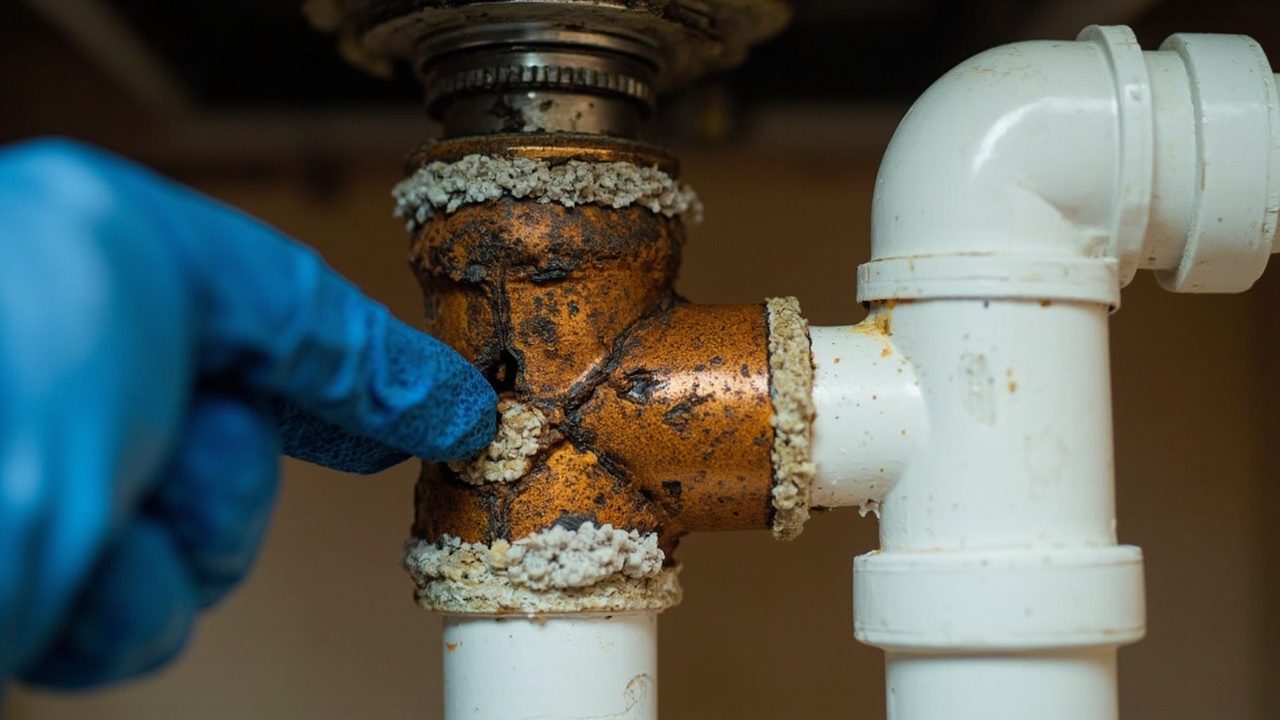
Where the smell shows decides which failure you have. One fixture that smells with nothing wet around it is a dry trap, a vent or the seal at the closet flange, and each of those is a small repair. Odor strongest at the base of a toilet, or a bowl that rocks, points at the wax ring and the flange. A kitchen sink that smells while the bathrooms stay clean puts the fault on the kitchen branch, where grease lines the pipe wall and holds waste against it. A sewer gas odor in the house that follows you from room to room, with slow drains or gurgling alongside it, puts the fault on the line itself. Desert heat and dry air evaporate the water in any trap nobody runs, so a guest bath, a tub or a floor drain can start smelling once it sits unused.
The age of the house shifts the odds. Homes from the late 1800s through the 1930s carry cast iron drains and clay laterals, and cast iron corrodes from the inside out while clay comes in short sections with many joints for roots to enter. Postwar slab homes from the 1940s through the 1960s often run cast iron under the slab, where a crack releases gas up through the floor with nothing wet to see. In houses built from the 1970s onward with ABS or PVC drains, the trap and the toilet seal are the first places to look. Heavy monsoon rain adds a second load across the county, because water that finds a cracked lateral enters the sewer line from outside the building.
Call today when the smell is in more than one room, or when a slow drain or a gurgle comes with it. Roots at one clay joint let gas out and catch paper and grease at that spot every day, and then the main backs up into the lowest fixture in the building with no warning. If the lowest drain has already started to back up, stop every water use in the building, including the washer and the dishwasher, keep people and pets out of the wet area, and do not plunge a line that is already full.
Our page on emergency sewer backup cleanup covers that side of the work in more depth.
How we trace the odor to one trap, seal or joint before quoting
The sequence follows where the gas is going. At the fixture that smells, water goes into the p trap and the tap runs, because a restored plug of water that ends the odor proves a dry trap in a minute. At a toilet, the base gets checked for water or a stain and the bowl for any rocking, since a failed wax ring or a closet flange sitting low lets gas up around the base. With both clean, the check moves to the stack vent and any air admittance valve, the parts that let the pipe breathe. Only when several fixtures smell, or the odor survives a refilled trap, does the work move to the line, and there the line is cleared first and cameraed second, because a full line shows nothing but water.
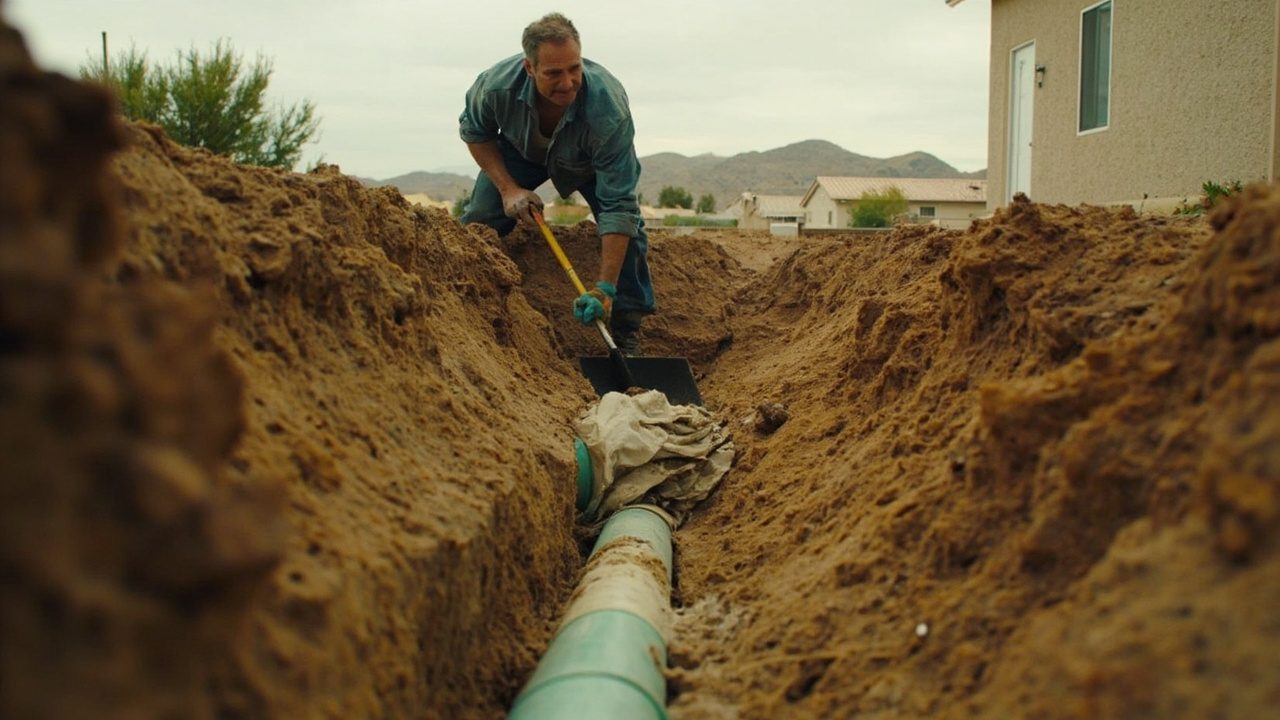
The reading this page turns on comes from the drain camera and its locator, run in from a cleanout after the line is cleared. Standing water part way along a level run is a belly in the line, and it holds waste between flushes, gives off odor and can be corrected only by re-laying that run to the right slope. Roots at a joint put the repair at that joint and leave the rest of the pipe alone. A continuous fall to the main with the pipe walls visible the whole way sends the smell back to a trap, a seal or a vent. The locator then marks the spot and its depth on the surface, and depth sets whether the opening is small or long. You see the footage, and the written scope comes from it.
Material and method come next. Cast iron is heavy and quiet and corrodes from the inside over decades, while PVC and ABS are lighter, faster to install and carry more noise through a wall. A partial swap joins the two with a no hub band, and that transition decides whether the joint holds. On a clay lateral, cured in place lining puts a new pipe inside the old one with a small loss of inside diameter and needs a host pipe that is still round. Open cut restores full diameter and lets slope be corrected. Mature trees over clay joints push the question toward joint against whole run, and caliche hardpan makes every dig slower, so a round host pipe with roots at a few joints leans toward lining while a belly leans toward open cut.
If this sounds close but not quite your situation, sewer line repair & replacement may be the better starting point.
Ask which of these readings was taken before any part is replaced.
| Instrument | Good reading | Bad reading | What it changes |
|---|---|---|---|
| Drain camera with a locator | Continuous fall to the main, clean joints | Standing water part way along a level run means a belly | Roots at a joint mean the repair belongs at that joint rather than the whole line |
| Anode rod pull on a tank water heater | The rod still has sacrificial metal along the core wire | A bare core wire with the metal gone | The tank itself is now the part being eaten |
| Screw on pressure gauge at a hose bib | Static pressure sitting in the 45 to 70 psi range with nothing running | Above 80 psi | Fixtures, supply hoses and water heaters start failing early |
| Water meter leak indicator with every fixture closed | The dial or the small leak wheel does not move over fifteen minutes | Any movement at all with the whole house off | Water is leaving the system somewhere you cannot see |
| Combustible gas detector and bubble solution on gas fittings | No alarm at the fittings and no bubble growing on the joint | Any bubble that keeps growing or any sustained alarm | The appliance valve gets closed before anything else happens |
| Thermometer at the farthest hot tap | Hot water arriving around 120 degrees | Hot enough at the tap to scald a child in seconds | The first slug of water is whatever was sitting in the pipe |
How a smelly drain call runs

First call and isolation
On the phone we ask which fixture smells, whether multiple drains are slow, when it started and what changed just before. On site the sequence follows the gas. Water goes into each p trap, the toilet base is checked for water and movement, and the vent side gets a look when both come up clean. If several fixtures smell, the line is cleared first because blockage masks the interior, and then the camera goes in from a cleanout with a locator. You watch the screen while the pipe walls are read, and the locator marks the spot and depth on the ground.
Approval and repair
Once you approve the written scope, the affected branch is isolated first and the floor is protected. A dry trap is refilled and its cause corrected. A failing seal means the toilet is pulled, the closet flange is checked and a new wax ring is set. A root joint on clay is cut out and replaced or lined, and a cast iron section takes new pipe through a no hub band. If more turns up behind a wall or under the slab, work stops, you see it on the camera and the scope is rewritten before anything continues.
Test and handover
Before we leave, the camera goes back through the repaired run and has to show a continuous fall to the main, the pipe walls visible the whole way and no standing water, with the repaired joint or new transition band on screen. Water runs at each fixture, the toilet base is checked dry, and every trap has to hold its plug of water. The smell is checked again at each fixture that had it. We walk you through the footage and you keep the written scope.
Why local soil and pipe age change a sewer odor job
Permits for this work follow the size of the job. A trap refill, a wax ring swap and a like for like fixture swap usually need none, while main line repair and any work on gas fittings usually do, and the local authority makes the final call on which side a given job falls. Whether the address sits inside city limits or outside them changes which office handles that call, a detail a crew unfamiliar with the area tends to miss.
The first mistake is treating every odor as a clog. A crew that jets the line, sees water drain and leaves has cleared paper and grease but never looked at the clay joint where roots entered, so the smell and the backup return. The second is gluing plastic onto old cast iron. A cast iron to PVC connection needs a no hub band, and a glued or patched connection is where the next leak starts.
Digging is the third. The county holds sandy, gravelly soil with caliche hardpan on the mesas and foothills, and finer alluvial soil that holds more water in the river valley. A quote written for soft ground and then met by hardpan becomes a longer dig, a larger surface to restore and a scope that changes after work has started. A crew that has dug here plans the depth and the method before the surface is opened.
Older housing adds its own trap. Victorian and Craftsman era homes carry cast iron drains and clay laterals underground, and any earlier repair may have spliced in plastic. Slab construction built after World War II keeps cast iron piping under the floor slab. A crew expecting one material and finding three changes the transition bands, the cutting and the access all at once. A smell that appears with monsoon rain points to water entering the lateral through a crack, and a crew new to the area may chase that in the fixtures instead of on the line.
More detail on commercial sewer line repair is on its own page.
Your local utility, El Paso Water, publishes service and water-quality information every El Paso homeowner should know.
Working with Bedrock Plumbing El Paso on a smelly drain
When someone reaches your door
You call and answer three questions. Which fixture smells, whether more than one drain is slow, and whether any drain has backed up. Those answers separate a same day visit from a scheduled one, since a backup or a gas smell goes to the front and a single dry trap can wait for a set window. You are told the arrival window on the phone, and if the job ahead of yours runs long, you hear the new window instead of waiting in silence.
Floors and fixtures protected
Before anything comes apart, runners and drop cloths go down from the door to the fixture. A toilet that comes up sits on a mat, and the closet flange opening gets plugged so gas and waste stay out of the room while the ring is off. Camera work runs from an outside cleanout, which keeps the equipment off your floors. Old wax and debris go into bags and leave with us, and the last thing done is wiping the floor around the fixture.
What moves the scope
Access moves the job furthest, meaning a finished wall, tile, a ceiling below or a slab, plus putting that surface back. Depth and length of any dig come next, and caliche slows both. The largest fork is a repair at one joint against replacing the whole run, and the condition of the rest of that line on camera decides it. Fixture grade and after hours calls add on top. The written scope comes from the footage, you approve it before work starts, and it states what happens if the opening finds more.
How technicians earn sign off
A new technician rides with a lead before working alone, and the lead signs off on specific tasks. Those tasks include resetting a toilet on a new wax ring with the closet flange checked level, running a drain camera from a cleanout, and reading a clay joint for roots. The lead confirms the technician can explain each reading aloud. On anything involving cast iron under a slab, a second technician looks at the footage before a scope is written.
You Have Questions,
We Have Answers
Sewer gas reaches some people at lower concentrations because nose sensitivity varies widely between individuals. Hydrogen sulfide is detectable by smell at very small amounts, and smell fatigue sets in within minutes, so someone who has sat in the room for an hour may stop noticing it. A person walking in fresh catches the full odor. A trap that dries out overnight can also release gas only in the early morning, when the room is closed and still.
Once the source is fixed, a sewage smell usually fades within a few hours to a day. Porous materials hold odor longer. Carpet padding, drywall behind a leaking toilet base and wood subfloor soaked by a leak can keep smelling for days until they dry or get replaced. Running a fan and opening a window speeds airing out. A smell that comes back after a day points to a source that was never fully corrected.
Run water in every fixture weekly so each p trap keeps its plug of water. Include guest baths, tubs and floor drains. A floor drain can dry in a few weeks of dry weather, so pour in a quart of water, then a spoonful of cooking oil to slow evaporation. In sinks, flush a kettle of hot water down after washing greasy dishes to soften buildup on the pipe wall.
Airing the room and removing the source neutralizes sewage smell, since sprays only mask hydrogen sulfide briefly. Activated charcoal and baking soda absorb some odor from air and soft surfaces. Enzyme cleaners break down organic film inside a fixture drain, though they will not fix a dry trap or a cracked pipe. Deodorizers poured into a drain can hide an ongoing leak while it gets worse.
Start with the fixture where the smell is strongest and pour a quart of water into its drain. If the odor stops, the trap was dry. Next, check around the toilet base for stains, moisture or a rocking bowl. Sniff at floor drains and the laundry standpipe as well. When several rooms smell, or the odor returns after refilling traps, the source is likely the line, which needs a drain camera run from a cleanout.
A faint smell from a dry trap is low risk, but a strong odor means airing the house. Hydrogen sulfide at high concentration causes headaches, nausea and eye irritation, and it dulls your sense of smell so the danger is harder to judge. Open windows, and if anyone feels dizzy, go outside. A rotten egg smell with no drain source could be natural gas, so leave immediately.
Fixing the smell starts with finding the cause, whether a dry trap, failed toilet seal, blocked vent or line damage. Refill traps first. A toilet with a stained base needs a new wax ring and a level flange. A vent stuck closed can be cleared from the roof. Root intrusion or a belly in the pipe needs a camera to confirm, then a joint repair or a section replaced.
Gas escapes through a dry trap, worn wax ring, stuck air admittance valve or hairline crack, with no clog involved. Gas moves through any opening because the drain system is vented and never sealed. A slow leak in a cast iron pipe below the floor can release odor with no wet spot showing. Water flows freely, so you see no drainage problem to point to.
A sewer smell means drain gas is entering the living space through a gap in a seal, trap or pipe. The usual causes are a dry p trap, a loose toilet flange, a failed wax ring, a cracked or corroded drain, or a vent that no longer moves air. Negative pressure from a bath fan or dryer can also pull gas through a weak trap, especially when doors are shut.
Plumbers recommend finding the cause before treating the smell. Most begin by refilling traps and checking the toilet seal, then inspect the vent and run a camera down the line if the odor persists. They advise against chemical drain openers, since caustic products sit in a pipe with a belly and can damage old cast iron. Enzyme cleaners for grease film are the usual maintenance choice for kitchen lines.
Why caliche and clay laterals change smelly drain repair in El Paso
Soil decides how the repair gets done. The mesas and foothills carry sandy, gravelly ground with layers of caliche hardpan, and hardpan slows every lateral dig and pushes a round, root-bound clay pipe toward lining instead of a deep trench. The river valley has finer alluvial soil that holds more water around a lateral, so a weeping joint stays wet and draws roots. In dry desert ground a leaking clay joint is the wettest spot for a long way, and roots follow that moisture in warm weather, which is why a line cleared once can back up again with every drain slow. Monsoon runoff collects in low streets and dips, and a cracked lateral there takes rain into the sanitary line from outside. Housing eras add material. Copper supply with ABS or PVC drains is common from the 1970s through the 1990s, and PVC laterals with PEX manifolds come with the newer subdivisions, so a smell in those homes points to a trap or a seal before a pipe.
Work on a main line or a lateral is usually inspected in stages, and the inspector looks at the joint, the fall of the pipe and the transition to existing material. The permit office that has jurisdiction depends on whether the work site sits in an incorporated area or unincorporated territory, since work outside city limits falls under the county or the neighboring town. Knowing that up front changes the sequence, because the trench stays open until the inspection and the camera pass is timed to happen before the backfill goes in. The locator marks where the fault sits and how deep, and the utility and the permit authority decide where responsibility for that stretch of line sits. Familiarity with that process shortens the job, since the footage, the depth and the transition detail are already in hand when the inspector arrives.
Plumbing Services in The El Paso Area
Explore our service area and locate Bedrock Plumbing El Paso with ease. We're proudly local and serve the surrounding neighborhoods with fast response and honest pricing. Use the map to check our coverage area, or call us and we'll confirm in seconds.
Address:
Bedrock Plumbing El Paso, 221 North Kansas St, Suite 700, El Paso, TX, 79901
Additional Services We Offer
Pouring water into an unused trap is a homeowner job and you do not need us for it. DIY stops at anything soldered, anything on the gas line, anything behind a finished wall or under a slab, and any drain already backed up past a cleanout. A musty or chlorine smell in the tap water itself belongs to the utility, not to a drain repair, and we tell you so on the first visit rather than after the invoice.
Know which fixture smells worst and whether it reads as sewage or rotten eggs, how long the odor has persisted, and any recent changes like a fixture left unused or a recent toilet reset. Note whether more than one drain is slow, whether anyone is in the house, and where your cleanout sits. Any age you have for the drain pipe helps.
Last reviewed September 2026 by Dave Parker, Owner.