





What a backing up lowest drain means for a commercial lateral
The floor drain in the lowest restroom gurgles when the kitchen dishwasher empties. Then the mop sink slows, and soon every fixture on the ground level drains at the same reduced rate. You may already have had the line cleared once, and it slowed again. One slow fixture points to a trap or a branch. A whole level slowing together, with the lowest drain showing it first, points to the main line downstream of all of them, which is where commercial main line repair scope gets decided.
Sewage and supply water fail differently. A pressurized supply leak runs all night whether or not anyone is in the building. A drain escapes only while something upstream runs, so a backup that appears at closing time, when the dish machine and the restroom groups discharge together, is loaded by your own schedule. Water rises to the first opening below the blockage, and that opening is the lowest floor drain, which is why it reports a fault that may sit far down the line under a parking lot. Paper and grease settle in the low spot behind the restriction each time the line drains, and the next discharge starts from a narrower pipe.
Three local conditions make a small restriction come back. Older commercial buildings in the county often carry cast iron stacks and long horizontal runs, and cast iron corrodes from the inside out until the wall roughens and catches paper. Clay laterals from the same era are jointed in short sections, and roots enter at those joints because a weeping joint is the wettest spot in dry desert soil. Kitchen branches add grease, which layers onto a level run with every shift. Caliche hardpan then slows any dig, so a fault that could be reached in a morning in soft soil takes longer here, and that is why commercial sewer repair scope is set by the camera before equipment is booked.
Call the same day when the sequence has started. Roots at one clay joint let paper and grease catch at that spot every day, and the main then backs up into the lowest fixture in the building with no warning. A line that slows again after clearing has reached the middle step. For a commercial tenant the cost of delay is downtime, since a kitchen that cannot discharge cannot open and a restroom bank on a backed up line closes, and every further backup puts wastewater on a finished floor.
Our page on commercial backflow prevention & testing covers that side of the work in more depth.
How we read the line before we scope lining or excavation
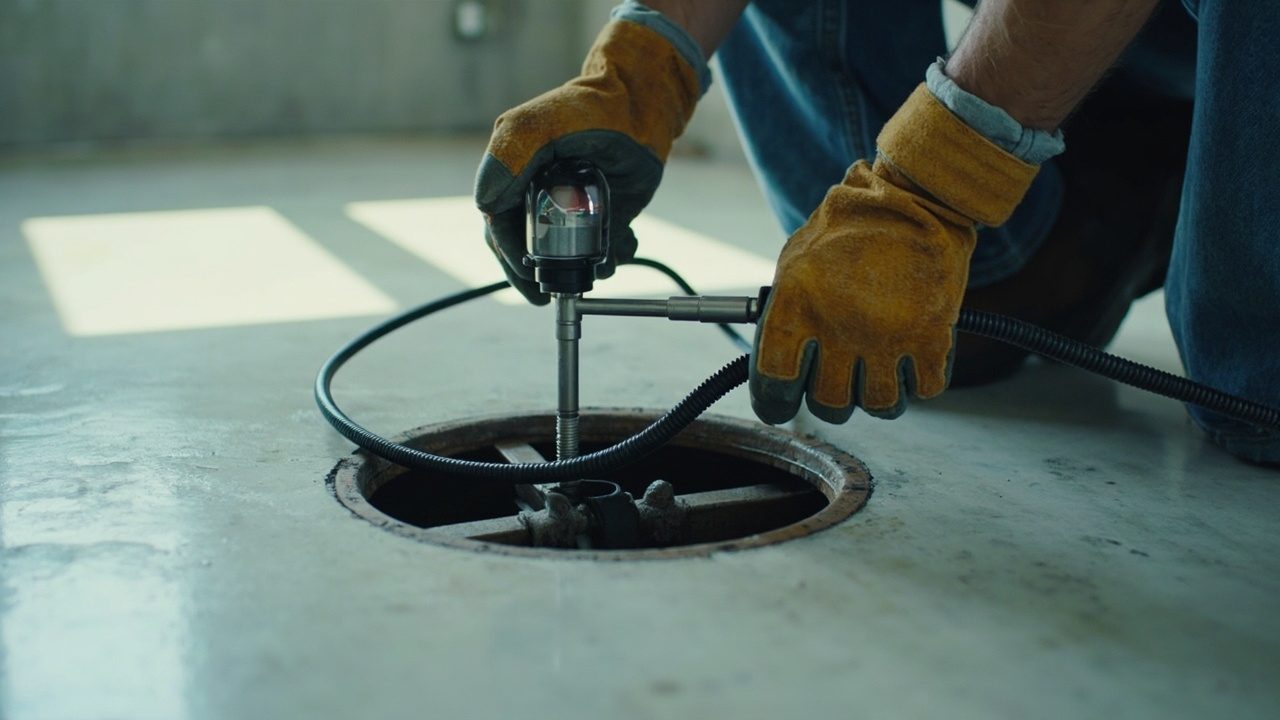
The sequence follows where the water is going. Every fixture in the building goes off, and the water meter leak indicator gets watched for fifteen minutes, because a dial that moves with everything closed puts a loss on the supply side and makes it a different job from a drain. With supply ruled out, each branch is isolated in turn, kitchen, restroom groups and floor drains, so the segment that backs up first has a name. Then the line gets cleared, by hydro jetting where grease is the cause. A full line shows nothing but water, so the commercial sewer camera inspection runs after clearing, from a cleanout, with a locator riding the camera head. The locator turns a picture into a spot and a depth, and that pair of readings separates a repair at one joint from re-laying a run.
Four findings on the screen decide the scope. Continuous fall to the main, clean joints and the pipe wall visible along the whole run is the passing reading, and it leaves the line a candidate for lining. Standing water part way along a level run is a belly, and a belly holds paper and grease however often the line is jetted, so that reading moves the job to open cut where slope can be corrected. Roots at a joint put the repair at that joint and leave the rest of the run alone if the camera shows it sound. Before any lining is priced, the host pipe has to be proven round, since a cured in place liner forms a new pipe inside the old one and needs the old one to hold its shape. The footage, the marked depth and the finding at each joint go into a written scope that a lender, an underwriter or a due diligence reviewer can read without a site visit.
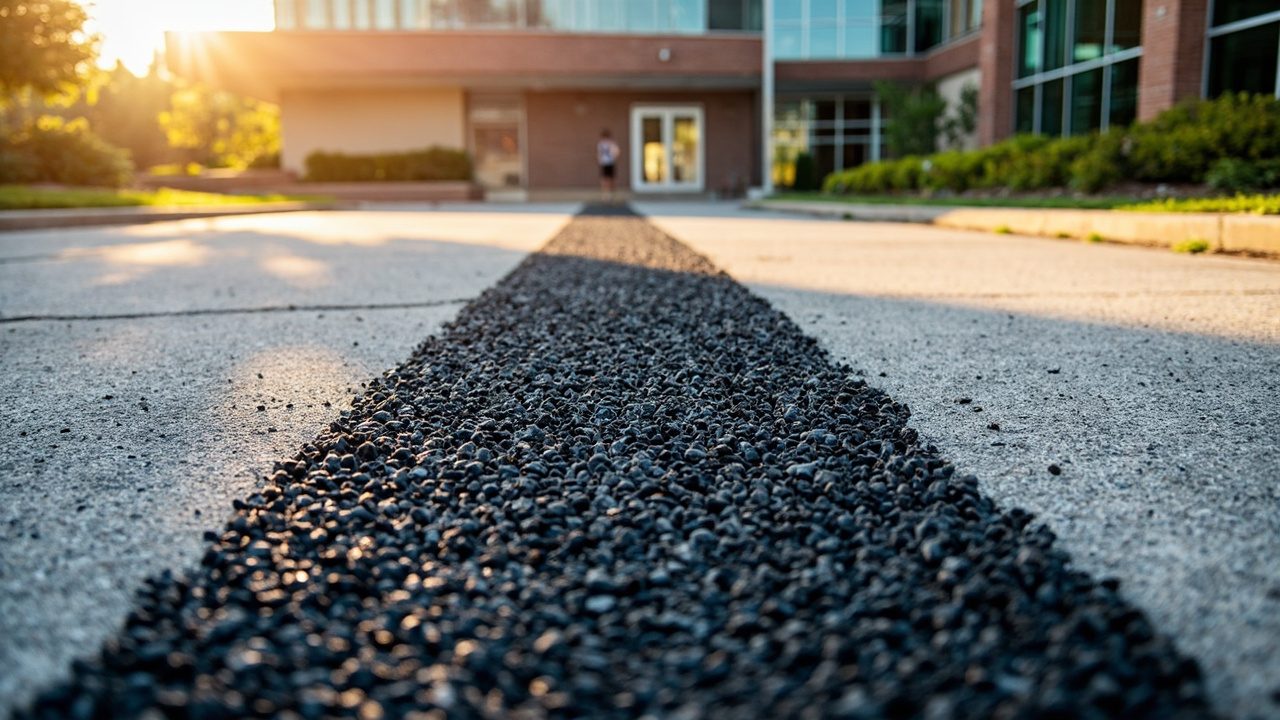
Local ground decides between lining and open cut here. Caliche hardpan and dense layers slow trenching, and a commercial lateral usually runs under parking or a slab, so each foot of open cut also carries a foot of surface to cut and restore. Where the camera proves a round pipe with continuous fall, both facts push toward lining. Where the run holds water or the slope has to change, open cut earns its extra surface work, and business sewer line replacement by open cut also gives a clean place to join cast iron to plastic with a proper transition band. A lining quote that arrives before the camera has run prices an unmeasured pipe, so commercial sewer contractors worth calling ask for the camera pass first.
Your local utility, El Paso Water, publishes service and water-quality information every El Paso homeowner should know.
Narrow this to two options before calling, then ask which one suits the house.
| Option | The numbers a buyer weighs | Best suited to |
|---|---|---|
| Trenchless lining against open cut replacement | Lining cures a new pipe inside the old one with a small loss of inside diameter | Runs under a slab, a drive or mature trees |
| Sump pump selection | Sized by horsepower against the vertical lift plus pipe run it has to push through | Basements with a real lift to the discharge |
| Salt softener against a salt free conditioner | An ion exchange softener removes hardness minerals and needs salt and a drain | Hard water houses weighing salt against upkeep |
| Tank water heater against tankless | A tank is judged on capacity in gallons and its first hour rating | Households with long back to back hot water use |
| Type L copper against PEX | Copper is rigid, tolerates heat directly | Repipes where the existing layout sets the method |
How a commercial sewer call runs
Call, then isolate
The call sorts the problem before anyone arrives. You describe the first drain to back up, the kitchen and restroom load, and where the cleanouts are. On site the technician walks to the lowest drain, then the meter, and shuts off water use one branch at a time while you watch which segment changes the behavior. Mats go down, the line is cleared, and the camera goes in from the cleanout with the locator on the head. You can stand at the monitor and see the pipe wall, the joints and any standing water as they pass, so the diagnosis is finished when the run ends.
Approval, then the work
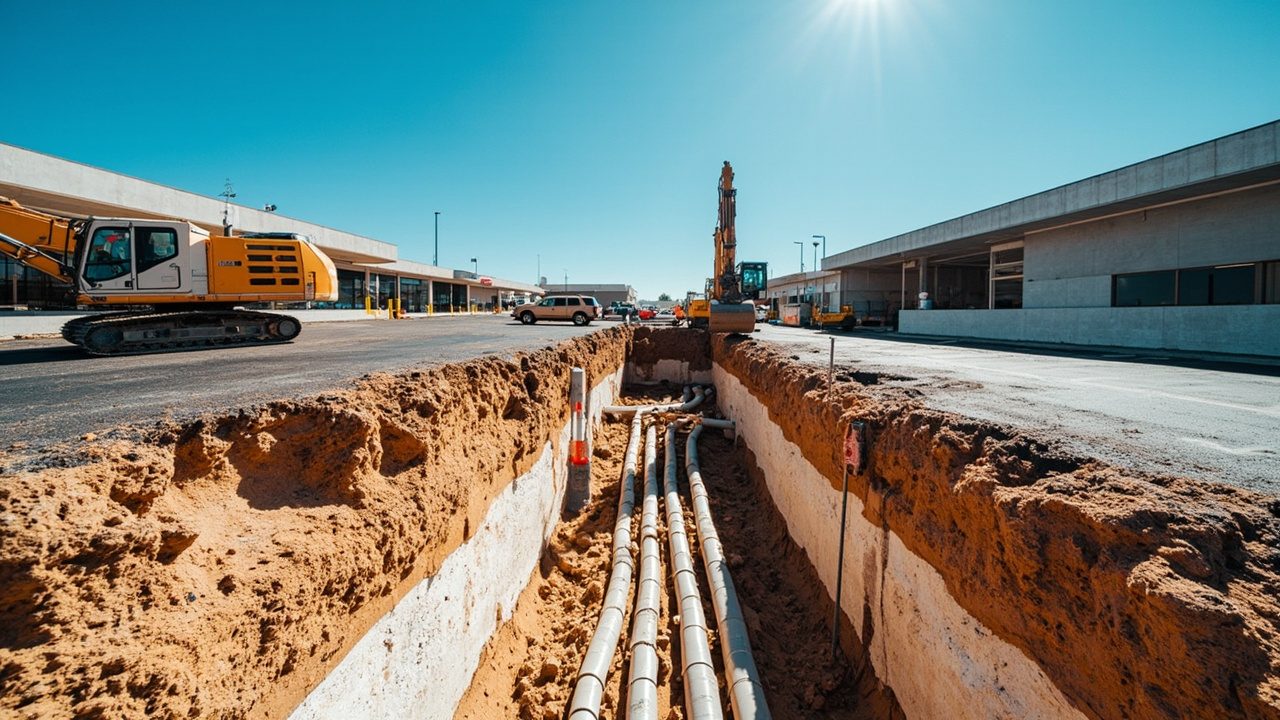
Once the scope is approved, the branch being worked is isolated first, so the rest of the building keeps water where the layout allows. Then the main operation begins. That is hydro jetting to clear, cured in place lining where the host pipe proved round, or open trench replacement where the run held water or needed its slope corrected. Cast iron to PVC connections get a no hub band. If a condition turns up behind a wall or below the slab that the camera did not show, work stops and you see it before anything continues.
Camera goes back in
After the repair or lining, the camera returns through the same run from the same cleanout to verify what the initial pass could not show: proper slope toward the main, sealed joints and an intact pipe wall throughout. Fixtures upstream are operated while it watches, and any standing water partway along indicates incomplete work. You watch the monitor, then retain the footage, the locator depth marks and the written scope with your approvals, which is the file a lender or underwriter asks for.
Why unfamiliar crews get commercial laterals wrong here
Main line work usually needs a permit and staged inspection, and a like-for-like fixture swap usually does not, with the final call belonging to the authority that covers the property. Inside city limits the city issues plumbing permits, and outside them the county or the neighboring town takes over, so two buildings a few miles apart can answer to different offices. A crew that assumes one process for every address files in the wrong place, and the cut in your parking surface waits open while the paperwork is redone.
Commercial buildings here span several construction eras, and each era hides a different pipe. The oldest carry cast iron stacks and clay laterals jointed in short sections. Buildings from the 1970s through the 1990s carry ABS or PVC drains with PVC laterals, and newer construction carries PVC throughout. Older buildings with partial repairs can show several materials in one run, and the camera is what tells them apart. A crew that reaches for one fitting for every connection joins cast iron to plastic with glue, and that joint becomes the weak point in the new work. The correct joint is a transition band. A crew used to soft soil books a trench for one morning and meets caliche hardpan, so the open cut outlasts the schedule the tenant was given.
Monsoon storms bring short, heavy flash flooding, and water collects in low streets and dips. Where rain reaches a cracked lateral joint it loads the sanitary line from outside the building, so a backup that arrives with a storm can be inflow, and a crew that only jets the line clears the water and leaves the crack. A lateral that weeps through a joint admits groundwater during high water tables and seasonal runoff as well, which means the problem recurs in wet months even without a storm. Response across the county crosses city limits, county ground and neighboring towns, so the first question on the phone is where the property sits, because the answer decides which permit route applies and which inspector needs to sign off on the work before the trench closes.
More detail on sewer line repair & replacement is on its own page.
We install and service equipment from major manufacturers like Rheem to manufacturer specifications.
How a commercial sewer job runs day to day
From call to arrival window
Three questions come first on the phone: which drain backs up first, whether the kitchen or restrooms are in use, and whether a cleanout is reachable. Those answers sort the job into a same day visit or a scheduled one. The person who took your call confirms the arrival window by phone on the day of the visit. When the job ahead runs long, the window moves and the new time is given to you before the old one passes.
Floors, cleanouts and cuts
Runner mats go down along the route from the entrance to the cleanout before a cap comes off, and a wet vacuum stands at the opening, since a line under head pressure empties onto whoever opens it. Jetting and camera work stay contained at that one access point. Any cut in parking or slab is marked and coned so customers and vehicles keep clear. Spoil and old pipe leave the site as the work finishes, and the last step is a wash-down of the route and a walk through the space with you.
What moves the cost
Access moves the cost most, meaning the parking, slab or finished floor over the pipe and restoring it. Depth and length of excavation come next, and caliche hardpan pushes both up. One joint against the whole segment is the widest fork, and the condition of the rest of the run decides it. Matching old pipe to new adds scope, as do permit and inspection requirements, which reach main line work more than a faucet. After hours response adds cost. You approve the written scope before work starts, and you agree in writing what happens if the opening finds more.
How technicians earn sign off
A new technician rides with a lead before working alone, and the lead signs off on specific tasks: running a camera from a cleanout and reading the locator depth, joining cast iron to PVC with a no hub band, and setting up containment at a cleanout. The team studies updated Texas codes as they change. On an unusual job, such as a run under a slab or a lining recommendation, a second technician reviews the footage before a scope is written.
You Have Questions,
We Have Answers
Owners can remove a cleanout cap and run a hand auger, but pipe repair belongs to a trained crew. Digging near a lateral risks striking gas or electric lines, and an unmarked trench can collapse. A cracked or offset joint also needs its slope checked with a level, since a quarter inch of fall per foot is the usual target for smaller drain diameters. Missing that fall leaves a low spot that clogs again within months.
Repair pays off when the camera shows sound pipe with one or two isolated defects. Examples include a single root intrusion or a cracked joint. Replacement makes more sense when the run shows a belly, offset joints in sequence, or a wall that flakes in layers. Paying for repeated jetting on a failing pipe adds up quickly, so compare that recurring cost against one permanent fix that restores fall and closes the joints.
Standard homeowners policies usually cover sudden damage inside the home but exclude wear, corrosion, and root intrusion. Coverage for a lateral outside the foundation varies by policy, and some carriers sell a separate service line endorsement. Read the exclusions section for the words "wear and tear" and "tree roots," and ask the carrier whether cleanup after a backup falls under a water backup rider, which is often a distinct add-on.
Replacement is rarely covered when age caused the failure, though a sudden break from a covered event may qualify. Adjusters typically want documentation, so a camera recording that dates the failure and shows the pipe condition helps a claim. Policies differ on whether they pay for the pipe, the excavation, or only the resulting interior damage, and many stop at the foundation line. Get the carrier's answer in writing before authorizing any digging.
Replacement cost rises with trench depth, linear footage, and the hard surface above the pipe. Rock-like caliche layers slow excavation and add labor hours, while an open yard costs less to restore than a driveway or slab. A run needing a permit and staged inspection carries added scheduling and fees to account for. A written scope listing footage, depth, and materials lets you compare bids on identical work rather than on vague totals.
Replacement follows pipe material rather than a fixed calendar, and a sound PVC line may never need it. Cast iron tends to corrode from the inside, so a camera inspection every few years after age forty shows scale buildup before it restricts flow. Clay lines fail at joints when roots enter, so recurring slow drains or a second backup within a year signal that the run deserves a look before the next failure.
Replacing a main sewer line is not a practical homeowner project, mainly because of depth, permits, and slope control. Trenches deeper than five feet require shoring under safety rules, and the new pipe must hold uniform fall to the street connection or a tap, which needs surveying tools. Backfill compaction also matters, since poorly compacted soil settles and puts a low spot back into the new pipe within a season.
Lifespan varies by material, from many decades for PVC to fifty to seventy-five years for cast iron. Clay lasts longer if joints stay sealed. Service life shortens where roots, corrosive waste, or shifting ground stress the pipe. Kitchen lines loaded with grease age faster than restroom lines, so two pipes installed together can reach the end of their useful life years apart.
Why caliche hardpan changes commercial sewer line repair in El Paso
Two soils meet under commercial properties here. On the mesas and foothills the ground is sandy and gravelly with layers of caliche hardpan, and hardpan slows every lateral and yard line dig, which lengthens the time a parking cut stays open and pushes the choice toward lining once the camera has proven the host pipe round. On low ground the soils are finer alluvial material that holds more water, so a weeping clay joint stays wet and draws roots. Pipe material follows the building's age. Clay and cast iron laterals sit under the oldest buildings, cast iron drains run under mid century slabs and crack or corrode into slow drains and backups, and ABS or PVC drains with PVC laterals belong to buildings from the 1970s onward. Each material changes how the camera findings are read and how new pipe is joined to old.
Main line work is inspected at stages during construction where the authority requires it, and the inspector looks at the joints and the fall of the new pipe. Knowing that up front changes sequencing. The permit request goes in before the first cut, the opening stays accessible until the stage has been seen, and the camera footage and locator depth are ready to hand over at the same visit. Backfill and surface restoration follow the inspection, which is why the schedule given to a tenant includes the inspection stage and does not end at the last shovel. Local amendments to the adopted code mean what applies at one property can differ at the next, and whether a given repair needs a permit at all is the authority's decision. For a commercial owner the inspection record is also a document, and a lender or a due diligence reviewer reads it beside the footage.
Plumbing Services in The El Paso Area
Explore our service area and locate Bedrock Plumbing El Paso with ease. We're proudly local and serve the surrounding neighborhoods with fast response and honest pricing. Use the map to check our coverage area, or call us and we'll confirm in seconds.
Address:
Bedrock Plumbing El Paso, 221 North Kansas St, Suite 700, El Paso, TX, 79901
Additional Services We Offer
- Apartment Complex Plumbing
- Commercial Backflow Prevention & Testing
- Commercial Kitchen Plumbing
- Commercial Plumbing Contractors
- Commercial Repiping Services
- Commercial Toilet & Urinal Repair
- Commercial Water Heater Systems
- Grease Trap Cleaning & Pumping
- Hydro Jetting Services
- Industrial Pipe Repair
- Medical & Dental Gas Plumbing
- Preventative Commercial Maintenance
Plunging a toilet and closing the main shutoff are jobs for your own staff. DIY stops at anything under a slab or parking surface, at gas work, and at any drain already backed up past a cleanout. Repaving a lot and structural slab repair belong to other trades, and we say so on the first visit and name who handles it, rather than after the invoice.
Before you call, know which drain backed up first and what was running when it did. Find the main shutoff and any cleanout caps, and note whether a kitchen or a restroom bank sits on that line. Any age or pipe material you know for the building helps, as does the last time the line was cleared. Say whether anyone is in the building.
Last reviewed September 2026 by Dave Parker, Owner.