





What a stain behind tile means in a hard water clinic suite
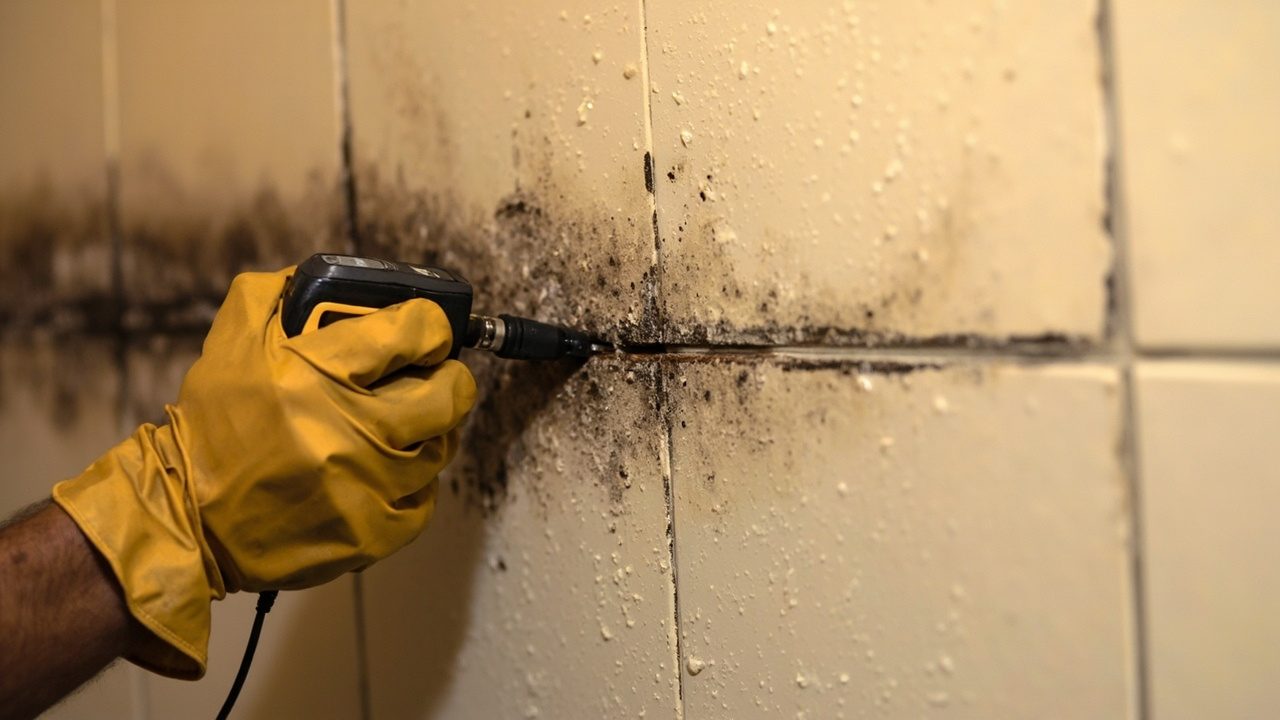
A stain at a grout line in a treatment room wall, a ceiling tile sagging below a plumbing chase, or a meter dial that turns while every fixture is closed all say the same thing. Water is leaving a pressurised line. Supply water escapes around the clock, with the suite dark and every sink idle, while a drain only escapes when something upstream is running. A stain that is wetter after a night with the suite closed is supply. A stain that shows only after a sink drains is a drain branch or a trap. A warm patch on a slab floor in one place is the hot side of the supply running under the slab, and it is losing water into the concrete.
Local water shapes what you find behind that wall. The supply here tests moderately hard to hard, and above about seven grains per gallon scale forms steadily in valves, aerators and heater elements. A shutoff valve that seeps at the stem or a faucet that stops closing fully usually has scale in the cartridge. Buildings across the county come from every decade, so a single clinic suite can hold galvanized supply that closes up from the inside, copper run through the slab, or PEX off a manifold, and each material fails in its own way. Dental office plumbing puts several sinks, drains and gas lines inside a compact footprint, and healthcare facility plumbing in general stacks treatment rooms along shared walls, so a leak in one branch reaches the neighboring room through the same framing.
Gas calls for a different reaction. A smell of gas or rotten eggs means everyone goes outside, nothing gets switched on the way out, the door stays open behind you, and Texas Gas Service is called from outside. Fittings feeding clinic equipment get checked after that with a combustible gas detector and bubble solution, and no appliance runs until they read clean.
A hairline supply leak behind tile leaves the framing damp, because nothing dries inside a wall. Damp framing turns a pipe repair into a wall rebuild, and a wall rebuild takes the treatment room out of service until the surface is restored and tested. Call the day you see the stain or the moving dial, while the repair is still a segment of pipe.
If this sounds close but not quite your situation, commercial plumbing contractors may be the better starting point.
How we isolate the fault before a wall or line is opened
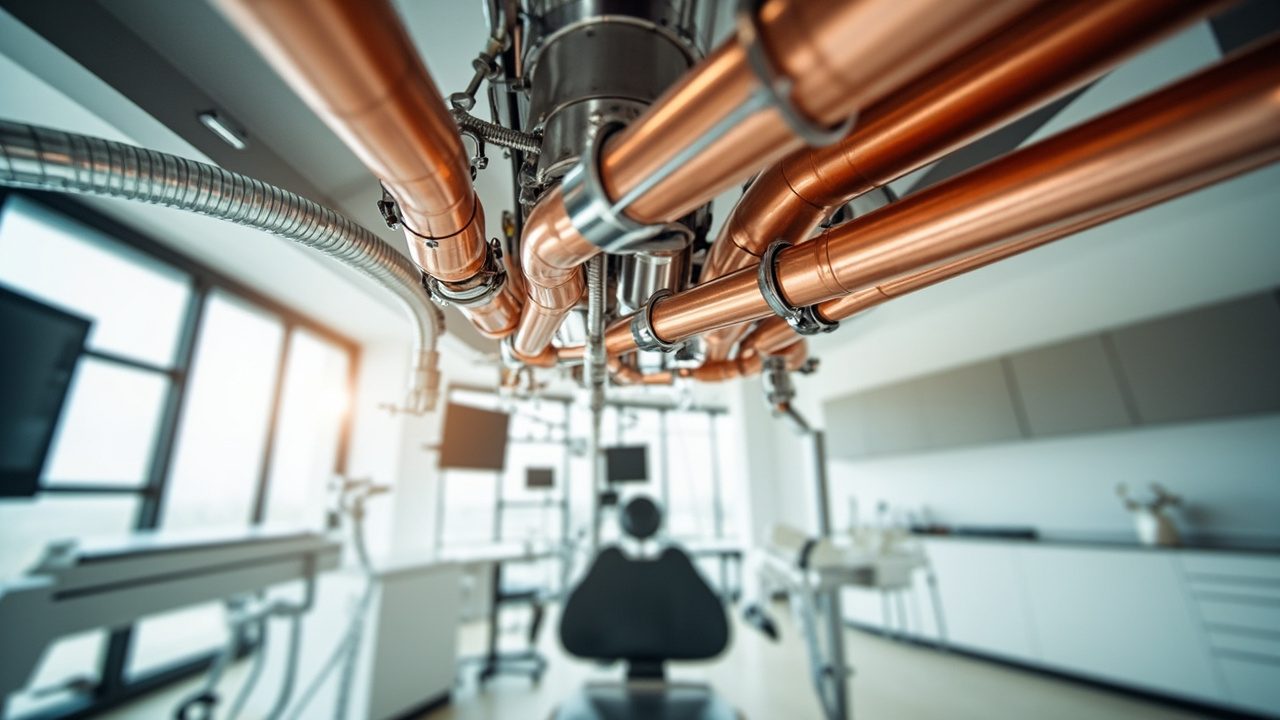
The visit starts at the meter, because the first useful act is shrinking the problem to a segment. With every fixture closed, the leak indicator gets watched for fifteen minutes, and any movement means water is leaving the system somewhere you cannot see. Then the main is closed and the dial is read again. A dial that still moves puts the loss on the street side of the meter, and a dial that stops puts it inside the building. Stops and branches close one at a time until the loss stops, and only then does anyone open a surface. Gas fittings follow the same discipline. A combustible gas detector finds where to look, bubble solution brushed on the joint proves it, and a bubble that keeps growing marks a leaking joint. Medical gas installation and medical vacuum systems follow your design documents, and each line is tested and recorded before the room returns to service. Medical gas certification, where the project calls for it, is a separate sign-off from the party your documents name, and it rests on test records like these.
Three readings change the scope. A screw on gauge at a hose bib, read with everything in the suite off, should sit between 45 and 70 psi, and above 80 psi a pressure reducing valve belongs in the job, since high pressure wears out fixtures, supply hoses and heaters early. Leaving the gauge on overnight catches a failed expansion tank, because a morning reading far above the night figure means the heater is pushing expanded water into a closed system. The hardness kit at the tap decides whether flushing, descaling or treatment gets planned into the job, since scale returns to any new valve fitted in untreated water. A thermometer at the farthest hot tap, read after a full minute of running, should show around 120 degrees. Each reading is written down, because the record is what a lender, an underwriter or a board can read afterward.
The medical gas piping follows the project design documents, so the material decision below applies to the water supply. Two local conditions settle it between type L copper and PEX. Intense sun and heat degrade exposed plastic, so anything crossing a roof, a mechanical yard or an unshaded wall goes in copper. Inside finished walls, PEX on a home run layout from a manifold puts fewer joints in the framing, which means a later repair costs less drywall, and it has to stay out of sunlight and be protected where it passes through framing. Between PEX A with expansion fittings and PEX B with crimp rings, the fitting system decides which tools and which access a future repair needs. Where new copper meets old galvanized, a dielectric union goes at the joint, and the hardness reading tells you whether treatment gets planned alongside the pipe.
More detail on apartment complex plumbing is on its own page.
Your local utility, El Paso Water, publishes service and water-quality information every El Paso homeowner should know.
Narrow this to two options before calling, then ask which one suits the house.
| Option | The numbers a buyer weighs | Best suited to |
|---|---|---|
| Type L copper against PEX | Copper is rigid, tolerates heat directly | Repipes where the existing layout sets the method |
| Tank water heater against tankless | A tank is judged on capacity in gallons and its first hour rating | Households with long back to back hot water use |
| Salt softener against a salt free conditioner | An ion exchange softener removes hardness minerals and needs salt and a drain | Hard water houses weighing salt against upkeep |
Clinic gas and water calls
Call and isolate
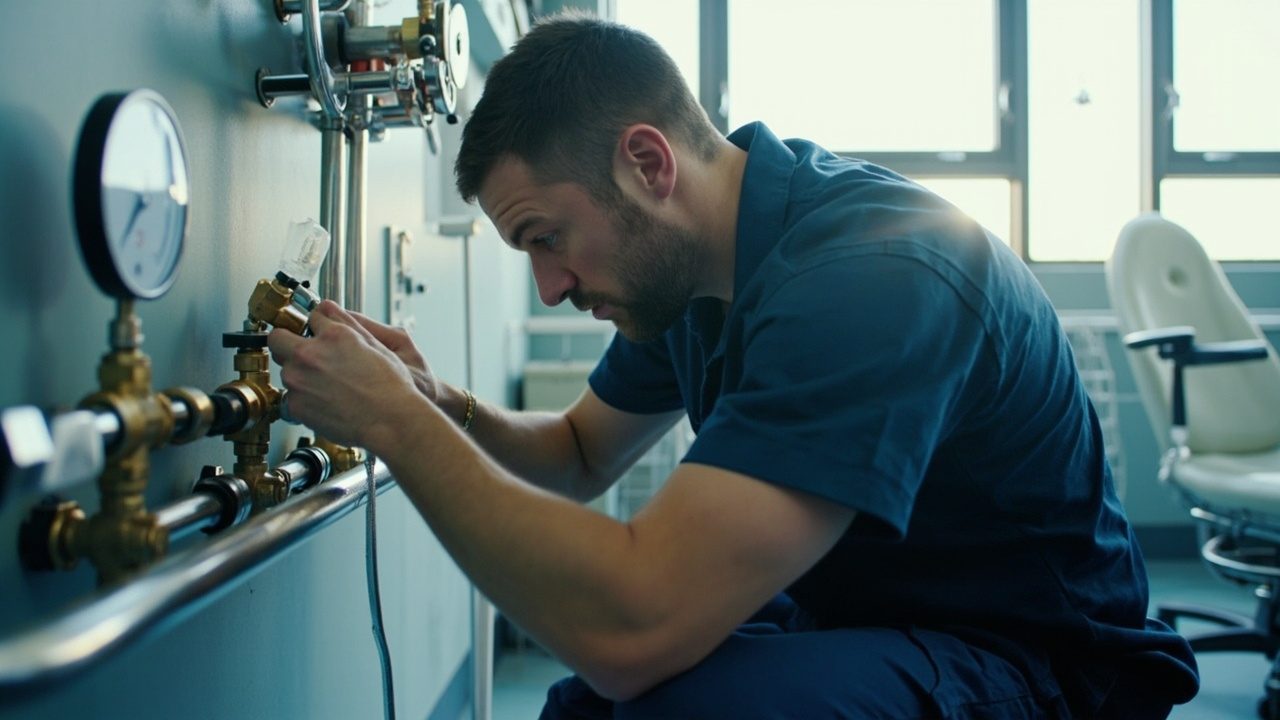
On the call, you describe what you see, when it started, which treatment rooms are affected, and whether a smell of gas is involved. Those answers sort the visit into same day or scheduled. On site, the sequence follows where the water is going. The meter is read with every fixture closed, then again with the main closed, then branch by branch until the loss stops. Gas fittings get the combustible gas detector first and bubble solution second. A backed up drain is cleared first and then run with a camera from a cleanout, since a full line shows nothing but water. You see the segment identified before anything is opened.
Approve, isolate, repair
After you approve the written scope, isolation comes first. The branch stop or the main gets closed, and any appliance valve on a gas line gets closed before a fitting is touched. The segment comes out and new type L copper or PEX goes in, joined with the fitting system the scope names. Where copper meets galvanized steel, a dielectric union prevents corrosion at the transition, and where cast iron meets plastic a no hub band makes the connection. If damp framing, galvanized closed up from the inside or a second pinhole turns up behind the wall, we stop and show you before going further. Any change to the scope is written and approved again before work continues.
Test and hand over
Before we leave, the detector goes back over every gas fitting we touched and has to stay silent, and bubble solution on each joint has to show no growing bubble. On the water side, the leak wheel on the meter cannot move over fifteen minutes with every fixture closed, and static pressure has to sit in the 45 to 70 psi band with nothing running. We walk you through each reading at the fitting. You keep a written record listing every joint tested and its reading, which is the paper the person releasing the treatment room will ask for.
Why hard water, sun and brief freezes trip up unfamiliar crews
A permit is usually required for gas work and main line work, and a like for like faucet or fixture swap usually needs none. The permit authority for your address has the final call, and it differs inside city limits and outside them, where work falls under the county or the neighboring town. Inspection happens at stages during construction, so a run has to stay open and testable until its stage passes. A crew that closes a wall over an untested joint opens that wall again.
Unfamiliar crews miss local conditions in predictable ways. A crew used to soft water fits a new valve or heater with no plan for scale, and above about seven grains per gallon the new part scales on the same schedule as the old one. A crew that runs PEX across a roof or an unshaded wall leaves a line that intense sun and heat will degrade. Freezing nights happen every winter, yet most sit just below freezing and clear by afternoon, so the ground never freezes deeply. A crew from a colder region prices frost protection the ground does not need, and a crew from a milder one leaves hose bibs and backflow assemblies bare for the arctic front that drops into the teens. Caliche hardpan slows trenching, so a lateral or yard line scheduled for soft soil runs late. Old stock hides mixed materials, and a crew that expects one pipe in a suite finds galvanized, cast iron and copper in the same wall after quoting for one. Galvanized joined straight to new copper without a dielectric union corrodes at that joint.
The work schedule depends on permit timing and on inspection windows. Clinics sit across the county, so the arrival window gets confirmed on the call. Planned openings go on days the treatment rooms are empty, which matters because a run left open for its inspection stage holds the wall open too. Coordination with other trades and with the permit authority keeps the schedule realistic and ensures the work moves without extended holds that would leave sections exposed or inaccessible.
Our page on commercial kitchen plumbing covers that side of the work in more depth.
What a clinic gas and water job involves day to day
Arrival and clinic schedules
You call and answer three questions: what you see, which treatment rooms are affected, and whether gas or only water is involved. Those answers decide between a same day visit and a scheduled one. The person who answers confirms the arrival window on that call. If the job ahead of yours runs long, you get a call with the revised window before the first one passes. Planned work on a live line can be set for hours when the treatment rooms are empty, so the wall is open only while the rooms are.
Protecting treatment rooms
Before any tile or panel comes off, floors and casework get covered and the branch stop is closed, so only that branch loses water. A plastic dust barrier goes across the opening to hold drywall dust out of the treatment room. Tools stage on a drop cloth outside the work zone. Cut pipe, old fittings and drywall leave with us in sealed bags. The last thing we do is run the water and wipe down the fixtures, then walk you through the space.
What moves the scope
Access moves the job furthest, meaning the finished wall, tile, ceiling below or slab that has to be opened and put back. Depth and length of any excavation add to it, and so does replacing a whole segment instead of one joint, which the condition of the rest of that run decides. Permit and inspection requirements add steps for gas work and main line work, while faucet replacement requires fewer. Fixture grade and after hours dispatch come last. You approve the written scope before work starts, including what happens if the opening finds more.
How technicians are checked
A new technician rides with a lead and works beside them until the lead signs off on specific tasks. Those tasks are closing the main and reading the meter leak indicator, reading static pressure at a hose bib, and proving a gas fitting with detector and bubble solution. The adopted code and its local amendments are reviewed with the lead. On any gas line or unusual job, a second technician looks at it before a scope is written.
You Have Questions,
We Have Answers
A medical gas plumber installs, repairs and tests piping that delivers oxygen, medical air and vacuum to patient rooms. The work uses copper tube cleaned for oxygen service, brazed while nitrogen flows through the joint so no black oxide flakes form inside. Those flakes can travel to a dental handpiece or ventilator. Because the lines feed clinical equipment, each section is pressure tested and recorded before anyone connects a patient outlet.
ACR tubing works for medical gas only when the supplier marks it cleaned for oxygen service. Ordinary ACR is dehydrated and nitrogen charged for refrigerant work, and it can retain drawing oil, which becomes a fire hazard in an oxygen line. Medical gas tube ships with plugged ends and a cleaning label, so a length with open ends or no label gets rejected before it enters the wall.
No gas station pay figure can be named here, because hourly wages differ by employer, shift and location. Cashier roles at fuel stations generally pay near entry level, while shift lead, manager and overnight positions pay more. Current job postings in your area show the real spread. Plumbing trades, including medical gas piping, follow a separate pay path, since brazing skill and documented testing experience raise what a tradesperson can command.
Trained facility staff close medical gas zone valves, and only after the clinician in charge approves. Each valve box sits in a corridor wall behind a breakable window, and closing one cuts oxygen or vacuum to every room downstream. Patients must be moved to portable cylinders first. A plumber closes a zone valve during work under a written shutdown plan, then confirms the gauge in the box reads zero.
Leaking brazed or threaded joints are the most common pipeline malfunction, followed by worn outlet valves and regulators. A poorly purged braze weeps under test pressure, and the gauge on the line drops over the standing test period. Quick-connect outlets wear their internal seals with repeated use, so a hiss at the wall outlet points to the seal. Construction debris left inside the pipe can also clog outlet check valves.
Med gas credentials pay off for tradespeople who want brazing work on hospital, surgery center or dental projects. Most project documents ask for a qualified person on installation and verification of patient lines, so without one a plumber cannot sign that work off. The training covers cleaning, nitrogen purge brazing and test procedures, and the credential belongs to the person, so it travels between employers. Owners should ask to see the holder's credential before work starts.
Medical gas piping has no single five class list, and the grouping most people mean is by gas service. Common groupings are oxygen, medical air, nitrous oxide, medical vacuum and waste anesthetic gas disposal. Each service carries its own color code and label, and outlets use gas-specific connectors so a hose cannot mate with the wrong service. Project design documents state which services a given suite receives.
Drilling engineers, petroleum engineers and offshore specialty roles are usually the highest paying jobs in oil and gas. Pay rises with remote rotations, hazardous duty and technical decision-making authority. Skilled trades such as pipeline welders and instrumentation technicians also rank high, particularly on overtime-heavy projects. Offers vary by employer and by where the industry sits in its price cycle, so current postings give the reliable figures for any single role.
Type L or Type K copper tube, cleaned for oxygen service, carries medical gas. Joints are brazed with a phosphorus-bearing filler while nitrogen flows through the line, which keeps oxide scale out of the bore. Pipe ends stay capped until installation. Each line is labeled by gas and flow direction, and vacuum lines may use different fittings. Plastic and galvanized steel do not belong in these systems.
A medical gas plumber lays out, brazes, purges, pressure tests and labels pipe that feeds outlets in patient rooms. On a repair call the work starts with isolating the affected zone, then locating the leak by gauge drop or bubble solution. Cross-connection testing follows any modification, confirming each outlet delivers only its intended gas. Records of each step go to the party who verifies the system.
Why hard water changes medical & dental gas plumbing in El Paso
El Paso Water supplies a blend of surface water and groundwater, disinfects it with chlorine, and describes it as moderately hard to hard. A hardness kit at the tap commonly reads around ten grains per gallon or more, and above about seven grains scale forms steadily in tank heaters, tankless heat exchangers and valves, so the scope plans for flushing, descaling or treatment. The utility also notes that rusting galvanized pipe inside a building is the typical cause of discolored water. Anyone worried about water quality should read the utility report and send a tap sample to a laboratory. Suites in slab on grade buildings from the 1970s through the 1990s carry copper supply under or through the slab with ABS or PVC drains, buildings from the 1940s through the 1960s often carry cast iron drains under the floor, and newer construction runs PEX from a manifold. Layers of caliche hardpan slow any trench that a lateral or yard line needs.
Work on gas lines and main lines is inspected at stages during construction, so the run stays open and testable until each stage passes inspection. Knowing that changes sequencing. Joints stay accessible, the test record is ready when the inspector arrives, and the wall closes only after inspection approval. Inside city limits the city adopts a plumbing code with local amendments, while work beyond those limits falls under county or town jurisdiction, so the first question on any suite is which office holds the address. Permit and inspection requirements are theirs to state, and this page states none of them as fact. What a facility owner controls is the paper. That means a written scope approved before work, a test record listing each fitting and its reading, and the permit record where one applied. A lender, an underwriter or a due diligence reviewer asks for those three documents, and a suite returned to service without them has no answer when they are requested.
Plumbing Services in The El Paso Area
Explore our service area and locate Bedrock Plumbing El Paso with ease. We're proudly local and serve the surrounding neighborhoods with fast response and honest pricing. Use the map to check our coverage area, or call us and we'll confirm in seconds.
Address:
Bedrock Plumbing El Paso, 221 North Kansas St, Suite 700, El Paso, TX, 79901
Additional Services We Offer
- Apartment Complex Plumbing
- Commercial Backflow Prevention & Testing
- Commercial Kitchen Plumbing
- Commercial Plumbing Contractors
- Commercial Repiping Services
- Commercial Sewer Line Repair
- Commercial Toilet & Urinal Repair
- Commercial Water Heater Systems
- Grease Trap Cleaning & Pumping
- Hydro Jetting Services
- Industrial Pipe Repair
- Preventative Commercial Maintenance
Closing the main shutoff, cleaning an aerator and swapping a braided supply hose are jobs you can do yourself. DIY stops at anything soldered, anything on the gas line, anything behind a finished wall or under a slab, and any drain backed up past a cleanout. Final medical gas certification and the design of a new system sit with the parties your project documents name. If a first visit shows that, we say so then and name who handles it.
Before you call, know when the stain, the smell or the drop in pressure started and what changed just before it. Read the meter dial with every fixture closed and note whether it moves. Find the main shutoff and any gas appliance valve, and know which treatment rooms are in use. Any age you have for the pipe or the building helps, because material decides the failure.
Last reviewed September 2026 by Dave Parker, Owner.