





What a sump pump that stopped working means in monsoon season
Do these things in this order for the next five minutes. Shut the water off. Close the main where the line comes into the house or at the meter. If water has reached an outlet, the panel or a ceiling fixture, kill that circuit before anyone steps into the water, and leave the pump cord alone until the power is off. If you smell gas or rotten eggs, touch no switch and no phone charger. Get everyone outside, leave the door open behind you and call the gas utility from outside. If sewage is coming up a drain, stop every water use in the building, including the washer and the dishwasher. Keep people and pets out of the wet area and do not plunge a line that is already full.
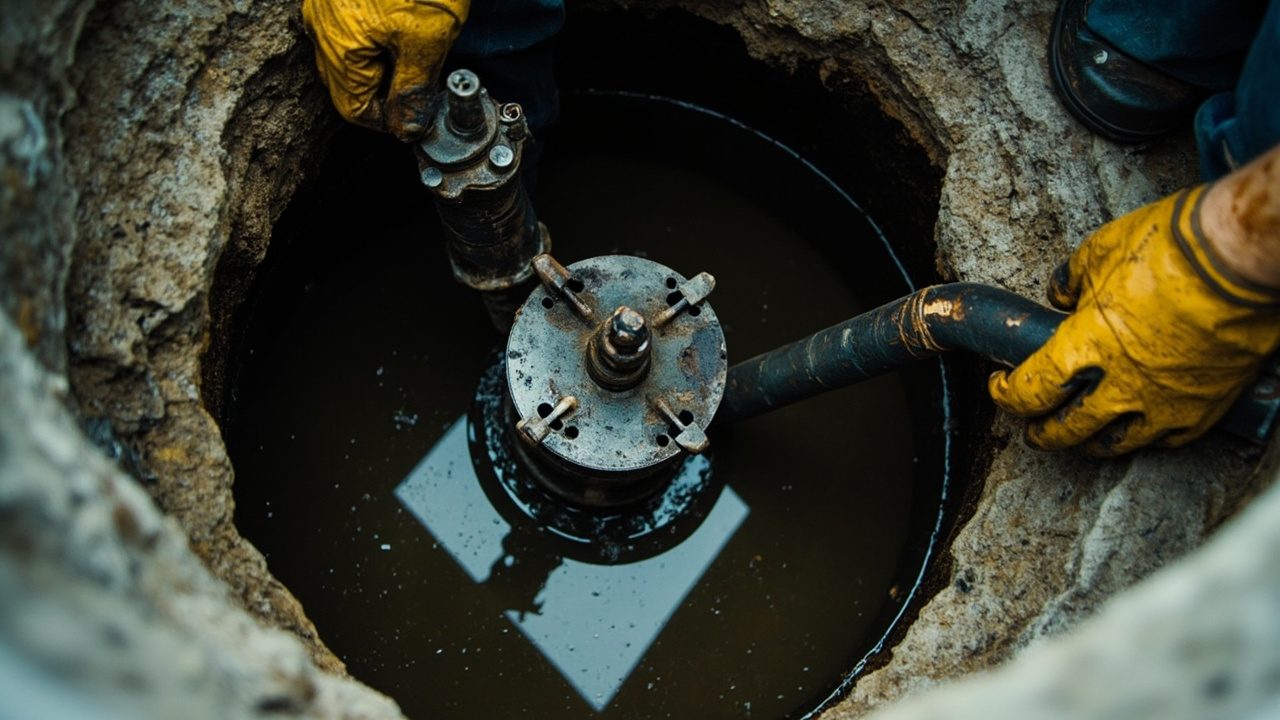
Your sump pump stopped working, and the first sign is quiet. The pit sits full or rising, the motor makes no hum, or it hums and no water leaves through the discharge line. A silent pump beside a full pit points at power, the float or a dead motor. A humming pump that moves nothing points at a blocked intake, a stuck check valve or a discharge line that cannot pass water. Supply water and weather water behave differently, and that difference sets your urgency. Pressurized supply water runs all night whether anyone is home. Groundwater and storm water arrive only while the ground is loaded, so a pit that keeps rising with every tap closed has a source outside your fixtures or inside a hidden supply line. Sump pump failure flooding starts on the lowest floor, because water finds the lowest slab, the lowest fixture and the lowest drain first.
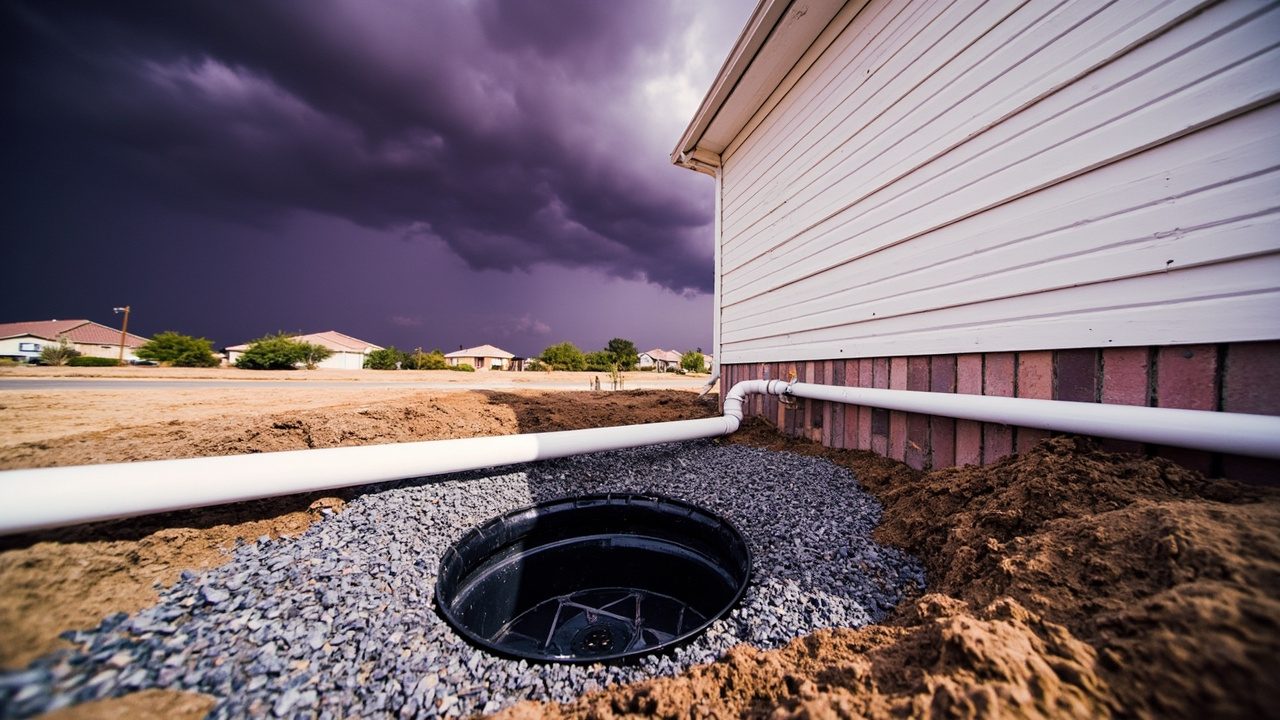
The pattern here is specific. A summer monsoon thunderstorm delivers a short, heavy burst, runoff races off the mountains through arroyos and collects in low streets and dips, and the finer soils of the river valley hold that water against foundations. A pump on household power stops the moment the power does, and a storm that interrupts power does it while the pit fills fastest. After a dry, windy spring, a pump that sat idle for months meets its first real load with a float that has not moved since.
Call today when the pit is full and the pump is silent, and call today when the lowest drain gurgles or holds water while the pit sits low. The second case is a lateral problem: roots at one clay joint catch paper and grease at that spot every day, and then the main backs up into the lowest fixture in the building with no warning.
Your local utility, El Paso Water, publishes service and water-quality information every El Paso homeowner should know.
Where the water comes from decides what gets replaced
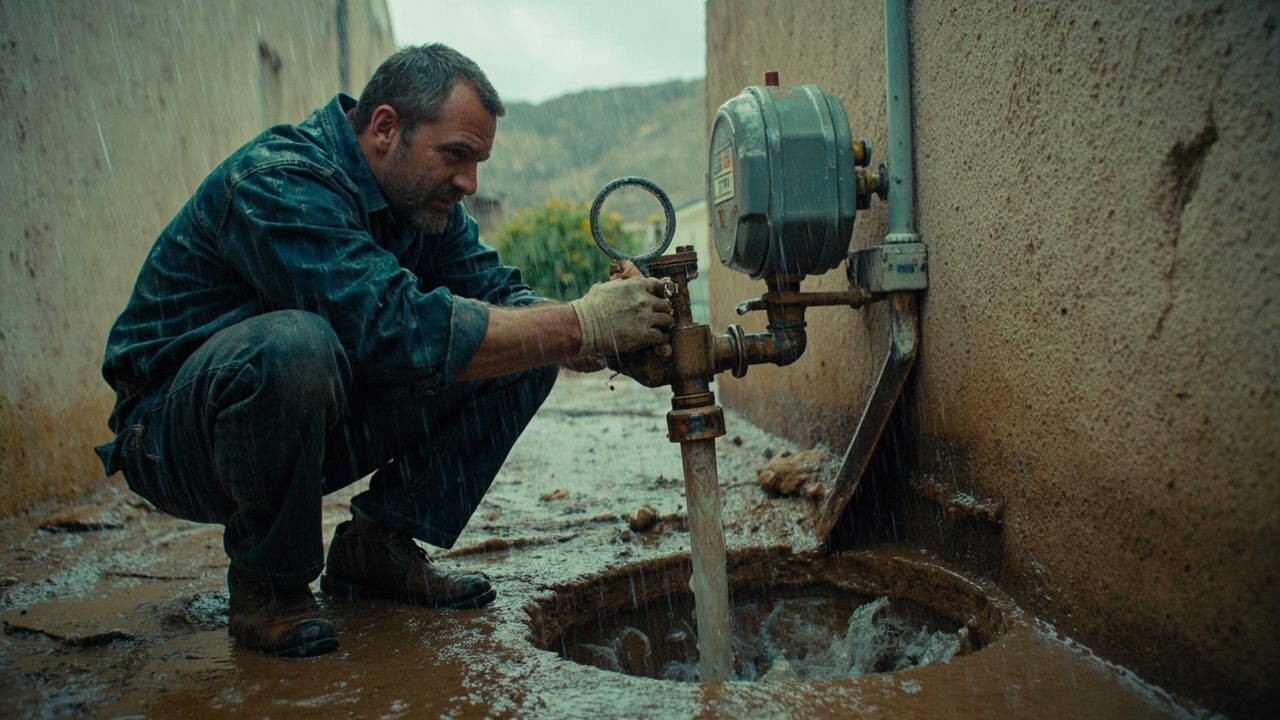
The first visit starts at the water meter, before anyone touches the pump. With every fixture closed, the technician watches the dial or the small leak wheel for fifteen minutes, and the pit level is marked at the start and again at the end of that window. Then the main shutoff is closed and the meter is read again. That sequence separates a house that is leaking from a house that weather is flooding, and it settles what gets opened before anything is opened. Only after the source is placed does the work move to the pump, its power feed, its float and its discharge line.
The reading this page turns on is the meter with every fixture closed. A dial that holds still for fifteen minutes puts the water outside your plumbing, so the job is pump capacity and backup power, and no pipe gets opened. Any movement at all means water is leaving the system somewhere you cannot see, and the pit may be catching a supply leak, which makes the job a leak hunt with the pump as the second question. Movement that continues with the main closed puts the loss on the street side of the meter, which moves the job out to the service line. Nobody replaces a pump on a hunch when that reading has not been taken.
Once the source is placed, selection comes down to three numbers and one condition. Horsepower is sized against the vertical lift plus the pipe run the pump must push through, so a long discharge run to a distant low point asks more of a pump than a short one over the same rise. A cast iron body pump sheds heat better than a thermoplastic body, which matters for a motor that runs for hours through a long storm. A battery backup secondary pump adds a second pump on its own power. The local condition decides between them. In a monsoon storm the outage and the flooding arrive together, so a backup pump matters more than extra horsepower on the primary, and a larger primary on the same dead circuit stops when the circuit does.
If this sounds close but not quite your situation, 24/7 emergency plumbing services may be the better starting point.
Ask which of these readings was taken before any part is replaced.
| Instrument | Good reading | Bad reading | What it changes |
|---|---|---|---|
| Water meter leak indicator with every fixture closed | The dial or the small leak wheel does not move over fifteen minutes | Any movement at all with the whole house off | Water is leaving the system somewhere you cannot see |
| Drain camera with a locator | Continuous fall to the main, clean joints | Standing water part way along a level run means a belly | Roots at a joint mean the repair belongs at that joint rather than the whole line |
| Combustible gas detector and bubble solution on gas fittings | No alarm at the fittings and no bubble growing on the joint | Any bubble that keeps growing or any sustained alarm | The appliance valve gets closed before anything else happens |
| Screw on pressure gauge at a hose bib | Static pressure sitting in the 45 to 70 psi range with nothing running | Above 80 psi | Fixtures, supply hoses and water heaters start failing early |
How an emergency pump call runs
Phone questions and meter
On the phone we ask whether the pit is rising, whether the power is on, and where your main shutoff and the pump's breaker are, because those answers decide who goes out first. On site the technician reads the meter with every fixture closed for fifteen minutes, closes the main and reads again, then moves to the pump. You will see the meter cover lifted, the pit level marked and the breaker traced. If the meter points to the drain side, the camera goes in from a cleanout after the line is cleared. The visit ends with the source named on one side of the system.
Approval and pump swap
Once you approve the written scope, the circuit feeding the pump is shut off and the discharge line is isolated first. For emergency sump pump replacement, the old unit comes out, the pit is cleared of grit, and the new pump goes in with a fresh check valve and a float set to swing free. A battery backup secondary pump, if you choose one, gets its own float set above the primary. If a cracked pit or a crushed discharge run turns up, we stop and show you before going further.
Test fill and handover
Before we leave, the pit is filled and the new pump has to start, clear the water and shut off cleanly. Then the meter goes back under the same test as at the start, and the dial has to hold still over fifteen minutes with every fixture closed. We walk you through where the float, the check valve and the breaker sit, and you keep the written scope showing what was found and what was changed.
Why desert storms and hardpan change sump pump work
Which sump work needs a permit is decided by the local building authority, and the final call is theirs. A like for like pump swap in an existing pit usually does not need one, while new discharge routing or a new pit cut into the slab more often does. Inside city limits the city sets the rules, and outside them the county or the neighboring town does, so the same job can carry different steps on two sides of a boundary.
A crew used to wetter climates makes predictable mistakes here. It sizes for constant rain, when rain is infrequent and the pump idles for months, so a dry check valve or a float that stuck after months without moving is the likelier failure. It runs a discharge line across bare ground where intense sun degrades the plastic, or leaves it exposed to a brief hard freeze that splits it, and a pump pushing into a blocked pipe overheats. It points the discharge at a low street or dip where storm water already ponds, and the water returns to the pit within the same storm. It picks a thermoplastic body for a motor that will run for hours in summer heat, and it wires a backup pump to the same circuit as the primary, so one outage takes both.
Ground changes the schedule too. Sandy, gravelly mesa soil over caliche hardpan slows any new pit or buried discharge run, so a scope written for softer soil runs long. Older homes with cast iron drains and clay laterals add a second suspect when the lowest floor is wet, which is why the meter is read before the pump is blamed. A storm produces calls across the county at once, so the first questions on the phone put a rising pit with no power ahead of a dry pit with a noisy motor.
The terrain and local soil conditions mean that what works in one location fails in another. A discharge line that runs downhill into native soil will percolate differently than one that terminates at a neighbor's property line or a street. The depth of the water table, the clay content, and seasonal flooding patterns all determine whether a pit needs annual maintenance or becomes a chronic problem. Winter freeze cycles, summer heat, and the mineral content of groundwater all attack materials and shorten the life of components that were sized for different conditions elsewhere.
See basement flooding pump-out for how the related work is scoped and priced.
What an emergency pump call looks like day to day
Arrival and confirmation
You call and answer three questions: is the pit rising, is the power on, and has water reached an outlet or the panel. Those answers sort the job into an immediate dispatch or a scheduled visit, and calls are answered around the clock. The arrival window is given on the phone, and you get a call when the technician is on the way. If the job ahead of yours runs long, you hear about the change by phone instead of watching an empty driveway.
Floors and pit protected
Before anything comes apart, drop cloths go down along the walking path and around the pit. Standing water in the lowest room is pulled out with a wet vacuum or a temporary pump first, so nobody works in it, and the circuit stays off until the outlet is dry. The old pump, a cracked check valve and any grit leave with us in bags. The last thing we do is fill the pit and watch the new pump cycle and clear it.
What moves the cost
Reaching the pit moves the job furthest, and a pit under a finished floor or a cut slab costs more to reach than an open one. Caliche hardpan lengthens any new pit or buried discharge run, and joining new pipe to old material adds parts and labor. A cast iron body pump and a battery backup add to the job, and you choose both. Night, weekend and holiday dispatch raises the cost of the same work compared with a scheduled visit. You approve the written scope before work starts, including what happens if the opening finds more.
How technicians earn sign off
A new technician rides with a lead before working alone, and the lead signs off on specific tasks: reading the meter with every fixture closed, sizing a pump against vertical lift plus pipe run, and setting a float so it swings free. Code changes are studied as they arrive. On an unusual job, such as a pit that keeps filling with no storm, a second technician looks at it before a scope is written, and the scope carries the reading that justified it.
You Have Questions,
We Have Answers
Standard homeowners policies often exclude a pump that wears out or loses power. Coverage for the resulting water depends on the policy. Many carriers treat groundwater and surface flooding as separate exclusions and offer sump overflow as an added endorsement. Photograph the pit level, the dead pump and the wet items before cleanup, and keep the written diagnosis. Adjusters ask for the cause of the failure, so a documented reading helps separate mechanical failure from a storm loss.
A broken pump is usually treated as maintenance and rarely paid for. Sudden water damage from it may be covered under some policies. Wear, corrosion and lack of upkeep are the common grounds for denial. An endorsement for water backup or sump discharge is what typically changes the answer. Read the policy language on water backup, ask the carrier before discarding the pump, and save the failed unit, since the adjuster may want to see how it failed.
A properly sized pump handles hours of continuous running, but a nonstop cycle shortens its life. Pushing against a restricted line does the same. A motor that runs without stopping usually signals an undersized unit, a stuck float or a check valve that lets water fall back into the pit. Thermal cutoffs in many motors shut the pump off when windings get too hot, then restart after cooling. Repeated trips cook the windings and bearings, so a pump that never rests needs attention.
Call a plumber who handles sump pumps and answers after hours, and an electrician if the panel is dead. Have the pit condition ready, including whether the pit is rising, whether the pump hums, and whether the breaker has tripped. A dead circuit needs electrical repair first, because a new pump on it will not run either.
Most failures trace to five causes: the float switch, the motor, the intake screen, the check valve or lost power. Grit and debris jam the impeller and let the motor draw excess current until it trips. Age matters too, since switches and bearings wear with cycle count. A pump that sits dry for long stretches can also seize from corrosion on the shaft, then draw heavy current when it finally starts.
Flooding follows a pump failure whenever the ground is loaded and inflow exceeds what the pit holds. Pit volume buys only a short window, often minutes during heavy inflow. Water then rises across the lowest slab. Finished flooring, stored boxes and any equipment on the floor take the damage first. Slab homes with no basement see the water at floor drains and door thresholds instead, and the pace depends on how hard the inflow is running.
Most standard homeowners forms cover sudden water damage only with a sump or water backup endorsement attached. Without it, claims for a pump failure are commonly denied. The limits on such endorsements are often set low, so check the amount against the size of your lowest floor. Call the carrier with the policy number before repairs begin, and ask what documentation they require of the failed pump.
Water stops leaving the pit, so the level climbs until it spills onto the lowest floor. A pump that hums but moves nothing may be airlocked or have a blocked intake, while a silent unit points to power, the float or the motor. Cut power to the circuit before stepping into standing water. Pull wet items off the floor and start removing water with a wet vacuum, because carpet padding and drywall wick moisture upward within hours.
Start with a plumber who takes emergency sump calls, then add an electrician if the panel is faulty. Ask the plumber whether the pit is rising and whether the check valve holds. Confirm the person answering can send someone out at night, since storms produce many calls at once. Have your main shutoff location and pump age ready. Ask for a written scope with the reading behind it before work begins.
Why monsoon storms and power loss change sump pump failure locally
El Paso Electric supplies the household current that runs a standard pump, and a monsoon thunderstorm is the kind of short, heavy event that can interrupt it. When that happens the pit is filling from runoff that ran down arroyos and ponded in low streets and dips, and the pump has stopped. The finer alluvial soils of the river valley hold more water than the sandy, gravelly mesas, so a pit in the valley sees a longer, steadier inflow than one on higher ground. A backup pump therefore needs its own battery, sized for how long an outage may last and not only for peak flow. Long hot summers stress the motor, and a plastic body sheds less heat than cast iron. Intense sun degrades exposed plastic discharge line, and a hard freeze during an arctic front splits any that is unprotected, leaving a pump pushing into ice.
Where a permit applies, inspection happens at stages during the work, so the pit, the discharge line and any new connection stay open until the inspector has seen them. Whether a backwater valve or a check assembly belongs on the line is the authority's call, and asking before the pipe is buried is cheaper than digging it up again through hardpan. The age of the house also changes what gets looked at around the pump. Homes from the 1940s through the 1960s commonly have cast iron drains under the slab that crack or corrode and cause slow drains and backups. Slab homes from the 1970s through the 1990s have PVC laterals, and homes from the 2000s have PEX supply with PVC drains. A wet slab in the older group can be a drain fault, so the meter test and, when the meter points to the drain, the camera settle it before a pump gets blamed.
Plumbing Services in The El Paso Area
Explore our service area and locate Bedrock Plumbing El Paso with ease. We're proudly local and serve the surrounding neighborhoods with fast response and honest pricing. Use the map to check our coverage area, or call us and we'll confirm in seconds.
Address:
Bedrock Plumbing El Paso, 221 North Kansas St, Suite 700, El Paso, TX, 79901
Additional Services We Offer
- 24/7 Emergency Plumbing Services
- Basement Flooding Pump-Out
- Burst Pipe Repair
- Emergency Sewer Backup Cleanup
- Emergency Water Heater Repair
- Emergency Water Shut-Off Service
- Frozen Pipe Thawing & Repair
- Gas Leak Detection & Repair
- Main Water Line Break Repair
- Overflowing Toilet Repair
- Rapid Response Leak Repair
- Septic Tank Emergency Pumping
A homeowner can plunge a toilet, swap a braided supply hose and find the main shutoff before anyone arrives. DIY stops at anything on the gas line, anything soldered, anything behind a finished wall or under a slab, and any drain already backed up past a cleanout. A dead panel or a failed breaker is electrical work outside ours, and we say so on the first visit and tell you who handles it.
Before you call, know when the pit began rising and whether the power went out first. If you can reach the panel without stepping in water, see whether the pump's breaker has tripped, and find the main shutoff. Say whether water has reached an outlet and whether anyone is in the house. Any age you have for the pump, and whether a backup unit exists, tells us what to bring.
Last reviewed September 2026 by Dave Parker, Owner.