





What long yard lines and hard water do to plumbing here
A water meter that keeps turning with every fixture closed is the first sign most owners out here get. On acreage the line from the meter to the house is long and buried, and it crosses flat sandy desert soil with caliche layers that slow every trench. A leak in that run never stains a ceiling. It shows up as low pressure at every tap, a dial that will not sit still, or a bill that jumped with nothing visibly wet. Sandy soil does not swell and shrink like clay, but it can settle when soaked, and local soils can carry salts that corrode buried metal fittings.
The houses tell you what is inside them. Rural lots from the 1980s and 1990s hold manufactured homes and owner built houses, with supply lines exposed under skirting and, in some older manufactured homes, original polybutylene that fails at fittings and joints. Site built slab ranch homes from the 1990s and 2000s dominate, with CPVC or PEX supply, PVC drains and long yard lines from the meter. Custom homes on acreage from the 2010s onward carry PEX supply, propane or gas tankless water heaters and larger septic systems. On unincorporated lots every home is its own septic system, so a slow drain often traces to the tank or drain field rather than the house piping.
Water service is tied to the Homestead Municipal Utility District, and some parcels sit on private wells, so the source gets confirmed at each property. A well brings a pump, a pressure tank and its own treatment. Groundwater in far east El Paso County should be treated as hard, and it leaves scale in tank and tankless heaters and in valve cartridges. A hardness test strip or titration kit reads it in grains per gallon, and above about seven is hard while above about ten and a half is very hard. Haciendas Del Norte still has lots selling for new custom homes, where plastic supply lines, on site septic and long runs between house, meter and drain field make a leak hard to find. Tierra Del Este is a master planned slab on grade area inside El Paso city limits, with plastic supply lines on city water and sewer, so a different authority covers it than the county lots next door.
From routine maintenance to shower & bathtub plumbing, the same local crew handles every call.
How Bedrock Plumbing El Paso runs a job on rural lots
Scope on a supply complaint is set by the water meter. With every fixture closed, the leak indicator or dial gets watched for fifteen minutes, and any movement at all means water is leaving the system. On a long buried yard line, that reading tells the technician whether the loss is outside the house before anyone digs, and it keeps a spot repair from turning into a repipe on a guess. The test takes fifteen minutes and points the first opening at the yard or at a wall rather than at both. Static pressure and a hardness reading go into the record on the same visit, so a heater that keeps failing gets traced to the water it is fed rather than replaced twice.
A second technician who did not do the work checks every finished job before the first one leaves the property. That person repeats the meter test with the fixtures closed, re-reads static pressure at a hose bib and looks at each joint that was touched. The check happens with the owner present, so the readings are shown rather than reported. New technicians ride with an experienced one and do not work alone until they read a meter test, a pressure gauge and a bubble test on a gas fitting correctly without prompting.
An unusual job gets a second opinion before the scope is written. A manufactured home with polybutylene under the skirting and a septic tank of unknown age is one example, because the supply, the drains and the tank may each date from a different decade. When a visit turns up work outside the original scope, that item stops, you see it, and it goes into the written scope as its own line for you to approve or decline. Where a wall has to come open, the written scope says in advance what happens if the opening finds more than expected. Buried work gets its own line because caliche and salty soil change the depth and length of the dig.
Need something specific? Our 24/7 emergency plumbing services page breaks down exactly how we handle it in Homestead Meadows North.
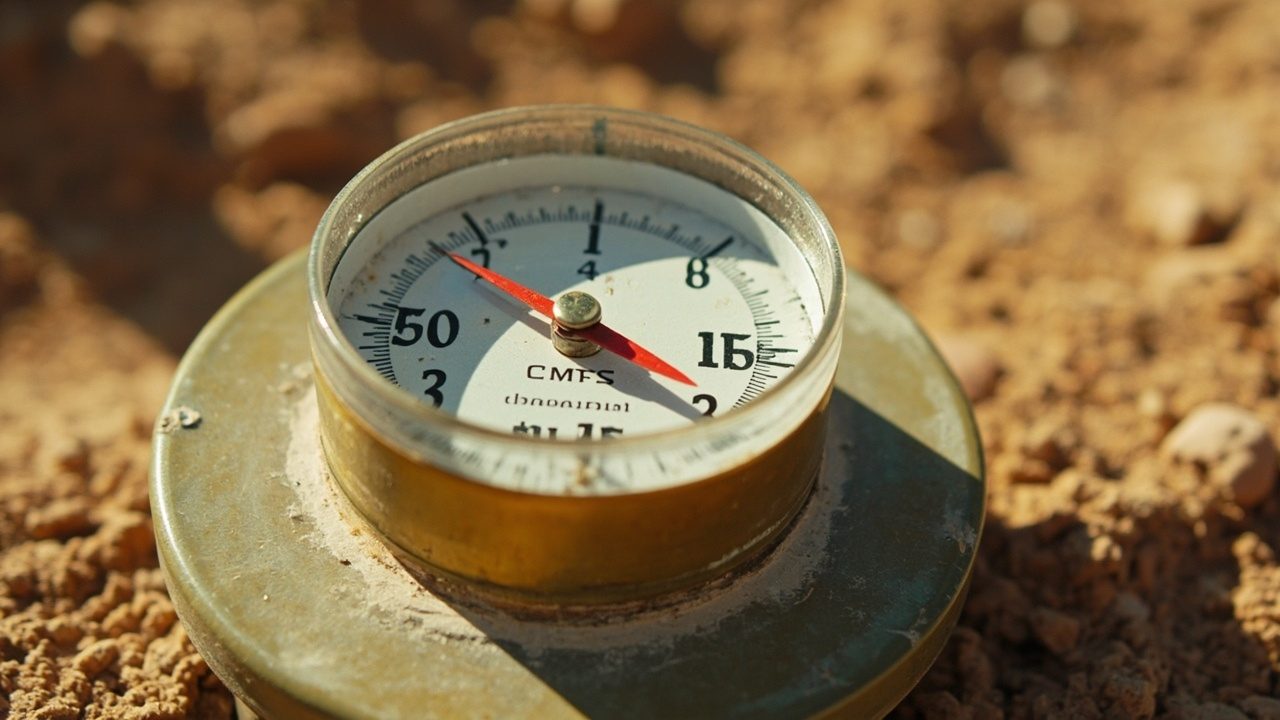
Isolate before opening
Close the main, read the dial again, then close branch stops one at a time until the loss stops. That sequence runs on every supply complaint. A dial that keeps moving with the main closed puts the loss on the service line side of the shutoff, and a dial that stops puts it inside the house. Across long lots, that difference decides whether the first opening is in the yard or in a wall.
Pressure gauge readings
A screw on gauge at a hose bib reads static pressure with everything in the house off. Between 45 and 70 psi is the normal band, and above 80 psi is where fixtures, supply hoses and water heaters start failing early. Leaving the gauge on overnight catches a failed expansion tank, because the morning reading climbs above the night figure when the heater expands water into a closed system.
Code as adopted
Technicians work from the International Plumbing Code as the local authority applies it, and code updates are reviewed and shared before they reach a job. On a water heater replacement or a gas line, that decides venting, the temperature and pressure relief valve discharge and whether a permit gets pulled. On a faucet or flapper swap, it usually adds no paperwork at all.
Rural lot knowledge
As a local plumbing company working the unincorporated east side of El Paso County, we know a manufactured home with supply lines under skirting and a site built slab ranch on PEX fail in different ways and need different access. Long yard lines, caliche and salty soil are routine here. The first look covers the septic side as well as the house piping.
Plumbing work we handle across far east El Paso County
Residential work here is mostly water heater repair and replacement, supply line repair and repipe work, fixture and valve replacement, drain clearing and gas line work inside the home. Slab on grade homes on plastic supply and manufactured homes with exposed runs under skirting need different access, and hard groundwater sits behind many of the heater calls.
Commercial work turns on uptime and records. It covers grease line jetting and maintenance, main line repair, water heater and booster work, restroom fixture programs and scheduled drain service for kitchens. Emergency work covers burst lines, no water, active leaks, sewage backup, failed heaters and after hours response, and the first move changes from diagnosis to isolation at the stop, the main or the breaker.
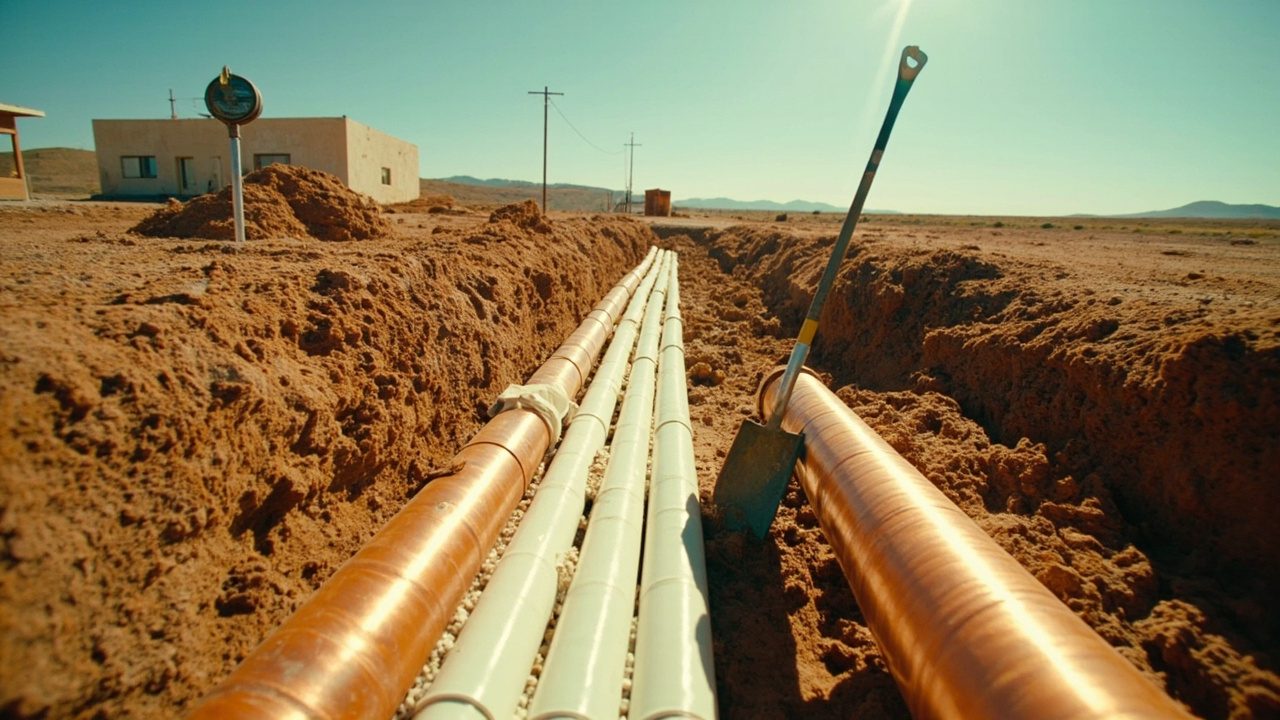
Water heater and supply line repair
Residential work covers leak repair, fixture and valve replacement, water heater repair and replacement, drain clearing, repipe work and gas line work inside the home. A typical call starts with a second shower that runs cold or rusty hot water for the first minute, and it ends with a heater that recovers or a new one sized to the household. On a slab ranch home with PEX supply we often find a 50 gallon tank scaled by hard groundwater and an anode rod pulled to a bare core wire. The grains per gallon reading then drives the next choice. An ion exchange softener removes hardness minerals and needs salt and a drain. A template assisted crystallization conditioner changes how the minerals behave and needs neither, so the reading and the drain location settle it. A tankless swap usually means a larger gas line, new venting and a new condensate path.
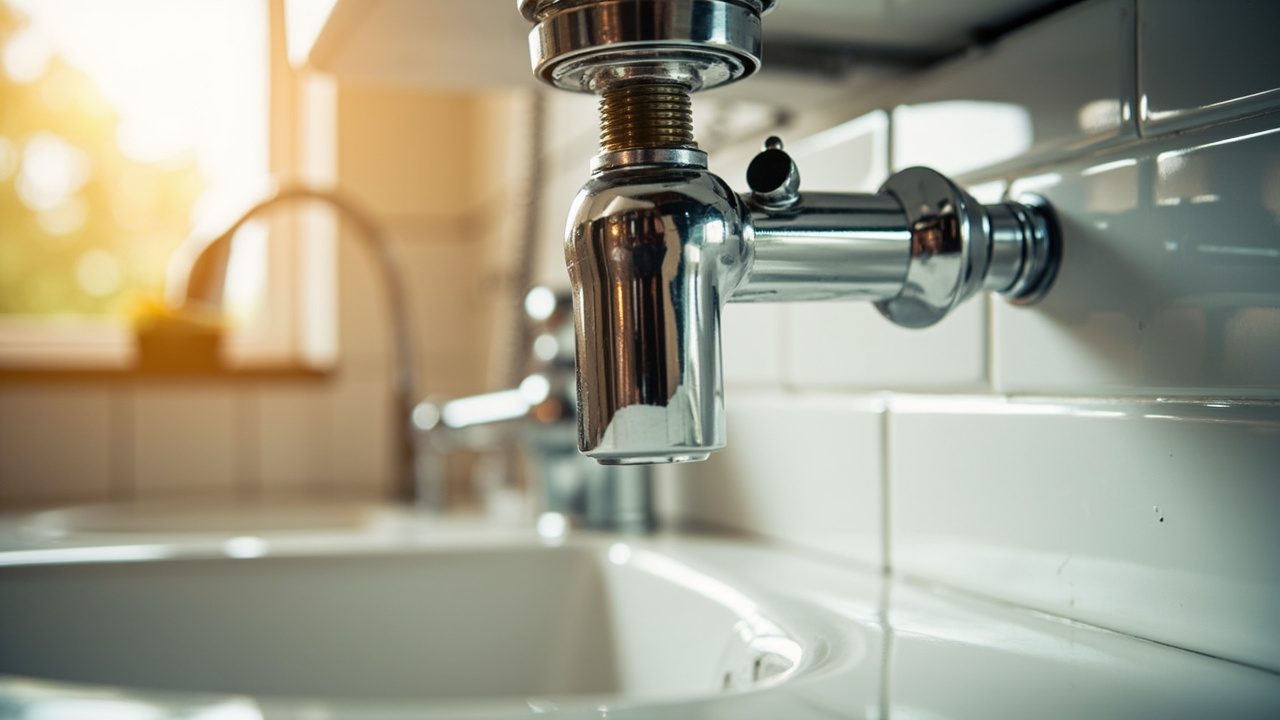
Grease line jetting and main line repair
Commercial work covers grease line jetting and maintenance, main line repair, water heater and booster work, restroom fixture programs and scheduled drain service for kitchens. Scheduling runs around service hours, and water is shut off to one branch where the valves allow. A kitchen branch that backs up when the dishwasher discharges gets jetted, then scoped with a camera from a cleanout, because a full line shows nothing but water. The record holds the camera footage, the locator depth, the pressure reading and the hardness result for the heater. A property manager, a lender or a due diligence reviewer asks for exactly those items. Restroom fixture programs can be phased across budget cycles, and the written scope lists each fixture as its own line.
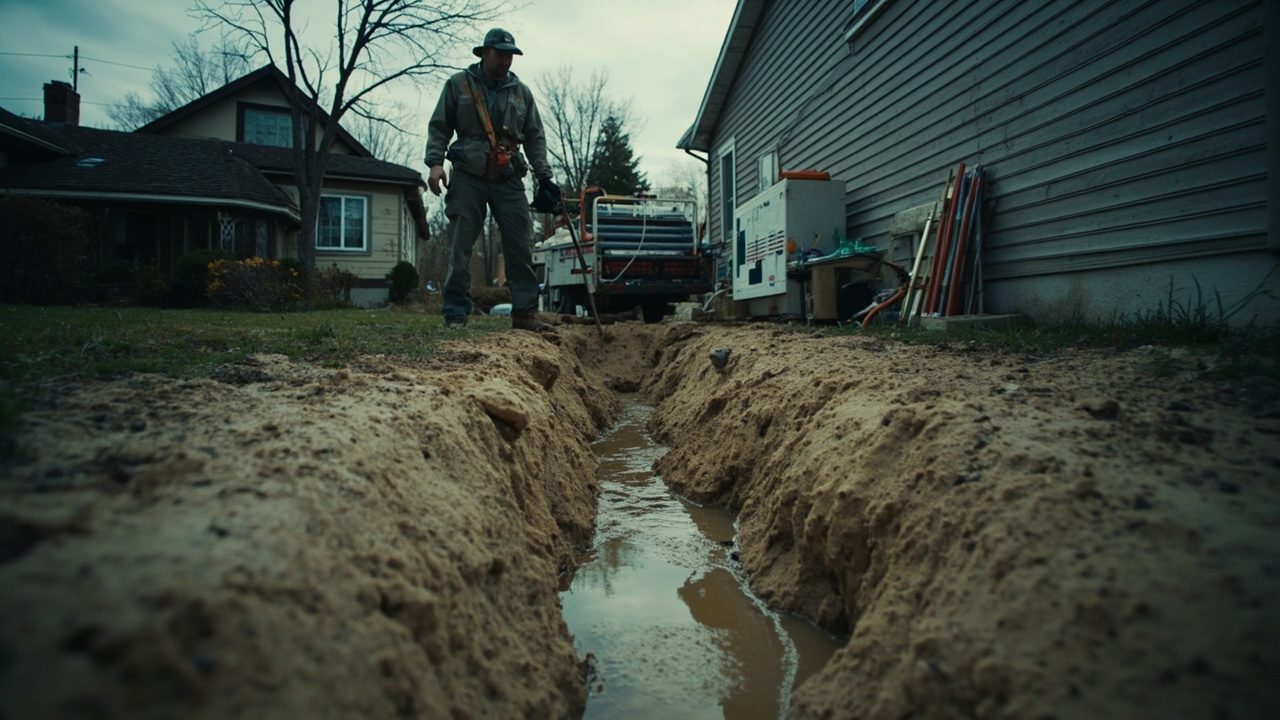
Emergency plumber for burst lines and backups
Emergency work covers burst lines, no water, active leaks, sewage backup, failed water heaters and after hours response. The first move on arrival is isolation, because pressurized water keeps escaping until the stop or the main is closed. On a heater, the cold inlet on top of the tank closes, the gas control or breaker goes off, and a hot tap on a lower floor opens so the tank is not under vacuum. A typical freeze call is a manufactured home with no water at one fixture and a wet patch under the skirting after the thaw. On a sewage backup, all water use stops, people and pets stay out of the wet area, and a full line does not get plunged. If you smell gas, everyone goes outside, nothing gets switched on the way out, and the gas utility is called from outside.
Common plumbing problems on acreage and rural lots here
A meter dial that turns with every fixture closed means pressurized water is leaving the system where you cannot see it. Pressurized water escapes all night whether anyone is home or not, which separates it from a drain that only spills while something upstream runs. On acreage the loss usually sits in the buried run between the meter and the house or in a branch inside a wall or slab. Close the main and read the dial again. If the dial still moves after shutoff, the leak is in the service line. If the dial stops, the leak is downstream of the shutoff.
Call the same day when the dial moves and you can also see damp framing, a soft patch in the yard or a warm spot on a floor. A hairline supply leak behind tile keeps the framing damp because nothing dries inside a wall, and then the pipe repair turns into a wall rebuild. In the yard, caliche layers already slow the trench, and sandy soil that stays soaked can settle around the pipe.
Permit and inspection questions? Planning & Inspections is the office we coordinate with on every permitted El Paso job.
Freeze splits under skirting
A hard freeze overnight splits exposed supply lines under manufactured home skirting, and nothing shows until the ice clears and the line is under pressure again. You see no water at one fixture while the rest of the house works, then a wet patch under the skirting hours after the temperature recovered. Close the main and call the same day. Exposed PVC and PEX outdoors also crack and weaken after long exposure to strong desert sun.
Polybutylene at the fittings
Some older manufactured homes still carry original polybutylene supply, and it fails at fittings and joints. A damp spot at one fitting or a dial that moves with everything off is the sign. The fitting weeps, the material around it stays wet, and the joint eventually lets go under full line pressure. Where the whole run is the same age, the question becomes repeated spot repairs against one repipe in PEX or type L copper.
Buried service line leaks
Low pressure at every tap or a meter that keeps running points at the long buried line from the meter to the house. Water surfaces slowly through sandy soil and sometimes never surfaces, so the dial is the first proof. Salty soil corrodes buried metal fittings, and caliche makes the dig slow, so depth and length decide the repair. Call the same day when the dial still moves with the main closed.
Water heater scale
Hard groundwater leaves scale in tank and tankless heaters, crusts aerators and shortens element life. The signs are a second shower that runs cold and rusty hot water for the first minute. An anode rod eaten to bare core wire means the steel tank becomes the sacrificial metal, and a split tank follows the rust. Flushing and descaling are routine here, and a hardness test settles whether to treat the water before buying another heater.
Find the sign you have, then read across to see whether it can wait.
| Symptom or first sign | What is already happening | What it becomes if ignored | When to call |
|---|---|---|---|
| A hairline supply leak behind tile | The framing stays damp | The pipe repair turns into a wall rebuild | This week, while it is still one part |
| Roots at one clay joint | Paper and grease catch at that spot every day | The main backs up into the lowest fixture in the building with no warning | Now, the same day |
| An anode rod eaten away | The steel tank becomes the sacrificial metal | Rusty hot water arrives first and a split tank arrives after | This week, while it is still one part |
| A weeping angle stop under a sink | The compression nut corrodes so it cannot be snugged | The stop snaps off in someone's hand during a faucet change | Now, the same day |
What the first visit looks like
The first stop is the water meter. With every fixture closed, observe the leak indicator or dial for fifteen minutes to detect any movement that signals an unseen loss. Before calling a plumber, know when the low pressure or high bill started and what changed just before it, such as a freeze, a storm or a new fixture. Find your main shutoff, note whether your water comes from the utility or a private well, and say how old the heater or supply lines are if you know. Tell us whether anyone is in the property.
Independent standards matter too, the EPA's WaterSense program sets the efficiency benchmarks we use when recommending replacement fixtures.
Before we arrive
The person who answers logs what you are seeing, when it started and where your main shutoff sits, then gives you an arrival window. A technician phones as they head to your lot, which matters on acreage where a gate or a long approach can slow the last stretch. Keep your phone on you in case a gate needs opening. If the job ahead runs long, you hear before your window closes.
At your door
The technician gives their name, puts down floor protection before stepping inside, and asks you to show where you first saw the problem and where the main shutoff sits. A walk of the property follows, taking in the meter, the hose bibs and any exposed lines under skirting. You describe the symptom and what changed just before it, and only then does anything get opened.
Before we leave
Before leaving, the meter test is repeated with every fixture closed and shown to you, and static pressure is read at a hose bib with everything off and shown as well. Any opening is closed and cleaned up. You keep a written record of the readings and of what was replaced, and the location of any buried repair is noted on it.
From your call to finished work
Most jobs run one or two visits. The first settles where the water is going, whether that is the yard line, a branch in the slab or a single fixture. A buried repair adds a second visit when caliche or trench depth makes the dig longer than one day. Whether the building loses water for the whole job or only one branch depends on where the shutoffs sit.
Three steps carry the run from the phone to the finished job. The call sets urgency, the diagnosis sets the written scope, and a measurement closes the work.
Call and describe it
The person who answers logs what you see, when it started, what changed just before it, the age of the heater or supply lines, and where the main shutoff sits. Water escaping under pressure or a drain that only spills when a fixture runs decides whether the visit is tonight or tomorrow morning.
Diagnosis and written scope
The diagnosis produces a written scope that lists access and surface restoration, excavation depth and length, repair at one joint against replacing the run, matching old pipe to new, and fixture or heater grade as separate lines. Nothing starts until you approve it. If an opening finds more than expected, the scope already says in writing what happens next.
Finish and verify
Work is done to the adopted plumbing code, then the meter is watched again for fifteen minutes with every fixture closed. Static pressure is measured at an outside faucet and checked against the 45 to 70 psi band. Gas fittings get the detector and the bubble solution. Before the technician signs off, you receive the readings and a record of what was replaced.
Permits, codes and inspections for plumbing work here
El Paso County says state law does not let it issue building permits in unincorporated areas, and it sends building permit questions to its Emergency Services Districts. For a parcel here, that means El Paso County Emergency Services District No. 1 or No. 2, depending on the parcel. A full repipe, a gas line or a main line replacement usually needs a permit, and a like for like repair such as a flapper, an aerator or a braided supply hose usually does not. The final call belongs to the permit authority, and the safe habit is to ask before work starts.
Compliance on a job gets checked by measurement before anyone leaves. Static pressure at a hose bib is read with everything off and should sit between 45 and 70 psi. Above 80 psi, fixtures, supply hoses and heaters start failing early, and a pressure reducing valve is normally fitted, with a thermal expansion tank where the system is closed. The authority decides what a given parcel requires. An overnight hold with the gauge left on shows whether the expansion tank works. Gas fittings get a combustible gas detector to find the spot and bubble solution to prove it, and a bubble that keeps growing means the appliance valve is closed before anything else happens. Drain work gets a camera run from a cleanout after the line is cleared, showing continuous fall to the main and clean joints. Hot water gets read with a thermometer at the farthest tap after the tap runs a full minute. Around 120 degrees balances scald risk against a tank that stays clean, and the setting is the owner's choice.
Materials matter as much as method in this ground and sun. Strong desert sun degrades exposed plastic, so any above ground PVC or PEX needs shielding, and PEX is protected where it passes through framing. Where copper meets steel, a dielectric union separates the two metals. Buried metal fittings face salty soil that corrodes them, which is why joint material gets its own line in the scope. Type L copper tolerates heat directly, PEX A with expansion fittings and PEX B with crimp rings join differently, and a repipe picks between them on joints inside walls and on how the water behaves. Hard groundwater is a materials question too. Scale in a heater and in valve cartridges is handled by flushing and descaling, and by softening or conditioning where the hardness reading lands in the hard range.
The Texas State Board of Plumbing Examiners publishes the rules that govern work like this in your area.
Placing a buried leak
With the loss placed between the meter and the shutoff, the work is to find the spot along the run before any trench opens. A locator gives the path and depth of the line, and listening gear narrows the point. Caliche layers make every extra foot of trench slow, so a pinpointed hole beats a long exploratory cut. Pressure above 80 psi adds a pressure reducing valve and expansion tank to the scope.
What moves the cost
Reaching the pipe and restoring the surface move the number furthest, so a finished wall, a slab or a ceiling below outweighs the pipe itself. On acreage the depth and length of the excavation come next, with whatever has to be cut or moved to reach it. A repair at one point against replacing the segment is the largest fork, and the condition of the rest of that run decides it. Fixture and heater grade come last. Agree in writing what happens if an opening finds more.
Time and benchmarks
A meter test takes fifteen minutes done properly, because a leak wheel that creeps needs the full window to show it. Finished work reads static pressure inside the 45 to 70 psi band at a hose bib, a dial that holds still with every fixture closed, and hot water near 120 degrees at the farthest tap after the tap has run a full minute. That temperature balances scald risk against a clean tank.
Septic and city permit routes
Septic tank installations go through El Paso County Planning and Development, and the county requires approved grading and drainage plans with a ponding area before it approves one. Parcels inside a city's limits go to that city's own permit department. Which office applies depends on the parcel. A drain problem on a septic lot may originate in the underground tank or absorption field, so the repair investigation can start at the permitting office rather than at the house piping.
Meter first, then scope, permit and proof
Answers for Homestead Meadows North Homeowners
Hydrojet a sewer line every one to two years when roots or grease keep building up. Clean walls on camera footage justify a longer gap. A kitchen branch that carries fats usually needs the shorter interval. A line that has never backed up can go longer between cleanings. Jetting with a rotating nozzle scours the pipe wall, and a camera run afterward shows whether scale, roots or a belly in the pipe will bring the blockage back.
A commercial boiler typically lasts 15 to 30 years, with cast iron sections outlasting steel fire-tube units. Water quality sets much of that range. Untreated makeup water leaves scale on heat exchange surfaces, and a scaled surface runs hotter and cracks sooner. Annual tube cleaning, a working low water cutoff and a blowdown routine add years. Repeated leaks at the tube sheet usually mean replacement is closer than another repair.
Boiling water rarely clears a shower drain because hot water only softens hair bound in soap scum. Water at 212 degrees can also soften PVC joints and loosen the slip fittings under a tub. Pour it only down cast iron or metal. A drain snake or a hair catching tool pulls the mass out. A clog that returns within days sits deeper in the line.
A broken main sends water out at full pressure, so taps lose pressure or the house goes dry. Closing the main valve stops the flow, and the meter dial confirms it by holding still. Water left running erodes the soil around the pipe and can undermine a slab edge. Then the pipe gets located, the break is exposed, and a section is replaced with new pipe and fittings.
Commercial water heaters most often fail from sediment buildup, a corroded anode rod, and undersized recovery during peak demand. Sediment insulates the burner from the water, so the tank runs hot at the bottom and pops or rumbles on each cycle. Failed thermocouples, scaled elements and stuck temperature and pressure relief valves follow. Recirculation loops add another failure point when a pump or check valve sticks and the farthest tap stays lukewarm.
Servicing a tankless heater costs more with a full descaling and less with an inspection alone. The main drivers are how hard the water is, how long since the last flush, and whether isolation valves already exist for a vinegar or descaler circuit. Units without service valves need them added first. Gas models add a combustion check, burner cleaning, and a look at the venting and condensate path.
Cost to fix an overflowing toilet climbs with how deep the blockage sits. A clog in the trap clears with an auger, while one past the toilet flange or in the branch line needs a longer cable or a camera. Pulling the toilet to retrieve a dropped object adds a new wax ring or seal. Water damage to the floor below adds repair work. Close the supply valve behind the bowl first to stop the overflow.
A homeowner cannot legally fix a refrigerant leak, because federal rules restrict handling refrigerants to technicians with EPA credentials. Refrigerant is also a pressurized chemical that can freeze skin and displace air in a closed space. Signs include ice on the evaporator coil, hissing at a line set and cooling that fades. Turn the system off to protect the compressor, and call an HVAC contractor who handles refrigerant.
Shut off the main valve first, then open a low faucet to drain the pressure in the lines. Turn off the water heater's gas control or breaker if the leak is near it. Move belongings away from the wet area, and catch drips in a bucket. Photograph the damage. A pinhole spray can be slowed temporarily with a rubber pad and hose clamp. Then have a plumber repair the pipe.
Plumbing Services in The Homestead Meadows North Area
Explore our service area and locate Bedrock Plumbing El Paso with ease. We're proudly local and serve the surrounding neighborhoods with fast response and honest pricing. Use the map to check our coverage area, or call us and we'll confirm in seconds.
Address:
Bedrock Plumbing El Paso, Homestead Meadows North, TX 79901
Clearing a toilet with a plunger, cleaning an aerator, swapping a flapper or a braided supply hose, draining a hose bib before a freeze and closing the main are homeowner jobs. DIY stops at anything soldered, anything on the gas line, anything behind a finished wall or under a slab, and any drain already backed up past a cleanout. Refrigerant leaks fall outside plumbing, and if a visit turns one up, we say so then and tell you who handles it.
Last reviewed September 2026 by Dave Parker, Owner.