





What mesa pressure and blended water do to plumbing here
Water in Horizon City is groundwater from district wells. Brackish, high mineral water from one well field goes through a reverse osmosis treatment plant, and water from a separate desert well field is chlorinated before it enters the system. How the district blends the two sets the mineral load at your tap, so hardness varies, and the annual water quality report is where the blend is published. A hardness test at your own tap settles what scale your heater element will see. Pressure varies as well. The district relies on elevated storage tanks and pump stations across the mesa, so a static reading on one street can sit well away from the reading two streets over. A gauge on a hose bib with the whole house off reads it, and anything above 80 psi is where fixtures, supply hoses and water heaters start failing early.
Housing decides which pipe carries that pressure. Most homes are slab on grade, and the newer ones, from the 2000s on, run plastic drain and waste lines under the slab with mostly plastic supply. Houses from the 1970s through the 1990s may still have original copper or early plastic supply, fixtures near replacement age and under slab drains that were repaired in part. Manufactured homes of mixed ages keep supply and drain lines under the floor behind skirting, where a gap lets a hard freeze in. Strong sun cracks exposed plastic pipe on roofs and exterior walls after years of exposure, and caliche hardpan slows trenching for laterals and service lines.
Three parts of town show these differences plainly. Emerald Estates, built from the 1970s through the 1990s with later infill, has the best chance in town of original copper or early plastic supply lines that have reached replacement age, so a second pinhole in one run there usually means replacing the run. Agua Dulce grew gradually from the 1970s and takes water from the district but sits outside town limits, so a job there goes to a different permit authority than a job inside the town. Paseo del Este, a master planned area from the 2000s onward, sits under City of El Paso jurisdiction, so permits there also go to a different authority even though it is a short drive away.
Our technicians follow the workmanship standards promoted by the Plumbing-Heating-Cooling Contractors Association.
How Bedrock Plumbing El Paso works in Horizon City
Scope on every job starts with a measurement. Before a valve, a heater or a section of pipe is priced, a screw on gauge goes on the hose bib with everything in the house off, and the static reading goes into the job notes. Readings in the 45 to 70 psi range leave a pressure reducing valve out of the scope, and readings above 80 psi bring one in. On the mesa that number differs from street to street because of the elevated tanks and pump stations, so a reading from a neighbor or an earlier job is never carried over. A hardness test at your tap goes beside it, and the district's annual water quality report is checked before anyone recommends treatment equipment or heater maintenance.
A second person checks the finished work. A senior technician who did not perform the job reviews the repeated readings and the photographs against the written scope before the job is closed. New plumbers ride along, then demonstrate soldering, a gas fitting leak check with detector and bubble solution, and a gauge and meter read to a senior technician before they work alone. Those demonstrations happen on live systems with the same instruments that go to customer homes. An unusual job, such as a leak under a slab or a lateral in caliche, gets a second opinion from another senior technician before the scope is written.
When a visit turns up something outside the original scope, work stops on that part. You see it, the written scope gets a new line with the reason, and you approve or decline it before anyone continues. If the gauge reads normal and the heater valve still drips, the search moves to the expansion tank and the heater itself, and the scope changes with it. Nothing found is priced before it has been seen.
One of our most-requested services here is plumbing services, see that page for pricing and process.
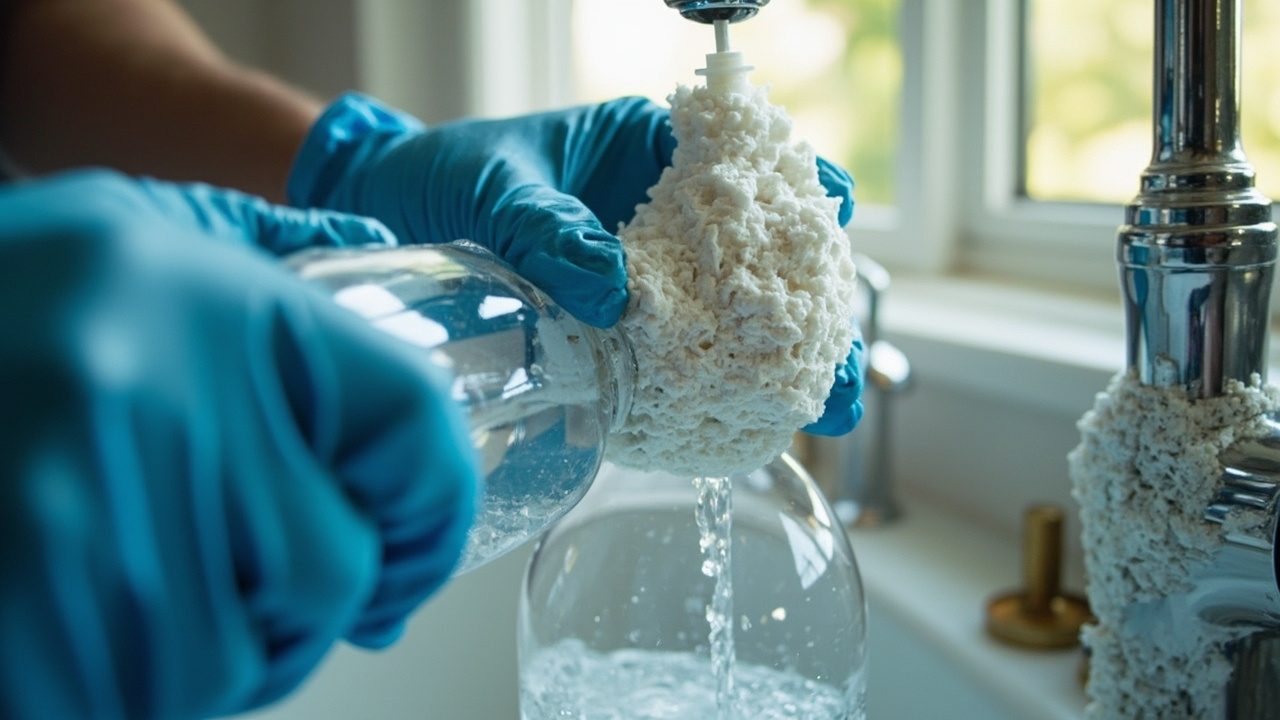
Overnight pressure hold
When a heater valve weeps, the gauge stays on the hose bib overnight. A morning reading far above the night figure means the heater is expanding water into a closed system with nowhere to put it, which points to a failed or missing thermal expansion tank. Street pressure on the mesa already varies, so this check separates a high supply from a heater that is pushing its own pressure up. Both get found in the same visit.
Meter leak test
The water meter leak indicator is watched for fifteen minutes with every fixture closed. A dial or leak wheel that stays still clears the supply side. Any movement means water is leaving somewhere out of sight, and closing the main and watching again puts the loss on the street side if the dial keeps turning. That answers a doubled water bill with nothing wet before a wall or a slab is touched.
Code currency
Every technician works from the International Plumbing Code, and local amendments are confirmed with the permit office before a permit job starts. On a heater replacement that review covers how the relief valve is piped and whether an expansion tank belongs on the system. The review happens before the truck leaves, so the materials on board match what the inspector will look at.
Mesa housing knowledge
Slab houses with plastic under the slab, older copper supply, and manufactured homes with lines behind skirting each fail in their own way, and knowing which one you live in shapes what goes on the truck. Caliche under a yard means a lateral repair may need different equipment, so that question comes up on the first call. Familiarity with the local water blend means scale and pressure are read before a part is blamed.
Plumbing work we handle across Horizon City
Residential work here is mostly water heaters, supply leaks and fixture valves on slab houses, with gas line work inside the home and sump pumps where a property needs one. Commercial work turns on schedule and documentation, meaning grease line jetting, main line repair and scheduled kitchen drain service around service hours. Emergency work covers burst lines, no water, active leaks, sewage backups and failed heaters at any hour, and the first move is isolation.
If you hire a plumber in Horizon City, the tiers differ in equipment and access. Residential visits bring a gauge, a thermometer and a meter check. Commercial visits bring hydro jetting and a camera with a locator, run on a schedule that suits the kitchen. Emergency calls arrive ready to close stops and shut the main. Caliche slows excavation on every tier, and garage heat wears heaters faster in all of them.
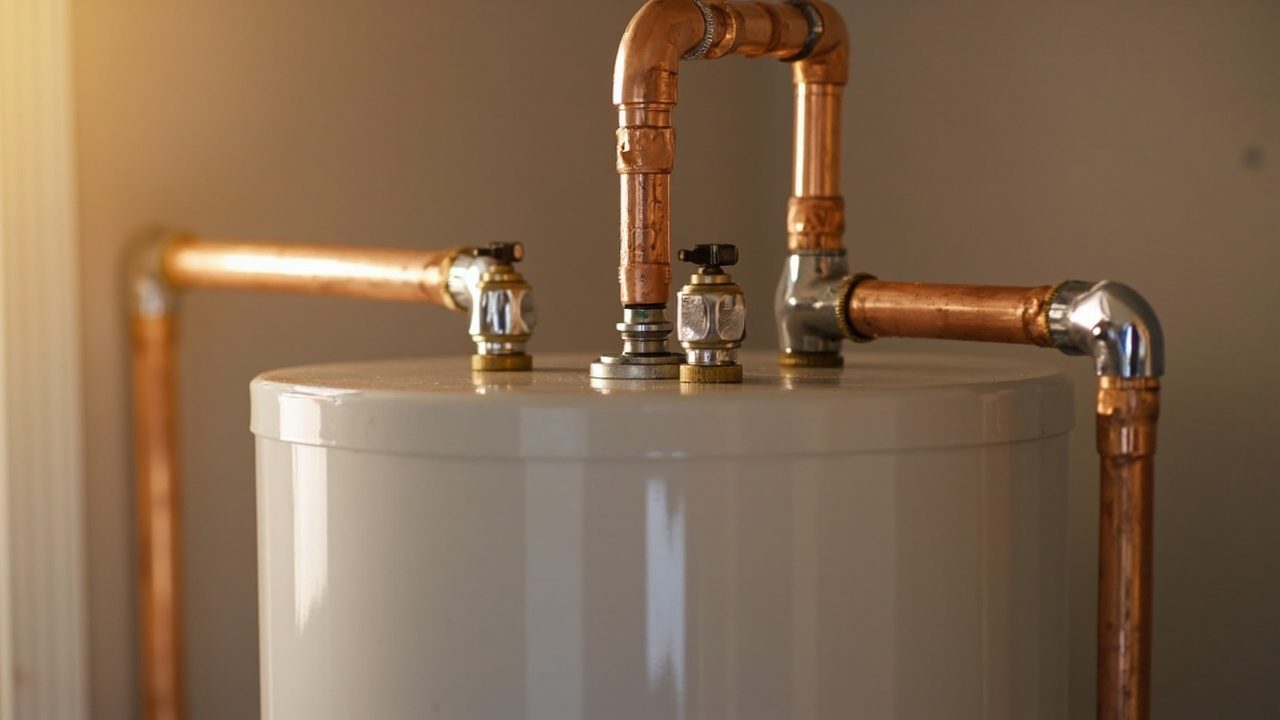
Water heater repair and replacement
Residential work covers leak repair, fixture and valve replacement, water heater repair and replacement, drain clearing, repipe work, sump pumps and gas line work inside the home. Heaters in hot garages wear faster, so they make up a steady share of calls. A tank is judged on gallons and first hour rating, and a tankless unit on gallons per minute at a set temperature rise, with a swap usually adding a larger gas line, new venting and a different condensate path. A typical call starts with a weeping relief valve on a 50 gallon tank. The gauge reads above 80 psi, the anode rod pull shows a bare core wire, and the scope adds a pressure reducing valve and an expansion tank. Pulling the rod needs headroom above the tank, so clearance is checked first.
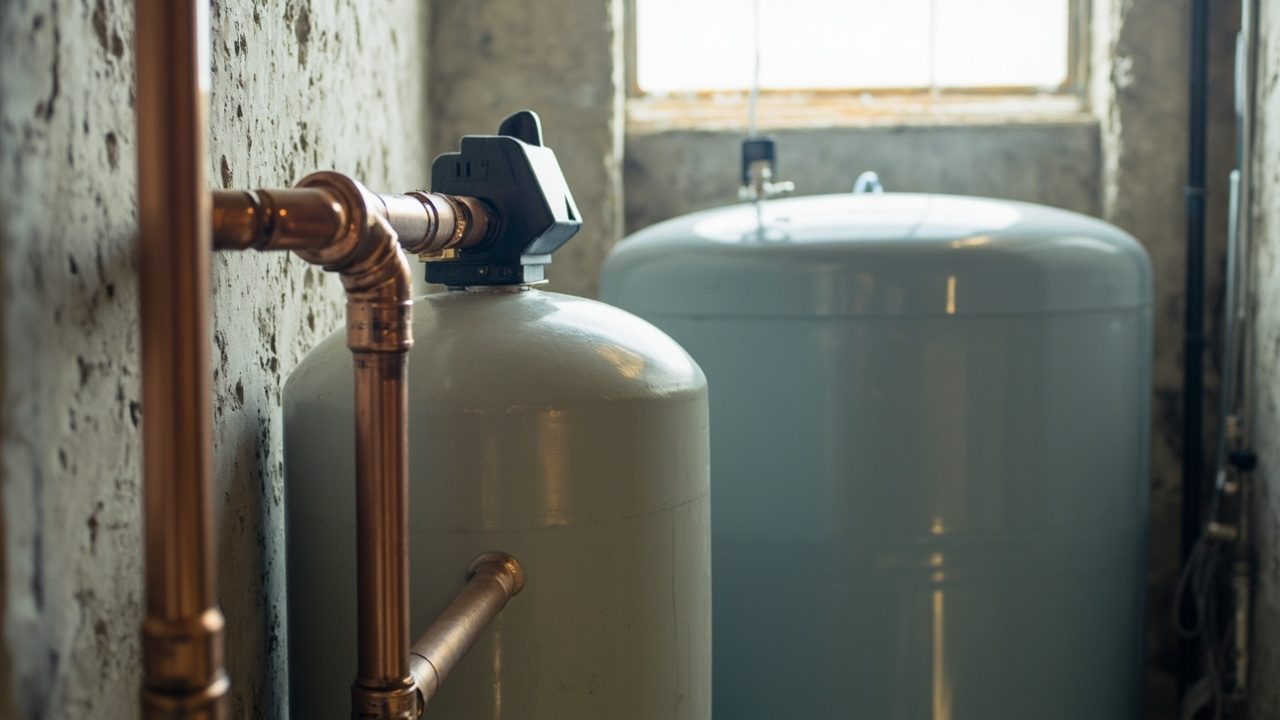
Grease line jetting and drain service
Commercial work covers grease line jetting and maintenance, main line repair, water heater work, restroom fixture programs and scheduled drain service for kitchens. Scheduling runs around service hours, so a kitchen branch is jetted while the line is idle. Hydro jetting clears the line first, and the camera with locator runs from a cleanout afterward, because a full line shows nothing but water. The documentation covers static pressure readings, camera findings with location and depth, and the written scope, which is what a property manager, a lender or an insurer's adjuster asks to see. A kitchen line backing up into the lowest floor drain is usually grease at one branch, and the camera shows which branch and how far along it sits.
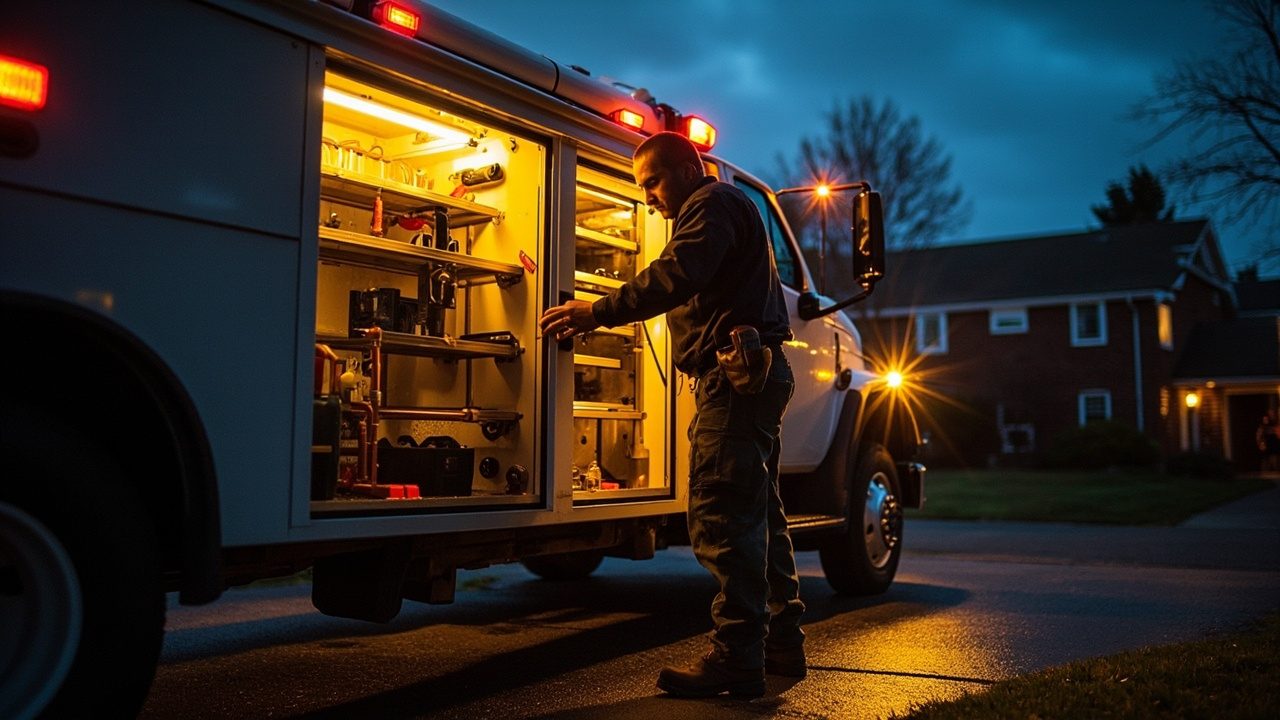
Burst line and after hours response
Emergency response includes burst lines, no water situations, active leaks, sewage backups and failed water heaters round the clock. An emergency plumber in Horizon City starts with containment. After a hard freeze splits a hose bib, shut the water off at the fixture stop or at the main where the line enters the house. If water has reached outlets, a panel or a ceiling fixture, kill that circuit before anyone steps into the water. On a heater failure, close the cold inlet on top of the tank, turn the gas control or the breaker off, then open a hot tap on a lower floor so the tank is not under vacuum. If you smell gas or rotten eggs, do not touch a switch or a phone charger. Get everyone outside, leave the door open behind you, and call the gas utility from outside. For a sewage backup, stop every water use in the building and do not plunge a line that is already full.
Plumbing problems the mesa produces most
A relief valve dripping at the top of your water heater is the symptom to read carefully here. The district feeds the mesa from elevated storage tanks and pump stations, so incoming pressure sits high on some streets, and a heater on a closed system has nowhere to put the water it expands while heating. Pressure climbs on every heating cycle, the temperature and pressure relief valve lifts slightly, and its seat begins to weep. Replacing the valve alone leaves the cause in place.
Call today when the valve drips and a gauge on the hose bib reads above 80 psi with everything off. The valve seat keeps wearing, the tank seams work harder on every cycle, and the heater fails years before it should. A screw on gauge threads onto the hose bib, and reading it with the whole house off gives the static number.
From routine maintenance to shower & bathtub plumbing, the same local crew handles every call.
Freeze damage to exposed lines
Hose bibs, irrigation backflow assemblies and cooler supply lines burst in a rare hard freeze because a mild winter leaves them uninsulated. The sign is no water at one fixture while the rest of the house works, then a ceiling stain after the temperature recovers and the pipe is under pressure again. Call the same day once a stain appears, since a split line keeps flowing until the main is closed. Draining a hose bib before a freeze is a job you can do yourself.
Supply lines at replacement age
Slab houses from the 1970s through the 1990s can still carry original copper or early plastic supply. The signs are a water bill that doubled with nothing visibly wet, or one warm spot on the floor, which is the hot line under the slab. A meter dial turning with every fixture closed confirms water leaving under pressure. A second pinhole in one run means replacing the run, and a leak behind tile keeps framing damp until a pipe repair becomes a wall rebuild.
Caliche and drain backups
Caliche hardpan layers make trenching for laterals and service lines slower and change the equipment a job needs. One fixture slow is a branch or a trap. Every fixture slow with the lowest one backing up puts the restriction on the main, and that is a same day call because the next flush has nowhere to go. A camera run from the cleanout after clearing gives location and depth before any digging starts.
Postponed heater and cooler care
Water heaters in hot garages wear faster, and mineral buildup on elements and valves depends on the local water blend. Rusty hot water in the first minute means the anode rod is spent and the steel tank is now corroding, and a split tank follows. Rooftop evaporative coolers add a seasonal water line that needs draining and shutoff before winter, and a float valve left wet in a freeze splits. Call when rust shows up in the hot tap.
Find the sign you have, then read across to see whether it can wait.
| Symptom or first sign | What is already happening | What it becomes if ignored | When to call |
|---|---|---|---|
| Incoming pressure above the normal band | The relief valve on the heater starts weeping | The tank seams work harder every cycle and the heater fails years before it should | This week, while it is still one part |
| A toilet that runs after flushing | The flapper lets the tank refill all night and the fill valve cycles constantly | The valve wears and sticks open with the overflow carrying it away unnoticed | This week, while it is still one part |
| A weeping angle stop under a sink | The compression nut corrodes so it cannot be snugged | The stop snaps off in someone's hand during a faucet change | Now, the same day |
| An anode rod eaten away | The steel tank becomes the sacrificial metal | Rusty hot water arrives first and a split tank arrives after | This week, while it is still one part |
What the first visit looks like
The first stop is your hose bib, where the gauge reads static pressure with everything off, and the meter check that follows takes fifteen minutes. Those two readings decide whether the fault sits in a fixture, a heater or the line. Before you call, know what you are seeing and when it started, what changed just before, how old the heater is, where your main shutoff sits, and whether anyone is in the house. Finding the main shutoff and the fixture stops beforehand means the first minutes on site go to reading.
Need something specific? Our 24/7 emergency plumbing services page breaks down exactly how we handle it in Horizon City.
Word before arrival
The person who answers logs what you are seeing, the heater age and the location of your main shutoff, then gives you an arrival window. When the technician is close, you hear about it before they reach your door. If the job ahead runs long, the window moves and you learn that day, so nobody waits at a window guessing. Gate codes, pets and parking are all worth mentioning on the call.
Arrival and walkthrough
The technician gives their name, puts down floor protection before stepping inside, then asks you to show the fixture, valve or heater and to describe what you have seen. The walkthrough covers the symptom before any tool comes out. Nothing is opened until the main shutoff and the fixture stops are located. Pets and children are kept out of the work area.
Handover and cleanup
Before leaving, the static pressure reading is repeated at the hose bib and shown to you. The meter dial is watched with every fixture closed, the relief valve outlet is checked for drips, and the thermometer read at the farthest hot tap after a full minute of running is shown to you. Floor protection comes up, debris leaves with the technician, and you keep the written scope with the readings recorded on it.
From first call to finished plumbing work
A job that stays above the slab and behind no finished wall can finish on the first visit. One that needs a surface opened or a part ordered takes a second, and access decides which, since a finished wall, a slab or a caliche trench each change what has to be opened and restored. Water stays on to the rest of the building wherever a branch can be closed at its own stop.
Three steps carry the work. The call logs the problem, the diagnosis produces a written scope, and testing confirms the finished work before signoff.
What the call logs
The call logs what you see, when it started, what changed just before, the age of the heater and where the main shutoff sits, plus whether anyone is in the house. Those answers decide how the technician is set up before arrival, whether that means a gauge and meter check or camera equipment and a plan for isolating a branch.
Diagnosis and written scope
Diagnosis starts at the meter and the hose bib, then narrows by closing stops and branches until the loss stops. The written scope lists the repair, any pressure reducing valve or expansion tank, access and surface restoration, and permit work as separate lines. Nothing starts until you approve it, and anything found behind a wall is handled by a line agreed in writing beforehand.
Testing and signoff
Work is built to the plumbing code the permit authority applies, then the gauge goes back on the same hose bib and is compared with the reading recorded at the start. Static pressure should sit in the 45 to 70 psi range with nothing running, the overnight hold should match the night reading, and the meter dial should stay still for fifteen minutes before signoff.
Permits and inspection for plumbing work in Horizon City
Building Services, part of the town Public Works Department, issues plumbing permits on a separate plumbing permit application and inspects the work. A full replacement scope, such as a repipe or a main line replacement, needs a permit, and a like for like repair, such as a faucet or a flapper, usually does not. Gas work and main line work draw permits more often than fixture swaps. The final call belongs to the permit authority, so a question about your specific job goes to them before work starts. Jobs on unincorporated county land next to town go to a different authority.
Compliance shows up in what gets tested before anyone leaves. A repair that stays under pressure is watched on a gauge overnight, a gas fitting gets the electronic detector to find where to look and bubble solution to prove the joint, and any relief valve discharge is checked for a clear path. When the inspector arrives on the permit authority's schedule, the test readings are already written on the scope. The items an inspector checks and the stage at which they check them are set by the authority for each scope, so ask their office for those details on your job.
Materials standards decide whether a repair holds. Soldered type L copper suits runs that see heat directly. PEX comes as PEX A with expansion fittings or PEX B with crimp rings, and either one stays out of sunlight and gets protection where it passes through framing, which matters on a mesa where strong sun breaks down exposed plastic. Where copper meets steel, a dielectric union goes in. Where cast iron meets plastic, a no hub band makes the transition and glue has no place in that joint. Static pressure above 80 psi is where a pressure reducing valve is normally required, and a thermal expansion tank belongs on a closed system beside it.
Buried work brings its own standard. Caliche hardpan makes trenching and bedding slower, and a plastic lateral needs clean bedding around it once the trench is open. Depth, length and what sits on top decide between cured in place lining, pipe bursting and open trench replacement. Lining needs a host pipe that is still round and loses a little inside diameter, while open cut restores full diameter and lets slope be corrected.
The Texas State Board of Plumbing Examiners publishes the rules that govern work like this in your area.
Isolating a leak first
Finding a leak starts with halving the system. With everything off, the meter is read, then the main is closed and the meter is read again, which puts the loss on the street side or the house side. Stops and branches close one at a time until the loss stops. Under a slab, listening gear, tracer gas or a thermal read plus a locator narrows it to a spot, and the choice is breaking the slab at one point or rerouting the line overhead.
What moves the cost
Access moves the cost furthest, meaning a finished wall, tile, a slab or a ceiling below and putting that surface back. Excavation depth and length through caliche raise it, and replacing a whole run costs more than repairing one joint, which the condition of the rest of the run decides. The grade of heater or fixture you choose moves it either way, and after hours calls raise it. Correcting pressure and expansion while a wall is open keeps later work down.
How long good work takes
The meter check takes fifteen minutes and a static reading takes the time to thread on a gauge, but the overnight pressure hold takes overnight, and that step cannot be rushed. A drain is cleared before it is cameraed, since a full line shows only water. Finished work reads 45 to 70 psi static at the hose bib, an overnight reading close to the night figure, and around 120 degrees at the furthest hot outlet after sustained flow.
Water district and utilities
Horizon Regional Municipal Utility District supplies the water, takes the wastewater and publishes annual water quality reports. With the main closed, a meter dial that keeps turning puts a leak on the street side, and the district and the permit authority decide where responsibility sits. Anyone worried about their water goes to that report and to a laboratory test of their own tap.
Pressure read, scope written, work inspected
Answers for Horizon City Homeowners
A plumbing inspection checks the installed work against the adopted code at set stages of the job. Typical stages are rough-in before walls close, when pipe supports, slope on drain lines and joint types are visible, and a final inspection once fixtures are set. Inspectors often want a pressure or air test on supply piping and a water test on drains at rough-in. Traps and vents get checked for size and distance, and water heater installs are checked for relief valve discharge routing and gas connections.
Drain cleaning cost depends on the blocked line, the blockage distance, and the method. A sink trap or single branch clears faster than a main line, and a cleanout near the blockage shortens the job. Roots or heavy grease push the work toward hydro jetting instead of a cable. Lines with no accessible cleanout add time for pulling a toilet to gain entry. Calls outside normal hours raise the total, and a camera inspection adds a line item.
Standard homeowner policies commonly exclude damage from gradual leaks, seepage and long-term moisture that went unrepaired. Flood water rising from outside the home and sewer or drain backup are also frequent exclusions unless a specific endorsement was added. Adjusters look for evidence of a sudden, accidental discharge, so old staining, rusted supply fittings or rotted cabinet bases point toward a maintenance denial. Wear and tear on the failed part itself is rarely paid, even when the resulting water damage is. Read the policy's water backup section.
A gurgling toilet usually signals a venting problem or a partial blockage in a shared drain line. Gurgling that appears when a nearby sink or washer drains suggests the vent stack is blocked or the branch is restricted, since draining water pulls air through the toilet trap. Try a plunger first, then check whether the tub or floor drain also bubbles. If several fixtures gurgle together, the main line is likely partly blocked. A camera run from the cleanout finds the restriction.
Stop the water source first, then rake the soggy area open so air reaches the soil. A yard that stays wet with no rain is often a broken supply line or an irrigation valve stuck open. Close the main and watch the meter dial. If it stops, the leak is on the house side. Once the source is fixed, spread the soil thin, run a fan or leave it in sunlight, and avoid compacting it while it stays soft.
Replacing copper with PEX pays off when copper has developed pinholes, since one pinhole often means thin walls throughout the run. PEX costs less in materials than copper, bends around corners with fewer fittings, and tolerates a mild freeze better because the tubing expands slightly before splitting. Copper lasts long in stable water and handles heat and sunlight better. PEX needs shielding from ultraviolet light and cannot be soldered to existing lines without transition fittings. Weigh access and wall repair, since the labor to open walls drives most of the decision.
A main sewer line is rarely a sensible do-it-yourself job, even where the rules allow homeowner work. The pipe must hold a continuous slope, commonly a quarter inch of fall per foot on smaller diameters, and a low spot creates a belly that collects waste. Trenches deep enough to need shoring carry cave-in risk, and buried utilities may sit close by. Permit rules for sewer work vary by authority, so confirm with the permit office. Camera inspection first shows whether lining or spot repair works instead.
A tub and shower combination needs a trap, a drain, a vent and one valve fed by hot and cold supply. Set the tub on a level base, connect the waste and overflow to a trap sized at one and a half inches, and run supply lines to a pressure balancing or thermostatic valve. Mount the valve at the depth the manufacturer's rough-in sheet gives. Pressure test the supply and fill the drain to check for leaks before closing the wall. Local code and permit rules apply.
Start with an electronic combustible gas detector, which senses gas concentration and beeps faster as it nears the source. Move it slowly along the pipe, fittings and appliance connections, holding it near the joints. Once the detector points to a spot, brush bubble solution over the joint, and growing bubbles confirm the leak. A meter test helps too. Shut off all appliances and watch the gas meter dial, because movement means gas is leaving the system. Leave the building immediately if the smell is strong.
Plumbing Services in The Horizon City Area
Explore our service area and locate Bedrock Plumbing El Paso with ease. We're proudly local and serve the surrounding neighborhoods with fast response and honest pricing. Use the map to check our coverage area, or call us and we'll confirm in seconds.
Address:
Bedrock Plumbing El Paso, Horizon City, TX 79901
Drinking water quality falls outside plumbing work, so a question about what is in your water goes to the district's annual report and a laboratory test of your own tap. Plunging a toilet, cleaning an aerator, swapping a flapper or braided supply hose, and closing the main are homeowner jobs. DIY stops at anything soldered, on the gas line, behind a finished wall or under a slab. Anything outside our scope gets named on the first visit.
Last reviewed September 2026 by Dave Parker, Owner.