





What groundwater and mixed pipe do to Anthony plumbing
Anthony sits in the Chihuahuan Desert on valley floor alluvium, which generally means river deposited sands, silts and clays, with caliche more likely on the higher ground. The soil decides how a repair gets reached. Sand and silt dig by hand near a foundation, while caliche can turn the same trench into a different job with different equipment. No site specific soil survey sits behind this page, so nobody should tell you what lies under your lot before the ground is opened. Summer monsoon storms arrive in short bursts, and the water they leave around a slab is a reason to check low yard cleanouts, not only the fixtures indoors.
The water is the second condition. The Town of Anthony pulls its supply mostly from groundwater wells and treats it at its own plant. The town has posted arsenic notices and a state notice about its lead service line inventory, and those notices are why under sink treatment is a routine request here. The records reviewed for this page leave hardness, the disinfectant used and how aggressive the water is toward copper unconfirmed. Copper pinholes and crusted aerators cannot be predicted from paper, so the incoming water is tested at your own tap before anyone guesses. Questions about what is in the water belong with the utility report and a laboratory test of your own tap.
Housing age sets which pipe you own. La Tuna was the community's earlier name, and it grew mostly after the town incorporated in the 1950s. Houses there are likely to have had their original supply and drain lines partly replaced over the years, so expect mixed materials in a single wall, with old metal, newer copper and plastic meeting at joints that were made by different hands. Each of those joints needs the right union or band, and the first job on arrival is finding where one material hands off to the next.
Farther along in age, ranch homes from the 1980s and 1990s carry plastic drains with copper or early plastic supply. Early plastic gives out at the fitting rather than along the pipe, which puts a slow drip at a connection under a sink or behind a fixture. The newer subdivisions built in the town's recent growth run plastic supply and drain throughout. Their calls tend toward pressure, valve quality and fixture grade instead of corroded pipe. A reading from a screw on gauge at a hose bib tells you which kind of house you are in faster than the year on the deed does.
Need something specific? Our plumbing services page breaks down exactly how we handle it in Anthony.
How Bedrock Plumbing El Paso runs a job in Anthony
Scope on an Anthony job is set by measurement before anyone names a part. The first reading is a hardness test on the incoming water, because hardness for your address is unknown until it is tested and hard water is what crusts aerators, scales heater elements and shortens element life. The jump from moderately hard to hard is where scale starts showing up on service calls. A soft to moderately hard result leaves fixtures and heater alone. A hard or very hard result moves the scope toward treating the water before another heater goes in. Hardness results and pressure readings go on the scope in writing, which lets you check that every line answers a measurement.
Technicians learn the isolation sequence before they work alone. A new technician reads the leak indicator, closes the main, watches again and says aloud which side of the meter the loss is on, all in front of a senior plumber on a live job. Only after that do calls go to them alone. When a job is unusual, such as a joint between old metal and new plastic, a second plumber reviews the plan before work starts. Before any job is called finished, the technician repeats the readings that opened it and shows them to you.
When the opening finds more than the written scope covered, work on the extra stops. You get the finding described with the reading behind it, the change itemized in writing, and the choice to approve it, defer it or decline it. A corroded angle stop found during a faucet change is the usual case, because the stop is what fails next and the faucet is not. Anthony houses can mix pipe from several eras inside a single cabinet, so the plan for each joint gets written before the first cut.
One of our most-requested services here is shower & bathtub plumbing, see that page for pricing and process.
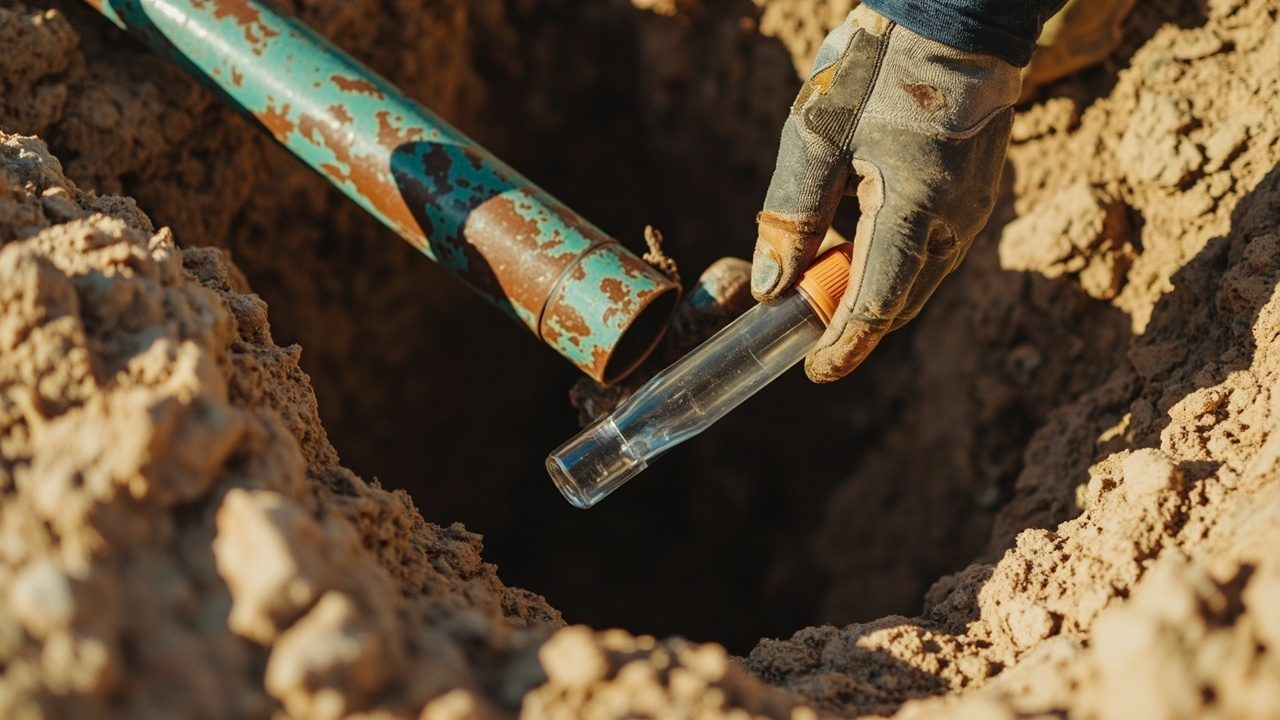
Hardness before scope
Hardness is read on the incoming water at every Anthony visit, since the town's records leave it unconfirmed. A soft to moderately hard result leaves aerators and heater elements alone, while hard to very hard explains scale and short element life. The number goes on the written scope beside each line item, so you can see which work answers the water and which work answers the fixture.
Overnight pressure hold
A screw on gauge at a hose bib reads static pressure with everything off, and the good band runs 45 to 70 psi. Above 80 psi, fixtures, supply hoses and heaters start failing early, and a pressure reducing valve normally belongs on the line. Leaving the gauge on overnight catches a failed expansion tank, because a morning reading far above the night figure means the heater is expanding water into a closed system.
Code cycle practice
Work is done to the International Plumbing Code, and technicians study each adopted change before it reaches a job. That shapes how a water heater swap is set up, including the temperature and pressure relief valve and the thermal expansion tank. Gas work and main line work draw permits more often than a faucet does, and the permit authority has the final say on your address.
Local pipe knowledge
Anthony homes span original metal supply from the decades after incorporation, ranch plumbing from the 1980s and 1990s, and newer plastic systems. The state line also changes which rules apply to an address. Because of that, the first call covers which side of the line you are on and roughly when the house was built, so the technician arrives expecting the right pipe and the right paperwork.
Plumbing work we handle around Anthony
Residential work in Anthony is mostly supply leaks, angle stops and fixtures, water heaters, drain clearing, and under sink treatment installed after the town's arsenic notices. Copper, early plastic and original metal can meet inside one house, so joining materials correctly is part of every repair. If you need to hire a plumber in Anthony for any of that, the first tab below is yours.
Commercial work turns on uptime. Grease line jetting, water heater and booster work, restroom fixtures and scheduled kitchen drain service run around opening hours, and water is isolated to one branch where the layout allows. Emergency work starts with isolation. A burst line, a sewage backup or a failed heater changes the order of the job, since the first task is closing the right stop or the main.

Supply repair and treatment installs
Residential plumbing repair in Anthony covers leaks, fixtures, valves, water heaters, drains, repipes, sump pumps and gas line work inside the home. A typical job starts with a weeping angle stop under a sink and ends with a new stop, a snug compression fitting and a dry cabinet floor. Treatment work sits in the same category. An ion exchange softener removes hardness minerals and needs salt and a drain, while a salt free conditioner changes how minerals behave and needs neither, so the hardness test decides which fits. On point of use treatment, a total dissolved solids reading from the untreated tap is compared with one from the treated tap. A treated reading close to the untreated one points to a system that needs service. On a house from the decades after incorporation we often find an original metal supply stub joined to newer pipe, and that stub is what leaks next.
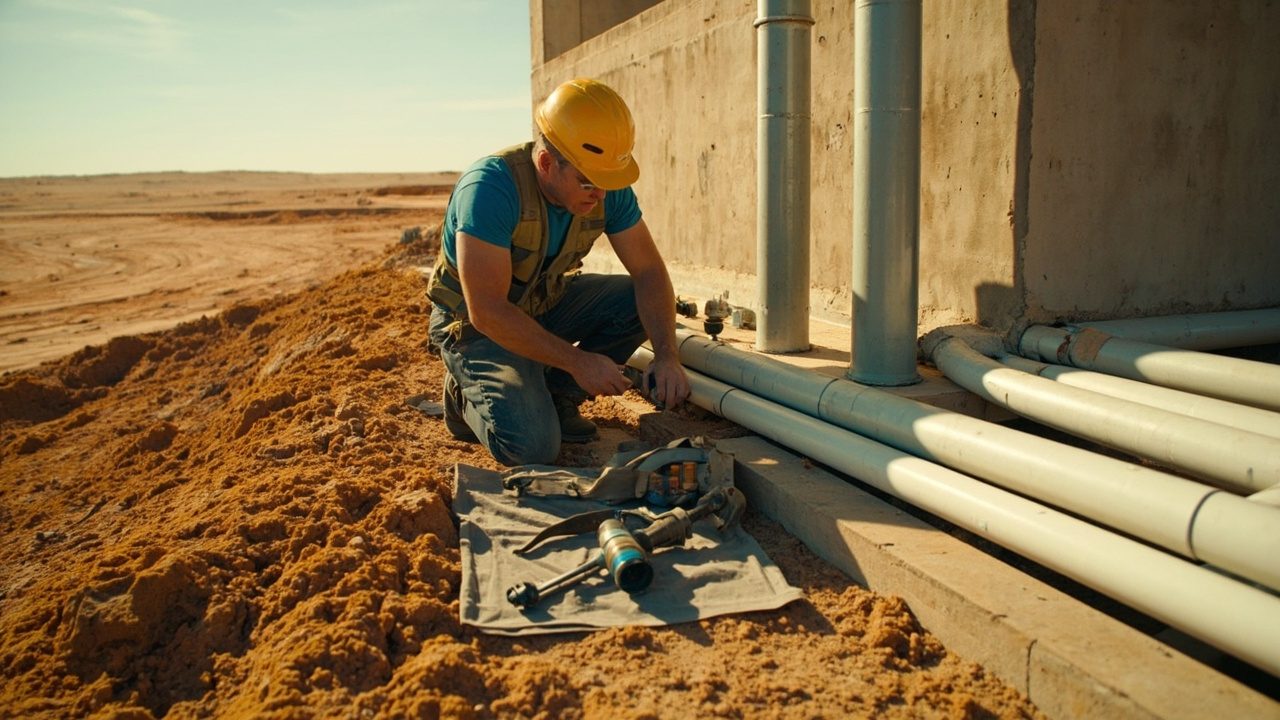
Grease lines and restroom service
Commercial plumbing covers grease line jetting and maintenance, main line repair, water heater and booster work, restroom fixture programs and scheduled drain service for kitchens. Scheduling runs around service hours, with water isolated to one branch wherever possible. Documentation matters as much as the repair. A kitchen line jetted on schedule leaves a camera record of continuous fall and clean joints, a static pressure reading, and a note of what scale showed on the heater. Those records are what a landlord, an underwriter or a due diligence reviewer asks to see. Permit status on gas and main line work is checked with the authority that governs the address, and the state line changes which authority that is. For a manager, downtime is the number to compare, and the repair figure comes second.
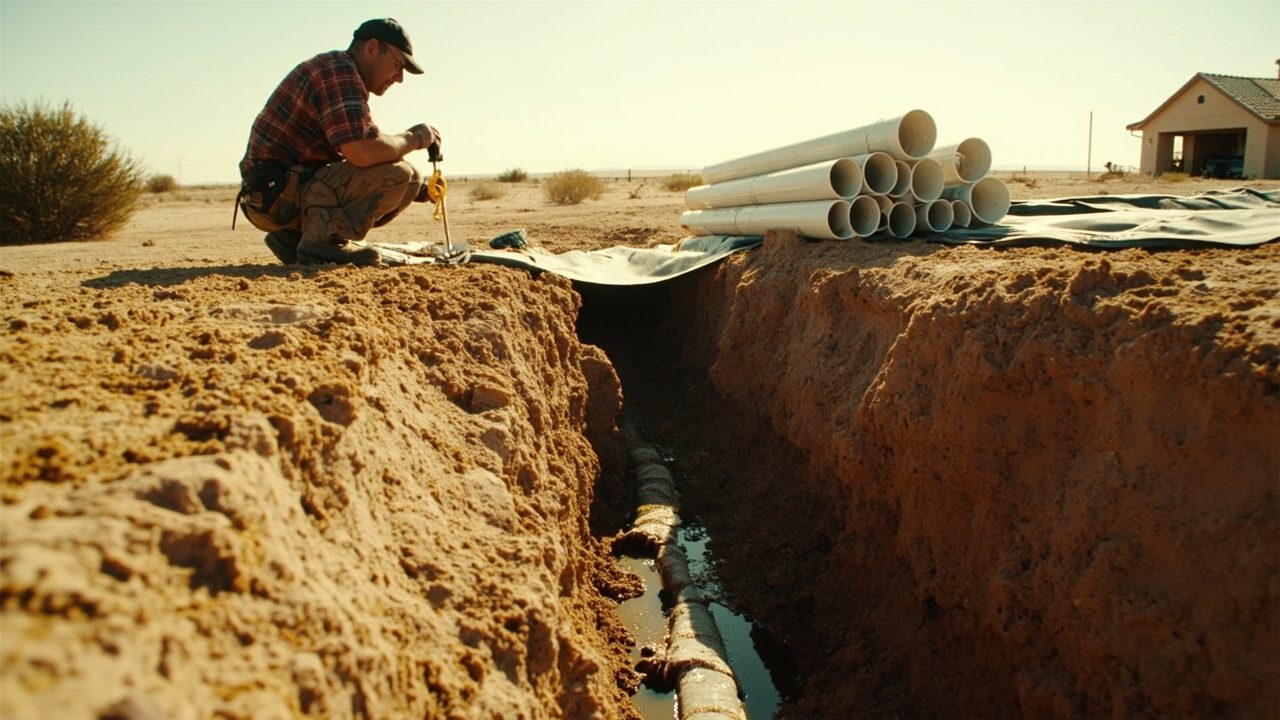
Burst lines and sewage backups
Emergency plumbing covers burst lines, no water, active leaks, sewage backups, failed water heaters and after hours calls. The first move on arrival is isolation, because pressurized water keeps escaping whether anyone is home or not. That means the fixture stop, then the main where the line enters the house or at the meter. On a failed heater, the cold inlet closes, the gas control or breaker goes off, and a hot tap opens on a lower floor so the tank is not under vacuum. For a sewage backup, every water use stops, including the washer and dishwasher, and nobody plunges a full line. If you smell gas, everyone goes outside before anything else, and the gas utility is called from outside. A typical Anthony call is a split hose bib after a cold snap, where the meter dial shows whether the loss is on the house side.
The plumbing problems Anthony homes report most
A weeping angle stop under a sink is the sign this page turns on, because it is the fitting a technician handles on every faucet change and every treatment install. The stop seeps at the compression nut, the brass corrodes there, and a cabinet floor that stays damp never dries. It is a supply fault, so the water sits under pressure and keeps seeping overnight whether anyone is home.
The call now threshold is a sequence. A stop that weeps at the nut means the nut is corroding, a nut that can no longer be snugged means the stop is failing, and a stop that snaps off in someone's hand during a faucet or filter change lets the room take the full supply. Call the same day once the nut is crusted or the stop turns loosely, and close the main shutoff first if it lets go.
From routine maintenance to 24/7 emergency plumbing services, the same local crew handles every call.
Hose bibs split in cold snaps
Hose bibs and exposed outdoor lines are rarely insulated in a desert climate, so the occasional hard freeze splits them at the coldest, least protected point. Nothing shows until the ice clears and the line is pressurized again. Then you see no water at one fixture while the rest of the house works, or a ceiling stain hours after the temperature recovered. Call the same day for either, and close the main first.
Aging original supply lines
Houses from the decades after incorporation can still carry original metal supply that corrodes from the inside and leaks at the joints. A hairline leak behind tile keeps the framing damp because nothing dries inside a wall, and a pipe repair turns into a wall rebuild. Close every fixture and watch the meter leak indicator for fifteen minutes. Any movement with the whole house off means water is leaving somewhere you cannot see, and calling that day keeps the opening small.
Monsoon water at cleanouts
Brief monsoon storms leave standing water around foundations and low yard cleanouts. Whether storm and sanitary lines are separated was not confirmed, so treat water at a cleanout lid as a drain problem and leave the cap on. A drain only escapes while something upstream runs, so a backup that shows when the washer runs or when it rains places the fault on the line. Stop all water use in the building and call.
Treatment systems left unserviced
Under sink treatment installed after the arsenic notices often goes years without a check. Compare total dissolved solids between your treated and untreated water. A treated result matching the untreated one signals the system needs service, and a high untreated result indicates scale risk. Call to schedule the service visit. Water quality questions are answered by your utility and your own laboratory analysis.
Find the sign you have, then read across to see whether it can wait.
| Symptom or first sign | What is already happening | What it becomes if ignored | When to call |
|---|---|---|---|
| A weeping angle stop under a sink | The compression nut corrodes so it cannot be snugged | The stop snaps off in someone's hand during a faucet change | Now, the same day |
| Roots at one clay joint | Paper and grease catch at that spot every day | The main backs up into the lowest fixture in the building with no warning | Now, the same day |
| Incoming pressure above the normal band | The relief valve on the heater starts weeping | The tank seams work harder every cycle and the heater fails years before it should | This week, while it is still one part |
| A toilet that runs after flushing | The flapper lets the tank refill all night and the fill valve cycles constantly | The valve wears and sticks open with the overflow carrying it away unnoticed | This week, while it is still one part |
What the first visit looks like
The first stop is the meter and the nearest hose bib, because a leak indicator that stays still for fifteen minutes and a static pressure reading with everything off sort the problem into supply or drain before anything is opened. The hardness test on the incoming water comes next. Before you call, know what you see, when it started, what changed just before it, and how old the water heater or fixture is if you know. Find the main shutoff, note whether anyone is home, and know which side of the state line the address is on.
Permit and inspection questions? Planning & Inspections is the office we coordinate with on every permitted El Paso job.
Calls and arrival windows
You get a confirmation of the visit when the call ends and a second call when the technician is on the way. If the job ahead runs long, you hear a revised arrival time by phone before the window passes. The phone is the only channel, so the number you called from is the number that gets the updates. Tell the person on the line where the main shutoff is and whether anyone will be home, so the technician can go straight to isolation on arrival.
Who arrives and what happens
The technician gives a name at the door, lays down floor protection before stepping inside, then asks you to show the fixture and describe when the water started doing it. Nothing is touched before that walkthrough. Next the technician closes the fixture stop or the main to shrink the problem to one segment and tells you which segment it is before opening a cabinet or a wall.
Handover and cleanup
Before leaving, the readings that opened the job are repeated and shown to you. That means the meter leak indicator, the static pressure and, on treatment work, the two total dissolved solids readings. Water on the floor is dried, packaging and old parts leave with the technician, and you keep the written scope with the final numbers noted on it. Anything the visit found outside the scope is explained at that point.
How a call becomes a finished job
Two visits is the usual shape. The first settles where the water is going and what the scope is, and one logistical detail decides how fast the second follows: whether water has to be off for the whole building or only for one branch. Gas and main line work also wait on the permit authority's schedule for the final inspection.
The call sets what the technician brings, the visit sets the written scope, and the closing readings decide whether the job is done.
The first call
On the call we document the visible symptoms, when problems began, prior conditions, system age, main shutoff location and jurisdictional boundaries. Those answers decide what goes on the truck, such as a pressure gauge, the hardness test or a drain camera and locator.
Written scope you approve
The diagnosis produces a written scope listing the repair, any pressure or expansion correction, the fixture or heater grade, restoration of the opened surface and any permit work as separate lines, each with the reading behind it. Nothing starts until you approve it. If the opening finds more than the scope covered, the change is written up before work continues.
Work and closing readings
Work is done to the adopted plumbing code. Every angle stop touched is closed and reopened while you watch the nut for dryness, and the meter indicator is read with the house shut off. Static pressure is read again, and any gas fitting gets the detector and bubble solution. Then the readings are noted on your scope.
Codes, permits and inspections for Anthony plumbing
The Town of Anthony Permits Department answers permit questions, gives permit status and schedules final inspections. Work across the state line goes through that state's authorities instead, so the address decides which office you deal with before the plumbing does. As a rule of trade, a full replacement scope draws a permit, such as a water heater on a gas line, a repipe or a main line repair, and a like for like repair usually does not, such as a new angle stop, a faucet, a flapper or a braided supply hose. A tankless swap moves a job from like for like into replacement scope, because it changes the gas line, the venting and the condensate path. The final call on any specific job belongs to the department, and asking it before work starts settles the question for your address.
Compliance gets checked in two places. The first is on the job, where the work is measured before anyone asks for an inspection. Static pressure is read with everything off and should sit in the 45 to 70 psi band, or a pressure reducing valve brings it there. An overnight hold with the gauge left on shows a morning reading close to the night figure, which tells you a thermal expansion tank is absorbing the heater's expansion. Hot water is read at the farthest tap with a thermometer after the tap runs a full minute, since the first water out is whatever sat in the pipe. Gas fittings get the combustible gas detector to find where to look and bubble solution to prove it, and any bubble that keeps growing stops the job. The second place is the final inspection the department schedules, and the inspector's checklist is theirs to state.
Materials standards decide whether a repair holds. Copper meeting steel or galvanized takes a dielectric union. Cast iron meeting PVC or ABS takes a no hub band, and glue has no place in that joint. Type L copper is soldered, PEX A takes expansion fittings, PEX B takes crimp rings, and PEX stays out of sunlight and gets protection where it passes through framing. A tank heater carries a temperature and pressure relief valve, and a relief valve that weeps points first to pressure above the band, then to the valve. Houses from the decades after incorporation make these transitions routine, so the joint gets a second look before the surface is closed. Permit status, the readings and the transition details stay with the written scope, so a later owner or reviewer can read what was done.
The U.S. Department of Energy's water heating guide is a solid primer on operating costs if you want to dig into the numbers yourself.
Joining old pipe to new
The hardest technical detail here is the transition between eras. Original metal supply meeting copper or plastic takes a dielectric union, while the transition from cast iron to PVC or ABS requires a no hub band with both pipe ends supported. The technician isolates the branch first, closes the stop and reads pressure before cutting, because the old pipe is the part most likely to fail once disturbed.
What moves the cost
Reaching the pipe and restoring the surface move a job furthest, so access comes first, then one joint against the whole run, then matching old pipe to new. Under a sink the access is a cabinet, which makes the grade of fixture, valve or heater you choose the largest lever you hold. A higher grade moves the number up, and after hours calls move it up again. Agree in writing what happens if the opening finds more.
How long and how to tell
A meter test takes fifteen minutes, and an overnight pressure hold takes the night, because the answer is the morning reading. Rushing either removes the check. Finished work shows a dial that stays still for fifteen minutes with every fixture closed, static pressure inside 45 to 70 psi, and hot water near 120 degrees at the farthest tap after that tap has run a full minute.
Utility side or your side
Water and sewer service on the Texas side comes from the Town of Anthony Water/Sewer Department, and a different utility serves the other side of the line. To place a leak, close the main and watch the meter. A dial still moving with the main closed puts the leak on the street side, and the utility and the permit authority decide where responsibility changes hands.
Measured first, inspected last
Answers for Anthony Homeowners
Plumbing services fall into repair, installation, drain and sewer work, and inspection or testing. Repair covers leaking supply lines, failed valves and seized fixtures. Installation covers heaters, fixtures, and gas appliances. Drain work covers clearing lines and camera inspection of sewer runs, where a camera shows belly sections that hold standing water. Testing covers pressure and leak checks on a supply system. Each category can be residential or commercial, and gas fitting is treated as its own specialty because a fitting error carries fire risk.
Labor for a tank heater swap moves with access, venting condition and code corrections, so no dollar figure applies. A heater in a tight closet costs more time than one in an open garage. Corroded gas connectors, a missing expansion tank or an undersized relief discharge line add work. Swapping a tank for a tankless unit adds gas line sizing and venting changes, which raises labor further. Ask for the labor line written separately from the equipment line.
A dripping faucet lowers freeze risk only slightly and does not protect a pipe already exposed to hard cold. Moving water resists freezing a little, but a thin drip may not keep flow through a long uninsulated run. Pipes in exterior walls, attics and crawl spaces freeze first. A split often forms a few inches from the ice blockage, where pressure builds between the ice and the closed faucet. Insulation and opening cabinet doors to warm air do more.
The two common gas pipe types are black iron steel pipe and corrugated stainless steel tubing, called CSST. Black iron uses threaded joints sealed with gas-rated dope or tape and suits most rigid interior runs. CSST is a flexible yellow-jacketed tube that bends around obstacles and installs faster, but it needs proper bonding for lightning and fault current. Copper and flexible appliance connectors also appear on older systems. Every joint on either type is proven with bubble solution after assembly.
Hair and soap bound together in the trap or just below the strainer usually cause a slow shower drain. Soap scum builds on pipe walls and narrows the bore, so water rises around your ankles before draining. Pull the strainer and lift out the hair mass first. If several fixtures on the same branch also slow down, the restriction sits farther down the line, and a cable or camera is the next step.
Showering in 130 degree water is possible for adults but scalds quickly. At 130 degrees, adult skin can burn in roughly thirty seconds, and children and older adults burn faster. A setting near 120 degrees reduces that risk and still limits bacterial growth in the tank. A mixing valve at the heater outlet lets you store water hotter and deliver a safer temperature. Check the tap temperature with a thermometer after a full minute of running.
A gurgling toilet points first to a venting problem or partial blockage, while a full septic tank is one cause. Air pulled through the trap as water drains makes the sound when the vent stack is blocked or the branch line is restricted. A septic tank at capacity usually also shows slow drains in every fixture, sewage odor near the tank lid and soggy ground over the drain field. Test whether the gurgle appears with one fixture or all of them.
Roofing repair falls outside what we do, so a roofer should answer this. A plumber can help with the related pieces, such as a leaking vent pipe boot, where a cracked rubber collar around the stack lets rain run down the pipe into the ceiling. Replacing that collar or sealing the flashing often stops the leak without a new roof. A ceiling stain that grows only after rain points to the roof, and one that grows anytime points to plumbing.
A good plumber explains the diagnosis with a measurement and writes the scope before starting. Look for someone who isolates the problem before cutting, protects floors and names the material at each joint, such as a dielectric union where copper meets steel. Itemizing any change found after opening the work matters too. Repeating the opening readings at the end shows the fix worked. Bedrock Plumbing El Paso works this way, and the call is where the scope conversation starts. Call (915) 350-8242.
Stop water use first and wear gloves, boots and a mask, because sewage carries bacteria. Remove standing water with a pump or wet vacuum, then discard porous materials such as carpet, padding and drywall that touched it. Scrub hard surfaces with detergent, then disinfect with a bleach solution left wet for the label contact time. Run fans and a dehumidifier until wood and concrete read dry. Have the line cleared and inspected first so it does not backflow again.
Plumbing Services in The Anthony Area
Explore our service area and locate Bedrock Plumbing El Paso with ease. We're proudly local and serve the surrounding neighborhoods with fast response and honest pricing. Use the map to check our coverage area, or call us and we'll confirm in seconds.
Address:
Bedrock Plumbing El Paso, Anthony, TX 79821
Plunging a toilet, cleaning an aerator, swapping a flapper or a braided supply hose, draining a hose bib before a freeze and closing the main shutoff are homeowner jobs. DIY stops at anything soldered, anything on the gas line, anything behind a finished wall or under a slab, and any drain already backed up past a cleanout. Roofing and laboratory water testing fall outside what we do. If a visit turns up either, we tell you then which trade or lab handles it.
Last reviewed September 2026 by Dave Parker, Owner.