




What no hot water in the house means when the water is this hard
You turn the hot tap and the water stays cold or barely warms. The cold tap runs at normal pressure, and that already narrows the search, because the supply is sound and the fault sits on the hot side, between the cold inlet on top of your water heater and the fixture. When you have no hot water in the house at all, the heater is the first suspect. When only one faucet is slow, a crusted aerator or a single branch is likelier. After one of the short hard freezes, a split in an exposed line can starve one branch while the heater is fine. You may already have turned the thermostat dial, run the tap longer or waited an hour. A tank that climbs back to warm but never to hot is recovering slowly, which is a scale sign, while a tank that stays cold has lost its heat source. Hot water that ran out halfway through the second shower points at usable volume, either a failed dip tube or scale coating the element and lining the tank.
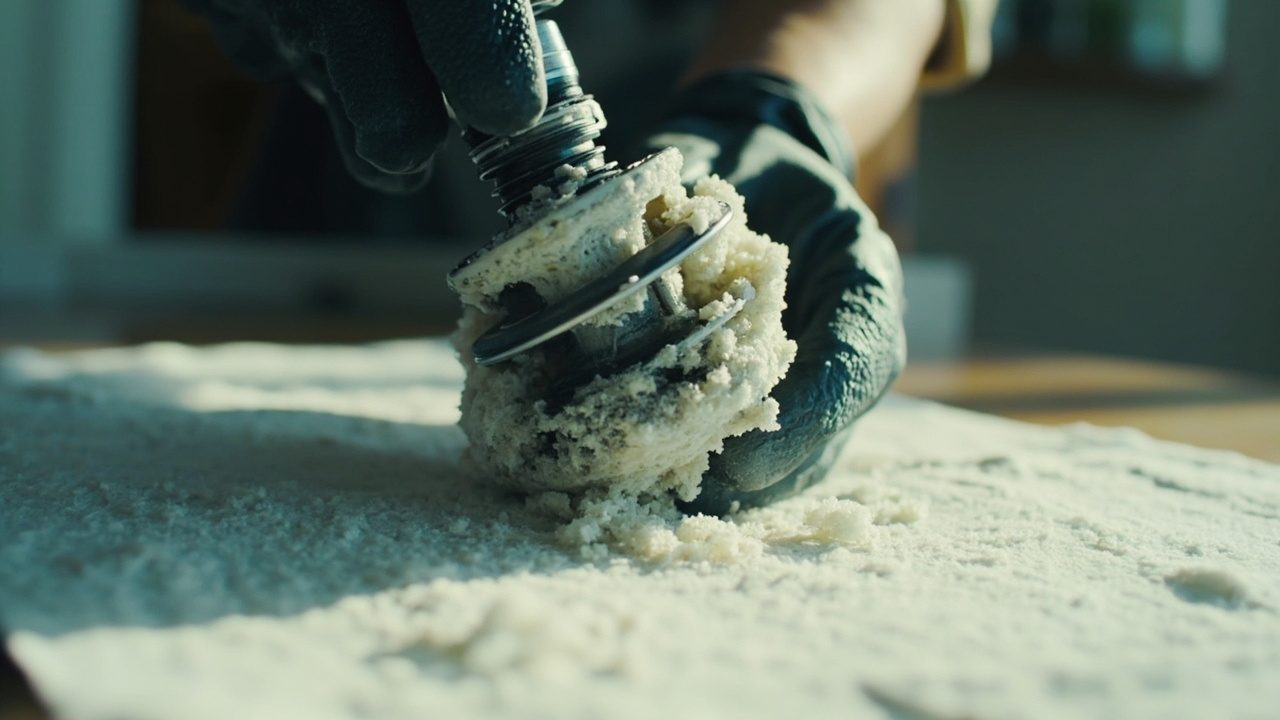
Scale is the local mechanism. Water across El Paso County runs moderately hard to hard, and above about seven grains per gallon scale forms steadily in tank water heaters, on elements and inside valves. A coated element still draws power but passes less heat into the tank, so recovery slows, then stops when the element burns out. When a pilot light keeps going out on a gas unit, the usual causes are a worn thermocouple or a gas control that is failing, and both are repairs. When a water heater is not heating on an electric unit and water is not getting hot at all, a dead element or a failed thermostat is likelier than the tank. Hot water that never arrived and hot water that ran out early point to different parts.
If you smell gas or rotten eggs near the heater, stop diagnosing. Everyone goes outside, nothing gets switched on the way out, no phone charger is touched, and the door stays open behind you. Call Texas Gas Service from outside.
One sequence decides whether today beats tomorrow. An anode rod consumed down to its bare core wire leaves the steel tank as the sacrificial metal, rusty hot water arrives first, and a split tank arrives after. So if your hot tap runs rust colored for the first minute while the cold tap runs clear, call today. If the cold tap runs rusty too, galvanized supply pipe is the more likely source, since the local water utility names that as the typical cause of discolored water. If you find water at the base of the tank, close the cold inlet on top of it while you dial.
See high water bills for how the related work is scoped and priced.
Find the sign you have, then read across to see whether it can wait.
| Symptom or first sign | What is already happening | What it becomes if ignored | When to call |
|---|---|---|---|
| An anode rod eaten away | The steel tank becomes the sacrificial metal | Rusty hot water arrives first and a split tank arrives after | This week, while it is still one part |
| Incoming pressure above the normal band | The relief valve on the heater starts weeping | The tank seams work harder every cycle and the heater fails years before it should | This week, while it is still one part |
| A weeping angle stop under a sink | The compression nut corrodes so it cannot be snugged | The stop snaps off in someone's hand during a faucet change | Now, the same day |
How we place the fault before any part gets ordered
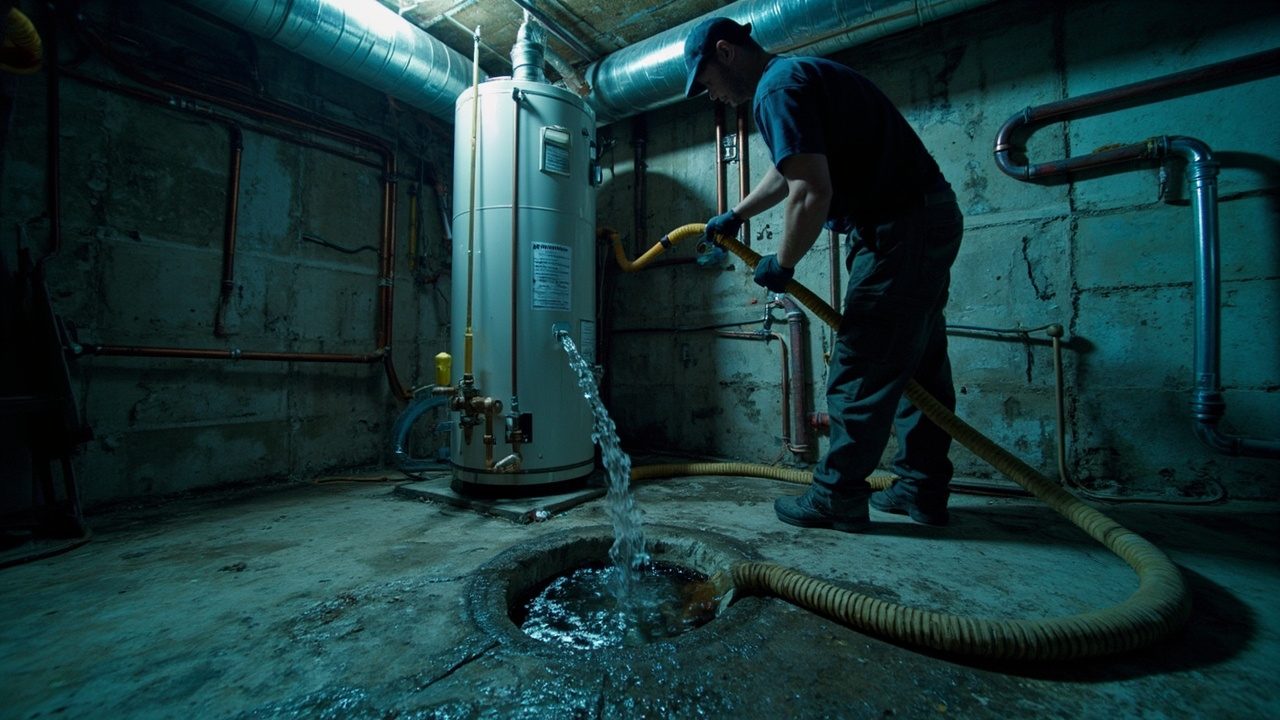
The sequence follows where the heat stops. First, every fixture is closed and the farthest hot tap is run for a full minute, because the first slug of water is whatever sat in the pipe. The thermometer goes into that stream. Then the work moves to the heater itself and to its fuel. On a gas unit that means the pilot, the thermocouple and the gas control, with the combustible gas detector and bubble solution on the fittings before anything is loosened. On an electric unit it means the breaker, the thermostat and the elements. If the tank outlet is hot and the far tap is cold, branches are closed one at a time until the loss shrinks to a single segment. A hot line leaking inside a wall or under a slab shows itself at the meter, where the dial moves with every fixture closed. That result moves the job from the heater to leak localization, and no wall is opened until the segment is proven.
The one reading this page turns on is tap temperature after a full minute. Water arriving around 120 degrees means heating and delivery both work, so the complaint is capacity and the dip tube, the scaled elements and the tank size come next. A lukewarm tap with a hot tank outlet puts the fault in the piping. A cold tap with a cold tank puts it in the burner, the pilot circuit or the element, and each of those is a repair. Setting the temperature is a tradeoff you own, since a higher setting raises scald risk and a much lower one lets the tank sit where bacteria are comfortable, so the thermometer gets read instead of the dial. Then the anode rod pull decides the last fork. Metal left on the core wire means repair, and a bare wire means the tank is the part now corroding, which moves the job to replacement.
Tank against tankless is the comparison most callers bring. A tank is judged on capacity in gallons and first hour rating, so a 40 gallon atmospheric vent tank and a 50 gallon tank differ in how far a second shower gets. A condensing tankless unit is judged on gallons per minute at a given temperature rise, and a swap usually brings a larger gas line, new venting and a different condensate path. Local water decides more than the label does. Moderately hard to hard supply scales a tankless heat exchanger the way it scales an element, so descaling or treatment belongs in the scope, and a second heater inside a few years points at the water. Colder incoming water on freezing nights widens the temperature rise a tankless unit has to cover.
Our page on cold water sandwich effect covers that side of the work in more depth.
Your local utility, El Paso Water, publishes service and water-quality information every El Paso homeowner should know.
Ask which of these readings was taken before any part is replaced.
| Instrument | Good reading | Bad reading | What it changes |
|---|---|---|---|
| Thermometer at the farthest hot tap | Hot water arriving around 120 degrees | Hot enough at the tap to scald a child in seconds | The first slug of water is whatever was sitting in the pipe |
| Water meter leak indicator with every fixture closed | The dial or the small leak wheel does not move over fifteen minutes | Any movement at all with the whole house off | Water is leaving the system somewhere you cannot see |
| Combustible gas detector and bubble solution on gas fittings | No alarm at the fittings and no bubble growing on the joint | Any bubble that keeps growing or any sustained alarm | The appliance valve gets closed before anything else happens |
| Screw on pressure gauge at a hose bib | Static pressure sitting in the 45 to 70 psi range with nothing running | Above 80 psi | Fixtures, supply hoses and water heaters start failing early |
| Overnight pressure hold with the gauge left | The morning reading is close to the reading taken the night before | A reading far above the night figure | The heater is expanding water into a closed system with nowhere to put it |
How a heater call runs
Phone questions and readings
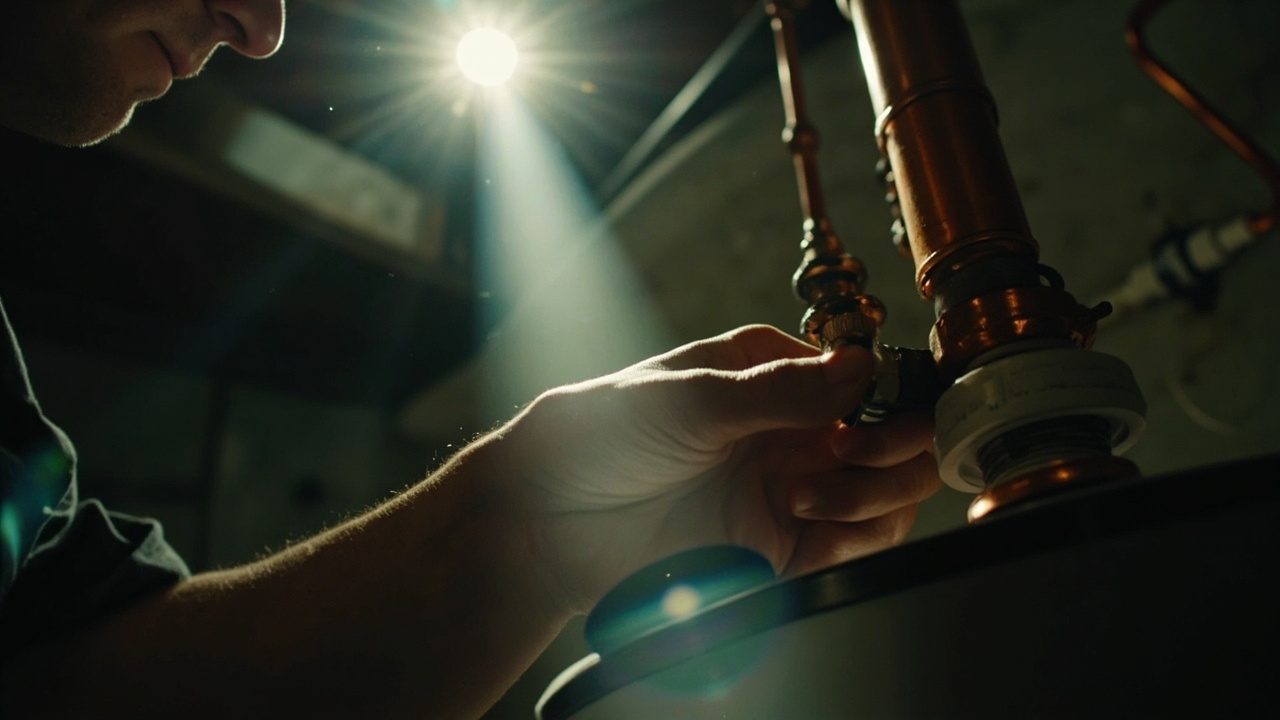
On the phone we ask which fuel the heater uses, whether hot fails at every fixture or one, and how long it has been absent. On site we start with the farthest hot tap. We run it a full minute, read the thermometer, then go to the heater and compare. If the tank is hot and the tap is cold, we close branches until the fault sits on one segment. If the tank is cold, we check the gas control and thermocouple, or the element and thermostat. Nothing is opened, drained or disconnected until the fault is placed, and you are shown what each reading means for the work.
Approval, then isolation
After you approve the written scope, the cold inlet on top of the tank is closed and the gas control or breaker is turned off. A hot tap on a lower floor is opened so the tank is not under vacuum, then draining begins. The main operation follows in trade terms: a new thermocouple, element or dip tube, a fresh anode rod, or a full tank swap with dielectric unions, a checked temperature and pressure relief valve and a thermal expansion tank where the system is closed. If scale or a bare core wire turns up and changes the scope, we stop and show you before going further.
Readings before we leave
Before we leave, the thermometer goes back on the farthest hot tap. After a full minute of running it has to read around 120 degrees. Gas fittings get the combustible gas detector first and bubble solution second, and no bubble may grow on any joint. If pressure was part of the job, the gauge goes on a hose bib with every fixture off, and static pressure has to sit in the 45 to 70 psi range. We walk you through each reading, and you keep the written scope with the final readings recorded on it.
Why local water and housing stock change a heater diagnosis
Replacing a tank or converting to tankless usually brings a permit and an inspection, and any change to the gas line does too, while a like for like element, thermostat or thermocouple swap usually needs neither. The local plumbing authority makes the final call on both. Where a permit applies, we pull it before the old tank comes out, so the paperwork is settled before anyone drains anything.
An unfamiliar crew tends to repeat three mistakes, and each has a consequence. Connecting a new heater straight onto old galvanized supply without a dielectric union starts corrosion at that joint from the galvanized side. Calling rusty hot water a tank failure when the cold tap runs rusty as well leaves a new tank delivering the same rust from the old supply pipe. Leaving out the thermal expansion tank on a closed system lets pressure climb overnight, the relief valve starts weeping, and the tank seams work harder every cycle.
The county mixes construction eras, so one day's calls can run from postwar slab homes with galvanized or early copper supply to newer homes with PEX manifolds. Slab homes from the 1970s through the 1990s often keep the heater in a garage or a closet, and clearance above the tank decides whether an anode rod can be pulled the same day. Newer subdivisions on the east and west sides are plumbed to a manifold, so the branch you isolate is the one on the manifold instead of a shutoff buried in a wall.
Calls come from across the county and from outside city limits, so what you tell us on the phone about the fuel, the age of the house and where the heater sits sets what goes on the truck. A thermocouple, an element, a dip tube and a set of dielectric unions cover the repairs that come up most, and a tank swap gets scheduled when the readings call for one.
If this sounds close but not quite your situation, discolored or rusty water may be the better starting point.
Working with Bedrock Plumbing El Paso on a heater fault
Scheduling and arrival window
You call and we ask four things: whether the unit burns gas or runs on electricity, whether the pilot is lit or the breaker is on, whether hot fails at every fixture or only one, and when it started. Those answers sort a same day visit from a scheduled one. We give you the arrival window on the phone, and if the job ahead of yours runs long, we tell you the new window as soon as we know it.
Protecting your home
Before the tank is touched, a drop cloth goes down under the work area and the cold inlet is closed. Draining runs through a hose to a floor drain or outdoors, and the old tank and fittings leave with us. When the new work is in, a hot tap on a lower floor runs until the air clears from the line, and the area around the heater is wiped down before we go.
What moves the scope
Access moves the job first. A heater in an open garage is easy to reach, while one in a closet behind a finished wall adds labor and surface restoration. Water off for the whole building instead of one branch widens the work again. The widest fork is one failed part against a replacement tank, and the condition of the tank decides it. Tankless adds gas line, venting and condensate work, and after hours dispatch adds more. You see the written scope and approve it before work starts. Anything a wall opening finds follows terms agreed in writing.
How technicians are checked
A new technician rides with a lead on heater calls before working alone, and the lead signs off on specific tasks: reading the farthest hot tap after a full minute, checking clearance before an anode rod pull, and proving gas fittings with a detector and bubble solution. Code updates get studied as the crews meet them. On an unusual job, such as several pipe materials in one house, a second technician looks at it before a scope is written.
You Have Questions,
We Have Answers
Hot water fails while cold works because the fault sits in the heating source or the hot-side piping. Cold water bypasses the heater entirely, so it stays normal even when the burner, element or a closed valve stops heat. A quick check is the heater's own outlet pipe. If it is warm to the touch while the tap runs cold, a partly closed valve or a failed branch is likelier. A cold outlet points back to the heat source.
Texas has no statute that makes a lack of hot water in your own house a crime. A homeowner who lives with a dead heater breaks no law. Rental housing is different, because a landlord's repair duty covers conditions that materially affect health or safety. Owners face practical limits instead, such as a heater that leaks gas or floods a closet, which should be shut off and repaired promptly.
Sudden loss of hot water usually means the heat source quit, such as a pilot, breaker or element. A gas heater goes cold when the thermocouple stops sensing the flame and shuts the gas valve. An electric unit often fails when the upper element opens, and the tank then delivers only lukewarm water from the lower element. Check the breaker and pilot first, since both take minutes.
Call a plumber who diagnoses both gas and electric water heaters, and call Texas Gas Service first for a gas smell. Bedrock Plumbing El Paso at (915) 350-8242 handles no-hot-water diagnosis on either fuel. Tell them the fuel type, the age of the heater, and whether hot fails everywhere or at one fixture. Renters should notify the landlord in writing before hiring anyone.
Texas sets no fixed number of days for restoring hot water in an apartment. The Property Code requires a landlord to make a diligent effort to repair a condition that materially affects the physical health or safety of an ordinary tenant, after the tenant gives notice and is current on rent. A reasonable time is presumed at seven days after notice, though a court may weigh the circumstances. Keep dated copies of every notice you send.
A house loses hot water overnight when one component fails, usually a thermostat, gas control or element. A tripped high-temperature cutoff button on an electric heater also drops output at once. Power surges, a flickering pilot in a drafty closet, or a tank that scaled up until the element burned out can each cause it. Water that ran lukewarm for a week beforehand suggests a failing element.
Start by finding the fuel type, then check whether the heat source is on. For a gas unit, look for a lit pilot or burner flame. For an electric unit, confirm the breaker is on and reset the red button behind the upper access panel only with the power off. Next feel the tank's hot outlet pipe. A hot outlet with cold taps points to piping, while a cold outlet points to the heater.
A Texas landlord must begin repairs within a reasonable time after notice, and the statute presumes seven days is reasonable. The tenant must be current on rent and should send notice in writing, by a method that leaves proof such as return-receipt mail. Written notice starts the clock. Severe conditions, such as a gas leak near the heater, warrant faster action, and a tenant who is unsure should read the lease terms on repair requests.
Tenants in Texas may demand repair of conditions that materially affect health or safety, and hot water often qualifies. If the landlord fails to act within a reasonable time, remedies can include repair and deduct, terminating the lease, or court action for a judgment. Each remedy carries strict notice steps, and deducting incorrectly can put the tenant in default. Written, dated notice and photos of the cold reading at the tap protect your position.
No Texas rule caps the number of days a homeowner may go without hot water. A tenant's timeline runs from written notice to the landlord, with seven days treated as a reasonable repair period under the Property Code. Beyond the law, a tank that sits unheated can be reactivated safely only after the cause is found. A gas unit that relit repeatedly and went out again should be looked at before further use.
Why hard water changes a no hot water diagnosis in El Paso
El Paso Water supplies a blend of surface water and groundwater and describes it as moderately hard to hard, commonly around ten grains per gallon or more. That number drives material and sequencing on a heater job. Elements and valves collect scale, so a tank gets flushed, a tankless unit gets descaled or paired with treatment, and the water chemistry shapes equipment choices over time. The utility also notes that rusting galvanized pipe inside homes is the typical cause of discolored water, which is why a rust colored hot tap gets compared against the cold tap before anyone blames the tank. Heat matters as well. Many homes from the 1970s through the 1990s keep the heater in a garage or closet, where long summer afternoons above one hundred degrees stress the unit and intense sun degrades any exposed plastic line. Newer subdivisions run PEX manifolds, and those connections are made differently from copper stubs.
Where a permit applies to a heater swap or a gas change, an inspection on this kind of work generally looks at the finished connections: the gas joint, the vent, the temperature and pressure relief valve with its discharge, and the expansion tank on a closed system. Which jobs need a permit is the local authority's decision, and work outside city limits can fall under the county or the neighboring town. Knowing that up front changes the sequence. The relief valve discharge and the expansion tank go in before the final connection, so nothing gets reopened after the inspector leaves. Gas fittings get the detector and bubble solution before the inspection, which means a growing bubble is found on our first pass and a second inspection trip is avoided.
Plumbing Services in The El Paso Area
Explore our service area and locate Bedrock Plumbing El Paso with ease. We're proudly local and serve the surrounding neighborhoods with fast response and honest pricing. Use the map to check our coverage area, or call us and we'll confirm in seconds.
Address:
Bedrock Plumbing El Paso, 221 North Kansas St, Suite 700, El Paso, TX, 79901
Additional Services We Offer
Cleaning a crusted aerator, swapping a braided supply hose and closing the main shutoff are homeowner jobs, and you do not need us for them. DIY stops at anything soldered, anything on the gas line and anything behind a finished wall or under a slab, because a gas leak or a hidden joint cannot be judged by eye. If the first visit turns up an electrical fault in the circuit feeding an electric heater, we say so then and tell you who handles it.
Before you call, know whether the heater burns gas or runs on electricity, when the water stopped getting hot, and what changed just before it. Check if cold water runs clear and whether anyone is at home. Locate the main shutoff valve and note any age you have for the heater.
Last reviewed September 2026 by Dave Parker, Owner.