




Why your water bill doubled with nothing wet in the house
Your water bill doubled and every faucet, ceiling and floor still looks dry. That pattern says water is leaving the system where you cannot see it, and the meter bills every gallon that crosses it whether anyone used that gallon or not. Supply water sits under pressure, so a supply leak runs all night on its own. A drain only carries water away while something upstream runs, so a loss that shows only during the wash cycle is a different problem from one that runs while the house sleeps. A bill that doubles in one cycle points at something that failed recently. A bill that creeps up each month points at a slow drip or scale building on a valve.
The high water usage causes behind a sudden jump split into two groups. One group is water you used, such as a longer irrigation run or a full house. The other is water that left without you, and a hidden water leak in that group tends to sit in one of two places. Indoors it is the toilet, because the loss goes straight down the drain and leaves no stain. Outdoors it is the evaporative cooler, and that one has a season.
When coolers start up in spring, the supply line and float valve go back into service after months of sitting. Water here tests moderately hard to hard, so scale has already crusted the valve seat and the float arm. A float valve that cannot seat lets the pan fill past its overflow, and the excess leaves where nobody looks. A cooler that seems to work normally can still be feeding the drain all day. Scale on the fill valve seat does the same thing inside a toilet tank. If the bill jumped in the first cycle after the cooler went on, start with that valve.
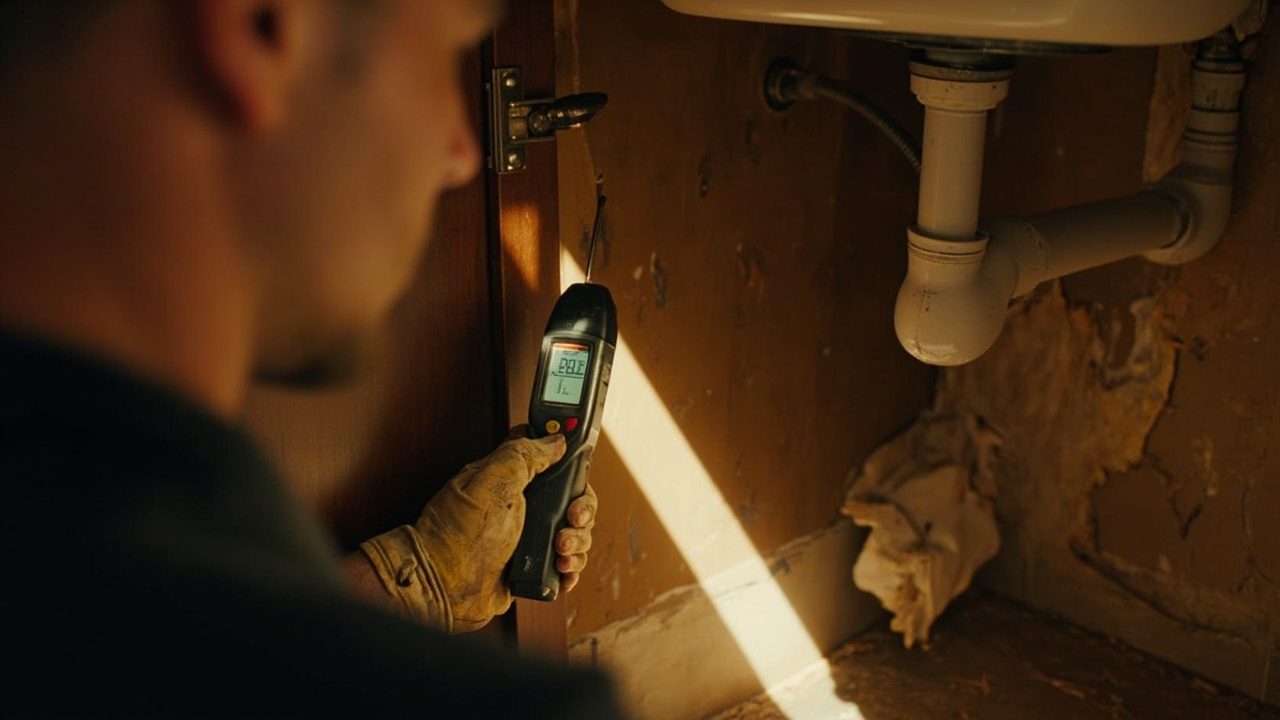
A hiss at the bowl a few minutes after a flush, or a tank that tops itself off with nobody near, means the flapper is letting the tank bleed into the bowl and the fill valve is refilling it. Closing the angle stop at that toilet and watching the meter slow tells you the fixture is the source. Only the angle stops, the meter and the main shutoff need your hands. A toilet that runs after flushing lets the flapper refill the tank all night, then the fill valve cycles constantly, then the valve wears until it sticks open with the overflow carrying the water away unnoticed. Call today once the bowl hisses between flushes, because by the time the valve sticks open the bill climbs every hour and the next bill carries the whole run.
Our page on discolored or rusty water covers that side of the work in more depth.
We install and service equipment from major manufacturers like Rheem to manufacturer specifications.
Find the sign you have, then read across to see whether it can wait.
| Symptom or first sign | What is already happening | What it becomes if ignored | When to call |
|---|---|---|---|
| A toilet that runs after flushing | The flapper lets the tank refill all night and the fill valve cycles constantly | The valve wears and sticks open with the overflow carrying it away unnoticed | This week, while it is still one part |
| Roots at one clay joint | Paper and grease catch at that spot every day | The main backs up into the lowest fixture in the building with no warning | Now, the same day |
| Incoming pressure above the normal band | The relief valve on the heater starts weeping | The tank seams work harder every cycle and the heater fails years before it should | This week, while it is still one part |
| An anode rod eaten away | The steel tank becomes the sacrificial metal | Rusty hot water arrives first and a split tank arrives after | This week, while it is still one part |
How the meter leak wheel finds the loss before anything opens
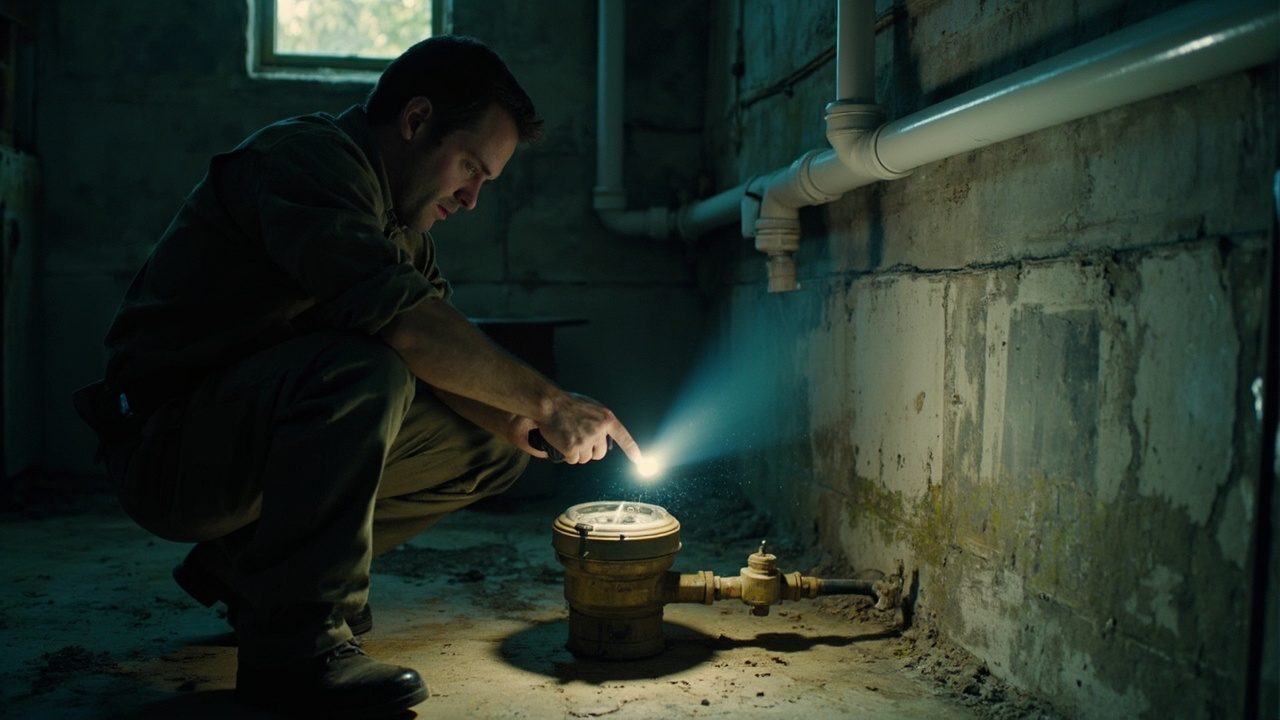
The sequence begins at the water meter leak indicator with every fixture closed. Nobody flushes, the washer and dishwasher sit idle, and the cooler supply is off. The leak wheel or the dial gets watched for fifteen minutes. Then the main shutoff closes and the meter gets read again, because a dial still turning with the main closed puts the loss on the street side of the house, while a dial that stops puts it inside. From there the work shrinks the problem. Stops close one at a time, toilets first, then the cooler line, then each branch, until the dial quits moving. The segment that stopped it holds the fault, and nothing gets opened before that point.
The reading this page turns on is movement at the leak wheel with the whole house off. Any movement at all means water is leaving somewhere you cannot see, and a wheel that holds still for fifteen minutes clears the plumbing and sends the search to usage, meaning irrigation, the cooler and household habits. When the stops isolate a toilet, the fix is a flapper or a fill valve, which is a repair. When they isolate a branch feeding a wall or a slab, the job changes shape, since reaching the pipe and restoring the surface becomes most of the work. Static pressure and hardness get read on the same visit, because they decide whether a pressure reducing valve, an expansion tank or water treatment belongs in the job. Listening gear, a camera or tracer gas comes in only after isolation has named a segment.
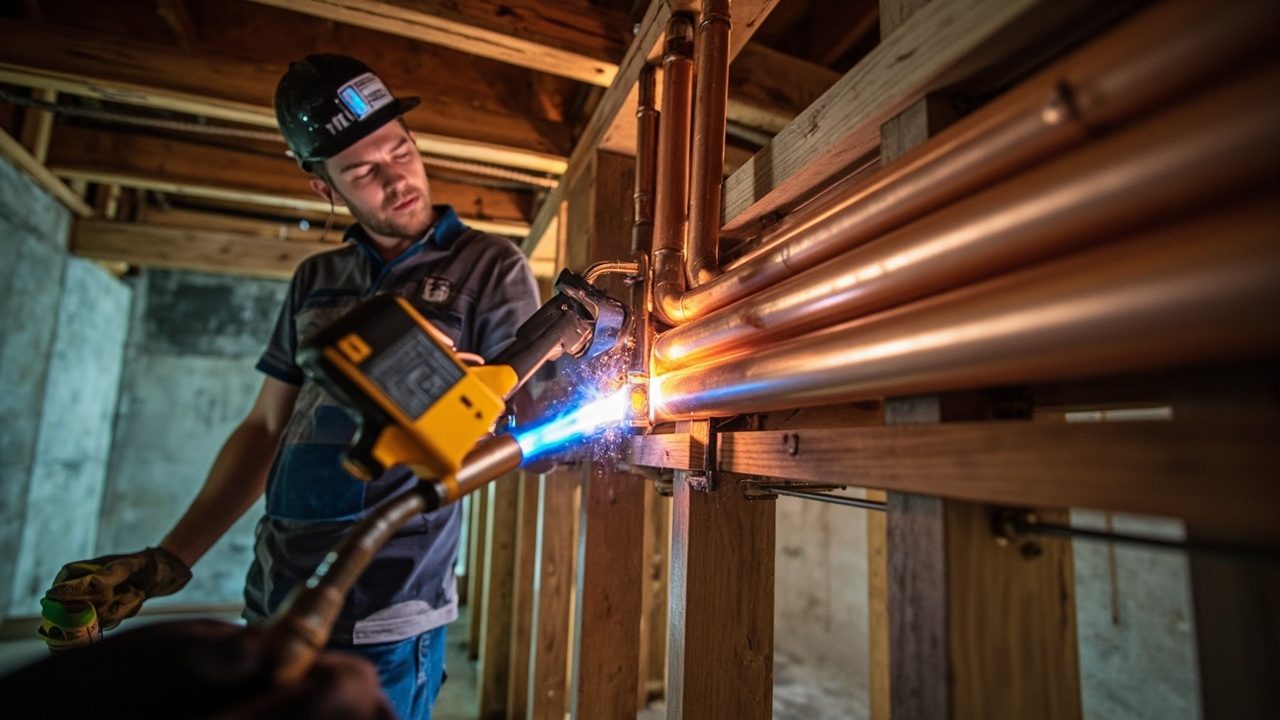
When isolation lands on a supply segment, the pipe material decides the next step. Type L copper is rigid, tolerates heat directly and costs more in material and labor. PEX is flexible, so a home run layout puts fewer joints inside walls, though it must stay out of sunlight and be protected where it passes through framing. PEX A with expansion fittings and PEX B with crimp rings join differently, and that matters the next time a repair means opening drywall. Galvanized supply closes up from the inside, so a second failure in the same segment points at replacing the segment, while one failed fitting on sound pipe points at the one joint. Hardness settles the rest. Water here commonly tests around ten grains per gallon or more, and above about seven grains per gallon scale forms steadily in heaters and valves. Plan flushing, descaling or treatment before buying another valve or heater. A salt softener needs salt and a drain, a salt free conditioner needs neither, and the drain question usually decides.
If this sounds close but not quite your situation, low water pressure issues may be the better starting point.
The U.S. Department of Energy's water heating guide is a solid primer on operating costs if you want to dig into the numbers yourself.
Ask which of these readings was taken before any part is replaced.
| Instrument | Good reading | Bad reading | What it changes |
|---|---|---|---|
| Water meter leak indicator with every fixture closed | The dial or the small leak wheel does not move over fifteen minutes | Any movement at all with the whole house off | Water is leaving the system somewhere you cannot see |
| Screw on pressure gauge at a hose bib | Static pressure sitting in the 45 to 70 psi range with nothing running | Above 80 psi | Fixtures, supply hoses and water heaters start failing early |
| Anode rod pull on a tank water heater | The rod still has sacrificial metal along the core wire | A bare core wire with the metal gone | The tank itself is now the part being eaten |
| Drain camera with a locator | Continuous fall to the main, clean joints | Standing water part way along a level run means a belly | Roots at a joint mean the repair belongs at that joint rather than the whole line |
| Overnight pressure hold with the gauge left | The morning reading is close to the reading taken the night before | A reading far above the night figure | The heater is expanding water into a closed system with nowhere to put it |
| Combustible gas detector and bubble solution on gas fittings | No alarm at the fittings and no bubble growing on the joint | Any bubble that keeps growing or any sustained alarm | The appliance valve gets closed before anything else happens |
How a high bill call runs
The call and the meter
On the phone you get asked whether the dial moves with everything off, when the bill jumped, and where your main shutoff sits, because those answers decide how quickly someone comes. On site the first move is the meter. Every fixture stays closed while the leak wheel gets watched for fifteen minutes, then each stop closes in sequence. Toilets first, then the cooler line and each branch, until the dial stops. You see which segment ends the movement. A wall stays closed until that segment is named.
Scope, then your yes
The written scope arrives after the readings, and nothing starts until you approve it. Approved work begins with isolation at the nearest stop, so the toilet angle stop or the branch valve closes before a flapper, fill valve or cooler float valve comes off. On a supply segment the run gets cut back to sound pipe, and where galvanized meets copper a dielectric union goes in. If a wall opening turns up more corrosion or a second pinhole, work stops, you see it, and the scope changes only with your written yes. Water stays on to the rest of the house when only one branch is closed.
Meter proves the repair
Before we leave, the meter leak wheel goes back on with every fixture closed and has to hold still for fifteen minutes. The pressure gauge at a hose bib reads static pressure with nothing running, and the number has to sit in the 45 to 70 psi range. A toilet repair ends with a flush test and a look at the bowl for the hiss that started the call. If the hardness test came in high, we tell you the treatment options that reading points to. You walk the repair with the technician, and you keep the written scope and the readings taken.
Why crews new to the area chase the wrong leak
Permits follow the scope, and the authority for your address makes the final call. Gas work and main line work usually need one, while a like for like flapper, fill valve or braided supply hose swap usually does not. A meter read and a valve swap raise no permit question at all, but a run replacement brings a permit and staged inspections with it, and the crew should know which office applies before the truck is loaded.
An unfamiliar crew makes three mistakes on a high bill call. The first is opening a wall to chase a leak before anyone reads the meter, which turns a flapper problem into a drywall repair. The second is replacing a scaled float valve or fill valve and leaving the water untreated, so the same scale builds on the new seat. The third is joining old galvanized to copper without a dielectric union, which starts corrosion at the joint and a fresh leak inside the wall. Houses from the 1940s through the 1960s often have galvanized or early copper supply with cast iron drains under the slab. Slab homes from the 1970s through the 1990s run copper under or through the concrete, so a warm spot on a floor there puts a hot line under the slab. Homes from the 2000s on use PEX manifolds, where closing one manifold valve isolates one fixture line.
Calls come from across the county, and the first phone question is whether water is escaping under pressure, since that decides today against a scheduled visit. A hose bib split by an arctic freeze leaks outdoors under pressure, so the bill climbs with no water inside the house. Spring brings a second wave when coolers start up and irrigation systems return, and a bill that jumped in that window gets the cooler valve checked before anything behind a wall. The crew verifies the reading before and after isolation of each zone, because a rising meter with all isolation valves closed points to a sub slab leak that escapes under the foundation rather than into the crawl space or basement where it would be visible.
More detail on cold water sandwich effect is on its own page.
Your local utility, El Paso Water, publishes service and water-quality information every El Paso homeowner should know.
What working with Bedrock Plumbing El Paso is like day to day
From call to arrival
You call and we ask four things: whether the meter dial moves with every fixture closed, when the bill jumped, whether a toilet hisses or the cooler has started up, and where your main shutoff is. Those answers sort the call into a same day visit, when water is escaping under pressure, or a scheduled visit for a slow loss. The visit window is confirmed by phone, and if the job ahead of yours runs long, you get a call with the new window.
Protecting your floors
Shoe covers and floor runners go down before anyone walks to the fixture, and tools stage on a drop cloth beside the work instead of on your floor. Water is isolated at the stop before a valve or supply line comes apart, so the towel under the connection catches only what is left in the line. A fill valve swap needs only the tank lid off, which keeps the work inside the bathroom. Old parts leave with us, and the last step is wiping the fixture and floor dry.
What moves the scope
Access moves the scope furthest. A finished wall, a ceiling below or a slab must be opened and restored, and restoring it is usually the larger half of the work. Excavation depth and length come next, then whether the fix is a repair at one joint or a replacement of the run, which depends on the condition of the rest of that pipe. Old to new material matching, fixture grade and after hours dispatch follow. The written scope comes from the meter reading, you approve it before work starts, and anything an opening turns up is agreed in writing first.
Checked before working alone
A new technician rides with a lead before working alone, and the lead signs off on demonstrated tasks including reading a meter leak indicator, isolating a branch with the stops, and setting a fill valve so it shuts off cleanly. The crew studies code changes as they arrive. On an unusual job, such as a warm spot on a slab that suggests a hot line underneath, a second technician looks at it before a scope is written.
You Have Questions,
We Have Answers
Yes, you can ask the utility to review a bill, and a written leak record strengthens the request. Ask first whether the reading was estimated or taken from the meter, since an estimated read followed by a true read can stack two periods onto one bill. Request a meter accuracy test if the dial stays quiet with everything off and the numbers still look wrong. Bring twelve months of usage so the reviewer sees the jump against your baseline. Adjustment rules for repaired leaks differ by utility, so ask what applies.
A doubled bill usually comes from a longer billing period, a running toilet, or a new outdoor water load. Count the days between meter reads first, because a 40-day cycle bills far more gallons than a 28-day one. Then drop dye tablets or a few drops of food coloring into each toilet tank and wait fifteen minutes. Color in the bowl without flushing shows a worn flapper. Also account for guests, a filled pool, or a newly planted yard, since each adds gallons that show up on the bill.
A sudden spike with no change in habits usually traces to an estimated read or a failed part. Compare the read dates and the read type printed on the bill, since a catch-up read after estimates can land months of use on one statement. If the reads were actual, check for a sprinkler zone valve stuck partly open, which passes water even when the controller shows off. Also look at the water heater relief valve discharge pipe for dampness or mineral streaks.
Leaking toilets, stuck irrigation valves, and dripping fixtures cause most unexplained high bills. A toilet flapper that leaks passes water continuously in a thin sheet you cannot hear. A sprinkler diaphragm with grit under it lets a zone weep around the clock. A faucet dripping once per second wastes water in a steady stream that adds up through a whole cycle. Less common causes include a failed water heater relief valve, a broken hose bib, and a softener that keeps cycling through its drain.
Dry desert conditions push outdoor water use up, and that shows on the bill. Landscaping needs frequent watering, pools lose water to evaporation and need topping off, and vehicle and patio washing add gallons that never reach the drain. Hard water also scales valves so they seat poorly, letting fixtures leak slowly. Pull last year's bill for the same month and compare gallons rather than dollars. A matching gallon count points to weather and habits, while a higher count points to a leak.
A bill several times your normal usage points to water escaping under pressure, not a small drip. Common sources are a hose bib split behind the wall, a stuck irrigation valve, a broken sprinkler head, or a supply line failure under a slab. A toilet flapper alone rarely produces that scale. Check the yard for soft, sunken, or unusually green patches along the line from the meter to the house. Then read the meter with everything off, since a fast-spinning leak wheel means the loss runs continuously.
Outdoor irrigation runs up the average household bill more than any indoor fixture. One sprinkler zone can pass many gallons in a single ten-minute cycle, and most yards have several zones running several days a week. Check the controller for stacked start times, since a program with three starts per day triples the water. Spray heads that mist, tilted heads, and water running onto pavement waste gallons without helping plants. Shortening runs and adding a rain sensor lowers usage without touching any plumbing inside the house.
A typical bill has no single figure, because it swings with household size, yard, and season. Winter usage is the cleanest baseline, since irrigation and evaporative cooling are off and most water goes to showers, laundry, and toilets. Divide the gallons on your winter bill by the days in the cycle and by the people in the home to get a per-person daily number. Summer readings that run far above that baseline mark the gallons worth investigating. Use your own history as the yardstick rather than a neighbor's bill.
A toilet with a worn flapper is the single most common indoor leak driving bills up. The tank drains into the bowl unseen, the fill valve refills it, and the cycle repeats all day. Second are showerheads and long showers, since a standard head passes roughly two and a half gallons per minute, so a twenty-minute shower adds up quickly. Third is laundry, especially older top-loading washers set to large load sizes. Fixing the flapper costs little compared with months of continuous refill.
Toilets, showers, and washing machines use the most water inside a home, and irrigation tops the list outdoors. Toilets made before the mid-1990s can use up to 3.5 gallons per flush, while newer models use 1.6 or less. Top-loading washers generally use more per load than front-loaders. Dishwashers use far less than hand washing a full load. Swapping an old toilet or a high-flow showerhead cuts usage more than any habit change, and it shows on the next full billing cycle.
Why spring cooler start up changes high water bills in El Paso
Three local conditions change how a high bill gets traced. The water arrives moderately hard to hard and disinfected with chlorine, and the scale it leaves crusts float valves, fill valves and faucet cartridges until they leak past their seats. Supply piping follows the era of the house. The oldest homes carry galvanized steel that closes up from the inside, postwar slab homes carry galvanized or early copper, and newer subdivisions use PEX manifolds. A pinhole in copper under a slab shows as a warm patch on the floor, while a manifold lets you close one fixture line and watch the dial. Layers of caliche hardpan run through the sandy and gravelly soil, which slows trenching on a yard line, so isolation has to name the segment before anyone digs.
Inside city limits the city issues plumbing permits and inspects the work at stages, and outside city limits the county or the neighboring town takes that role. At an inspection the questions usually concern the joints, the transitions where old pipe meets new, and whether the supply holds at working pressure. Knowing the stages ahead of time changes sequencing, because the pipe needs to be visible before the wall closes, and a crew that closes the wall first cuts it open again. The utility reads the meter. When the dial moves with the main closed, the loss sits on the street side and the call goes to El Paso Water, and the utility and the permit authority decide where responsibility sits. A written record of the wheel reading with every fixture closed, and again with the main closed, gives a billing review something concrete to work from.
Plumbing Services in The El Paso Area
Explore our service area and locate Bedrock Plumbing El Paso with ease. We're proudly local and serve the surrounding neighborhoods with fast response and honest pricing. Use the map to check our coverage area, or call us and we'll confirm in seconds.
Address:
Bedrock Plumbing El Paso, 221 North Kansas St, Suite 700, El Paso, TX, 79901
Additional Services We Offer
A flapper, a braided supply hose or a cleaned aerator is a homeowner job, and closing the main before anyone arrives is yours to do. DIY stops at anything soldered, anything on the gas line, anything behind a finished wall or under a slab. The street side of the meter is outside our work. If the dial keeps moving with your main closed, we tell you so on the first visit and you call the utility next.
Before you call, note when the bill jumped and what changed just before it, such as the cooler starting up. Read the leak wheel on the meter with every fixture closed and say whether it moved. Find your main shutoff and have the last two bills nearby. Any age you have for the toilet valves, water heater or pipe helps, and say whether anyone is home.
Last reviewed September 2026 by Dave Parker, Owner.