





What a weeping relief valve says about a shared heater in summer heat
A relief valve on a shared water heater is weeping, or the top floor runs out of hot water while the ground floor is fine, or the monthly water bill jumped and no ceiling is wet. Supply hoses in the units keep failing, and pipes bang when a washer shuts off. Maintenance may already have replaced the valve once, and the drip came back. Each of these places the fault on a side of the system. Supply water escapes under pressure all night whether anyone is home, and a drain only escapes while a fixture upstream runs, so property management plumbing starts by deciding which side you are on. In a multi unit building that decision also sets how many households lose water while the repair happens.
Extreme summer heat changes how these failures develop across El Paso County. Many days sit at or above one hundred degrees, and water heaters in garages and closets work inside that air while demand on them peaks. Exposed rooftop supply lines take sun directly, and intense sun and heat degrade exposed plastic. The local water adds scale. It tests moderately hard to hard, and above about seven grains per gallon scale forms steadily in tank elements, tankless heat exchangers and valves. A heater that is hot, scaled and under high pressure has almost no margin left, so the first visible sign is often a weeping valve.
Placement narrows the call. One unit with no hot water points at its own branch, gas control or element. A whole riser running cold points at the shared heater or its dip tube. A warm patch on a floor in one place is the hot side of a supply line, and copper run under or through the slab is common in buildings from the 1970s through the 1990s. Rusty water for the first minute points at the tank or at galvanized pipe corroding from the inside. A gurgle in the lowest unit when a neighbor's washer empties puts the restriction on a shared stack or branch.
Call today when incoming pressure sits above the normal band, because the relief valve on the heater then starts weeping, and after that the tank seams work harder every cycle and the heater fails years before it should. Replacing the valve leaves the pressure in place. For an owner, the cost of that sequence is downtime, meaning every unit on that heater without hot water, plus the notices and the documentation a lender or an underwriter will ask for later. Apartment building plumbers who isolate by branch keep that downtime to the units on one branch.
If this sounds close but not quite your situation, commercial kitchen plumbing may be the better starting point.
Permit and inspection questions? Planning & Inspections is the office we coordinate with on every permitted El Paso job.
How we isolate one branch and read the pressure before quoting
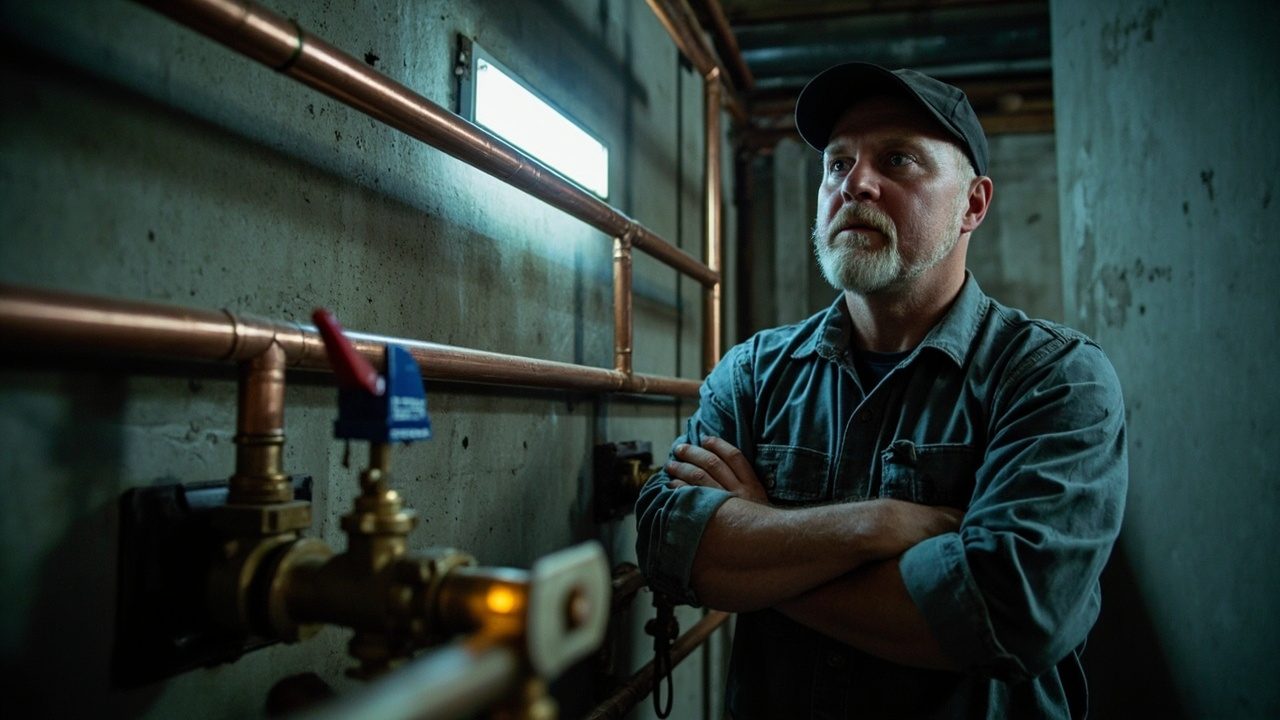
The sequence on a multifamily job follows where the water is going. A screw on pressure gauge goes on a hose bib with the shared systems idle, because a running fixture hides the real static number, and the gauge stays on overnight. The water meter leak indicator is read with every fixture closed, and any movement means water is leaving the system somewhere you cannot see. Closing the main and reading again splits the loss, since a dial still turning with the main closed puts the leak on the street side of the meter. Only then do the branch stops close one at a time until the loss stops, which names the branch and the units on it. A wall or a slab is opened last.
Static pressure in the 45 to 70 psi range with nothing running is the good reading. Above 80 psi, fixtures, supply hoses and heaters start failing early and a pressure reducing valve is normally required, so the scope grows from the failed fixture to the valve that feeds every fixture. The overnight hold decides the second fork. A morning reading close to the night reading means the closed system is behaving. A morning reading far above the night figure means the heater is expanding water into a closed system with nowhere to put it, and the thermal expansion tank has failed or was never installed. That single reading explains a weeping temperature and pressure relief valve, banging pipes when a washer shuts off and supply hoses that keep bursting. Meter movement with the main closed moves the job out to the service line, where the utility and the local authority decide where responsibility sits.
Extreme summer heat decides between a tank and a tankless heater in these buildings. A tank in a garage or closet sits in air that reaches one hundred degrees or more on many days, and its anode rod and relief valve show the strain first, so an anode rod pull tells you how much tank is left. A tankless swap changes the gas line, the venting and the condensate path in every closet it enters, and that multiplies across a building. Its heat exchanger also meets water above seven grains per gallon, so it needs a descaling plan from the first day. Where a closet cannot take new venting, a tank with a working expansion tank is the sound choice. Where one central plant feeds a riser and demand arrives all at once, gallons per minute at a given temperature rise is the number to size against. On supply piping, exposed rooftop runs favor type L copper because it tolerates heat directly, while PEX must be kept out of sunlight. Inside the units, PEX to a manifold puts fewer joints in the wall and a future repair takes less drywall.
See commercial plumbing contractors for how the related work is scoped and priced.
Narrow this to two options before calling, then ask which one suits the house.
| Option | The numbers a buyer weighs | Best suited to |
|---|---|---|
| Tank water heater against tankless | A tank is judged on capacity in gallons and its first hour rating | Households with long back to back hot water use |
| Type L copper against PEX | Copper is rigid, tolerates heat directly | Repipes where the existing layout sets the method |
| Cast iron drain against PVC or ABS | Cast iron is heavy and quiet and corrodes from the inside over decades | Drain replacement under a finished house |
| Trenchless lining against open cut replacement | Lining cures a new pipe inside the old one with a small loss of inside diameter | Runs under a slab, a drive or mature trees |
How an apartment plumbing call runs

First call and isolation
The phone call sets the first move. We ask whether water is leaving under pressure, which floors and units are affected, when it began, what changed just before, and where the main shutoff and branch stops are. On site, we attach a screw on pressure gauge to a hose bib while the shared systems sit idle, and we read the water meter with every fixture closed. Then the main closes for a second reading, which places a loss on the street side or the house side. We isolate each branch stop in sequence to narrow the leak location. The diagnosis ends with a named branch, a pressure reading and a first estimate of what has to be opened.
Approval and the work
Once the scope is approved, the branch stops close and the units on that branch are told first. Water heater work follows a fixed order: cold inlet closed on top of the tank, gas control or breaker off, and a hot tap opened on a lower floor so the tank is not under vacuum. Then the main operation goes in, whether that is a pressure reducing valve, a thermal expansion tank, a new angle stop or a cut section of cast iron joined with a no hub band. If corroded galvanized or a second pinhole turns up behind a wall, work stops and you see it before a larger scope is written.
Testing and handover
Before leaving, the gauge goes back on the hose bib with everything off, and the static reading has to sit in the 45 to 70 psi band. Where pressure or heater work was done, the overnight hold repeats, and the morning reading has to sit close to the night figure, the same hold that opened the diagnosis. The meter dial has to stay still over fifteen minutes with every fixture closed. A thermometer at the farthest hot tap, after a full minute of running, reads around 120 degrees. You keep a written record of the readings and the branch list, which is the file a lender or an underwriter asks for.
Why a crew unfamiliar with local buildings closes the wrong valve
Permits and inspection sit with the local authority, and the final call on any single job is theirs. Gas work and main line work usually need a permit and get inspected at stages, while a like for like faucet, flapper or stop swap usually does not. Work outside city limits falls under the county or the neighboring town, so a multi unit plumbing contractor working a complex near a boundary confirms which jurisdiction applies before the first cut.
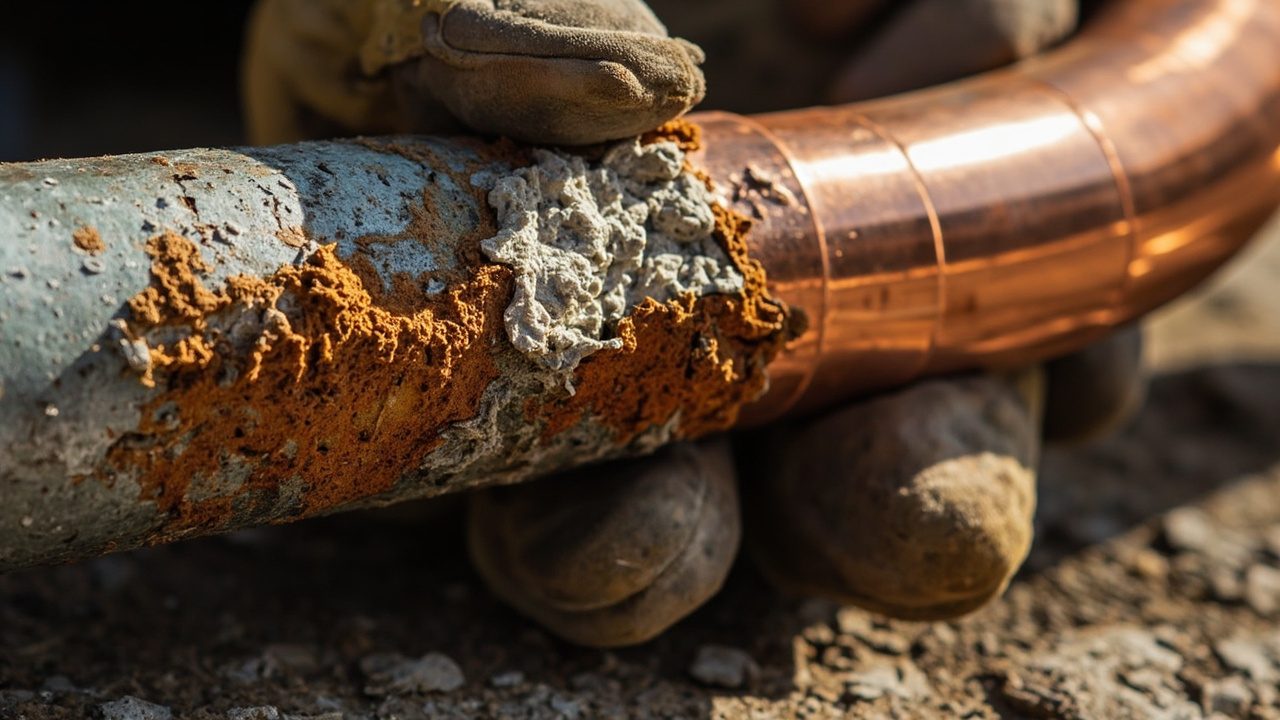
The most common mistake in an occupied building is closing the main. It takes every unit off water for a repair that needed one branch, and it makes every heater refill at once when the water returns. Crews from elsewhere also misjudge pipe by its era. Buildings from the late 1800s through the 1930s carry galvanized supply, cast iron drains and clay laterals, postwar slab buildings carry cast iron under the slab, and later slabs carry copper through the concrete. Joining new copper to old galvanized without a dielectric union starts corrosion at the joint. Plastic joins to cast iron with a no hub band, and glue on that joint weeps and carries noise through the wall.
Apartment plumbing maintenance across the county depends on isolation planned before anyone arrives. The phone call establishes where each building's main shutoff sits, which branch stops exist and whether a hose bib is reachable for the gauge, because a stop that has not been closed in years may not seal. Caliche hardpan slows any lateral or yard line dig, so a repair with parking above the line is scheduled around the excavation. Older stock often holds several pipe materials in one building, so a technician expects galvanized, copper and plastic together and brings fittings and transitions for each. Planning also confirms whether the lateral runs under a building or a parking area, because that choice determines whether excavation happens inside or outside the structure and what equipment fits the site.
More detail on medical & dental gas plumbing is on its own page.
Use this to ask what is driving the quote rather than asking for a rough number.
| Driver | Why it moves the estimate | What you control |
|---|---|---|
| Matching existing pipe material and size | Where old and new have to be joined | Choosing to match the existing material or convert the run |
| Access to the pipe | A finished wall, a slab, a crawlspace or a ceiling below | Clearing the work area and the path before the crew arrives |
| Permit and inspection requirements | Apply to gas work and main line work more than to a faucet | Scheduling early, the step cannot be skipped |
What working with Bedrock Plumbing El Paso looks like day to day
How the call is scheduled
You call and we ask four things: whether water is escaping under pressure, which units are affected, where the main shutoff and branch stops sit, and whether the relief valve on a shared heater is dripping. Those answers decide whether the visit is needed today or can be scheduled, and the emergency tier covers burst lines, no water and after hours response. The window is given on that call. If it shifts, the person who set it gives the property contact the new window by phone.
Protection for units and halls
Before anything comes apart, corridor floors and stair landings get covered, and a list of the units on the branch goes to the property manager so notices reach residents before a stop closes. Water is drained down through hoses to a floor drain or outside. Any wall or ceiling opening is kept to the smallest access the pipe allows, with drywall dust held behind sheeting. Cut pipe, old stops and debris leave with the crew, and the last step is running every fixture on the branch and watching the meter dial hold still.
The driver that moves cost
On this job the driver that moves the estimate furthest is whether water goes off for the whole building or only one branch. Working branch stops keep the scope small and every other unit supplied. Stops that no longer seal add valve replacement ahead of the repair itself. The written scope follows the measurements, and you approve it before any work starts. If an opening turns up more, the written scope says in advance what happens next and who decides.
How technicians are checked
A new technician rides with a lead before working alone and has to demonstrate the overnight pressure hold, a meter isolation and a no hub transition, and the lead signs off on each. The whole crew studies the current code cycle. On anything unusual, such as slab work or a shared heater plant, a second technician reviews the findings before a scope is written. Readings are recorded the same way on every visit, so any technician can pick up the file.
You Have Questions,
We Have Answers
A central supply main feeds vertical risers, and each riser serves stacked units through branch lines with shutoff stops. Hot water usually comes from a shared boiler or heater plant, with a recirculation loop that keeps the far units from waiting for heat. Waste leaves through vertical stacks vented through the roof, and sewer gas is held back by a trap under every fixture. Every unit on a riser shares that riser's pressure and any failure in it.
Texas sets the filing deadline by claim type, and this page cannot give you a legal deadline. A lawyer will need your dates, so keep the original repair request, the management reply, photos with timestamps and any medical or repair receipts. Mold from a slow leak is usually the claim where deadline questions arise, since the damage often appears weeks after the leak began. Ask an attorney about the deadline promptly, because delay can weaken the evidence.
Water enters through one meter or several, then runs to buildings on underground service lines. Those lines split into risers and unit branches. Larger complexes often add a pressure reducing valve at each building so upper floors and ground floors see similar static pressure. Sewage flows out through cast iron or plastic building drains to a lateral, then to the public sewer. Irrigation, pool and laundry room lines are frequently on separate branches with their own shutoffs.
Texas law gives a landlord a reasonable time to repair, presumed to be seven days after written notice. The duty covers conditions that materially affect health or safety, and the tenant must be current on rent. Circumstances can change that period. A total loss of water or a sewage backup is treated as urgent, while a slow faucet drip is not. Send notice in writing and keep a copy, because verbal requests are hard to prove later.
The owner normally pays for the building's plumbing, meaning the supply lines, drains, shared heaters and water meter. Tenants often pay for water use through the lease as a usage charge, and that is distinct from a repair charge. A lease can shift small items to the tenant, such as clogs caused by the tenant, but it cannot remove the owner's duty to keep the building's plumbing working.
A tenant can sue when the landlord ignored written repair notices and the problem caused loss or harm. Typical grounds are a lost habitable unit, damaged belongings from a leak and health effects from mold. Small claims court usually handles smaller amounts, and larger losses go to a lawyer. Your case is stronger with dated photos, moisture readings from a contractor and an invoice showing what the repair required.
The landlord is responsible for plumbing failures unless the tenant caused the damage. A burst supply line, a failed shared water heater and a main stack blockage all fall on the owner. A tenant is typically responsible for a flushed object, a grease clog from the kitchen or a broken fixture from misuse. Cause is the deciding factor, which is why a technician's written finding of where the failure started carries weight in a dispute.
Installers rough in the drains and vents first, then the supply, before drywall closes the walls. In slab buildings, drain lines go in below the concrete and are tested before the pour. Supply lines run to each unit, often as PEX to a manifold or as copper, and are pressure tested with air or water and held for a set period. Fixtures are set last, and the inspector signs off at the rough-in stage and again at final.
A tenant or landlord attorney who handles habitability and property damage claims is the right fit. Look for one who takes residential lease disputes, because personal injury lawyers may take the case if mold or a fall caused an injury. Bring the lease, repair notices, photos and any written plumbing finding. Many tenant matters that stay small are filed by the tenant alone in justice court, so a lawyer may not be necessary.
Recurring water heater failures, low pressure on upper floors, slow drains and leaking supply hoses lead the list. Older buildings add corroded galvanized lines that shed rust and pinhole leaks behind walls. Drains that run through several units back up when a shared stack clogs, and the lowest unit floods first. Running toilets waste hundreds of gallons quietly, so an unexplained jump on the water bill often points to a worn flapper or fill valve.
How extreme summer heat changes apartment complex plumbing in El Paso
Age and heat work together on the pipe in this county. Structures built between the late 1800s and 1930s contain galvanized supply lines, cast iron drains and clay laterals, with rusting galvanized causing the typical discolored water complaint. Postwar slab buildings have cast iron drains under the slab, while those from the 1970s through 1990s run copper through the concrete with ABS or PVC drains below. Newer complexes use PEX to a manifold, and PEX cannot sit in sunlight, which matters when summer heat above one hundred degrees hits a rooftop or a sun facing wall. Outdoor lines face the opposite problem in an occasional arctic front, when temperatures fall well into the teens and hose bibs and backflow assemblies split. Spring startup of evaporative coolers puts float valves and supply lines back in service, and caliche hardpan slows any trench for a lateral repair.
Inspection of this work belongs to the local authority, and the sequence of the work matters as much as the paperwork. Gas work and main line work usually carry a permit and inspection at stages, while a faucet or fixture swap usually does not, and the authority makes the final determination on each job. Work near a boundary between jurisdictions requires clarity on which authority has oversight before the first cut. What we control is the record an inspector, a lender or an underwriter will read. Readings from the overnight hold and the meter, photographs of every opening and a branch by branch shutoff list go into one file. Knowing that up front changes the order of work, because a line is tested and photographed before a wall closes, and closing a wall over an unrecorded joint means opening it again.
Plumbing Services in The El Paso Area
Explore our service area and locate Bedrock Plumbing El Paso with ease. We're proudly local and serve the surrounding neighborhoods with fast response and honest pricing. Use the map to check our coverage area, or call us and we'll confirm in seconds.
Address:
Bedrock Plumbing El Paso, 221 North Kansas St, Suite 700, El Paso, TX, 79901
Additional Services We Offer
- Commercial Backflow Prevention & Testing
- Commercial Kitchen Plumbing
- Commercial Plumbing Contractors
- Commercial Repiping Services
- Commercial Sewer Line Repair
- Commercial Toilet & Urinal Repair
- Commercial Water Heater Systems
- Grease Trap Cleaning & Pumping
- Hydro Jetting Services
- Industrial Pipe Repair
- Medical & Dental Gas Plumbing
- Preventative Commercial Maintenance
A site manager or tenant can plunge a toilet, clean an aerator, swap a flapper or braided supply hose, drain a hose bib before a freeze and find the main shutoff. DIY stops at anything soldered, anything on the gas line, anything behind a finished wall or under a slab, and any drain backed up past a cleanout. Deciding who pays between owner and tenant sits outside this work, and we say so on the first visit rather than after the invoice.
Before you call, know which units are affected, when it started and what changed just before it. Find the main shutoff for the building and the stops on the affected branch, and check whether the relief valve on the shared heater is dripping. Any age you have for the heater or the supply piping helps. Those answers tell us whether this needs someone today.
Last reviewed September 2026 by Dave Parker, Owner.