





What grit in your aerators means in older county homes
You unscrew a faucet aerator and find dark grit packed against the screen, or a white crust that scrapes off like chalk. Sometimes the first minute of hot water runs brown and then clears. Both are supply side problems. Supply water sits under pressure, so whatever is shedding into it keeps shedding whether anyone is home or not, while a drain only moves things when a fixture upstream runs.
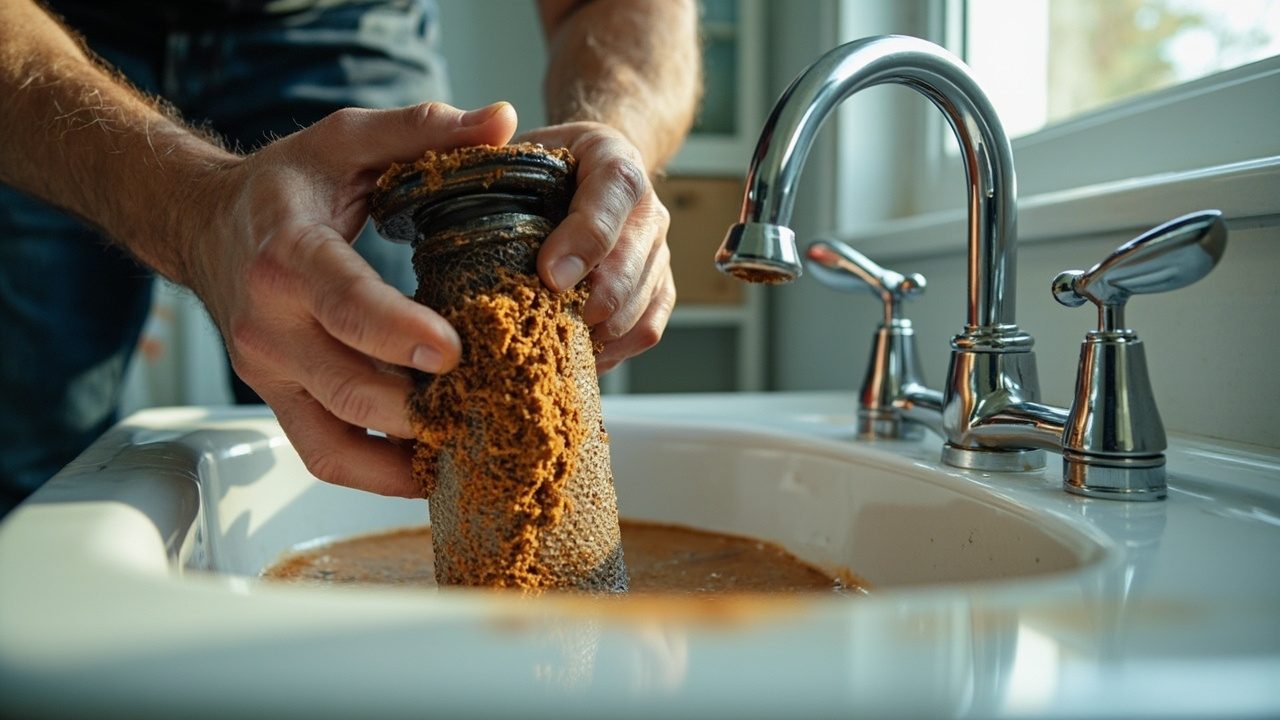
The dark grit is rust from galvanized steel pipe, and galvanized pipe corrodes from the inside. The zinc coating wears through, rust builds on the wall, and flakes break loose and ride the flow to the nearest screen. That same rust shrinks the bore, so flow at the far tap drops years before the pipe ever leaks. El Paso Water names rusting galvanized pipe inside homes as the typical cause of discolored water. Houses from the late 1800s through the 1930s carry galvanized supply, and postwar slab homes from the 1940s through the 1960s carry galvanized or early copper, so the older central neighborhoods of the county are where this pipe is most likely still in the walls. The white crust is scale, the calcium deposits that hard water leaves behind. The county supply blends river water with aquifer groundwater, and the utility describes it as moderately hard to hard. Scale collects in faucet cartridges and valves, on heater elements, and as loose sediment on the floor of a tank.
Where the grit shows places the fault. One clogged aerator with clean taps everywhere else puts the source at that fixture's own stop or short branch. Grit at every aerator in the house puts it upstream, in the main supply run or the heater. A tap at the far end of the house that has lost flow while the rest run normally fits a run narrowed from the inside. Hot water that runs out halfway through the second shower alongside grit in the aerators fits a tank scaling for years. Rust on both hot and cold points at galvanized pipe, and rust on the hot side only points at the tank. Most people have already cleaned the screens or fitted a filter cartridge, and the screen loads again because the source sits upstream of it.
Call today when the rust shows on the hot side only. The anode rod in a tank heater is sacrificial metal, and once it is consumed the steel tank becomes the metal being corroded. Rusty hot water arrives first and a split tank arrives after, which puts the tank's full contents on the floor around the heater. Grit on both sides with steady flow can wait for a scheduled visit.
More detail on cold water sandwich effect is on its own page.
How we read the water before we price any pipe
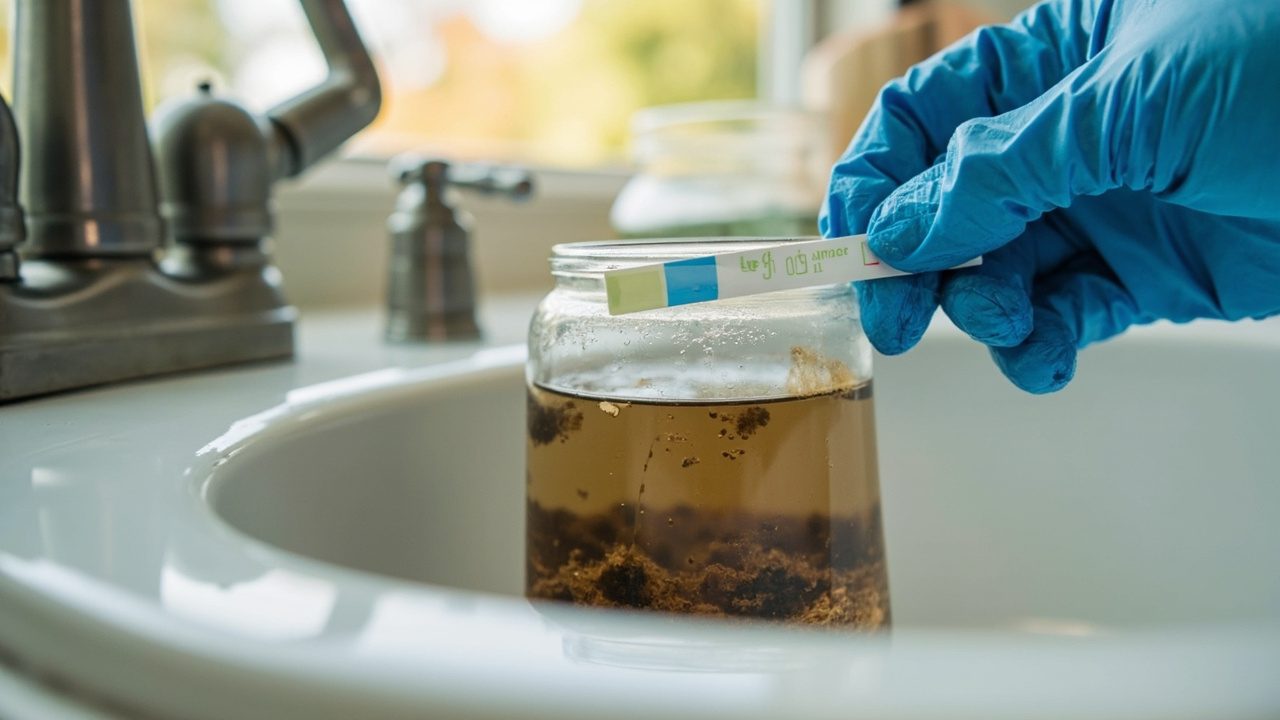
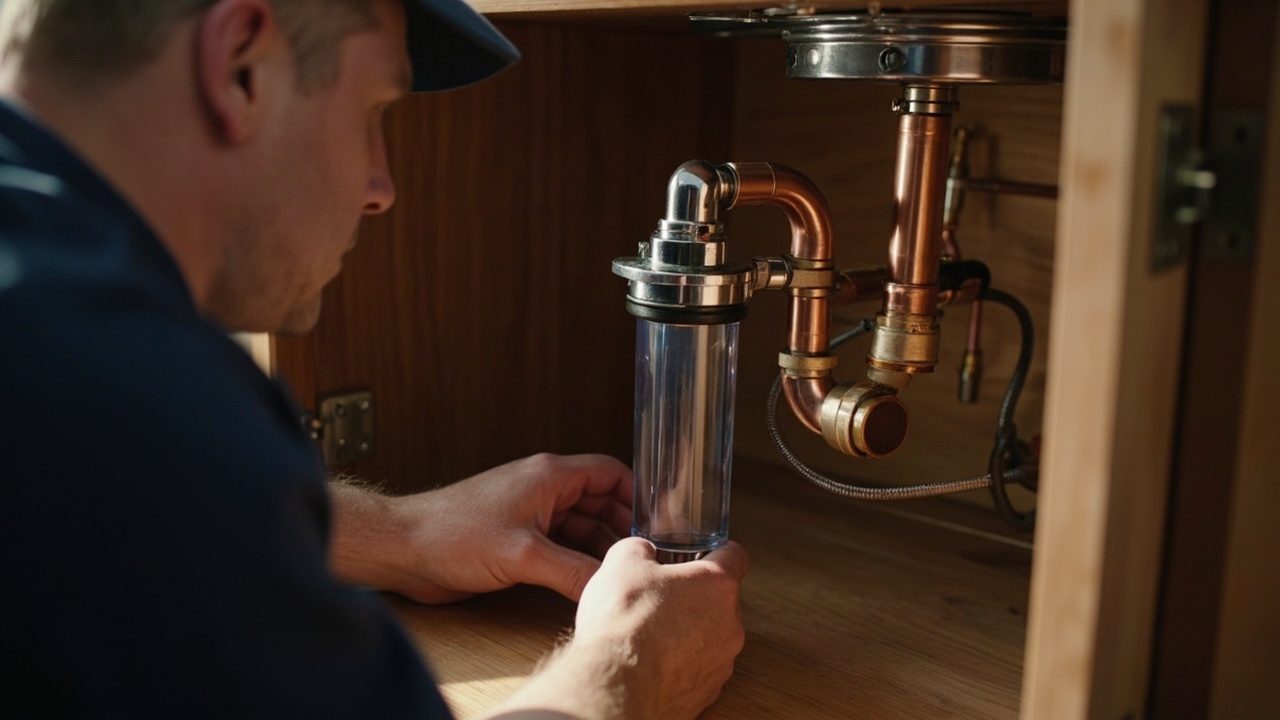
Start with the hardness of the water coming into the house, taken at a tap ahead of anything that treats it, because that reading decides whether the crust in your aerator is a water problem or a pipe problem. The aerator at the farthest sink comes off next, cold and then hot, since color and texture separate rust from scale. Then the hot side gets isolated. The cold inlet on top of the tank closes, the tank drains through a hose, and the anode rod comes out if there is headroom above the tank to pull it, which gets checked before anyone promises a same day rod pull. A wall or ceiling opens last, and only at the segment the isolation pointed to.
One reading turns this page, and it is hardness. Soft to moderately hard water leaves aerators and heater elements alone. Hard to very hard water shows up as scale in the heater, crusted aerators and short element life, and the jump from moderately hard to hard is where scale starts showing on service calls. Local water commonly tests around ten grains per gallon or more, and above about seven grains per gallon scale forms steadily, so flushing, descaling or treatment goes into the plan before any pipe gets priced. That number sets the fork. White crust, a high hardness reading and clean pipe walls wherever a section is opened mean the job is descaling the heater and treating the water, because new pipe would scale the same way. Orange brown flakes with hardness inside the normal band mean the galvanized is the source, and cleaning only removes what has already come loose while the wall keeps corroding. A run that has shed at two fixtures gets replaced as a segment rather than repaired at a spot. A bare core wire on the anode rod moves the heater from cleaning to replacement.
When a galvanized run is replaced, the choice is type L copper or PEX. Copper is rigid, tolerates heat directly and costs more in material and labor. PEX is flexible, so a home run layout from a PEX manifold puts fewer joints inside walls and leaves fewer places where a future repair has to open drywall. PEX A takes expansion fittings and PEX B takes crimp rings, and either needs protection from sunlight and where it passes through framing. Where new copper meets galvanized that stays, a dielectric union separates the metals. Neither pipe changes the hardness, so scale keeps forming until the water is treated, and the choice between an ion exchange softener and a template assisted crystallization conditioner turns on the reading and on whether a drain is available. Where a finished wall is costly to reopen, the fewest joints inside it wins.
If this sounds close but not quite your situation, noisy pipes may be the better starting point.
Permit and inspection questions? Planning & Inspections is the office we coordinate with on every permitted El Paso job.
Ask which of these readings was taken before any part is replaced.
| Instrument | Good reading | Bad reading | What it changes |
|---|---|---|---|
| Combustible gas detector and bubble solution on gas fittings | No alarm at the fittings and no bubble growing on the joint | Any bubble that keeps growing or any sustained alarm | The appliance valve gets closed before anything else happens |
| Thermometer at the farthest hot tap | Hot water arriving around 120 degrees | Hot enough at the tap to scald a child in seconds | The first slug of water is whatever was sitting in the pipe |
| Overnight pressure hold with the gauge left | The morning reading is close to the reading taken the night before | A reading far above the night figure | The heater is expanding water into a closed system with nowhere to put it |
| Drain camera with a locator | Continuous fall to the main, clean joints | Standing water part way along a level run means a belly | Roots at a joint mean the repair belongs at that joint rather than the whole line |
| Anode rod pull on a tank water heater | The rod still has sacrificial metal along the core wire | A bare core wire with the metal gone | The tank itself is now the part being eaten |
| Screw on pressure gauge at a hose bib | Static pressure sitting in the 45 to 70 psi range with nothing running | Above 80 psi | Fixtures, supply hoses and water heaters start failing early |
How a sediment call runs
First questions and tests
On the phone we ask which taps show grit, whether discoloration appears on the hot outlet alone or both sides, and whether the tank sits in a garage or a closet, because that decides whether a rod pull is possible the same day. On site the sequence runs in one order. The hardness test goes on the incoming water first. We remove the strainer basket at the farthest fixture from both cold and hot lines. The cold inlet on the tank closes, and the anode rod comes out if the headroom allows. You see the kit color and the rod itself before anything is written down.
Approval, then isolation
Once you approve the written scope, the main or the branch closes first and the heater drains through a hose to the floor drain or outdoors. A flush or descale and new aerators follow, and where the scope calls for it, a replaced heater or a replaced run. On a replaced run the cut goes at the transition, a dielectric union joins any galvanized that stays, and type L copper is soldered or PEX runs to a manifold. If the pipe behind a wall shows more corrosion than the reading predicted, we stop and show you before going further.
Readings before we leave
Before we leave, the hose bib gauge goes back on with everything in the house off and has to read inside 45 to 70 psi. The farthest hot tap runs a full minute, and a thermometer in the stream should read around 120 degrees with water that runs clear. Wherever treatment was installed, the hardness kit goes on again and the number goes on the record beside the first one. You walk through the aerator and the rod or the cut pipe with us, and you keep the written scope with the hardness reading, the pressure reading and a note of any galvanized left in place.
Why galvanized runs and desert water trip up unfamiliar crews
Permits for repipe work come from the authority that covers your address, which is the city inside city limits and the county or the neighboring town outside them. A full run of supply pipe usually needs a permit and gets inspected in stages, while cleaning an aerator or swapping a braided supply hose usually needs none, and the final call belongs to that authority. Gas work on a heater swap draws inspection more readily than a faucet does. A crew that works across the county knows which side of that line a house sits on before it prices the job.
The most common mistake is reading scale as rust, or rust as scale. A crew that replaces pipe in a house whose real problem is hard water leaves new pipe to scale the same way, and a crew that descales a heater in a house with shedding galvanized leaves the source running. The hardness reading and the aerator color settle it before a quote exists.
Old galvanized breaks under force. Rust thins the wall under the threads, so a wrench tightening a new fitting can snap a nipple and open a second leak inside the wall. Older houses in the county often mix galvanized, cast iron and later partial repipes in one building, and joining copper straight to galvanized without a dielectric union starts a new corrosion point at the joint.
Heater location matters too. Homes from the 1970s through the 1990s often keep the water heater in a garage or closet where headroom limits an anode rod pull, and a crew that promises the rod pull by phone finds out at the tank. Exposed plastic lines degrade in intense sun and heat, so PEX on a garage or exterior wall gets covered or routed inside. Short hard freezes split unprotected outdoor piping, so a run crossing an exterior wall gets protected.
Response covers the whole county, from the sandy, gravelly mesas and foothills to the finer alluvial soils of the river valley. Caliche hardpan slows any yard line dig on the mesas, which matters when a meter test puts the source on the street side rather than inside the house.
See how to prevent frozen pipes for how the related work is scoped and priced.
Independent standards matter too, the EPA's WaterSense program sets the efficiency benchmarks we use when recommending replacement fixtures.
Working with Bedrock Plumbing El Paso on a sediment job
When someone arrives
You call and we ask three things: which taps show grit, whether the rust is on the hot side only, and where the tank sits. Rust on the hot side only, which can mean a consumed anode rod, goes to the front of the day, and grit at every tap with steady flow goes to a scheduled visit. The arrival window is given at the end of that call. If the visit ahead of yours runs long, the window moves and you are told before the technician arrives.
Protecting floors and walls
Before anything comes apart, drop cloths go down around the sink and the heater. The heater drains through a hose to the floor drain or outdoors, so scale and rust flakes never land on your floor. Aerator screens and cut pipe sections go into a tray so you can see what came out. Everything removed leaves with us, and the last task is running each tap with the aerator off until the stream clears.
What moves the cost
Access moves the number furthest. A finished wall, a tiled surface, a ceiling below, a slab or a crawlspace all have to be opened and restored, so the same pipe costs more where it is harder to reach. Repair at one joint against replacement of the whole run comes next, and the condition of the rest of that run decides it. Matching old material to new, the grade of fixture or heater you choose, and after hours dispatch follow. The written scope comes after the hardness test and isolation, and you approve it before work starts, including what happens if the opening finds more.
How technicians are checked
A new technician rides with a lead and does not work alone until the lead has watched them run a hardness test, pull an anode rod and read the result, and join copper to galvanized with a dielectric union. The lead signs off on each task. Code updates are read and talked through as a group before they reach a job. On a galvanized run that has closed up, a second technician looks at it before a scope is written.
You Have Questions,
We Have Answers
Sediment forms when minerals precipitate from hard water or when metal pipe corrodes and sheds particles. Calcium and magnesium fall out of solution when water heats, so scale grows fastest on heater elements and in the bottom of a tank. Separately, old steel supply lines and disturbed mains release fine grit after a pressure surge or a repair. Sand or silt arriving from a failing service line looks different from either one, since it is gritty, tan and settles quickly in a clear glass.
Sediment in water comes from minerals, corroded pipe, or soil entering the supply through a damaged line. Fill a clear glass and wait a few minutes. Particles that sink quickly are usually sand or scale, while a cloudy look that rises and clears from the bottom is trapped air. Black specks often come from degraded rubber supply hoses or flexible connectors, and fine tan silt after street work suggests a disturbed main rather than anything inside your walls.
White vinegar or a citric acid descaler dissolves calcium scale on fixtures, aerators and heater elements. Soak a removed aerator for several hours, then scrub the screen. Acid does nothing to rust flakes, because iron oxide only loosens slowly and comes off in pieces that lodge downstream. Never pour acid into a pipe with galvanized or thin walls, since it attacks the metal along with the deposit. Inside a tank, a circulated descaling solution is used with the heater isolated and the anode rod inspected.
Flush a water heater by closing the cold inlet and draining the tank through a hose until clear. Open a hot tap upstairs first so air enters and the tank drains freely. Chunks of scale often jam the drain valve seat, so a trickle that stops early means the valve is blocked and the tank still holds water. Briefly opening the cold inlet stirs settled solids and carries more out. Then run each fixture without its aerator to clear the lines.
Removing sediment means finding the source first, then cleaning what came loose and correcting the source. Scale from hard water calls for descaling the heater and treating the water so it does not return. Rust from corroding steel pipe calls for replacing the shedding segment, since cleaning leaves the wall corroding. Flushing a heater tank yearly slows accumulation, and checking the anode rod catches a consumed rod before the tank wall begins to rust. A treatment device sized to the hardness reading protects the new work.
Water filters remove sediment when the cartridge micron rating is fine enough for the particle size. A five-micron sediment cartridge catches sand and rust flakes, while a coarser screen passes fine silt. Cartridges load faster on a house with corroding steel pipe, sometimes within weeks, and a clogged cartridge drops pressure at every tap. A filter also cannot stop dissolved hardness minerals, which pass through and form scale later when the water is heated. The pipe wall keeps shedding upstream of the filter.
A clogged drain pipe shows as slow draining, gurgling, and water backing up in the lowest fixture. Gurgling happens when air is pulled through a trap behind a partial blockage. If a tub bubbles when the washing machine drains, the blockage sits on the shared line downstream of both. Several fixtures draining slowly at once point to the main drain, while a single slow sink points to its own trap or short branch. A sewage smell near a floor drain adds to that evidence.
Enzyme cleaners, hot water and a hand auger clear most organic blockages, and caustic openers are the harshest option. Grease and soap buildup softens with hot water and enzymes over repeated treatments. Hair and paper need mechanical removal, because chemicals leave the mass in place. Caustic products generate heat that can soften old plastic traps and sit in a standing blockage, which then makes the line dangerous to open by hand. Tree roots and collapsed pipe do not respond to chemicals at all.
No single bottled brand can be named least contaminated, because results change with each bottling batch and its test report. Check the label for the source and the treatment method, such as reverse osmosis or distillation, and look for a posted water quality report from the bottler. Low total dissolved solids on the report signals a more heavily processed product. A lab analysis of contaminant levels is the right route for comparing brands.
Clogged supply pipes show as falling flow at one or more taps while the pressure gauge stays normal. Compare flow at the far tap with the tap nearest the main by timing how long a bucket takes to fill. A pipe narrowed by rust or scale gives a weak stream even with the valve fully open. Pressure that reads normal at the hose bib but weak indoors points to the branch. Flow that drops when hot water runs, but not cold, points to the heater.
Why hard water and galvanized pipe change sediment work in El Paso
The water comes first. The utility blends river surface water with aquifer groundwater, disinfects it with chlorine, and describes it as moderately hard to hard. The hardness reading taken at the start of a visit sets the plan for any tankless unit, because scale forms steadily in tank heaters, tankless heat exchangers and valves above about seven grains per gallon. Housing stock sets the pipe. Post-war construction through the 1960s installed galvanized or early copper supply with cast iron drains under the slab, so a rust problem there means reaching a run through concrete or rerouting it overhead. Homes from the 1970s through the 1990s run copper under or through the slab, so the supply pipe stays out of reach while scale builds in the heater and fixture valves above it. Newer subdivisions use PEX manifolds, which moves the sediment question to the heater and the fixtures. Summer heat stresses heaters and intense sun degrades exposed plastic, so sun facing runs get covered.
Inspection follows the permit. Where a repipe is permitted, the inspector usually looks at the pipe in stages while it is still exposed, and the items that draw attention are how the run is supported, what joins old metal to new, how PEX is protected where it passes through framing, and whether the gas connection at a replaced heater is sound. Knowing that in advance changes the sequence. Walls stay open until the joints have been seen, and the wall repair gets scheduled after the inspection. Freezing nights come every winter and most hover just below freezing, but an arctic front can drop temperatures well into the teens, and that is when exposed hose bibs, backflow assemblies and outdoor lines split. Spring adds another condition. Evaporative coolers start up, and scale on their float valves and supply lines is a local failure mode, so a cooler branch gets its own stop when new supply is run.
Plumbing Services in The El Paso Area
Explore our service area and locate Bedrock Plumbing El Paso with ease. We're proudly local and serve the surrounding neighborhoods with fast response and honest pricing. Use the map to check our coverage area, or call us and we'll confirm in seconds.
Address:
Bedrock Plumbing El Paso, 221 North Kansas St, Suite 700, El Paso, TX, 79901
Additional Services We Offer
Cleaning an aerator and swapping a braided supply hose are homeowner jobs, and you do not need us for them. DIY stops at anything soldered, anything on the gas line, and anything behind a finished wall or under a slab, because a corroded galvanized nipple can snap under a wrench. We do not test drinking water for contaminants. If the first visit turns up work outside ours, we say so then and tell you who handles it.
Know which taps show grit and whether rust appears from heat alone or throughout the system. Pull one aerator and note whether the debris is orange brown or white and chalky. Find the water inlet connection and the main shutoff. Any age you have for the heater or the pipe helps, along with when it started and what changed just before.
Last reviewed September 2026 by Dave Parker, Owner.