



What a frozen water line usually means in El Paso homes
In the next five minutes, work in this order. Shut the water off at the fixture stop if there is one. If there is not, close the main where the line comes into the house or at the meter. If water has reached outlets, a panel or a ceiling fixture, kill that circuit before anyone steps into the water. If the frozen line feeds the water heater, close the cold inlet on top of the tank and turn the gas control or the breaker off. Then open a hot tap on a lower floor so the tank is not under vacuum. If you smell gas or rotten eggs, touch no switch and no phone charger. Get everyone outside, leave the door open behind you, and call Texas Gas Service from outside.
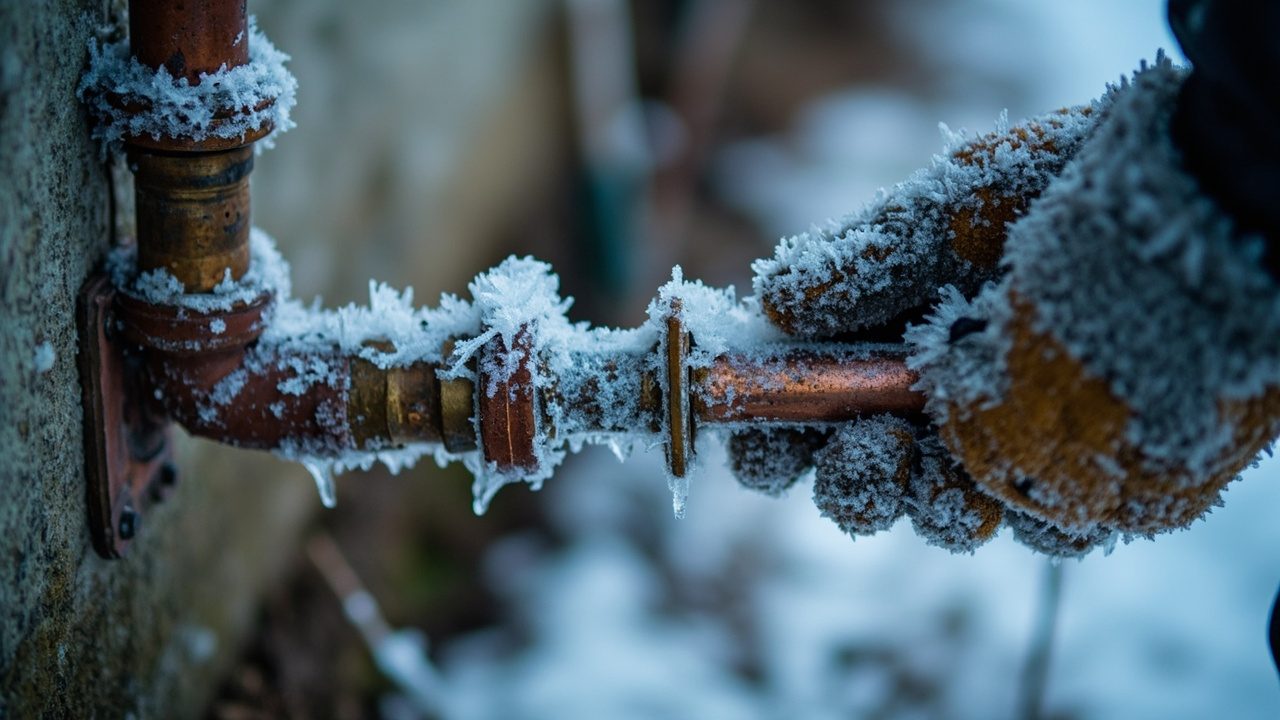
A kitchen tap that gave a trickle, a cough of air and then nothing puts the ice on that branch. A hose bib with a bead of ice on it and a pipe that is cold to the hand behind it says the same. In El Paso, freezing nights come every winter, but most hover just below freezing and give way to a mild afternoon. The ground does not freeze deeply, so buried lines mostly stay clear. The pipes that lose sit in open air, in hose bibs, backflow assemblies, outdoor lines, garages and exterior walls. When an arctic front drops the night well into the teens, lines built for a mild winter freeze solid. Slab homes from the 1970s through the 1990s often keep the water heater in a garage, so check whether the dry line is the cold inlet.
Ice damages a pipe by pressure. Water expands as it freezes, and the water trapped between the ice plug and a closed tap has nowhere to go, so the pipe wall gives way at its weakest point, often away from the ice itself. While the plug holds, nothing drips and the tap is dry. The leak starts as the plug melts and the line refills, which is why a ceiling stain can show hours after the temperature recovered. A thawed line that looks sound can still hold a hairline split that only weeps under full pressure. Supply and drain behave differently here. A burst frozen pipe on the supply side runs under pressure all night whether anyone is home, while a drain only escapes while something upstream runs.
Call today when a line that stayed dry begins to show a ceiling stain, damp tile or a hiss inside a wall as the house warms. A hairline supply leak behind tile keeps the framing damp because nothing dries inside a wall, and then the pipe repair turns into a wall rebuild.
Our page on burst pipe repair covers that side of the work in more depth.
Permit and inspection questions? Planning & Inspections is the office we coordinate with on every permitted El Paso job.
How we thaw a frozen water line and prove it holds
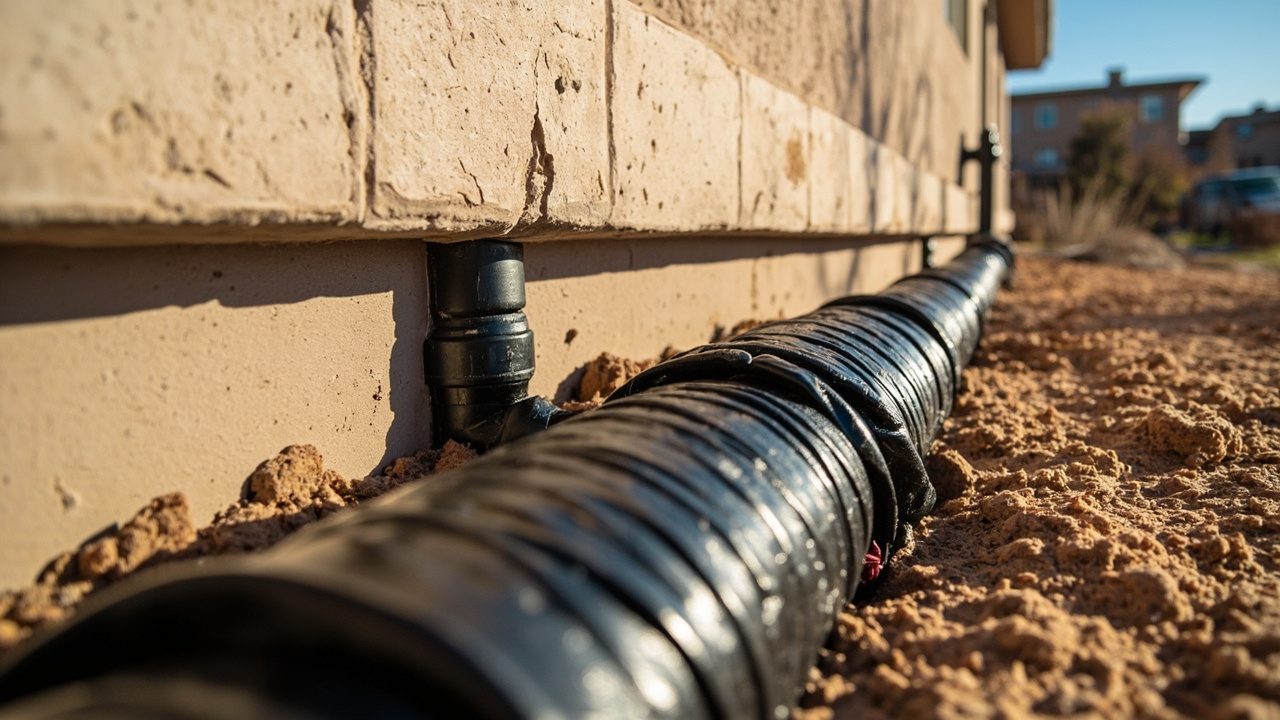
A pipe thawing service works by isolation first and heat second. We find which fixtures are dry. Cold and hot both dry at one sink puts the ice on that branch, a dry hot side alone points at the heater, and a dry house sends the search to the main. Then the main closes, the tap on the frozen branch opens, and heat goes on at that open tap and works back toward the source. That direction gives melt water and expanding water an exit the whole way, which is what prevents a second split. Heat stays low and keeps moving along the pipe. Open flame stays off the line, since it heats one spot of the wall faster than the water behind it can drain. When flow returns, pressure comes back one branch at a time while every joint and the ceiling below are watched.
One reading decides more than any other on this visit, the screw on pressure gauge at a hose bib, read with every fixture off. A running fixture hides the real static number, so nothing runs. A reading of 45 to 70 psi leaves the scope at the split itself. A reading above 80 psi adds a pressure reducing valve to the scope, because the new segment, every supply hose and the heater all take that pressure on every cycle. Where the heater sits on a closed system, the gauge stays on overnight, and a morning figure far above the night figure means the heater is expanding water with nowhere to put it, so a thermal expansion tank joins the list. A wall that is already open is the least expensive place to fix pressure.
If a split takes out a segment, the replacement material is a decision, and freeze exposure settles it. Soldered type L copper is rigid, tolerates heat directly and stays where you can see it, so it suits a run that stays exposed in a garage or along an exterior wall. PEX is flexible, so a home run layout from a PEX manifold puts fewer joints inside walls, and PEX A with expansion fittings and PEX B with crimp rings both work. PEX has to stay out of sunlight, and El Paso sun degrades exposed plastic, so it is protected where it crosses framing and never runs bare outdoors. Copper costs more in material and labor. A later repair on PEX in a wall costs less drywall. Where the layout allows, the replacement segment moves off the exterior wall.
If this sounds close but not quite your situation, how to prevent frozen pipes may be the better starting point.
Ask which of these readings was taken before any part is replaced.
| Instrument | Good reading | Bad reading | What it changes |
|---|---|---|---|
| Screw on pressure gauge at a hose bib | Static pressure sitting in the 45 to 70 psi range with nothing running | Above 80 psi | Fixtures, supply hoses and water heaters start failing early |
| Overnight pressure hold with the gauge left | The morning reading is close to the reading taken the night before | A reading far above the night figure | The heater is expanding water into a closed system with nowhere to put it |
| Water meter leak indicator with every fixture closed | The dial or the small leak wheel does not move over fifteen minutes | Any movement at all with the whole house off | Water is leaving the system somewhere you cannot see |
| Drain camera with a locator | Continuous fall to the main, clean joints | Standing water part way along a level run means a belly | Roots at a joint mean the repair belongs at that joint rather than the whole line |
| Combustible gas detector and bubble solution on gas fittings | No alarm at the fittings and no bubble growing on the joint | Any bubble that keeps growing or any sustained alarm | The appliance valve gets closed before anything else happens |
How a frozen pipe call runs
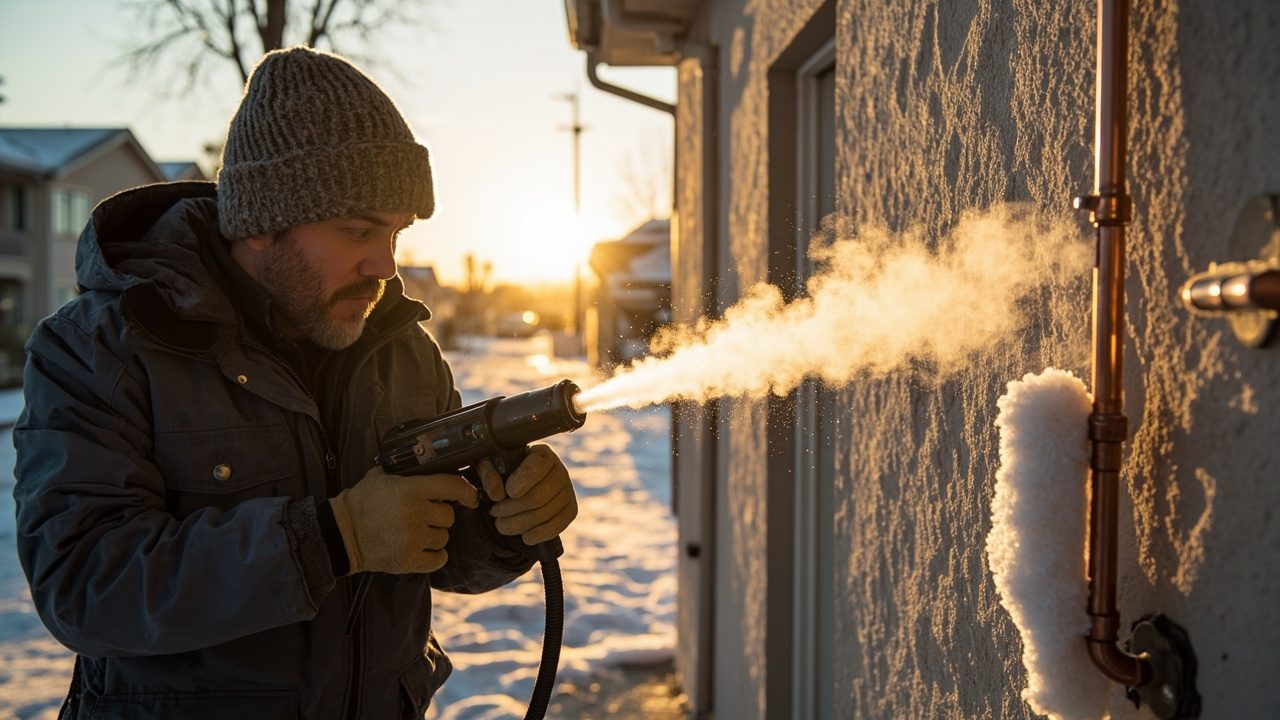
Call and isolation
The first call is short. You tell us which taps are dry, whether water shows anywhere, and where the main shutoff sits. On site the order follows where the water is going. Every fixture goes off, the main closes, and the tap on the frozen branch opens. Heat application begins at that opening and advances toward the source with warmth kept in motion, so melt water always has an exit. You watch flow return. Then we restore each branch individually while monitoring every joint and the ceiling below, and a screw on pressure gauge goes on a hose bib to read static pressure with everything off.
Approval and repair
Once the thaw shows where the pipe split, the scope is written and you approve it before anything gets cut. Isolation comes first, with the stop or the main closed and the branch drained. The failed segment comes out, and the new piece goes in as soldered type L copper or as PEX with a push fit fitting, crimp rings or an expansion fitting, matched to the pipe already there. If the opening turns up more damage or a corroded galvanized run behind the split, we stop and show you before going further. On an old run, frozen pipes repair often becomes a question of one segment against the whole run, and you decide it with the evidence in front of you.
Testing and handover
Before we leave, the screw on pressure gauge goes back on a hose bib with every fixture off and has to read inside the 45 to 70 psi band. Each new joint gets checked under full pressure, and the ceiling below stays under watch while it does. If the reading came in above 80 psi, the pressure reducing valve is part of the approved scope and gets tested the same way. We walk you to the repaired segment, the stop for that branch and the main shutoff, and you keep the written scope you approved.
Why El Paso freezes trip up crews from other climates
El Paso County gets freezing nights every winter, and most of them are gentle, so a crew that reads the job from another climate gets it wrong in two directions. Crews from colder places dig for a frost line. Here the ground does not freeze deeply, so the buried service line is rarely where the ice sits, and a trench opened on that assumption burns a day in caliche and finds nothing. The ice sits in hose bibs, backflow assemblies, outdoor lines and runs through garages and exterior walls.
Crews used to mild weather make the other mistake. An arctic front that takes the night well into the teens is occasional, so a stiff hose bib looks routine and nobody checks the wall behind it. The split often opens behind a finished surface while ice still holds it shut. Irrigation backflow assemblies split in the same cold, and a crew that only checks the house misses them. Older galvanized supply, common in the oldest housing here, is already narrowed by rust from the inside, so full pressure returned too fast can open a second weak point. Pressure comes back in stages.
Hard water sets a third trap. El Paso Water describes the supply as moderately hard to hard, and scale locks fixture valves and angle stops in place. A stop that has not turned in years and gets forced can snap off in the hand, and then the room takes the full supply. A crew that knows this reads the stop first and closes the main when the stop will not turn cleanly. The same scale shortens heater life, so a heater in a garage that fails after a freeze gets its anode rod and scale checked before the freeze takes the blame.
Permits follow what the job touches. A like for like fixture swap usually needs none, gas work and main line work usually do, and the authority for the address makes the final call, because work inside city limits and work outside them fall under different offices. Response across the county is sorted by the same logic. A cold snap brings calls from every direction inside the same few hours, so the first questions separate water escaping under pressure from a tap that is only dry. Escaping water goes first.
See industrial pipe repair for how the related work is scoped and priced.
How a frozen pipe call goes day to day
When someone arrives
You call and we ask which taps are dry, whether water is showing anywhere, and where your main shutoff sits. Those three answers sort emergency pipe thawing calls into water escaping under pressure, which goes first, and a dry line with no leak, which can be a scheduled visit. The arrival window is confirmed on the phone before the call ends. If the job ahead of yours runs long, the revised window reaches you by phone before the first one closes.
Protecting floors and walls
Before a tool comes out, drop cloths go down between the door and the work area and under the frozen tap. Thawing sends melt water out of the open tap, so a catch bucket and towels sit under it and under any joint that gets opened. If a wall has to open, the cut stays as small as the split allows and plastic sheeting holds the dust in that room. The crew carries out everything that comes out, wipes the floor dry, and finishes by walking the touched joints with you.
What moves the cost
Access moves the job furthest, meaning a finished wall, tile, a ceiling below, a slab or a crawlspace, plus putting that surface back. Depth and length of any trench come next, and caliche slows those. Then comes one split against a whole segment, decided by the condition of the rest of the run, followed by matching old pipe to new, the grade of fixture or valve you choose, and after hours dispatch. You approve a written scope before work starts, and what happens if an opened wall shows more is agreed in writing first.
How technicians earn sign off
A new technician rides alongside a lead before working alone, and the lead signs off on specific tasks, including reading a screw on pressure gauge with every fixture off, bringing pressure back to a thawed line one branch at a time, and closing a scaled angle stop without snapping it. Code changes are studied when they take effect. On any job with galvanized pipe or a split behind tile, a second technician looks at it before a scope is written.
You Have Questions,
We Have Answers
A plumber thaws frozen pipes by applying low, controlled heat that starts at the open faucet. Before any heat goes on, the plumber closes the main and tracks which fixtures are dry, so the frozen section is known. Ice can also mask a split, so the pipe is watched for weeping once flow returns. A thaw that skips the isolation step can leave a leaking joint hidden inside a wall.
Frozen pipes do thaw once air temperature stays above 32 degrees Fahrenheit long enough, but the timing is uneven. A pipe in an exterior wall or an unheated garage can stay frozen well into the afternoon, since the ice plug is insulated by the pipe's own surroundings. The danger is the refill. A split hidden by the plug can begin spraying as the ice melts, so keep the fixture stop closed until someone checks the line.
Worry begins when a dry tap starts to hiss, drip or show damp drywall as the house warms. Bulging or a visible crack in exposed pipe also counts, as does a water meter dial that keeps turning with every fixture off. Any of these means the ice has released a split and the line is refilling under full pressure. Close the main immediately and stop using that branch.
Cost rises with access difficulty, since a finished wall, tile or ceiling below adds cutting and patching. It rises again when a whole segment fails instead of one split, or when old galvanized pipe must be matched to new material. After hours dispatch adds to the total, while a simple thaw at an exposed hose bib sits at the low end. A written scope is approved before work begins.
Plumbers can thaw the ice, find the split, replace the failed segment and correct the pressure that stressed the pipe. Reading static pressure with a gauge on a hose bib shows whether the home runs too high. Readings above 80 psi point to a pressure reducing valve. A plumber can also reroute a vulnerable run away from an exterior wall, which addresses the cause instead of only the damage.
Close the water at the fixture stop or main, then open the tap on the frozen branch. An open tap lets melt water leave and relieves pressure between the ice and the valve. Leave a faucet on a lower floor open if the heater is affected. Apply only gentle warmth, such as a hair dryer on low, and keep watching for moisture on the wall or ceiling below.
Unfreeze a pipe by warming it gradually, starting at the open faucet and moving toward the frozen section. A hair dryer on low, a heating pad or warm towels wrapped around an exposed pipe all work. Move the heat along the pipe instead of holding it in one spot, because uneven heating stresses the wall. Never use a propane torch, since it can scorch framing and overheat solder joints.
Homeowner policies often cover sudden water damage from a burst pipe, though terms vary by carrier and by cause. Many exclude damage from neglect, such as leaving a vacant house unheated. Policies usually treat the pipe repair itself differently from the resulting water damage to floors and walls. Photograph the split, the wet areas and the stopped meter before cleanup, and read your own policy or call your carrier.
Plumbers use low, controllable heat such as an electric heat gun kept moving, heating cable or warm-water methods. Open flame stays off because copper conducts heat quickly and steam can form in the water trapped behind the ice plug. A pressure gauge on a hose bib is the verification tool afterward, read with every fixture off, and it confirms whether the thawed system is holding safe static pressure.
Open the frozen branch's tap first, then warm the pipe slowly from that tap back toward the ice. Wrapping towels soaked in hot water around exposed copper works when a heat source is not handy. Check any joint you can see for bulging seams while the ice clears. If water sprays or stains appear, close the main at once and stop thawing that section.
Why arctic cold fronts change frozen pipe thawing in El Paso
Freezing nights arrive in El Paso every winter, with the first freeze in mid November and the last in early March. Most of those nights dip below freezing and warm during the afternoon, and the ground does not freeze deeply. That puts the failures at exposed supply connections and exterior piping. When an occasional arctic front takes the night well into the teens, those lines split, and the work changes with the pipe. Slab homes from the 1970s through the 1990s run copper supply under or through the slab with heaters in garages, so the garage runs get checked first. Homes from the 2000s onward carry PEX on a manifold, and closing the manifold valve isolates one branch while the rest of the house keeps water. Exposed plastic degrades in the sun, which shapes how a replacement segment is protected. Caliche hardpan slows any trench for a buried outdoor line, so a repair that can be done at the wall is chosen over one that needs a dig.
Oversight on a frozen pipe job follows what the repair touches. A like for like swap of a hose bib, a supply hose or a fixture stop usually needs no permit. Work on the main line and irrigation backflow assemblies replaced after a freeze often does, and the authority, not the plumber, decides what applies. Where a permit applies, work is inspected at stages, and which office handles the address depends on whether it sits inside or outside city limits. That timing changes the sequence. Bringing pressure back one branch at a time keeps every new joint visible under load, and a wall stays open until the joint has been looked at, since reopening a closed wall to show one joint costs far more than waiting for it. Pressure and expansion get read while the opening is still there, so a pressure reducing valve or a thermal expansion tank goes in during the same visit rather than through a second wall. Knowing the sequence in advance shortens the job.
Plumbing Services in The El Paso Area
Explore our service area and locate Bedrock Plumbing El Paso with ease. We're proudly local and serve the surrounding neighborhoods with fast response and honest pricing. Use the map to check our coverage area, or call us and we'll confirm in seconds.
Address:
Bedrock Plumbing El Paso, 221 North Kansas St, Suite 700, El Paso, TX, 79901
Additional Services We Offer
- 24/7 Emergency Plumbing Services
- Basement Flooding Pump-Out
- Burst Pipe Repair
- Emergency Sewer Backup Cleanup
- Emergency Sump Pump Failure
- Emergency Water Heater Repair
- Emergency Water Shut-Off Service
- Gas Leak Detection & Repair
- Main Water Line Break Repair
- Overflowing Toilet Repair
- Rapid Response Leak Repair
- Septic Tank Emergency Pumping
Draining a hose bib before a freeze and closing the main shutoff are homeowner jobs, and you do not need us for them. DIY stops at anything soldered, anything on the gas line, and anything behind a finished wall or under a slab, because a split there leaks where you cannot see it. Drying out a soaked wall sits outside plumbing, and if the first visit turns up that job, we say so then and tell you who handles it.
Before you call, know which taps are dry and whether the hot side, the cold side or both have stopped. Note when it started, and whether any wall, ceiling or floor near the pipe is damp or warm. Find your main shutoff, and tell us where your water heater sits and how old the pipe is, if you know. Say whether anyone is home.
Last reviewed September 2026 by Dave Parker, Owner.