





What a failed valve at night usually means in El Paso homes
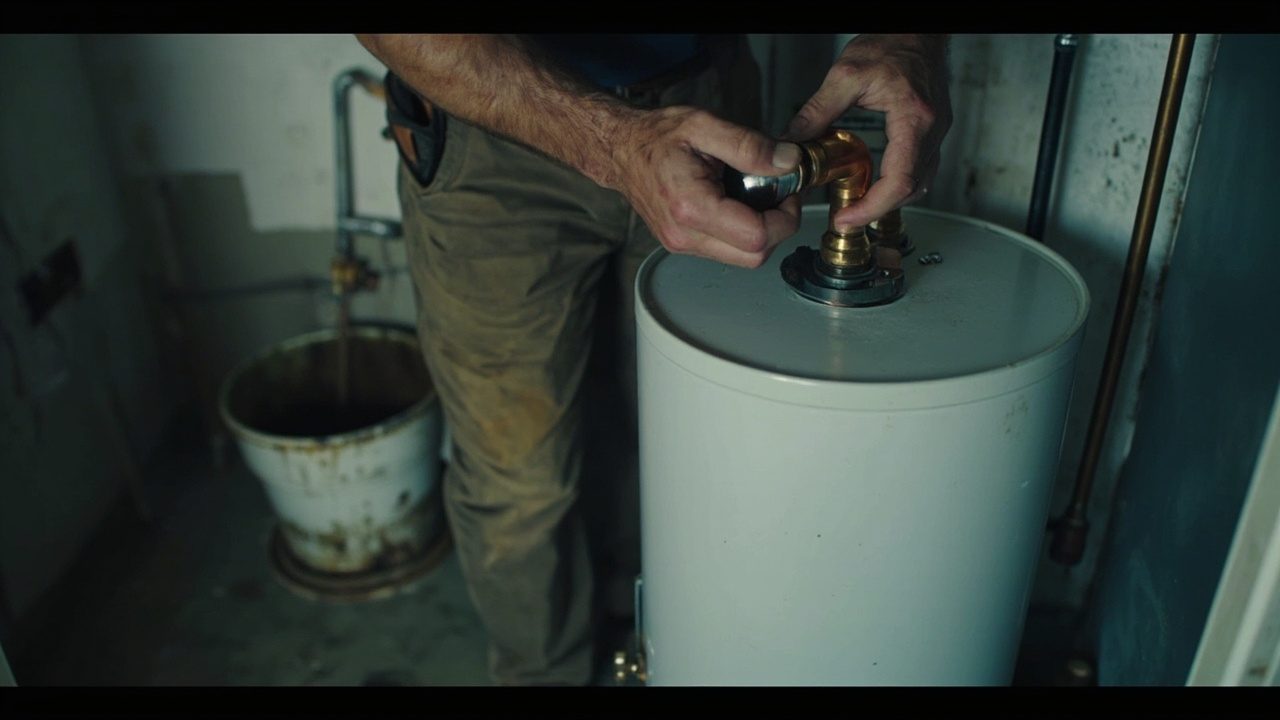
First five minutes, in this order. Shut the water off. Use the stop at the fixture if there is one, and if there is not, close the main where the line comes into the house or at the meter. If water has reached outlets, a panel or a ceiling fixture, kill that circuit before anyone steps into the water. On a water heater, close the cold inlet on top of the tank, turn the gas control or the breaker off, then open a hot tap on a lower floor so the tank is not under vacuum. If you smell gas or rotten eggs, touch no switch and no phone charger. Get everyone outside, leave the door open behind you, and call Texas Gas Service from outside. For a sewage backup, stop every water use in the building, including the washer and the dishwasher. Keep people and pets out of the wet area, and do not plunge a line that is already full.
Where the water shows tells you which side of the system failed. Water under pressure runs all night whether anyone is home or not. A drain only escapes while something upstream runs. A spray, a ceiling stain that keeps spreading, a warm patch on the floor or a meter dial turning with everything off puts the trouble on the supply side, and that is a tonight problem. A gurgle, or water at a floor drain only when the washer empties, puts it on the drain side. There the first job is stopping the water use that feeds it.
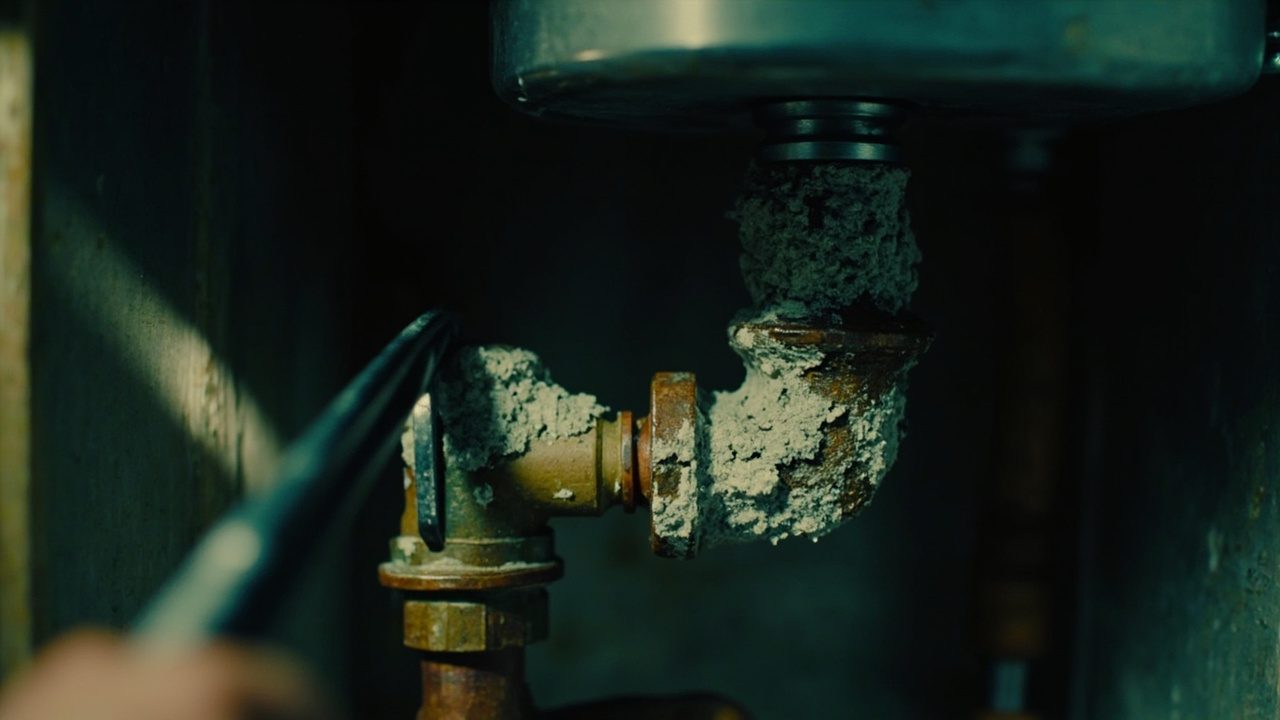
Most night calls start with one small part. A braided supply hose splits, a fill valve sticks open, or a compression nut gives way, and the room takes supply pressure until someone closes the right stop. Local conditions make those parts fail sooner. The water is moderately hard to hard, so scale builds in valves, aerators and heater elements. Older homes with galvanized supply close up from the inside, which is why rusty water often shows up before a leak does. Freezing nights here mostly hover just below freezing, but an arctic front that drives temperatures into the teens splits exposed hose bibs and outdoor lines at the coldest point. The split stays quiet until the ice clears and the line is under pressure again, so the ceiling stain appears hours after the temperature recovered.
Call today rather than waiting when an angle stop under a sink is weeping. The compression nut corrodes until it cannot be snugged, and then the stop snaps off in your hand during a faucet change and the room takes the full supply. If that stop is already dripping, leave the faucet alone and close the main.
If this sounds close but not quite your situation, emergency sewer backup cleanup may be the better starting point.
Your local utility, El Paso Water, publishes service and water-quality information every El Paso homeowner should know.
How the loss gets located before a wall is opened
A leak search follows where the water is going, so it starts by splitting the system in two. Every fixture goes off and the water meter leak indicator gets read for fifteen minutes. Then the main closes and the dial gets read again. Stops and branches close one at a time until the loss stops, and only after that does anyone open a wall, a ceiling or a floor. Above the slab, isolating branches and listening narrow the leak to a run. Below it, the work takes listening gear, tracer gas, or a thermal reading on a hot line, plus a locator, and the decision is between breaking the slab at one point and re-routing that line overhead. On a drain the line gets cleared first and the camera goes in second from a cleanout, because a full line shows nothing but water.
The reading this page turns on is the meter with every fixture closed. Any movement means water is leaving the system somewhere you cannot see. With the main closed, a dial that stops puts the leak inside the house. A dial that still moves with the main closed puts it on the street side, which sends the conversation to El Paso Water before any wall is opened. The same visit reads pressure, because a hose or heater valve that failed at night is usually reporting on the system. Pressure above the normal band brings a pressure reducing valve and an expansion tank into the scope, so the job corrects the cause along with the part. The same readings settle tonight against tomorrow morning. If a fixture stop holds and the meter sits still, the permanent repair can wait for daylight. If the main has to stay closed to stop the loss, the house is without water and the work belongs to tonight.
The permanent repair is a materials question, and the isolation settles it. Two pinholes in one segment put the repair on the whole segment. Type L copper is rigid, tolerates heat directly and costs more in material and labor. PEX is flexible, puts fewer joints inside walls on a home run layout, and has to stay out of sunlight, which matters under desert sun. On drains, cast iron is heavy, quiet and corrodes from the inside over decades, while PVC or ABS is lighter, faster to install and louder in a wall, and a partial swap needs a no hub band rather than glue. On a lateral, lining needs a host pipe that is still round, and open cut restores full diameter and lets slope be corrected. Hardpan slows a trench, so depth and length decide between them.
See emergency sump pump failure for how the related work is scoped and priced.
Ask which of these readings was taken before any part is replaced.
| Instrument | Good reading | Bad reading | What it changes |
|---|---|---|---|
| Water meter leak indicator with every fixture closed | The dial or the small leak wheel does not move over fifteen minutes | Any movement at all with the whole house off | Water is leaving the system somewhere you cannot see |
| Thermometer at the farthest hot tap | Hot water arriving around 120 degrees | Hot enough at the tap to scald a child in seconds | The first slug of water is whatever was sitting in the pipe |
| Drain camera with a locator | Continuous fall to the main, clean joints | Standing water part way along a level run means a belly | Roots at a joint mean the repair belongs at that joint rather than the whole line |
| Overnight pressure hold with the gauge left | The morning reading is close to the reading taken the night before | A reading far above the night figure | The heater is expanding water into a closed system with nowhere to put it |
| Anode rod pull on a tank water heater | The rod still has sacrificial metal along the core wire | A bare core wire with the metal gone | The tank itself is now the part being eaten |
| Screw on pressure gauge at a hose bib | Static pressure sitting in the 45 to 70 psi range with nothing running | Above 80 psi | Fixtures, supply hoses and water heaters start failing early |
| Combustible gas detector and bubble solution on gas fittings | No alarm at the fittings and no bubble growing on the joint | Any bubble that keeps growing or any sustained alarm | The appliance valve gets closed before anything else happens |
How a night call runs
Phone triage and meter read
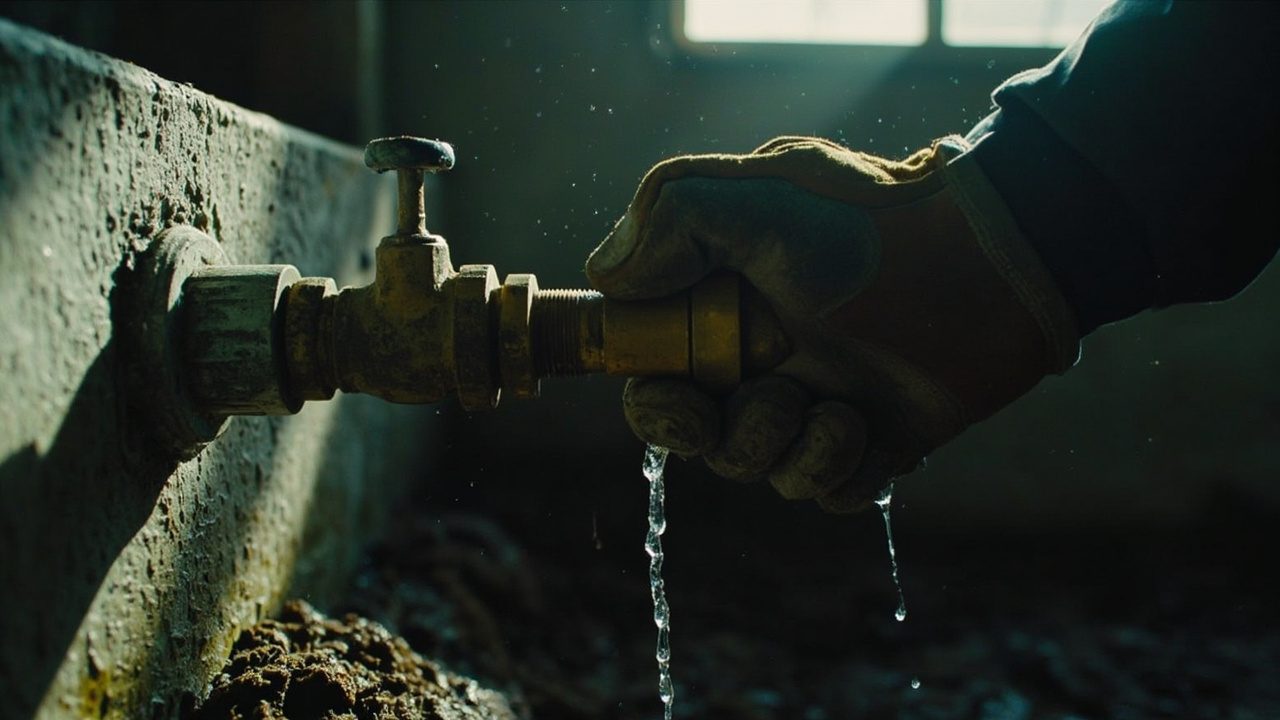
On the phone you are asked what is running, when it started, what changed just before it and where the main is, and those answers decide whether a technician comes tonight. On site the order is fixed. You keep fixtures off while the water meter leak indicator is read for fifteen minutes, then the main is closed and the dial is read again. Next, stops and branches are closed sequentially until the loss halts. You watch all of it happen at the meter and the valves before any surface is touched. A drain line is cleared first, and video inspection follows from a cleanout.
Approval, then isolation
Once the scope is approved, the stop or branch that isolates the work closes first and the line is drained so nothing sprays when a joint opens. Then comes the repair itself. A failed angle stop is replaced with a new stop and supply line, a split segment is cut back to sound pipe and rejoined in type L copper or PEX, and a cast iron to PVC joint goes together with a no hub band. If more turns up behind the wall, we stop and show you before going further.
Test and handover
Before we leave, the water comes back on slowly and the meter leak indicator goes back on with every fixture closed. It has to sit still for fifteen minutes, the same test that opened the visit. The repaired joint is watched under full pressure. On a gas fitting, the combustible gas detector and bubble solution go on the joint, and a bubble that keeps growing keeps the appliance valve closed. You get a walkthrough of what was replaced and a written record of the scope and the readings, which you keep for your own file. If a claim follows, the owner files it and the carrier decides.
Why desert freezes and hard water change a night call
Plumbing permit rules are locally amended, so this page states none of them as fact. Gas line work and main line work usually need a permit, a like-for-like angle stop, faucet or flapper swap usually does not, and the final call on any job belongs to the local authority. A crew that learns this after the wall is closed stalls the repair for an inspection it could have arranged in the first phone call.
Housing here spans several construction eras, and each one hides a different failure. Homes from the 1940s through the 1960s often have cast iron drains under the slab, so a slow drain there gets a camera run from a cleanout before anyone talks about a new line. Homes from the 1970s through the 1990s often run copper through or under the slab, which makes a warm patch on the floor a hot line until proven otherwise. Newer subdivisions on the east and west sides use PEX from a manifold, so the first move is finding the manifold rather than the wall. A crew used to one era treats the others as if they were the same house.
Pressure is where an unfamiliar crew most often replaces the part and leaves the cause. A burst braided hose or a stuck fill valve gets swapped, and nobody screws a gauge onto the hose bib. Static pressure above 80 psi is where hoses, valves and heaters start failing early, and a pressure reducing valve is normally required. If the gauge shows the hose died from pressure, the next hose fails the same way. The overnight hold matters too, because a reading far above the night figure means the heater is pushing expanded water into a closed system, and the expansion tank has failed or was never installed.
Freezing weather here is short, and the ground does not freeze deeply. A technician from a colder region looks for buried lines when the damage sits at exposed hose bibs, backflow assemblies and the vacuum breaker on the outdoor spigot. Heat brings its own mistake. Water heaters in garages and closets run in stifling air, and a crew that plans a rod pull without checking headroom above the tank promises a same-day fix the closet cannot allow.
Response logistics follow the ground. The county covers river valley, mesa and foothill, and monsoon runoff collects in low streets and dips, so the arrival window you get on the call accounts for the job ahead of yours and for standing water on the route.
More detail on emergency water heater repair is on its own page.
What a night call looks like from your side
How a call becomes arrival
The person who answers asks what is running, where your main is and whether anyone is in the house. Those answers sort a supply leak that needs someone tonight from a slow drain that can wait for a scheduled visit, and the arrival window is given on that same call. A 24 hour plumbing service works against the calls already open, so if the job ahead of yours runs long the window is adjusted and you hear the new one. With the main located before you dial, the first minutes of the visit go to the meter.
Protecting floors and rooms
Before anything comes apart, drop cloths go down along the path from the door to the work and around the fixture. Water gets controlled first, by closing the stop or the main and draining the line, so nothing is staged in a wet room. If a wall or ceiling has to open, the cut goes at the smallest section that reaches the pipe, and only after you approve it. Drywall and debris are bagged and carried out. The last thing done is turning the water back on slowly and watching the joint before the drop cloths lift.
What moves the number
Reaching the pipe and restoring the surface move the job furthest, whether a finished wall, tile, a ceiling below or a slab. Depth and length of any dig come next, then one joint against a replaced run, then matching old pipe to new. After hours, weekend and holiday dispatch raises the cost of the visit and leaves the repair scope where the meter put it. Fixture and heater grade are yours to choose. The written scope comes from what isolation found, and you approve it before work starts. If an opening finds more, what happens next is agreed in writing first.
How technicians earn sign off
A new technician rides along with a lead before working alone, and the lead signs off on tasks the technician has to demonstrate, such as reading a meter with the main closed, isolating a branch and checking a gas fitting with a combustible gas detector and bubble solution. The current code cycle gets studied as a team. On anything unusual, such as a leak under a slab or a bubble that keeps growing on a gas fitting, a second technician looks at it before a scope is written.
You Have Questions,
We Have Answers
An emergency call out has no fixed figure because the visit charge follows the hour and the job ahead. Nights, weekends and holidays raise the visit portion, while the repair scope stays where the meter reading put it. Travel across the county, standing water on the route and a second technician for a hard access job all add time. The number you hear on the phone is confirmed in writing before any work starts.
A clogged drain becomes an emergency when sewage rises at a floor drain, tub or toilet. A single slow sink can wait for a scheduled visit. Multiple fixtures gurgling together point to the main line, and a toilet that overflows when the washer drains means the blockage sits downstream of the branches. Stop all water use in the building until someone clears it.
A plumbing emergency is any failure that damages the building or threatens health faster than daylight can arrive. Examples include a burst supply line, a water heater leaking from the tank seam, sewage backing up into living space and a gas fitting that keeps bubbling under test. Water reaching a ceiling light or a panel raises the urgency further. A dripping faucet or a running toilet with a working shutoff can wait.
A 24 hour plumber charges more than a daytime visit, and the amount depends on hour, distance and work found. Late-night arrival, weekends and holidays carry a higher dispatch portion. Access matters most for the repair itself, since a pipe behind tile or under a slab takes longer than an exposed stop. Ask for the scope in writing and approve it before the technician opens anything.
Bedrock Plumbing El Paso works only in El Paso, so an Austin homeowner needs a local Austin plumber. Search for a company that answers its phone around the clock and gives an arrival window on the first call. While you wait, close the main shutoff, turn off the water heater gas control or breaker, and photograph the damage for your records.
An emergency plumber visit costs more than a scheduled one because it is pulled ahead of other work and staffed outside normal hours. The final total follows the repair, and a like-for-like angle stop is a small job while a split segment inside a wall is larger. Parts grade, such as a braided supply line against a hard copper riser, also moves the total. Approve the written scope before work begins.
A water leak counts as an emergency when it runs under pressure, reaches electrical items or continues after you close the fixture stop. A weeping joint that a bucket catches over a day is different from a spraying line. Check the ceiling below for a stain that spreads or sags, since saturated drywall can drop without warning. If the leak stops when the main closes, you can often wait for morning.
Austin's 311 line is the city's non-emergency number for reporting service problems and reaching municipal departments. Residents use it for street damage, missed trash pickup, code complaints and questions about city utilities. Fires, injuries, gas odors and active crimes still go to 911. For a broken water main on the street side of your meter, the utility handles that report, not a private plumber.
Emergency plumbers in San Antonio must be found locally, since this company works only in the El Paso area. Search for a business that lists round-the-clock dispatch and confirm on the phone that a technician is coming tonight. Have the location of your main shutoff ready, and say whether water is spraying, backing up or dripping so the dispatcher can sort the call by urgency.
San Antonio has plumbers advertising 24-hour service, but this company covers only El Paso. Confirm three things on the call: a real person answers overnight, an arrival window is given, and the scope is written down before work starts. Some services only take messages after midnight, which delays a burst line by hours, so ask directly whether a technician is on call.
Why hard water and short freezes change emergency plumbing in El Paso
Local water arrives moderately hard to hard, commonly around ten grains per gallon or more, and above about seven grains scale forms steadily in heaters, valves and cartridges. That changes emergency work in three ways. A stop or fixture valve crusted with scale may not close fully, so the isolation step gets tested before anyone trusts it. A heater that fails may be reporting years of scale, so the plan includes flushing, descaling or treatment rather than another tank alone. Galvanized supply in the oldest houses corrodes from the inside and discolors the water, so joining new copper or PEX to it needs a dielectric union or a transition made for the material. Ground conditions decide the schedule. Sandy and gravelly soils sit over layers of hardpan, and the river valley's finer alluvial soils hold more water, so a lateral repair is a planned excavation and tonight's work is stopping the water and the backup.
Gas work and main line work are inspected at stages during construction, and which office handles an address depends on whether it sits inside city limits or outside them. Knowing that before the permanent repair keeps the schedule from stalling on a question one phone call could have settled. The season decides which failures arrive. Arctic fronts that push temperatures well into the teens split exposed hose bibs, backflow assemblies and outdoor lines, and the calls come in when the thaw pressurizes them again. In spring, evaporative coolers start up, and scale and float valve failures on their supply lines follow. Summer heat stresses water heaters and outdoor lines, and intense sun degrades exposed plastic. Monsoon storms run off quickly and collect in low streets and dips, so a wet floor after a storm with a meter that sits still points to groundwater, and the fix belongs to drainage.
Plumbing Services in The El Paso Area
Explore our service area and locate Bedrock Plumbing El Paso with ease. We're proudly local and serve the surrounding neighborhoods with fast response and honest pricing. Use the map to check our coverage area, or call us and we'll confirm in seconds.
Address:
Bedrock Plumbing El Paso, 221 North Kansas St, Suite 700, El Paso, TX, 79901
Additional Services We Offer
- Basement Flooding Pump-Out
- Burst Pipe Repair
- Emergency Sewer Backup Cleanup
- Emergency Sump Pump Failure
- Emergency Water Heater Repair
- Emergency Water Shut-Off Service
- Frozen Pipe Thawing & Repair
- Gas Leak Detection & Repair
- Main Water Line Break Repair
- Overflowing Toilet Repair
- Rapid Response Leak Repair
- Septic Tank Emergency Pumping
Plunging a toilet, cleaning an aerator, swapping a flapper or a braided supply hose, draining a hose bib before a freeze and closing the main are homeowner jobs, and you do not need us for them. DIY stops at anything soldered, anything on the gas line, anything behind a finished wall or under a slab, and any drain already backed up past a cleanout. If the first visit finds work past that line, you hear it then.
Before you call, know what is running or spraying, when it started and what changed just before it. Read the meter dial with every fixture off if you can reach it, and find the main shutoff and the stop nearest the trouble. Any age you have for the heater or the pipe helps, as does whether anyone is in the house and whether the wet area is near an outlet.
Last reviewed September 2026 by Dave Parker, Owner.