





What crust on every faucet means in El Paso homes
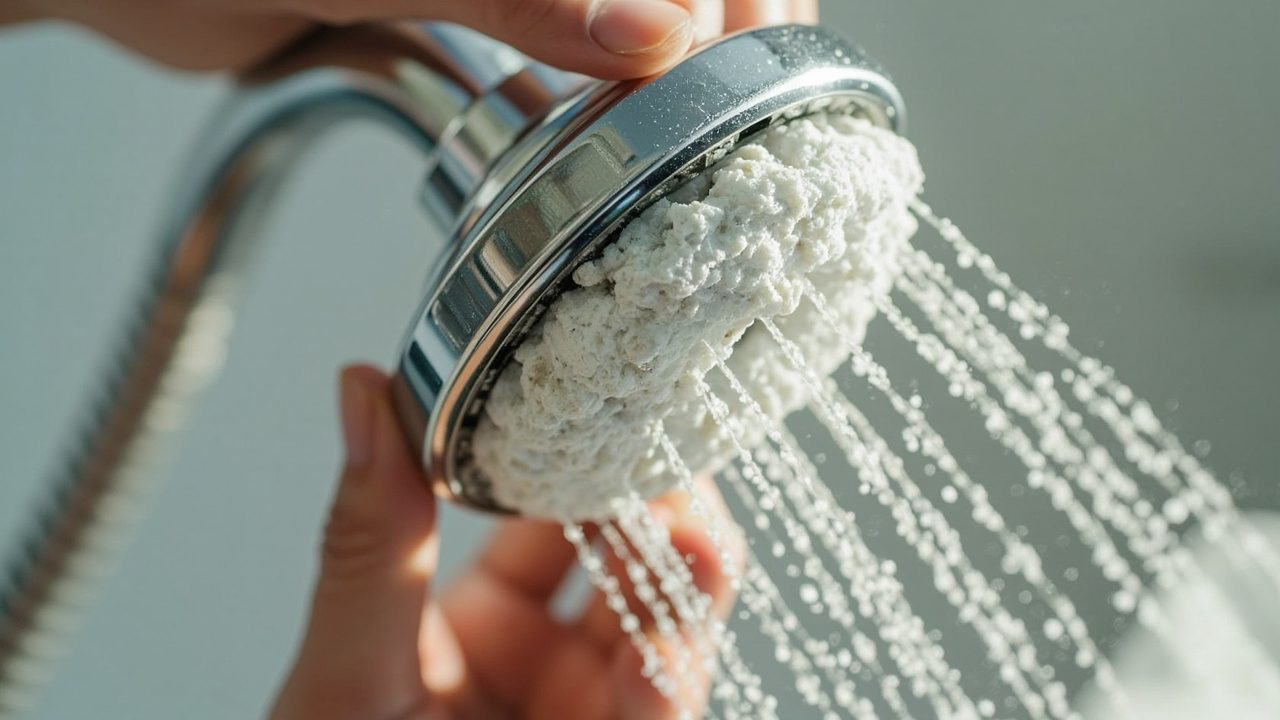
White crust on the shower head, aerators that clog again a few weeks after you soaked them, and a film on the glass that returns a day after you wipe it all point to one cause. Hardness minerals leave the water wherever it heats or dries, and heat speeds the process. Inside a tank water heater they settle on the element and the tank floor, so a second heater inside a few years points at the water. The minerals ride in on the supply, which means every faucet in the house shows the crust. A drain fault would show at one fixture or one line. New shower heads and stronger cleaners change nothing, because the supply keeps delivering the minerals.
Here the water tests moderately hard to hard, commonly around ten grains per gallon or more, and the jump from moderately hard to hard is where scale starts showing up on service calls. Above about seven grains per gallon, scale forms steadily in water heaters, valves and faucet cartridges. Elements and cartridges are the first parts to show it. Summer adds load, because many afternoons across El Paso County sit in the nineties and above one hundred degrees, and heat already stresses a water heater. Spring puts the same scale into evaporative cooler supply lines, where a crusted float valve fails when the cooler starts up.
A second complaint arrives in summer, and hard water treatment does not touch it. Algae growth in upstream reservoirs can give the water a musty taste and odor for a few weeks, then it clears. Softening removes hardness minerals, and a whole house water filter is built to address taste and odor at every tap. Two symptoms call for two treatments, and buying one for the other's problem leaves the complaint in place. Rust colored water in the first minute is a third thing. It points at galvanized pipe corroding from the inside, and a softener leaves that pipe where it is.
Cleaning an aerator or swapping a braided supply hose is a job you can do yourself, and it restores flow for a few weeks. Call today when the relief valve on top of your heater weeps. Incoming pressure above the normal band starts the weep, then the tank seams work harder every cycle, and the heater fails years before it should. Scale in the same tank shortens that life again. A softener or filter changes nothing about pressure, so a reading on a screw on gauge at the hose bib, taken with everything off, comes before any treatment gets sized.
Our page on tankless water heater services covers that side of the work in more depth.
The U.S. Department of Energy's water heating guide is a solid primer on operating costs if you want to dig into the numbers yourself.
Find the sign you have, then read across to see whether it can wait.
| Symptom or first sign | What is already happening | What it becomes if ignored | When to call |
|---|---|---|---|
| Incoming pressure above the normal band | The relief valve on the heater starts weeping | The tank seams work harder every cycle and the heater fails years before it should | This week, while it is still one part |
| Roots at one clay joint | Paper and grease catch at that spot every day | The main backs up into the lowest fixture in the building with no warning | Now, the same day |
| A weeping angle stop under a sink | The compression nut corrodes so it cannot be snugged | The stop snaps off in someone's hand during a faucet change | Now, the same day |
How we read the water before we size anything
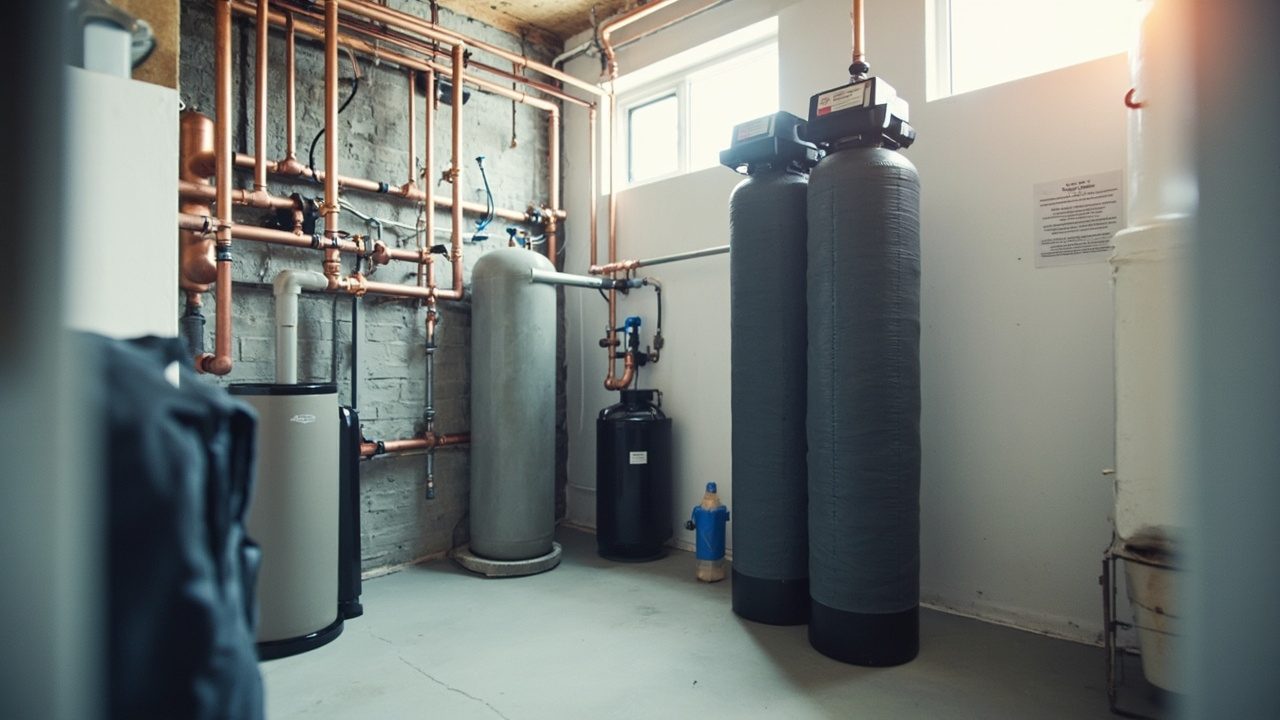
The visit runs in the order the water travels. Everything in the house goes off first, and the technician finds the main shutoff, because that valve is the point where treatment equipment ties in and the point where the house can be isolated. A screw on pressure gauge goes on a hose bib next. Reading it with every fixture closed matters, since a running fixture hides the true static number. The hardness test kit then goes on a cold tap that has run for a minute, ahead of any existing treatment, and it returns a grain count that lands on the soft, moderately hard, hard or very hard classification. Only after those two readings does anyone look for a drain, a wall or a spot for a tank.
Each reading decides a fork. A soft or moderately hard result leaves aerators and elements alone, and treatment can wait. A hard or very hard result means the technician plans for flushing, descaling or hard water treatment, and at the ten grains or more this area commonly shows, the grain count sets the equipment. A static reading between 45 and 70 psi is the good band. Above 80 psi, fixtures, supply hoses and heaters start failing early and a pressure reducing valve is normally required, so that valve and a thermal expansion tank join the scope even when the complaint was only scale. When the relief valve weeps, the gauge stays on overnight. A morning reading far above the night figure means the heater is expanding water into a closed system, which points at a failed expansion tank. The written scope carries these numbers, so you can see why each line item is there.
Salt softener against salt free conditioner is the choice this water forces, and the local reading decides it. At ten grains or more, removal is the job, which points to an ion exchange softener. That unit needs salt and a drain, so the walk-through finds the drain before it picks a spot for the tank. Where no drain is within reach, or the reading sits near the low end of hard, a template assisted crystallization conditioner needs neither and changes how the minerals behave so they stick less. A heater that has already failed early is the case for treating the water before buying the next one. Summer taste and odor belongs to a separate water filtration system, and reverse osmosis installation puts filtration at one kitchen tap, which matters because the local water utility does not recommend softened water for drinking.
If this sounds close but not quite your situation, water heater repair & installation may be the better starting point.
Independent standards matter too, the EPA's WaterSense program sets the efficiency benchmarks we use when recommending replacement fixtures.
Narrow this to two options before calling, then ask which one suits the house.
| Option | The numbers a buyer weighs | Best suited to |
|---|---|---|
| Salt softener against a salt free conditioner | An ion exchange softener removes hardness minerals and needs salt and a drain | Hard water houses weighing salt against upkeep |
| Type L copper against PEX | Copper is rigid, tolerates heat directly | Repipes where the existing layout sets the method |
| Trenchless lining against open cut replacement | Lining cures a new pipe inside the old one with a small loss of inside diameter | Runs under a slab, a drive or mature trees |
How a water treatment call runs
Questions then readings
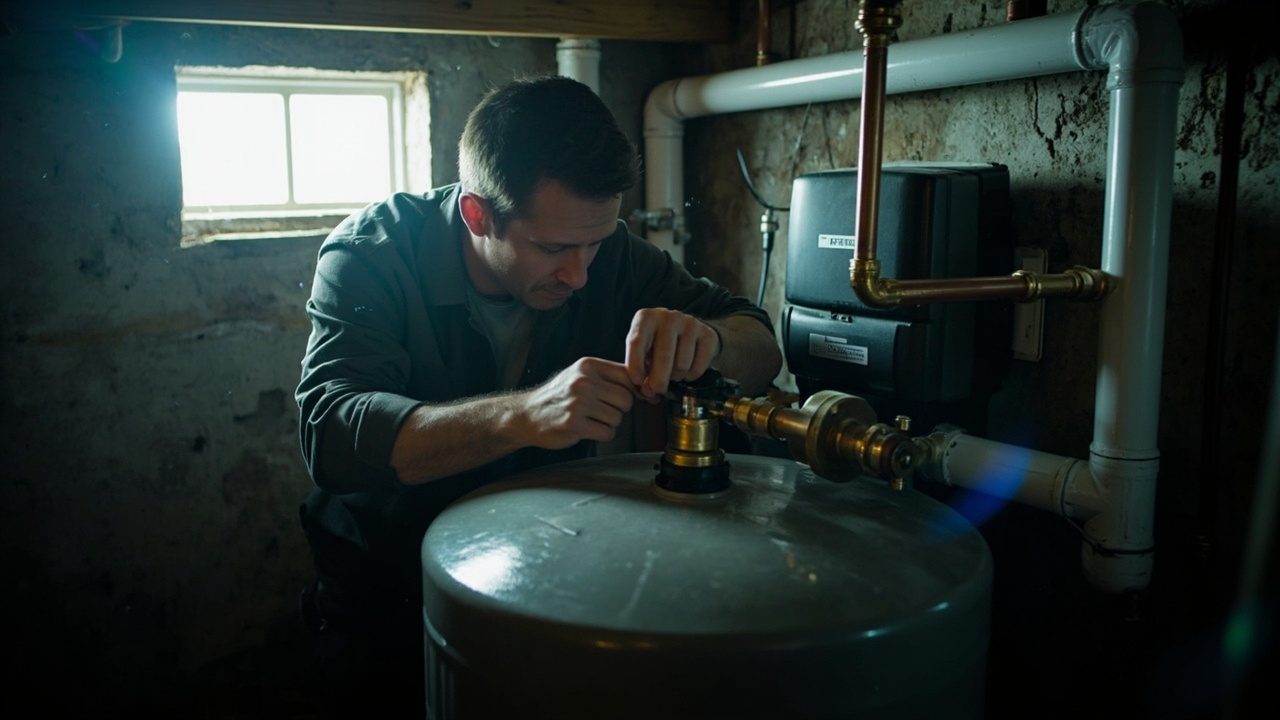
On the phone we ask when the scale or taste started, what the relief valve is doing and where the main shutoff sits, so the technician arrives knowing which readings to take first. On site, everything in the house goes off and the screw on gauge goes on a hose bib for the static pressure. The hardness test kit then reads a cold tap that ran for a minute. You watch two instruments and hear two numbers, and no wall gets opened. If the gauge shows pressure above the band, the technician walks the line from the main to the heater to find where an expansion tank belongs.
Approval then installation
Once the scope is approved, the main shutoff closes and the line drains first. The technician cuts in the tie-in with type L copper or PEX to match what is already there, uses a dielectric union wherever copper meets galvanized, then sets the unit and runs its drain line if it is an ion exchange softener. A conditioner needs no drain. Soldered and crimped joints on your supply line stay with us. If corroded galvanized turns up behind a fitting, we stop and show you before going further.
Readings before we leave
Before we leave, the hardness test kit goes back on a treated cold tap and has to read soft to moderately hard on an ion exchange softener. A conditioner leaves the minerals in the water, so its check sits on the fittings and the flow. The screw on gauge returns to the hose bib and has to hold between 45 and 70 psi with nothing running. Each joint gets a dry wipe. We walk you through the main shutoff and the drain line, and you keep the written scope with both readings. Anyone with questions about what is in the water should read the utility report and send a tap sample to a laboratory.
Why a softener sized elsewhere misses on El Paso water
Whether a permit applies to your job depends on the work and on where your address sits. A softener or filter tied into the supply line at the main shutoff usually needs a permit, a like for like cartridge swap usually does not, and the final call belongs to the permitting authority for your address. Work outside city limits falls under the county or the neighboring town, so the address gets asked on the first phone call. Confirming the route before the first cut keeps the joints and the drain line visible until the question is settled.
A crew that has not worked this water tends to size from the number of people in the house. The grain count and the static pressure reading a technician takes before sizing are the numbers that matter, and a unit sized without them leaves scale forming in the heater. Transitions are the next miss. Homes from the 1940s through the 1960s often carry galvanized or early copper supply, and new copper tied straight onto galvanized without a dielectric union starts corroding at that joint.
Newer slab homes from the 2000s on run PEX from a manifold, and PEX has to stay out of sunlight, which matters where a garage wall takes afternoon heat above one hundred degrees. A crew that skips the pressure reading installs treatment and leaves a weeping relief valve to keep working the tank seams. Older stock with cast iron drains under the slab needs the drain route planned around that pipe, since cast iron corrodes from the inside and the tie-in belongs at an accessible point. Caliche hardpan slows any trench for a yard run, and a crew from softer soil underestimates that day.
Response across the county follows the job. A weeping relief valve moves up the schedule, and a hardness test visit is booked with the first readings planned from what you tell us about the age of the house. A 1970s through 1990s slab home with the heater in a garage or closet gets the gauge and a look at the heater first, while a house with galvanized pipe gets the transition planned before the tools come in.
More detail on commercial water heater systems is on its own page.
Permit and inspection questions? Planning & Inspections is the office we coordinate with on every permitted El Paso job.
Working with Bedrock Plumbing El Paso on water treatment
When someone arrives
You call, and we ask when the crust or the musty taste started, whether the relief valve on your heater drips, and whether you know where the main shutoff is. Those three answers sort a weeping valve, which moves up the schedule, from a hardness test visit, which is booked. The person who took your call confirms the arrival window by phone the morning of the visit. If the job ahead of yours runs long, the revised window reaches you by phone before the first one closes.
Protection and cleanup
Drop cloths run from the door to the main shutoff before anything comes apart. The line is drained through a hose into a bucket before the first cut, which keeps water off the floor. Tools stage on a tarp beside the work, and cut pipe, packaging and old fittings leave with us. The last thing we do is run the tap and wipe every joint dry, so a weeping fitting shows itself while we are still standing there.
What moves the number
Access moves the scope first, because a finished wall, a tiled surface or a slab around the supply line means opening and restoring it. Distance to a drain and the length of the pipe run come next. The grade of valve, fixture or heater you choose moves the number up or down, and a pressure reading above the band adds a pressure reducing valve. After the hardness test you get a written scope and approve it before work starts. If an opening finds more, what happens is agreed in writing first.
How technicians are checked
A new technician rides along with a lead before working alone, and the lead signs off on two demonstrations, a hardness reading at a cold tap and a static pressure reading with every fixture closed. Sign off also covers tying copper to galvanized with a dielectric union and protecting PEX from sunlight. On any house with mixed pipe materials, a second technician looks at it before a scope is written. Changes to local code are read together before they reach the field.
You Have Questions,
We Have Answers
Installed cost climbs with drain distance, pipe run length, wall or slab access, and the unit you choose. A tie-in near an existing drain and an open garage wall keeps labor low. A finished wall, a long run to the drain, or a required pressure reducing valve pushes it higher. Resin capacity, sized to the grain count, also moves the equipment side upward. Bedrock writes the scope after readings, so each line item traces to a measurement.
Combined systems price as two separate stages, so the total follows the number of tanks and cartridges. A softener tank with a larger resin bed costs more than a small one, and carbon or sediment stages add housings, each with its own tie-in joints. Higher grain counts push resin volume up. Longer pipe runs, difficult access and a drain far from the equipment raise labor. Pre-existing galvanized pipe adds transition work before anything gets set.
Consumer Reports ratings are not something this page can quote, so no ranking from them appears here. Check the current published test results yourself and compare them against your own numbers. Match the resin capacity to your measured grain count and the flow rate to your peak demand, since an undersized unit lets hardness through at the tap. A rating earned in one water supply says little about another supply.
An ion exchange softener uses salt and sends brine to a drain during each regeneration cycle. It adds sodium or potassium to the water, needs periodic salt refills, and the resin bed eventually loses capacity. Softened water also tastes slightly salty to some people, so a separate drinking tap often makes sense. The unit does nothing for rust, pressure or taste. Template assisted crystallization conditioners avoid salt and drain, though they leave minerals in the water.
Household cost depends on tank size, number of filter stages, pipe run and installation access. A family of two with a short run to the drain needs less resin than a household of six. Carbon stages, sediment prefilters and a pressure reducing valve each add parts and labor. Copper versus PEX tie-in makes little difference, but a slab wall or tiled surface around the supply line adds opening and restoration work.
The best combination pairs a softener with a separate carbon filter, each sized to its own job. Softening resin removes calcium and magnesium but does little for chlorine taste or musty odor. Carbon handles taste and odor but leaves hardness alone. Put the filter ahead of the softener so chlorine does not wear down the resin over the years. Size each by measured grain count and household flow demand.
A softener pays off when the grain count is high enough to shorten appliance life. Above roughly seven grains per gallon, scale builds inside heaters and valves, and softened water also lets soap lather with less product. A tank heater coated in scale runs longer to reach temperature because the mineral layer insulates the element. Homes testing near the soft end gain little, so the hardness reading decides the answer.
A single unit that softens and filters exists, but it does both jobs at reduced capacity. Some combine a resin bed with a carbon layer in one tank, which shortens the carbon's contact time and limits how much chlorine or odor it removes. Resin and carbon also wear out at different rates, so replacing one means replacing both. Two separate tanks let each stage be sized, serviced and swapped independently.
Reliability depends more on installation and sizing than on a brand name. Look for a metered valve head that regenerates by actual water use rather than a clock, since a timer wastes salt and can run out of capacity during heavy laundry days. Parts availability matters too, because a valve nobody stocks can leave a house without treatment for weeks. Ask what resin volume the model carries and how the drain line is routed.
Both can run on the same supply line, and they normally should when the complaints include scale and taste. The usual order is a sediment or carbon filter first, then the softener downstream, so the resin stays clear of chlorine and debris. Each unit needs its own bypass valve at the main tie-in. A softener requires a drain for regeneration, while a carbon filter needs only periodic cartridge or media replacement.
How hard water and summer heat shape softener choice in El Paso
El Paso Water supplies a blend of surface water and groundwater, describes it as moderately hard to hard, and disinfects it with chlorine. That hardness is why scale collects in heater elements, cartridges and valves here, and why replacement becomes necessary within a few years. The same utility ties rust colored water in older homes to galvanized pipe corroding inside the house, a fault treatment at the main does not reach. Housing era decides what the unit ties into. Homes built between 1940 and 1960 often have galvanized or early copper supply with cast iron drains under the slab, so the brine line from an ion exchange softener needs a proper route. Homes built between 1970 and 1990 run copper through or under the slab with equipment housed in a garage or closet. Newer construction uses PEX from a manifold, and exposed plastic degrades in intense sun.
Work that ties into the supply is looked at in stages by the local permitting authority, and the office that answers depends on whether your house sits inside city limits or outside them. The inspector looks at the tie-in joints, the transition between copper and galvanized, the drain connection and the discharge from the temperature and pressure relief valve on the heater. Knowing that up front changes the sequence. Joints stay exposed and the drain line stays visible until the inspection question is settled, so no patched wall has to be reopened. Where a pressure reducing valve and thermal expansion tank are both required, they're installed in the same opening, which puts one set of joints in front of the inspector. Familiarity with the local process shortens the job because the work is sequenced around the inspection stage.
Plumbing Services in The El Paso Area
Explore our service area and locate Bedrock Plumbing El Paso with ease. We're proudly local and serve the surrounding neighborhoods with fast response and honest pricing. Use the map to check our coverage area, or call us and we'll confirm in seconds.
Address:
Bedrock Plumbing El Paso, 221 North Kansas St, Suite 700, El Paso, TX, 79901
Additional Services We Offer
- Backflow Prevention & Testing
- Drain Cleaning & Rooter Service
- Faucet & Sink Repair
- Garbage Disposal Services
- Gas Line Repair & Installation
- Plumbing Services
- Sewer Line Repair & Replacement
- Shower & Bathtub Plumbing
- Slab Leak Detection & Repair
- Sump Pump Services
- Tankless Water Heater Services
- Toilet Repair & Installation
Cleaning an aerator and swapping a braided supply hose are homeowner jobs. DIY stops at anything soldered and anything behind a finished wall or under a slab. Water quality testing requires utility documentation and laboratory analysis, work beyond our scope. If the first visit finds galvanized pipe corroding inside, we say so then, because a softener leaves that pipe as it is.
Know when discoloration or odor began and whether the relief valve leaks. Find the main shutoff and a hose bib, and note whether a floor drain sits near the heater or the main. Any age you have for the heater helps, and so does the last utility water report if you kept one. Those answers shape the first visit.
Last reviewed September 2026 by Dave Parker, Owner.