




A valve that will not close while water keeps running in El Paso
Work these steps in order for the next five minutes. Step one. Shut the water off at the stop under the fixture. With no stop, close the main where the line enters the house or at the meter. Step two. If water has reached an outlet, a panel or a ceiling fixture, kill that circuit before anyone steps into the water. Step three. On a water heater, close the cold inlet on top of the tank and turn the gas control or the breaker off. Then open a hot tap on a lower floor so the tank is not under vacuum. Step four. If you smell gas or rotten eggs, touch no switch and no phone charger. Get everyone outside, leave the door open behind you, and call the gas utility from outside. Step five. For a sewage backup, stop every water use in the building, washer and dishwasher included. Keep people and pets out of the wet area and do not plunge a line that is already full.
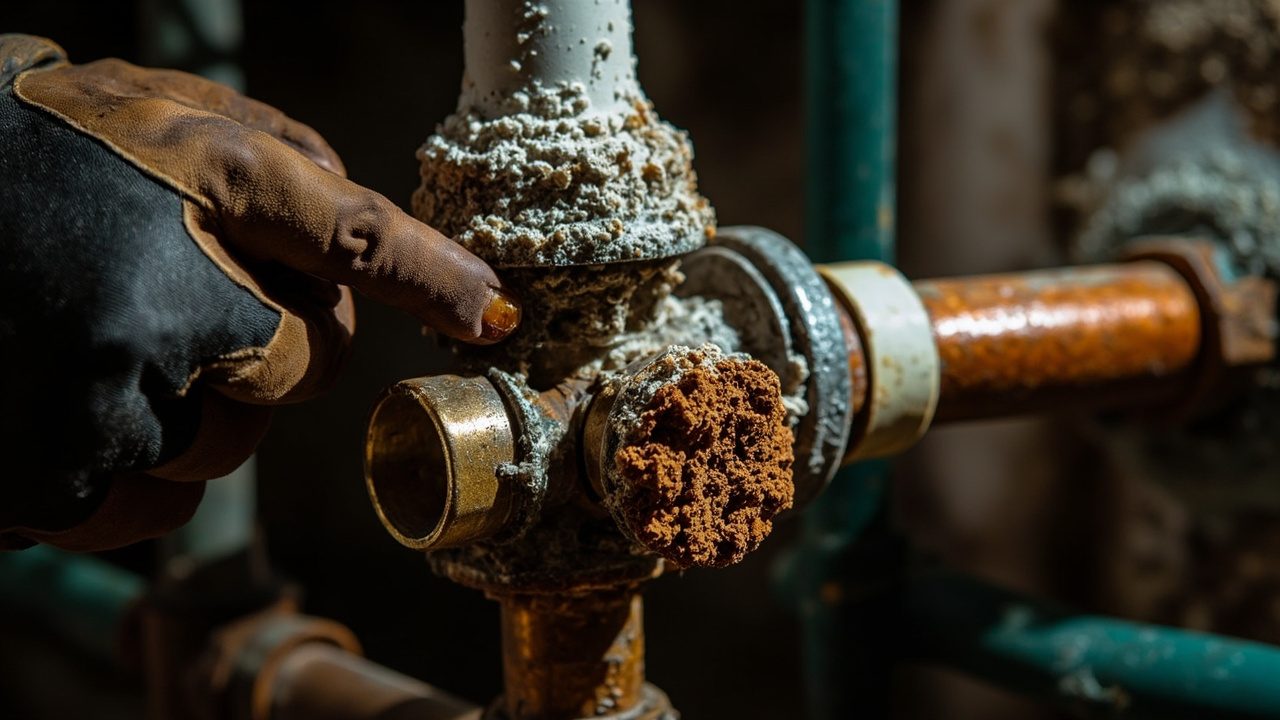
You turned the main and the water kept running. Or the handle spun without slowing the flow, or it moved a quarter turn and stopped. Water here is moderately hard to hard, and above about seven grains per gallon scale forms steadily in valves. A shutoff that has sat open for years seizes on that scale, and a handle forced past its stop can shear the stem. Angle stops under sinks fail the same way, at the compression nut. Older houses with galvanized supply add a second problem, because the pipe corrodes from the inside and the threaded joint at the valve can crack when the valve is turned hard. The short arctic fronts that split exposed hose bibs and outdoor lines are when a stuck main costs the most. If you cannot shut off water at the main, the house has no isolation left, and the job is emergency water valve repair.
Sort the water by where it goes. Pressurized water runs all night on its own, so a loss that continues with every fixture off sits on the supply side. A drain only spills while something upstream runs, so a backup that shows at the wash cycle is a different problem with a different fix. Three valves matter here. The stop at a fixture serves that fixture. The main shutoff at the house serves the whole building. The valve at the meter sits in the utility's equipment, and whether you should turn it is the utility's to say. Fixture stops and the main are the only valves we ask you to touch.
Call today when a stop under a sink weeps at the nut. The compression nut corrodes until it cannot be snugged, and the stop then snaps off in someone's hand during a faucet change, so the room takes the full supply. A broken shut off valve at the main turns that one-room leak into a water main emergency for the whole house, because nothing on the property can stop it.
See how to shut off main water valve for how the related work is scoped and priced.
Your local utility, El Paso Water, publishes service and water-quality information every El Paso homeowner should know.
How we trace the water before a valve gets replaced
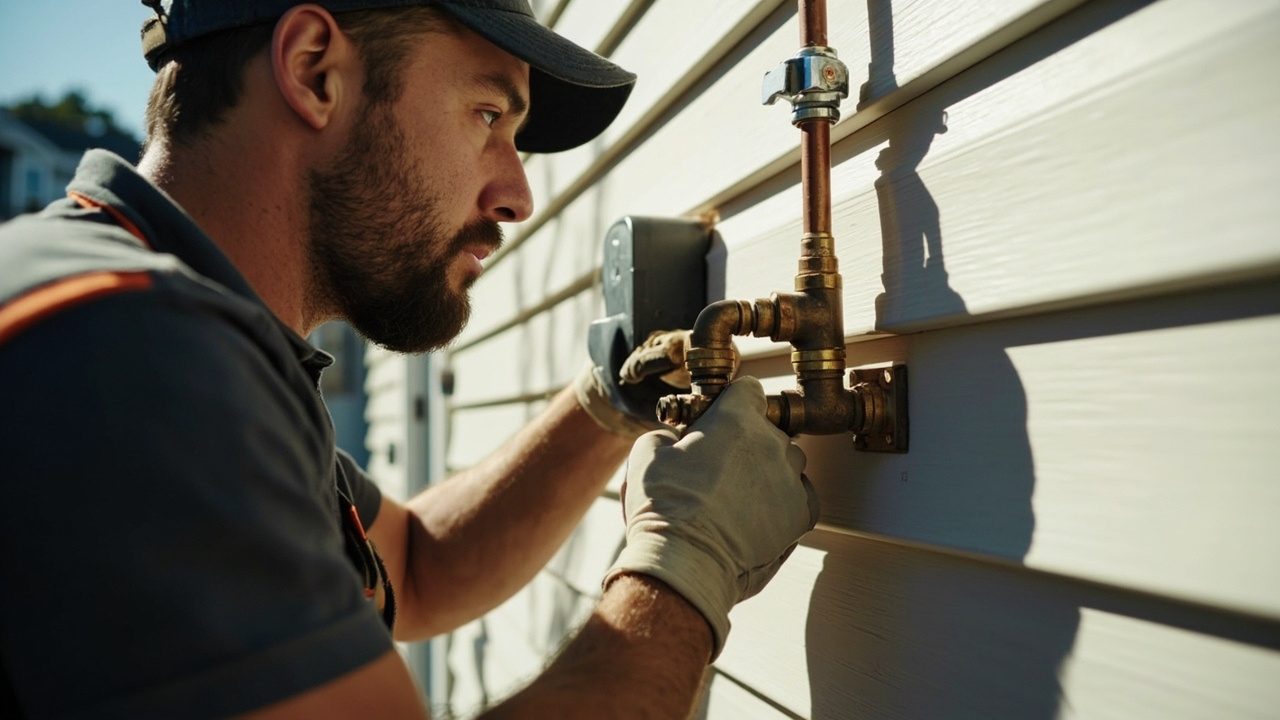
Every shutoff call starts at the meter, because the meter shows where the water is going before anyone opens a wall. With every fixture closed and the appliances off, the technician watches the leak indicator for fifteen minutes. Any movement with the whole house off means water is leaving the system somewhere you cannot see. Then the main gets closed and the dial gets watched again. A dial that keeps moving with the main closed puts the loss on the street side, and the job moves out of the house. A dial that stops puts the loss inside. From there the stops and branches close one at a time until the loss stops, and only then does a surface get opened.
That one reading sorts the visit. A street side loss puts the next call with the utility, which decides about its own side, and leaves you holding a documented dial reading. A loss inside the house narrows by branch. Above the slab, closing branches and listening along the pipe places the leak in a wall or a run. Under the slab the work calls for listening gear, tracer gas, or thermal on a hot line plus a locator, and the choice is between breaking the slab at one point and rerouting that line overhead. A locator or a listening device shows where to look and decides nothing alone. If the main refuses to close, the closing test cannot run, so the main shutoff becomes the first repair.
Whichever segment gets replaced, the material choice is type L copper against PEX. Copper is rigid, tolerates heat directly and costs more in material and labor, and it is joined by soldering. PEX is flexible, so a home run layout puts fewer joints inside walls and a later repair costs less drywall. PEX A takes expansion fittings, PEX B takes crimp rings, and a push fit fitting joins a new run to a stub already in place. PEX has to stay out of sunlight and needs protection where it passes through framing, which matters where desert sun reaches an exposed line. Joining new pipe to old galvanized takes a dielectric union. Hard water scales valves and heater elements whichever pipe carries it, so the valve is chosen with scale in mind and the water is treated before another heater is bought. Short hard freezes decide where an outdoor run gets routed.
More detail on emergency water heater repair is on its own page.
Communities like r/Plumbing are full of homeowners comparing notes on exactly this problem, worth a read before a major project.
Ask which of these readings was taken before any part is replaced.
| Instrument | Good reading | Bad reading | What it changes |
|---|---|---|---|
| Water meter leak indicator with every fixture closed | The dial or the small leak wheel does not move over fifteen minutes | Any movement at all with the whole house off | Water is leaving the system somewhere you cannot see |
| Combustible gas detector and bubble solution on gas fittings | No alarm at the fittings and no bubble growing on the joint | Any bubble that keeps growing or any sustained alarm | The appliance valve gets closed before anything else happens |
| Screw on pressure gauge at a hose bib | Static pressure sitting in the 45 to 70 psi range with nothing running | Above 80 psi | Fixtures, supply hoses and water heaters start failing early |
| Overnight pressure hold with the gauge left | The morning reading is close to the reading taken the night before | A reading far above the night figure | The heater is expanding water into a closed system with nowhere to put it |
How a shutoff call runs
Phone notes and meter test
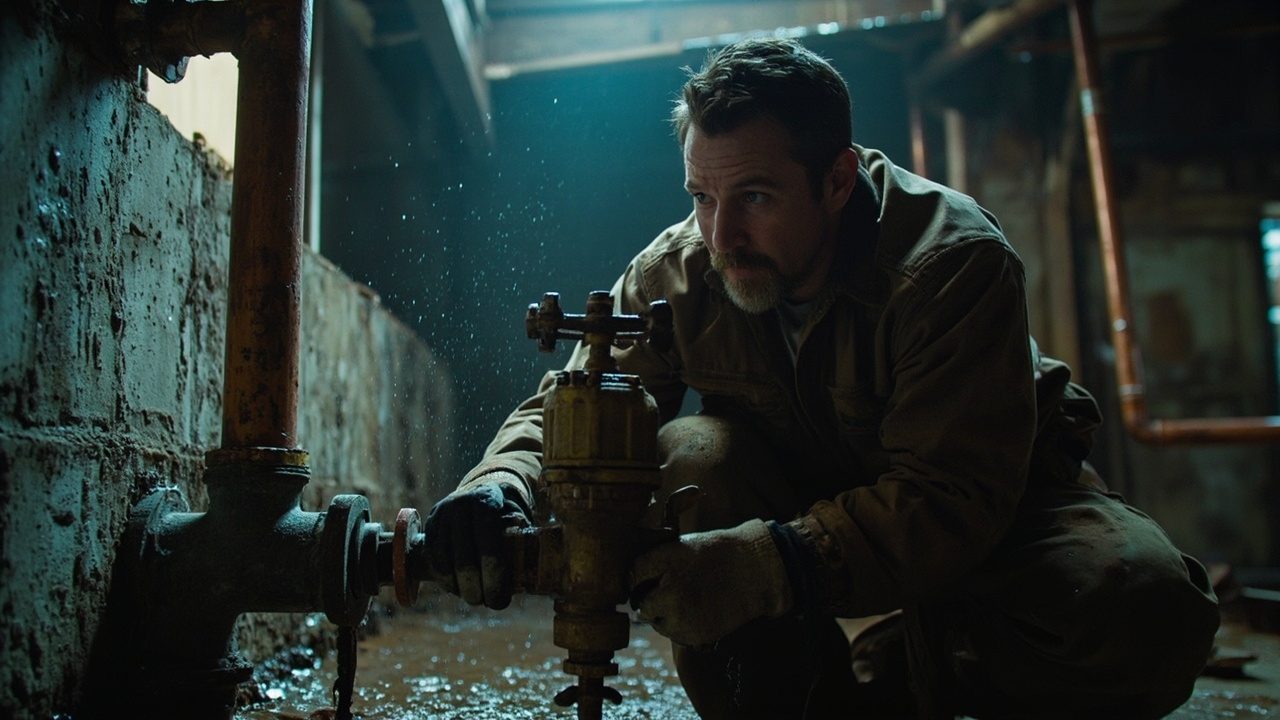
On the phone we note what the handle does when you turn it, where the water shows, and how old the plumbing is, since those answers decide which valves and pipe go on the truck. On site the technician goes to the meter before any wall, with everything closed and the leak indicator read for fifteen minutes, then the main closed and the dial read again. Each shut-off point closes in sequence until the flow drops to zero. A surface opens only after the loss has a location, and you watch the reading with us, so the scope rests on a dial you saw move or hold still.
Approval then isolation
Once you approve the written scope, isolation comes first. The main or the branch stop closes, the line drains down, and the failed valve gets cut out. The replacement goes in as soldered type L copper or as PEX with a push fit fitting, and a dielectric union joins it to old galvanized. The scope confirms whether the shutoff affects the whole building or a single branch, so you know when the taps go dry. If corrosion or damaged pipe turns up behind the valve, we stop and show you before going further. Emergency water valve repair proceeds only on your yes.
Test and handover
Before we leave, the new valve is closed and opened fully, and the meter leak indicator is watched again with every fixture off. It has to sit still for fifteen minutes, and the compression nut and joints have to stay dry. A pressure gauge on a hose bib, read with the house off, should sit in the 45 to 70 psi range, and a reading above 80 psi puts a pressure reducing valve into the conversation. We walk you to the main, show which way it closes, and you keep the written scope with the readings noted.
Why an unfamiliar crew loses time on a shutoff call
A replaced main shutoff and other main line work usually need a permit, while a like for like angle stop or fixture swap usually does not, and the final call belongs to the local authority for the address. We raise that question before the first cut, because a permit question found after the wall is closed leaves work covered that should have stayed open.
Hard water catches out crews used to soft water. They expect a shutoff to turn, but in moderately hard to hard water a main that has sat open seizes, and a crew that arrives without a replacement valve leaves the building with its water off. The housing stock catches out crews that assume one material. Postwar slab houses here commonly carry copper or galvanized supply with cast iron drains under the slab, and the newest subdivisions carry PEX on a manifold. Cutting copper into galvanized without a dielectric union starts corrosion at that joint.
Freezing works differently here too. Crews used to deep frost hunt for buried breaks, and the ground here does not freeze deeply, so the split sits at the exposed hose bib, the backflow assembly or the outdoor line after an arctic front drops temperatures well into the teens. Intense sun degrades exposed plastic, which is why PEX stays out of sunlight. A line that froze and burst once will freeze again without heat trace or insulation, and the second call costs more than the first prevention.
Yard lines bring the ground into it. Desert soils on the mesas are sandy and gravelly over layers of caliche, and the river valley soils are finer and hold more water, so caliche hardpan slows trenching on a lateral or a yard line and the quote has to account for it before anyone digs. A trencher that hits caliche at six inches goes slower than a crew expecting soil, and caliche that sits two feet down means the trench runs deeper and takes longer still. Calls reach us from across the county, so the first phone questions are the address, where the main sits and what the dial does.
Our page on 24/7 emergency plumbing services covers that side of the work in more depth.
Working with Bedrock Plumbing El Paso on a shutoff call
When someone reaches you
You call, and we ask whether water still runs with every fixture off, whether you can reach the main, and whether anyone is near wet outlets. Those answers sort a tonight visit from a scheduled one, and after hours calls are sorted the same way. The arrival window is given on the phone before you hang up. If the job ahead of yours runs long, the window moves, and the main you closed keeps the house dry while you wait.
Protection before anything opens
Before anything comes apart, runners go down between the door and the work area and a drop cloth goes under the valve. Water left in the line drains into a bucket, so it stays off the floor. If a wall has to open, the cut is kept small and straight so the drywall patch stays small. Everything that comes out, including the old valve, goes into our bags and leaves with us. The last thing we do is wipe down the fittings and the floor around them.
What moves the scope
Access moves the scope furthest. A main behind a finished wall, tile or a slab adds opening and restoring that surface. Next is whether water goes off for the whole building or only one branch, since a fixture stop or manifold branch isolates one line while a failed main takes every fixture down for the cut, join and test. One joint against a whole run follows, then matching old pipe to new, then valve grade and after hours dispatch. The written scope comes from the meter reading and what the opening finds, and you approve it before work starts.
How technicians earn sign off
A new technician rides with a lead before working alone, and the lead signs off on specific tasks. Those include running the meter test with the main closed, sweating a type L copper joint, making a PEX connection, and joining new pipe to old galvanized with a dielectric union. The technician also studies the code cycle the local authority enforces. On anything unusual, such as a main that will not close at all or a leak under a slab, a second technician looks at it before a scope is written.
You Have Questions,
We Have Answers
Call a plumber for anything on your side of the meter, and the water utility for its own equipment. A plumber can cut out a seized stop or a failed main and replace it. Before dialing, watch the meter leak indicator with every fixture closed. If the dial still turns after the main is closed, the loss sits on the street side and the utility takes that visit. Tell whoever answers what the handle did, where the water shows, and how old the plumbing is.
El Paso's 311 line is the city's non-emergency information and service request number. Residents use it to report problems such as street-side leaks, missing meter covers or potholes, and to ask about city services. A dispatcher logs the report and gives a reference number. Life-threatening situations, such as gas odor or water reaching live electrical equipment, belong with 911 or the gas utility instead, and a house-side pipe failure still needs a plumber.
Check whether the outage is one fixture, the whole house, or the whole street. Open a cold tap at the lowest sink, then look at the meter for a dial moving or stopped. If neighbors also have no water, the cause is on the utility side. If only your house is dry, look for a closed main handle, a clogged pressure reducer screen, or a frozen exposed line. Leave one tap open so returning pressure can push out air.
A sudden loss usually comes from a utility main break, a closed or failed valve, or a blocked line. A partly closed main after recent work restricts flow. A pressure reducing valve that fails closed drops a house to a trickle while the street has full pressure. Sediment loosened by a pressure surge can jam a fixture stop or a faucet screen. Check the meter and the main handle first, then ask a neighbor.
Contact El Paso Water to start or restore service, since the utility controls the meter and its shutoff. Have your service address and account details ready. If service was off for a leak or repair, the meter valve is reopened by the utility, not the homeowner. Open the main slowly afterward and run cold taps until air clears, then check the meter dial with every fixture closed to confirm no leak remains.
An emergency water shut-off means stopping the supply to a building or branch right away to limit damage. It applies when a pipe bursts, a fixture stop fails or a heater tank leaks. The stop under the fixture isolates one line, and the main isolates everything. Each minute of a half-inch supply line running open can put several gallons onto floors, so speed matters more than tidiness.
A well can go dry when the water table drops below the pump intake. Heavy pumping during a dry spell, a failing pump, or a clogged screen all produce sputtering taps and air spurting from faucets. Sand or cloudy water often shows up just before the flow stops. Pumps that run without water overheat, so switch off the breaker if the flow stops. A driller can measure static water level to confirm which cause applies.
The 311 number connects residents to city government for non-emergency questions and service requests. A call taker records the location, describes the problem, and routes it to the right city department. Typical reports include water running in the street, damaged signage, and questions about trash or permits. It does not replace 911, and it will not send a plumber to fix a broken pipe inside your home.
A utility can leave a street dry for several hours during a main repair. Longer outages follow when a valve fails or a large line needs replacing. Planned work is normally noticed in advance, while break repairs run on crew and parts availability. Repair crews must isolate the section, dig, cut, join, flush and pressure test before restoring flow. Store a few gallons in clean containers when an outage may run overnight.
Turn the main shutoff clockwise until it stops, usually where the supply line enters the house. Look near an exterior wall or in the garage. A round wheel handle closes with several full turns, while a lever handle closes with a quarter turn once it sits crosswise to the pipe. Then open the lowest tap to drain pressure. Turn valves gently, since a corroded stem can shear under force.
Why hard water changes emergency water shut-off work in El Paso
El Paso Water supplies a blend of river surface water and aquifer groundwater, and the utility describes it as moderately hard to hard and disinfected with chlorine. Hardness is a common reason a shutoff seizes, and a valve that will not turn is a scale problem before it is a handle problem. The utility also notes that rusting galvanized pipe inside homes is the typical cause of discolored water, which matters because houses from the 1940s through the 1960s commonly carry galvanized or early copper supply. Questions about what is in the water go to the utility's own report and to a laboratory test of your tap, since this page cannot answer them. Newer subdivisions with PEX supply and manifold style distribution usually give each branch its own stop, so one line can close while the rest of the house keeps water. When the meter test puts the loss on the street side of your main, caliche hardpan makes the dig slower than it would be in softer soil.
Where an inspection applies, the authority for your address looks at the work at a stage while it is still open, so the pipe, the joints and any transition band are visible. Inside city limits that authority is the city, and outside them the county or the neighboring town takes the role, which makes the address the first thing we confirm. Main shutoff replacement and other main line work are the jobs that usually draw a permit and a staged inspection, and gas work draws one more often than a faucet swap does. Knowing that up front changes the sequence, because the new valve is joined and pressure held before any drywall closes over it. The utility decides about its own side of the meter, so the dial reading taken with the main closed goes into the paperwork you keep. Together the authority and the utility settle where responsibility sits, and the reading gives them something measured to work from.
Plumbing Services in The El Paso Area
Explore our service area and locate Bedrock Plumbing El Paso with ease. We're proudly local and serve the surrounding neighborhoods with fast response and honest pricing. Use the map to check our coverage area, or call us and we'll confirm in seconds.
Address:
Bedrock Plumbing El Paso, 221 North Kansas St, Suite 700, El Paso, TX, 79901
Additional Services We Offer
- 24/7 Emergency Plumbing Services
- Basement Flooding Pump-Out
- Burst Pipe Repair
- Emergency Sewer Backup Cleanup
- Emergency Sump Pump Failure
- Emergency Water Heater Repair
- Frozen Pipe Thawing & Repair
- Gas Leak Detection & Repair
- Main Water Line Break Repair
- Overflowing Toilet Repair
- Rapid Response Leak Repair
- Septic Tank Emergency Pumping
Closing your own main, swapping a braided supply hose or a flapper, and draining a hose bib before a freeze are homeowner jobs. DIY stops at anything soldered, anything on the gas line, anything behind a finished wall or under a slab, and any drain backed up past a cleanout. We do not work on the utility's meter or its side. If the first visit puts the loss there, we say so then and name who handles it.
Before you call, know what the meter dial does with every fixture closed and when the problem first showed up. Tell us what changed just before, such as a faucet change or a freeze. Find the main and note whether the handle turns, and give the age of the plumbing if you know it. Say whether anyone is in the property and whether water is near an outlet.
Last reviewed September 2026 by Dave Parker, Owner.