





What knocking pipes and failing hoses mean for an El Paso building
Pipes knock in the wall behind a restroom each time a flush valve closes, and the supply hoses under the sinks have been replaced more than once. Nothing is on the floor today. Hoses and stops get replaced first because they are the visible parts, and the pressure behind them stays untouched. That pattern puts the fault on the supply side, where water sits under pressure around the clock and escapes whether the building is occupied or empty. A drain spills only while something upstream runs, so a wet floor that shows up with the dish machine or a restroom flush belongs to a different job.
Three symptoms tend to travel together in a commercial building. Supply hoses and fixture valves fail early, the discharge pipe from the temperature and pressure relief valve on a heater drips, and pipes bang when a valve shuts fast. Each one reports on system pressure. Static pressure above 80 psi is the point where fixtures, hoses and heaters start failing early, and it is where a pressure reducing valve is normally required. A new hose fitted a third time meets the same pressure the first two did.
Local water adds a second load. Supply in the county runs moderately hard to hard, so scale builds on heater elements, tank floors and valve seats, and a scaled heater runs longer to hold temperature. Many afternoons at or above one hundred degrees leave garage and closet heater installs hot before the burner fires. Scale can also crust the seat of a relief valve, which is why a weeping valve needs a gauge reading before anyone blames it. A closed system, where nothing lets heated water expand back toward the street, turns every heating cycle into a pressure spike, and a failed expansion tank sends that spike into the valve, the hoses and the tank seams.
Commercial plumbing maintenance plans built around readings turn all of this into a record. A lender, an underwriter or a board can read the static pressure taken at each visit, and a drifting number appears long before a closure does. Call the same day when the relief valve on a heater has started to weep. Incoming pressure above the normal band is already pushing on it, and each heating cycle then works the tank seams harder until the heater fails years before it should, which takes hot water out of a kitchen or restroom bank for the length of the replacement.
More detail on commercial backflow prevention & testing is on its own page.
Permit and inspection questions? Planning & Inspections is the office we coordinate with on every permitted El Paso job.

How an overnight pressure hold sets the scope
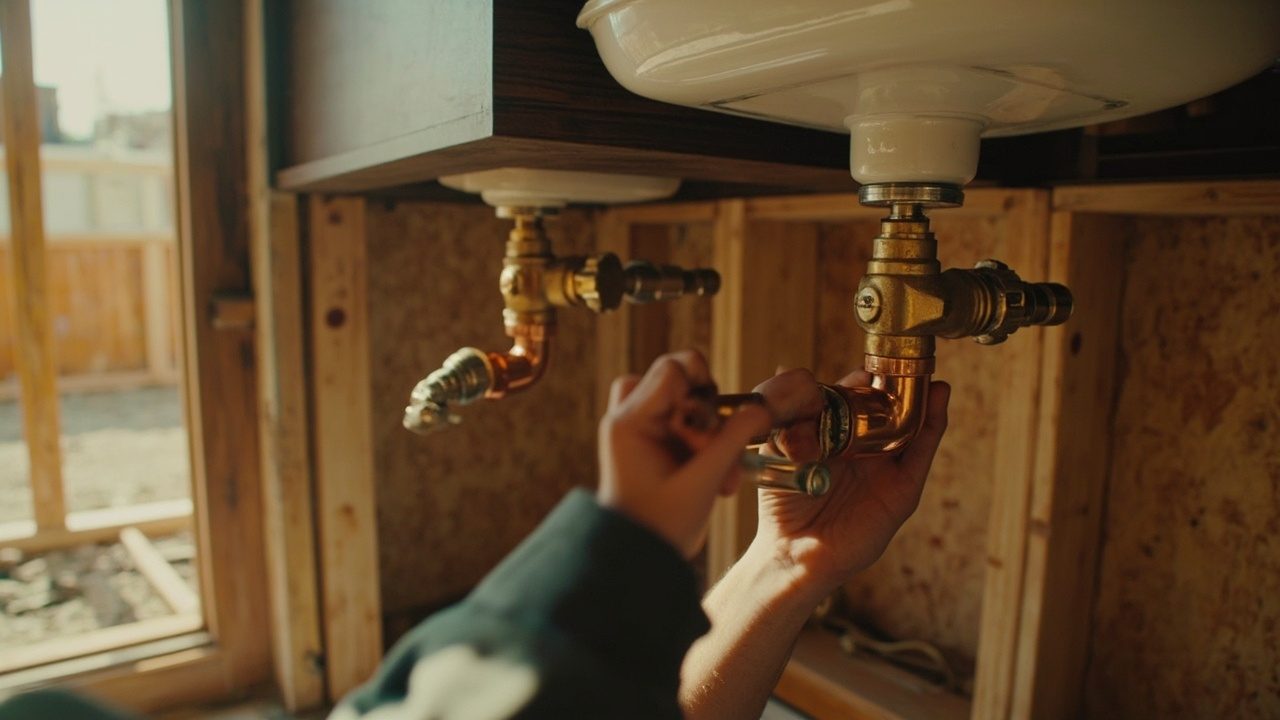
The first act on a maintenance visit is shrinking the building to a segment. With every fixture and appliance off, a screw on pressure gauge goes on a hose bib and the static number is read, because a running fixture hides the real figure. The gauge stays on overnight. The water meter leak indicator is watched for fifteen minutes with everything closed, then the main is closed and the meter is watched again, since a dial still moving with the main shut puts the loss on the street side of the building. Branches and fixture stops close one at a time until any loss stops, and only then does anyone discuss opening a surface. The heater gets its own pass, with the anode rod pulled where headroom above the tank allows and a hardness test kit run on the incoming water.
Static pressure between 45 and 70 psi with nothing running is a passing number. Above 80 psi the job grows to include a pressure reducing valve, and the fixture that failed stops being the whole scope. The morning reading is compared with the night one, and a morning figure far above it means the heater is expanding water into a closed system, which puts a thermal expansion tank in the job. A meter that keeps moving with the main closed sends the work out to the service line. An anode rod with a bare core wire means the tank itself is now the part being consumed, so replacement timing becomes the conversation. Commercial plumbing inspections run this way produce readings, and plumbing service contracts that carry those readings give the scope a number to stand on.
Treating the water is the decision the local supply forces. A hardness kit at the tap commonly lands around ten grains per gallon or more, and above about seven grains per gallon scale forms steadily in heaters, tankless heat exchangers and valves, so the plan includes flushing, descaling or treatment. Between a salt softener and a salt free conditioner, the deciding facts are the grain count and whether the mechanical room has a floor drain and someone to load salt. At ten grains or more, an ion exchange softener removes the hardness minerals and suits a room with a drain and a salt routine. A conditioner changes how the minerals behave so they stick less, needs neither salt nor a drain, and suits a site with neither, while the hardness stays in the water. Softened water is a treatment for equipment. Anyone with a question about what is in a tap should read the utility water quality report and send a sample from that tap to a laboratory.
Our page on commercial kitchen plumbing covers that side of the work in more depth.
Narrow this to two options before calling, then ask which one suits the house.
| Option | The numbers a buyer weighs | Best suited to |
|---|---|---|
| Salt softener against a salt free conditioner | An ion exchange softener removes hardness minerals and needs salt and a drain | Hard water houses weighing salt against upkeep |
| Type L copper against PEX | Copper is rigid, tolerates heat directly | Repipes where the existing layout sets the method |
| Trenchless lining against open cut replacement | Lining cures a new pipe inside the old one with a small loss of inside diameter | Runs under a slab, a drive or mature trees |
| Tank water heater against tankless | A tank is judged on capacity in gallons and its first hour rating | Households with long back to back hot water use |
How a scheduled maintenance visit runs
The call and the gauge
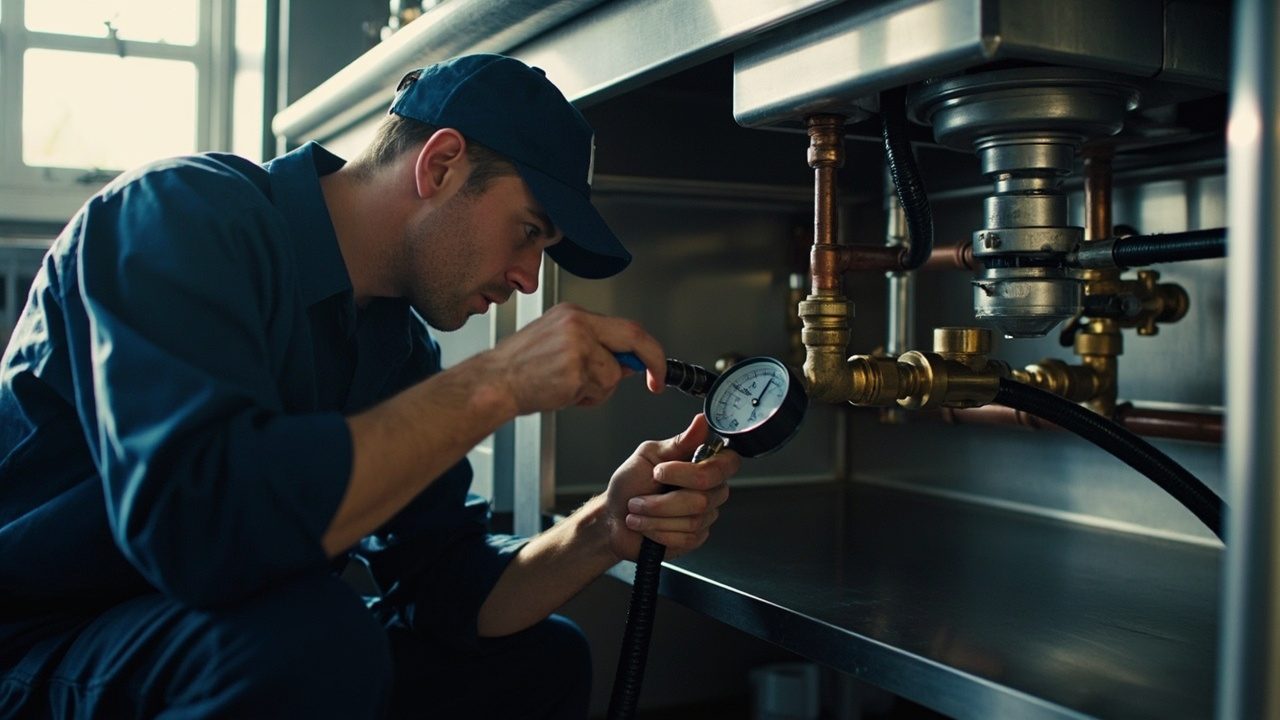
The call takes a few minutes. You say what you see or hear, when it started, how old each heater is, where the main shutoff sits and whether anyone is in the building. On site, everything gets shut off first and a screw on gauge goes on a hose bib for the static reading. The leak indicator is observed for fifteen minutes with the main closed, then observed again with it open. Stops and branches are isolated in sequence until the loss ceases. The gauge then stays on overnight, and the morning figure is read against the night one before the scope is written.
Written scope, then work
Once you approve the written scope, isolation comes first. The main or the branch stop closes, the heater drains to a floor drain or outside, and only the segment being worked on loses water. The work then runs in trade terms, which may mean a pressure reducing valve on the incoming line, a thermal expansion tank on the heater, a new temperature and pressure relief valve, a fresh anode rod, or angle stops swapped for braided supply hoses. Old pipe meeting new gets a proper transition such as a dielectric union or a no hub band. If corrosion turns up behind a stop or a wall, work pauses and you see it before anything goes further.
Readings before we leave
The gauge goes back on the hose bib with everything off, and static pressure has to sit inside the 45 to 70 psi band. Every fixture stays closed while the meter leak indicator is observed for fifteen minutes and must not move. A thermometer at the farthest hot tap reads around 120 degrees after the tap has run a full minute. Every touched fitting is checked for a bead of water. You walk the mechanical room with the technician and keep a written sheet of each reading, which a lender, underwriter or board can read.
Why desert water and freezes change a maintenance plan
Which authority handles a permit depends on where the building sits. Inside city limits one department issues plumbing permits and inspects the work at stages, and outside those limits the county or the neighboring town takes over, so the address decides who gets the first call. Gas work and main line work usually need a permit, a like for like fixture or supply hose swap usually does not, and the final call belongs to the authority.
A crew working from national averages makes four predictable errors here. It sets a heater flush interval for soft water, so scale builds on elements and heat exchangers between visits. It insulates for deep frost that never arrives, while the local event is a brief hard freeze after mild weather, when arctic fronts drop temperatures into the teens and split every bare hose bib and outdoor line. It scopes a lateral or yard line dig as soft soil, and caliche hardpan slows the trench and stretches the surface to restore. It leaves exposed plastic in direct sun, where heat degrades it. Each error produces a call that looks like a fixture failure.
Spring adds its own item. Evaporative coolers start up, and scale on their supply lines fouls float valves that sat idle all winter, so scheduled plumbing maintenance at that point covers the cooler supply along with the heaters. Buildings across the county also mix eras, so one property can carry galvanized supply, copper and plastic in different wings, and a crew that assumes one material orders the wrong transition.
The freeze window runs on average from mid November to early March, which makes exposed lines and outdoor assemblies the checks to finish before it opens. Monsoon thunderstorms bring short, heavy flash flooding to low streets and dips, and a visit that crosses one of them can move. The site contact gets a call with the new arrival window before the old one closes.
If this sounds close but not quite your situation, commercial plumbing contractors may be the better starting point.
Working with Bedrock Plumbing El Paso day to day
How visits get scheduled
You call and answer a few questions about what you see, when it started, how old the heaters are, where the main shutoff sits and who is in the building. Those answers sort a same day visit from a scheduled one. Scheduled visits are set for a time when fixtures can stay off, since the overnight pressure hold needs a quiet building. The technician confirms the arrival window by phone before heading over, and if the job ahead runs long, you get a call with the new window before the old one closes.
Protecting floors and equipment
Drop cloths go down between the mechanical room and the work area before any fitting comes apart. Only the branch being worked on is isolated, so restrooms or a kitchen line elsewhere in the building keep running. A heater flush drains through a hose to a floor drain or outside, never across the floor. Tools stay staged in one spot, old hoses, valves and scale go into bags that leave with the crew, and the last step is opening the supply and checking every touched fitting for a weeping bead.
What moves the scope
Access moves the number furthest, meaning whether a finished wall, tile, a slab or a ceiling below has to be opened and put back. Depth and length of any dig come next, then whether the fix is one joint or the whole run, which the condition of the rest of that pipe decides. Matching old pipe to new, the grade of fixture or heater you choose and after hours dispatch follow. Where plumbing service contracts cover recurring visits, the written scope lists each visit's checks, and you approve it before work starts.
How technicians earn sign-off
A new technician rides along with a lead before working alone, and the lead signs off on specific tasks. Those tasks include reading static pressure with everything off, running an overnight hold, watching a meter leak indicator and pulling an anode rod. Code updates are reviewed with the whole group. On anything unusual, such as continuous meter movement when the main valve is shut, a second technician looks at it before a scope is written.
You Have Questions,
We Have Answers
Preventive maintenance is usually split into time-based, usage-based, condition-based, predictive and prescriptive types. Time-based work follows a calendar, such as draining a water heater tank on a fixed interval. Usage-based work follows run hours or cycles. Condition-based work triggers on a reading crossing a limit. Predictive work trends readings to forecast failure, and prescriptive work adds a recommended action. Plumbing sits mostly in the first three, since a strainer, a tank and a valve each wear at a different pace.
The seven elements are inspection, cleaning, lubrication, adjustment, testing, parts replacement and record keeping. In a plumbing room, inspection means checking fittings for weeping beads, and lubrication means exercising a gate valve so its stem does not seize. Adjustment covers resetting a pressure reducing valve after its spring relaxes. Testing confirms a backflow assembly still holds, and the records let someone spot a slow trend between visits.
Typical examples include exercising shutoff valves, replacing braided supply hoses, testing backflow preventers and cleaning floor drain traps. Valves left untouched for a few years often seize at the stem, so the first time anyone needs to isolate a leak the handle snaps or will not turn. Rubber hose liners soften and burst without warning, which is why age matters more than appearance. Water in a rarely used trap also evaporates, letting sewer gas into the room.
The seven types commonly listed are preventive, corrective, predictive, condition-based, risk-based, run-to-failure and improvement maintenance. Run-to-failure fits cheap, easily replaced parts such as a faucet aerator. Corrective work repairs a fault after it appears. Risk-based maintenance ranks assets by the damage a failure would cause, so a heater above a finished ceiling gets attention before one on a slab beside a drain. Improvement maintenance changes the design, such as adding an expansion tank.
The main types are time-based, usage-based and condition-based, with predictive work often added as a fourth. Time-based tasks repeat on a fixed calendar, like flushing sediment from a tank. Usage-based tasks follow measured wear, such as the cycles on a recirculation pump. Condition-based tasks wait for a measurement, for example a rising temperature drop across a heat exchanger that signals scale. Choosing among them depends on how costly a surprise failure would be for that equipment.
Five common examples are flushing heaters, testing relief valves, exercising shutoff valves, cleaning strainers and replacing supply hoses. Lifting the lever on a temperature and pressure relief valve should discharge water and reseat cleanly. A valve that dribbles afterward needs replacement. Y-strainers ahead of a pressure reducing valve collect grit and slow flow when packed, so a rising pressure drop across the valve tells you when to open the cap and rinse the screen.
The 3 P's usually stand for planned, preventive and predictive maintenance, though some shops use people, process and parts. The planned version has a scheduled scope, materials on hand and a set time window. Preventive replaces components on an interval. Predictive relies on trending measurements such as pump amperage or heater outlet temperature. Together they push work from emergency calls into scheduled windows, which matters when a repair needs a shutoff that affects several tenants.
The seven elements of maintenance are planning, scheduling, inspection, repair, spare parts control, documentation and review. Spare parts control is easy to overlook, yet a heater element or a specific relief valve size held on the shelf turns a multi-day outage into a same-visit swap. Documentation records model and serial numbers so the correct part is ordered. Review compares failure records against the plan and moves intervals shorter where the same component keeps failing.
Quality maintenance is a total productive maintenance method whose seven steps define defects, find causes and set preventive conditions. The sequence runs from clarifying the defect, through studying the process, listing the conditions that produce the defect, and measuring those conditions, to setting standard values, checking them on a routine, and reviewing the standards. In a plumbing setting, a repeating fixture failure can be traced to a condition such as line pressure held above its standard value.
Examples include draining tank sediment, checking dielectric unions, replacing washing machine hoses and inspecting softener brine tanks. Sediment settles at the tank floor, insulating the water from the burner and producing a rumbling noise as steam pockets collapse. Washing machine hoses with rubber cores are best replaced with braided stainless versions before bulging appears. Brine tanks can form a salt bridge, a hard crust that leaves the softener running without making brine.
Why hard water changes a preventive plumbing program in El Paso
El Paso Water supplies water the utility describes as moderately hard to hard and disinfects with chlorine. That shapes the heater plan. A hardness kit at the tap gives the grain count, and the count sets how short the flush interval runs and when descaling goes on the schedule, before an element or a tankless heat exchanger is lost to scale. The utility also notes that rusting galvanized pipe inside buildings is the typical cause of discolored water, so orange water on the first draw points to galvanized supply piping inside the building. Heat works on outdoor lines. Many days at or above one hundred degrees degrade exposed plastic, so exposed runs get sleeved or rerouted. Caliche hardpan slows trenching, so a yard line repair is scoped as a longer dig with more surface to restore.
Permit and inspection questions are settled by the authority for the address, and the answer changes between city limits and the county or a neighboring town. Work that gets inspected is inspected at stages during construction, so a heater replacement or a pressure reducing valve install stays open and readable until the inspection is done. Knowing that before work starts sets the sequence, since a valve buried behind new finish work cannot be inspected. Every gas fitting on a heater gets the combustible gas detector and then bubble solution, and a bubble that keeps growing closes the appliance valve first. If you smell gas, get everyone outside, touch no switch, and call Texas Gas Service from outside. Arctic fronts that push temperatures into the teens split exposed hose bibs, and a split found after the thaw is a supply leak under pressure. Water that reaches an outlet or a panel after monsoon flooding means the circuit is killed before anyone steps in.
Plumbing Services in The El Paso Area
Explore our service area and locate Bedrock Plumbing El Paso with ease. We're proudly local and serve the surrounding neighborhoods with fast response and honest pricing. Use the map to check our coverage area, or call us and we'll confirm in seconds.
Address:
Bedrock Plumbing El Paso, 221 North Kansas St, Suite 700, El Paso, TX, 79901
Additional Services We Offer
- Apartment Complex Plumbing
- Commercial Backflow Prevention & Testing
- Commercial Kitchen Plumbing
- Commercial Plumbing Contractors
- Commercial Repiping Services
- Commercial Sewer Line Repair
- Commercial Toilet & Urinal Repair
- Commercial Water Heater Systems
- Grease Trap Cleaning & Pumping
- Hydro Jetting Services
- Industrial Pipe Repair
- Medical & Dental Gas Plumbing
Plunging a toilet, cleaning an aerator, swapping a flapper or a braided supply hose, and draining a hose bib before a freeze are jobs you can do without us. DIY stops at anything soldered, anything on the gas line, anything behind a finished wall or under a slab, and any drain already backed up past a cleanout. Scheduled checks do not answer water quality questions. If the first visit finds work past that line, we say so then and tell you who handles it.
Know when the knocking or the weeping started and what changed just before it, such as a new heater or a repaired valve. Find the main shutoff and a hose bib with room for a gauge, and note the age of each heater if you know it. Say whether the building can sit quiet overnight, since the pressure hold needs every fixture off.
Last reviewed September 2026 by Dave Parker, Owner.