





What a gurgle after each flush usually means in El Paso homes
A gurgle after a flush comes from the drain and vent side of the house. Pressurized water keeps escaping all night whether anyone is home, while a drain only causes trouble when something upstream is running, so a toilet that gurgles when flushed, or a toilet making noise when the washer drains, belongs on the drain side. You might also hear toilet bubbling in the bowl after the tank empties, or gurgling drains at a tub or floor drain while the toilet goes down. One fixture gurgling alone points at its own branch, its trap or a vent above it. Every fixture gurgling, with the lowest drain in the building backing up, puts the restriction on the main.
Water leaving the bowl pulls a slug of water down the line, and the vent has to feed air in behind it. When the vent is blocked or the line is partly restricted, that air is pulled from the easiest source, which is the water seal in a p trap or the bowl itself. The sound is air in toilet pipes being drawn through standing water, and it shows up as a gurgle, a burp or a bubble rising in the bowl. It gets louder when a second fixture drains at the same time, because two flows compete for the same air. A trap that loses part of its seal this way also lets sewer odor into the room.
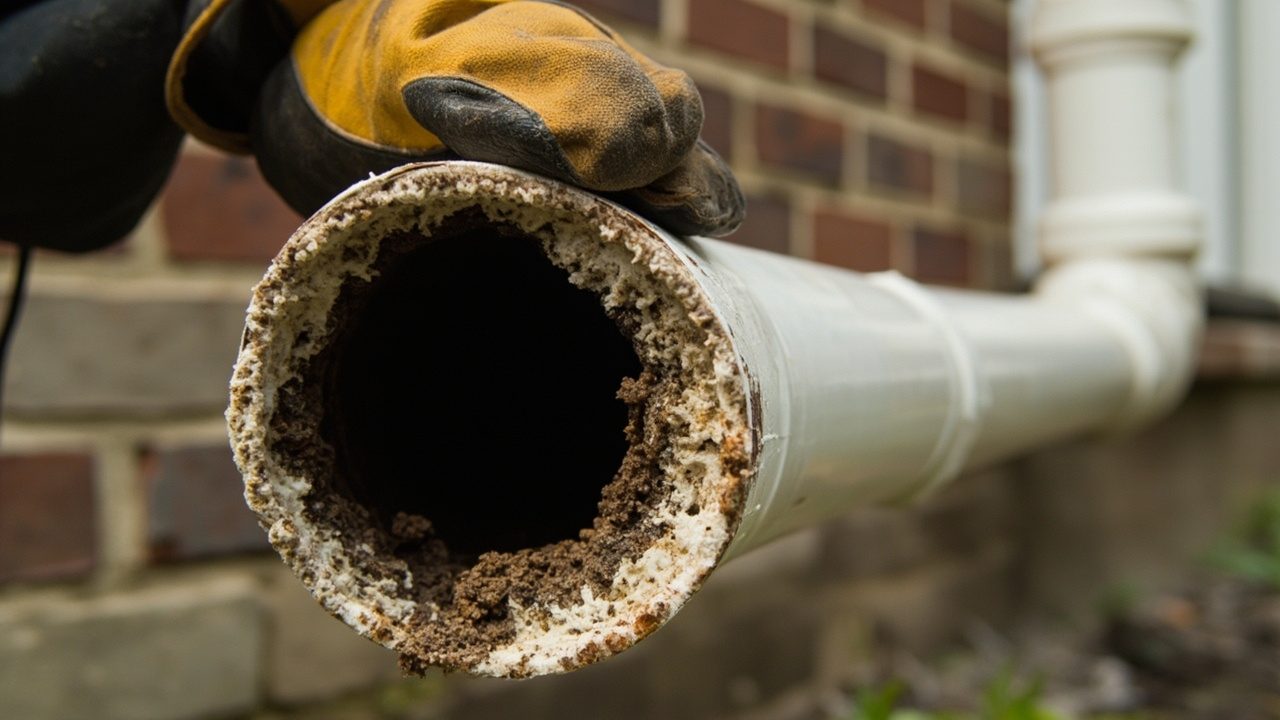
Housing stock here adds its own reasons for a restricted line. Postwar slab homes commonly have cast iron drains under the floor and clay or cast iron laterals, and cast iron corrodes from the inside, so scale narrows the bore and roughens the wall where paper catches. Clay laterals are jointed in short sections, and in dry desert soil a weeping joint is the wettest spot around, so roots find it and grow in. Either material can crack, and a crack lets the line sag or take in soil, which leaves standing water that pulls air behind every flush. Later slab homes carry ABS or PVC drains, where a blocked vent or a belly in the line is likelier than corrosion.
Waiting stops being reasonable at one sequence. When a gurgle comes with a toilet that keeps running after the flush, the flapper lets the tank refill all night and the fill valve cycles constantly, and every refill sends more water into a line that is already restricted. Once the valve wears and sticks open, the overflow carries water away unnoticed and the restricted line takes that load through the night. Call the same day when that pair shows up together.
Our page on running toilet repair covers that side of the work in more depth.
Permit and inspection questions? Planning & Inspections is the office we coordinate with on every permitted El Paso job.
Find the sign you have, then read across to see whether it can wait.
| Symptom or first sign | What is already happening | What it becomes if ignored | When to call |
|---|---|---|---|
| A toilet that runs after flushing | The flapper lets the tank refill all night and the fill valve cycles constantly | The valve wears and sticks open with the overflow carrying it away unnoticed | This week, while it is still one part |
| An anode rod eaten away | The steel tank becomes the sacrificial metal | Rusty hot water arrives first and a split tank arrives after | This week, while it is still one part |
| A hairline supply leak behind tile | The framing stays damp | The pipe repair turns into a wall rebuild | This week, while it is still one part |
| Incoming pressure above the normal band | The relief valve on the heater starts weeping | The tank seams work harder every cycle and the heater fails years before it should | This week, while it is still one part |
| A weeping angle stop under a sink | The compression nut corrodes so it cannot be snugged | The stop snaps off in someone's hand during a faucet change | Now, the same day |
Clear the line, then camera it, before anything is quoted
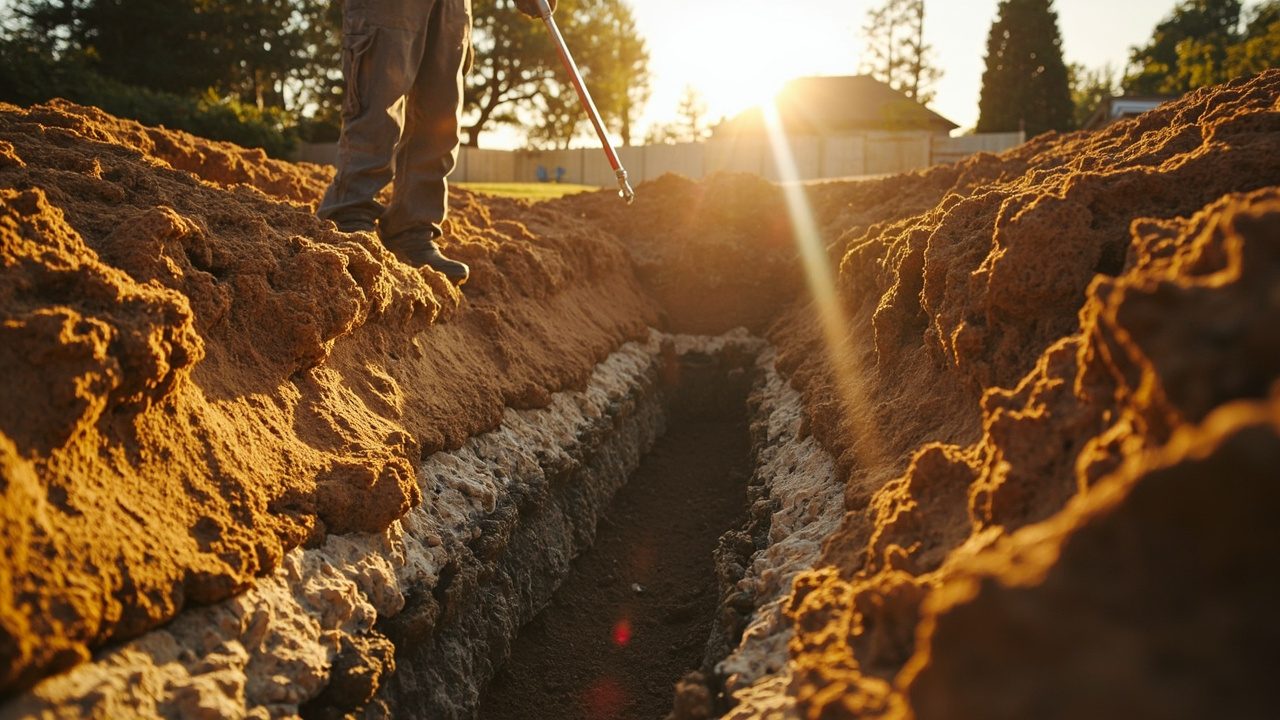
The order follows where the water is going. The technician asks which fixtures gurgle, then runs water at each one and watches the traps and bowls around it, which separates a single branch from the main. The line gets cleared next, from a cleanout, by hydro jetting or a cable as the restriction demands. Clearing comes before the camera because a full line shows nothing but water. Once the water drops, the drain camera goes in from that same cleanout, and the locator at the surface marks the spot and the depth of whatever the lens finds. That turns a sound into a location, a material and a depth, and only then does anyone decide what gets opened.
The reading this page turns on is what the camera sees in the first level run after the clearing. Standing water part way along that run is a belly in the line, and jetting cannot fix a low spot because paper and water settle there again. Roots at one joint call for a repair at that joint, so the opening is small and the rest of the line stays. Continuous fall, clean joints and pipe walls visible the whole way mean the drain is sound, and the gurgle moves to the vent side, where the stack vent or an air admittance valve gets checked. The locator's depth figure also sets the method, since a deep run under hardpan is a bigger job than a shallow one under a bathroom floor.
The comparison that matters in older houses here is cast iron against PVC or ABS. Cast iron is heavy and quiet and corrodes from the inside over decades, which is how a postwar slab run ends up narrowed by scale. Plastic is lighter, faster to install and carries more noise through a wall. A partial replacement joins the two with a no hub band transition and never with glue, and that detail decides whether the joint holds under a slab. Where the camera shows a belly, open cut replacement restores full diameter and lets the slope be corrected, while cured in place lining needs a host pipe that is still round and follows the existing sag. Roots at one clay joint push toward a repair at that joint, and corrosion along the whole run pushes toward replacing the run.
If this sounds close but not quite your situation, commercial toilet & urinal repair may be the better starting point.
Independent standards matter too, the EPA's WaterSense program sets the efficiency benchmarks we use when recommending replacement fixtures.
Ask which of these readings was taken before any part is replaced.
| Instrument | Good reading | Bad reading | What it changes |
|---|---|---|---|
| Drain camera with a locator | Continuous fall to the main, clean joints | Standing water part way along a level run means a belly | Roots at a joint mean the repair belongs at that joint rather than the whole line |
| Thermometer at the farthest hot tap | Hot water arriving around 120 degrees | Hot enough at the tap to scald a child in seconds | The first slug of water is whatever was sitting in the pipe |
| Water meter leak indicator with every fixture closed | The dial or the small leak wheel does not move over fifteen minutes | Any movement at all with the whole house off | Water is leaving the system somewhere you cannot see |
| Combustible gas detector and bubble solution on gas fittings | No alarm at the fittings and no bubble growing on the joint | Any bubble that keeps growing or any sustained alarm | The appliance valve gets closed before anything else happens |
| Screw on pressure gauge at a hose bib | Static pressure sitting in the 45 to 70 psi range with nothing running | Above 80 psi | Fixtures, supply hoses and water heaters start failing early |
| Overnight pressure hold with the gauge left | The morning reading is close to the reading taken the night before | A reading far above the night figure | The heater is expanding water into a closed system with nowhere to put it |
How a gurgling toilet call runs
Call, clear, then camera
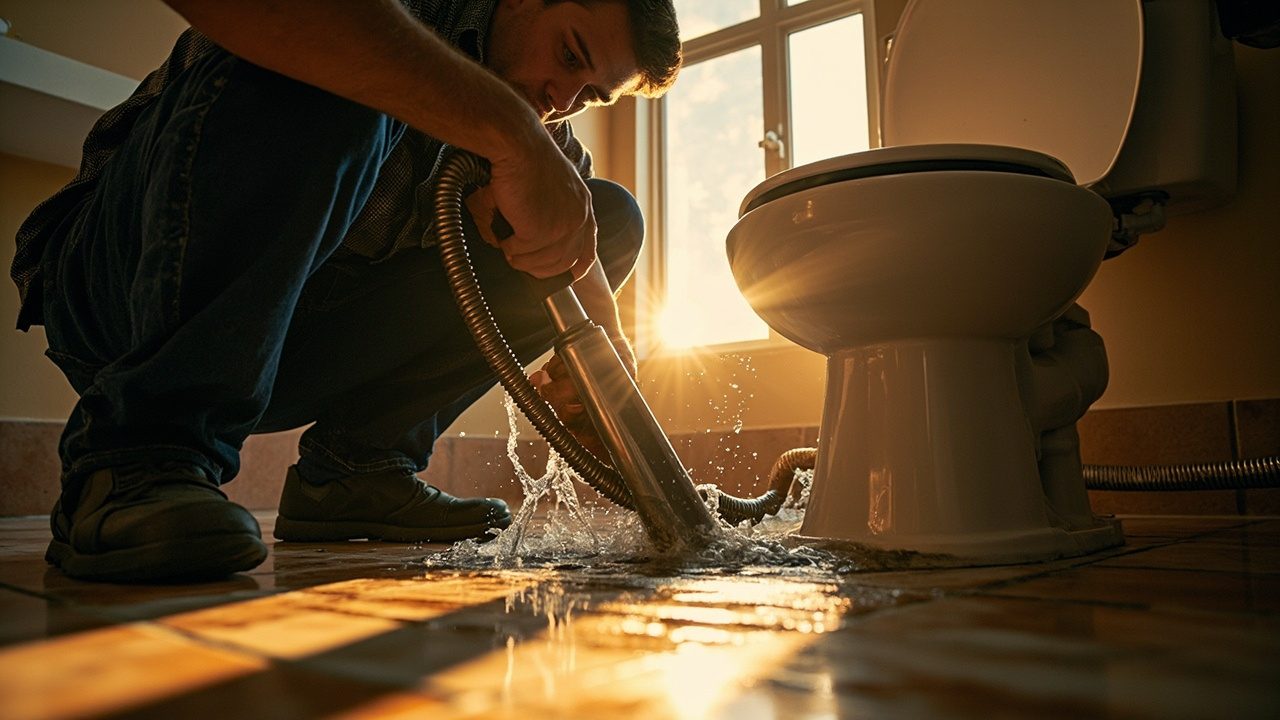
On the phone we ask which fixtures gurgle, whether any drain is backing up now, and whether the toilet still flushes. On site, the technician runs water at each fixture in turn and watches which traps and bowls react, which places the fault on one branch or on the main. The line is cleared first, since blockage hides the pipe interior on video. Then the drain camera goes in from a cleanout, and the locator marks the spot and the depth of anything it finds on the floor or the ground above. You can watch the monitor as the camera moves, and the diagnosis ends with a spot, a depth and a material.
Approve, isolate, repair
After you approve the written scope, the fixture is taken out of use and the work area is covered. Isolation comes first. On a drain job that means stopping every water use upstream, and if a supply line has to be moved, the stop or the main gets closed. The main operation then follows in trade terms, whether that is cutting out a failed section of cast iron and joining new pipe with a no hub band, or an open cut that restores full diameter and corrects slope. If a belly or a second root joint turns up behind the first, we stop and show you the footage before going further.
Test and handover
Before leaving, water runs through every fixture at once while the technician watches the traps and bowls for movement, and the gurgle has to be gone with two fixtures draining together. Where a section was replaced, the camera goes back through it and has to show continuous fall with no standing water, the same level run that showed the belly or the root joint earlier. You get a walkthrough of the footage at the repaired spot, and you keep the written scope and the recording of the final camera run.
Why local drain and vent knowledge changes a gurgling toilet job
Whether a job needs a permit depends on its scope and on which jurisdiction covers your address, and the final call belongs to that authority. Clearing a drain and pulling a camera through it usually needs none. Replacing a run of drain pipe, or cutting into a slab to reach one, is the kind of work that usually does, and permits come up more on gas and main line work than on a faucet swap. Ask who holds the permit for your street before a repair is scheduled.
A crew that does not work these houses tends to make four mistakes. The first is snaking a gurgle a second time with no camera, which opens a hole through a root mass, clears the line for a few weeks and leaves the joint still cracked. The second is gluing plastic to cast iron. Without a no hub band transition the joint weeps under the slab, where nobody sees it until the floor is wet. The third is quoting a trench as soft soil where caliche hardpan slows every foot of digging, so the scope changes halfway through. The fourth is assuming one material, when a single older house can carry cast iron, clay and a later plastic repair in the same run.
Vent faults get misread as well. Plastic vent pipe above the roofline sits in intense sun, and heat degrades exposed plastic, so a vent that cracked or clogged gets blamed on the drain below it. An unfamiliar crew jets a clean line and the gurgle stays. A house with an air admittance valve under a sink has a different vent path than one with a full stack vent to the roof, and the first thing to check changes with it.
Calls across the county are sorted on the phone by what you describe. A backup at the lowest drain, or gurgling at every fixture, moves to the front of the day, while one gurgling bowl with a normal flush can wait for a scheduled visit with the camera.
See overflowing toilet repair for how the related work is scoped and priced.
Communities like r/Plumbing are full of homeowners comparing notes on exactly this problem, worth a read before a major project.
Working with Bedrock Plumbing El Paso on a gurgling toilet
When somebody arrives
Three questions on the phone sort the visit. Which fixtures gurgle, whether any drain is backing up now, and whether the toilet still flushes decide if this is a same day call or a scheduled one. Whoever answers confirms the arrival window with you by phone before the visit. If the job ahead of yours runs long, the new window is passed to you by phone. Someone should be home to point out the cleanout and the fixtures that react.
Protection and cleanup
Runners go down from the entry to the bathroom and to the cleanout before any tool comes out. The camera cable and any jetting hose pass through the cleanout, so wastewater stays contained at that one opening and off the floor. A toilet is pulled only if the work needs that path, and then the closet flange gets checked and a new wax ring goes in on reset. Whatever comes out of the line goes into a sealed container and leaves with the crew, and the last step is wiping down the floor and the cable path.
What moves the cost
Reaching the pipe moves the number most, meaning a slab, a finished wall or a ceiling below and putting the surface back. Depth and length of the dig come next, and hardpan makes them longer. The largest fork is one joint against the whole run, and the camera view of the rest of that run decides it. Matching old cast iron to new plastic, fixture grade and after hours calls adjust it further. The written scope comes from the camera findings, you approve it before work starts, and it states what happens if the opening finds more.
How technicians are checked
A new technician rides along with a lead before working alone, and the lead signs off on specific tasks. Those include operating the camera after clearing the line, distinguishing a belly from a root joint, and making a no hub band transition between cast iron and plastic. On a slab drain or any run with mixed materials, a second technician reviews the footage before a scope is written.
You Have Questions,
We Have Answers
Plunge once or twice only if the bowl drains slowly, and stop if the water level stays normal. A plunger pushes and pulls water against the trap, and it clears a clog sitting in the toilet's own passage. A gurgle with a normal bowl level usually comes from the vent or the branch line, where a plunger changes nothing. Forcing it can also push wastewater back toward a weak wax ring seal. If a tub or floor drain bubbles while you plunge, stop, because the blockage sits farther down the line.
Low bowl water means suction is pulling the trap seal down through a blocked vent or restricted drain. Each flush sends water down the line, and air has to follow it. When the vent cannot supply that air, the flush siphons water out of the bowl and leaves the level a few inches under normal. A bowl that refills slowly after each flush and smells of sewer has lost part of its seal. A partial blockage in the branch produces the same drop.
A toilet gurgles repeatedly when air is trapped behind a restriction that never fully clears. A one-time gurgle can follow a large flush, but a repeating sound means the vent or the drain has narrowed. Watch the timing. A gurgle right after each flush suggests a partial blockage in the branch, while a gurgle that starts when the washer or a shower drains points at the shared vent or the main. Roots, scale and grease all narrow a line gradually, so the sound tends to grow louder over weeks.
Fixing it starts with finding whether the vent or the drain is restricted, since the repair differs for each. Try running water at each fixture and note which ones gurgle. A single fixture points to its own trap, branch or vent. If the drain is restricted, a cable or hydro jetting clears it, and a camera then shows whether a belly, root intrusion or scale remains. A blocked vent needs clearing from the roof. Clearing without a camera often gives only temporary relief.
Call a plumber when several fixtures gurgle, a low drain backs up, or the gurgle returns after plunging. Those patterns point to the branch or main, which a plunger and store-bought chemicals cannot reach. Chemical cleaners also sit in a partly blocked line and can attack old cast iron joints and any worker who later opens the pipe. A single gurgle with a normal flush and normal bowl level can be watched for a day or two while you note when it happens.
A gurgling toilet can signal a full septic tank, though a blocked vent or partial line blockage is more common. Septic-related gurgling shows up alongside slow drains at every fixture, soggy ground or a strong odor over the tank or drain field, and sewage backing into the lowest drain. A tank that is full raises the liquid level until it stops the outlet baffle from moving wastewater. Homes on a municipal sewer connection have no tank to fill, so look at the line instead.
A slow drain with gurgling and no clog usually means a partial restriction or a belly holding standing water. Paper and waste need a continuous downhill fall to travel. Where the pipe sags, water pools, slows the flow and pulls air through the pool with a gurgle after each flush. Scale inside cast iron does the same by narrowing the bore. Grease, wipes and a crushed joint leave the bowl clean and the line still restricted. A camera run shows which one it is.
A gurgling toilet can indicate a broken sewer line, but it is one of several possible causes. A break or collapse lets soil enter the pipe and leaves standing water that pulls air behind each flush. Signs that raise the odds include gurgling at every fixture, repeated backups after clearing, and a wet or sunken patch in the yard along the line's path. A blocked vent produces the same sound with an intact pipe, so a camera inspection separates the two before anyone digs.
Gurgling without a clog usually means air is not reaching the drain through the vent. Vent pipes can be blocked by a nest, debris, a cracked section or a failed air admittance valve under a sink. The drain flows freely, but the water leaving pulls air from the nearest trap instead. Test this by running a sink upstairs and listening at the toilet. If gurgling follows the water and the drains empty at normal speed, the vent is the first suspect.
Slab drains and caliche change gurgling toilet repairs in El Paso
Three ground and material conditions change how a gurgling drain gets repaired here. Caliche hardpan sits in layers under the sandy and gravelly soils on the mesas and foothills, so a trench to a lateral or a slab drain goes slower than in soft ground, and the method choice tilts toward a small opening at one joint when the camera allows it. The finer valley soils hold more water, which keeps clay joints wet and gives roots something to follow. Postwar slab homes put cast iron under the floor, so reaching a fault sometimes means breaking concrete at a locator mark. Later homes with ABS, PVC and manifold style layouts have plastic that sunlight and heat degrade where it is exposed, including vent pipe above the roof. A gurgle that appears only after a hard monsoon storm points at a cracked joint taking groundwater into the sanitary line.
When drain work needs a permit, inspection typically happens at stages while the pipe is still exposed, and the inspector looks at the fall of the run, the joint type and how old pipe meets new. Knowing that up front changes the sequence. The trench or the slab opening stays uncovered until the inspection is done, so the camera footage and the locator depth go into the scope before the dig is scheduled, and you know what will be open and for how long. Which authority inspects depends on whether your address falls inside city limits, under the county or with a neighboring town, and that authority also decides where responsibility for a lateral changes hands. A camera that shows the fault position along the run, plus its depth, gives them a position and a depth to work from. A fixture level job such as a wax ring or a fill valve usually needs no permit, and the final call is the authority's.
Plumbing Services in The El Paso Area
Explore our service area and locate Bedrock Plumbing El Paso with ease. We're proudly local and serve the surrounding neighborhoods with fast response and honest pricing. Use the map to check our coverage area, or call us and we'll confirm in seconds.
Address:
Bedrock Plumbing El Paso, 221 North Kansas St, Suite 700, El Paso, TX, 79901
Additional Services We Offer
Plunging a toilet whose bowl level is normal, swapping a flapper and finding the main shutoff are homeowner jobs. Where it stops is any drain already backed up past a cleanout and anything behind a finished wall or under a slab, because a full line pushes water at whoever opens it. If the first visit shows the fault lies outside our work, such as on the utility side, we say so then and tell you who handles it.
Before you call, know which fixtures gurgle and whether any drain backs up when the toilet flushes or the washer runs. Note when it started and what changed just before, such as a cleared drain or a new fixture. If you can, find the cleanout and the age of the house, since cast iron, clay and plastic each fail differently, and note whether the tank fills normally.
Last reviewed September 2026 by Dave Parker, Owner.