





What a repeat sewer backup means for El Paso commercial buildings
A line that was jetted, ran clear and backed up again usually holds a single restriction, at a joint, a low spot or a scaled section of old pipe. Jetting moves the blockage without removing its cause. Where the water shows tells you the segment: every fixture draining slowly with the lowest one backing up puts the fault on the main lateral, while one slow fixture puts it on a branch or a trap that a lateral repair will not touch. A backup that follows the dish machine points at the kitchen branch, and one that follows every flush in the building points at the main. A drain also escapes only while something upstream runs, so the symptom appears at peak use, when restrooms, dish machines and laundry discharge together.
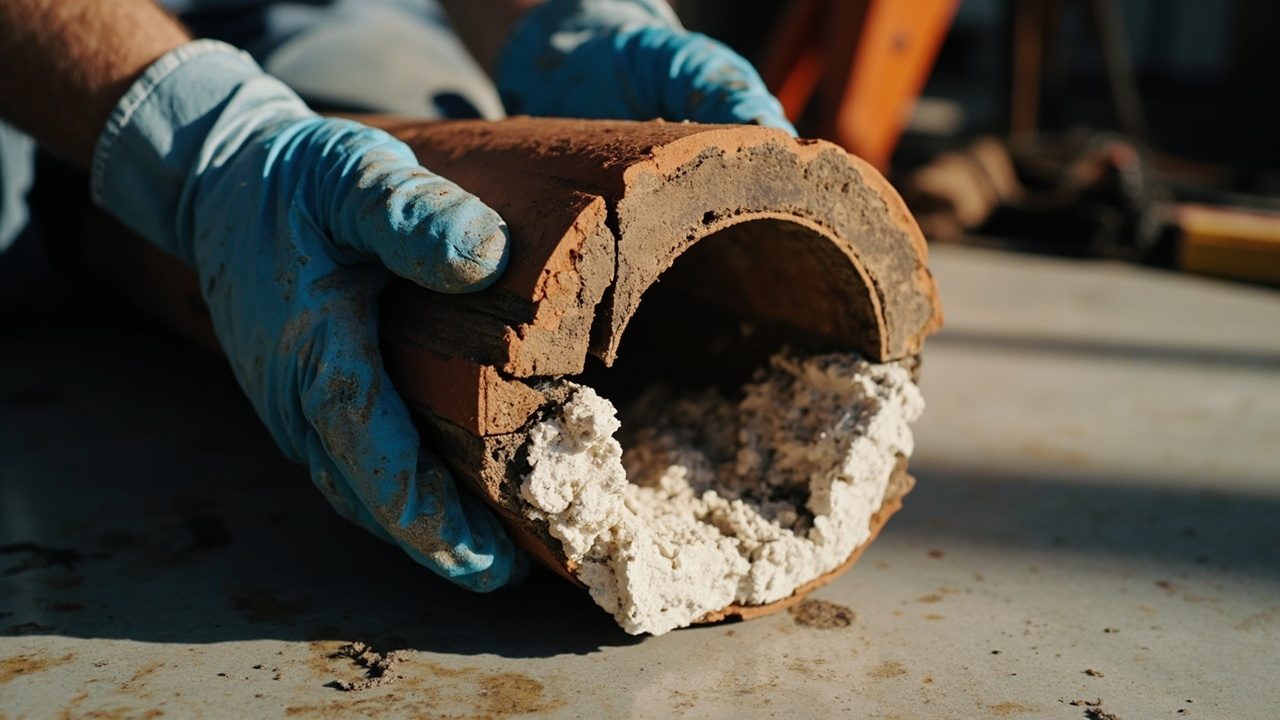
Laterals in this county carry the age of the buildings on them. Structures from the late 1800s through the 1930s have clay laterals jointed in short sections, and the 1940s through 1960s stock added cast iron drains under the slab with clay or cast iron laterals. Every clay joint is an entry point for root intrusion. Dry desert soil sharpens the problem, since a weeping joint is the wettest ground around and roots grow toward it. Short monsoon thunderstorms add a second load, because rain that reaches a cracked joint enters the sanitary line from outside the building. Cast iron corrodes from the inside out, so the bore roughens and narrows before the pipe cracks, which is why older commercial buildings with long horizontal runs need camera inspection and descaling.
Call today when a second backup follows a clearing on the same line. The pattern means roots at one clay joint are catching paper and grease at that spot every day, and the next event is the main backing up into the lowest fixture in the building with no warning. Once the line is full, stop every water use in the building including the washer and dishwasher, keep people out of the wet area and do not plunge a line that is already full.
For an occupied commercial building the cost of that sequence is downtime: a restroom bank out of service, a wet floor at the lowest drain and a request from an insurer, lender or buyer for a documented cause. The recording, the marked depth and position of each defect and the measured length are what a lender, underwriter or due diligence reviewer can use. No dig sewer repair becomes an option only after the cause is located, which is why the camera and locator survey comes before any price.
If this sounds close but not quite your situation, commercial sewer line repair may be the better starting point.
Permit and inspection questions? Planning & Inspections is the office we coordinate with on every permitted El Paso job.

How the line is located and measured before any scope is written
The sequence starts at the fixtures, because where the water shows places the fault before any equipment goes in. Water use is stopped branch by branch until the backup shrinks to a segment. The line is then cleared, since a full line shows nothing on camera but water. Once it runs clear, a drain camera goes in from the cleanout while a locator follows the camera head along the surface, marking the position and depth of each defect it passes. The camera runs after clearing and never before, because a run full of water hides the belly the survey is looking for. The output is a recording and a set of surface marks that turn a symptom into a spot, a depth and a length.
The recording gets read for a few specific readings. Continuous fall to the main, clean joints and the pipe wall visible along the whole run keeps trenchless pipe lining on the table. Standing water part way along a level run means a belly in the line, and a cured in place pipe liner follows the grade of the host pipe it cures inside, so the belly stays. That reading moves the job to open cut, where slope can be corrected. Roots at a joint mean the repair belongs at that joint rather than on the whole line. A host pipe that has gone out of round or collapsed cannot take a liner, so the camera also has to confirm a host pipe that is still round before lining is quoted. Depth from the locator settles whether pits are practical for a pipe bursting service or for lining access.
Local conditions decide between the methods here. Caliche hardpan slows every trench, so a deep or long open cut costs more in excavation time than the same run in soft soil, and that pushes those runs toward lining or pipe bursting. Mature trees over clay laterals push toward the question of one joint against the whole run. A camera that shows a single rooted joint on a round pipe supports a spot repair or a liner, while roots at joint after joint on pipe of one age support replacing the run. Where cast iron meets plastic in a partial replacement, a no hub transition band makes the connection. Finished floors in an occupied building, paving that must stay and exterior surfaces that cannot be disturbed decide the method more often than the pipe does.
See emergency sewer backup cleanup for how the related work is scoped and priced.
Our technicians follow the workmanship standards promoted by the Plumbing-Heating-Cooling Contractors Association.
Narrow this to two options before calling, then ask which one suits the house.
| Option | The numbers a buyer weighs | Best suited to |
|---|---|---|
| Trenchless lining against open cut replacement | Lining cures a new pipe inside the old one with a small loss of inside diameter | Runs under a slab, a drive or mature trees |
| Sump pump selection | Sized by horsepower against the vertical lift plus pipe run it has to push through | Basements with a real lift to the discharge |
| Salt softener against a salt free conditioner | An ion exchange softener removes hardness minerals and needs salt and a drain | Hard water houses weighing salt against upkeep |
| Tank water heater against tankless | A tank is judged on capacity in gallons and its first hour rating | Households with long back to back hot water use |
How a lateral repair call runs
Call and camera survey
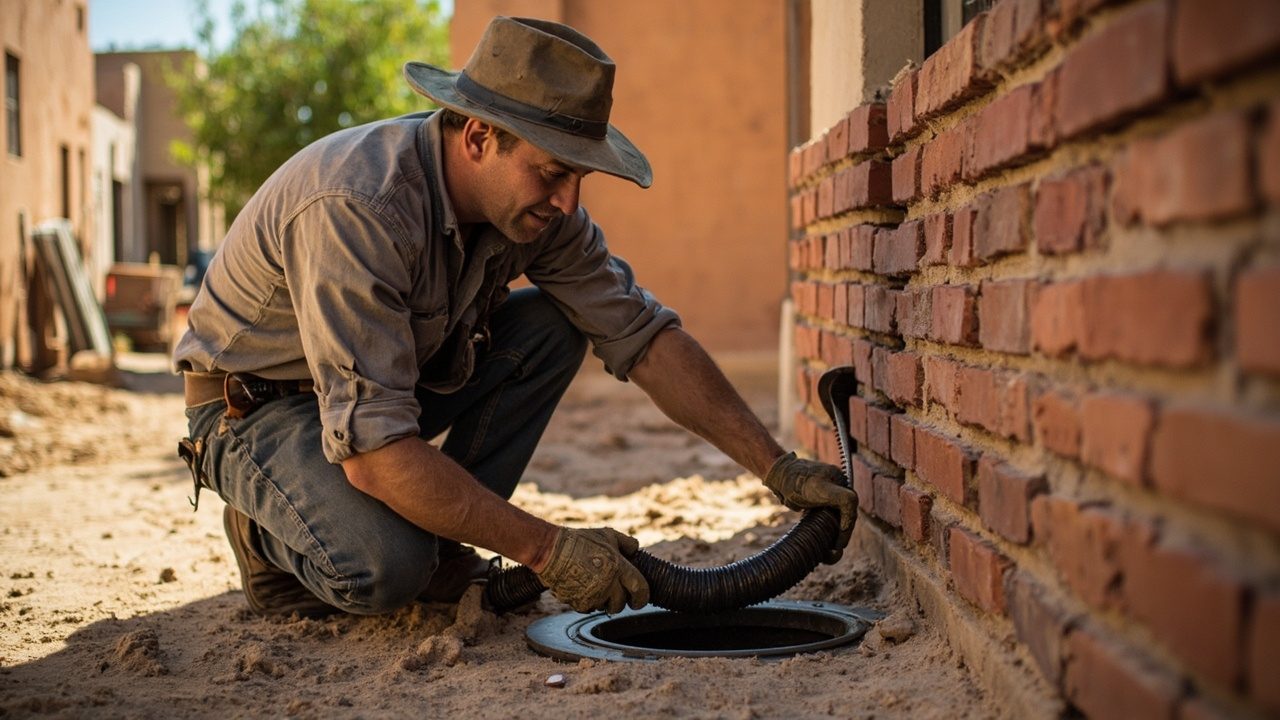
The call covers which fixtures back up, whether the lowest one goes first, when the line was last cleared and what age and material the building has. On site, water use in the building stops and the line is cleared through the cleanout, since a full line shows nothing but water. The camera then runs from that cleanout while the locator follows the head along the floor or ground, marking each defect with its position and depth. You watch the recording with the technician, and the marks stay on the surface until the written scope is done.
Written scope and work
Once the scope is approved, the affected branch is isolated and the cleanout is prepared as the working access. For lining, the host pipe is cleaned and a cured in place pipe liner is installed and cured inside it. For bursting or open cut, pits open at the locator marks, and a partial replacement is joined to old cast iron with a no hub band. If a belly or an oval host pipe turns up that the recording did not show, work stops and you are shown before the scope changes.
Camera check and handover
Before leaving, the drain camera goes back in from the cleanout and has to show proper slope to the main, clean joints and no water standing part way along the run, the same reading that decided the method. The technician walks the recording with you at the cleanout, and any surface opened is checked against the scope you approved. You keep the pre-repair and post-repair recordings, the locator depth and position for each repair and the approved written scope, along with the permit record where one applied.
Why old laterals and caliche hardpan make this work local
Sewer lateral work usually needs a permit and staged inspection, and a like for like fixture swap usually does not, with the final call on either belonging to the permitting authority. A crew that treats the permit as optional leaves the owner with an unpermitted repair in a building that a lender, underwriter or buyer's due diligence reviewer will later ask about. The file that should come out of a job is the pre-repair recording, the locator depth and position, the written scope, the post-repair recording and the permit record where one applied. Work phased across budget cycles still needs the recording, since the survey of the whole lateral decides which segment is done first.
Unfamiliar crews tend to make five mistakes here. Quoting before the camera has run prices a guess, so open cut gets quoted where a liner would have served, or a liner where a belly needed open cut. Lining over a belly is the second, because the liner cures with water standing in it and the backup returns at the same spot. Planning pits for soft soil is the third, since caliche hardpan stretches excavation and keeps a pit open longer than the schedule assumed. The fourth is gluing cast iron to plastic where a no hub transition band belongs, which leaves a joint that shifts under load. The fifth is assuming one pipe material per building, when older buildings often combine original cast iron and clay with later partial repairs, so the material at the cleanout says little about the material further along the run.
Response across the greater metro depends on what is asked on the first call. Older central stock has clay and cast iron, newer subdivisions have PVC laterals, and the county holds both, so the first questions cover building age, cleanout location and whether the line has been cleared. The crew arrives with the camera, locator and jetting equipment matched to those answers, which keeps a first visit from ending for lack of a tool.
More detail on sewer line repair & replacement is on its own page.
Working with Bedrock Plumbing El Paso on a lateral repair
How arrival gets set
You call, and the questions cover which fixtures back up, when the line was last cleared and how old the building is. Those answers show whether a full line needs someone the same day or a camera survey can be scheduled. The arrival window is given on that call, and if the job ahead runs long the window moves and you are told before it closes. The technician comes equipped with camera, locator and jetting tools ready to deploy.
Protection and cleanup
Before anything comes apart, floor runners and plastic sheeting go down between the cleanout and the door. Jetting water and residue are contained at the cleanout so they stay out of the space. Tools are staged at the access point and nothing is set down in the wet area. Everything removed leaves with the crew, any pit is backfilled and any surface opened is restored to the state written in the scope, and the last step is a rinse and wipe of the cleanout area.
What moves the price
Trenchless sewer replacement cost moves with access first, meaning what has to be opened to reach the pipe and what it takes to restore that surface. Depth and length of any pit, and what sits on top of the line, come next. One repaired joint costs less than a replaced segment, and the condition of the rest of the run decides which applies. Joining new pipe to old material and after hours dispatch raise the number. You approve the written scope before work starts, and anything the opening finds is priced in writing first.
How technicians are checked
A new technician rides along with a lead and works drain jobs under observation before working alone. The lead signs off on clearing a line, running the camera from a cleanout, reading the recording and marking a locator point at the right depth. The current code cycle is reviewed with the crew. On anything unusual, such as a belly or an oval host pipe, a second technician looks at the recording before a scope is written.
You Have Questions,
We Have Answers
A cured in place liner lasts as long as the host pipe stays round and the liner cures fully. The liner is a resin-saturated felt tube that hardens into a continuous pipe with no joints, so root entry points close. Service life depends on resin quality, cure temperature control and how well the pipe was cleaned beforehand. Any grease or scale left on the host wall can leave voids where the liner did not bond. The post-repair camera run shows whether the cure took.
Orangeburg, galvanized steel and polybutylene are the worst pipe materials in most buildings. Orangeburg is tar-impregnated paper fiber that softens, ovals and collapses under soil load. Galvanized steel scales shut from the inside, cutting flow and pressure over decades. Polybutylene supply tubing degrades from chlorine in the water and fails at its fittings without warning. Cast iron and clay also cause trouble, but they can often be lined or repaired at specific joints instead of being replaced whole.
Lining is worth it when the host pipe is round, falls continuously and sits under costly surfaces. It pays off most under finished floors, slabs and paving, where restoration would cost more than the pipe work. Lining loses its value on a line with a belly, because the cured liner keeps the low spot, or on a collapsed pipe. A camera survey with measured depth and length settles the question before any method is chosen.
A properly installed liner or burst line commonly serves for decades, depending on what surrounds it. Bursting pulls in new HDPE pipe with fused joints, which removes the joint gaps where roots enter. Lining preserves the old pipe as a shell, so a host that keeps deteriorating behind the liner can eventually shift it. Fittings and lateral connections are the usual weak points. Checking them on the post-repair recording confirms sealed tie-ins.
Cost rises or falls with access, depth, length, the method chosen and the surface that must be restored. A short spot liner at one rooted joint costs far less than a full-run replacement, and a deep run under concrete costs more than a shallow one in open yard. Extra cleaning, cutting protruding taps and reinstating service connections add labor. Written pricing follows the camera and locator survey, since the recording fixes the length and depth that drive the number.
Trenchless methods cannot fix a belly, a collapsed pipe or a run that needs its slope corrected. Lining also narrows the bore slightly, since the liner wall takes up some diameter. Bursting needs entry and exit pits and can disturb neighboring utilities if they cross the path. Lateral connections must be reopened after lining, using a robotic cutter, and a missed tap leaves a fixture without drainage. Severe offsets at joints may need a local dig first.
Relining cost follows pipe length, diameter, the lateral connections to reopen and the cleaning the host needs. Heavy scale, root mass or protruding taps add preparation time and push the number up. Easy cleanout access lowers it, while a run that needs a pit for access raises it. Any figure quoted before a camera has measured the run is a guess, so pricing waits for the recording.
Trenchless repair pricing depends on the method, run length, depth and the surface restored afterward. Spot liners, full liners and pipe bursting each carry different labor and material loads. Pipe diameter matters, since larger liners use more resin and felt. Upfront cleaning, root cutting and reinstating connections are itemized in the written scope. Approval comes before work starts, so surprises found during opening are priced in writing first.
Standard homeowners policies cover sudden, accidental damage inside the home but often exclude sewer lines failing from age or roots. Some carriers sell a service line endorsement that extends coverage to the underground pipe, so policy wording matters more than the pipe type. A recording showing the defect and its cause helps the adjuster classify the loss. Ask the carrier whether the endorsement applies before any work begins, since approval rules vary.
No single average holds up, because sewer repair cost varies too widely between buildings. A single rooted joint repaired from the cleanout and a long run under a slab differ by method, depth, access and restoration. A camera and locator survey measures the pipe and produces a written scope tied to the recording, and that scope replaces any guess about the number. Ask for the survey first, then compare methods against what it shows.
How hardpan and clay laterals shape trenchless repair in El Paso
In the Rio Grande Historic District, buildings from the early 1900s through the 1920s are likely to have clay laterals, and exterior work there can require historic review. Lining a clay lateral is the method that can leave the yard and walks above it undisturbed, because the liner goes in through existing access points and no continuous trench is dug. Elsewhere the ground makes a similar argument. Caliche hardpan layers slow every excavation, and the finer alluvial soils of the river valley hold more water, so a pit dug there fills and a clay joint sits wet more of the time. Cast iron drains under 1940s through 1960s slabs corrode from the inside out and crack, which puts the repair beneath the floor. Buildings from the 1970s onward have ABS or PVC drains and PVC laterals, so the camera there is checking for a belly or a displaced joint.
Work of this kind is usually inspected in stages, and an inspector reviews the finished connection, the grade of the new run and the transition to existing pipe. The permitting authority decides which stages apply to a given repair. Knowing that up front changes sequencing: a pit stays open until the connection has been seen, and the pre-repair and post-repair recordings are ready to hand over on the day. Storm timing matters as well. Monsoon runoff moves quickly through arroyos and channels and collects in low streets and dips, so open pits get scheduled around the storm forecast. The locator marks also bear on responsibility, since the recording shows where the defect sits along the run, and the authority and the utility decide where responsibility changes hands.
Plumbing Services in The El Paso Area
Explore our service area and locate Bedrock Plumbing El Paso with ease. We're proudly local and serve the surrounding neighborhoods with fast response and honest pricing. Use the map to check our coverage area, or call us and we'll confirm in seconds.
Address:
Bedrock Plumbing El Paso, 221 North Kansas St, Suite 700, El Paso, TX, 79901
Additional Services We Offer
- Apartment Complex Plumbing
- Commercial Backflow Prevention & Testing
- Commercial Kitchen Plumbing
- Commercial Plumbing Contractors
- Commercial Repiping Services
- Commercial Sewer Line Repair
- Commercial Toilet & Urinal Repair
- Commercial Water Heater Systems
- Grease Trap Cleaning & Pumping
- Hydro Jetting Services
- Industrial Pipe Repair
- Medical & Dental Gas Plumbing
Plunging a single toilet and cleaning an aerator are homeowner jobs. DIY stops at any drain already backed up past a cleanout, anything behind a finished wall and anything under a slab, because a full cleanout empties onto whoever opens it. Trenchless methods have their own limit: lining cannot correct a belly or rescue a collapsed host pipe. If the first survey shows either, you are told so on that visit and the scope changes to open cut.
Know which fixtures back up and whether the lowest one goes first, when the line was last cleared and what the crew reported, and what changed just before the latest backup. Any age you have for the building or its lateral helps, along with the location of the cleanout and whether anyone is in the building. Those answers usually decide whether the visit happens today.
Last reviewed September 2026 by Dave Parker, Owner.