





What a rising bowl or a running tank means in hard-water homes
Before you touch a plunger, do these three things in order. Turn the angle stop behind the toilet clockwise until it stops. If it will not turn, close the main where the line enters the house. Next, if water has reached an outlet or a ceiling fixture below, switch off that circuit before anyone steps into the wet floor. Then stop every water use in the building, the washer and dishwasher included, and keep people and pets out of the wet room. Leave a bowl that is already full alone, because a full line has nowhere to send what the plunger moves.
Now read what the bowl did. Water that rises with nobody flushing, with a hiss from the tank and a stream down the overflow tube, is a supply problem, and pressurized water keeps coming all night whether anyone is home. A bowl that rose after a flush, gurgled when the shower ran, or now drains slowly is a drain problem, and a drain only spills while something upstream is running. That split decides whether the toilet flooding your bathroom is a fill valve job or a line job. Give it a few minutes with the stop closed. A bowl that settles back to its normal level had a drain that was moving, so the fill valve was the fault. A bowl that stays high or drops a little at a time has a restriction somewhere past the p trap.
Two local conditions tilt the odds. The water supplied here tests moderately hard to hard, and scale crusts the seat and seal of a fill valve until it no longer shuts off cleanly, which is why so many calls about a toilet that won't stop running end at a valve. Flakes from corroding galvanized supply pipe in older homes can lodge in the same seat. On the drain side, homes from the 1940s through the 1960s often have cast iron under the slab, corroding from the inside until the bore narrows and a flush that used to clear now stalls partway. Later homes with ABS or PVC drains tend to stall at a joint or a low spot in the run.
Call the same day for a toilet that keeps running after the flush. The flapper is letting the tank refill all night and the fill valve is cycling constantly, the valve wears until it sticks open, and the overflow tube then carries the water away unnoticed until a bill or a wet floor shows it. A bowl that stays at the rim after the stop is closed is a toilet overflowing emergency of its own, because the line behind it is full.
Our page on gurgling toilet sounds covers that side of the work in more depth.
Our technicians follow the workmanship standards promoted by the Plumbing-Heating-Cooling Contractors Association.

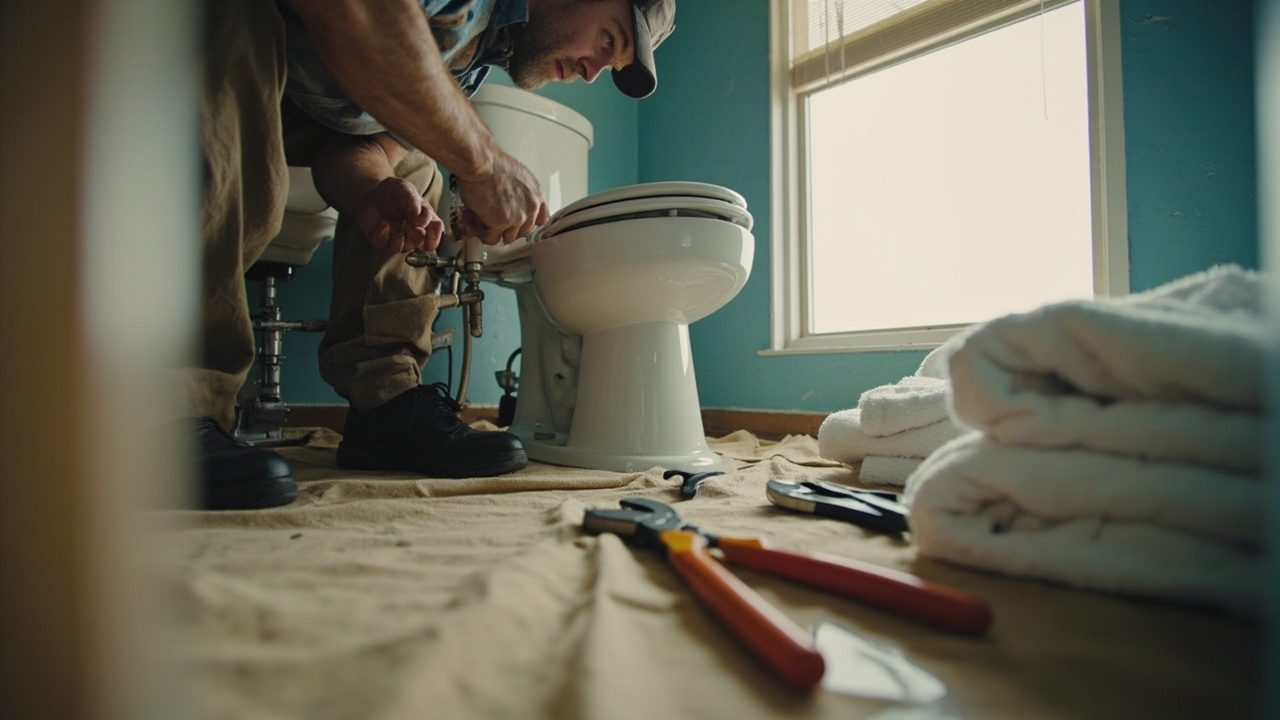
Isolate the water, clear the line, then run the camera
A technician works the water first and the pipe second. The angle stop closes, the tank lid comes off, and the fill valve and flapper are watched through a full refill to see whether the tank shuts off at its fill line. A tank that quits cleanly puts the fault below the toilet. Every other fixture then runs one at a time while the bowl is watched, since a bowl that rises when the tub drains shares that branch and one that rises only when the washer empties points to the main. The line gets cleared before it gets a camera, because a full line shows nothing but water. Nobody opens a cleanout under a full line, since the head of water empties onto whoever is standing there.
The reading this page turns on comes from the camera and locator, run from a cleanout after the line is cleared. Continuous fall to the main with clean joints and the pipe walls visible the whole run means the blockage was a one-time restriction and the line goes back into service. Standing water part way along a level run is a belly, and that stretch gets re-laid, because clearing it again only moves paper down to the next low spot. Roots at a joint put the repair at that joint rather than the whole line. The locator then marks position and depth on the surface above, and depth decides whether the fix is a trench, one opening in the slab or a re-route overhead. You can watch the same footage on screen and hold it up against the written scope.
If the camera finds a failed stretch, the material question comes next. Cast iron is heavy and quiet and corrodes from the inside over decades, which is why old drains under postwar slabs crack or narrow. PVC or ABS is lighter and faster to install and carries more sound through a wall, so a bathroom over a living room hears it. A partial replacement joins new plastic to the old cast iron hub with a no hub band or a proper transition, never with glue, because the transition is where these repairs leak. Caliche hardpan slows any trench in this county, so a short tie-in at one joint often makes sense. A cast iron line that looks the same corroded all the way along argues for replacing the run once.
If this sounds close but not quite your situation, running toilet repair may be the better starting point.
Ask which of these readings was taken before any part is replaced.
| Instrument | Good reading | Bad reading | What it changes |
|---|---|---|---|
| Drain camera with a locator | Continuous fall to the main, clean joints | Standing water part way along a level run means a belly | Roots at a joint mean the repair belongs at that joint rather than the whole line |
| Thermometer at the farthest hot tap | Hot water arriving around 120 degrees | Hot enough at the tap to scald a child in seconds | The first slug of water is whatever was sitting in the pipe |
| Water meter leak indicator with every fixture closed | The dial or the small leak wheel does not move over fifteen minutes | Any movement at all with the whole house off | Water is leaving the system somewhere you cannot see |
| Combustible gas detector and bubble solution on gas fittings | No alarm at the fittings and no bubble growing on the joint | Any bubble that keeps growing or any sustained alarm | The appliance valve gets closed before anything else happens |
How an overflowing toilet call runs
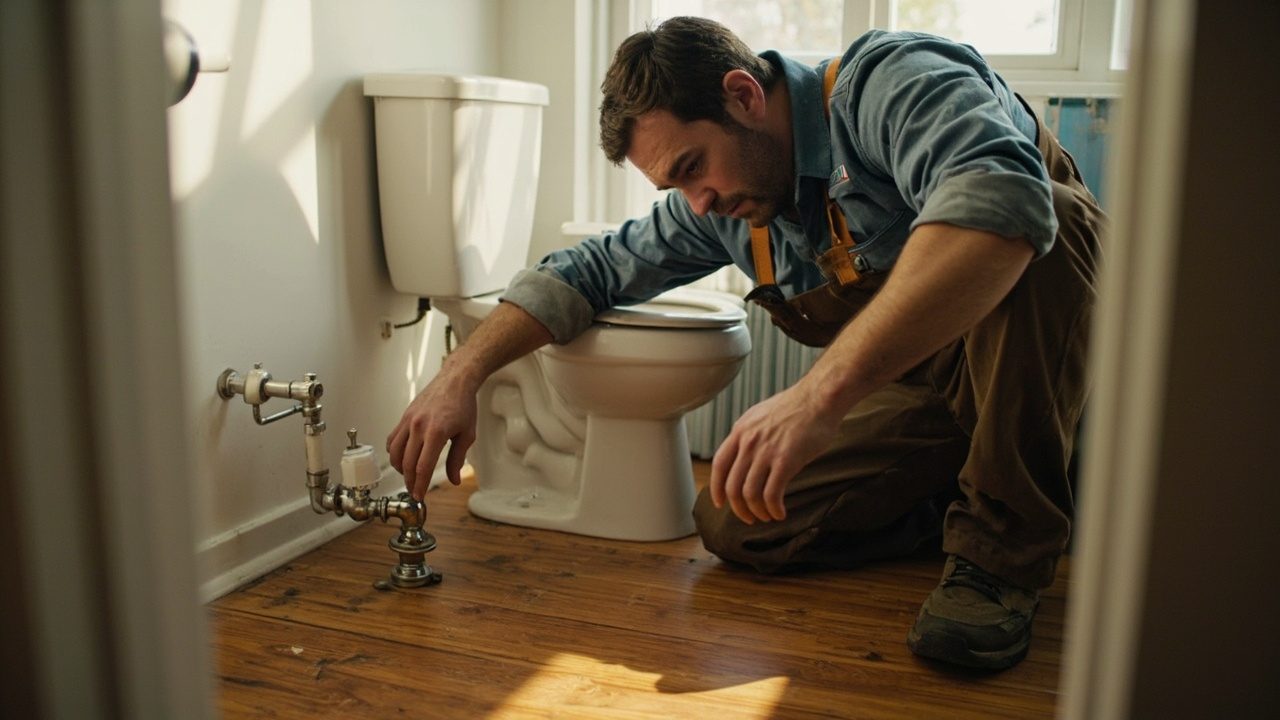
Isolate first, then look
The call starts with three questions: does the bowl rise on its own, does it rise after a flush, and do other drains gurgle, plus whether anyone is home. On site the technician closes the angle stop, lifts the tank lid and watches a full refill. If the tank behaves normally, the line is cleared first, since an obstruction blocks flow completely. Then the drain camera and locator go in through a cleanout. You watch the footage as it runs, and the locator marks depth and position on the floor or ground above, so the decision to open anything comes from a picture.
Scope approved, then work
Once the scope is approved, the supply is isolated at the angle stop and the bowl and tank are drained. On a valve job the old fill valve comes out, the seat is checked for scale and the new valve is set to shut off at its fill line. On a line job the toilet is lifted, the closet flange and wax ring are inspected, and a cast iron to PVC joint gets a no hub band. If the opening shows more than the scope covered, we stop and show you before going further.
Tested before we leave
Before we leave, the toilet is flushed repeatedly while the base is watched for weeping and the bowl for a slow drain, and the tank has to shut off at its fill line with no hiss. On a line job the camera goes back through the repaired stretch and has to show continuous fall to the main, clean joints and pipe walls visible the whole run. Then every fixture on that branch runs at once. The failed part is shown to you so you can see the scale or corrosion behind it, and you keep the written scope.
What a crew new to the county gets wrong on a toilet overflow
A fill valve, a flapper or a toilet reset usually needs no permit, while replacing a section of drain, working on a lateral or touching a gas line usually does, and the local authority has the final call. Work inside city limits and work in the county outside them can fall under different offices, so the address gets settled before the first tool comes out. Permitted drain work is inspected at stages during construction, which keeps a trench or a slab opening uncovered until the inspector has seen it. A bathroom flood that ends with a cracked drain under the slab is a permit job even though it began as a fill valve call.
Crews new to this metro repeat a short list of mistakes. Some expect plastic under every slab, arrive without a no hub band and improvise the joint between new PVC and old cast iron. A camera goes into a full line and films nothing but water. A cleanout gets opened under head pressure, and the line empties onto whoever is standing there. A rising bowl gets snaked when the tank was the source, or a fill valve gets swapped in scaled water without a look at the seat, so the new valve sticks the way the old one did. Corroded angle stops get tightened past what they can take, and one snaps off with the room on full supply. Where caliche hardpan turns a short trench into an all day job, a same day visit slides into the evening.
Mixed materials are the local norm. A house with original cast iron and a later PVC section on the same run needs a transition matched to both, and a crew that carries one kind of band makes a second trip. Older central homes, postwar slab homes and newer east and west side subdivisions each need different tools on the truck, and the camera footage is what shows which band and which method the run needs. Response across the county follows how the day is running, and the arrival window is given on the call.
More detail on commercial toilet & urinal repair is on its own page.
Your local utility, El Paso Water, publishes service and water-quality information every El Paso homeowner should know.
Working with Bedrock Plumbing El Paso on an overflow
When someone arrives
You call, and the person who answers asks whether the bowl rises with nobody flushing, whether it rose after a flush, and whether water is on the floor. Those answers sort an emergency toilet repair visit today from a scheduled one. You get the arrival window on that same call. If the job ahead of yours runs long, you hear about it by phone before your window closes, and you are told whether the angle stop can stay shut until someone arrives.
Floors and fixtures protected
Before the toilet comes off the floor, a drop cloth runs from the door to the bathroom and the floor around the base is covered. Water left in the bowl and tank goes into a bucket and stays off the floor. The old wax ring, the flange bolts and any debris go into sealed bags and out with us. The last thing we do is wipe the floor around the base and check that the closet flange sits level.
What moves the cost
Access moves the job furthest, meaning the wall, tile, ceiling or slab over the pipe and the surface restored afterward. Depth comes next, then one joint against a whole run, which the camera footage settles, since roots at one joint and a belly lead to different scopes. Matching old cast iron to new plastic adds work. Fixture grade moves the job as you choose, and after hours, weekend and holiday dispatch adds to it. You approve the written scope before work starts.
How technicians earn sign off
A new technician rides with a lead before working alone, and the lead signs off on reading a bowl and tank in the right order, closing the angle stop before anything else, and running the camera through the cleanout once the line is clear. The lead also watches a new wax ring seat on a level flange. On a line that shows a belly or roots, a second technician reviews the footage before any scope is written, and the current code cycle gets studied together.
You Have Questions,
We Have Answers
Yes, overflow water from a toilet bowl is treated as contaminated because it can carry pathogens from waste. Bacteria such as E. coli can persist on porous surfaces like grout, baseboard and subfloor for days. Wear rubber gloves and boots, mop with a disinfectant labeled for bacteria and viruses, and let it sit wet on the surface for the contact time printed on the label. Discard soaked rugs and bath mats. Drywall that wicked water upward usually needs cutting out.
Hot tap water can soften a soft clog, but boiling water can crack the porcelain bowl. Porcelain fractures from sudden thermal shock, and boiling water can also soften a wax ring seal. Use water hot from the tap, around what a shower delivers, poured slowly from waist height into the bowl. Add a squirt of dish soap first to lubricate the blockage. Paper and waste respond to this. A toy, a wipe or a wad of hair will not dissolve.
A failed fill valve overflows a toilet with no clog by pushing water past the overflow tube. That water arrives faster than the trap can pass it. A clogged roof vent stack also causes slow, gurgling drainage because air cannot replace the water leaving the pipe. Bird nests and debris are common vent blockers. A float set too high causes the same overfill.
Close the angle stop, then remove standing water with a cup and bucket and plunge with a flange plunger. A flange plunger has a rubber extension that seals inside the toilet outlet, unlike a flat cup plunger. Push slowly first to expel air, then pull sharply, about fifteen strokes. If the level drops and the bowl refills to normal when you open the stop, the drain is moving. Towels and a wet vacuum handle floor water afterward.
Rising bowl water after a flush means the drain is restricted downstream of the trap. Each flush delivers around a gallon and a half of water, and a partial clog cannot pass it, so the level climbs and then falls slowly. A gurgle from the shower or sink drain points to a branch or main line problem. If the bowl rises again after settling, the blockage is growing. Stop flushing and avoid running other fixtures.
Lift the tank lid and check the flapper and fill valve, because one of them leaks or sticks open. Press the flapper down by hand. If the flow stops, the flapper is worn or warped and needs replacing. Look for a chain caught under the flapper, too. If water still flows into the overflow tube, lower the float or replace the fill valve. A drop of food coloring in the tank shows a flapper leak when color appears in the bowl.
Close the angle stop by hand, then stop all other water use in the house. If the handle is seized, close the main. Lift the tank lid and push the float or flapper down to confirm the tank is not the source. Do not flush again. Once the bowl is no longer receiving water, remove overflow with towels and a bucket, and leave the line alone until it is assessed.
Overflowing toilet water spreads across the floor and soaks into whatever it touches, which starts damage within hours. Water seeps under vinyl and along baseboards, swells particleboard subfloor, and can drip through the ceiling below, sometimes reaching light fixtures. Because the water is contaminated, porous materials that stay wet more than a day or two often grow mold and may need removal. A flood from a stuck valve keeps running until the supply is closed.
A toilet overflows without a clog when the fill valve leaks past its seal or the float sits too high. Excess water then flows through the overflow tube into the bowl until the trap cannot keep up. A partly blocked vent or a full septic-style branch can also raise the bowl level with no visible obstruction. Look for a steady hiss after the tank refills, which signals a valve not seating fully. Water level marks on the inside of the tank help you check the float setting.
Fix a repeat overflow by finding whether the tank or the drain causes it, since the two repairs differ. If the tank keeps filling after it reaches the fill line, replace the fill valve or adjust the float. If the bowl rises slowly after flushes, run a closet auger through the trap to clear the blockage. An auger with a rubber sleeve protects the porcelain from scratches. Repeated overflows after augering point to a deeper line problem that needs a camera.
How hard water and cast iron shape toilet overflow repair in El Paso
The water here tests moderately hard to hard, commonly around ten grains per gallon or more, and above about seven grains scale forms steadily in valves and heaters. On a toilet that means the fill valve seat gets checked for crust and the job is planned around flushing, descaling or treatment so the new valve does not fail the same way. Foundation type decides access. Postwar slab homes run cast iron under the floor, so a cracked drain under the bathroom means breaking the slab at one point or re-routing overhead, and caliche hardpan slows the digging either way. Homes from the 1970s through the 1990s have ABS or PVC drains and copper supply through the slab. The newest east and west side subdivisions use PEX supply on manifolds with PVC drains and laterals, which lets a branch be isolated at the manifold.
Inspection follows the stage the work reaches. On a drain repair that stage is the open trench or open slab before anything is buried, and inspectors typically look at the joints, the transition band where plastic meets cast iron, the fall of the run and the support under it. A crew that knows this keeps the opening uncovered until the inspection and keeps the camera footage that justified the cut. Hardpan makes a second dig expensive, so sequencing matters. In a yard that catches runoff, an open trench collects water from a monsoon thunderstorm, which pushes the work toward closing the line the same day it is approved. Which office holds the address, the city or the county, decides who inspects, and knowing that ahead of time keeps a repair from waiting on the wrong inspector. A fill valve replacement usually stays a single-visit fixture job.
Plumbing Services in The El Paso Area
Explore our service area and locate Bedrock Plumbing El Paso with ease. We're proudly local and serve the surrounding neighborhoods with fast response and honest pricing. Use the map to check our coverage area, or call us and we'll confirm in seconds.
Address:
Bedrock Plumbing El Paso, 221 North Kansas St, Suite 700, El Paso, TX, 79901
Additional Services We Offer
- 24/7 Emergency Plumbing Services
- Basement Flooding Pump-Out
- Burst Pipe Repair
- Emergency Sewer Backup Cleanup
- Emergency Sump Pump Failure
- Emergency Water Heater Repair
- Emergency Water Shut-Off Service
- Frozen Pipe Thawing & Repair
- Gas Leak Detection & Repair
- Main Water Line Break Repair
- Rapid Response Leak Repair
- Septic Tank Emergency Pumping
Plunging a toilet that is slow but not full, swapping a flapper or a braided supply hose, and closing the angle stop are homeowner jobs. DIY stops at anything soldered, anything on the gas line, anything behind a finished wall or under a slab, and any drain already backed up past a cleanout. Drying a soaked floor and replacing damaged flooring belong to another trade, and we say so on the first visit.
Know when the bowl started rising and whether it rose after a flush or by itself. Check that the angle stop is closed, whether other drains gurgle, and whether water reached an outlet or the ceiling below. Know where the main is, and tell us if anyone is home. The age of the house, or whether the drains are cast iron or plastic, helps too.
Last reviewed September 2026 by Dave Parker, Owner.