





What orchard roots and salty soil do to plumbing here
The river valley sits on alluvium, a mix of silt, clay and sand that has been farmed for cotton and pecans. Valley soils can hold salts, and salts attack buried copper, galvanized steel and iron from the outside. Pecan orchards and mature valley trees add a second problem. Roots follow moisture, so a weeping joint in a sewer line is the wettest spot in dry ground and the first place they enter. Long summers put evaporative coolers and yard irrigation on the same supply, and hard water runs through every heater and float valve on the property.
El Paso Water describes its supply as moderately hard to hard, a blend of river surface water and groundwater. The jump from moderately hard to hard is where scale starts showing up on service calls, as crusted aerators, short element life and sediment in tank heaters and tankless units. Scale also narrows small lines and cartridges and shortens the life of valves. Your house's age tells you which pipe to suspect. Older block, adobe and frame homes from the early and mid twentieth century can still carry galvanized steel supply, which closes up from the inside, and cast iron or clay drains jointed in short sections where roots get in. Later twentieth century slab on grade homes usually run copper supply under the floor, so one pinhole becomes a slab leak. Manufactured homes on rural lots add plastic supply and drain lines under the floor and longer yard service lines. Subdivisions from the 1990s onward brought plastic supply and drains, with the water heater in a garage or closet where nobody checks it.
West Side tract homes, built mostly from the 1970s through the 2000s, are commonly slab on grade with copper or plastic supply and plastic drains, so slab leaks and water heater replacements are routine calls. In Westway, site built and manufactured homes stand side by side, so one street can hand a crew a different supply and drain material at every house. Borderland has newer slab on grade homes with plastic supply and drain piping, while older rural parcels carry longer runs of mixed materials that make a leak harder to pin to one segment.
Permit and inspection questions? Planning & Inspections is the office we coordinate with on every permitted El Paso job.
How we run plumbing jobs on sloped valley lots
Scope on every job here starts with a hardness test on the incoming water, because the local supply tests in the moderately hard to hard range and the reading changes what gets quoted. A result in the hard range puts flushing, an anode check and treatment options into the conversation before anyone prices another heater. A moderately hard result leaves aerators and elements alone. The reading goes into the written scope beside the pressure and meter readings, so you can see what each line item rests on.
The technician who did the work performs the final check, repeating the measurement that opened the job and showing you the number. On drain work that means a camera run from the cleanout after the line is cleared, since a full line shows nothing but water. On valley lots that run separates pecan roots at one clay joint, which call for a repair at that joint, from a low spot holding water, which calls for relaying the run. The footage stays attached to the written scope, so a second reviewer, a lender or a carrier can see the same pipe.
A new technician rides with an experienced one and works alone only after showing the gauge readings, the joint work and the camera interpretation on live jobs. An unusual job gets a second technician's review of the readings and footage before the scope is written. When an opened wall or trench turns up more than the scope covered, work stops at that point, you see what was found, and a revised written scope needs your approval before anything continues. On rising ground where caliche slows digging, that revision matters most, because a trench that runs longer than planned changes the work more than any part does.
Communities like r/Plumbing are full of homeowners comparing notes on exactly this problem, worth a read before a major project.
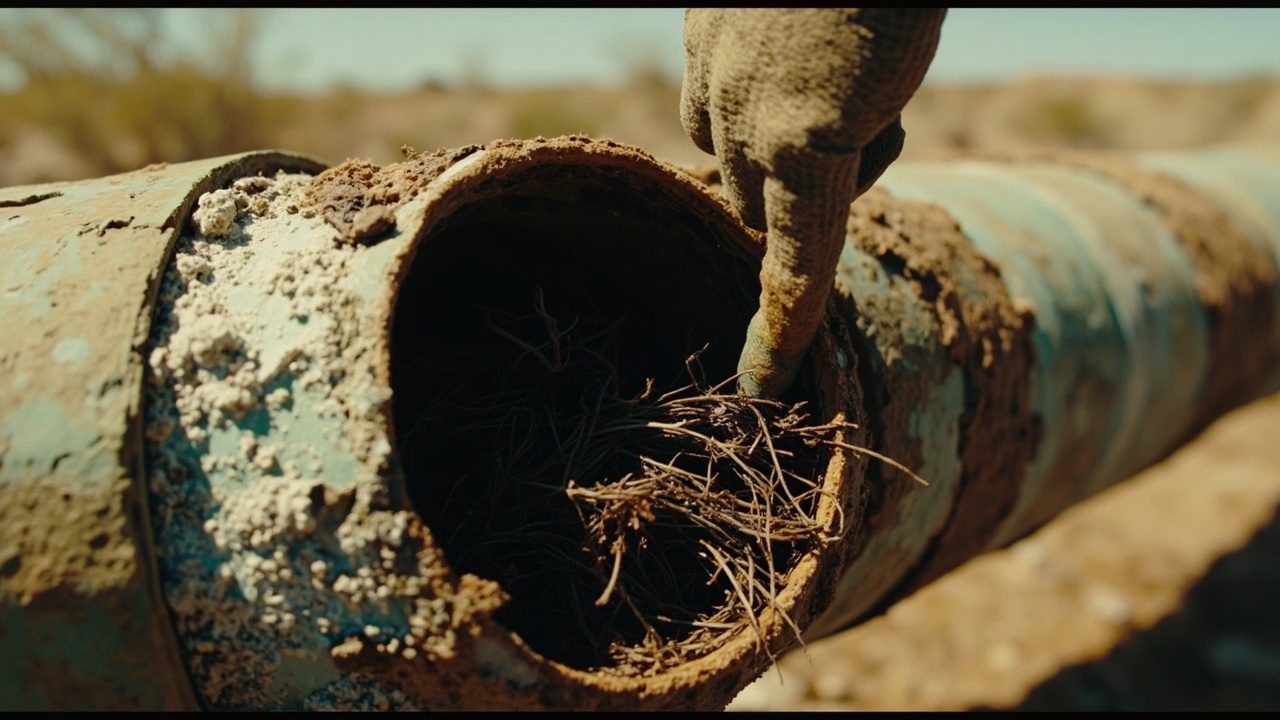
Meter test first
The meter leak indicator gets read with every fixture closed, and the dial or small leak wheel has to hold still for fifteen minutes. Then the main closes and the meter is read again. Movement with the main closed puts the loss on the street side, and a dial that stops puts it in the house. On slab homes and long yard service lines, that sequence decides what gets opened.
Camera and locator
A drain camera enters from the cleanout after clearing, since a clogged line yields only water on the screen. It reveals continuous slope and sound connections, pooling on flat sections that indicates a belly, or root intrusion at joints. The locator marks the spot and depth above ground, which sizes the dig before excavation begins.
Code as adopted
Technicians work from the International Plumbing Code as the local authority applies it, and they review changes when the authority updates its adoption. On a water heater replacement that governs how the temperature and pressure relief valve is piped and how the venting is checked. Gas work and main line work get the permit conversation first, while a faucet or angle stop swap usually does not.
Valley lot knowledge
Working Doniphan Drive and the valley lots around it means expecting a different pipe at every house. Block and adobe homes call for transition bands where cast iron meets plastic, slab tract homes call for line locating, and manufactured homes call for reading plastic lines under the floor. Knowing which house holds which material saves the first hour of guessing.
Plumbing work we handle in the area
Residential work here is mostly slab on grade houses with copper or plastic supply, so leak repair means finding the line before opening anything, and water heater work means reading the hardness of the water before choosing the next tank. Repipes, sump pumps, fixture and valve replacement and gas line work inside the home sit in the same tier.
Commercial work turns on downtime. Grease line jetting, main line repair, water heater and booster work and scheduled kitchen drain service all run around business hours, and each finishes with camera footage or a pressure reading for the file. Emergency work is defined by the first minute, when the stop, the main or the gas valve gets closed. Burst lines, active leaks, sewage backups and failed heaters change the sequence, because containment comes before diagnosis.

Leak repair and water heater replacement
Residential plumbing covers leak repair, fixture and valve replacement, water heater repair and replacement, drain clearing, repipe work, sump pumps and gas line work inside the home. A typical call starts with a warm spot on one patch of floor and ends with the hot line located and either rerouted overhead or reached by breaking the slab at one point. On a slab on grade house with copper supply, the meter test comes first so the work starts at the right branch. When the hardness test reads hard, the water gets addressed before the next heater goes in. An ion exchange softener removes hardness minerals and needs salt and a drain. A template assisted crystallization conditioner changes how the minerals behave so they are less likely to stick, and it needs neither. The reading and whether a drain is available decide between them.
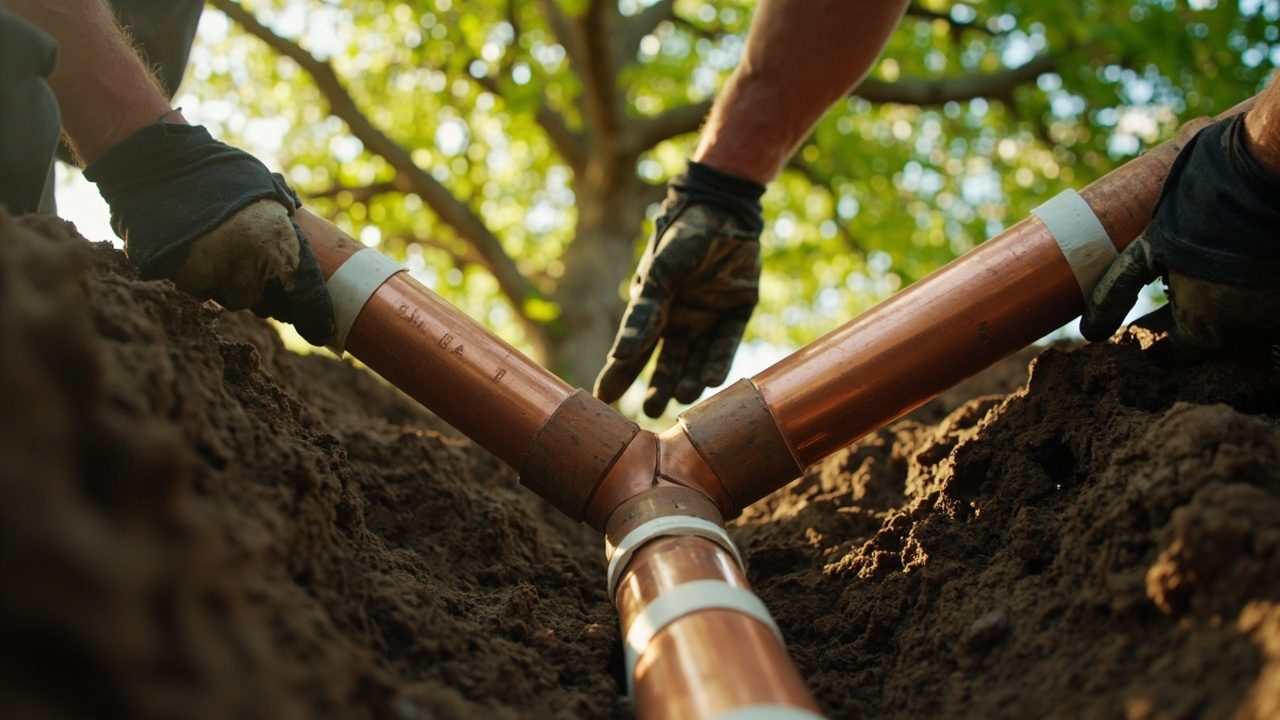
Grease line jetting and main line repair
Commercial plumbing covers grease line jetting and maintenance, drain repair, water heater and booster work, restroom fixture programs and scheduled drain service for kitchens. Scheduling runs around service hours, so a kitchen branch gets jetted on a set interval. Each visit produces camera footage of the jetted run, the pressure reading at the booster or heater, and a written scope for any repair. That record is what a property manager, lender or underwriter asks for when they need the condition of the drain and supply on paper. Mature valley trees near a building send roots into the same clay and cast iron joints that residential lines have, and the camera decides between a repair at one joint and replacement of a longer run.
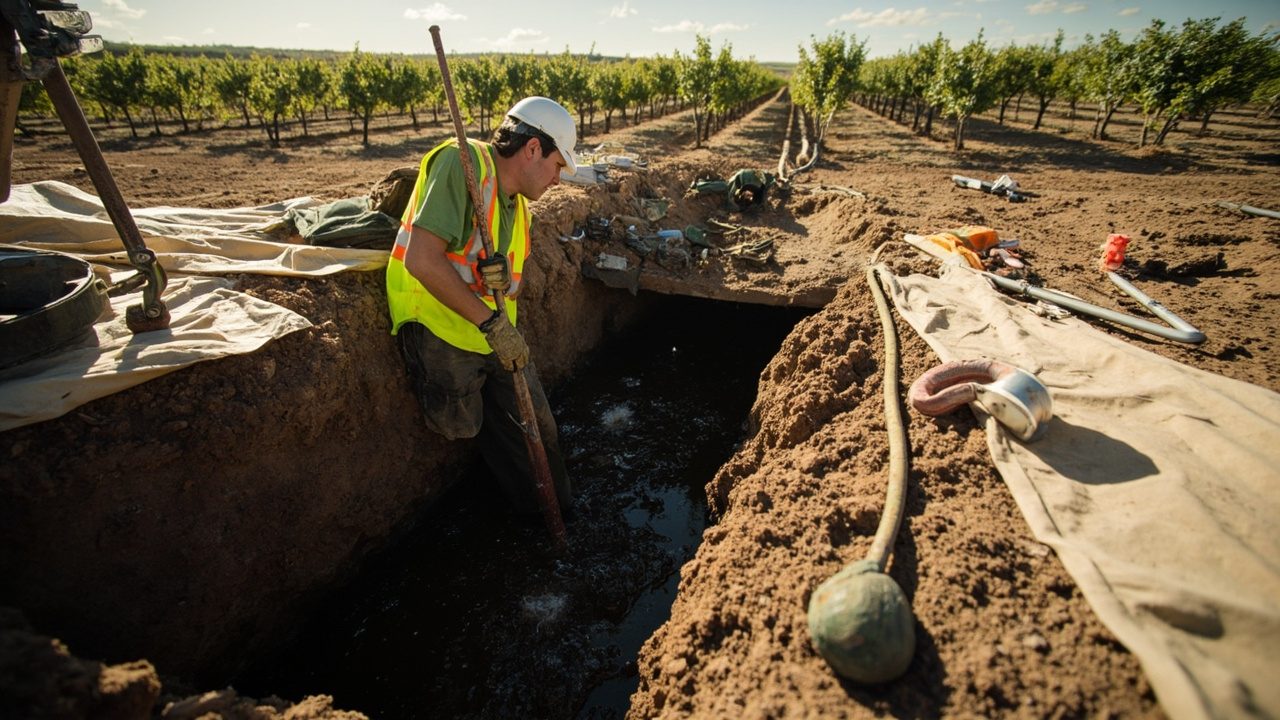
Burst line and sewage backup response
Emergency plumbing covers burst lines, no water, active leaks, sewage backups, failed water heaters and after hours response. Pressurized water keeps escaping all night, and a drain escapes only while something upstream runs, so the first move is closing the stop at the fixture or the main at the house or meter. If water has reached outlets, a panel or a ceiling fixture, that circuit goes off before anyone steps into the water. On a failed heater the cold inlet closes, the gas control or breaker goes off, and a hot tap opens on a lower floor. A gas smell means everyone outside, nothing switched on the way out, and Texas Gas Service called from outside. On a sewage backup, every water use stops, washer and dishwasher included, and nobody plunges a full line.
The plumbing problems we see most often
Most drain calls here start with a line that slowed, got cleared and slowed again. Roots from those orchards and trees enter a clay or cast iron joint where it weeps, thicken into a mat, and the mat holds every sheet of paper and film of grease that passes. Clearing cuts the mat but leaves the root anchored in the joint. A drain only escapes while something upstream runs, so a backup that shows at the wash cycle sits on the drain side of the house.
Call today when a line you have already cleared once slows again. Roots at that one joint mean paper and grease catch at the same spot every day, and the main then backs up into the lowest fixture in the building with no warning. Stop all water use, washer and dishwasher included, and keep people and pets out of the wet area.
One of our most-requested services here is plumbing services, see that page for pricing and process.
Freeze splits after the thaw
One fixture has no water while the rest of the house works, then a ceiling stain appears hours after the temperature recovered. Hard freezes are infrequent here, so hose bibs, evaporative cooler lines and uninsulated pipe were often never protected. Ice splits the pipe at the coldest point, and nothing shows until it thaws and pressure returns. Close the fixture stop or the main, then read the meter with everything off to see whether water is still leaving.
Galvanized supply closing up
Flow at a tap weakens while the gauge screwed onto the hose bib still reads 45 to 70 psi with nothing running. The restriction then sits in the house piping. Galvanized steel closes up from the inside as rust and scale narrow it, and older block, adobe and frame homes can still have it unless repiped. Cast iron drains in those houses corrode from the inside out. Call when flow drops at more than one tap, because the narrowing runs the length of the pipe.
Salty soil and slab leaks
The meter dial turns with every fixture closed, one patch of floor runs warm, or the water bill jumps with nothing wet. Valley soils can hold salts that corrode buried copper, galvanized steel and iron, and older slab on grade homes have copper under the floor. Close the main and watch the dial again. Still moving puts the leak on the street side of the meter, and stopped puts it in the house. Call once the dial moves with the whole house off.
Scale and spent anode rods
Rusty hot water in the first minute, a second shower that runs cold, or an evaporative cooler float valve that sticks every summer. Hard water builds scale in tank heaters and clogs cooler supply lines and float valves with minerals. An anode rod eaten to a bare core wire makes the steel tank the sacrificial metal, and rusty water arrives first with a split tank after. Call when the hot water turns rusty, before the tank seam gives.
Find the sign you have, then read across to see whether it can wait.
| Symptom or first sign | What is already happening | What it becomes if ignored | When to call |
|---|---|---|---|
| Roots at one clay joint | Paper and grease catch at that spot every day | The main backs up into the lowest fixture in the building with no warning | Now, the same day |
| Incoming pressure above the normal band | The relief valve on the heater starts weeping | The tank seams work harder every cycle and the heater fails years before it should | This week, while it is still one part |
| A weeping angle stop under a sink | The compression nut corrodes so it cannot be snugged | The stop snaps off in someone's hand during a faucet change | Now, the same day |
| An anode rod eaten away | The steel tank becomes the sacrificial metal | Rusty hot water arrives first and a split tank arrives after | This week, while it is still one part |
What the first visit looks like
The first stop is the water meter or the hose bib, because the leak indicator over fifteen minutes and a gauge reading with everything off settle whether water is escaping under pressure. On a drain call the first stop is the cleanout, where the line gets cleared before the camera goes in. Before you call, know what you see and when it started, what changed just before it, and how old the heater or the pipe is if you know. Find the main shutoff and the electrical panel, and say whether anyone is in the house.
From routine maintenance to shower & bathtub plumbing, the same local crew handles every call.
Word before arrival
You get a confirmation on the call itself, with the address and the symptom read back so the details are right before anyone drives. The technician phones as they leave for your address. If the job ahead runs long, you get a call with the new timing, and you can keep the water closed at the main until then. Keep the phone nearby and the route to the meter clear.
Arrival and walkthrough
The technician gives a name at the door, lays drop cloths and puts on shoe covers before stepping inside, then asks you to show the fixture, the meter or the cleanout and describe what you have seen. Point out where the stain, the warm floor or the slow drain appeared first, since the first location narrows the segment. Nothing gets opened until you and the technician agree where the problem sits.
Handover and cleanup
Before leaving, the measurement that opened the job is repeated and shown to you. Depending on the work, that is static pressure with nothing running, the meter dial holding still, or a camera run showing continuous fall. Drop cloths come up, debris leaves with the technician, and any opened surface is closed or noted in writing. You keep the written scope with the final readings on it.
From first call to finished plumbing work
The first visit settles where the water is going and ends with a written scope. Access decides what happens next, because a finished wall, a tiled floor or a slab needs surface work after the pipe work, and that can run past the plumbing visit itself.
One logistical detail shapes the day. Work that needs the whole building off gets a shutoff plan, and work on one branch keeps the rest of the house running. On a valley lot with a long yard service line, the meter test also tells the crew whether the yard needs to be opened. Three steps carry a job from the phone to the last reading.
Call and logging
The call logs what you see, when it started, what changed before it, the age of the system, where the main shutoff and panel are, and whether anyone is in the property. Supply and drain get separated on the call itself. Those answers decide whether the first move is a meter test, a pressure gauge, or a cleanout and camera.
Diagnosis and written scope
The diagnosis produces a written scope listing the repair, the access work, the surface restoration, any permit, and any pressure or water treatment work as separate items, with the readings beside each one. Nothing starts until you approve it. If the opening reveals additional work beyond what was scoped, work stops and the revision comes to you in writing.
Work and final readings
Work follows the plumbing code family the permit authority applies, and a final measurement closes the job. Static pressure reads inside the required range with no fixtures open, the meter dial holds still for fifteen minutes, gas fittings get the detector and bubble solution, and a drain run shows continuous fall. Those readings go on your copy of the scope before signoff.
Codes, permits and inspections for plumbing work here
Permit questions on plumbing work here go to El Paso County Emergency Services District No. 1 or No. 2, as directed by the county for unincorporated areas. The final call on any permit belongs to that authority, and a plumbing company can only tell you what it expects. A full replacement scope, such as a water heater replacement, a repipe or a main line repair, generally needs a permit. A like for like repair, such as a flapper, a braided supply hose, an angle stop or a faucet, usually does not. Gas work and main line work bring the permit conversation up more often than any fixture swap does, so those jobs start with a question to the authority before anything is cut.
Compliance on the job shows up in what gets tested before anyone leaves. On a water heater that means the temperature and pressure relief valve piped to a safe discharge, and static pressure read at a hose bib with everything off and compared with the 45 to 70 psi band. An overnight hold with the gauge left on finds a failed expansion tank, because a morning reading far above the night reading means the heater is expanding water into a closed system. Above 80 psi is where fixtures, supply hoses and heaters start failing early and where a pressure reducing valve is normally fitted, and the authority decides what applies at a given address. Gas fittings get the combustible gas detector to find where to look and bubble solution to prove it. A bubble that keeps growing or a sustained alarm closes the appliance valve before anything else happens. The finished work is then reviewed against the code family, and the stage at which an inspector looks is the authority's to set.
Materials standards decide whether a repair holds in valley soil. Salty ground corrodes buried copper, galvanized steel and iron, so plastic service and drain lines are the better choice, and any metal that must be buried gets wrapped. Where copper meets steel, a dielectric union separates the metals. Where new plastic joins old cast iron, a no hub band transition makes the joint rather than glue. Cast iron is heavy and quiet and corrodes from the inside over decades, while plastic is lighter, faster to install and carries more noise through a wall. Soldered type L copper is rigid and tolerates heat directly. PEX A with expansion fittings and PEX B with crimp rings put fewer joints inside walls, and PEX stays out of sunlight and gets protected where it passes through framing.
Need something specific? Our 24/7 emergency plumbing services page breaks down exactly how we handle it in Canutillo.
Pressure hides behind parts
A weeping relief valve, supply hoses that keep failing and pipes that bang when the washer shuts off usually report pressure above the band or a failed expansion tank. The gauge goes on a hose bib with everything off, because a running fixture hides the real static number. Above 80 psi points to a pressure reducing valve, and readings that climb from night to morning point to the tank.
Access moves the number
Reaching the pipe and restoring the surface cost more than the pipe itself. A finished wall, tile, a ceiling below or a slab comes first, then the depth and length of any excavation and what sits on top, where caliche on rising ground slows digging. One joint against the whole run moves the number furthest, and the rest of that run decides it. Fixture grade, adjacent work in the same opening and clear access are yours to control, and unknowns behind a wall get agreed in writing.
How long good work takes
Hydro jetting and the camera run that follows take as long as the line needs, because a full line shows nothing until it is cleared. An overnight pressure hold gives the confirming reading the next morning. Finished work reads static pressure inside 45 to 70 psi at the hose bib with nothing running, a meter dial that holds still over fifteen minutes, and a camera run showing continuous fall to the main.
Confirm the address first
The unincorporated area cannot receive building permits or zoning authority from the county, which refers permit questions to its emergency services districts. Before any permit conversation, crews confirm the address is not inside an incorporated city or village, because a different government means a different permit and inspection process.
Measured scope, correct permit, proven result
Answers for Canutillo Homeowners
Labor for a 50 gallon tank swap moves with access, venting and code work, so no figure appears here. A heater in a tight closet or attic takes longer to drain and carry out than one in a garage. Corroded gas connectors, a missing drain pan or a relief valve discharge line that must be rerouted add hours. Gas and electric units also differ in the venting or wiring work involved. The written scope lists each of those items separately before work begins.
Switch off the pump's breaker, then check whether the float moves freely and the discharge line is still connected. A float snagged on the pit wall or a tripped breaker is common, and both take a minute to check. If the pit is filling, bail it down with a bucket and keep the pump unplugged while you work. A check valve that has failed lets water fall back into the pit, so the motor short cycles and burns out. Replacement usually means pulling the old unit and testing the new one with a bucket of water.
Copper remains a sound choice for supply lines, and type L is the usual weight for residential water. It tolerates heat directly and resists sunlight damage that harms PEX. Its weak point is water chemistry. Very soft or acidic water and high flow velocity cause pinhole pitting from the inside, and aggressive soil attacks unwrapped runs from outside. Solder joints need a clean, fluxed fit and a dielectric union where copper meets galvanized steel. Where the soil is corrosive, a sleeve or plastic under the slab lowers the risk of buried leaks.
Trenchless sewer repair cost depends on pipe length, depth, diameter and existing line condition, so no number appears here. A camera run decides whether lining or pipe bursting can work at all. A line with a collapsed section, a deep belly holding water or a lateral that has separated at a joint may need a spot dig first. Each cleanout, tie-in and the pits at both ends add to the scope. Access and surface restoration often move the total more than the pipe.
A dripping faucet wastes a few gallons a day, depending on drip rate and line pressure. You can measure it by holding a measuring cup under the spout for ten minutes, then multiplying to a full day. Higher static pressure pushes more water through a worn seat, so a home reading above the normal band drips faster. The water cost is small, but hot water drips also waste heater energy. The usual cause is a worn cartridge, washer or seat, and replacement parts settle it.
A failed heating element or a dead pilot causes most no hot water calls. Electric units often trip the high limit reset button or a breaker first, so check both. Gas units lose the flame when the thermocouple ages or the burner ports clog with debris. A dip tube that has broken down can also mix cold water into the outlet and leave only lukewarm water. Sediment on a lower element shortens its life, and testing with a meter shows which part failed.
Tank units suit lower upfront cost, while tankless units suit homes wanting continuous hot water and reclaimed floor space. Tankless units need a larger gas line or higher electrical capacity, and venting is often stainless steel. Scale is the main maintenance issue with hard water, so a flush with vinegar or descaling solution is needed on a regular schedule. A tank holds standby heat and fails at the seam, and tankless heat exchangers fail from scale. Household demand, fuel supply and water hardness decide the choice.
A worn flapper, a warped seat or a badly adjusted chain causes most flush valve failures. A flapper that does not seal lets water leak into the bowl, which makes the tank refill in short bursts. Chlorine tablets in the tank harden and crack rubber parts quickly. Mineral scale on the seat also stops a good seal, and cleaning the seat with a pad often restores it. A flush valve that sticks open runs constantly and points to a misaligned overflow tube or a float set too high.
Responsibility usually follows the line's ownership, and the meter is normally the dividing point. The utility generally handles the main and the pipe up to the meter, while the property owner handles the service line from the meter to the house. Damage from a utility side break may be a claim against the utility, and damage from a private line is usually a matter for your own policy carrier. Take photographs, keep the meter reading and close the main before anyone enters. An exclusion for gradual leaks often applies, so read the wording.
Sewage smell is neutralized by removing its source, since air fresheners only cover it. A dry trap is the most common cause, and running water for a minute refills the seal in an unused drain. A cup of water with a spoonful of mineral oil slows evaporation in floor drains. Baking soda absorbs odor from a surface but does not treat a cracked line. A smell that persists points to a failed wax ring, an unvented fixture or a broken sewer line, and a camera shows which one.
Plumbing Services in The Canutillo Area
Explore our service area and locate Bedrock Plumbing El Paso with ease. We're proudly local and serve the surrounding neighborhoods with fast response and honest pricing. Use the map to check our coverage area, or call us and we'll confirm in seconds.
Address:
Bedrock Plumbing El Paso, Canutillo, TX 79835
Lab testing of your tap water for contaminants and the issuing of permits fall outside this work. Plunging a toilet, cleaning an aerator, swapping a flapper or a braided supply hose, draining a hose bib before a freeze and closing the main shutoff are homeowner jobs. DIY stops at anything soldered, anything on the gas line, anything behind a finished wall or under a slab, and any drain already backed up past a cleanout. If a visit turns up work outside ours, you hear it that day.
Last reviewed September 2026 by Dave Parker, Owner.