





What a running toilet or urinal usually means in El Paso restrooms
You notice one of three things. A toilet keeps refilling after the flush, a urinal trickles between uses, or a flushometer hisses after the handle has returned. Sometimes the restroom shows nothing at all, and the only sign is a water bill that climbed while nothing in the building looks wet. Every one of those sits on the supply side, where pressurized water escapes all night whether anyone is in the building or not.
A drain behaves differently, because it only escapes while something upstream runs. A toilet that gurgles when the next fixture flushes, or a floor drain that fills when a washer discharges, is a drain problem, and the urgency runs lower than for a leak under pressure. Placement is the diagnosis. One toilet that will not clear points at its own trap or the branch behind it, and every fixture in the restroom running slow with the lowest one backing up points at the main. If the lowest fixture is already backing up, stop every water use in the building, keep staff and customers out of the wet area, and leave the plunger alone on a line that is already full.
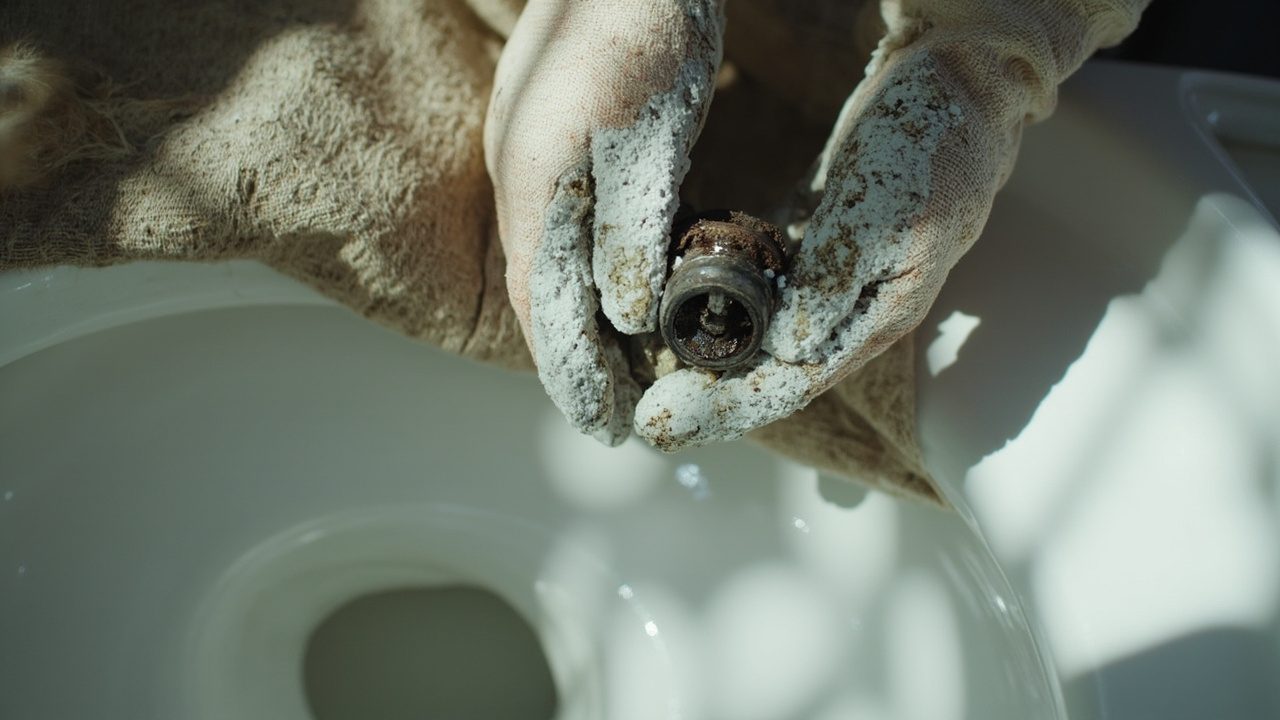
Local water changes how that supply-side failure develops. The city supply is moderately hard to hard, commonly around ten grains per gallon or more on a test kit at the tap, and above about seven grains per gallon scale forms steadily in fixture valves. In a busy restroom, the seat of a flushometer or urinal valve collects that scale, the valve stops closing fully, and the fixture runs on after the flush with nobody standing at it. A dial reading taken before and after the repair gives a manager or an underwriter a written record of the water that was leaving.
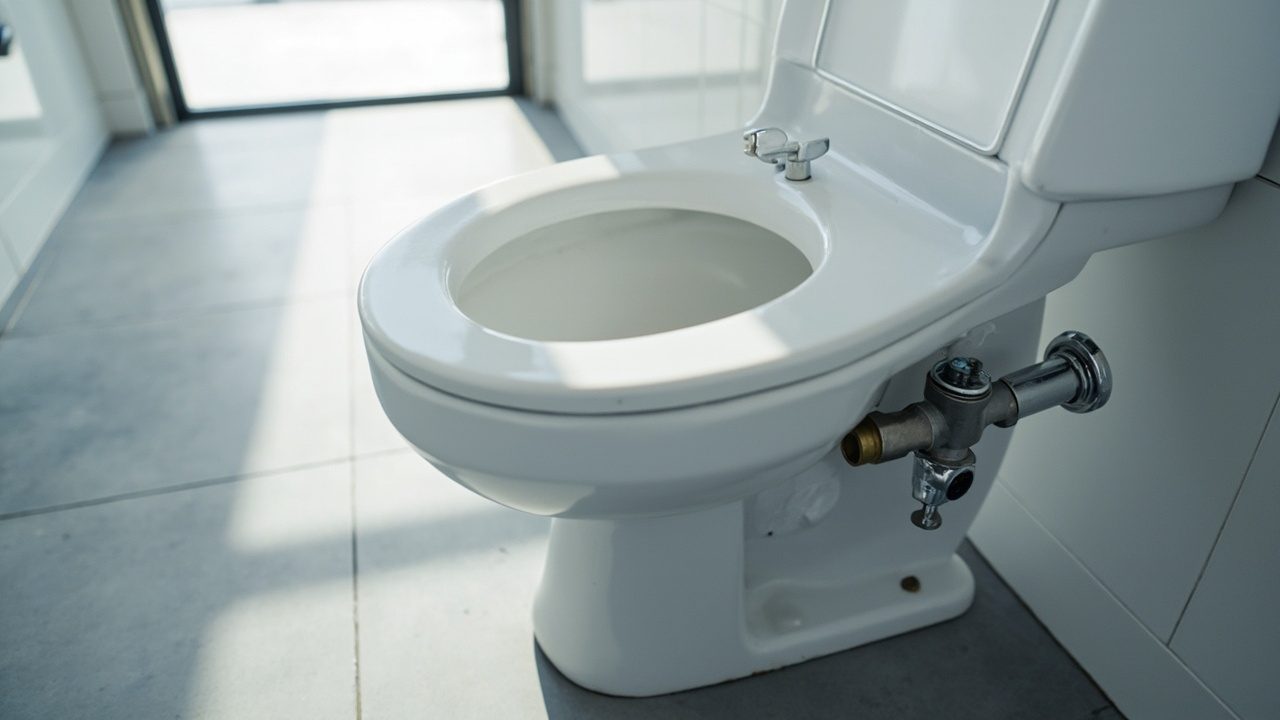
A toilet that runs after flushing is the first stage. The flapper lets the tank refill all night and the fill valve cycles constantly, and then the valve wears until it sticks open, with the overflow carrying the water away unnoticed. A flushometer that sticks open reaches that last stage sooner, because it has no tank to limit what it passes. Call today when any fixture runs with nobody using it, or when the meter dial moves with the whole building closed, since water is leaving under pressure around the clock and the valve wear has already started. Until someone arrives, close the stop at that fixture or the main shutoff, the only two things you need to touch.
See commercial plumbing contractors for how the related work is scoped and priced.
How we isolate the leak before we quote the repair
The visit starts at the water meter with every fixture in the building closed. The leak indicator, a dial or a small wheel, should hold still for fifteen minutes, and any movement means water is leaving the system somewhere you cannot see. Next the main is closed and the meter is watched again. A dial that still turns puts the loss on the street side, and a dial that stops puts it inside the building. From there the work halves the building, closing the stops and then the branches restroom by restroom until the dial stops, and only then does a valve come apart or a surface open. That sequence also settles whether the whole building loses water or only one branch. On a drain complaint the order flips, with the line cleared first and the camera run second from a cleanout, because a full line shows nothing but water.
Three readings change the scope. A screw-on gauge at a hose bib, read with everything off, should sit between 45 and 70 psi static. Above 80 psi, fixtures, supply hoses and water heaters fail early and a pressure reducing valve is normally required, so that valve joins the job beside the repair. Leaving the gauge on overnight adds a second figure, and a morning reading far above the night reading means the heater is pushing expanding water into a closed system, which puts a thermal expansion tank on the list. The third reading is a hardness test kit at the tap. Above about seven grains per gallon, plan for flushing, descaling or treatment, because a new flushometer kit set into scaling water scales again. The camera settles the drain side. Roots at one joint mean the repair belongs at that joint, and standing water part way along a level run is a belly, which means that run gets re-laid.
Drain material settles the last question, and building age decides which case applies. Older buildings from the 1940s through the 1960s commonly carry cast iron drains under the slab, and cast iron corrodes from the inside, so a camera view of sound joints on a cracked run points to a repair at that spot, joined through a no hub band transition. Buildings from the 1970s through the 1990s commonly carry ABS or PVC, which is lighter, quicker to install and noisier through a wall, and that noise matters when a restroom shares a partition with offices. Caliche hardpan under the desert soil slows every trench, and slower digging pushes toward the smaller repair whenever the rest of the run is sound. A level run holding water changes the answer, since only open cut lets you correct slope. Lining needs a host pipe that is still round.
Our page on commercial backflow prevention & testing covers that side of the work in more depth.
Permit and inspection questions? Planning & Inspections is the office we coordinate with on every permitted El Paso job.
Narrow this to two options before calling, then ask which one suits the house.
| Option | The numbers a buyer weighs | Best suited to |
|---|---|---|
| Cast iron drain against PVC or ABS | Cast iron is heavy and quiet and corrodes from the inside over decades | Drain replacement under a finished house |
| Sump pump selection | Sized by horsepower against the vertical lift plus pipe run it has to push through | Basements with a real lift to the discharge |
| Tank water heater against tankless | A tank is judged on capacity in gallons and its first hour rating | Households with long back to back hot water use |
| Trenchless lining against open cut replacement | Lining cures a new pipe inside the old one with a small loss of inside diameter | Runs under a slab, a drive or mature trees |
How a restroom repair call runs
Questions, then the meter
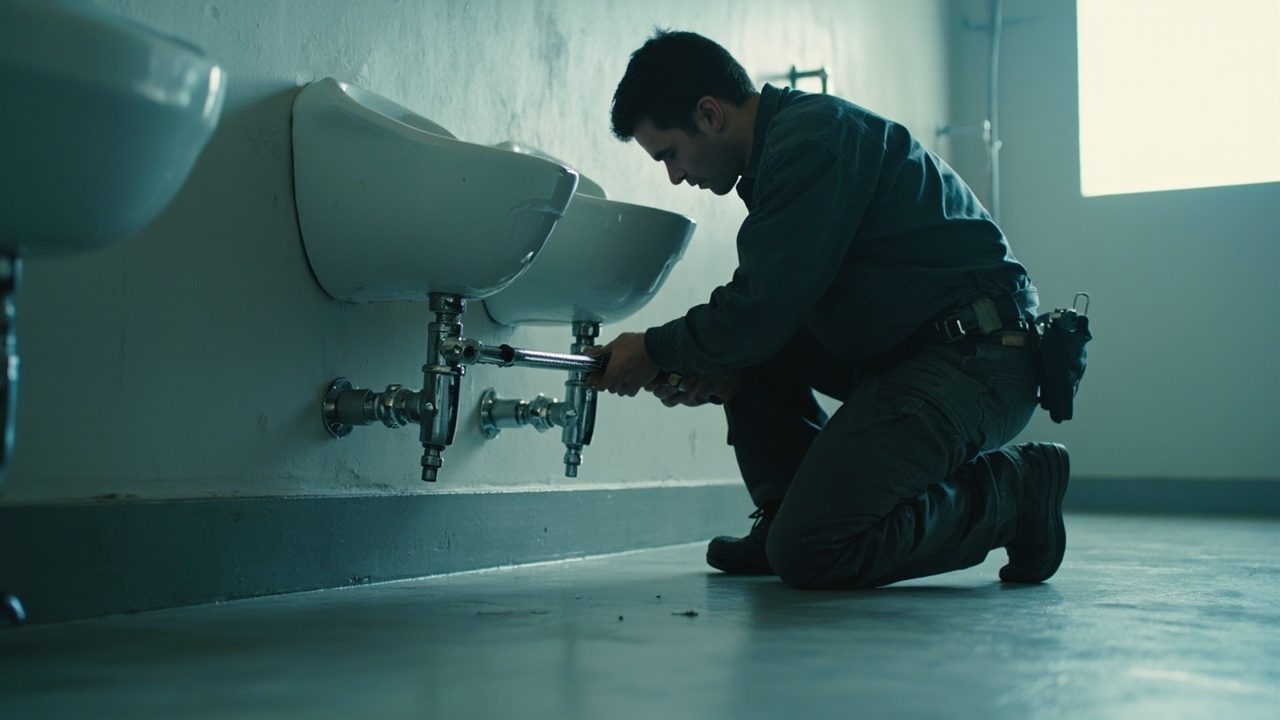
The call comes first. You are asked about the affected restroom and fixture, when the problem started and where the water shutoff valves are located, which sorts a running valve from a backed up drain. On site the technician goes to the meter before entering the restroom. Every fixture is closed, the leak indicator is watched for fifteen minutes, then the main is closed and the dial is watched again. Stops and branches close one at a time until the movement stops. On a drain call the line is cleared, then the camera runs from a cleanout so the pipe walls show. You watch the isolation happen, and nothing has been opened yet.
Approval, isolation, repair
After you approve the written scope, isolation comes first, at the fixture stop or the branch valve, so the rest of the building keeps water. The valve internals are replaced with a kit matched to the valve, or the fixture is replaced, which means a new wax ring and a check of the closet flange on a toilet. A cast iron run that is partly replaced gets a no hub band transition to the new plastic. If the opening turns up more, such as a second pipe material or damage behind the wall, we stop and show you before going further, and the change goes into writing before it is done.
Tested before we leave
Before we leave, the meter leak indicator goes back on with every fixture closed and has to hold still for fifteen minutes. The gauge connects at a hose connection with all valves shut and has to read inside 45 to 70 psi, and any drain work gets a second camera pass. Then every fixture is flushed while you watch. A moving dial or a reading above 80 psi means the job is not finished. You keep the written scope and the before and after readings, the record a manager, a lender or an underwriter can use.
Why commercial restroom work here follows the age of the building
A full main line replacement or any gas work usually needs a permit and an inspection, while a like-for-like flush valve rebuild or a fixture swap usually does not. The local plumbing authority makes the final call, and the office that reviews a job can change with where the property sits relative to the city limits. Code compliance is a liability question for the owner of a commercial building, so the written scope records which work was permitted and which was not, and that record is what a lender or an underwriter asks for later.
A crew unfamiliar with local buildings makes predictable mistakes. Gluing PVC onto a cast iron stub in an older slab building is the first, and the joint fails with the leak landing under the slab. A flushometer rebuilt without a hardness test is the second, because scale from water above about seven grains per gallon closes the seat again. Closing the main for one restroom takes water from every tenant when a branch stop would have kept the rest of the building running. A trench priced without caliche hardpan in mind runs long, and the water stays off while it does. Reading a moving meter as an inside leak misses the case where the dial still turns with the main closed, which puts the loss on the street side.
Visits in the county span mid-century slab buildings, newer construction with PEX manifolds, and older brick and adobe structures on raised floors or shallow foundations, so the first phone questions, whether the call is commercial restroom repair, commercial toilet replacement or urinal installation, cover which restroom, which fixture and roughly how old the building is. In the oldest buildings, galvanized supply closes up from the inside, so a new flushometer on that branch still sees restricted flow, and the branch itself may be the repair. Where the job needs the whole building's water shut, the shutdown is agreed with the property manager first, since restrooms, break rooms and any kitchen line lose supply together. Work phased across budget cycles is a routine request, and the written scope can split restrooms into separate stages, each one closed out with its own meter reading.
If this sounds close but not quite your situation, commercial kitchen plumbing may be the better starting point.
Price-checking is smart: marketplaces like Thumbtack publish typical cost ranges you can hold any quote against, including ours.
What a restroom repair looks like from your side
Booking and arrival window
The call opens with four questions: which restroom, which fixture, when it started, and whether the meter dial moves with everything closed. A fixture running in an empty building or a dial that keeps moving sorts into a same day visit, and a slow drip fits a scheduled one. Whoever took your call confirms the arrival window by phone before anyone drives out. If the job ahead of yours runs long, the new window reaches you the same way.
Floors, fixtures and cleanup
Floors are covered from the restroom door to the fixture before anything comes apart. The stop or branch valve closes first, so the water is off before a flushometer is opened, and a wet vacuum stays within reach. Tools stage on a drop cloth. Worn valve parts and old wax rings go into a sealed bag and leave with the crew. The last step is a wipe down of the fixture and floor and a flush test with you watching.
What moves the scope
Access moves the scope furthest. A finished wall, tile, a ceiling below or a slab raises it, and so does putting that surface back. Deeper, longer digs raise it, a whole run costs more than one joint, and matching old pipe to new adds work. Fixture grade and after hours response raise it further. Water off for one branch keeps it lower than a whole building shutdown. You get the written scope, including what happens if the opening finds more, and you approve it before work starts.
How technicians earn sign off
A new technician works beside a lead until the lead has watched them run the meter isolation, read static pressure at a hose bib with everything off, and join cast iron to plastic with a no hub band transition. The lead signs off on those tasks before the technician works alone. Updated codes and new low-flow fixtures get studied as they change. On an unusual job, such as cast iron, galvanized and copper in one restroom, a second technician looks at it before a scope is written.
You Have Questions,
We Have Answers
Cost depends on the fixture type, the valve or part involved, and the access the repair needs. A flushometer rebuild with a matched kit sits at the low end, while a wall-hung carrier or a cracked drain behind tile sits at the high end. Extra work such as closet flange repair, a second visit for parts, or after hours response pushes the total up. Isolating at the fixture stop keeps the scope smaller than a building shutoff. Written scope comes before work starts.
A worn flushometer diaphragm, a throttled supply stop or a partly blocked trapway stops a commercial toilet from flushing properly. Weak flush with a short hiss usually means a torn diaphragm bypass or a stop opened only a quarter turn. Slow swirl with a gurgle points to a partial blockage in the trap or branch. Low line pressure also starves the valve, so a static gauge reading at a hose bib helps separate the causes.
Flange repair cost depends on the flange material, the floor type and how much subfloor or slab is damaged. A cracked plastic ring that a repair ring can bridge costs less than a corroded cast iron flange, which needs cutting and re-joining. A flange sitting below the finished floor needs a spacer or extension, and rotted wood under it adds carpentry. Wax ring replacement and a rocking test come with the job. The written scope names what the opening finds.
Handymen often swap flappers, fill valves and supply lines, but flushometers and drain work call for plumbing trade skills. A flushometer holds line pressure behind the valve, so a wrongly seated diaphragm or a crossed stop can soak a floor within seconds. Cutting into cast iron, resetting a closet flange, or adding a vacuum breaker also involves joints and backflow parts that need correct materials. Simple tank swaps suit a handyman, while anything behind a wall or under pressure does not.
Close the fixture stop, then release residual pressure with the handle. Next unscrew the flushometer cap and lift out the inner assembly. Replace the diaphragm or piston, the relief valve and the seat gasket together with a kit matched to the valve model. Clean the body of scale, especially the seat ring, before reassembly. Hand-tighten the cap, open the stop slowly to avoid water hammer, and flush several times to confirm the valve closes crisply.
Commercial toilet parts come from plumbing supply houses, restaurant and janitorial suppliers, and the manufacturer's own parts catalog. Big-box stores stock common flushometer kits, but diaphragms vary by valve brand, model and gallons-per-flush rating. Read the stamped model number and the year code on the valve body before buying. Bring the old diaphragm or a photo of the valve, because a kit that looks identical can differ in bypass hole size and relief valve design.
Fixture grade, mounting style and the rough-in already in the wall or floor set the replacement cost. A floor-mount bowl on an existing flange runs lower than a wall-hung unit that needs a carrier. ADA-height models, flushometer versus tank valves, and matching the existing rough-in dimension change the price. Tile removal, new supply stops, and after hours work raise it. Keeping the same location avoids moving drain lines, which holds the scope down.
The best kit matches your valve's brand, model and flow rating, typically 1.6, 1.28 or 1.0 gallons per flush. Look for a kit that includes the diaphragm or piston, relief valve, and seat gasket in one package. Original manufacturer kits keep the bypass orifice sized correctly, while generic diaphragms can cause slow closing. Where scale is heavy, a kit with a hardened relief valve tolerates hard water longer.
A clogged diaphragm bypass or a scaled relief valve seat keeps a flushometer from reseating. On a tank-type unit, a warped flapper or a fill valve set above the overflow tube does the same. A steady trickle in the bowl points to the seat, while a hiss with no water movement points to the diaphragm. Turning the stop off ends the flow until the worn part is replaced.
Turn the stop screw under the cap on the supply side, and leave the handle alone. Turning the screw clockwise reduces flow and counterclockwise increases it, in quarter turn steps. A correct setting clears the bowl in one flush with a brief refill and no water hammer. Too little flow leaves waste behind, while too much splashes and wastes water. Test with a full flush and watch the bowl water level settle.
Why hard water changes commercial toilet and urinal repair in El Paso
Hard water sets the maintenance rhythm for restroom fixture service in this county. The supply is a blend of river surface water and aquifer groundwater, moderately hard to hard, and any valve seat that sees it all day keeps collecting scale. Building age then decides the fix. Late 1800s through 1930s stock carries galvanized supply that closes up from the inside, restricts the flow a flushometer needs and turns the first draw brown, with cast iron drains and clay laterals behind it. Postwar slab buildings carry cast iron under the floor. Slab buildings from the 1970s through the 1990s run copper through the slab with ABS or PVC drains, and the newest use PEX manifolds with PVC. Caliche hardpan under the sandy, gravelly desert soil slows any trench, and the finer alluvial soil of the river valley holds more water, so a drain dig is scheduled around the ground as much as the pipe.
When a job reaches inspection, sequencing changes. Transition bands and cleanouts stay uncovered until the inspection question is settled with the local authority, and the camera run goes in after the line is cleared so the record shows the pipe walls. Responsibility for a leak is a separate question. El Paso Water handles water, wastewater and stormwater, and a meter dial that keeps moving with the main closed puts the loss on the street side, where the utility and the authority decide who owns the repair. The summer monsoon adds another test. Short, heavy thunderstorms run off quickly and collect in low streets and dips, and a floor drain that backs up only while it rains points at a cracked lateral loading the line from outside. The camera settles which joint, and the answer decides between a repair at that joint and a longer replacement. Exposed lines and backflow assemblies outside the building split during the brief hard freezes that follow arctic fronts, so outdoor lines get protected ahead of the first freeze.
Plumbing Services in The El Paso Area
Explore our service area and locate Bedrock Plumbing El Paso with ease. We're proudly local and serve the surrounding neighborhoods with fast response and honest pricing. Use the map to check our coverage area, or call us and we'll confirm in seconds.
Address:
Bedrock Plumbing El Paso, 221 North Kansas St, Suite 700, El Paso, TX, 79901
Additional Services We Offer
- Apartment Complex Plumbing
- Commercial Backflow Prevention & Testing
- Commercial Kitchen Plumbing
- Commercial Plumbing Contractors
- Commercial Repiping Services
- Commercial Sewer Line Repair
- Commercial Water Heater Systems
- Grease Trap Cleaning & Pumping
- Hydro Jetting Services
- Industrial Pipe Repair
- Medical & Dental Gas Plumbing
- Preventative Commercial Maintenance
Plunging a toilet, swapping a flapper or a braided supply hose, and closing the main shutoff are homeowner jobs. DIY stops at anything soldered, on the gas line, behind a finished wall or under a slab, and at any drain backed up past a cleanout. We read hardness at the tap, and drinking water questions belong to the utility report and a laboratory test of your own tap. A finding outside our scope gets named on the first visit.
Know which restroom and which fixture, whether it is a tank toilet, a flushometer or a urinal, and when the running or backup started. Note what changed just before it, whether the water bill jumped, and whether water continues flowing when all fixtures are off. Find the stop at the fixture and the main shutoff, and say whether the building is occupied right now.
Last reviewed September 2026 by Dave Parker, Owner.