





What a lukewarm far tap and a weeping valve mean in El Paso
The tap at the far end of the building runs lukewarm while the sink beside the heater delivers hot water. Or the second group of showers turns cold partway through a shift, or the relief valve on the heater leaves a wet ring on the floor under its discharge pipe. Turning the setpoint up is the usual first move, and it raises the temperature at the nearest fixtures while the far tap stays cool. Each symptom puts the fault on the supply side, where water is pressurised and keeps pushing on every joint and valve all night whether anyone is in the building or not.
Where the water cools tells you which segment to open, and commercial hot water repair starts by placing the fault before naming a part. Hot at the heater and lukewarm at the farthest tap puts the loss in the pipe run or in the setpoint. Cold at every tap after a heavy draw puts it in the heater, which cannot reheat incoming water as fast as the building uses it. Orange or brown water in the first minute puts it in the tank or in older galvanized supply, and the water utility names rusting galvanized pipe inside buildings as the typical cause of discolored water. A warm spot on the floor in one place puts a hot line under the slab, and a bill that jumped with nothing wet puts the loss behind a surface.
The water supplied here arrives moderately hard to hard, and above about seven grains per gallon scale forms steadily in tank heaters, tankless heat exchangers and valves. A unit serving a kitchen or a restroom block cycles many times a day, so scale builds on its heating surfaces and shortens element life sooner than it would in a household. Summer adds load, since many afternoons pass one hundred degrees and every heater and outdoor line works harder. A second heater inside a few years is a water problem before it is an equipment problem.
Call today when the relief valve on the heater begins to weep. Incoming pressure above the normal band forces that valve to lift, the tank seams then work harder on every heating cycle, and the heater fails years before it should, taking hot water from the whole building at once. For a business that loss lands on trading hours, and the replacement then happens on a schedule you did not choose.
If this sounds close but not quite your situation, emergency water heater repair may be the better starting point.
Your local utility, El Paso Water, publishes service and water-quality information every El Paso homeowner should know.
How the far tap decides the scope before any quote
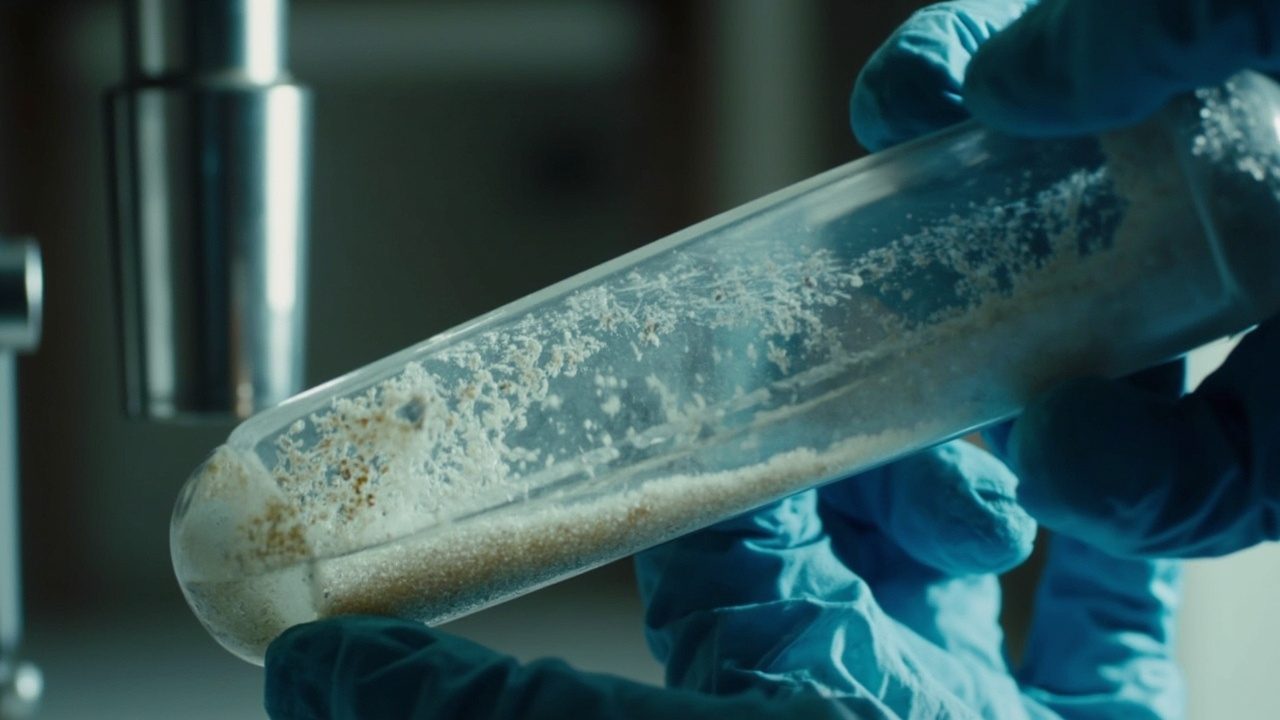
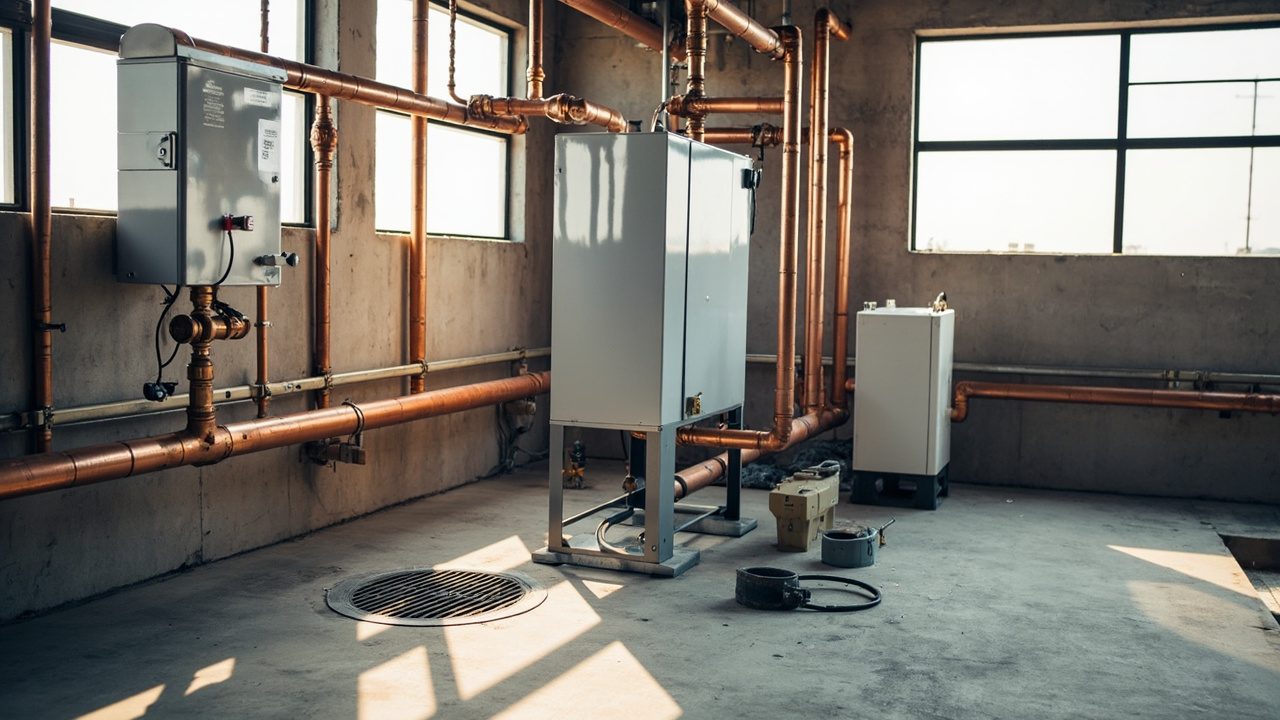
The sequence starts at the farthest hot tap with a thermometer, and the tap runs a full minute first, because the first slug of water is whatever sat in the pipe. A reading around 120 degrees is the usual balance between scald risk and a tank that stays clean. A reading hot enough to scald a child in seconds points at the setpoint, and one so cool that the tank sits where bacteria are comfortable points at the same setpoint from the other side. The next reading goes on the tap nearest the heater, and the gap between the two puts the loss in the pipe run rather than the heater. A third reading after a sustained draw shows recovery, meaning how fast the heater reheats while the building keeps drawing. Raising the setpoint to gain recovery raises scald exposure at the nearest fixtures. Branches then close one at a time until the reading changes, and only after that does a wall, a ceiling or the heater get opened.
Three readings change the scope. Static pressure with everything off above 80 psi is where fixtures, supply hoses and heaters start failing early, so a pressure reducing valve belongs in the job, and an overnight hold that climbs far above the night figure means a failed thermal expansion tank on a closed system. The anode rod comes next. A bare core wire means the tank itself is now the part being consumed, which moves the job from repair to replacement, and the pull needs headroom above the tank, so clearance is checked before anyone promises same day work. Scale is the third. Water at or past the seven grain mark means flushing, descaling or treatment go into the plan, whichever unit is chosen. Each reading is written into the scope beside the line item it justified, which gives a landlord, lender or board a document showing why every item is there.
El Paso's moderately hard to hard water decides the choice between a tank and a tankless system more than any capacity figure does. A tank heater can be flushed and its anode rod pulled and read, so scale and tank condition stay visible. A tankless heat exchanger scales at the same threshold, so commercial tankless systems here go in with flushing, descaling or treatment planned from the first day. A steady all day draw from a kitchen or laundry favors tank storage with strong recovery, and short sharp peaks in a building with little floor space favor tankless. Past what one unit can serve, high capacity water heaters become a question of how many units to install and where the branches split, which decides whether one failure takes out the whole building or one branch. A tankless swap usually means a larger gas line, new venting and a different condensate path, and that gas work brings permit steps of its own.
See tankless water heater services for how the related work is scoped and priced.
Plumbing code in most jurisdictions traces back to the Uniform Plumbing Code maintained by IAPMO, it's the rulebook behind our permit work.
Narrow this to two options before calling, then ask which one suits the house.
| Option | The numbers a buyer weighs | Best suited to |
|---|---|---|
| Tank water heater against tankless | A tank is judged on capacity in gallons and its first hour rating | Households with long back to back hot water use |
| Trenchless lining against open cut replacement | Lining cures a new pipe inside the old one with a small loss of inside diameter | Runs under a slab, a drive or mature trees |
| Type L copper against PEX | Copper is rigid, tolerates heat directly | Repipes where the existing layout sets the method |
| Sump pump selection | Sized by horsepower against the vertical lift plus pipe run it has to push through | Basements with a real lift to the discharge |
How a hot water call runs
Questions and first readings
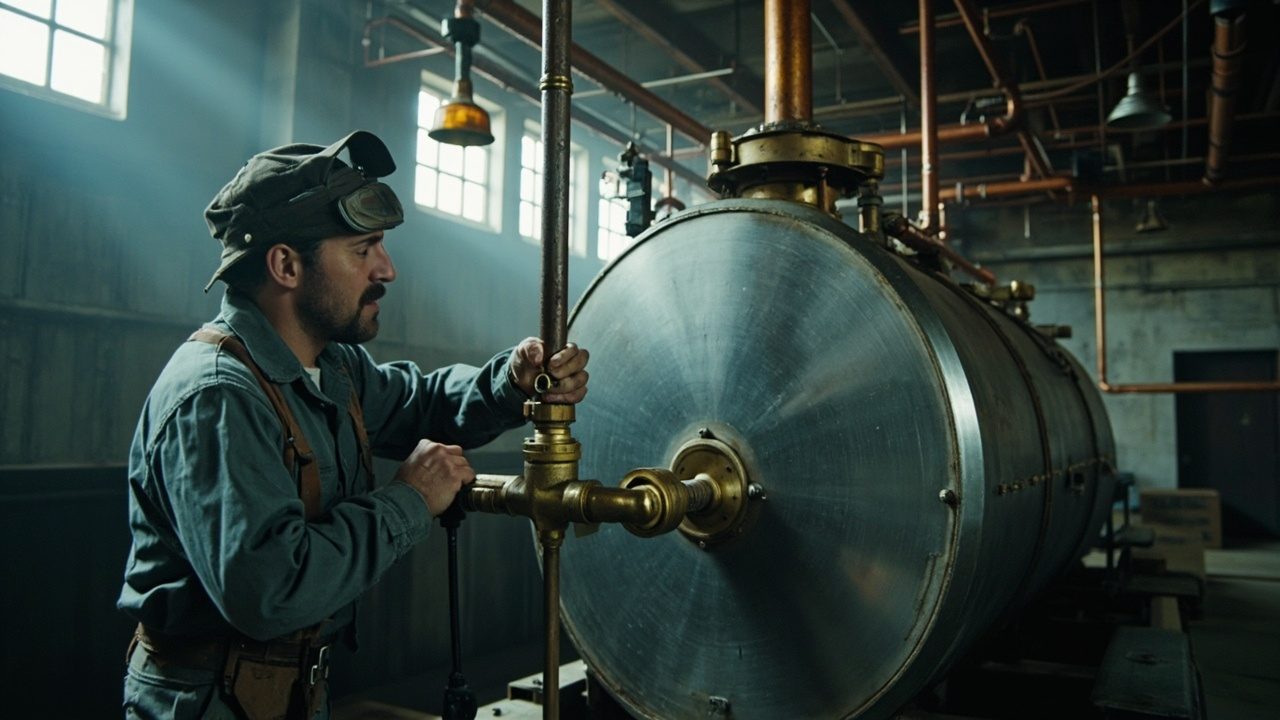
On the phone you are asked about the heater's location, age, current operation and the position of its gas control and main shutoff. If you smell gas or rotten eggs, get everyone outside, touch no switch on the way out, and call the gas utility from outside. On site the thermometer goes on the farthest fixture after a full minute of running water, then on the nearest one. Supply lines close one at a time until the pressure reading changes, static pressure is read with everything off, and only then does anyone open a surface. You can watch every reading taken.
Approval and isolation
Once you approve the written scope, the heater is isolated first. The cold inlet on top of the tank closes, the gas control or the breaker goes off, and a hot tap on a lower floor opens so the tank is not under vacuum. The tank then drains through a hose, and the new unit goes in with a dielectric union wherever copper meets galvanized, a piped temperature and pressure relief valve, and a thermal expansion tank where the system is closed. If a bare anode core, scale in the drain water or corroded supply turns up, work stops and you see it before the scope changes.
Readings before we leave
Before we leave, the thermometer goes back on the same farthest hot tap that read wrong on arrival, and after a full minute of running water it should settle around 120 degrees. This temperature protects against scalding while keeping the tank clean. Detector and bubble solution go over every gas fitting, and no bubble may grow. We walk you through the relief valve, the shutoff locations and the setpoint. You keep a written record of the readings, the settings and the leak test, which a manager, landlord or lender can file.
What an unfamiliar crew gets wrong on heater jobs in this county
Gas work is where permits enter a heater job. A new or upsized gas line, new venting and a conversion to tankless usually need a permit and staged inspection, while a like for like element, thermostat or anode rod swap usually does not. The final call on all of it belongs to the permit authority for the address, and which authority that is depends on whether the building sits inside city limits, since work outside city limits falls under the county or the neighboring town. Commercial water heater installation here carries the permit and the open gas piping as part of the scope.
A crew that works mostly elsewhere repeats a few predictable mistakes. One is sizing a tankless unit on gallons per minute alone, which leaves out the scale and sends the heat exchanger to descaling early. Another is tying a new copper connection into older galvanized supply without a dielectric union, so the joint corrodes and the owner blames the new heater for rusty water. Plastic supply left where intense sun reaches it degrades. An outdoor line or hose bib left unprotected splits in the short hard freezes that follow otherwise mild weather, and nothing shows until the pipe is under pressure again. A relief valve discharge that ends over a floor or electrical gear turns the first lift of the valve into a second problem. Each of those failures shows months later, at the farthest tap or on the first cold night, long after the crew has gone.
Buildings from the late 1800s through the 1930s often carry galvanized steel supply and cast iron drains, and the postwar decades added copper and slab floors, so a technician expects to join old material to new at the heater connections and picks the transition fitting to match. Freeze exposure decides where a line is routed. Response across the county is sequenced by what you describe on the call, so a building with no hot water and a weeping valve goes ahead of a slow recovery complaint, and the arrival window is given on that first call.
More detail on water heater maintenance tips is on its own page.
Communities like r/Plumbing are full of homeowners comparing notes on exactly this problem, worth a read before a major project.
What a heater job looks like inside your building
How the visit gets booked
You call and answer four questions: what the heater is doing, where it sits, how old it is, and whether the relief valve is dripping. Those answers decide whether the visit is same day or scheduled. The arrival window is given on that call, and the person who booked you passes on a revised window if the job ahead of yours runs long. A building with no hot water at all is sequenced ahead of a slow recovery complaint, because everyone inside is waiting on the fix.
Protection for your space
Before anything comes apart, floor covering runs from the heater room to the door the equipment moves through. A hose carries the tank drain to a floor drain or outside, so water and the scale flushed from the tank never cross the floor. The relief valve discharge is checked for where it ends before the valve is touched. The old unit leaves with us along with cut-off fittings and packaging, and the last step is wiping the floor around the heater dry so any new drip shows.
What moves the scope
Access sets most of the number, meaning whether the pipe sits behind a finished wall, above a ceiling or under a slab, and what putting that surface back takes. Longer or deeper excavation for a gas line pushes it up. So does replacing a whole run instead of one joint, which the condition of the rest of that run decides. Matching old pipe to new, a higher grade of heater and after hours work add further. Permit and inspection requirements weigh on gas work more than on a faucet. You approve the written scope before work starts, including what happens if the opening finds more.
How technicians are checked
A new technician rides with a lead and does not work alone until the lead has watched them read a thermometer at the farthest tap after a full minute of running water, pull and judge an anode rod, and prove gas fittings with a detector and bubble solution. The lead signs off each task. On gas upgrades, and on any tank with a bare core wire or a heater room with no headroom, a second technician looks at the job before the scope is written.
You Have Questions,
We Have Answers
No single brand wins everywhere, because the best unit matches the building's peak draw, gas capacity and floor space. A restaurant with a steady dishwasher load needs fast recovery, while a small office needs little storage. Ask for the first-hour rating and the recovery rate in gallons per hour, then compare those numbers between models. For sizing help on a specific building, call Bedrock Plumbing El Paso at (915) 350-8242.
Sediment buildup, failed thermostats and burned-out elements are the problems technicians meet most on commercial heaters. Sediment settles on the tank bottom and insulates the water from the burner, which causes rumbling noises during heating. Upper elements in electric units often fail first when they sit uncovered in a partly drained tank. Other faults include a leaking drain valve, a tripped high-limit switch, a dead pilot thermocouple and a fouled burner orifice on gas models.
Commercial heaters are built for higher volume, faster recovery and heavier daily cycling than household units. Storage tanks often run well above 50 gallons, and burner inputs can be several times a residential rating. Many use three-phase electric power or larger gas inputs that a house cannot supply. Commercial models also tend to have serviceable parts, such as replaceable elements, flanged access ports and thicker tank linings, so a single component can be swapped instead of the whole unit.
A commercial tank heater typically lasts around 10 to 15 years. A tankless unit often lasts longer with regular descaling. Usage load moves that figure more than the label does. A unit cycling through a kitchen shift wears its anode rod and heating surfaces faster than one serving a lightly used break room. Replacing the anode rod on schedule can add years, while ignoring drain-down flushing shortens the tank life considerably.
Commercial grade heaters are better for high demand and worse for low demand. Their larger storage, stronger burners and serviceable parts suit businesses that draw hot water for hours at a stretch. In a low-use setting the extra standby volume keeps heating water nobody uses, which wastes fuel. Parts cost more too, and installation may need heavier venting or gas supply. Better means matched to the load, and a mismatched commercial unit performs worse than a correctly sized household one.
A commercial heater works in a house only if the home has the gas capacity, venting and electrical supply it needs. Many commercial electric models need three-phase power, which houses almost never have. Gas units may need a larger line and a different vent diameter than the existing setup. Size also matters, since a tank built for high volume takes more floor space and needs larger clearances than most utility closets provide.
Some light commercial models fit residential use, but most full-size units do not suit a home. The mismatch usually shows up in the utilities, because a commercial burner may pull more gas than a house meter and line were sized for. Voltage is the other barrier, since many units run on 208 or 480 volts. A large household with several bathrooms sometimes justifies a light commercial unit, provided a technician confirms the supply first.
A commercial grade heater is better only when the building's demand matches its capacity. It recovers faster and tolerates constant cycling, which matters when several fixtures run at once. Its weight, heat input and venting needs also add installation work. For a small space with occasional use, a standard unit costs less to run and fits existing connections. Compare peak gallons per hour required against the first-hour rating before choosing between the two classes.
Most commercial tank heaters reach about 10 to 15 years, with life expectancy set by water quality and maintenance. Anode rod condition is the best early indicator, since a rod consumed down to its core wire leaves the steel tank exposed to corrosion. Units that get an annual drain-down flush and timely anode replacement tend to reach the upper end. Tankless exchangers can pass 20 years when descaled on a regular schedule.
Hard water and commercial water heater systems in El Paso
The water utility supplies a blend of surface water and groundwater, disinfects it with chlorine and describes it as moderately hard to hard, commonly around ten grains per gallon or more. At that level every heater, tank or tankless, needs flushing, descaling or treatment in the plan, and a commercial unit that cycles all day reaches the scale threshold sooner. A hardness test at the tap shows how fast a given building will scale, and the utility's water quality report and a laboratory test of your own tap answer questions about what is in the water. Desert heat sets the other limit. Many days pass one hundred degrees, so exposed plastic supply degrades in intense sun and needs protection where it leaves the building. Caliche hardpan in the sandy and gravelly mesa soils slows trenching, so a gas line run to a relocated heater takes longer to dig than the same run in soft ground, while the finer river valley soils hold more water.
Permitted work is inspected at stages, and the sequencing of a job follows from that. The city adopts its plumbing code with local amendments, so a detail that passes elsewhere can fail here. The gas piping stays open and visible until the stage inspection is done, nothing gets closed behind a panel or ceiling tile first, and the relief valve discharge, the venting and the dielectric transitions are laid out where an inspector can see them. Permits inside city limits are issued through the city, and an address outside city limits belongs to the county or the neighboring town, so the first question on a job is which side of that line the building sits on. Knowing that early shortens the job, because a failed stage holds the work while the heater sits cold. For an owner, the passed inspection and the permit record are the documents a lease audit, a sale or a lender's review asks for.
Plumbing Services in The El Paso Area
Explore our service area and locate Bedrock Plumbing El Paso with ease. We're proudly local and serve the surrounding neighborhoods with fast response and honest pricing. Use the map to check our coverage area, or call us and we'll confirm in seconds.
Address:
Bedrock Plumbing El Paso, 221 North Kansas St, Suite 700, El Paso, TX, 79901
Additional Services We Offer
- Apartment Complex Plumbing
- Commercial Backflow Prevention & Testing
- Commercial Kitchen Plumbing
- Commercial Plumbing Contractors
- Commercial Repiping Services
- Commercial Sewer Line Repair
- Commercial Toilet & Urinal Repair
- Grease Trap Cleaning & Pumping
- Hydro Jetting Services
- Industrial Pipe Repair
- Medical & Dental Gas Plumbing
- Preventative Commercial Maintenance
Closing the main shutoff, cleaning an aerator and draining a hose bib before a freeze are jobs you or your staff can do. DIY ends at anything soldered, on the gas line, behind a finished wall or under a slab. A boiler serving only space heating is a separate system, and commercial boiler service on the heating side falls outside this work. If the first visit finds one, we say so then and name who handles it.
Before you call, know where the heat gives out, whether that is the farthest tap or every tap after a heavy draw, and whether the relief valve is dripping. Note the heater's age and the gallons on its label if you can read them, where the gas control and the main shutoff sit, and whether anyone is in the building. Those answers usually settle whether a technician comes today.
Last reviewed September 2026 by Dave Parker, Owner.