





What groundwater and slab floors do to plumbing here
Most Sunland Park housing is slab on grade, built from the 1970s through the 1990s with copper or early plastic supply lines running in or under the floor. Copper from that era pinholes, and early plastic tends to fail at the fitting, so a leak under the slab is an ordinary call by now. The signs are a warm spot on the floor in one place or a water bill that doubled with nothing visibly wet. Meadow Vista, one of the original communities that incorporated as Sunland Park, is where that pattern shows most, because a supply leak there has to be located under the slab before anyone opens the floor. Newer homes on higher ground use plastic supply and drain piping, which moves the calls toward fixtures, water heaters and pressure.
Water arrives from the Camino Real Regional Utility Authority, which draws groundwater from wells in the Mesilla Bolson aquifer. Desert groundwater of this kind should be expected to carry minerals, and mineral scale builds in water heaters, valves and fixture cartridges. No hardness figure was confirmed in the sources reviewed, so a test at your tap settles it. Residents have raised complaints about discolored water, and state and federal inspections found deficiencies that the utility has been correcting. On service calls that shows up as clogged aerators, filters and appliance screens, plus pressure swings during tank and waterline rehabilitation work. The utility reports its water met federal and state standards, with arsenic, lead and copper within EPA limits and no lead service lines found. For questions about what is in the water itself, read the utility report and send a sample from your own tap to a laboratory.
Rain runs off dry ground quickly and collects in low areas. Lower Anapra sits in a flood prone low area near the river, so monsoon runoff, silt and standing water around cleanouts and yard lines are a recurring factor there. Basements are uncommon, so the trouble shows at yard lines and floor drains. On higher ground the sandy desert soil carries a hard caliche layer below the surface that slows trenching for laterals and service lines. No formal soil survey was reviewed, so each site gets checked on the job.
The Texas State Board of Plumbing Examiners publishes the rules that govern work like this in your area.
How Bedrock Plumbing El Paso works in Sunland Park
Scope comes from readings taken before anything comes apart. The meter dial with every fixture closed, then again with the main shut, places the loss on the house side or the street side, and the written scope follows from that. On a slab home the leak is located under the floor first, so the scope can weigh breaking the slab at one point against rerouting the line overhead. You read the scope and approve it before work starts, and each item sits on its own line so you can see which reading produced it.
A plumbing company in Sunland Park, NM answers for what it leaves behind, so the check on a finished job is built into the work. The technician who did the job repeats the readings, and a second person reviews them against the written scope before the job closes. Photos of any open wall or trench stay with the scope, which gives a later question a record to check against.
A new plumber works beside a senior technician and does not run a job alone until the same set of readings has been shown start to finish, including a meter isolation and a drain camera run from a cleanout after the line is cleared. An unusual job goes to a second technician before the scope is written, such as a line loaded with monsoon silt or a caliche layer that changes the excavation plan. When a visit turns up something outside the original scope, work stays inside the original scope and the new finding gets its own line in writing for your approval.
Pressure read first
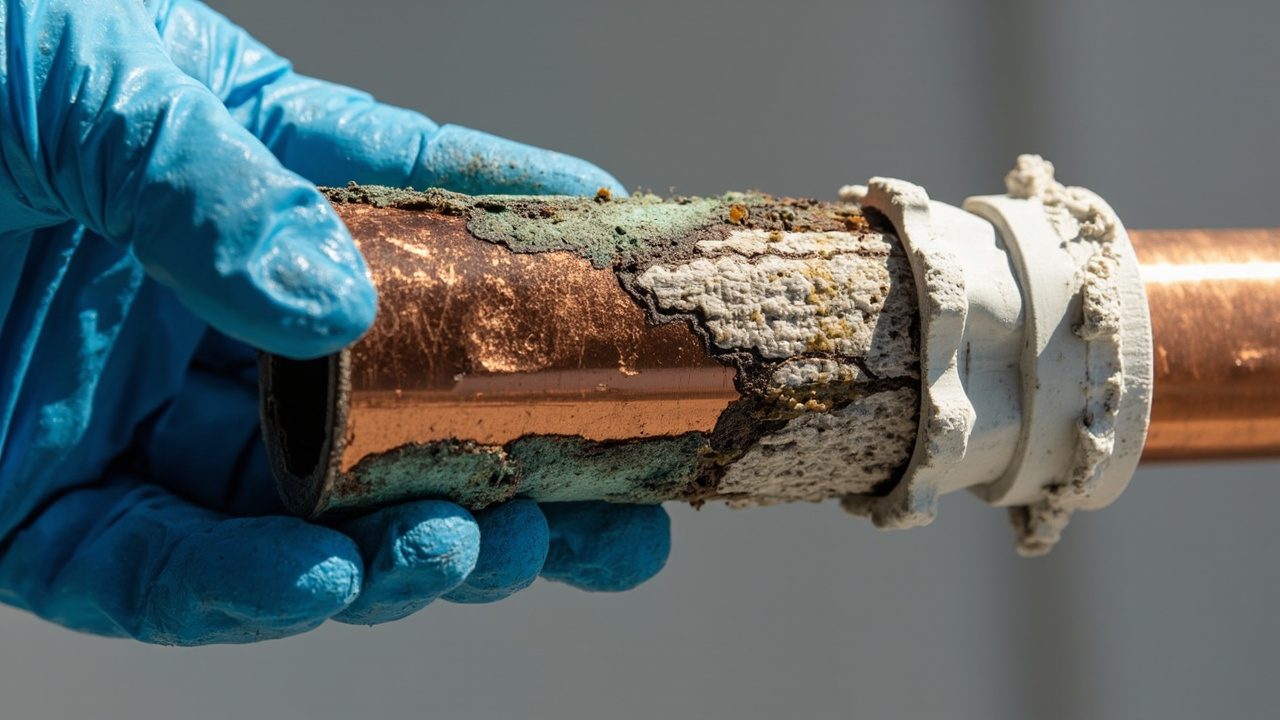
Static pressure gets read at a hose bib with everything in the house off, because a running fixture hides the real number. Above 80 psi, fixtures and supply hoses fail early and a pressure reducing valve is normally required. The reading tells you whether the trouble originates inside your walls or upstream from utility work.
Hardness test at the tap
A hardness test on the incoming water settles whether a heater failed from scale or from a bad part. The classification runs soft, moderately hard, hard and very hard, and the jump from moderately hard to hard is where scale starts showing up on service calls. Because no hardness figure was confirmed for the regional supply, we measure it at your tap before recommending a replacement heater.
Current on code
Every technician works from the Uniform Plumbing Code as it is adopted here, and a question about what a job requires goes to the permit authority for the final answer. Gas work and main line work carry permit and inspection questions that a faucet swap or an angle stop replacement usually does not. Knowing that before arrival keeps a permitted job from stalling once the wall is open.
Local housing knowledge
Sunland Park mixes colonia era homes with connections added after construction, manufactured units with plastic lines behind skirting, and slab on grade houses from the 1970s through the 1990s. Knowing which one you live in tells us where the supply enters and where the heater sits before we arrive, so the first questions on the phone are about your home type and its age.
Plumbing work we handle across Sunland Park
Residential plumbing services in Sunland Park are mostly leak repair on slab on grade homes, water heater repair and replacement on scaled tanks, drain clearing and gas line work inside the home. Static pressure and the meter dial decide most of it. Manufactured homes add exposed underfloor lines and flexible connectors behind skirting, which is a different access problem from a slab.
Commercial work turns on schedule, because a kitchen drain line cannot go down during service, so grease line jetting, main line repair, water heater and booster work and restroom fixture programs are planned around opening hours. Emergency work covers burst lines, no water, active leaks, sewage backup and failed heaters. The first move there is shrinking the problem to one segment with the nearest stop or the main shutoff, which changes what the technician carries in and what gets asked on the phone.
Leak repair and water heaters
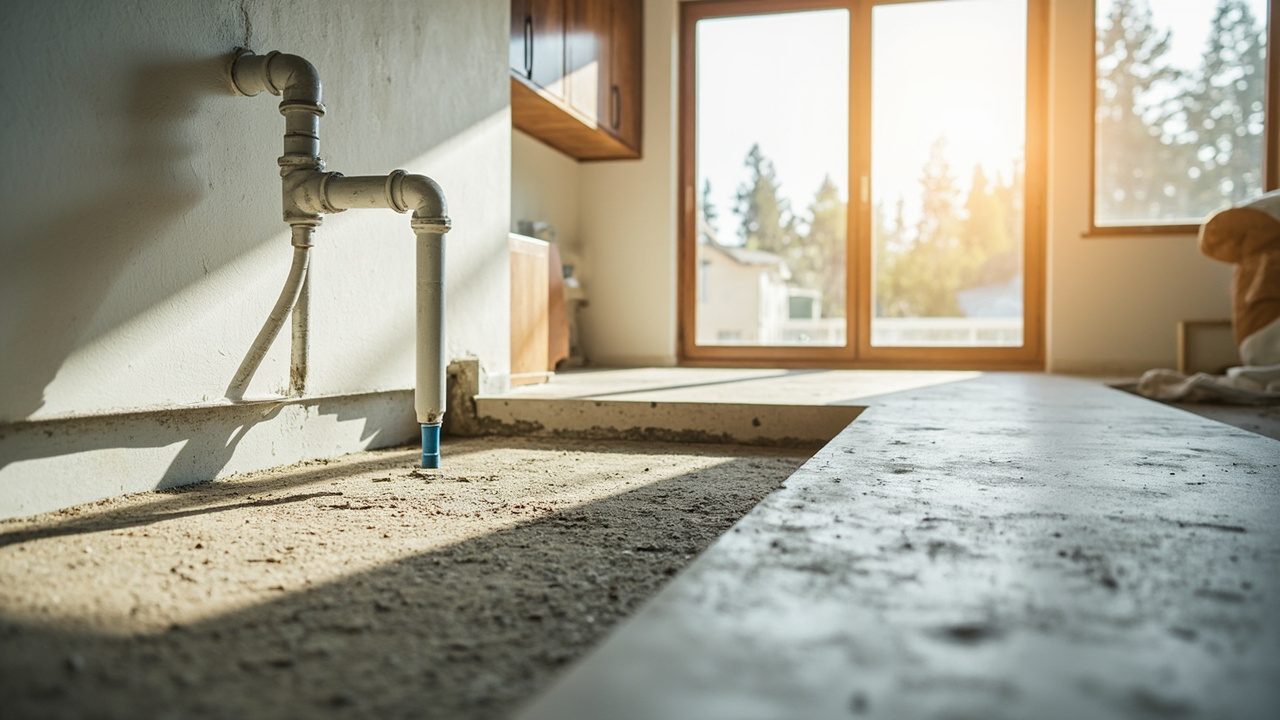
Residential work covers leak repair, fixture and valve replacement, water heater repair and replacement, drain clearing, repipe work and gas line work inside the home. A typical call starts with a warm spot on a floor or a bill that doubled, and it ends with the loss located, the line repaired or rerouted, and static pressure read again. On a 1970s through 1990s slab home we usually find pinholes or failed fittings on the original supply piping, and the decision is between breaking the slab at one point and rerouting the line overhead. On a tank heater, pulling the anode rod shows whether sacrificial metal remains along the core wire. It needs headroom above the tank, so clearance gets checked before anyone promises same day work. The service suits owners who want the cause found before parts get replaced.

Grease lines and drain service
Commercial work covers grease line jetting and maintenance, restroom fixture programs and scheduled drain service for kitchens. Scheduling runs around service hours, because a kitchen with a restricted branch loses seating the moment the line backs up. Hydro jetting clears the line, then a drain camera runs from a cleanout to show continuous fall or standing water, which separates roots or grease at one joint from a belly in the line. The documentation covers the camera findings, the pressure and meter readings and the written scope, which is what a property manager, lender or underwriter asks for. A recurring schedule replaces emergency calls when the camera shows the same branch loading with grease again.
Burst lines and after hours response
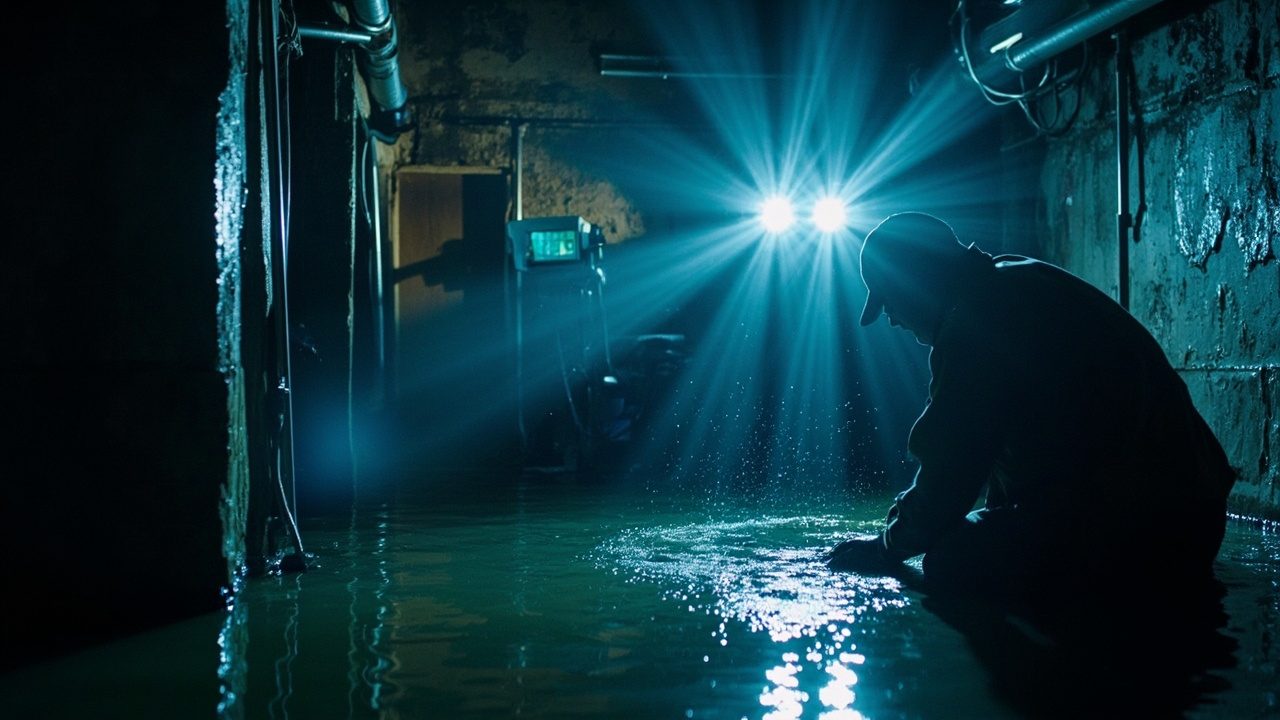
Emergency work covers burst line, no water, active leak, sewage backup, failed water heater and after hours response, so an emergency plumber in Sunland Park has to arrive ready to contain first. The first move is closing the nearest stop or the main, because pressurised water escapes whether anyone is home or not. A hard cold snap that splits exposed underfloor piping on a manufactured home is a typical scenario, with the stain showing hours after the thaw. The meter, read with the main closed, then determines whether the loss originated inside the structure or in the utility line. If water has reached an outlet, a panel or a ceiling fixture, that circuit goes off before anyone steps in. On a heater, the cold inlet closes, the gas control or breaker goes off and a hot tap opens. Smell gas and everyone goes outside with nothing switched on, and the gas utility is called from outside. For a sewage backup, every water use stops, including the washer and dishwasher.
The plumbing problems we see most in Sunland Park
A relief valve that drips on top of the heater is a pressure reading. Water expands when it heats, and in a closed system with a failed or missing thermal expansion tank it has nowhere to go, so pressure climbs on every heating cycle. Static pressure at a hose bib, read with everything off, should sit between 45 and 70 psi. An overnight hold on the gauge shows the cause, since a morning reading far above the night figure means the heater is expanding water into a closed system.
Call today when the relief valve starts weeping, because pressure above the band is already loading the tank seams on every cycle, and a tank worked that way fails years early and splits onto the floor. Pressure swings during utility waterline work can add load to a system that was already running high.
Cold snaps on exposed lines
Frost stays shallow and brief here, so freezing reaches what is exposed, meaning plastic lines behind skirting on manufactured homes, hose bibs, and lines in exterior walls or attics. The tell is no water at one fixture while the rest of the house works, then a stain hours after the temperature recovers, because a split only leaks once the ice clears and pressure returns. Close the main shutoff when the stain appears, since water escaping under pressure keeps running until someone stops it.
Slab supply leaks
A warm patch on the floor in one place is the hot line under the slab. A meter dial that turns with every fixture closed puts the loss on the supply side, and closing the main then watching again shows whether it is the house or the street. Original supply piping from the 1970s through the 1990s pinholes or fails at fittings, and the leak runs whether anyone is home. Call when the warm spot or the dial movement appears.
Runoff and silt at cleanouts
Monsoon runoff carries silt and stormwater toward cleanouts and yard lines on low ground. A drain that gurgles or backs up only after a storm points to the yard line, while every drain running slow with the lowest fixture backing up puts the restriction on the main. Stay out of standing water around a cleanout and leave a full one closed, because it empties onto whoever opens it. Call when the lowest fixture in the house backs up.
Postponed heater flush
The postponed job here is the heater flush and anode check. Groundwater scale builds in the tank and valves, and a rod reduced to a bare core wire means the steel tank is now the sacrificial metal, so rusty hot water arrives first and a split tank arrives after. Discolored supply water also clogs aerators and appliance screens, which a homeowner can clean. Call when hot water runs rusty or the second shower runs cold.
Find the sign you have, then read across to see whether it can wait.
| Symptom or first sign | What is already happening | What it becomes if ignored | When to call |
|---|---|---|---|
| Incoming pressure above the normal band | The relief valve on the heater starts weeping | The tank seams work harder every cycle and the heater fails years before it should | This week, while it is still one part |
| A hairline supply leak behind tile | The framing stays damp | The pipe repair turns into a wall rebuild | This week, while it is still one part |
| Roots at one clay joint | Paper and grease catch at that spot every day | The main backs up into the lowest fixture in the building with no warning | Now, the same day |
| An anode rod eaten away | The steel tank becomes the sacrificial metal | Rusty hot water arrives first and a split tank arrives after | This week, while it is still one part |
| A weeping angle stop under a sink | The compression nut corrodes so it cannot be snugged | The stop snaps off in someone's hand during a faucet change | Now, the same day |
What the first visit looks like
The first stop is the hose bib, because a screw on gauge with everything in the house off gives the static pressure that a running fixture would hide, and that takes a few minutes. Next the water meter is watched for fifteen minutes with every fixture closed, which places any loss on the supply side. Before you call, know what you are seeing and when it started, what changed just before, how old the water heater is if you know, where the main shutoff sits, and whether anyone is in the home.
From routine maintenance to plumbing services, the same local crew handles every call.
Arrival window and updates
The person who answers logs your symptom and gives you an arrival window before the call ends. On the day, you get a phone call when the technician is on the way. If the job ahead runs long, you hear about it before your window closes and get a new time. Tell the person on the phone if water is reaching a ceiling, a panel or an outlet, since that changes what you are told to do before anyone arrives.
Who arrives and what they check
The technician gives a name, puts down shoe covers and a drop cloth before stepping inside, then asks you to show the main shutoff, the water heater and the spot where you first saw water. You describe what you saw and heard, and the gauge goes onto a hose bib while you watch. Anything you already tried, such as plunging or tightening a stop, is worth mentioning. The walkthrough happens before any wrench comes out, and pets and children stay clear of anything wet.
Readings repeated before leaving
The static pressure reading is repeated and shown to you, and the meter is watched again with every fixture closed. Floor and wall protection comes up, debris leaves with the technician, and any opened surface is left as agreed in the written scope. You keep the scope with the readings written on it. Anything found outside that scope is told to you in plain words and gets its own line.
From your call to finished work
Most jobs run two visits. The first settles where the water is going, using the gauge and the meter, and access decides whether the second happens the same week, since a finished wall, a tiled floor or a slab has to be reached and put back. On a slab home the locate comes first, so the second visit opens one spot rather than a room.
Water may go off for the whole building or for one branch while work happens, and you are told which before it starts. Three steps carry a job from the first call to signoff.
What gets logged on the call
The call logs what you see, hear or pay for, whether water is escaping under pressure or only while a fixture runs, and whether it is reaching a ceiling or a circuit. It also logs the age of the water heater, occupancy status, and main shutoff location. Those answers decide whether the visit is today, and which instruments go on the truck first.
Diagnosis and written scope
Isolation comes first. The meter, the main and the branch stops place the loss, and then the written scope lists items separately. Repair, access and surface restoration, a pressure reducing valve or expansion tank if the reading calls for them, and any permit work each get their own line. Nothing starts until you approve it, and the scope says in writing what happens if the opening finds more.
Verified before signoff
Work is done to the code as adopted here, then static pressure is read again and the meter leak wheel is observed for fifteen minutes with all fixtures shut before signoff. A reading close to the night figure after an overnight hold confirms expansion is handled. You keep the written scope with those readings.
Codes, permits and inspections for plumbing in Sunland Park
The City of Sunland Park Community Development Department reviews plumbing permits here. A full replacement scope such as a repipe, along with gas work and main line work, usually needs a permit, and a like for like repair such as a flapper, a braided supply hose or an angle stop usually does not. The final call belongs to the department, and asking before work starts avoids opening a wall twice. Plumbing work is typically inspected at rough in before it is covered and again at completion. At rough in the inspector sees joints and transitions while the piping is still open, before drywall or a slab patch closes it. On a slab job that stage falls after the leak is located and the line is repaired, and before the floor is patched. At completion the fixtures, valves and heater connections are in place and the system is under pressure.
Materials standards matter more than most owners expect. On supply lines the choice is type L copper or PEX. Copper is rigid, tolerates heat directly and costs more in material and labor. PEX is flexible, so a home run layout with a PEX manifold puts fewer joints inside walls, and it comes as PEX A with expansion fittings or PEX B with crimp rings. Local conditions decide between them. Mineral heavy groundwater wears valves and cartridges whichever pipe carries it, and manufactured homes expose supply lines to sun and frost, so PEX has to be kept out of sunlight and protected where it passes through framing. A dielectric union goes where copper meets steel. On drains, cast iron is heavy and quiet and corrodes from the inside over decades, while plastic is lighter, faster to install and carries more noise, and a partial replacement joins the two with a proper no hub band transition.
Pressure is the standard most of these jobs turn on. Static pressure above 80 psi triggers installation of a pressure reducing valve, and on a closed system a thermal expansion tank belongs beside it. Mineral heavy groundwater shortens heater life, so flushing and the anode rod check are part of any heater scope. Whether a backwater valve or a backflow device applies to a given property is the department's call, and so is where responsibility for the sewer lateral changes hands.
Need something specific? Our shower & bathtub plumbing page breaks down exactly how we handle it in Sunland Park.
Isolating the leak
Meter first, with every fixture closed. Any movement means water is leaving somewhere unseen, and closing the main then watching again puts the loss on the street side if the dial keeps moving or on the house side if it stops. Branch stops come next, closed one at a time until the loss stops. Only then does a surface get opened, and on a slab the locate decides between breaking at a single spot or running the line above ground.
Access drives the cost
The pipe is rarely the expensive part. Reaching it and restoring the surface are, so a finished wall, tile, a slab or a ceiling below moves the job furthest, then depth and length of excavation, with caliche slowing trenching. One joint against the whole run comes next, then matching old material to new, fixture or heater grade and after hours dispatch. You control grade, adjacent work in the same opening and clear access, and the unknown behind a wall gets agreed in writing first.
Timing and proof of finish
The overnight hold that exposes a failed expansion tank means the verdict arrives the next morning, with the gauge still on the hose bib. Finished work reads static pressure inside the 45 to 70 psi range, and the meter leak wheel stays still over fifteen minutes with every fixture closed. A slab leak locate cannot be rushed, because the wrong spot opened costs the floor twice.
Who files the permit
Permit applications are made on New Mexico Construction Industries Division forms submitted to the city permit authority, in person or online through CloudPermit. On a permitted job the plumber handles the filing. Homeowners doing their own work file a notarized homeowner application, and gas work and anything under a slab is where DIY stops in any case.
Pressure read, leak located, work inspected
Answers for Sunland Park Homeowners
Trenchless replacement costs more per foot in many cases and cannot fix every failed line. Pipe bursting and lining need a continuous path, so a collapsed section or a sharp offset can stop the method. A liner also reduces the inside diameter slightly, and each service tap must be reopened from inside the pipe. A camera run before any decision shows whether the line has a belly, a break or heavy scale, and that footage decides whether trenchless is workable or whether a dig is needed.
Pipe repair cost depends on access, and the repair itself is usually the smaller share. A finished wall, tile or slab above the pipe raises the job most, followed by excavation depth and length. A single failed joint costs less than a full run, and matching old material to new adds parts and labor. A written scope should list repair, access, surface restoration and permit work as separate lines, so you can see which item moved the total.
San Antonio is outside the area this business serves, so it cannot speak to plumbers there. For a 24-hour plumber in any city, ask whether a person answers live and whether an arrival window is given before the call ends. While waiting, close the nearest stop or the main shutoff, turn off power to any circuit water has reached, and photograph the damage. Those steps limit the loss whichever company arrives.
Stop the loss first, because containment limits the damage while you sort out money. Close the main shutoff, open a low tap to relieve pressure, and use towels and a bucket. Then ask for a written scope with each item on its own line, so you can approve the urgent repair and postpone the rest. Water heater flushes, fixture swaps and cosmetic restoration can often wait, while an active leak, a sewage backup or a gas smell cannot.
Bedrock Plumbing El Paso serves Sunland Park, NM, so Baltimore falls outside its area and no ranking exists here. Two things set the company apart. Static pressure and the meter dial are read before anything comes apart, and the technician repeats the readings before the job closes, with a second person checking them against the written scope. Call (915) 350-8242 to describe what you are seeing and get an arrival window before the call ends.
Septic pumping prices vary with tank size, access distance and accumulated solids, and this business does not pump tanks. Buried lids add digging time, and a tank overdue for service holds a thick scum layer that slows the pump-out. Ask any septic hauler what tank volume the quote assumes, whether risers are already installed, and whether the effluent filter is cleaned during the visit.
No general law sets a maximum time without hot water, so local housing rules or your lease control the answer. Renters should contact the landlord in writing, since habitability rules usually cover a failed heater. For homeowners, a heater that trips its breaker, smells of gas or leaks from the tank seams should stay off until it is inspected. A cold shower after a long run often points to a failed element or scaled tank.
Sump pump replacement cost depends on pump horsepower, the discharge run and whether the pit needs work. Sunland Park basements are uncommon, so this business rarely handles sump pumps. A cast iron pump handles heat better than a thermoplastic one, and a battery backup adds parts. Check that the check valve sits above the pump so water does not flow back into the pit, and confirm the discharge line drains away from the foundation.
Closing the main does not prevent freezing, because water already inside the lines still turns to ice and expands. Opening a hose bib and a low faucet after closing the main drains the standing water, which leaves little for a freeze to split. Vacuum breakers on outdoor spigots should be drained too. Insulating exposed lines or keeping a slow drip at the farthest tap on a cold night adds protection where drain-down is not practical.
Yard leaks usually trace to a failed service line, a cracked fitting at the meter, or an irrigation line broken by roots. A soft, green or unusually wet patch in dry weather marks the spot. Pressurized water keeps running, so a meter that keeps registering after every indoor tap is shut confirms the loss is outside. Sewage smell in the wet area points to a broken drain lateral instead of a supply line.
Plumbing Services in The Sunland Park Area
Explore our service area and locate Bedrock Plumbing El Paso with ease. We're proudly local and serve the surrounding neighborhoods with fast response and honest pricing. Use the map to check our coverage area, or call us and we'll confirm in seconds.
Address:
Bedrock Plumbing El Paso, Sunland Park, NM 88063
Plunging a toilet, cleaning an aerator, swapping a flapper or braided supply hose, draining a hose bib before a cold snap and closing the main are homeowner jobs. DIY stops at anything soldered, anything on the gas line, anything behind a finished wall or under a slab, and any drain backed up past a cleanout. Electrical repair on a circuit water has reached belongs to an electrician, and a visit that turns it up says so on the first visit.
Last reviewed September 2026 by Dave Parker, Owner.