





Water standing below grade after a monsoon storm in El Paso
Work through these five steps in order for the next five minutes. First, shut the water off. Use the stop at the fixture if there is one. If there is not, close the main where the line comes into the house or at the meter. Second, if water has reached outlets, a panel or a ceiling fixture, kill that circuit before anyone steps into the water. Third, on a water heater emergency, close the cold inlet on top of the tank and turn the gas control off or the breaker off. Then open a hot tap on a lower floor so the tank is not under vacuum. Fourth, if you smell gas or rotten eggs, touch no switch and no phone charger. Get everyone outside, leave the door open behind you, and call the gas utility from outside. Fifth, if the water carries a sewage smell, stop every water use in the building, including the washer and the dishwasher. Keep people and pets out of the wet area, and do not plunge a line that is already full.
Closing the main stops a supply leak and does nothing about storm water. Check whether the level keeps rising after the main is shut. If it does, the water is entering through the floor and wall line or coming up a drain, and the room needs standing water removal before anyone can find the entry point. A camera sent down a full line shows nothing but water. Pressurized supply water runs all night whether anyone is home or not. Drain water only escapes while something upstream runs, and storm water stops rising when the rain stops. A floor drain that rises only during a downpour points at a loaded sanitary line. Every fixture slow with the lowest one backing up points at the main.
El Paso County gets short, heavy monsoon thunderstorms, and the ground sends that rain running off in minutes. Runoff collects in low streets, dips and the flatter valley ground, where finer alluvial soil holds water longer than the sandy, gravelly mesas. A below grade room in those spots takes water from two directions, through the foundation and up the drains. Older homes add a third path. Clay laterals were laid in short jointed sections, and a cracked joint lets rain reach the sanitary line from outside, so that line is loaded before your fixtures add anything.
If the lowest drain in the house has been slow or gurgles when the washer runs, call today. Roots at one clay joint catch paper and grease at that spot every day, and the main then backs up into the lowest fixture in the building with no warning. A storm that loads the line from outside brings that backup sooner, and it arrives as sewage in the room you just pumped.
More detail on sump pump services is on its own page.
Independent standards matter too, the EPA's WaterSense program sets the efficiency benchmarks we use when recommending replacement fixtures.
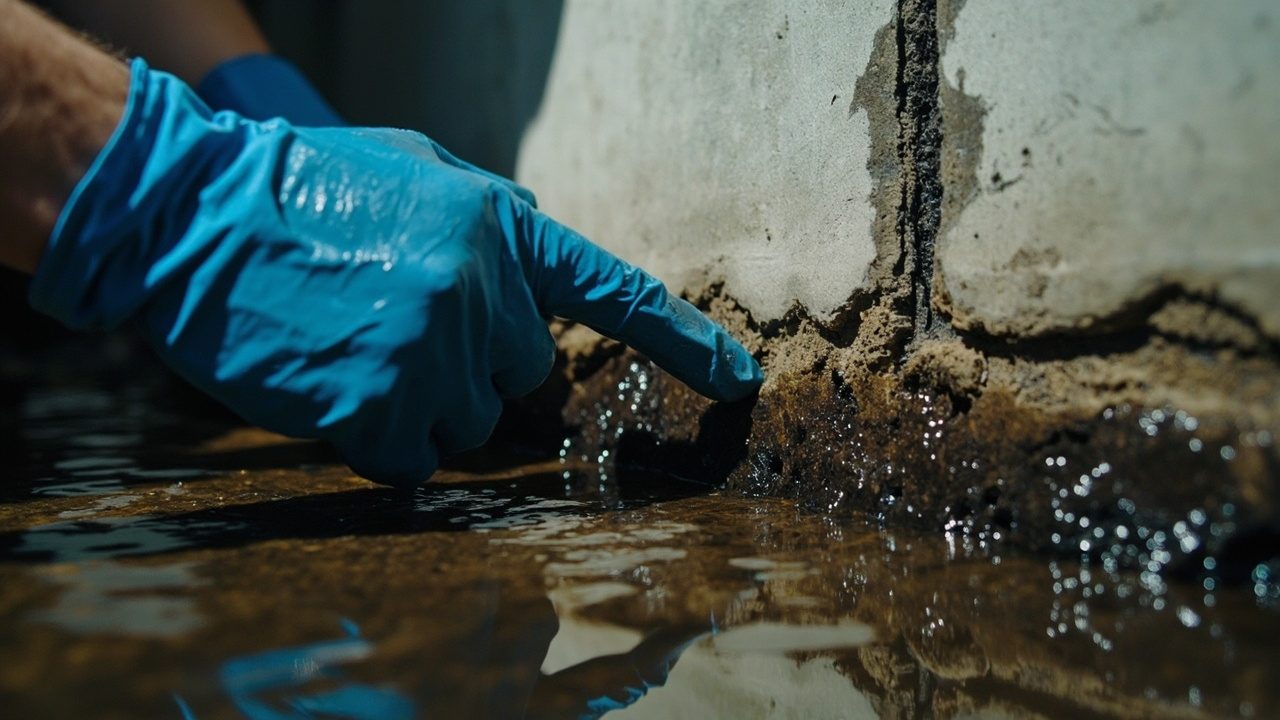
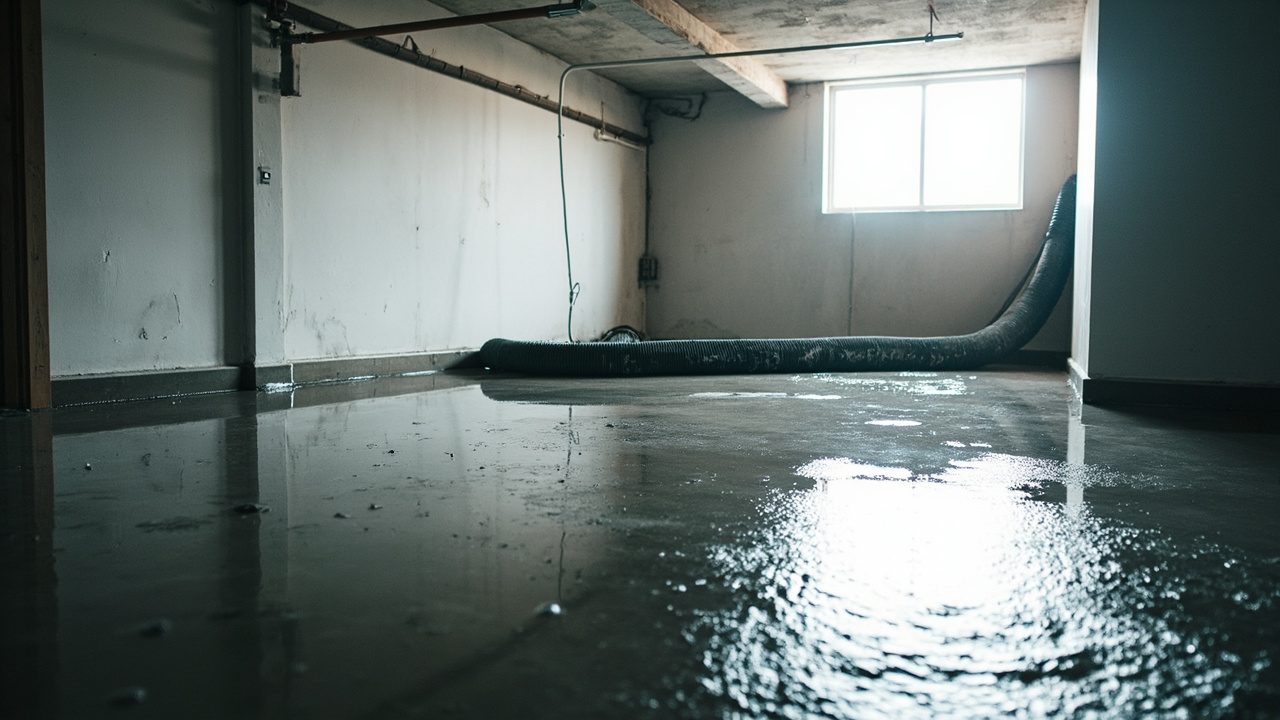
How we find where the water came from after the room is pumped
Pumping comes first because standing water hides what the diagnosis needs. The pump goes at the lowest point, the discharge hose ends well away from the foundation, and flood water extraction runs until the floor shows. With the room down, the sequence follows where the water is going. Everything in the house goes off and the meter is read. If the dial holds still, the supply side is cleared and the water came from outside or from a drain. The main is then closed and the meter is read again, which splits any loss between the street side and the house side. Stops and branches close one at a time until a loss stops, and only then does anyone open a surface.
On the drain side, the line is cleared first and cameraed second, because a full line shows nothing but water. The camera goes in through a cleanout, and the locator above ground marks the spot and the depth. The reading this page turns on is what the camera shows along a level run. Standing water part way along the run is a belly, and that section gets re-laid with the slope corrected. Roots at a joint put the repair at that joint and leave the rest of the clay lateral in place. The clearing history counts too, since roots at the same joint after several clearings point at a joint repair and away from another snaking. Depth from the locator then picks the method. Lining cures a new pipe inside the old one and needs a host pipe that is still round. Open cut restores full diameter and lets you fix slope, and it runs slower through caliche hardpan.
Pump selection follows the same measurement. A sump pump is sized by horsepower against the vertical lift plus the pipe run it has to push through, so a long climbing discharge line needs more than a pit that empties through a short level one. A cast iron body sheds heat better than a thermoplastic body, which counts when summer days sit at or above one hundred degrees and a monsoon burst keeps the pump running hard. A battery backup secondary pump matters more than extra horsepower when the outage and the storm arrive together, and thunderstorms bring both. If the camera finds a loaded sanitary line, a bigger pump treats the wrong problem, since the water arrives through the drain and never touches the pit.
Our page on 24/7 emergency plumbing services covers that side of the work in more depth.
Our technicians follow the workmanship standards promoted by the Plumbing-Heating-Cooling Contractors Association.
Ask which of these readings was taken before any part is replaced.
| Instrument | Good reading | Bad reading | What it changes |
|---|---|---|---|
| Drain camera with a locator | Continuous fall to the main, clean joints | Standing water part way along a level run means a belly | Roots at a joint mean the repair belongs at that joint rather than the whole line |
| Combustible gas detector and bubble solution on gas fittings | No alarm at the fittings and no bubble growing on the joint | Any bubble that keeps growing or any sustained alarm | The appliance valve gets closed before anything else happens |
| Anode rod pull on a tank water heater | The rod still has sacrificial metal along the core wire | A bare core wire with the metal gone | The tank itself is now the part being eaten |
| Thermometer at the farthest hot tap | Hot water arriving around 120 degrees | Hot enough at the tap to scald a child in seconds | The first slug of water is whatever was sitting in the pipe |
How a pump-out call runs
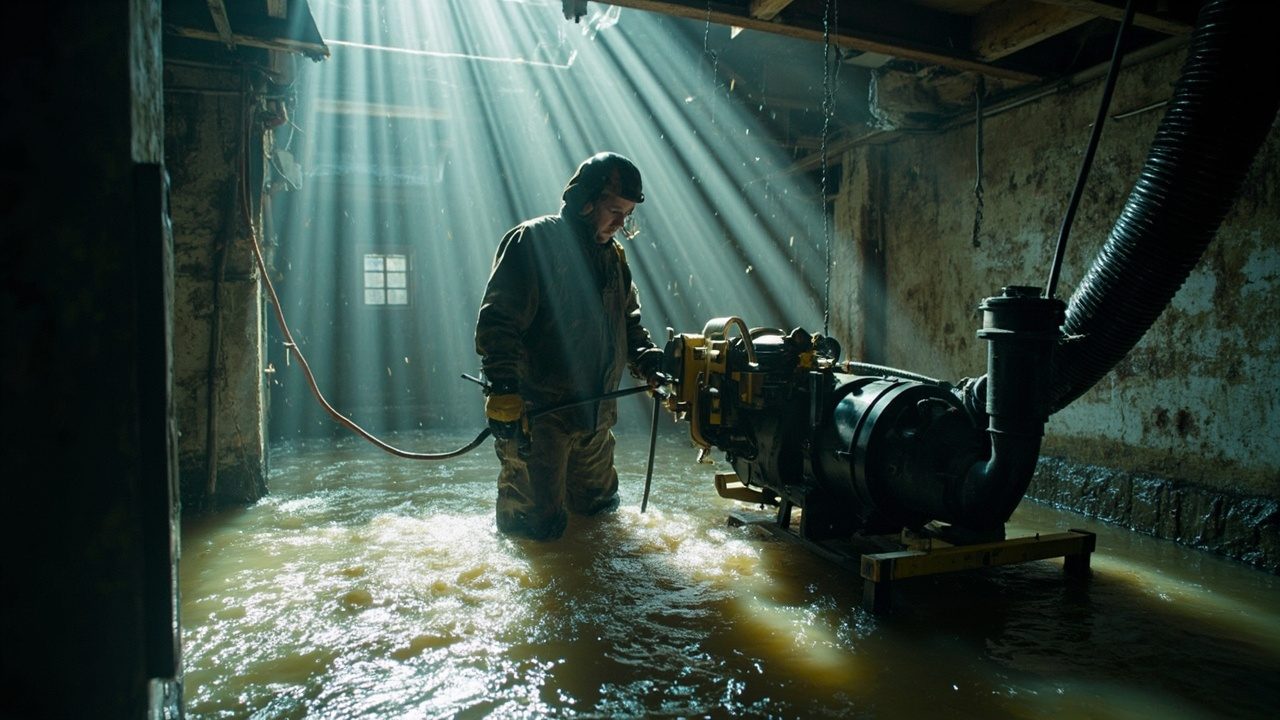
Call, pump, then camera
On the phone, the questions decide the order of work: where the main shutoff is, which drain sits lowest, and whether the sump pump was running when the water came in. On site, the pump goes in first and the hose runs away from the foundation. With the floor exposed, the meter is read with everything off and again with the main closed. The line is then cleared, and the camera goes in through a cleanout while the locator marks the spot and depth above ground. You can stand at the screen and see the same joint or low spot the technician sees.
Approve, then repair
The written scope comes after the camera and meter findings, and nothing beyond the pump-out starts until you approve it. Once you do, the affected branch is isolated at its stop or at the main. A cracked or rooted clay joint is cut out and replaced, and a cast iron to PVC connection gets a no hub band. A belly is re-laid to restore fall. If a second bad joint turns up behind the first, we stop and show you the footage before going further. A failed sump pump is replaced with one sized to the lift and pipe run, with a battery backup added if you choose it.
Test and hand over
Before we leave, the camera goes back through the repaired section and has to show continuous fall to the main, clean joints and the pipe wall visible along the run. The meter leak indicator is watched with every fixture closed and must not move over fifteen minutes. The sump pump runs through a cycle with water poured into the pit. Then the lowest toilet is flushed and the lowest sink is run to confirm the drain clears without gurgling. You are walked through the footage, and you keep the written scope and a record of what the camera showed.
What a crew new to desert storm runoff gets wrong
Pumping standing water out of a room is not permit work. What follows it can be. A lateral repair or a gas line job usually needs a permit, a like for like fixture swap usually does not, and the final call belongs to the local plumbing authority. The first visit therefore includes asking whether your address sits inside city limits, since the answer decides which office handles it.
The first common mistake is treating every storm call as a pump job and nothing more. The hose ends near the wall, the level drops, the crew leaves, and the next monsoon cell fills the room again because the sanitary line that let the water in was never looked at. Where the discharge ends gets decided before the pump starts, and it ends where the water has no short path back to the foundation.
The second mistake is expecting the wrong pipe. Homes from the late 1800s through the 1930s carry cast iron drains and clay laterals. Postwar slab homes from the 1940s through the 1960s often have cast iron drains under the slab. Slab homes from the 1970s through the 1990s have ABS or PVC drains, and newer subdivisions have PVC laterals and PEX manifolds. Each material fails its own way. Cast iron corrodes from the inside out and clay lets roots in at the joints. The era tells the crew what the camera should show, and a cast iron to PVC connection takes a no hub band.
The third mistake is reading water that came up a floor drain as clean. Water that rose through a drain is sewage, so people and pets stay out and the cleanup changes.
Storms load the whole county at once, so calls stack in the hours after a cell passes. The county runs from sandy mesas to low valley ground, and a street that collects water can slow a crew as much as distance does. That is why the phone call asks whether your street ponds.
See emergency sump pump failure for how the related work is scoped and priced.
Your local utility, El Paso Water, publishes service and water-quality information every El Paso homeowner should know.
Working with Bedrock Plumbing El Paso on a flooded basement
When the crew arrives
You are asked whether the water keeps rising after the main is closed, whether any outlet or panel is wet, and whether it smells like sewage. Those answers separate a same day emergency water pump out from a scheduled visit. You get the arrival window during the call itself. If the job ahead of yours runs long, you hear about the shift by phone before the window closes. Flooded basement water removal on a weekend or holiday storm night is answered the same way.
What happens to your floor
Before the pump goes in, runners cover the path from the door to the wet room, and the crew checks for wet outlets so nobody wades toward a live circuit. The discharge hose leaves through one doorway and ends away from the foundation. Wet debris goes into bags at the door and never crosses the dry rooms. When the water is down, the floor is left clear of hoses and tools, and the line where the water stood on the wall stays visible for your photographs, which is where basement flood cleanup and any claim begin.
What moves the cost
Access to the pipe moves the job furthest, meaning a finished wall, a slab or a ceiling below and the work of restoring it. Depth and length of any dig come next, then one joint against the whole run, then matching old pipe to new. After hours, weekend and holiday dispatch adds to the visit itself, and a monsoon night is when many calls stack up. The written scope follows the meter and camera findings, and you approve it before anything beyond the pump-out starts. If an opening finds more, you agree the next step in writing.
How technicians earn sign-off
A new technician rides with a lead before working alone. The lead signs off on running the camera from a cleanout, reading the locator for depth, and reading the meter with the main closed. Local code amendments are reviewed with the lead as they change. When a line shows a belly or roots at more than one joint, a second technician reviews the camera footage before any scope is written, so a re-lay is never proposed on one person's read.
You Have Questions,
We Have Answers
Cut power to the room, then lower the water in stages with a submersible utility pump. Set the pump on a brick or board so silt stays out of the intake, and run the hose to a spot that slopes away from the house. Drop the level about a third at a time, since emptying a saturated basement too fast lets wet soil outside push against the walls. Pause between stages and check the wall for new cracks or seepage.
A submersible utility pump with a float switch suits most flooded rooms. Look for a cast iron body if it will run for hours in heat, and a vortex impeller if the water carries silt or grit. A three-quarter horsepower unit clears a typical room, but a long climb up to the discharge point calls for more. Check the pump's rated lift at your actual height, because the flow number on the box assumes almost no lift.
Pump-out cost rises with water depth, room size and how long the pump must run. Sewage contamination raises it because handling and cleanup change. After-hours arrival adds to the visit. Access to the source moves the total most, so a pump-out alone costs far less than a pump-out followed by a repair behind a finished wall. A technician can only price it after seeing the room, so no honest figure exists before that.
Three pump types handle basement water: submersible utility pumps, pedestal sump pumps and trash pumps. A submersible sits in the water and handles most floods. A pedestal keeps its motor above the water, which suits a pit but not a room. A trash pump passes small solids and debris, so it fits muddy or sewage-laden water. Only a submersible or trash pump should sit in open floor water, and each needs a hose with no kinks or sharp bends.
Water depth, floor area, contamination and the hour you call set the price of pumping a flooded basement. Clear rain seepage costs less than water that came up a floor drain, because sewage adds protective steps and disposal handling. Extra time for a second pump, a long hose run or a difficult discharge point also raises the total. The written scope after the camera and meter findings sets the price for any repair beyond the pump-out.
Most fire departments do not pump out private basements, and any help is limited to life-safety emergencies. During a widespread storm their crews are busy with road rescues, downed lines and gas odors. Call them if someone is trapped, if you smell gas, or if water is touching a live panel. For an ordinary flooded room, expect to arrange a plumber or a rented pump yourself, and keep the panel off meanwhile.
A wet-dry vacuum handles the first inch or so of water. A small submersible pump cannot go below its intake height. Standard utility pumps leave about an inch behind, which is why shallow water needs a low-profile pump with a flat base plate that draws down to roughly an eighth of an inch. Squeegee the remainder toward the pump or a floor drain. Then mop the film and run a fan across it.
A sump pump fails to stop flooding when the water arrives by a route that never reaches the pit. Common causes are a sanitary line backing up a floor drain, a pump on a dead float switch, a clogged check valve, or a discharge line that empties beside the foundation and recirculates. A power outage during the storm also stops a pump with no battery backup. Check the float first, then the discharge end, then the lowest drain.
Move air first, since airflow across wet surfaces dries a basement faster than heat does. After the standing water is gone, run box fans across the floor and a dehumidifier set to hold humidity below about 50 percent. Pull up wet carpet and pad, cut wet drywall a foot above the water line, and open the walls to the studs. Wet materials left in place can grow mold within two days.
A cast iron submersible pump with a battery backup suits flooding that comes with storms. Storms often take the power out, so a battery-backed secondary pump keeps working when the primary stops. Size the motor to the vertical lift plus the length of the discharge run, since a long climbing hose needs more horsepower than a short level one. A float switch that moves freely in the pit matters as much as the motor.
How monsoon runoff changes a basement flooding pump-out in El Paso
Monsoon storms in this county are short and heavy, and the ground sheds that rain in minutes. Runoff crosses the desert through arroyos and channels and settles in ponding areas, low streets and the flatter valley ground. Finer alluvial soil in the valley holds more water than the sandy, gravelly mesas, so a below grade room there stays wet longer after the storm ends. Caliche hardpan sits in layers under many lots, and it slows any trench you need for a lateral or a longer discharge line. Each condition changes the job. A lot in a dip needs a pump sized to a longer lift and run. A wet valley lot needs a pit that can refill without the pump overheating. The same storm that fills the room often takes the power with it, so the battery backup secondary pump becomes a sizing decision on these lots.
Plumbing permits inside city limits are issued by the city, and the work is inspected at stages while it is built. Work outside city limits falls under the county or the neighboring town, so the first thing to settle on a lateral job is which office owns your address. Pumping standing water out is not inspected. Gas line work and lateral repairs typically require inspection, and the final call is the authority's. Knowing the stage up front shortens the job, because the trench stays open until the joint has been seen and nobody digs through caliche hardpan twice. Whether a backwater valve belongs on your lateral is a question for that office, and its answer governs the design. For insurance, stop the water, photograph the water line on the walls and the camera footage of the line, and file the claim yourself, since the carrier decides what it covers.
Plumbing Services in The El Paso Area
Explore our service area and locate Bedrock Plumbing El Paso with ease. We're proudly local and serve the surrounding neighborhoods with fast response and honest pricing. Use the map to check our coverage area, or call us and we'll confirm in seconds.
Address:
Bedrock Plumbing El Paso, 221 North Kansas St, Suite 700, El Paso, TX, 79901
Additional Services We Offer
- 24/7 Emergency Plumbing Services
- Burst Pipe Repair
- Emergency Sewer Backup Cleanup
- Emergency Sump Pump Failure
- Emergency Water Heater Repair
- Emergency Water Shut-Off Service
- Frozen Pipe Thawing & Repair
- Gas Leak Detection & Repair
- Main Water Line Break Repair
- Overflowing Toilet Repair
- Rapid Response Leak Repair
- Septic Tank Emergency Pumping
Plunging a toilet, swapping a flapper or a braided supply hose, and finding and closing the main shutoff are homeowner jobs. DIY stops at anything soldered, anything on the gas line, anything behind a finished wall or under a slab, and any drain already backed up past a cleanout. Drying the structure and replacing wet drywall or flooring fall outside plumbing, and if the first visit shows that work, we say so then.
Know when the water started, whether it keeps rising after the main is closed, and whether it looks clear or smells like sewage. Find the main shutoff and tell us if any outlet or the panel is wet. If a sump pump sits in the room, note its age and whether it was running when the water came in. Tell us if anyone is in the house.
Last reviewed September 2026 by Dave Parker, Owner.