





Brown water and pinholes from galvanized pipe in older homes
Water runs rust brown for the first stretch after the house has sat idle, clears, and then the shower thins out when a second fixture opens. That pair of signs points at galvanized steel supply pipe. Galvanizing is a zinc coating, and once it wears through, the steel corrodes from the inside and grows rust nodules that shrink the bore. Flow drops long before the pipe leaks, and fixtures at the far end of the run show it first because they sit downstream of every narrowed section. The brown slug is loosened rust from the pipe wall, and the utility itself names rusting galvanized pipe inside homes as the typical cause of discolored water.
The local water accelerates that failure. It runs moderately hard to hard, so scale lays down inside the same pipe that is rusting, and the crust and the rust build together. Wall thickness thins unevenly, and the thinnest points sit at threaded joints, elbows and tees, where the thread cut already removed metal. Pinholes open there first. Scale also collects in tank and tankless heaters, faucets and valves, so a house with old galvanized often shows rust at one tap and scaled aerators at the next. Houses from the late 1800s through the 1960s carry galvanized or early copper supply in many cases.
Patching one pinhole leaves the rest of the run as it was. That pipe went in during the same build, at the same wall thickness, in the same water, so a second pinhole in one segment means the whole segment has reached the end of its life. A spot repair also has to join new pipe to old steel, and each of those joints becomes the next weak point. People who start by asking about one repair often end up asking to replace galvanized pipes throughout.
Call today when a stain, a soft grout line or a bubbled patch of paint shows on a wall that holds a supply pipe. A hairline supply leak behind tile leaves the framing damp because nothing dries inside a wall, and once the framing stays wet the pipe repair turns into a wall rebuild. Pressurized water escapes all night whether anyone is home, while a drain only escapes when something upstream runs, so a supply leak is a tonight call and a slow drain can usually wait for a scheduled visit. Close the main shutoff on the way to the phone if water is visibly moving.
Our page on drain cleaning & rooter service covers that side of the work in more depth.
The U.S. Department of Energy's water heating guide is a solid primer on operating costs if you want to dig into the numbers yourself.
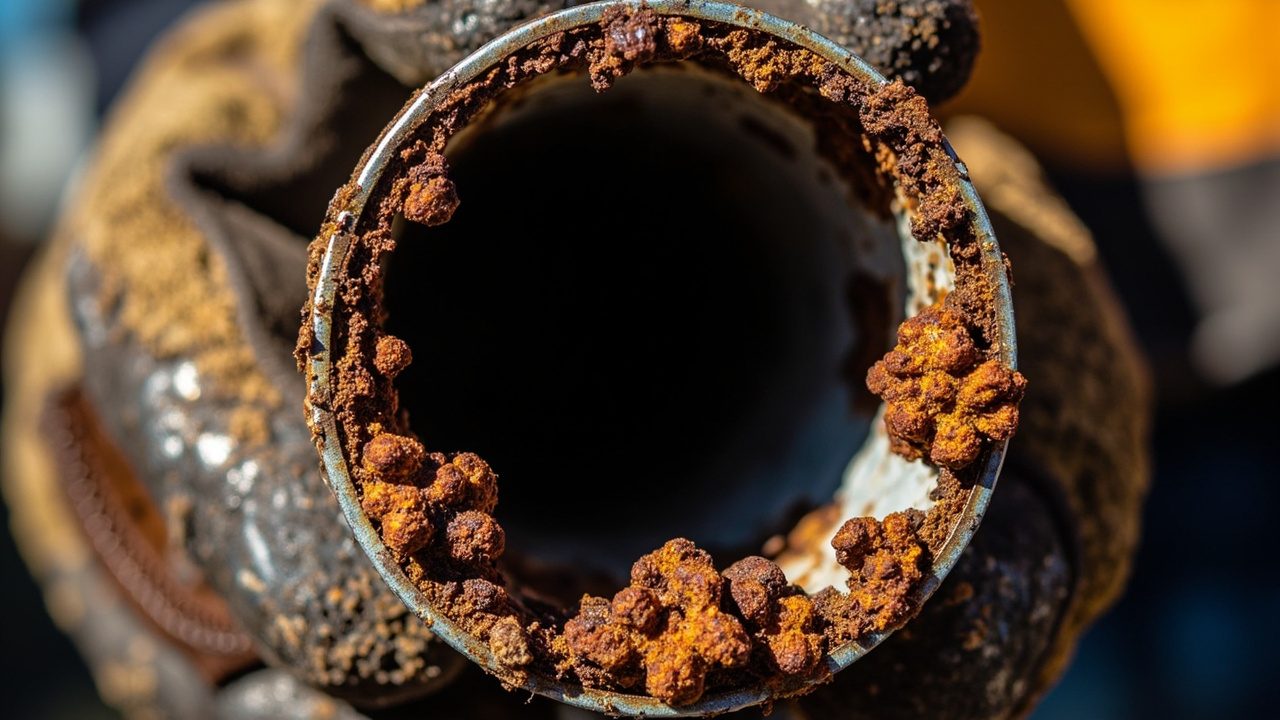
Find the sign you have, then read across to see whether it can wait.
| Symptom or first sign | What is already happening | What it becomes if ignored | When to call |
|---|---|---|---|
| A hairline supply leak behind tile | The framing stays damp | The pipe repair turns into a wall rebuild | This week, while it is still one part |
| A weeping angle stop under a sink | The compression nut corrodes so it cannot be snugged | The stop snaps off in someone's hand during a faucet change | Now, the same day |
| Roots at one clay joint | Paper and grease catch at that spot every day | The main backs up into the lowest fixture in the building with no warning | Now, the same day |
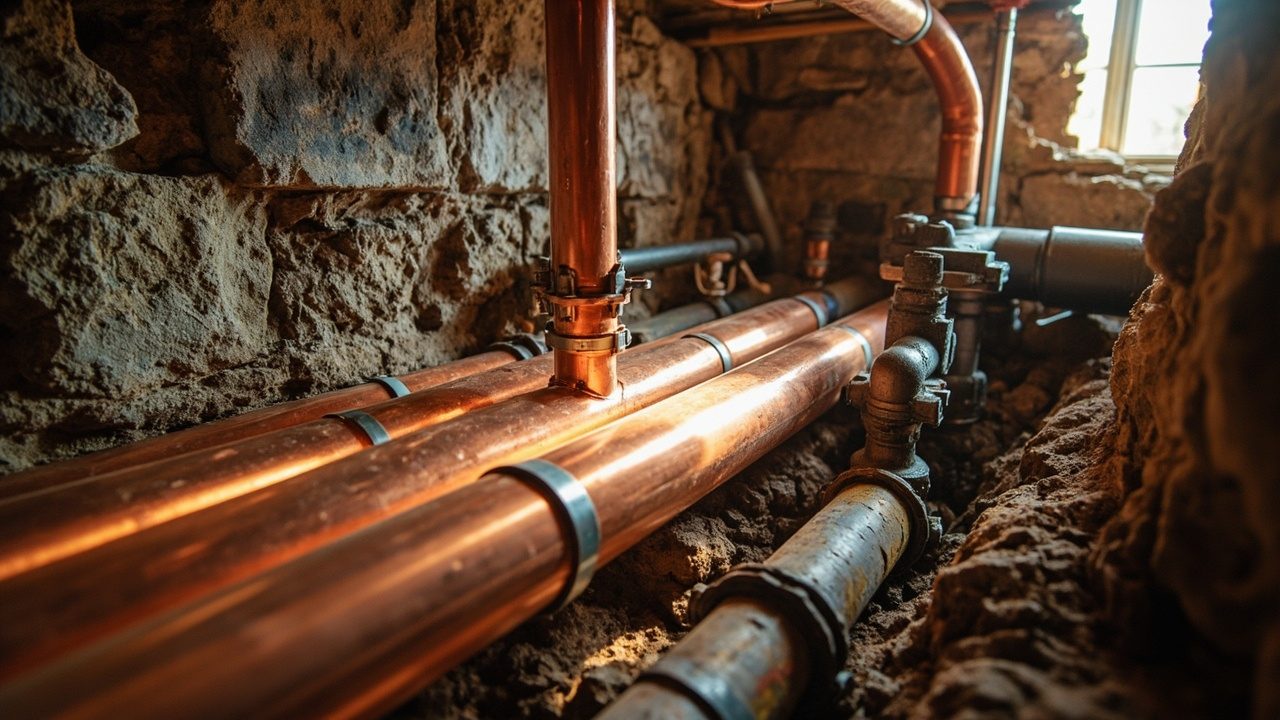
How the pressure reading sets the scope of a repipe
The first visit shrinks the problem to one segment before anything is opened. A gauge threads onto a hose bib with every fixture off, because a running fixture hides the real static number. The water meter leak indicator is then read with every fixture closed, and any movement over fifteen minutes means water is leaving the system somewhere you cannot see. Closing the main and reading again splits the loss in two, since a dial that still moves with the main closed puts the leak on the street side, outside the pipe a repipe replaces. Stops and branches then close one at a time until the movement ends, and only after that does anyone open a wall.
The gauge reading changes the scope. Static pressure in the 45 to 70 psi range is the healthy band, and a reading above 80 psi is the point where fixtures, supply hoses and water heaters start failing early, so a pressure reducing valve belongs in the job next to the pipe. The gauge then stays on overnight. A morning reading far above the night figure means the heater is expanding water into a closed system with nowhere to put it, and a thermal expansion tank joins the scope. A second pinhole in the same segment moves the job from a spot to the segment, and a static reading above the band explains why the pinholes arrived together. A hardness test at the tap sets the third fork. Above about seven grains per gallon scale forms steadily in heaters and valves, and local water tests at or above that line, so flushing, descaling or treatment is planned before new fixtures connect to new pipe. Skip those corrections and the new pipe carries the same pressure and scale that wore out the old.
Type L copper and PEX both suit a whole house repipe, and what stays behind decides between them. Old steel left at a wall stub or where the line enters the house has to meet the new pipe, and copper repiping makes that joint with a dielectric union that keeps the two metals from corroding each other where they touch. A PEX repipe suits raised floors and open framing, since a home run layout to a PEX manifold puts fewer joints inside walls and leaves a future repair with less drywall to cut. Inside PEX, PEX A joins with expansion fittings and PEX B with crimp rings. Desert sun degrades exposed plastic, so PEX stays out of sunlight and hose bib stubs and garage heater connections are better done in copper. Short hard freezes split unprotected outdoor piping, so routes stay off exterior walls and out of unheated spaces where the framing allows. Scale forms in heaters and valves whichever pipe is chosen, so hardness decides whether treatment goes in the scope. Where supply runs under a slab, the fork is breaking the slab at one point or rerouting that line overhead, and PEX makes the overhead route easier to run.
See commercial repiping services for how the related work is scoped and priced.
Permit and inspection questions? Planning & Inspections is the office we coordinate with on every permitted El Paso job.
Narrow this to two options before calling, then ask which one suits the house.
| Option | The numbers a buyer weighs | Best suited to |
|---|---|---|
| Type L copper against PEX | Copper is rigid, tolerates heat directly | Repipes where the existing layout sets the method |
| Sump pump selection | Sized by horsepower against the vertical lift plus pipe run it has to push through | Basements with a real lift to the discharge |
| Cast iron drain against PVC or ABS | Cast iron is heavy and quiet and corrodes from the inside over decades | Drain replacement under a finished house |
How a whole home repipe runs
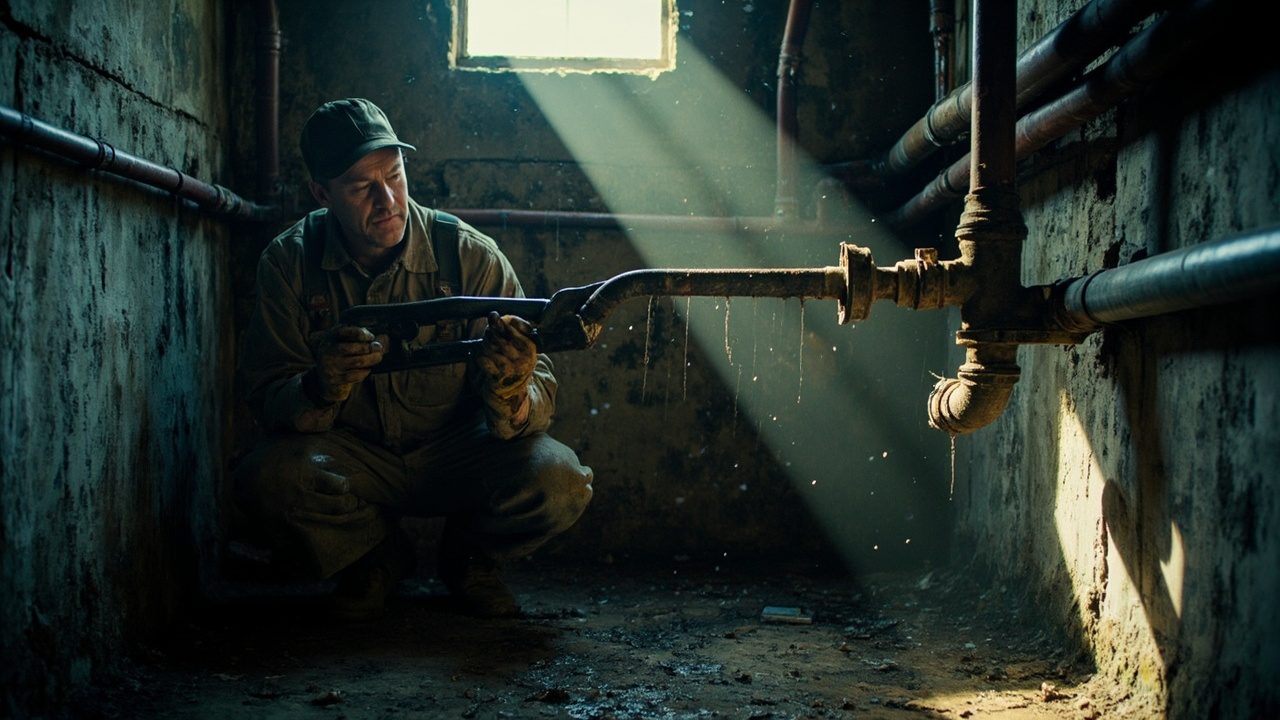
First call and gauge reading
On the phone we ask what the water looks like, which taps show it, the age of construction, and the location of the main shutoff. On site, everything in the house goes off and a gauge threads onto a hose bib to read static pressure. The meter is read with every fixture closed, then again with the main closed, and stops and branches close one at a time until any movement ends. A hardness test at the tap comes next, and a walk of the house shows where the pipe runs and what has to open to reach it. The gauge stays on overnight, and nothing gets cut on this visit.
Approval then isolation
Once you approve the written scope, water goes off at the main and the branches drain. Old galvanized comes out in sections. Type L copper is soldered or PEX is run to a manifold in a home run layout, and a dielectric union joins the new line to any old steel that stays. Where a pressure reducing valve or thermal expansion tank is in the scope, they go in during the tie-in. If wet framing, a second pipe material or a corroded stub turns up behind a wall, we stop and show you before going further, and the scope changes only with your yes.
Pressure test and handover
Before we leave, the same gauge from the first visit goes back on the hose bib and has to read inside the 45 to 70 psi band with nothing running. The meter dial must hold still for fifteen minutes with every fixture closed. The overnight hold is read the next morning, and a figure close to the night reading confirms the closed system has somewhere to put expanding water. We walk you through each opened wall, and you keep the written scope with the readings recorded. Where a permit applies, the inspection stage happens before the walls close.
Why the pipe you keep matters as much as the pipe you install
The City of El Paso Planning and Inspections Department issues plumbing permits inside city limits, and the city adopts the International Plumbing Code with local amendments. A whole home repipe usually needs a permit, and so does gas work at the heater, while a like for like fixture swap usually does not. The final call on any of it belongs to the department, so a crew that has worked its process asks the right questions before the first cut.
An unfamiliar crew gets predictable things wrong here. Treating an older house as one material is the first. A house from the late 1800s through the 1930s was built with galvanized steel supply, cast iron drains and vent stacks, and clay sewer laterals, and later partial repairs add copper and plastic, so several pipe materials can share one wall. Threading new copper straight onto old steel without a dielectric union starts a corrosion point at that joint. Skipping the static pressure reading puts new pipe under the same pressure that pinholed the old. Cutting a chase in brick or adobe the way a crew would in a stud wall leaves masonry to patch, so runs are planned along raised floor cavities and existing openings first. Excavating for a service line in caliche hardpan takes longer than the same dig in soft soil, and a crew that quotes it as soft ground meets a different job on the day.
The same call can come from a raised floor house with crawlspace access or from a slab house in a newer subdivision with manifold style PEX distribution, so the first phone questions decide which approach, materials and tools arrive. Slab houses from the 1970s through the 1990s often run copper supply under or through the slab, which makes a reroute overhead a real option before anyone cuts concrete. Response across the metro shifts with the age of the house, so the address and the year it was built come up early on the call. A crew that ties in without isolating branches leaves the whole building dry for longer than the work needs, and one that skips a hardness test connects the heater and valves to new pipe and leaves them to scale.
More detail on backflow prevention & testing is on its own page.
Independent standards matter too, the EPA's WaterSense program sets the efficiency benchmarks we use when recommending replacement fixtures.
Day to day with Bedrock Plumbing El Paso during a repipe
How the visit is booked
You call, and we ask what you see, when it started, how old the house is and where the main shutoff sits. Active supply leaks get a same day visit. A whole home repipe is a scheduled job, because the pressure reading and the written scope come before any wall opens. The person who took your call confirms the arrival window by phone before the visit. If the job ahead of yours runs long, that window is updated by phone before the crew reaches your door.
Floors, walls and dust
Before any wall opens, runners cover the floor from the door to the work area and furniture in that room moves clear. Drywall cuts follow the framing lines and stay as small as the fitting allows, so the opening can be patched. Removed galvanized pipe leaves by one route in bags or buckets and never crosses the living space loose. Patch, texture and paint are named in the written scope as included or left to you, so nothing is assumed. The last step is wiping down the path and running each tap to clear debris from the aerators.
What moves the cost
House repiping cost follows access first. Finished walls, tile and a slab raise it because reaching the pipe and restoring the surface is the larger half of the work, while open framing or a crawlspace lowers it. Matching old pipe size and material where new meets existing adds fittings and time. Fixture grade and after hours work add more. You control fixture grade and whether pressure and expansion get corrected while the wall is open. The written scope follows the pressure reading, states what happens if an opening finds more, and waits for your approval before work starts.
How technicians earn sign off
A new technician rides with a lead before working alone, and the lead signs off on reading a static pressure gauge with every fixture off and on making a dielectric union joint between old steel and new copper. Each technician studies the code cycle the city adopts. On anything unusual, such as several pipe materials in one wall or a leak that the meter places on the street side, a second technician looks at it before a scope is written.
You Have Questions,
We Have Answers
Avoid guessing at the cause or describing the damage as long-standing before anyone has inspected it. Many policies separate sudden, accidental discharge from gradual seepage and wear, so wording like "it has been leaking for months" can shape how a claim is read. Describe only what you saw, when you saw it, and when you closed the main. Photograph the wet area and keep the failed pipe section before anything is discarded. Moisture readings taken before drying begins give the adjuster something measurable.
Repiping is worth it when a second pinhole appears in the same run or flow drops at several fixtures. Corroded steel keeps narrowing on the inside, so each spot repair leaves the remaining pipe as thin as before. Compare the repipe against repeated wall openings, drywall patching and the mold risk of framing that stays damp. A house with stable pressure and no leak history has little reason to repipe. Pipe that still tests sound can stay.
A full replumb costs more than a supply repipe because the term can also cover drains, vents and fixtures. Supply lines are pressurized and replaced first. Drain and vent replacement adds cast iron removal, new slope-graded pipe and more wall or floor demolition. Ask which systems the quote covers before comparing numbers. Two written scopes with different boundaries cannot be compared fairly. The number of bathrooms and the number of stories both push the total upward.
Yes, a slab house can be repiped, usually by abandoning the under-slab supply and running new lines overhead. The new pipe travels through the attic, and PEX bends around framing with fewer fittings than rigid copper. The old buried lines get capped where they leave the slab so they cannot feed anything. Rerouting avoids concrete cutting entirely. Breaking the slab is reserved for cases where an overhead path is blocked, such as a vaulted ceiling with no chase.
Cost for an entire home rises with fixture count, bathroom count and the length of the longest pipe run. A three-bath house needs more branches and more manifold outlets than a one-bath house of the same size. Finished tile and plaster raise the price because restoration is the larger share of the work. Open crawlspace access lowers it. Copper generally costs more in materials than PEX, and the pipe choice moves the total in that direction.
Coverage usually applies to water damage from a sudden pipe failure, and often excludes the failed pipe. Report the loss promptly and shut the main so the damage stays limited. Keep the ruptured section, take dated photos, and get a written scope that separates pipe replacement from wall and floor restoration. Adjusters read those two line items differently. Corrosion and wear are commonly excluded, so read the policy's exclusions before filing a claim.
Square footage alone does not set the price of repiping a 2000 square foot house. Fixture count and pipe run length decide it. A compact single-story plan with bathrooms stacked around one wet wall needs far less pipe than a sprawling layout with a distant kitchen. A second story adds vertical runs and more wall openings. Kitchens with an ice maker and a laundry room add stub-outs. A written scope built from a walk-through gives a figure for your house instead of a generic one.
Yes, a whole house can be repiped, and the work proceeds in stages rather than all at once. Old supply comes out in sections while new lines are built from the manifold outward. Fixtures are reconnected as their branches are finished, and the last step is charging the system and checking every joint under pressure. Homes with more than one material in the walls take longer because each transition needs its own fitting. Access decides the pace more than house size.
A slab foundation on a 2000 square foot house changes the price mainly through the routing decision. Running PEX overhead through the attic keeps concrete work out of the job, though it adds ceiling and wall penetrations to patch. Cutting the slab at one point costs less in pipe but adds jackhammering, dust control and a concrete patch. Where the buried line is copper that has failed at a single spot, a targeted break can be the lower-cost route.
Repiping a slab house costs more than a raised-floor house when concrete has to be cut. Each break point adds saw-cutting, removal of the concrete, pipe work in the trench and a patch that must cure. An overhead reroute replaces that with attic labor and drywall repairs at drops. Pipe material matters less than routing here. Before choosing, a technician locates the buried line's entry and exit points so the number of cuts is known ahead of time.
Why hard water changes whole home repiping in El Paso
Sunset Heights homes date from the late 1890s through the 1920s, and homes this old often still carry galvanized steel supply lines, cast iron drains and clay sewer laterals. A repipe there replaces the supply side, so the new line has to join steel that stays and run beside drains that remain cast iron. The water adds its own demand. The local supply blends surface water and groundwater, and its utility describes it as moderately hard to hard and disinfects it with chlorine. Hardness commonly runs around ten grains per gallon or more, so flushing, descaling or treatment is planned in for the heater and valve connections before the new pipe goes on. Caliche hardpan slows any trenching, which keeps the work inside the framing wherever the run allows. Arctic cold fronts that drop temperatures well into the teens split exposed hose bibs, so those stubs are routed away from exterior walls and protected.
Work like this is inspected at stages during construction, and on a repipe the stage that matters is the one before drywall goes back, since a joint inside a closed wall cannot be read. Work outside city limits falls under the county or the neighboring town, so the first check is which authority holds the address. Knowing the process up front changes sequencing. Walls stay open with the lines under gauge pressure until the inspection stage passes, tie-ins are staged so the building loses water for the shortest stretch, and any work at a gas water heater is planned as its own step with its own inspection question for the authority. If you smell gas or rotten eggs at any point, everyone goes outside, nothing gets switched on and no charger gets touched on the way out, and the gas utility is called from outside.
Plumbing Services in The El Paso Area
Explore our service area and locate Bedrock Plumbing El Paso with ease. We're proudly local and serve the surrounding neighborhoods with fast response and honest pricing. Use the map to check our coverage area, or call us and we'll confirm in seconds.
Address:
Bedrock Plumbing El Paso, 221 North Kansas St, Suite 700, El Paso, TX, 79901
Additional Services We Offer
- Backflow Prevention & Testing
- Drain Cleaning & Rooter Service
- Faucet & Sink Repair
- Garbage Disposal Services
- Gas Line Repair & Installation
- Plumbing Services
- Sewer Line Repair & Replacement
- Shower & Bathtub Plumbing
- Slab Leak Detection & Repair
- Sump Pump Services
- Tankless Water Heater Services
- Toilet Repair & Installation
Draining a hose bib before a freeze, closing the main shutoff, swapping a braided supply hose and cleaning aerators are homeowner jobs. DIY stops at anything soldered, anything on the gas line and anything behind a finished wall or under a slab. A repipe replaces supply pipe only, so a cast iron drain or a clay lateral with roots is a separate job. If the first visit finds one, you hear it then, before any invoice exists.
Before you call, know what the water looks like at the first tap after the house sits idle and which fixtures thin out when a second one opens. Know when it started and what changed just before, such as a heater swap or a patched leak. Find the main shutoff and the hose bib easiest to reach for the gauge, and know the age of the house.
Last reviewed September 2026 by Dave Parker, Owner.