





What a full septic tank does to your lowest drain
Four steps cover the first five minutes, in this order. Shut the water off at the stop if there is one, and if there is not, close the main where the line comes into the house or at the meter. If water has reached outlets, a panel or a ceiling fixture, kill that circuit before anyone steps into the water. If you smell gas or rotten eggs, touch no switch or phone charger, get everyone outside, leave the door open behind you, and call Texas Gas Service from outside. For a backup, stop every water use in the building including the washer and the dishwasher, keep people and pets out of the wet area, and do not plunge a line that is already full.
A septic backup starts small. The tub gurgles when the washer drains, the toilet flushes slowly and then sits, and the lowest drain in the house shows water first. Standing water or soft ground over the tank lid points the same way. A drain only escapes while something upstream runs, so stopping water use stops the flow. A supply leak behaves differently, because pressurised water keeps escaping all night. Every fixture slow with the lowest one backing up puts the fault on the main line or at the tank. One slow fixture points to a branch or a trap instead. A sewage smell in a room with nothing wet points to a dry trap, a vent or the seal at the closet flange, which is a different job.
El Paso County ground decides how fast a full tank becomes an overflowing one. The mesas and foothills carry sandy, gravelly soil over layers of caliche hardpan. The river valley has finer alluvial soil that holds more water, so a drain field there accepts less flow after a summer monsoon storm and the tank fills faster. Saturated ground pushes flow back toward the tank, and a septic tank full to the lid overflows on the first heavy wash day. Older homes in the county also carry clay lines jointed in short sections, which is where roots get in.
Pumping relieves a full tank in one visit, and the level afterward tells you something. A tank that refills within days points past the tank to the outlet line or the drain field. Call today when the lowest drain has already backed up once. Roots at one clay joint catch paper and grease at that spot every day, and then the main backs up into the lowest fixture in the building with no warning. A second backup leaves raw sewage on the floor and turns one pump out into a pump out plus a line repair. Emergency septic pumping runs through the night on the same 24 hour septic service line.
If this sounds close but not quite your situation, 24/7 emergency plumbing services may be the better starting point.
Permit and inspection questions? Planning & Inspections is the office we coordinate with on every permitted El Paso job.
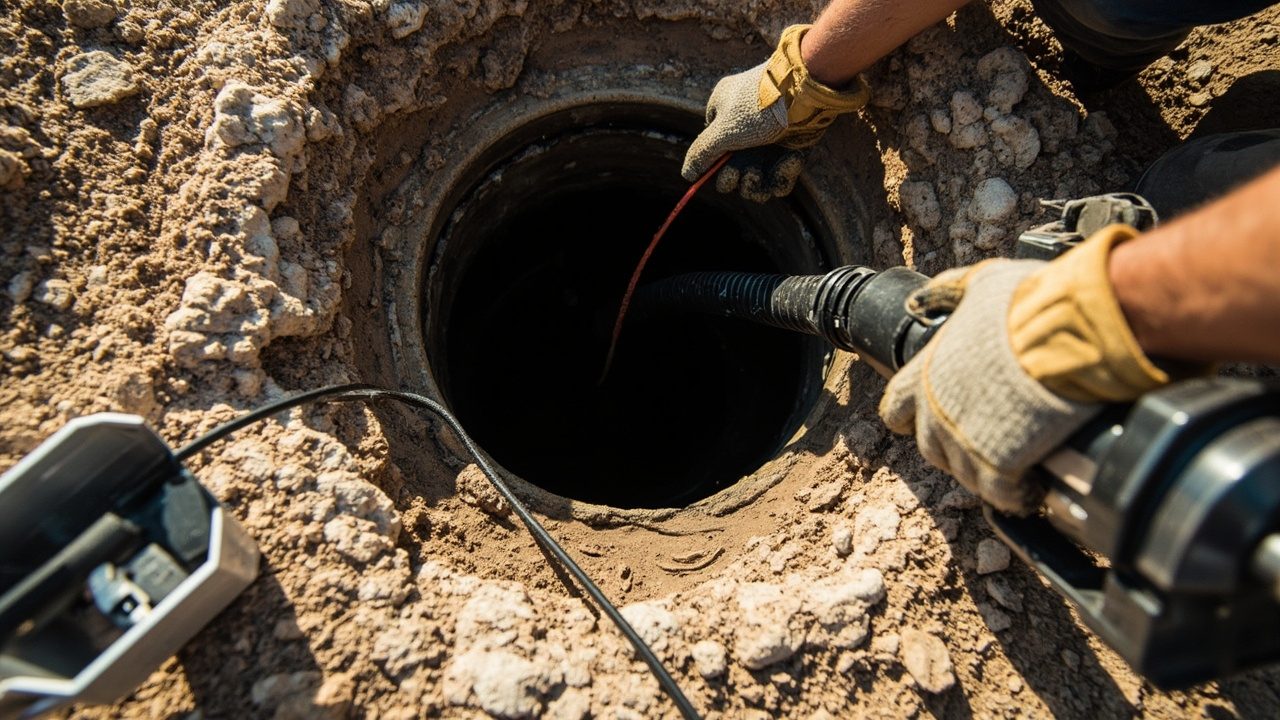
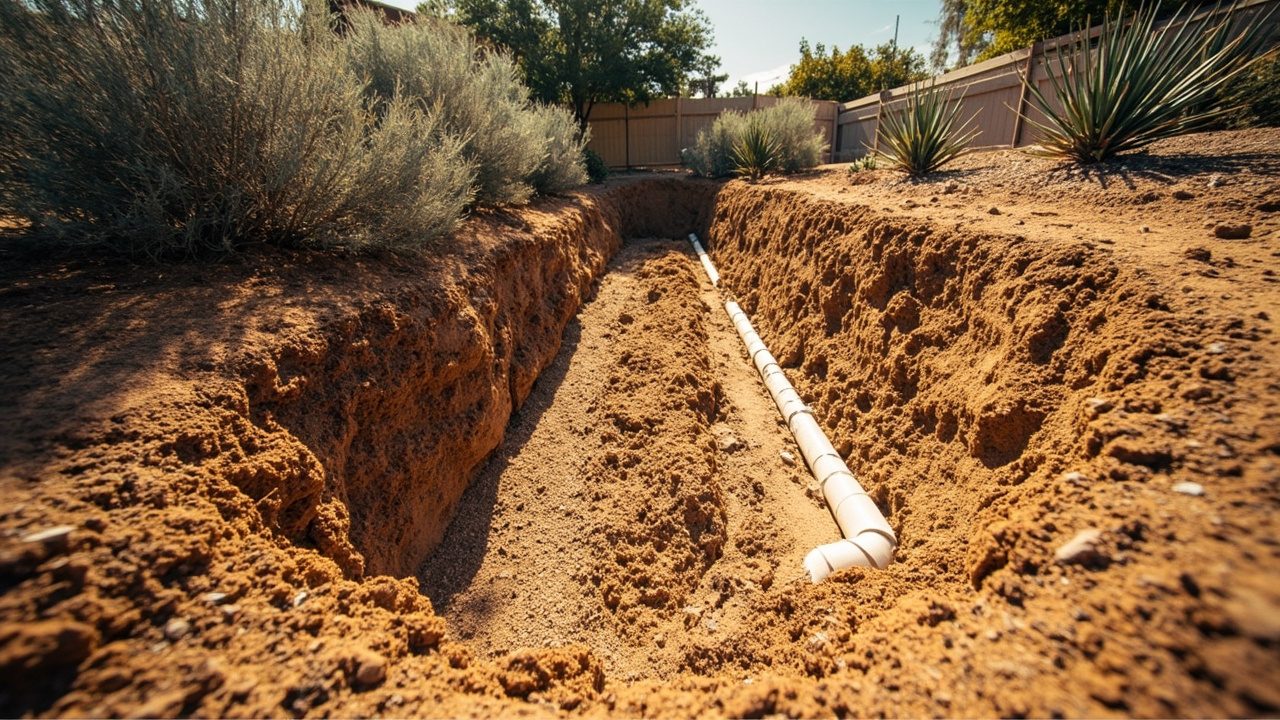
Pump the tank first, then camera the line before we quote
The sequence follows where the waste is going. With every fixture off, the meter dial should sit still for fifteen minutes, and movement means a supply leak that is a separate job. Then you tell us which drains are slow. Pumping comes first, because a full line shows nothing but water on camera, and a cleanout opened under head pressure empties onto whoever opens it. The tank is drawn down before anyone touches the cleanout. Once the level drops, the camera goes in from the cleanout and the locator marks the fault and its depth on the ground above. Nothing gets dug on a guess.
The reading this visit turns on is what the camera shows on the outlet line once the tank is empty. Continuous fall, clean joints and pipe walls visible the whole run mean the line is sound, and suspicion moves to the drain field. That is why a tank that refills within days gets a field answer and not a second pump out. Standing water part way along a level run is a belly, which holds solids and needs that stretch re-laid. Roots at a joint put the repair at that joint and leave the rest of the line alone. Each reading sets a different scope, and you watch the same monitor we do before you approve any of it.
If the camera finds a bad section, two repairs compete. Cured in place lining forms a new pipe inside the old one with a small loss of inside diameter, and it needs a host pipe that is still round. Open cut replacement restores full diameter and lets us correct slope, so a belly gets an open cut. The deciding numbers are depth, length and what sits on top of the line. The hardpan that slowed the dig pushes a deep run under a slab or driveway toward lining when the host pipe holds its shape. Older clay lines under mature trees put the question at the joint against the whole run. Pipe bursting is the third route when the old line is too far gone to line.
See emergency sewer backup cleanup for how the related work is scoped and priced.
Communities like r/Plumbing are full of homeowners comparing notes on exactly this problem, worth a read before a major project.
Ask which of these readings was taken before any part is replaced.
| Instrument | Good reading | Bad reading | What it changes |
|---|---|---|---|
| Drain camera with a locator | Continuous fall to the main, clean joints | Standing water part way along a level run means a belly | Roots at a joint mean the repair belongs at that joint rather than the whole line |
| Screw on pressure gauge at a hose bib | Static pressure sitting in the 45 to 70 psi range with nothing running | Above 80 psi | Fixtures, supply hoses and water heaters start failing early |
| Combustible gas detector and bubble solution on gas fittings | No alarm at the fittings and no bubble growing on the joint | Any bubble that keeps growing or any sustained alarm | The appliance valve gets closed before anything else happens |
| Overnight pressure hold with the gauge left | The morning reading is close to the reading taken the night before | A reading far above the night figure | The heater is expanding water into a closed system with nowhere to put it |
How an emergency pump out runs
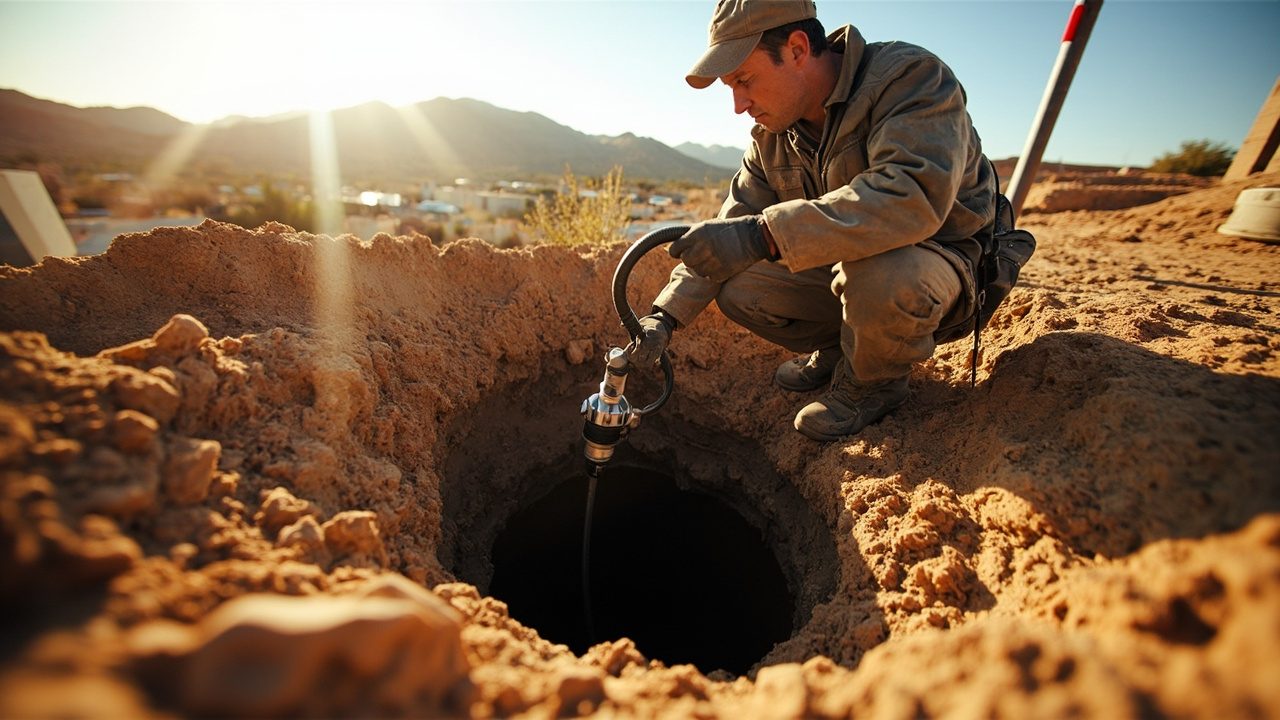
Call and first look
On the phone we ask which fixtures are slow, whether the lowest drain has backed up, and whether water use has stopped. On site, the technician confirms the main is closed, checks that the meter dial holds still over fifteen minutes with every fixture off, and finds the tank lid and the cleanout. The tank is pumped down first so the cleanout opens without head pressure. Then the camera enters the line and the locator marks where the fault is and its depth. You can watch the monitor as it runs.
Scope, approval and repair
Once the scope is approved in writing, the branch or run is isolated first, and the pump out finishes if the tank still holds solids. A repair at one joint means uncovering that joint, cutting out the cracked clay or cast iron, and joining new pipe with a proper transition band. A lined section is cleaned by hydro jetting and then cured in place. If the opening turns up more damage behind the joint, we stop and show you before going further.
Test and handover
Before we leave, the camera goes back down the repaired run and has to show continuous fall, clean joints and no standing water. Then the lid is closed and the walking path is cleaned. We walk you through the monitor view of the finished run and what the reading showed, and you keep the written scope with what was done. If the tank was the only fault, we tell you what a refill within days would point to.
Why local ground changes an emergency septic call
Permits follow the scope of the work. A pump out is a service visit. A new outlet line, a re-laid run or gas work is the kind of job that usually draws a permit and staged inspection, and the authority for your address makes the final call. Which office that is depends on whether the property sits inside city limits or outside them, so the address is one of the first things we confirm on the phone.
Ground and water conditions here punish a crew that works from habit. Monsoon runoff moves quickly through arroyos, channels and ponding areas and collects in low streets and dips. A tank or field sitting in one of those low spots takes water from outside the plumbing, and pumping it buys a short reprieve if the ground around it stays saturated. In the river valley the finer alluvial soil already holds water, so a drain field there can be full when the truck arrives. An unfamiliar crew pumps, leaves, and the homeowner makes a second call.
Housing age changes the repair as much as the ground does. Houses from the 1940s through the 1960s often have cast iron drains under the slab with clay or cast iron laterals. Houses from the 1970s through the 1990s moved to ABS or PVC drains and PVC laterals. Where old meets new, the joint needs a no hub band as a proper transition between cast iron and plastic, because glue on that seam fails under load. Clay laterals are jointed in short sections, and roots find those joints first. A rotten egg smell at a septic call gets the gas sequence before anything else, with everyone outside and the utility called from outside. Response runs across the county, so the answers you give on the phone decide who arrives first and with which equipment. We track these patterns through every job because they shape what happens when we arrive at your property and what tools we stage before we open the access points.
More detail on emergency sump pump failure is on its own page.
Price-checking is smart: marketplaces like Thumbtack publish typical cost ranges you can hold any quote against, including ours.
Working with Bedrock Plumbing El Paso on an emergency pump out
When someone arrives
You call and we ask four things: what the drains are doing, when it started, whether the lowest fixture has backed up, and where your main shutoff is. Those answers sort a same day visit from a scheduled one, and the septic line answers around the clock. You get an arrival window when the technician is on the way. If the job ahead of yours runs long, you get a call with the new window before the old one closes.
Protecting floors and yard
Before the hose comes off the truck, drop cloths go down along the walking path, and the route to the tank lid is marked so the hose stays off wet ground. Anyone standing in a wet room is moved out of it. Tools are staged on plastic sheeting. Everything drawn from the tank stays in the truck, and the last step is cleaning the walking path and closing the lid.
What moves the cost
Access moves the job most, meaning a buried lid or a cleanout under a slab or driveway, and putting the surface back. Depth and length of any dig come next, and hardpan slows both. One joint against the whole run is the largest fork, decided by the condition of the rest of that line. Matching old pipe to new and the grade you choose add scope. After hours, weekend and holiday dispatch raises the visit itself. You approve a written scope before work starts.
How technicians are checked
A new technician rides along with a lead before working alone, and the lead signs off on reading a camera monitor, marking a line with the locator and isolating the main. The current code cycle is studied as a team. On a line with mixed pipe materials or an unusual layout, a second technician looks at the footage before a scope is written.
You Have Questions,
We Have Answers
A full septic tank shows itself through slow drains, gurgling, and a wet or spongy patch above the tank. Sewage odor outdoors often arrives before any indoor symptom. Grass over the tank turning greener than the rest of the yard signals liquid rising toward the surface. Inside the tank, a healthy scum layer floats above the clear zone, and when solids build up to the outlet baffle, cloudy effluent starts moving into the outlet line and toward the field. A pumper can measure sludge depth through the lid to confirm.
A 500 gallon tank serving a busy household often fills its solids storage within a year or less. Small tanks leave little settling volume, so the clear zone between scum and sludge shrinks quickly. A garbage disposal, frequent laundry loads, or more than two occupants shortens the interval further. Tanks this size are common on older properties, and sludge that reaches about a third of the liquid depth is the usual cue that pumping is due.
A septic emergency is sewage backing into the house or pooling on the ground above the tank or field. Either condition means the tank or outlet line can no longer accept flow. Alarms sounding on a pump chamber and toilets that will not clear after water use stops also qualify. Sewage on the surface carries pathogens, so keeping children and pets away from the area matters as much as stopping the water.
A 1000 gallon tank typically needs pumping every three to five years for a small household. Occupant count drives the interval more than any calendar. Four or five people with a disposal can reach the sludge limit in two to three years, while one or two people may stretch past five. Inspection through the lid measures scum and sludge depth, and those readings, not the calendar, decide when the tank is drawn down.
Pumping cost depends on tank volume, hose reach, and lid access. A buried lid needs digging before the truck can pull anything. Heavier sludge and a full tank increase the volume hauled. Emergency timing, such as nights, weekends and holidays, raises the visit itself. Extra work like a filter cleaning or outlet baffle check adds scope. Because those factors vary by property, a phone description of the tank and lid location is how a scope gets set.
Tapeworm eggs can survive in a septic tank, since they resist the anaerobic conditions and settle into the sludge. Adult tapeworms need a living host, so they do not thrive there. The practical concern is exposure to raw effluent and pumped waste. Eggs can persist for weeks in cool, damp material. Keep people and pets away from surfacing effluent, and wash hands and boots after any contact with the tank area.
Cleaning a 1000 gallon tank means pumping the full volume, then rinsing the walls and checking the baffles. An outlet filter, if installed, gets checked too. Sludge that has hardened needs to be broken up with a jet or agitation before the hose can pull it. Cost moves up with buried lids, long hose runs and heavy solids. Quotes are set after the tank lid is found and the condition of the tank is known.
Twenty years without pumping is possible only with very light use, and it usually ends in damage. Solids build up until sludge passes the outlet baffle and carries into the drain field, where it clogs the soil pores. Field failure means trenches saturate and sewage surfaces. Replacing a field costs far more than routine pumping. A tank untouched that long may also have a corroded baffle or a cracked lid.
Holding tanks are pumped more often than septic tanks because every gallon stays in the tank. There is no drain field to release any of it. Cost follows the tank volume, hose distance, lid access and the number of trips needed if the truck fills before the tank is empty. Emergency or after-hours calls raise the visit. A high-level alarm sounding means the tank is near capacity, and pumping should be scheduled soon after.
Most households should not go more than three to five years between pumpings. The safe limit shifts with tank size, occupant count and disposal use. Warning signs before the interval ends include slow drains, gurgling, and effluent smell near the tank. Sludge at one third of the tank depth is the standard trigger. Waiting past that point moves solids toward the outlet and the drain field, which raises the chance of an emergency call.
Why caliche hardpan changes emergency septic work in El Paso
Ground decides both access and how the drain field behaves. On the mesas and foothills the soil is sandy and gravelly with layers of caliche hardpan, so a dig for a joint repair or a re-laid outlet run goes slower than in softer soil. That slower dig is why lining a deep run often comes up as an option. The river valley has finer alluvial soils that hold more water, so a drain field there takes less flow after a storm and a tank fills faster. Monsoon thunderstorms run off quickly through arroyos, channels and ponding areas. A tank or line positioned in a depression collects water from outside the plumbing, which shows up as a tank that holds in dry weather and overflows after a storm. Intense sun degrades exposed plastic, so any pipe above grade stays covered.
Permitted work is inspected at stages, and what the inspector looks at depends on what was opened. On a new or re-laid outlet run that means slope, joints and the transition where old pipe meets new, checked before the trench closes. Where a line is lined instead of dug, the check is the camera pass after curing. A pump out on its own has no stage to inspect, so the camera reading serves as the check. Knowing the stages up front changes the sequence, because the trench stays open and the backfill waits until the stage passes. Roots follow moisture, and a weeping joint is the wettest spot in dry soil, so joints get the closest look on any older clay line. The inspector confirms water flow and structural integrity at each stage before work advances.
Plumbing Services in The El Paso Area
Explore our service area and locate Bedrock Plumbing El Paso with ease. We're proudly local and serve the surrounding neighborhoods with fast response and honest pricing. Use the map to check our coverage area, or call us and we'll confirm in seconds.
Address:
Bedrock Plumbing El Paso, 221 North Kansas St, Suite 700, El Paso, TX, 79901
Additional Services We Offer
- 24/7 Emergency Plumbing Services
- Basement Flooding Pump-Out
- Burst Pipe Repair
- Emergency Sewer Backup Cleanup
- Emergency Sump Pump Failure
- Emergency Water Heater Repair
- Emergency Water Shut-Off Service
- Frozen Pipe Thawing & Repair
- Gas Leak Detection & Repair
- Main Water Line Break Repair
- Overflowing Toilet Repair
- Rapid Response Leak Repair
Plunging a toilet and closing the main are homeowner jobs, and you do not need us for either. DIY stops at anything soldered, anything on the gas line, anything behind a finished wall or under a slab, and any drain that is already backed up past a cleanout. A pressurized line sprays raw sewage across the person who breaks the seal. If the first visit finds work outside what we handle, we say so then and tell you who does.
Before you call, know which drains are slow and whether the lowest one has already backed up. Note when it started and what changed just before, such as a heavy wash day or a storm. Find the main shutoff and the tank lid if you can, and know whether anyone is in the house. Any age for the tank helps.
Last reviewed September 2026 by Dave Parker, Owner.