





What banging pipes usually mean in El Paso homes
The washer finishes a fill and a hard knock runs through the wall. Or you shut the kitchen tap and the pipe bangs behind the cabinet. The sound is loudest at night, when the house is quiet and one knock carries through every room. That is water hammer noise, and it sits on the supply side, the pressurised water, because a drain only makes sound while something upstream is running. A fast closing valve stops a moving column of water in a fraction of a second. The pressure spike then travels back along the line and slams the pipe against whatever holds it, which is why banging pipes seem to come from inside the wall instead of at the fixture you touched. If you have already snugged a visible strap and the noise came back, the source is the surge itself, and a strap will not remove it.
Each sound places the problem on a different segment. One hard knock right after a valve closes puts it on that fixture's branch, and pipes knocking in the wall near a washer usually trace to the washer's fast closing fill valve. A tick or creak that starts a few minutes after the heater fires runs along the hot line, where the pipe lengthens as it warms and drags across a strap or through a hole in the framing. Rattling pipes when water runs, loudest at one fixture, point to a loose strap near that branch. Humming water pipes that change pitch when a toilet refills or a faucet is half open put the fault at one worn fill valve or one scaled cartridge. When every fixture hums or bangs, the cause sits in the incoming pressure for the whole house.
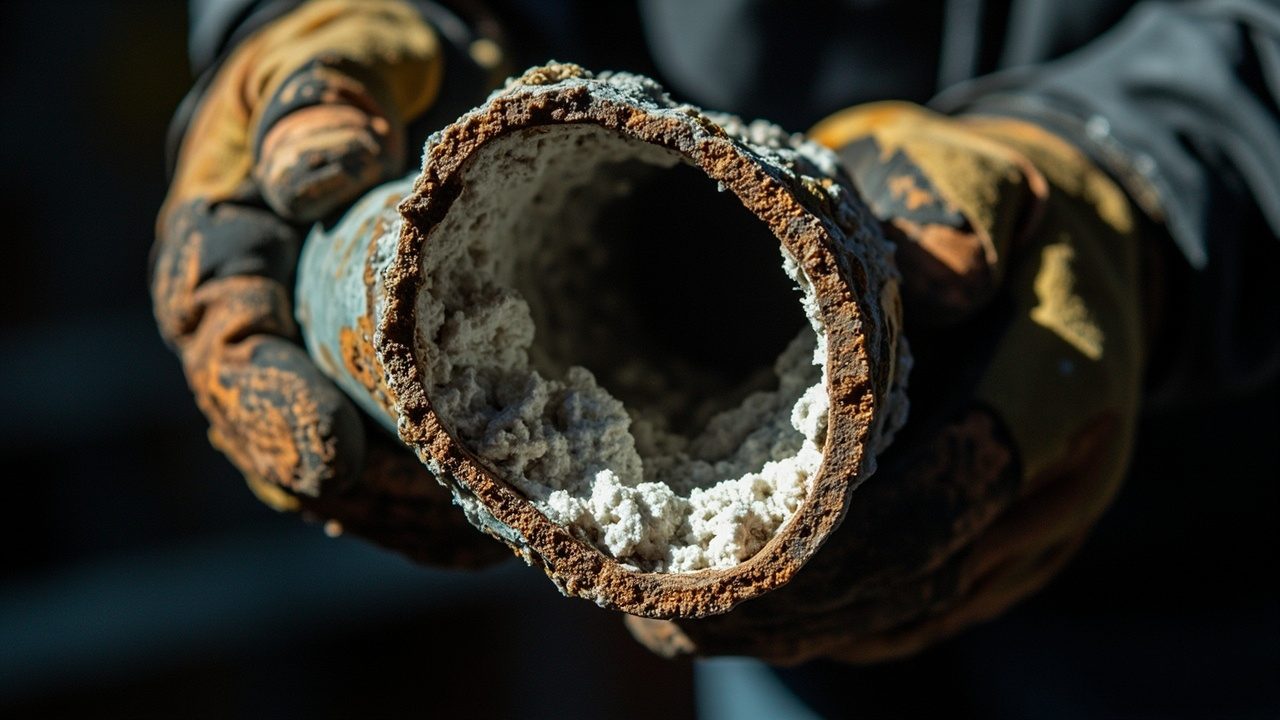
Local water changes the picture. The supply here tests moderately hard to hard, commonly around ten grains per gallon or more, and above about seven grains scale forms steadily in heaters and valves. Scale narrows the opening inside fixture valves, cartridges and aerators, and water pushed through a narrowed opening hums or chatters. A toilet fill valve wears the same way and can stick partway open. In older homes with galvanized supply the pipe corrodes from the inside and closes up, so the same flow moves faster through less pipe. Slab homes with copper run under or through the floor and a heater in a garage or closet add a third factor, because heat loads the heater and a closed system has no place to send water that expands.
Incoming pressure above the normal band makes the relief valve on the heater start weeping, and the tank seams then work harder every cycle until the heater fails years before it should. Once that valve drips alongside the banging, call today instead of waiting.
See cold water sandwich effect for how the related work is scoped and priced.
How we trace the noise before anything gets replaced
The first visit shrinks the problem before anything gets opened. You show us which fixture makes the noise and when, then stops and branches close one at a time until the noise stops, which puts the fault on a segment. A knock that follows only the washer puts it on the washer's valve. A tick that follows the heater puts it on the hot line, and noise at every fixture puts it on the incoming pressure. Then a screw on pressure gauge goes on a hose bib with everything in the house off, because a running fixture hides the real static number.
The reading this page turns on is the overnight pressure hold, with the gauge left on the hose bib. The night reading is written down, the morning reading is compared with it, and the two sit close together when nothing is building pressure. A close match sends the work to mechanical causes, meaning a strap, a valve or a spot where a pipe passes through framing. A morning figure far above the night figure means the heater is expanding water into a closed system with nowhere to put it, so a thermal expansion tank belongs in the scope. If the static number also sat above 80 psi, a pressure reducing valve joins it, since fixtures, supply hoses and heaters start failing early at that pressure. Nobody should replace a strap, a fill valve or a relief valve before this reading is in, because the part making the noise is often reporting on the system.
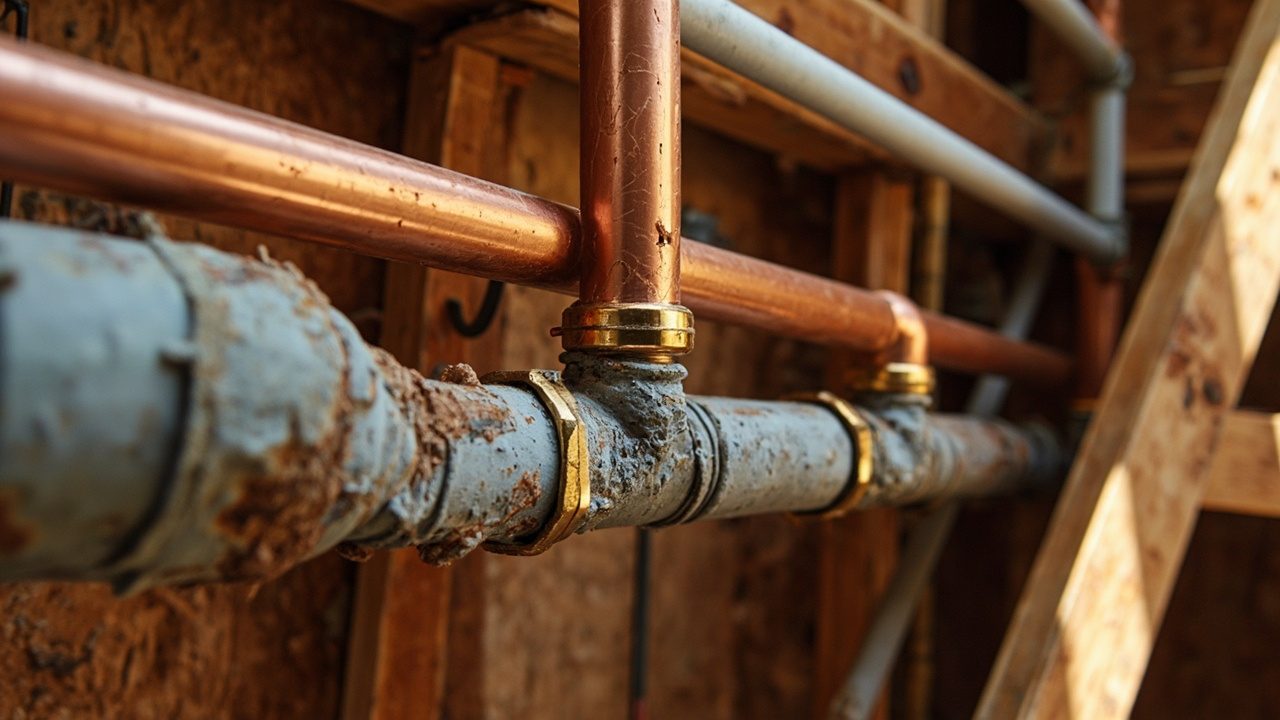
Where the isolation finds a run that has to be replaced, the choice is type L copper or PEX, and the house decides it. Copper is rigid, tolerates heat directly and costs more in material and labor, and a rigid run that lengthens with hot water needs supports that allow for the movement. PEX is flexible, so a home run layout from a PEX manifold puts fewer joints inside the walls and leaves fewer places to open drywall later. That holds for PEX A with expansion fittings and PEX B with crimp rings, and both have to stay out of sunlight and be protected where they pass through framing. Local water tips the choice toward treating the hardness before buying another heater or valve, since scale forms in them whichever pipe feeds them. Where new pipe meets galvanized, a dielectric union separates the metals. Repair against replacement is settled by what the isolation found, one loose strap or a whole run of the same age.
Our page on sediment buildup in pipes covers that side of the work in more depth.
Permit and inspection questions? Planning & Inspections is the office we coordinate with on every permitted El Paso job.
Ask which of these readings was taken before any part is replaced.
| Instrument | Good reading | Bad reading | What it changes |
|---|---|---|---|
| Overnight pressure hold with the gauge left | The morning reading is close to the reading taken the night before | A reading far above the night figure | The heater is expanding water into a closed system with nowhere to put it |
| Combustible gas detector and bubble solution on gas fittings | No alarm at the fittings and no bubble growing on the joint | Any bubble that keeps growing or any sustained alarm | The appliance valve gets closed before anything else happens |
| Water meter leak indicator with every fixture closed | The dial or the small leak wheel does not move over fifteen minutes | Any movement at all with the whole house off | Water is leaving the system somewhere you cannot see |
| Anode rod pull on a tank water heater | The rod still has sacrificial metal along the core wire | A bare core wire with the metal gone | The tank itself is now the part being eaten |
| Thermometer at the farthest hot tap | Hot water arriving around 120 degrees | Hot enough at the tap to scald a child in seconds | The first slug of water is whatever was sitting in the pipe |
| Screw on pressure gauge at a hose bib | Static pressure sitting in the 45 to 70 psi range with nothing running | Above 80 psi | Fixtures, supply hoses and water heaters start failing early |
How a noisy pipes call runs
Questions and isolation
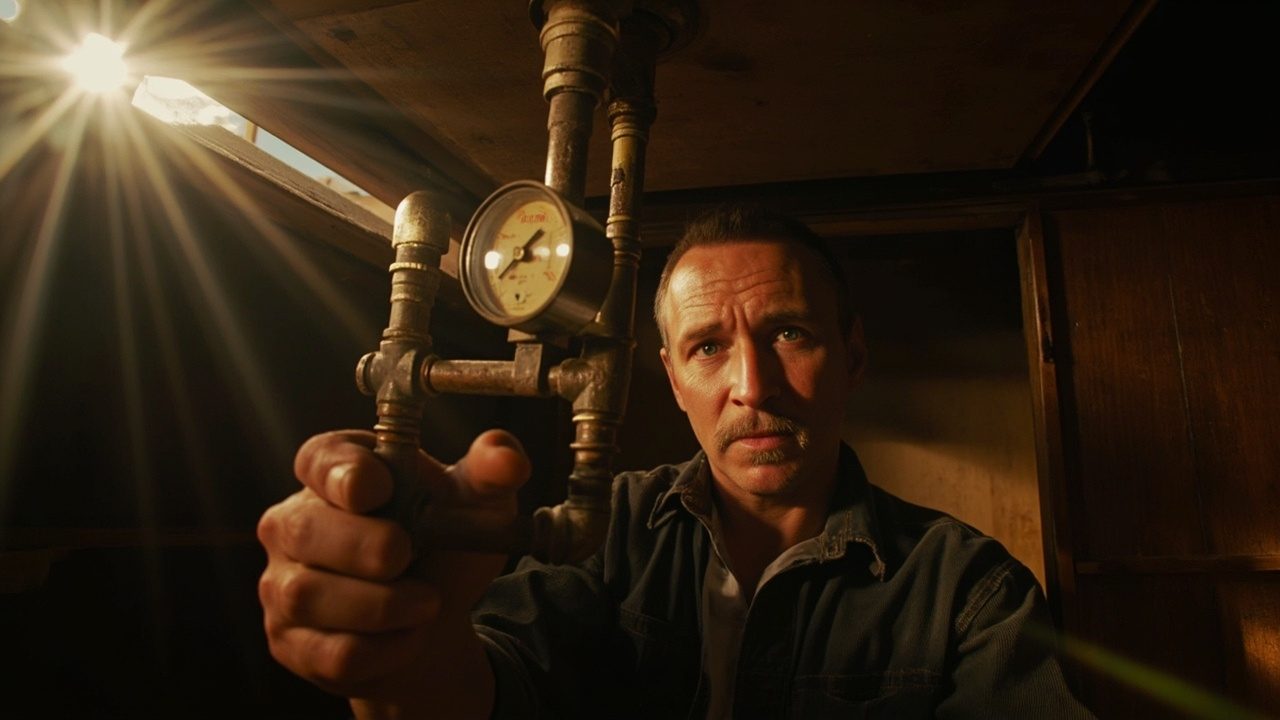
On the phone we ask when the noise happens, how old the heater is, and whether the relief valve is dripping. On site, you point out the main shutoff and the stops under the fixtures, and those are the only things you are asked to touch. We operate isolation valves in sequence to identify which one is leaking, and the pressure gauge connects to a hose bib with everything off. The overnight pressure hold belongs to the same visit, with the night reading written down for comparison against the morning figure. Nothing is opened until the readings have decided what the problem is.
Approval then repair
Once the scope is approved, the branch gets isolated first, and the main is closed only when the work needs it. The main operation follows in trade terms, which might be setting a thermal expansion tank, installing a pressure reducing valve, replacing a worn fill valve or angle stop, re-strapping a run where it passes through framing, or joining old pipe to new with a dielectric union. If corrosion or scale turns up behind a valve, or a pipe of a different material than described, we stop and show you before going further. You decide on anything beyond the written scope.
Readings before handover
Before we leave, the gauge goes back on the hose bib with everything off and has to read inside the 45 to 70 psi range. The fixture that hammered is run and closed while we listen at the wall, and the hot line is run to confirm the tick is gone. The night and morning figures from the overnight hold are the comparison, and on a corrected system they sit close together. You keep the written scope and the readings, and we walk you through what each one showed.
Why local knowledge changes a noisy pipe diagnosis
The local permit authority decides which of this work needs a permit, and the final call is theirs. Gas work and main line work usually need one, while a like for like fixture swap or a strap adjustment usually does not. The same noisy pipes job can sit under a different office depending on the address, which is worth asking about early.
A crew that does not work El Paso County regularly repeats a few predictable mistakes. The first is treating a ticking or banging line as a loose strap. Tightening it moves the noise for a few days while the heater keeps expanding water into a closed system, and the relief valve begins to weep. The second is expecting one pipe material per house. The oldest stock here has galvanized supply and cast iron drains, postwar slab homes have galvanized or early copper, homes from the 1970s through the 1990s have copper through the slab, and newer subdivisions have PEX manifolds. Partial repipes leave several materials in one house, and joining copper to galvanized without a dielectric union starts corrosion at that joint. In slab homes, a warm spot on the floor in one place points to a hot line under the slab, and a crew unfamiliar with that stock opens a wall when it should be listening at the floor.
The third is replacing a scaled heater or fixture valve without checking the water, so the new part scales on the same schedule and a second heater inside a few years is a water problem. A single hard knock after the washer fills and a hum that follows every tap are different jobs, and one fix applied to both wastes the visit.
Calls sort by what the water is doing. Banging with a relief valve that keeps dripping, or a stain spreading on a ceiling, gets a same day slot, and knocking that stops within seconds of a valve closing goes on the scheduled list. The phone questions settle that sort, and they also tell the technician which pipe material to bring fittings for, including the dielectric union where old galvanized meets copper.
If this sounds close but not quite your situation, how to prevent frozen pipes may be the better starting point.
Independent standards matter too, the EPA's WaterSense program sets the efficiency benchmarks we use when recommending replacement fixtures.
What a noisy pipes visit with Bedrock Plumbing El Paso looks like
When someone arrives
You call and we ask which fixture makes the noise, when it happens, and whether the relief valve on the heater is dripping. Those answers sort the call into a same day visit or a scheduled one. You receive a confirmed arrival window by phone. If the job ahead of yours runs long, you are told the new window as soon as it changes. Knocking that stops seconds after a valve closes is scheduled, and a relief valve that keeps dripping moves the visit up.
Protection and cleanup
Floor covering goes down from the door to the work area before a tool comes out, and the gauge, fittings and tools stay staged on it. Water is shut off only to the branch being worked when a stop can isolate it, so the rest of the house keeps running. If a wall has to be opened to reach a strap or valve, the opening is cut as small as that part requires. Old parts leave with the technician, and the last step is running each fixture to confirm the noise is gone and the floor is dry.
What moves the scope
Reaching the pipe moves the job furthest, because a finished wall, a tiled surface or a slab has to be opened and put back. A repair at one strap or valve costs less than replacing the run, and the condition of the rest of that run decides which applies. Matching existing pipe material and size raises the scope wherever old and new must be joined, since each pairing needs its own transition. Fixture grade and after hours dispatch add to it. The written scope follows the diagnosis and you approve it before work starts.
How technicians are checked
A new technician rides along with a lead on visits before working alone. The lead signs off on reading static pressure at a hose bib with everything off, setting up an overnight pressure hold, and joining old pipe to new with the right transition. Current code changes are read and discussed before they reach a job. On mixed pipe materials, or a reading that does not fit the symptom, a second technician looks at it before a scope is written.
You Have Questions,
We Have Answers
Stopping noisy pipes starts with finding which segment makes the sound, then fixing that cause. Water hammer usually needs an arrestor at the offending fixture or a corrected supply pressure. Loose runs need padded straps every few feet of horizontal pipe. Worn fill valves get replaced. Tightening one strap while a surge continues only relocates the knock, so identify the type of noise first. A single sharp bang points to a fast closing valve, while a steady hum points to a restricted valve or cartridge.
Most pipe noise is a nuisance, but repeated water hammer can loosen joints over time. Each surge can flex soldered fittings and stress washing machine hoses at their connections. Rattling from a loose strap does little harm beyond wearing the pipe surface. Watch for a wet spot near a fitting, a drip at a supply hose, or a knock that grows louder month to month. Those changes suggest a joint or fixture is being worked harder than it was built to handle.
A sudden change in noise usually follows something that altered flow or pressure. A worn washing machine valve, a supply stop that was partly closed after a repair, or a recent change in street pressure can each start banging overnight. Air can also return to the lines after a shutoff, causing sputtering and knocking until it clears. If one fixture started it, look there first. If every tap changed together, the cause is upstream of the house.
Pipes get quieter when the moving parts are secured and the surge is absorbed. Add cushioned hangers where a run touches wood or metal, and keep a few inches of slack where pipe passes through a stud. Water hammer arrestors installed close to washers and dishwashers absorb the shock of a closing valve. Opening a faucet at the highest point and draining the lines briefly can also refill any air chambers that have waterlogged and stopped cushioning.
Pipes get suddenly louder when a component fails or a condition changes. Common triggers include a washer valve that now closes faster, a cracked fill valve, and a strap that worked loose after a repair. Air chambers that fill with water stop cushioning shocks, so a house that was quiet for years can begin knocking with no other change. Note the fixture and timing of the first bang, because that narrows the search quickly.
Water pipes are noisy because moving water meets restrictions, sudden stops or loose supports. Sudden valve closure creates a pressure surge. Narrow openings make water whistle or hum as velocity rises. Hot pipes expand and scrape along straps, producing ticks and creaks. Long unsupported runs vibrate against framing. Worn washers in faucets can chatter when water squeezes past them. Matching the sound to its trigger identifies which of these causes applies.
Stop banging by absorbing the surge at the fixture that causes it and confirming the air chambers work. Install a water hammer arrestor on the washer supply, sized to the fixture unit rating on its label. Recharge old air chambers by shutting the main, opening the highest and lowest taps, and draining the system, then reopening slowly. Cushion any run that touches framing. If banging persists at every tap, a high supply pressure is the likely culprit.
Quiet noisy water pipes by matching the fix to the sound. Knocking calls for arrestors or recharged air chambers. Ticking calls for hangers with a small allowance for expansion. Humming calls for replacing the worn fill valve or cleaning the aerator that restricts flow. Squealing at one faucet usually means a worn washer or seat. Opening the main valve fully also helps, since a partly closed valve speeds up water through the gap and creates a whistle.
Banging with no water running usually comes from thermal movement or a pressure change. Pipes expanding after a heater cycle can pop against framing minutes after the last tap closed. A leaking toilet fill valve can also refill the tank briefly and shock the line without anyone noticing. Neighbors' demand can shift street pressure and set off a surge in a house with a failing air chamber. Listen for whether the sound repeats on a schedule.
A pipe about to fail gives visible signs more often than a distinct sound. Freezing water can produce creaking or cracking as ice forms, and a bulging or split pipe may whistle as water escapes through a pinhole. Hissing near a joint, drops of moisture, or a sudden loss in flow are stronger warnings than noise. If you hear hissing inside a wall, close the main shutoff and have a plumber look at it the same day.
Why hard water and mixed pipe eras change noisy pipes in El Paso
El Paso Water supplies a blend of surface water and groundwater and describes it as moderately hard to hard, so valve seats, cartridges and heater components collect scale steadily. The oldest homes, built from the late 1800s through the 1930s, carry galvanized supply that corrodes inward and narrows the bore, and the postwar slab homes carry galvanized or early copper with cast iron drains under the floor. Homes from the 1970s through the 1990s run copper through or under the slab, often with the heater in a garage or closet, and afternoons above one hundred degrees load that heater and the closed system around it. Newer subdivisions have PEX on manifolds, where each fixture has its own run. When a supply line under a slab has to be rerouted, caliche hardpan makes digging slow, so running the new line overhead gets weighed against breaking the floor. Heat is why the overnight pressure hold from the first visit carries the most weight where the heater sits in a garage, since the night and morning figures show how far expansion pushes the pressure.
Plumbing permits and inspections belong to the authority for the address, and the address matters. Inside city limits, work is inspected at stages during construction, while work outside city limits falls under the county or the neighboring town. Work that needs a permit has its inspection stages set by that authority, and the inspector's call is final. On a noisy pipes job, the work that reaches an inspector is usually the larger scope, such as a repipe or a heater replacement, where the inspector looks at supports, joints and the transition where old pipe meets new. Knowing that up front changes sequencing, because pipe stays exposed until its stage is passed and the wall closes afterward. Texas Gas Service is the utility for gas work on a heater swap, and a gas smell means everyone goes outside without touching a switch and the call goes to the utility from outside.
Plumbing Services in The El Paso Area
Explore our service area and locate Bedrock Plumbing El Paso with ease. We're proudly local and serve the surrounding neighborhoods with fast response and honest pricing. Use the map to check our coverage area, or call us and we'll confirm in seconds.
Address:
Bedrock Plumbing El Paso, 221 North Kansas St, Suite 700, El Paso, TX, 79901
Additional Services We Offer
Swapping a braided supply hose, cleaning a crusted aerator and closing the main shutoff are homeowner jobs, and you do not need us for them. DIY stops at anything soldered, anything on the gas line and anything behind a finished wall or under a slab, because a failed joint there floods or leaks gas. If the noise turns out to come from something other than the plumbing, we say so on the first visit and tell you who handles it.
Before you call, note which fixture makes the noise and what happens just before it, such as the washer finishing a fill or the heater firing. Know how old the heater is if you can, and find the main shutoff and the hose bib nearest the heater, where the gauge will go. Tell us if water is coming from the relief valve and whether anyone is home.
Last reviewed September 2026 by Dave Parker, Owner.