





How floodplain clay and retrofitted lines decide what fails here
Most homes here sit on layered river silt, clay and sand, and the clay layers swell when irrigation or a monsoon storm wets them and shrink as they dry. The dominant housing is the single story ranch house on a slab, with drain lines running under the concrete. When the clay moves the slab by even a small amount, the lateral under it moves too, and a joint that opens lets soil in, lets water out and gives roots a wet target. Water from a cracked line can wet the same clay further. The valley floor is flat, so storm water pools in low lots and streets and keeps the ground wet for longer.
Water and sewer service both come from the Lower Valley Water District, which also provides septic system services. The supply runs hard to very hard, so scale coats heater elements, tank bottoms, cartridge valves and aerators, and a second heater inside a few years is a water problem before it is a heater problem. Flushed wipes are the other local pattern, since the district has had to clear them from sewer lines in town. Many slab homes were connected to the sewer only when service reached their subdivisions, and some were on septic before that. Rural parcels still drain to onsite septic, so a backup can sit in a district main, a private lateral or a tank, and finding which one comes before any tool goes into the line.
The San Elizario Historic District holds the oldest buildings, thick adobe masonry from the 1800s that went up before indoor plumbing. Supply and drain lines were added later and run through additions, exterior walls or shallow trenches, where a hard freeze reaches them and where the route around masonry decides the whole job. Exterior changes fall under the city historic preservation rules. Manufactured homes on piers carry their lines under a raised floor, where frost and rodents reach them. Newer homes on the edges of town use plastic supply and drain piping, connected to district mains or to onsite septic where mains are not available, and desert sun makes any exposed plastic brittle.
Our technicians follow the workmanship standards promoted by the Plumbing-Heating-Cooling Contractors Association.
How Bedrock Plumbing El Paso runs a job here
Scope on a job comes from what the meter, the gauge and the cleanout show. A supply job starts with the meter leak indicator with every fixture closed, then again with the main closed, which puts the loss on the house side or the street side. A drain job starts at the cleanout. Because a line here may end at a district main or at a septic tank, the location of that end goes into the job notes before any clearing begins.
The technician who did the work checks the finished job, using the same measurement that found the problem. The meter dial is watched again with every fixture closed, static pressure is read again at a hose bib, and each fixture is run in turn. You are shown the readings. A new technician works beside an experienced one and is signed off by an experienced plumber only after running an isolation sequence, reading a gauge and handling a drain camera correctly on a live job. An unusual job, such as a retrofitted run through an adobe wall or a lateral where the footage shows a belly, gets a second technician's read of the footage and the readings before the scope is written.
When a visit turns up something outside the original scope, such as a scaled heater found during a valve swap or a second joint with roots, work on the original item continues only as far as safety allows. The new item is written up separately, with its own line in the scope, and you approve or decline it. The technician adds nothing on the spot.
Need something specific? Our plumbing services page breaks down exactly how we handle it in San Elizario.
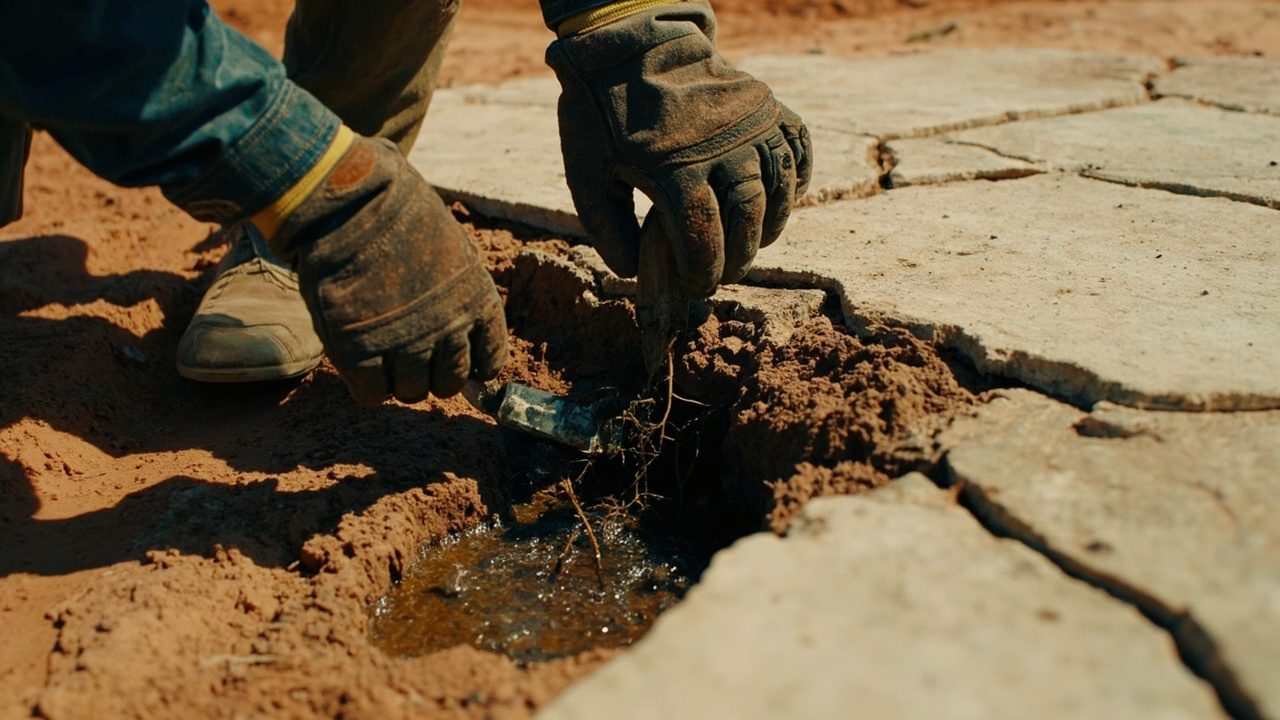
Waste path first
Every drain call begins by finding where the line ends. A slab home on a district main, a rural parcel on septic and an adobe addition with a retrofitted run each need different access and different tools. Locating the cleanout and walking the run takes a short while at the start, and it keeps a technician from jetting toward a tank or opening a slab in the wrong place.
Hardness reading
A hardness test strip or kit on the incoming water gives a reading at the tap, and tap water here usually lands in the hard to very hard range. A very hard reading tells us scale will build fast in tank heaters, tankless heat exchangers and valves, so flushing, descaling or a softener gets discussed before a replacement heater is priced. It separates a failed part from a water problem.
Code currency
Technicians work from the plumbing code the city adopts and check it against the permit authority when a job crosses from repair to replacement. Gas work and main line work draw permits and inspections more often than a faucet does. When a scope sits close to that line, the written scope says which side it falls on, and the permit authority makes the final call.
Valley housing mix
Adobe retrofits, slab ranch homes on clay, manufactured homes on piers and newer plastic piped houses on the edges of town each fail differently, and the split between district sewer and septic adds another question. Knowing those four housing types means the call opens with foundation type and cleanout location, so the right tools and the right access plan arrive at the first visit.
Residential, commercial and emergency plumbing work here
Residential work here is mostly leak repair, fixture and valve replacement, water heater work, drain clearing, sump pumps and gas line work inside the home. Slab homes send drain and supply questions under the floor, manufactured homes send them under a raised floor, and adobe retrofits send them through thick walls, so access decides the schedule as much as the fault does.
Commercial work turns on uptime. Grease line jetting, main line repair, booster and water heater work and scheduled kitchen drain service are planned around open hours and around where the building's waste goes, a district main or a septic system. Emergency work covers burst lines, active leaks, sewage backups, failed heaters and after hours calls, and the first job is closing water off and isolating one branch.
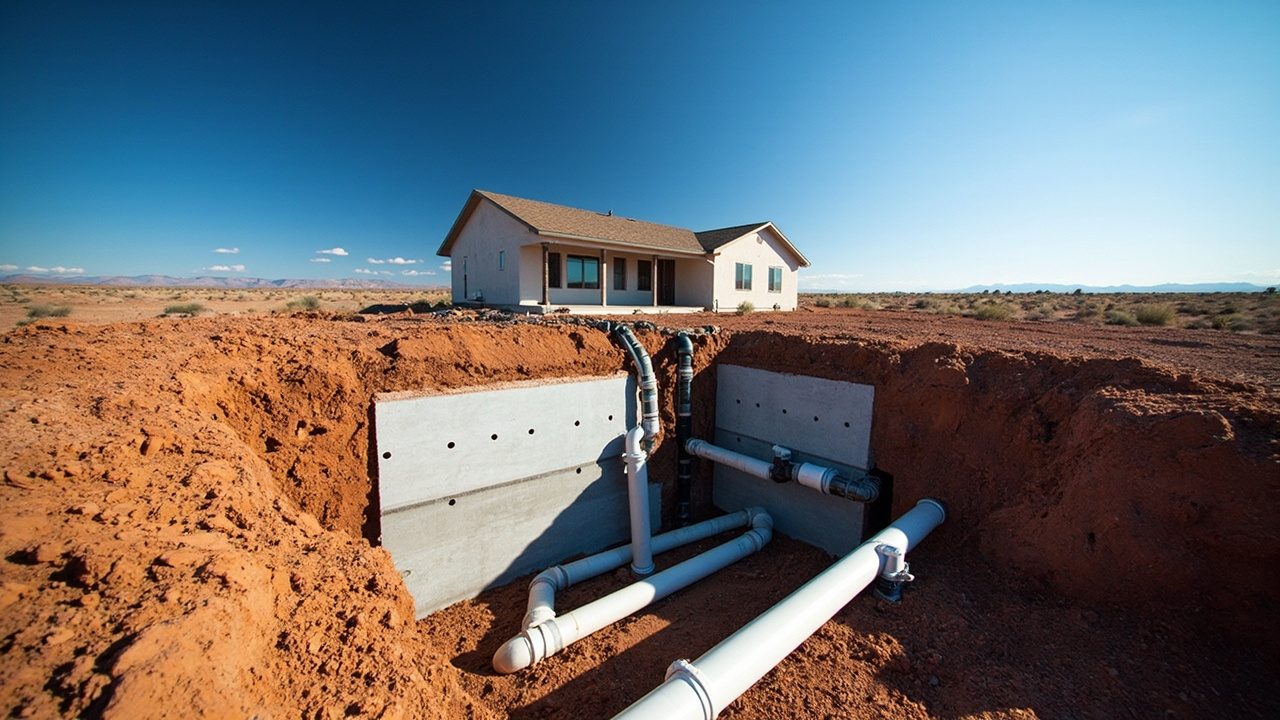
Residential drain and heater work
Residential work covers leak correction, fixture and valve service, water heater repair and replacement, drain clearing, repipe work, and gas line service inside the home. It suits an owner with a specific fault, such as a heater that runs out during the second shower or a drain that slows only when the washer runs. A typical retrofit job involves a cast iron drain corroding from the inside. Cast iron is heavy and quiet, and PVC or ABS is lighter, faster to install and louder through a wall. A partial replacement joins the two with a no hub band, because glue does not bond plastic to cast iron. On a heater, the anode rod is pulled first, and a bare core wire means the tank itself is now corroding. Headroom above the tank is checked before same day work is promised.
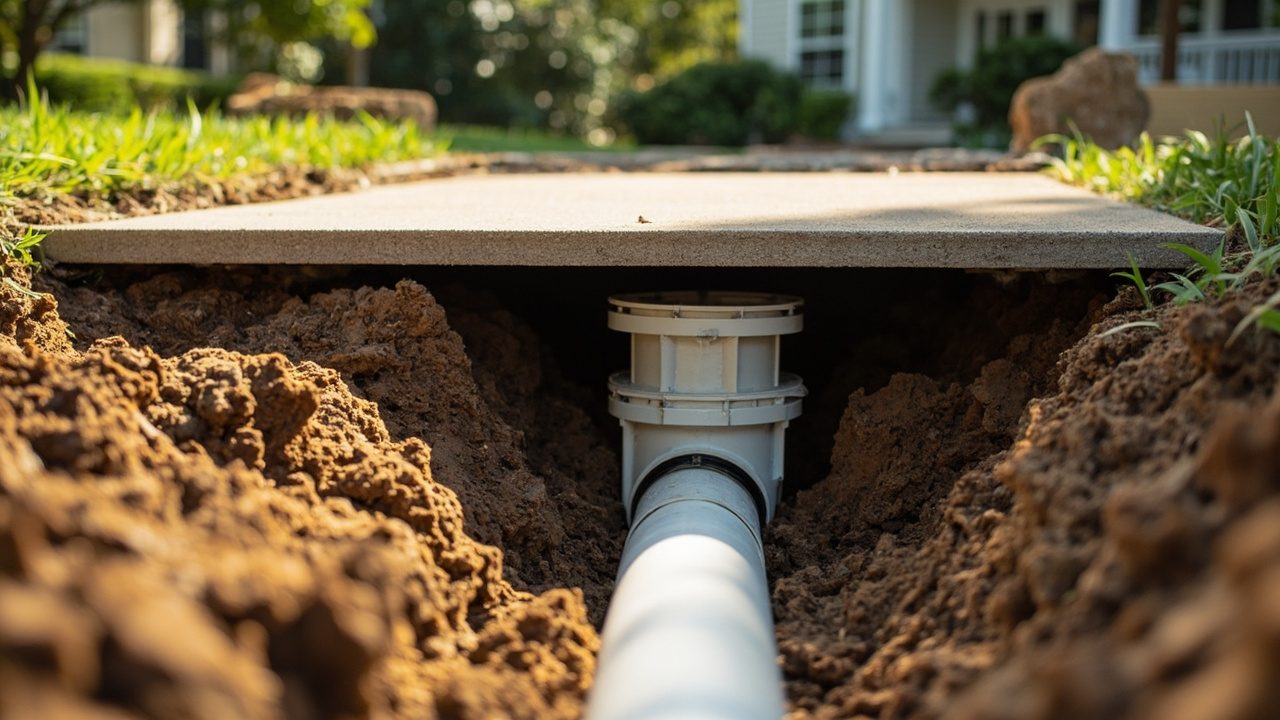
Commercial grease and main line service
Commercial work covers grease line jetting and maintenance, main line repair, water heater and booster work, restroom fixture programs and scheduled drain service for kitchens. Scheduling runs around opening hours, so a kitchen branch is jetted after service and the line is cameraed from a cleanout once it is clear, since a full line shows nothing but water. A building on septic adds a question about tank and drain field capacity that a sewer connected building never faces. The documentation covers the camera record of joints and slope, the locator depth of any repair, static pressure at the hose bib and the written scope. A property manager, a lender or a due diligence reviewer can use each of those as a record of what the line looked like on the day.

Emergency plumbing response
Emergency work covers burst lines, no water, active leaks, sewage backups, failed water heaters and after hours calls. A supply line split under a manufactured home after a hard freeze is the typical scenario. The first move on arrival is closing the main or the branch stop, because pressurised water escapes whether anyone is home or not. Then observe the meter dial with every fixture closed to detect whether water is leaving the system, and closing the main and watching again puts a moving dial on the street side. A sewage backup starts differently. Every water use stops, including the washer and the dishwasher, people and pets stay out of the wet area, and a line that is already full is not plunged. If you smell gas or rotten eggs, get everyone outside, leave the door open and call the gas utility from outside.
Common plumbing problems across San Elizario
A drain that slows or gurgles only when the washer runs is a restriction at one spot on the line. Wipes, paper and grease do not dissolve, so they catch on a rough joint, on a root that has entered a seam or on a low spot where clay has shifted a slab, and every flush adds to the catch. Where the line ends matters too. On a district sewer connection the blockage may sit in the lateral or the main, and on a septic parcel it may sit at the tank outlet or in the drain field.
Call today when a drain slows at the wash cycle, because paper and grease then catch at that same spot every day, and the line backs up into the lowest fixture in the building with no warning. Once water reaches a floor drain, stop every water use and keep people out of the wet area. Do not plunge a line that is already full.
One of our most-requested services here is shower & bathtub plumbing, see that page for pricing and process.
Freeze splits exposed lines
No water at one fixture while the rest of the house runs points to a split line at the coldest, least protected point, usually a hose bib or a run under a raised floor. Nothing shows until the ice clears and the line is under pressure again, and then a ceiling stain or a wet floor appears within hours. Close the main the moment water shows, and call the same day. Draining hose bibs before a freeze is a homeowner job.
Slab and retrofit leaks
A warm spot on the floor in one place puts a hot line under the slab, and a water bill that jumped with nothing wet puts a leak somewhere unseen, possibly inside a retrofitted wall. Close every fixture and watch the meter leak indicator for fifteen minutes, because any movement means water is leaving the system. Left alone, the leak keeps soil or framing damp, and a repair at one point becomes a floor or a wall opened wide.
Clay movement under slabs
Floodplain clay swells with irrigation and storm wetting and shrinks as it dries, so drain joints under a slab crack and open. A floor drain that backs up only while it rains, or a septic parcel where every fixture slows together, puts the fault in the ground outside the house. Stop all water use the moment a floor drain shows water, and restrict access to saturated zones.
Heaters never flushed
Hard water scales heater elements and tank bottoms, so a heater that has never been flushed runs out halfway through the second shower or sends rusty water for the first minute. Rust at the tap means the anode rod is likely gone and the steel tank is now the sacrificial metal. Call when the water runs rusty, because a split tank follows and the floor takes the whole volume.
Find the sign you have, then read across to see whether it can wait.
| Symptom or first sign | What is already happening | What it becomes if ignored | When to call |
|---|---|---|---|
| Roots at one clay joint | Paper and grease catch at that spot every day | The main backs up into the lowest fixture in the building with no warning | Now, the same day |
| A hairline supply leak behind tile | The framing stays damp | The pipe repair turns into a wall rebuild | This week, while it is still one part |
| Incoming pressure above the normal band | The relief valve on the heater starts weeping | The tank seams work harder every cycle and the heater fails years before it should | This week, while it is still one part |
| A toilet that runs after flushing | The flapper lets the tank refill all night and the fill valve cycles constantly | The valve wears and sticks open with the overflow carrying it away unnoticed | This week, while it is still one part |
What the first visit looks like
The first stop is the water meter and a hose bib. The leak indicator with every fixture closed and a screw on pressure gauge with nothing running show whether water is leaving the system and whether static pressure sits in the 45 to 70 psi range, and that takes about fifteen minutes. On a drain call the cleanout comes first. Before you call, know when the problem started, what changed just before it, how old the heater or the line is, where the main shutoff and the cleanout are, and whether anyone is in the house right now.
From routine maintenance to 24/7 emergency plumbing services, the same local crew handles every call.
Confirmation and arrival window
The person who answers logs your symptoms and tells you the arrival window before the call ends. The technician phones when close, so you can meet them at the meter or the cleanout. If the job ahead runs long, you hear about the shift before your window closes. Until arrival, keep the main shut if water is escaping, and keep every fixture off if a drain is backing up, including the washer and the dishwasher.
Arrival and walkthrough
The technician introduces themselves, lays floor covers down before stepping inside and asks you to walk the problem with them. You show the stain, the slow drain, the heater and the main shutoff, and you say what changed just before it started. Nothing is opened, cut or disconnected during the walkthrough. Slab floors, adobe walls and finished tile get protected first, since reaching the pipe and restoring the surface is usually the larger half of the repair.
Handover and cleanup
Before leaving, the meter dial is checked with all fixtures shut down, static pressure is repeated at the hose bib, and any camera footage of the repaired line is shown to you. The thermometer at the farthest hot tap is read after the tap has run a full minute, and the heater setting is explained as a trade between scald risk and a clean tank. Debris and cut pipe leave with the technician, and you keep the written scope with the readings.
From your call to finished work
Most jobs run two visits. The first settles where the fault is, and access, meaning whether a wall, a slab, a crawlspace or a ceiling below has to be opened, decides whether the second happens the same week. Where a scope needs a permit, Bedrock Plumbing El Paso pulls it, and the permit authority decides whether it applies.
Three steps carry a job from the first call to a measured finish, and each one produces something you can check, a log, a written scope and a set of readings. Water stays on to the rest of the building whenever a single branch can be isolated.
Symptoms logged on the call
On the call we log what you see, when it started, what changed just before, whether the house sits on a slab, piers or adobe, the location of shutoff and cleanout points, and occupancy. Water escaping under pressure gets sent tonight. A drain that slows only at the wash cycle can take the first available window. The foundation type decides what goes on the truck.
Written scope you approve
Diagnosis works by isolation, closing the main and then branches until the loss stops, and it produces a written scope listing each item separately. The scope separates a repair at one point from replacement of a run, access and surface restoration, any permit item, and the transitions between old and new pipe. It also states what happens if the opening finds more. Nothing starts until you approve it.
Measured before signoff
Work is done to the plumbing code as adopted here, then measured. The meter dial holds still with every fixture closed, static pressure stays between 45 and 70 psi, and each fixture is run in turn while the lowest fixture in the building, the one that backs up first, is watched for any rise in water. Where the scope needed a permit, the authority's inspection follows.
Codes, permits and inspections for plumbing work here
The City of San Elizario Chief Building Official is the permit authority for plumbing work inside the city limits. The city requires a building permit to install, modify or remodel work there, so a full water heater replacement, a repipe or a main line repair is permit work, and a like for like repair such as a flapper, a braided supply hose, a faucet cartridge or an angle stop usually is not. Modifications to the gas line or changes to the main distribution system trigger permitting more often than fixture repairs do. The final call belongs to the authority. Bedrock Plumbing El Paso checks which side of that line a scope falls on before the written scope is issued, and the city also regulates manufactured housing through its manufactured housing ordinance, so a supply line under a raised floor gets the same check.
Compliance is checked in two passes, and ours comes first. On supply work, static pressure is read at a hose bib with everything in the house off, then read again after an overnight hold. A morning reading far above the night figure means the heater is expanding water into a closed system, and the thermal expansion tank has failed or is missing. Above 80 psi, fixtures, supply hoses and heaters start failing early, and a pressure reducing valve is normally fitted. On gas work, the combustible gas detector finds where to look and bubble solution on each joint proves it, and a bubble that keeps growing closes the appliance valve before anything else happens. On drain work, the camera runs from a cleanout after the line is cleared, and the run has to show continuous fall to the main with clean joints. Where the scope needs an inspection, the authority sets the stages, and our readings are recorded in the written scope when the inspector arrives.
Materials standards decide whether a repair holds. Type L copper is rigid, tolerates heat directly and is soldered, with a dielectric union wherever it meets steel. PEX A with expansion fittings and PEX B with crimp rings both have to stay out of sunlight and be protected where they pass through framing, which matters under desert sun. A cast iron hub stack that meets new PVC or ABS gets a no hub band as the transition. On a toilet reset, the closet flange is checked for a solid, level seat before a new wax ring goes on. Hose bibs carry a vacuum breaker, and exposed plastic fittings that have turned brittle in the sun are replaced with protected runs.
The Texas State Board of Plumbing Examiners publishes the rules that govern work like this in your area.
Camera after clearing
A full line shows nothing but water, so the line is cleared first and the drain camera with a locator goes in from a cleanout second. Standing water part way along a level run means a belly, and roots at a joint mean the repair belongs at that joint. The locator marks the spot and the depth on the surface, which separates one joint from a re-laid run before any soil or concrete is opened.
What moves the price
Reaching the pipe and restoring the surface move a job most, so a leak under a slab or inside a finished wall costs more to reach than to repair. Depth and length of excavation come next, then repair at one joint against replacement of a run. The city collects permit and inspection fees under its building code ordinance, and gas work carries them more than a faucet does. Heater grade and after hours calls raise the job.
Timelines and benchmarks
A drain job takes the time to clear the line, camera it and mark the fault, and a slab repair takes longer than one above the floor because the surface has to be opened and restored. Skipping the meter test saves minutes and hides the cause. Finished work reads a meter dial that does not move over fifteen minutes with every fixture closed, static pressure holding steady and a camera run with continuous fall to the main.
Which office applies
Work outside the city limits in unincorporated El Paso County falls under a different authority, so the location of the parcel decides which permit process applies. Parcels on onsite septic add a second question, because the water district also provides septic system services. Confirming the address and whether the parcel sits on a district sewer main or on septic happens on the first call, before any permit question is answered.
Locate, measure, permit, confirm
Answers for San Elizario Homeowners
A plumbing inspection checks supply pressure, drain flow, fixture function, water heater condition and visible leaks. Pressure is read at a hose bib, and a reading above 80 psi is flagged. Inspectors look for a temperature and pressure relief valve with a discharge pipe, shutoff valves that turn freely, and traps that hold water. Under sinks they look for corrosion, green crust on copper and wet cabinet floors. A drain camera can add a record of joints and slope in the sewer lateral.
Homeowners policies usually cover water damage from a sudden pump failure but exclude the pump itself. Many also exclude seepage or backup unless a water backup endorsement was added. Claims are often denied when the pump was old, unmaintained or without power during a storm. Photos of the wet area, the failed float switch and the pump's age plate help the file. Read the policy's backup and overflow wording, then confirm details with the agent who wrote it.
Sediment buildup is the most common water heater problem, causing popping noises, slow recovery and early tank failure. Minerals settle on the tank bottom and insulate water from a gas burner, so the steel overheats. On electric units, scale coats the lower element until it burns out. A tank that has never been drained often shows rust at the tap once the anode rod is consumed. Flushing yearly slows this, and a hardness test explains how quickly it will return.
San Elizario follows the International Plumbing Code for plumbing work. The city does not publish a fixed rulebook that a plumber can recite from memory, so the adopted edition and any local amendments should be confirmed with the permit office before a scope is written. Gas line changes, water heater replacement and repipes draw permit review most often. Technicians should record which items fall under permit in the written scope, so the inspector sees the same list the owner approved.
Sump pump replacement cost varies with pump type, horsepower, basin condition and discharge routing, so no honest average exists. A submersible unit usually costs more than a pedestal pump but handles debris better. A cracked basin, a stuck check valve or a discharge line that runs uphill raises the work. A battery backup pump adds parts and wiring. Pit depth and how easily the old pump lifts out also change labor time.
Installation price for a hot water heater turns on tank size, fuel type, venting, permit needs and access. Replacing a like-for-like electric tank in an open utility closet is quicker than converting a gas unit to a new vent path. Code items add material and time, such as a drain pan, a discharge pipe, an expansion tank and a gas shutoff. Attic installs and tight closets lengthen labor. Ask for the scope itemized by these drivers.
Plumbing inspection cost depends on who performs it and how deep it goes, so no single figure applies. A visual home inspection sits at the light end. Adding a sewer camera run, a pressure test or a gas leak check lengthens the visit and raises the price. Permit inspections by the authority are billed as part of the permit rather than by the plumber. Property size, the number of fixtures and whether the sewer cleanout is reachable also move the cost.
Call a plumber who handles water heaters, and shut off the heater's cold supply valve first. Bedrock Plumbing El Paso takes water heater calls at (915) 350-8242, so describe the leak, the missing hot water or the smell. If the unit is gas and you smell gas, leave the house and call the gas utility from outside instead. Turn the gas control to pilot or off, and switch off breaker power to an electric heater before anyone touches it.
Labor for a 50 gallon water heater install varies with the site, so no single number applies. A ground-level electric swap in an open area takes the least time. Gas models add venting, a gas connector and a leak test, and a tight closet or attic adds hauling time. Removing a heavy full tank, replacing corroded shutoffs and fitting an expansion tank all extend labor. Permit work is separate. Ask that labor be listed apart from the tank cost.
Plumbing Services in The San Elizario Area
Explore our service area and locate Bedrock Plumbing El Paso with ease. We're proudly local and serve the surrounding neighborhoods with fast response and honest pricing. Use the map to check our coverage area, or call us and we'll confirm in seconds.
Address:
Bedrock Plumbing El Paso, San Elizario, TX 79849
Plunging a toilet, cleaning an aerator, swapping a flapper or supply hose, and draining a hose bib are homeowner jobs. DIY stops at anything soldered, anything on the gas line, anything behind a finished wall, and any drain backed up past a cleanout. Electrical circuits water has reached belong to an electrician. If a visit turns up either, we say so and tell you who handles it.
Last reviewed September 2026 by Dave Parker, Owner.