





What a slow floor drain means in older El Paso commercial buildings
Every ground floor fixture drains slowly, and the lowest one, a mop sink or a floor drain, holds a ring of standing water after the upstairs restrooms have been used. A single slow fixture points to a trap or a branch, while every fixture slow with the lowest one backing up points to the main. Drain water only escapes while something upstream runs, so the symptom shows at restroom peaks and clears overnight, and it gets logged as a nuisance for weeks. You may have had the line cabled already, and it ran freely for a few days before slowing again.
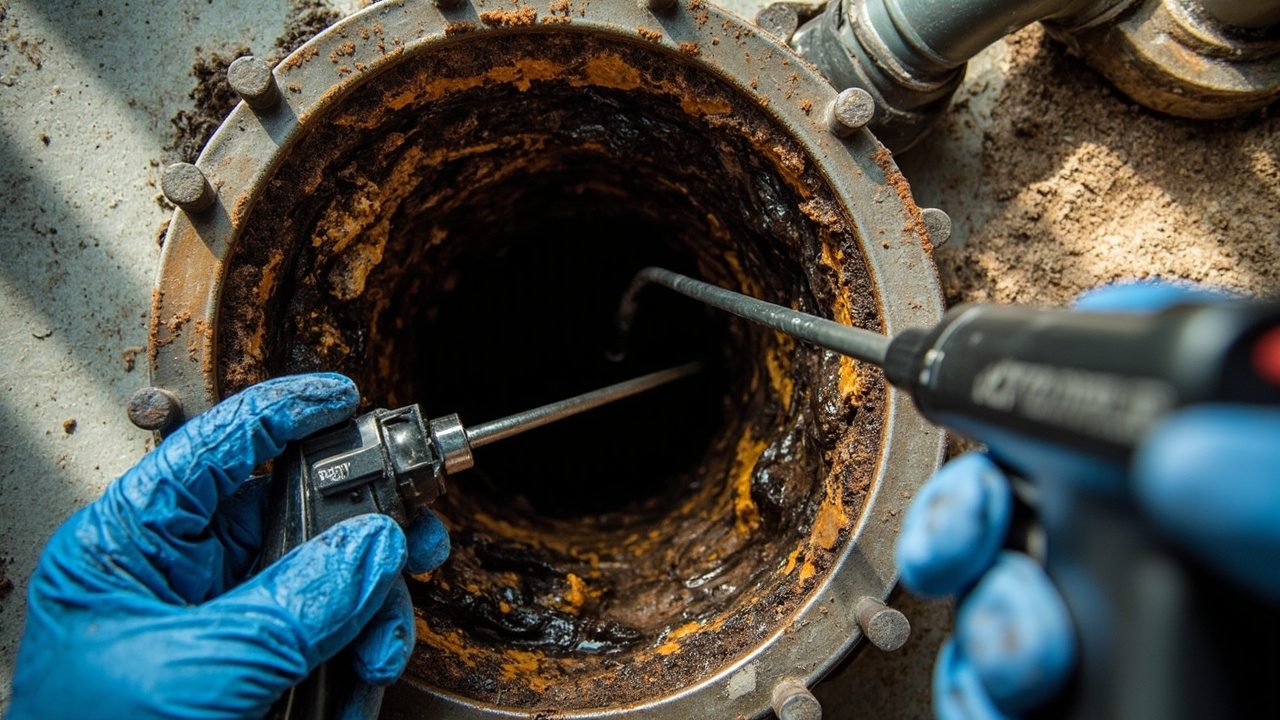
Older commercial buildings in Downtown El Paso, from the late 1800s through the 1930s with later infill, commonly have cast iron drain stacks and long horizontal runs that need camera inspection and descaling. Cast iron corrodes from the inside, and the rust scale it sheds hardens into rough nodules along the pipe wall. Paper and grease catch on those nodules, and a horizontal run with little fall gives them time to settle. Infill work often ties plastic into the old iron, so one building can carry several pipe materials between the fixture and the lateral. Long runs matter because more length between cleanouts means more places for a restriction to form and fewer ways to place it from the surface.
Hydro jet drain cleaning sends water through a hose to a nozzle that throws jets backward against the pipe wall, which scours grease, scale and root growth off the full circumference. A cable bores a hole through the middle of a blockage and leaves the wall coated, so the line slows again. High pressure pipe cleaning suits long iron runs and kitchen branches for that reason, and the camera then shows whether the wall underneath is still sound. A grease coated kitchen branch responds the same way.
Call today when the lowest fixture has backed up even once. The clay sewer lateral outside the building was jointed in short sections, and roots follow moisture, so a weeping joint is the wettest spot in dry soil. Roots at one clay joint, then paper and grease catch at that spot every day, then the main backs up into the lowest fixture in the building with no warning. From that point every restroom or kitchen on the line is out of service until the restriction clears, and the downtime lands on every occupant of those floors. Before you call, shut down water use upstairs so nothing flushes into a full line.
More detail on apartment complex plumbing is on its own page.
Our technicians follow the workmanship standards promoted by the Plumbing-Heating-Cooling Contractors Association.
How the line is cleared, then mapped, before a scope is written
The sequence follows where the water is going. The technician first places the restriction by asking which fixtures are slow, since one slow fixture is a branch and multiple slow fixtures with the lowest one backing up indicate the main. Water use upstairs is shut down so nothing flushes into the line being worked. At the cleanout, floor protection goes down and the flow stays controlled, because a line under head pressure empties onto whoever opens it. Commercial hydro jetting then clears the line before anything else, since a full line shows nothing but water. Only after the line is clear does the drain camera with a locator go in from that same cleanout, run the whole length, and turn a symptom into a spot and a depth.
The camera reading decides the scope. Continuous fall to the main, clean joints and the pipe wall visible along the full run mean jetting was the whole job, and the next interval is set by what the line carries. Standing water part way along a level run is a belly in the line, and jetting cannot correct it because the fall itself is wrong. Roots at a clay joint put the repair at that joint while the rest of the line stays in service. Scale nodules along cast iron call for descaling, and heavy corrosion along one segment points toward replacing that segment. The locator marks the spot on the floor and reads the depth, and depth decides whether opening the ground is a small job or a large one. A line already cleared several times raises the same fork, a maintenance schedule against one excavation, and the footage shows which one applies.
The comparison after a bad camera reading is trenchless lining against open cut replacement, and local ground decides it. Caliche hardpan slows every trench, and older buildings carry finished floors and structure on top of the line, so lining wins wherever the camera shows a host pipe that is still round with continuous fall. A belly pushes the other way, because lining cures a new pipe inside the old one along its existing slope and only open cut lets you correct the fall. Depth and length from the locator settle the remaining cases, and a run under a finished floor tilts toward lining sooner than a run under open ground. Sewer jetting service comes before either option, since lining needs a host pipe cleaned back to its wall.
Our page on commercial backflow prevention & testing covers that side of the work in more depth.
Permit and inspection questions? Planning & Inspections is the office we coordinate with on every permitted El Paso job.
Narrow this to two options before calling, then ask which one suits the house.
| Option | The numbers a buyer weighs | Best suited to |
|---|---|---|
| Trenchless lining against open cut replacement | Lining cures a new pipe inside the old one with a small loss of inside diameter | Runs under a slab, a drive or mature trees |
| Type L copper against PEX | Copper is rigid, tolerates heat directly | Repipes where the existing layout sets the method |
| Salt softener against a salt free conditioner | An ion exchange softener removes hardness minerals and needs salt and a drain | Hard water houses weighing salt against upkeep |
| Sump pump selection | Sized by horsepower against the vertical lift plus pipe run it has to push through | Basements with a real lift to the discharge |
| Cast iron drain against PVC or ABS | Cast iron is heavy and quiet and corrodes from the inside over decades | Drain replacement under a finished house |
How a jetting call runs
Call, map, clear
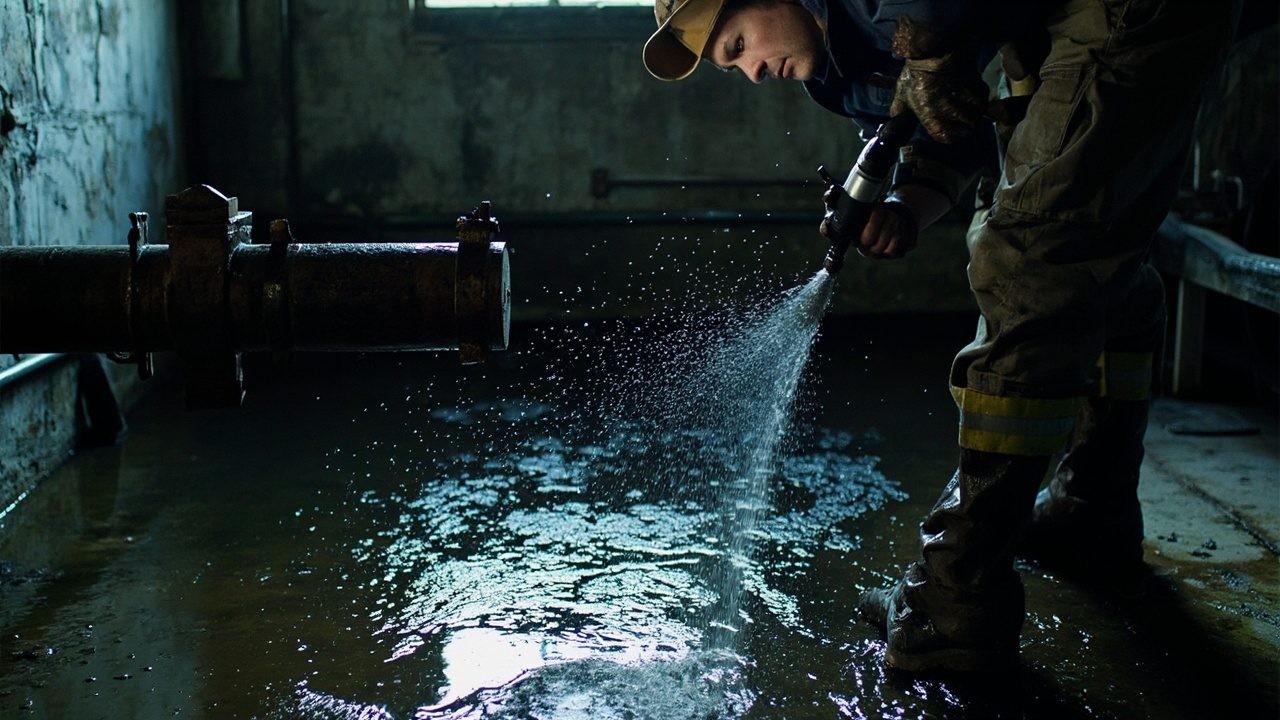
The call sorts the visit. You describe which fixtures are slow, whether water backs up at the lowest drain, and where the cleanout is. On site, the technician confirms that pattern by running the fixtures one at a time, which places the restriction on a branch or on the main, and then shuts down water use upstairs. Floor protection goes down, the cleanout opens under control, and the line is jetted clear. The camera and locator go in only after that, from the same cleanout, and you can watch the footage on the screen as the pass runs.
Written scope, your approval
Once the camera pass is finished, the technician writes the scope from what the footage and the locator showed, and you approve it before anything beyond the clearing begins. Where the wall is sound, the scope is a jetting interval. Where a joint holds roots, a belly holds water or the iron is corroded through, the scope is a repair at that spot or a run replaced by lining or open cut. After approval, isolating the branch comes first. If something turns up behind a wall or under the floor that the footage did not show, work stops and you see it before going further.
Camera proof before leaving
Before we leave, the camera descends again from the same cleanout to verify proper slope toward the main, with joints and pipe surfaces clearly visible throughout. Any pooled water indicates a belly and is marked with its locator depth. Fixtures then run together, loading the line the way restroom peak does. You walk the footage with the technician and keep the recording and the written notes, which a lender, an underwriter or a board reviewer can read without a technician in the room.
Why long iron runs in older buildings punish a rushed crew
Jetting alters no pipe, so the permit question begins where the camera result turns into a repair. Main line repair or replacement usually needs a permit, while a like for like fixture swap usually does not, and the final call belongs to the local plumbing authority. Whether a backwater valve or a backflow device belongs on the line is that authority's decision as well. Downtime is the liability an owner carries, so the visit is written up in terms a facilities manager can hand to a lender or an underwriter: what was cleared, what the camera found, and what is scheduled next.
Older central buildings mix materials, and a crew working from one assumption pays for it. Expecting a single pipe material from the cleanout to the lateral, a crew runs a nozzle into cast iron that was tied to plastic during an infill repair, and the transition catches. Opening a cleanout on a full line without floor protection empties the head pressure onto the floor and the person holding the cap. A crew that quotes an open cut without allowing for caliche hardpan produces an excavation that runs longer and wider than the scope said. Gluing cast iron to plastic where a no hub band belonged leaves a joint that fails at the first movement of either pipe. Treating every restriction as a jetting job leaves a belly holding water, and treating every restriction as a replacement job removes iron that descaling would have kept in service.
The housing stock sets what a technician finds. Buildings from the late 1800s through the 1930s carry cast iron drains and vent stacks with clay sewer laterals. Postwar slab construction from the 1940s through the 1960s put cast iron drains under the floor. The 1970s through the 1990s brought ABS or PVC drains and PVC laterals, and newer work is PVC throughout. Response across the metro follows the answers on the phone, so a backed up main goes ahead of a slow branch, and the footage from a first visit supports a repair phased across budget cycles.
See hydro jetting vs. snaking for how the related work is scoped and priced.
Your local utility, El Paso Water, publishes service and water-quality information every El Paso homeowner should know.
Working with Bedrock Plumbing El Paso on a jetting job
How the visit gets booked
The person who answers asks which fixtures are slow, whether the lowest drain has backed up, whether the building is occupied and where the cleanout sits. A backing up main sorts into a same day visit, and a slow branch sorts into a scheduled one. You get a confirmed arrival window on that same call. If the job ahead of yours runs long, the person who booked you moves the window with you directly, so nobody waits in the building on a guess.
Protection around the drain
Before a cleanout cap comes off, the floor around it is covered and a wet vacuum stands beside it, because a full line under head pressure empties onto the floor. The jet hose is staged along a runner so it never drags across finished flooring, and water use upstairs stays shut down for the run. Debris flushed from the line is caught at the cleanout and bagged for removal. The last steps are running clean water through the fixtures and wiping the floor.
What moves the scope
Access moves the job furthest, meaning a cleanout at grade against a line behind a finished wall or under a slab that needs its surface restored. Depth and length of any excavation come next, with caliche slowing every dig. The largest fork is a repair at one joint against replacing the whole run, and the condition of the rest of the run decides it. Matching old pipe to new, fixture grade and after hours dispatch follow. Hydro jetting cost tracks line length and what the run holds. You approve the written scope before work starts.
How technicians earn sign off
A new technician rides with a lead until the lead has watched them run a camera the full length of a line from a cleanout and read the locator depth correctly. The lead signs off on controlled flow at an opened cleanout before that technician works alone. On a line with mixed materials or a suspected belly, a second technician reviews the footage before a scope is written, and the current code cycle is studied before it reaches the field.
You Have Questions,
We Have Answers
Interval follows what the line carries, so a restaurant grease branch and an office stack run on different schedules. Kitchen lines often need jetting every few months because fat rebuilds a coating on the wall. Office and retail lines with clean camera footage can go a year or more between visits. Use the camera footage from the last visit to set the next interval, and shorten it if the wall shows fresh buildup.
Results last as long as the cause stays out of the pipe. Jetting scours the wall to bare metal or clay, so a grease line that is jetted but keeps receiving fat will coat again within weeks. A line with no grease load and no root entry can stay clear for years. Roots regrow from an open joint, usually within one to two growing seasons, so a joint with roots needs repair rather than repeat jetting.
Risk comes mostly from pipe that is already weak, since water at high pressure finds every crack. Thin, heavily corroded cast iron can open at a wall already rusted through. Offset joints and cracked clay can lose more material to the jet than to the blockage. Nozzle choice and pump pressure matter, and a camera run first shows whether the wall can take it. A line with an unknown condition gets a lower pressure start.
Consumer jetting kits exist, but they carry limits a plumber would spot at once. Small electric units run at low flow and pressure, and the hose lacks the length for a long horizontal run. A hose fed blind into cast iron can snag on a nodule or an offset joint. Backflow from a full line out of an opened cleanout is the larger hazard, since the wastewater arrives with head pressure behind it.
Jetting is a good idea for lines coated with grease, scale, silt or root hair. It works best when a camera confirms the pipe wall is sound. A cable leaves a coated wall behind, while a jet strips it. Jetting is a poor fit for collapsed pipe, a belly holding water or a broken joint, because none of those is a buildup. A camera run after the pass shows which case applies.
Owning a rental jetter does not make the job safe, since the hazards sit in the line. Rental units run at pressures and flows that can damage aged clay or thin cast iron, and no locator comes with the rental to show where the hose ended up. Hose whip at the cleanout opening can injure a hand. Keep the machine away from any line with unknown materials or a history of cracks.
A pressure washer cannot stand in for a jetter, because the flow and the nozzle geometry differ. A washer delivers a narrow forward stream at a low flow rate, and a sewer jet nozzle throws rear-facing jets that pull the hose forward while scouring the wall. A washer wand has no self-propelling action and no hose reel, so it cannot travel far into a horizontal run. Running one through a drain also risks backsplash.
Jetting equipment is expensive to own and run, which shows up in the job price. A trailer or truck-mounted pump moves a large volume of water at pressure, and the hoses and nozzles wear from abrasion in scale and grit. Two people are usually on site, one running the pump and one managing the hose and floor protection. Water handling and debris removal add time, and the camera pass after jetting adds another step.
A fair jetting price reflects a stated scope with length, access point, number of passes and camera run listed. Compare written scopes rather than totals. A low figure that leaves out the camera pass or the floor protection buys less work than it appears. Ask what happens if the line proves longer than described, since a scope that adds footage should say how the price changes.
Why caliche hardpan and old iron change hydro jetting in El Paso
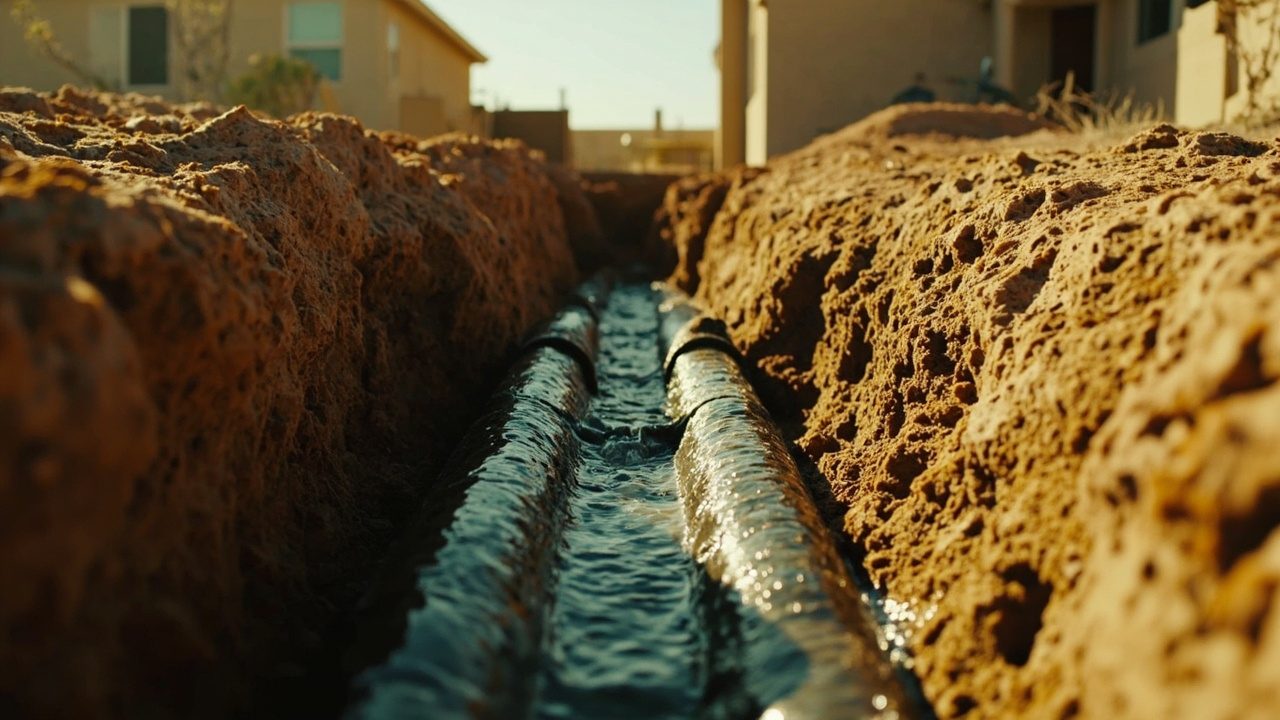
The ground decides the method more than the pipe does. Desert soils on the mesas and foothills are sandy and gravelly with layers of caliche hardpan, and hardpan slows every lateral or yard line trench, so an excavation that looks short on paper runs long. The river valley has finer alluvial soils that hold more water, and a joint sitting in wetter soil draws roots. Roots follow moisture, and in dry desert ground a weeping clay joint under a mature tree is the wettest spot around. Heavy summer storms run off quickly and collect in low streets and dips, and a cracked joint takes that water into the sanitary line from outside. Older stock adds the material era, with cast iron drains and clay laterals from the late 1800s through the 1960s, ABS or PVC from the 1970s, and PVC drains and laterals in newer subdivisions.
Repairs that follow a camera reading reach inspection at stages, so the order of the work matters. A run replaced by open cut stays open until the slope, the bedding and every transition between cast iron and plastic can be seen, and the final decision on what gets checked belongs to the local authority. Inside city limits and outside them fall under different offices, since work outside city limits falls under the county or the neighboring town, and knowing which applies before the trench opens avoids a second mobilization. For a commercial owner, the inspection record and the camera footage together form the file a lender or an underwriter asks for, and code compliance on a main line is a liability question for the owner. Work phased across budget cycles keeps jetting in the first cycle and the repair scope, drawn from the footage, in the next.
Plumbing Services in The El Paso Area
Explore our service area and locate Bedrock Plumbing El Paso with ease. We're proudly local and serve the surrounding neighborhoods with fast response and honest pricing. Use the map to check our coverage area, or call us and we'll confirm in seconds.
Address:
Bedrock Plumbing El Paso, 221 North Kansas St, Suite 700, El Paso, TX, 79901
Additional Services We Offer
- Apartment Complex Plumbing
- Commercial Backflow Prevention & Testing
- Commercial Kitchen Plumbing
- Commercial Plumbing Contractors
- Commercial Repiping Services
- Commercial Sewer Line Repair
- Commercial Toilet & Urinal Repair
- Commercial Water Heater Systems
- Grease Trap Cleaning & Pumping
- Industrial Pipe Repair
- Medical & Dental Gas Plumbing
- Preventative Commercial Maintenance
Plunging a single toilet is a homeowner job, and so is finding and closing the main shutoff. DIY stops at any drain already backed up past a cleanout, because opening that cleanout puts the head pressure on you. Jetting cleans a pipe and repairs nothing. If the camera finds a cracked joint or a belly, we say so on the first visit and scope the repair separately.
Know which fixtures are slow and whether the lowest drain has ever held water. Note when it started, what changed just before, and whether the line has been cleared before and how many times. Find the cleanout if you can, and share the building's age and pipe material if you have them. Say whether the building is occupied.
Last reviewed September 2026 by Dave Parker, Owner.