





A toilet still refilling on a holiday night in El Paso
Five steps, people first and property second. Shut the water off. Use the stop at the fixture if there is one. If there is not, close the main where the line enters the house or at the meter. If water has reached outlets, a panel or a ceiling fixture, kill that circuit before anyone steps into the water. For a water heater, close the cold inlet on top of the tank, turn the gas control off or the breaker off, then open a hot tap on a lower floor so the tank is not under vacuum. If you smell gas or rotten eggs, touch no switch and no phone charger. Get everyone outside, leave the door open behind you, and call the gas utility from outside. For a sewage backup, stop every water use in the building, washer and dishwasher included. Keep people and pets out of the wet area, and do not plunge a line that is already full.
Next, sort what you are seeing by where the water goes. Supply water sits under pressure and keeps escaping whether anyone is home or not. A drain only escapes while something upstream runs. A meter dial turning with every fixture closed, a warm patch on the floor or a ceiling stain that keeps growing puts the trouble on the supply side. A gurgle when another fixture runs, or water at a floor drain only while the washer empties, puts it on the drain side. One slow fixture is a branch or a trap and usually leaves room for a weekday visit. Every fixture slow with the lowest one backing up is the main, and that stops being a morning question.
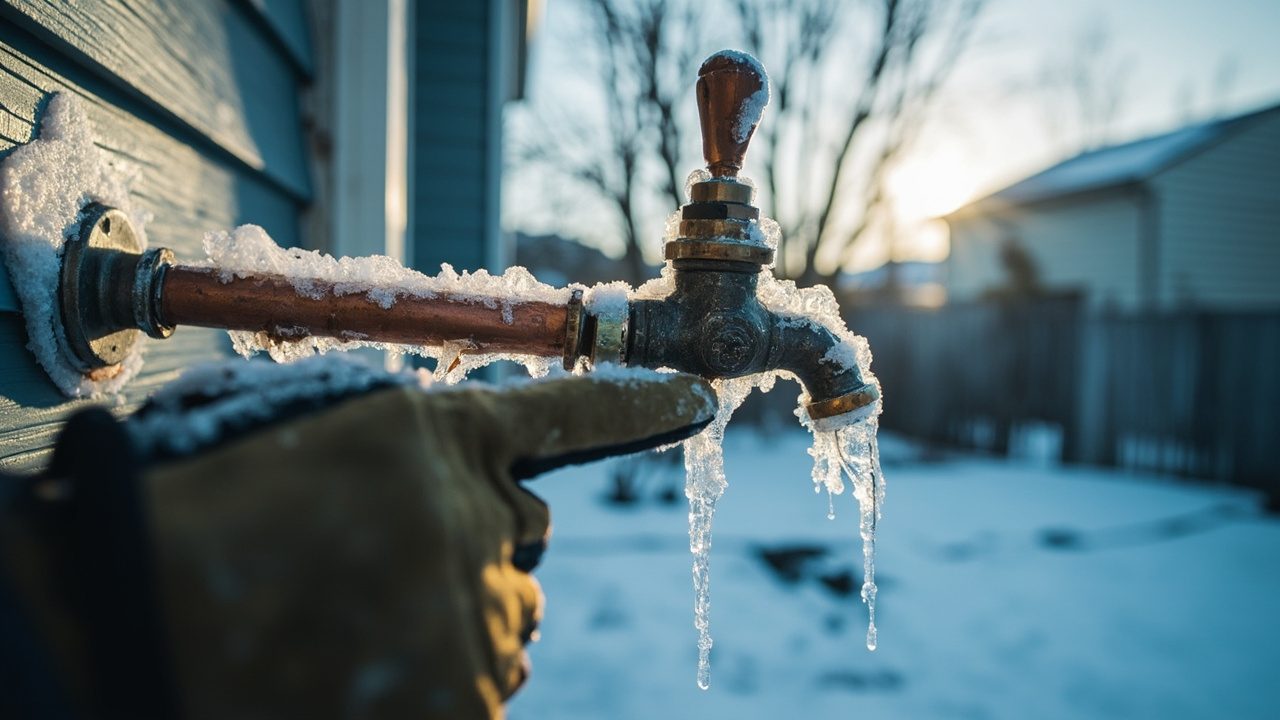
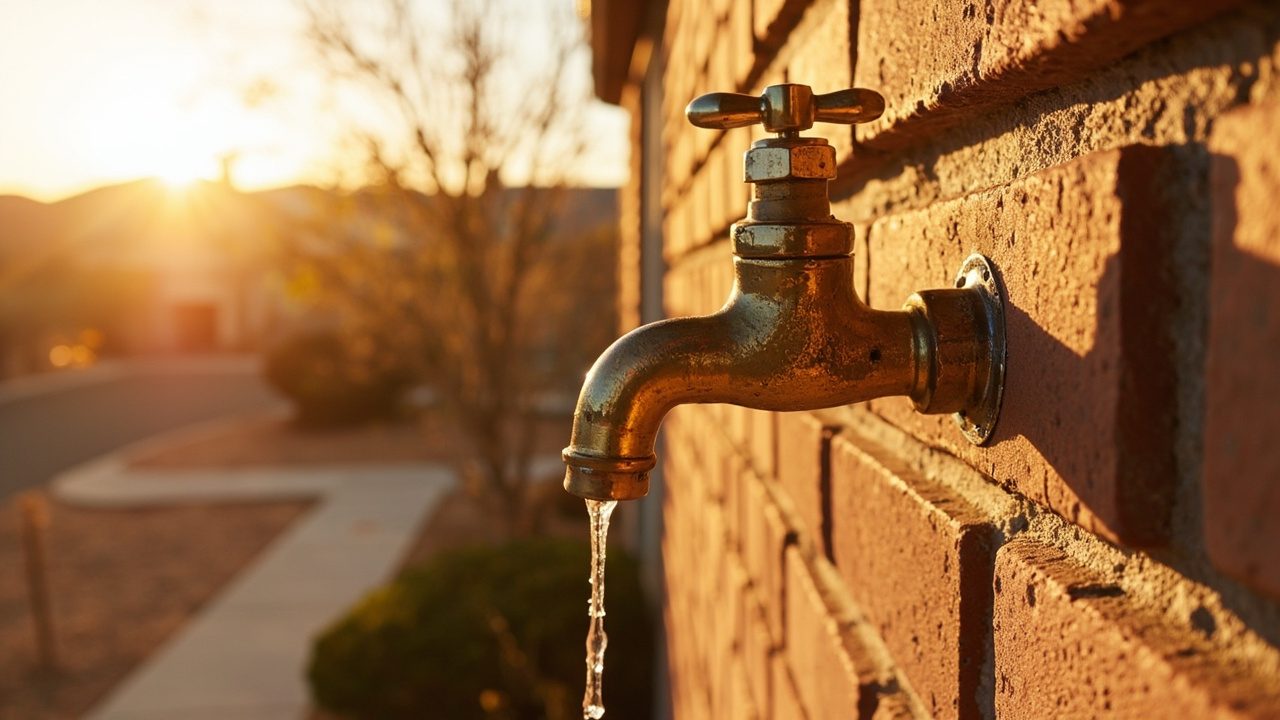
Weather in El Paso County moves these calls around the holidays. When an arctic front drops the temperature into the teens, exposed hose bibs, backflow assemblies and outdoor lines split. Ice holds the water in until the thaw, so you see no water at one fixture while the rest of the house works, then a ceiling stain hours after the temperature recovers. In spring, evaporative coolers go back into service and a scaled float valve sticks open on its supply line. In summer heat, a weeping relief valve on top of the heater usually points to water pressure running above the normal band.
One chain sets the call now line. A toilet that runs after flushing lets the tank refill all night and the fill valve cycles constantly, then the valve wears and sticks open with the overflow carrying water away unnoticed. Close the stop behind the toilet. If it turns and holds, the fix waits for a scheduled visit. If the stop will not turn, or water is already reaching a ceiling below or a circuit, call tonight.
Our page on apartment complex plumbing covers that side of the work in more depth.
Permit and inspection questions? Planning & Inspections is the office we coordinate with on every permitted El Paso job.
How we sort tonight from tomorrow before anything is quoted
Isolation comes first, and it runs in the order the water travels. Everything in the house goes off and the meter gets watched. Then the main gets closed and the meter is watched again, which puts any loss on the street side or the house side. Stops and branches close one at a time until the loss stops. Only then does a wall, ceiling or slab get opened, and it gets opened at one point along the run. A drain follows a different order. The line is cleared first and the camera goes in second, from a cleanout, because a full line shows nothing but water.
The reading this page turns on is the overnight pressure hold. A screw-on gauge goes on a hose bib with everything in the house off, since a running fixture lowers the static number. It stays on through the night. A morning figure close to the night figure means the system relieves its own pressure. A morning figure far above the night figure means the heater is expanding water into a closed system with nowhere to put it, so a failed expansion tank is the cause and the dripping valve on top of the heater is only where it showed. That single comparison decides whether a thermal expansion tank and a pressure reducing valve join the job. On a holiday it also decides what waits, because replacing a relief valve while the pressure stays high brings the same drip back.
Material choice comes next when a segment has to be replaced. Copper is rigid, tolerates heat directly and costs more in material and labor. PEX is flexible, so a home run layout puts fewer joints inside walls, with PEX A using expansion fittings and PEX B using crimp rings. Sunlight decides the outdoor runs here, because PEX has to stay out of it and the intense sun in this climate degrades exposed plastic. On drains, cast iron is heavy and quiet, plastic is faster to install and carries more noise through a wall, and a partial replacement needs a proper transition band rather than glue. Water chemistry decides the heater question. Local water tests moderately hard to hard, and above about seven grains per gallon scale forms steadily, so a heater that fails twice in a few years points to flushing or treating the water before buying another tank.
If this sounds close but not quite your situation, commercial kitchen plumbing may be the better starting point.
Communities like r/Plumbing are full of homeowners comparing notes on exactly this problem, worth a read before a major project.
Ask which of these readings was taken before any part is replaced.
| Instrument | Good reading | Bad reading | What it changes |
|---|---|---|---|
| Overnight pressure hold with the gauge left | The morning reading is close to the reading taken the night before | A reading far above the night figure | The heater is expanding water into a closed system with nowhere to put it |
| Combustible gas detector and bubble solution on gas fittings | No alarm at the fittings and no bubble growing on the joint | Any bubble that keeps growing or any sustained alarm | The appliance valve gets closed before anything else happens |
| Thermometer at the farthest hot tap | Hot water arriving around 120 degrees | Hot enough at the tap to scald a child in seconds | The first slug of water is whatever was sitting in the pipe |
| Screw on pressure gauge at a hose bib | Static pressure sitting in the 45 to 70 psi range with nothing running | Above 80 psi | Fixtures, supply hoses and water heaters start failing early |
How a holiday call runs
Phone questions and isolation
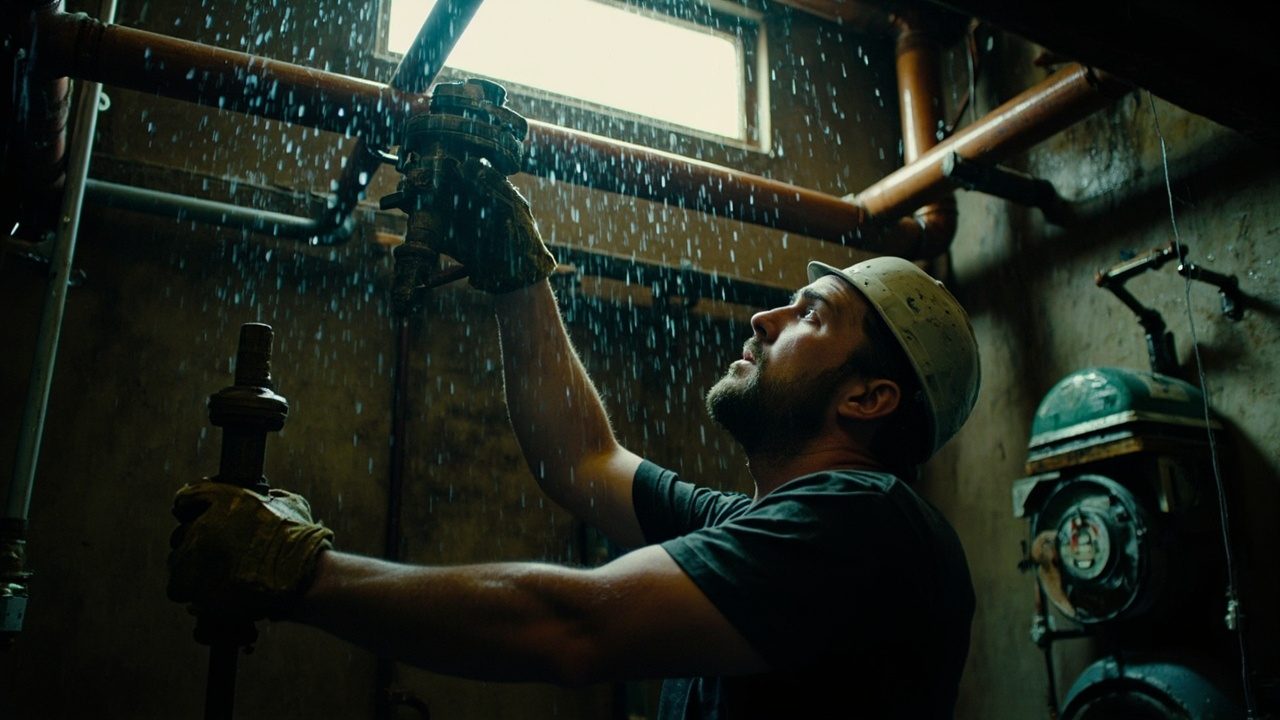
The call starts with what you are seeing, when it began and where your main shutoff is. On site, we turn off all fixtures and observe the meter. We close the main and take a second reading to confirm the leak sits between those two points. Then we methodically shut valves in sequence until the loss stops, narrowing it to a single segment. A screw-on gauge then goes on the hose bib with everything still off. You see each valve we close and each reading we take, because that isolation decides which surface, if any, gets opened.
Approval before any opening
Once you approve the written scope, isolation comes first, so the branch is dry before a wall opens. The repair then runs at the joint or segment the readings pointed to, whether that is a new angle stop, a soldered type L copper repair, PEX with a crimp ring or a no hub band at a cast iron transition. Old galvanized meeting copper gets a dielectric union. If the opening turns up more behind the wall than the scope covered, we stop and show you before going further.
Overnight hold and handover
Before we leave, the gauge stays on the hose bib and the night number gets written down. In the morning you read the same gauge, and that figure has to sit close to the night one. If it has climbed, excessive pressure is building in the lines and an expansion tank belongs in the scope before the job counts as finished. Where the meter dial had been moving, it gets watched again with every fixture closed. You keep the written scope with the readings on it.
What a crew new to this county gets wrong on a holiday call
Permit questions on an after hours call depend on the scope. Gas work and main line work usually need a permit. A like for like faucet, angle stop or flapper swap usually does not. The final call belongs to the permit authority for your address, and inside the city limits and out in the county those authorities are different. Inside the city limits, work is inspected at stages, so anything that will be covered gets tested before the wall closes. Response across the county follows the same sorting. The first phone questions separate a line under pressure from a single stopped fixture, so a call from a newer east side subdivision and a call from an older central street both start with where the water goes.
Older central homes from the late 1800s through the 1930s carry galvanized steel supply, cast iron drains and clay laterals. Postwar slab homes from the 1940s through the 1960s often have galvanized or early copper supply with cast iron drains under the slab, so a warm spot on the floor points to a hot line under the concrete. A crew that treats that as a fixture leak breaks the wrong floor. A crew that joins new copper straight to old galvanized without a dielectric union leaves a corrosion joint that leaks again. Homes from the 1970s through the 1990s run copper under or through the slab with the heater in a garage or closet, so the headroom for an anode rod pull gets checked before anyone promises it today. Newer east and west side homes use PEX manifolds, where closing one branch at the manifold shrinks the problem to one segment.
Soil changes the plan on a lateral. The mesas and foothills carry sandy, gravelly soil over layers of caliche hardpan that slow trenching, while the river valley soils are finer and hold more water. A quote written as if the dig were soft ground comes up short once the shovel meets hardpan. Freeze damage adds another miss, which is replacing a split hose bib without looking at the backflow assembly on the same outdoor line. An emergency weekend plumber who knows the county checks both before writing a scope.
More detail on 24/7 emergency plumbing services is on its own page.
Your local utility, El Paso Water, publishes service and water-quality information every El Paso homeowner should know.
What a weekend call looks like from your side
How the call gets booked
You call, and we ask three things. Is water escaping under pressure, is it reaching a ceiling or a circuit, and is the backed up drain the only one in the house. Those answers sort a tonight visit from a scheduled one. The person on the phone gives you the arrival window before the call ends and confirms it when the technician is on the way. If the job ahead of yours runs long, you hear about the shift before the window closes, and the stop you closed keeps the water contained meanwhile.
Protecting floors and rooms
Before anything comes apart, a drop cloth runs from the door to the work area, and the stops or the main get closed so the branch is dry. Wall or ceiling access is cut only as large as the pipe needs, and plastic sheeting over the opening keeps dust in that room. Wet material and cut pipe go into bags and leave with us. The last step is a run of every tap on that branch and a wipe of the floor.
What moves the cost
Access moves the job furthest. A finished wall, tile, a ceiling below or a slab raises it, and so does putting the surface back. Depth of any dig comes next, then one joint against the whole segment, then matching old pipe to new. Fixture or heater grade and after hours, weekend and holiday dispatch also add. You control the grade and clear access. You receive the written scope and approve it before work starts, and an unknown behind the wall is settled in writing first.
How technicians earn sign-off
A new technician rides with a lead before working alone. The lead signs off on specific tasks, including isolating a branch at the stops, reading static pressure at a hose bib with everything off, and testing a gas fitting with detector and bubble solution. On slab work, gas work or anything unusual, a second technician looks at the job before a scope is written. The crew studies updated codes as they change.
You Have Questions,
We Have Answers
Plumbers work weekends, and most emergency calls are active leaks, sewage backups and gas-fired heater faults. Availability thins on holiday weekends, when the same few crews cover a whole metro area. A call placed early in the morning usually lands an earlier window than one placed at dusk. Closing the fixture stop or main before the call keeps the damage from growing while you wait for the arrival window.
Weekend plumbing costs more in most cases because after-hours labor is priced above weekday labor. The size of the increase varies by company, so ask how the weekend premium is applied before agreeing to a visit. Parts and materials cost the same on any day, so the difference sits in labor and dispatch. Many jobs, such as a slow fixture or a dripping faucet, can wait until Monday when the premium no longer applies.
Many plumbers charge extra for weekends, with the surcharge applied either to the entire visit or only to the first hour. Holidays often carry a larger premium than ordinary Saturdays because fewer technicians are on call. Ask whether the extra appears on the written scope. Shutting off water at the stop and waiting for a weekday visit removes the premium entirely.
Monday is commonly the busiest day, because problems that built up over the weekend get reported when offices reopen. Calls also spike after a hard freeze, once ice melts and split pipes begin leaking under pressure. Heavy-use days such as the day after a large gathering bring clogged main lines. Midweek mornings tend to have the most open scheduling, so a nonurgent repair booked Tuesday or Wednesday often gets a tighter arrival window.
A 4 inch building drain commonly carries several toilets, with the limit set by drainage fixture unit values. The International Plumbing Code table for drain sizing governs the count, and slope matters as much as diameter. A 4 inch line falling one quarter inch per foot moves waste far better than a flatter one. Local inspectors apply the table to the whole branch, so the total load on the line decides the answer.
A 45 degree fitting is acceptable in a sewer line and is preferred over a sharp 90. Two 45s spaced apart make a gentle sweep that keeps solids moving and lets a camera or cable pass through. A 45 also helps at a cleanout wye, where flow needs to merge smoothly. Keep the slope continuous through the bend so waste does not settle and build a partial blockage.
A shower and a toilet can share one drain when the pipe is sized and vented. Toilets discharge a large volume quickly, so the shared branch is usually 3 inch or 4 inch. The shower trap connects upstream of the toilet or through a sanitary tee, never into the toilet flange itself. A blocked shared line shows up as shower water rising when the toilet flushes.
The 135 degree rule builds a drain turn from two 45 degree fittings instead of one sharp 90. Horizontal-to-vertical changes are the common application. The gentler sweep keeps solids suspended in the flow and reduces the chance of a buildup at the elbow. It also gives a drain cable or camera head a passable path when the line needs clearing later.
Start by collecting the written scope, the invoice and any photos, then compare the invoice against what was approved. Ask the company in writing to explain each line item. If they refuse, dispute the charge with your credit card issuer promptly, since chargeback windows are limited. You can also file a complaint with the Texas Attorney General consumer protection division or the Better Business Bureau. A second plumber's written assessment strengthens any claim.
Why short hard freezes change weekend plumbing calls in El Paso
The first freeze here arrives on average in mid November and the last comes in early March. Most freezing nights sit just below freezing and break to mild days, so the ground never freezes deeply and buried lines are mostly spared. The damage lands on what is exposed: exterior faucets, check valves and above-ground piping that split under ice pressure, with an occasional arctic front that drops the temperature well into the teens finding every unprotected one. Nothing leaks until the ice clears and the pipe is under pressure again, which is why the calls arrive after the thaw. Spring brings evaporative coolers back into service, and scale on the float valve and supply line sticks the valve open. Summer heat strains tank heaters, and water that tests moderately hard to hard, commonly around ten grains per gallon or more, lays scale steadily above roughly seven. Intense sun also degrades exposed plastic lines, so PEX outdoors gets protected or routed out of the sun.
Permits and inspection depend on the scope and on which authority covers your address. Inside the city limits the city issues plumbing permits and inspects work at stages during construction, while work outside the limits falls under the county or the neighboring town. Main line work and gas work typically require permitting, though a faucet replacement often proceeds without one, with the final determination resting with the authority having jurisdiction. Knowing the staged inspection sequence shapes the order of the job. Anything that will be covered gets tested first, so bubble solution goes on gas fittings and a pressure hold runs on new supply before drywall closes. Cleanouts and joints stay reachable until then. On a holiday repair, the water gets isolated at the stop or the main that day, and the opening that needs testing is not closed early. Which office applies to your address is worth one question before work begins.
Plumbing Services in The El Paso Area
Explore our service area and locate Bedrock Plumbing El Paso with ease. We're proudly local and serve the surrounding neighborhoods with fast response and honest pricing. Use the map to check our coverage area, or call us and we'll confirm in seconds.
Address:
Bedrock Plumbing El Paso, 221 North Kansas St, Suite 700, El Paso, TX, 79901
Additional Services We Offer
- 24/7 Emergency Plumbing Services
- Basement Flooding Pump-Out
- Burst Pipe Repair
- Emergency Sewer Backup Cleanup
- Emergency Sump Pump Failure
- Emergency Water Heater Repair
- Emergency Water Shut-Off Service
- Frozen Pipe Thawing & Repair
- Gas Leak Detection & Repair
- Main Water Line Break Repair
- Overflowing Toilet Repair
- Rapid Response Leak Repair
Plunging a toilet, cleaning an aerator, swapping a flapper or supply hose, draining a hose bib before a freeze and closing the main are homeowner jobs. DIY stops at anything soldered, anything on the gas line, anything behind a finished wall or under a slab, and any drain backed up past a cleanout. If the first visit shows work for another trade, such as a wet electrical panel, we say so then.
Before you call, know what you are seeing, when it started and what changed just before it, such as a freeze, a cooler start-up or a heater running hard. Find the main shutoff and note whether the stop at the fixture closes. Any age you have for the heater helps. Say whether anyone is in the house and whether water has reached an outlet or a panel.
Last reviewed September 2026 by Dave Parker, Owner.