



What a faucet that keeps dripping usually means in El Paso homes
A faucet that keeps dripping after the handle is shut is a supply side leak, and that one fact sets how you read it. Supply water sits under pressure around the clock, so the drip runs at noon at the same rate it runs at midnight. A faucet drips at night only in the sense that you can finally hear it, and the water a dripping tap wastes passes through your meter whether the sink looks dry or not. Drain side water behaves differently. It escapes only while something upstream is running, so a wet cabinet that appears during a dishwasher cycle points at a p trap or a slip joint.
Water here changes how the drip develops. El Paso water is moderately hard to hard, and above about seven grains per gallon scale forms steadily on valve faces, cartridge seals and the threads of every fitting under the sink. A cartridge that seals against a scaled surface starts to pass a thread of water. Scale then grinds against the seat with every turn of the handle, and the leak widens. The whole house runs the same hardness, so a second faucet that starts to drip soon after the first points at the water.
Where the drip shows places the fault. Water leaving the spout means the cartridge or valve inside the faucet, a repair at the fixture that leaves the rest of the plumbing alone. A bead on the underside of the stop, on the compression nut or at the braided supply hose connection places the fault one step upstream, on a valve that has sat untouched since the sink was set. Green or white crust on that nut is corrosion on the threads. Dry the area with a paper towel and look again after an hour.
Call today when the bead comes back. A weeping angle stop under a sink means the compression nut is corroding, the nut then cannot be snugged, and the stop snaps off in someone's hand the next time the faucet is changed or the handle is turned, and the whole room takes full supply pressure. Leave a weeping stop alone and close the main shutoff if it starts to spray. A drip that shows only at the spout can wait for a scheduled visit.
If this sounds close but not quite your situation, cold water sandwich effect may be the better starting point.
Permit and inspection questions? Planning & Inspections is the office we coordinate with on every permitted El Paso job.
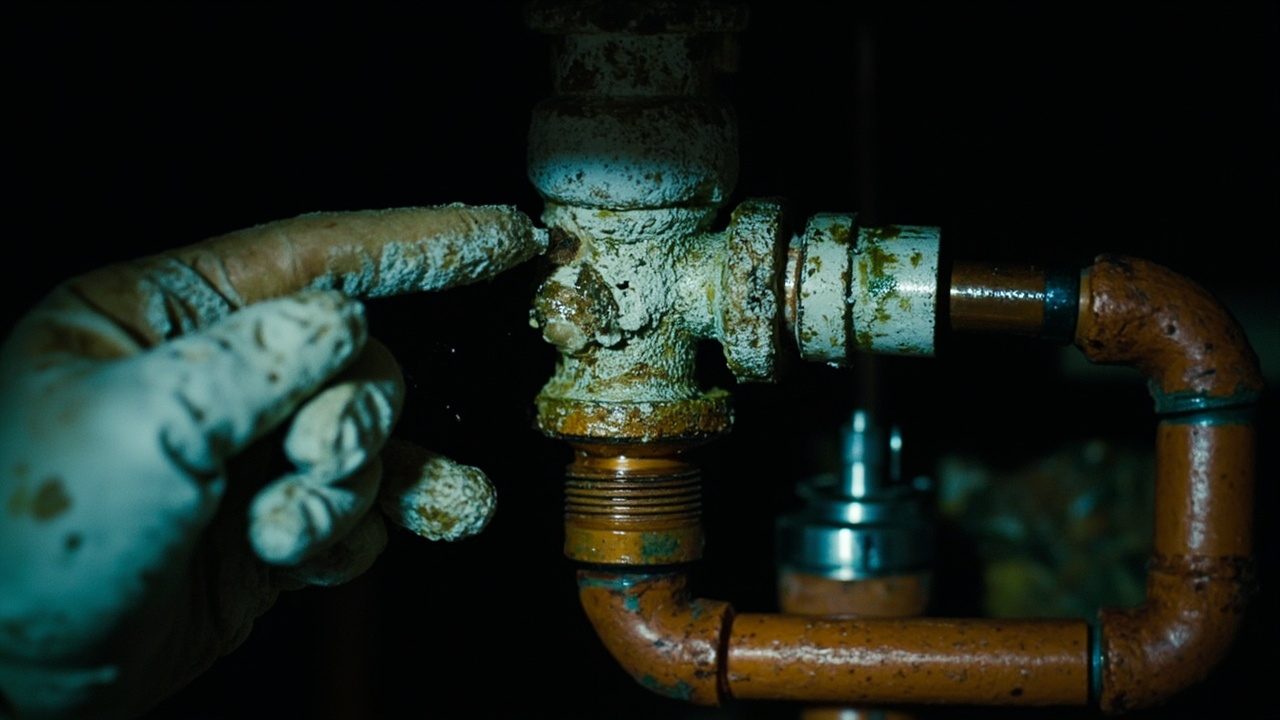
Find the sign you have, then read across to see whether it can wait.
| Symptom or first sign | What is already happening | What it becomes if ignored | When to call |
|---|---|---|---|
| A weeping angle stop under a sink | The compression nut corrodes so it cannot be snugged | The stop snaps off in someone's hand during a faucet change | Now, the same day |
| A hairline supply leak behind tile | The framing stays damp | The pipe repair turns into a wall rebuild | This week, while it is still one part |
| A toilet that runs after flushing | The flapper lets the tank refill all night and the fill valve cycles constantly | The valve wears and sticks open with the overflow carrying it away unnoticed | This week, while it is still one part |
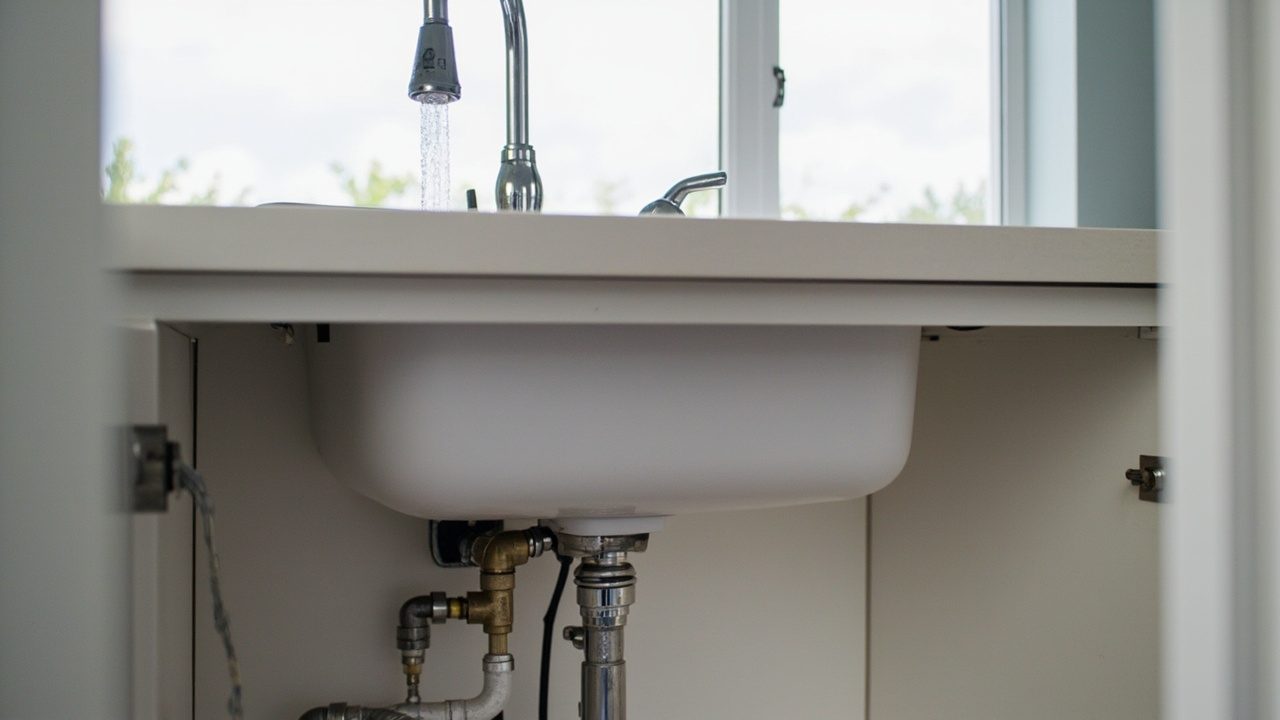
Meter first, then the stop, then the faucet
To fix a dripping faucet you have to place the loss first, and the water meter does that. Every fixture in the house gets closed, including the ice maker and the washer, and the leak indicator, either the dial or the small leak wheel, gets watched for fifteen minutes. One dripping faucet can be enough to make the wheel creep, so the next step is closing the stop under that sink and watching again. If the wheel stops, the drip was the loss and the job is a cartridge or a fixture. If it keeps turning, water is leaving somewhere else. Then the main gets closed and the meter is read once more. A dial still moving with the main closed puts the leak on the street side of the meter, which is a conversation with the utility and not a repair inside your house. Stops and branches close one at a time until the loss stops, and only then does a surface get opened.
The reading this visit turns on is any movement at all on the leak indicator with every fixture closed. Movement that stops when one stop closes keeps the scope at that faucet. Movement that survives every stop moves the scope to a branch, and a branch may mean a wall, a ceiling below or a slab. Static pressure and the hardness test decide what rides along with the faucet work. A static reading above the normal band brings a pressure reducing valve into the scope. Hard water at the tap means a new cartridge lasts only as long as the scale allows unless the aerators and valves are cleaned in the same visit. Those numbers go into the written scope before you approve anything.
Type L copper and PEX come up when the drip traces past the stop into the supply pipe itself. Copper is rigid, tolerates heat directly and costs more in material and labor. PEX is flexible, so a home run layout to a manifold puts fewer joints inside your walls, and PEX A with expansion fittings and PEX B with crimp rings are the two joining systems. Local conditions decide between them. Intense sun and heat degrade exposed plastic, so a run through a garage or along an outside wall favors copper, and a run buried in framing favors PEX because a future repair opens less drywall. Where the old supply is galvanized, the utility's own note that rusting galvanized pipe is the typical cause of discolored water is the reason the run gets replaced instead of patched at the stop.
See discolored or rusty water for how the related work is scoped and priced.
Price-checking is smart: marketplaces like Thumbtack publish typical cost ranges you can hold any quote against, including ours.
Ask which of these readings was taken before any part is replaced.
| Instrument | Good reading | Bad reading | What it changes |
|---|---|---|---|
| Water meter leak indicator with every fixture closed | The dial or the small leak wheel does not move over fifteen minutes | Any movement at all with the whole house off | Water is leaving the system somewhere you cannot see |
| Drain camera with a locator | Continuous fall to the main, clean joints | Standing water part way along a level run means a belly | Roots at a joint mean the repair belongs at that joint rather than the whole line |
| Anode rod pull on a tank water heater | The rod still has sacrificial metal along the core wire | A bare core wire with the metal gone | The tank itself is now the part being eaten |
| Screw on pressure gauge at a hose bib | Static pressure sitting in the 45 to 70 psi range with nothing running | Above 80 psi | Fixtures, supply hoses and water heaters start failing early |
| Overnight pressure hold with the gauge left | The morning reading is close to the reading taken the night before | A reading far above the night figure | The heater is expanding water into a closed system with nowhere to put it |
How a dripping faucet call runs
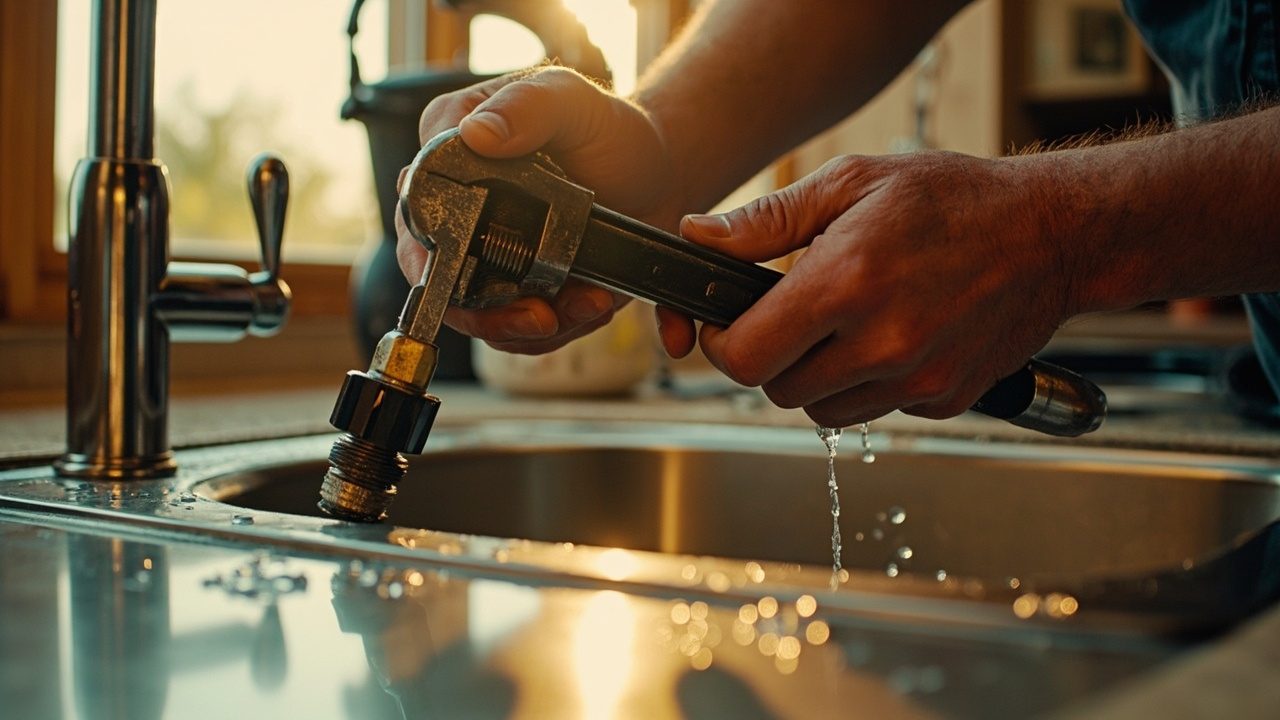
Questions, then the meter
On the phone we ask where the water shows, when it started, whether the stop under the sink is dry, and where your main shutoff is. On site the technician closes every fixture and reads the meter leak indicator for fifteen minutes, closes the stop under the dripping faucet and reads again, then closes the main and reads a third time. You will see the technician at the meter and then at the sink, with nothing opened yet. A gauge goes on the hose bib with the house off, and the hardness test runs at the tap. Those readings, not a preference, set the scope.
Approval before the swap
Once you approve the written scope, the water gets isolated first, starting at the fixture stop or at the main if that stop will not seal. The faucet handle opens to drain the line, the cartridge comes out, and the seat and aerator get cleaned of scale. A corroded angle stop gets replaced with a new braided supply hose, and the main stays closed for the whole building while that happens. If a soldered stub or a wall opening turns up behind the stop, work stops, you see what was found, and the scope gets rewritten for your yes before anything more comes apart.
Readings repeated at handover
Before we leave, the meter leak indicator gets read again with every fixture closed, and it has to sit still for fifteen minutes, the same reading that opened the visit. The gauge goes back on the hose bib, and static pressure has to sit in the 45 to 70 psi range. Each stop is closed and opened while a dry paper towel is held under the nut, and the towel has to stay dry. You get a walkthrough of the old cartridge and stop, and you keep the written scope with the readings noted on it.
Why local water and old stops trip up crews from elsewhere
A like for like faucet, cartridge or supply hose swap usually does not need a permit, and gas work or main line work usually does. Which office reviews a permit depends on whether your address sits inside city limits or under the county or a neighboring town, and the final call on any permit question belongs to that office. A drip call can grow into a supply segment replacement once an angle stop refuses to close, so the address question gets asked early.
Crews that have not worked El Paso homes repeat a few errors. Torque is the first. Houses from the late 1800s through the 1930s here were built with galvanized supply, and the 1940s through the 1960s brought galvanized or early copper, so a wrench on a decades old compression nut can crack the stub behind the wall and open a repair nobody priced. Galvanized pipe also closes up from the inside, which means a stop that opens fully can still deliver poor flow. Water chemistry is the second error. A new cartridge fitted into water at ten grains per gallon or more, without cleaning the valve body and aerator, inherits the old scale and starts to weep on the same surface. The third turns up at the hose bib after an arctic front, where a drip often means the vacuum breaker or the pipe behind the wall split during a freeze that followed a mild day, and a new washer does not fix a split.
Calls arrive from across El Paso County, and the phone questions sort them into today and scheduled. Water reaching a ceiling or spraying at a stop goes to the front. A drip at the spout that stops when the stop is closed takes a scheduled slot. The questions are whether water escapes under pressure or only while a fixture runs, and whether the leak wheel moves with everything closed. Scale and float valve failures on evaporative cooler supply lines, when the coolers start up, produce wet spots that get reported as faucet drips, so where the water sits matters more than the word leak.
More detail on gurgling toilet sounds is on its own page.
What working with Bedrock Plumbing El Paso on a leak looks like
Sorted on the phone first
You call and we ask three things: whether water shows at the spout or under the sink, whether the meter leak wheel moves with everything closed, and whether the stop is wet. Water escaping under pressure or reaching a ceiling gets a same day visit, and a spout drip that stops when you close the stop gets a scheduled one. The person who took your call confirms the arrival window with you. If the job ahead of yours runs long, the window moves and you are told before the original one ends.
Cabinet and floor protected
Before anything comes apart, a drop cloth goes down under the sink and along the path from the door to the cabinet. The water gets closed at the stop, or at the main if the stop will not seal, and a bucket sits under the connection for what is left in the line. The old cartridge, stop and supply hose leave with us. The last step is wiping the cabinet floor dry and checking it for swelling before the doors close.
What moves the number
What a leaky faucet costs starts with access, and under a sink access is short work, so the grade of fixture, valve or heater you choose moves the scope furthest. A higher grade cartridge or stop raises it and a basic replacement holds it down. A drip that traces behind tile or a finished wall raises it more, as does replacing a run instead of one joint or matching old pipe to new. The written scope follows the meter test and you approve it before work starts. If an opening finds more, what happens next is agreed in writing.
How skill gets checked
A new technician rides with a lead before working alone, and the lead signs off on named tasks. Those tasks include closing an angle stop without forcing the nut, reading static pressure at a hose bib with everything in the house off, and running the meter leak test through to the second reading with the main closed. Each gets demonstrated on a live call. On a job with a corroded stop or several pipe materials in one house, a second technician looks at it before any scope is written.
You Have Questions,
We Have Answers
Pipes can freeze with a faucet dripping when the trickle is too slow to hold the line above freezing. Ice forms in the coldest exposed stretch, often a pipe in an uninsulated exterior wall. A trickle that slows or stops as pressure drops lets that stretch ice over. Once ice blocks the line, pressure builds between the blockage and the closed faucet, and that trapped section is where the pipe bursts. Insulation and opened cabinet doors add more protection than a drip alone.
Worn internal seals cause most dripping faucets, usually a rubber washer, O-ring or cartridge. Each turn of the handle presses the washer against the valve seat, which flattens the rubber over time. Once it stops sealing, water passes the seat and leaves the spout. A faucet that drips slowly from the spout and stops when the shutoff below is closed almost always has this fault at the seat or seal. Single-handle faucets hold the same fault in the cartridge.
A dripping faucet alone does not protect pipes, because the flow rate matters more than the drip. Freeze protection works from a steady trickle about the width of a pencil lead, and a slow drip moves too little water. Pipes on exterior walls, in crawl spaces or in garages also need cabinet doors opened so warmer room air reaches them. Outdoor hose bibs need a disconnected hose, since a connected hose traps water in the spigot.
Cold water is the usual choice, though many people open both the hot and cold sides for a trickle. Both supply lines run through the same cold wall or crawl space, so both can freeze. Hot lines often freeze first in practice because they are less insulated. On a single-handle faucet, set the handle to the middle so both lines flow. A trickle on the fixture at the far end of the house on an exterior wall works best.
Shut off the supply valve under the sink, then replace the worn cartridge, washer or O-ring. Take a photo of the parts as you remove them, because handle styles differ. Soak the valve seat in white vinegar to loosen scale, then scrape it smooth before reassembling. Match the replacement part to the faucet brand, since cartridges vary by a few millimeters. Turn the supply back on slowly and watch the base of the spout for a bead of water.
A worn washer, O-ring or cartridge is the most common cause, and a pitted valve seat comes second. Scale roughens the brass seat until even a new washer cannot close against it. A drip from a single-handle faucet usually means the cartridge has lost its seal, while a drip from a two-handle faucet points to the washer under the leaking side. Water pressure above the normal band pushes past marginal seals sooner and makes a slight weep worse.
A faucet dripping once per second wastes roughly five gallons a day, and a faster drip climbs from there. A thin steady stream can pass many times that. The water and sewer charge depends on your billing tier, and hot water leaks add the energy cost of heating the water. To measure your own loss, hold a measuring cup under the drip for ten minutes, then multiply the result by 144 to get the daily volume.
Start the drip when the outdoor temperature falls to about 20 degrees Fahrenheit, earlier for north-facing or exposed walls. Water in a pipe can freeze once the wall cavity around it drops below 32 degrees, and that happens after several hours of hard cold. Choose the faucet farthest from where the main enters the house. Keep the trickle running until temperatures stay above freezing through the day, since a thaw can refreeze overnight.
Call a plumber when the drip continues after you replace the cartridge or washer, or when the shutoff leaks. A wet cabinet floor that feels soft or swollen also calls for a visit, since water has been sitting there for some time. A single faucet drip that stops when you close the shutoff can wait for a scheduled visit, while spraying at a valve needs the main closed right away.
A faucet drips after shutoff when the valve seat seal no longer closes, or when trapped pressure is bleeding down. A drip that lasts a few seconds and stops is normal, since the spout holds a little water. A drip that continues means a worn cartridge or washer, or a seat scored by scale. Water heater thermal expansion can also push pressure past a marginal seal, so a drip that shows mostly on the hot side points there.
How hard water and short freezes wear faucet parts in El Paso
El Paso Water supplies a blend of surface water and groundwater, and the utility describes it as moderately hard to hard. A hardness test kit at the tap commonly reads around ten grains per gallon or more, and above about seven grains scale forms steadily in valves, cartridges and heater elements. That reading changes the job before a tool comes out. The cartridge is chosen for a scaled seat, the aerator is cleaned or replaced in the same visit, and treatment belongs in the scope when a second faucet in the house starts to drip. The utility also notes that rusting galvanized pipe inside homes is the typical cause of discolored water, so rusty water at the tap changes what gets replaced behind the stop. Outdoors the same conditions act differently. Intense sun and heat degrade exposed plastic lines, and arctic fronts that drop well into the teens split hose bibs and unprotected outdoor piping, so exposed runs are routed and protected with that in mind.
Where a permit applies, work is inspected at stages during construction, so a supply segment replaced behind an open wall is looked at before the wall closes. Knowing that up front changes the sequence. The wall stays open until that stage is signed off, and the patching waits. The meter test adds a second line of responsibility. A dial that keeps moving with the main closed puts the loss on the street side of the meter, and the utility and the permit authority decide who owns that repair, so the crew stops and says so instead of digging in your yard. Where the scope adds a pressure reducing valve or an expansion tank while the stop is being replaced, the static pressure reading that justified it goes into the written scope, so anyone reviewing the work can see why the part is there. Questions about whether a specific job needs a permit go to the office for your address, and that office has the last word.
Plumbing Services in The El Paso Area
Explore our service area and locate Bedrock Plumbing El Paso with ease. We're proudly local and serve the surrounding neighborhoods with fast response and honest pricing. Use the map to check our coverage area, or call us and we'll confirm in seconds.
Address:
Bedrock Plumbing El Paso, 221 North Kansas St, Suite 700, El Paso, TX, 79901
Additional Services We Offer
Cleaning an aerator, swapping a braided supply hose and finding the main shutoff are homeowner jobs, and you do not need us for them. DIY stops at anything soldered, anything on the gas line, and anything behind a finished wall or under a slab. Whether your drinking water is safe belongs to the utility report and a lab test of your own tap. If the first visit shows work outside ours, you hear it then, before any invoice.
Before you call, know whether moisture appears at the spout or under the sink, and when you first noticed it. Dry the stop with a paper towel and see whether a bead comes back. Find your main shutoff, and note the age of the faucet if you know it. Those answers tell us whether the meter test comes first.
Last reviewed September 2026 by Dave Parker, Owner.