





What a wet wall behind a restroom means in El Paso buildings
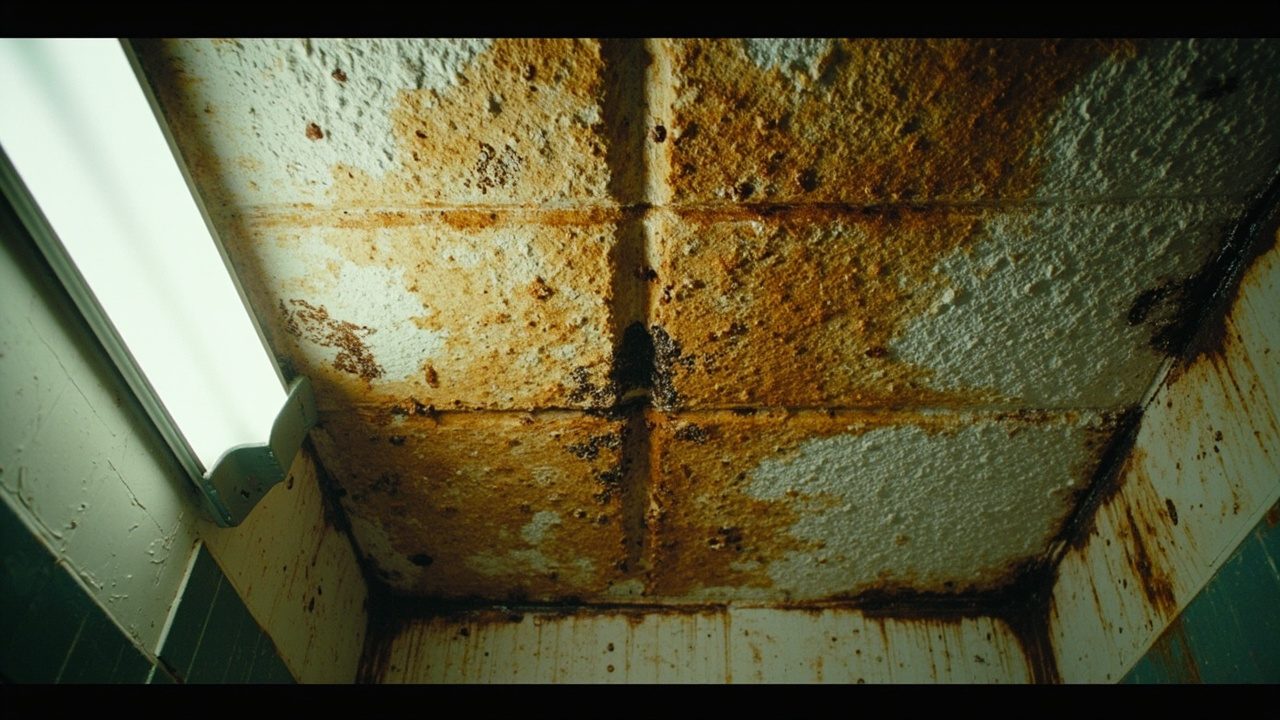
A darkened grout line on a restroom wall, a stain spreading across the ceiling of the suite below, one floor tile that feels warm underfoot, or a water bill that jumped while nothing looks wet. Each of these tells you which side of the system to look at before it tells you which part failed. Supply and drain behave differently. Pressurized supply water escapes overnight with the building empty, while a drain only escapes while something upstream is running. A stain that grows on a Sunday points at supply. A stain that appears after the morning restroom rush points at a drain, a trap or a fixture seal. A floor sink that overflows only when the kitchen discharges puts the fault on that kitchen branch.
Placement comes next, and placement is the diagnosis. One fixture slow or gurgling means a branch or a trap. Every fixture slow with the lowest floor drain backing up means the main. A warm patch in a slab floor means the hot line under it. An odor with nothing wet means a dry trap, a vent or the seal at a closet flange. Building age narrows it further. Slab on grade suites from the 1970s through the 1990s across the county carry copper supply run under or through the slab, and older stock adds cast iron drains that crack or corrode from the inside. Newer suites on PEX manifold distribution have fewer joints inside walls, so a supply leak there sits at a fitting or at the manifold.
Local water adds a second mechanism. The utility describes El Paso water as moderately hard to hard, and scale collects inside fixture valves, cartridges and supply stops. A valve that seeps at the stem wets the wall cavity slowly, and from the tile side that slow seep looks the same as a pinhole. Both leave a damp cavity, and the cause only separates once the branch is isolated.
For an owner or property manager, a wet wall is a schedule problem before it is a plumbing problem. The restroom closes, the ceiling below gets opened, and any tenant improvement behind that wall loses its start date. A commercial plumbing service provider who traces the leak to a branch before cutting keeps that opening to one point. Whether you hire commercial plumbers for the trace or send the first call to your own maintenance staff, the written record of where the loss sits is what the next contractor, the designer and the lender will ask for.
Call today when the stain is still growing. A hairline supply leak behind tile keeps the framing damp because nothing dries inside a wall, and the pipe repair turns into a wall rebuild. Until someone arrives, the only things to touch are the fixture stop and the main shutoff, and anyone standing near wet outlets or a ceiling fixture should have that circuit killed first.
Our page on commercial backflow prevention & testing covers that side of the work in more depth.
How we survey a commercial line before anything is designed
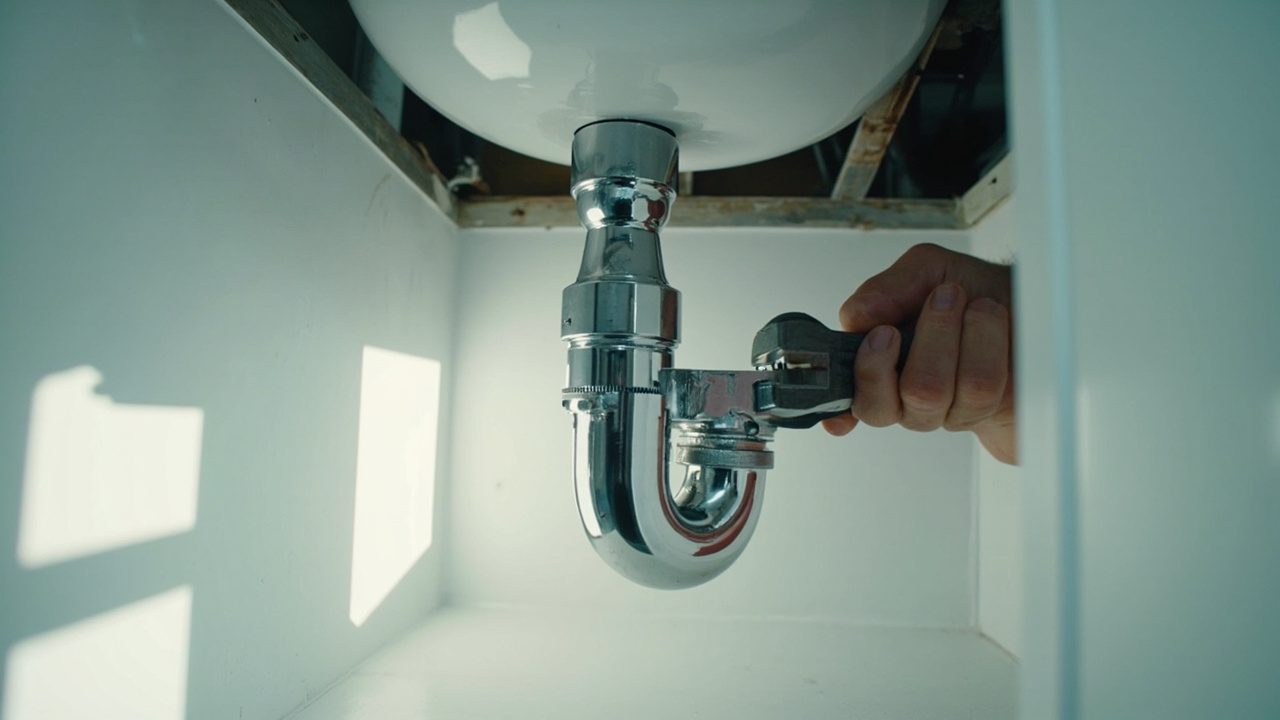
The sequence follows where the water is going. With every fixture closed, the water meter leak indicator is watched for fifteen minutes, and any movement means water is leaving the system somewhere you cannot see. The main is then closed and the meter watched again. A dial still moving with the main closed puts the loss on the street side, and a dial that stops puts it inside the building. Stops and branches close one at a time until the loss stops, and only then does anyone open a surface. Drains run in a different order. The line is cleared first, because a full line shows nothing but water, and the drain camera with a locator goes in second, run from a cleanout. The picture turns a slow drain into a spot and a depth, which separates a repair at one joint from replacing a run.
Readings then set the scope. A screw on pressure gauge at a hose bib, read with everything off, should sit at 45 to 70 psi. Above 80 psi, fixtures, supply hoses and heaters start failing early, and a pressure reducing valve with a thermal expansion tank belongs in the job alongside whatever failed. Leaving the gauge on overnight catches a failed expansion tank, because a morning reading far above the night figure means the heater is pushing water into a closed system. The hardness test at the tap decides the heater question. Above about seven grains per gallon scale forms steadily, so the plan includes flushing, descaling or treatment before another heater goes in. On camera, continuous fall with clean joints leaves the line alone, standing water on a level run marks a belly, and roots at a joint put the repair at that joint.
Cast iron against PVC or ABS is decided by the age of the building and by what the camera shows. Older commercial stock in the county runs cast iron that corrodes from the inside over decades, and buildings from the 1970s through the 1990s run ABS or PVC. A tenant improvement that replaces only part of a run joins the two with a no hub band transition, and the transition detail decides whether the joint holds. Cast iron stays quiet inside a wall, which matters in stacked suites, while plastic transmits more noise. Caliche hardpan slows every long trench here, which pushes a long run under a finished floor toward cured in place lining when the camera shows a host pipe that is still round. A belly pushes the other way, toward open cut, because lining cannot correct slope.
See commercial kitchen plumbing for how the related work is scoped and priced.
Permit and inspection questions? Planning & Inspections is the office we coordinate with on every permitted El Paso job.
Narrow this to two options before calling, then ask which one suits the house.
| Option | The numbers a buyer weighs | Best suited to |
|---|---|---|
| Cast iron drain against PVC or ABS | Cast iron is heavy and quiet and corrodes from the inside over decades | Drain replacement under a finished house |
| Salt softener against a salt free conditioner | An ion exchange softener removes hardness minerals and needs salt and a drain | Hard water houses weighing salt against upkeep |
| Trenchless lining against open cut replacement | Lining cures a new pipe inside the old one with a small loss of inside diameter | Runs under a slab, a drive or mature trees |
| Tank water heater against tankless | A tank is judged on capacity in gallons and its first hour rating | Households with long back to back hot water use |
How a commercial plumbing call runs
Call and isolate
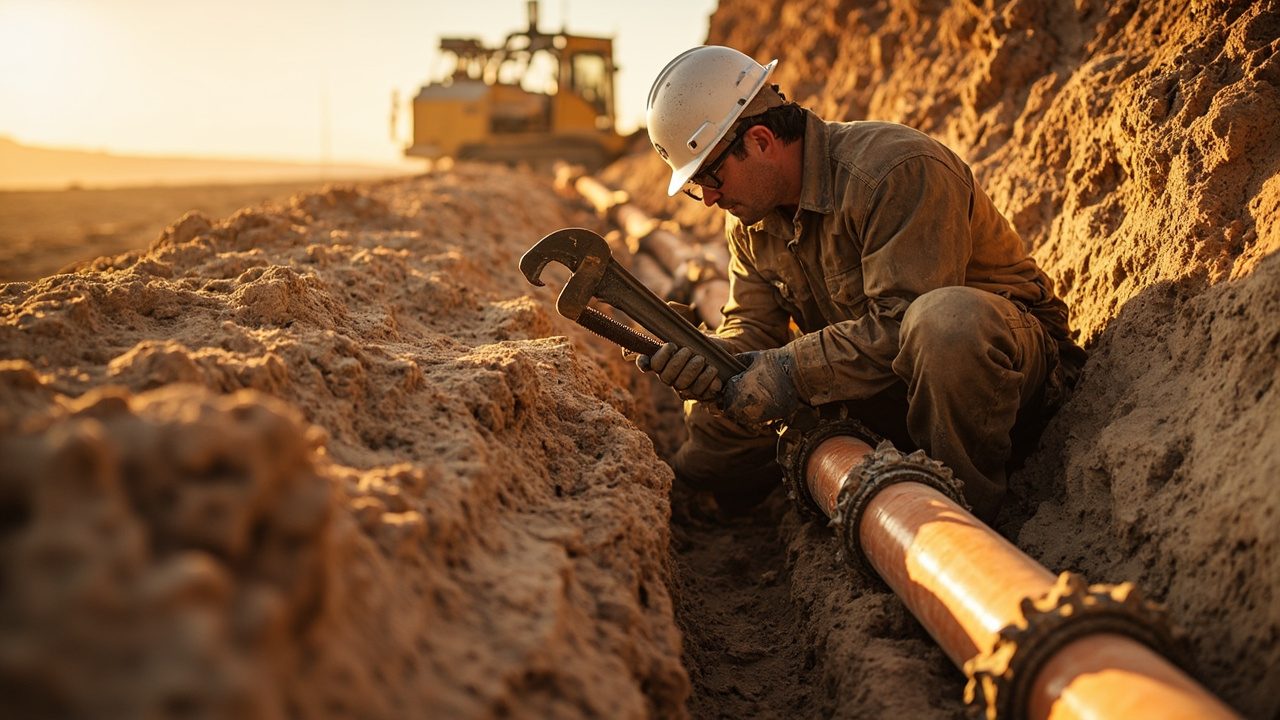
On the phone you describe what you see, whether water escapes with the building empty, whether one fixture or every fixture is affected, and where the main shutoff sits. On site, everything goes off and the meter leak indicator is read for fifteen minutes, then the main closes and the meter is read again. Each stop and branch closes in sequence until the loss halts. For a drain, the line is cleared first and the camera with the locator goes in from a cleanout, so you watch the pipe wall on screen and the locator marks the spot and depth on the surface above.
Approve the written scope
Once you approve the scope, the branch that carries the work gets isolated at its stop so the rest of the building keeps water. Protection goes down, and the cut is made at the located point. Cast iron cut at a hub is rejoined with a no hub band, type L copper is soldered, and PEX gets protected where it passes through framing. The permit gets pulled where the work calls for one. If a joint, stack or wall opening shows more than the scope described, we stop and show you before going further, and the change goes into the written scope before anything continues.
Test and hand over
Before we leave, the pressure gauge goes back on a hose bib and has to read 45 to 70 psi static with everything off. The meter dial stays motionless for fifteen minutes with every fixture closed, the same test that opened the visit. After drain work the camera runs the line again and shows continuous fall with clean joints. We walk you through the readings on site, and you keep the written scope and the camera footage with the locator depth, the documentation a lender or property manager can file.
Why inspection timing decides commercial plumbing schedules here
Inspection sets the pace of commercial plumbing work in the county. Inside city limits the city permit authority issues plumbing permits and inspects work at stages during construction, and outside city limits the county or the neighboring town takes that role. Gas work and main line work usually need a permit, a like for like faucet or fixture swap usually does not, and the final call belongs to the authority. A wall that closes before its stage inspection gets opened again, and that reopening lands on your tenant improvement deadline. Occupancy adds pressure. A restaurant or retail suite cannot lose water for a full day, so inspection stages get booked around the hours a branch can be shut.
A crew unfamiliar with local conditions makes three mistakes that show up after the walls close. Restroom layouts drawn without a camera survey put new fixtures on a line with a belly or roots at a clay joint, and the first week of full occupancy exposes it. Cast iron joined to plastic without a no hub band transition leaks at the joint or works loose under load. A heater specified without a hardness reading meets water commonly around ten grains per gallon or more, and scale starts eating element life. Outdoors, brief arctic freezes split exposed hose bibs and backflow assemblies, and intense sun degrades exposed plastic lines, so routing and protection get decided before pipe goes in.
Work runs across the greater metro and the permit authority changes with the address, so the first question on the phone is where the building sits. When you hire commercial plumbers, a commercial plumbing company that asks for the address before it names a schedule is checking which authority reviews the job and which inspection stages apply. Long horizontal runs in older commercial buildings need camera inspection and descaling, and a crew that skips the survey finds the corroded section only after a fixture is added upstream.
More detail on apartment complex plumbing is on its own page.
What working with Bedrock Plumbing El Paso looks like day to day
Scheduling around occupied hours
You call and we ask what you see, when it started, whether water escapes with the building empty and whether one fixture or all of them are affected. Those answers sort the visit into same day or scheduled. Whoever took the call confirms the arrival window by phone once the visit is set, and when the job ahead of yours runs long the window moves and you are told the new one. We also ask which branch can lose water and for how long, so tenants know before the valves close.
Protecting floors and tenants
Before anything comes apart, floor protection goes down along the walk path from the door to the work area, and fixtures nearby get covered. A dust barrier at the wall opening keeps drywall and tile dust out of the occupied space, and a wet vacuum stays at hand for the first cut on any line. Drain work that can smell gets ventilation and containment at the cleanout. Cut pipe, tile and drywall are bagged and leave with the crew, and the last thing done is running every fixture on the branch to confirm nothing weeps.
What moves the scope
Hard access raises the scope first, meaning a finished wall, tile, a ceiling below or a slab, plus putting that surface back. Longer, deeper excavation raises it next, then a whole run in place of one joint, then matching old pipe to new. Gas and main line work add permit and inspection scope, which a faucet swap usually lacks, and the authority has the final say. Higher fixture and heater grade and after hours dispatch raise it last. The survey produces a written scope, you approve it before work starts, and it states what happens if an opening finds more.
How technicians earn sign off
A new technician rides with a lead before working alone, and the lead signs off on specific tasks, including running the drain camera from a cleanout, reading the locator depth and closing a no hub band transition. The lead also signs off on the meter test, because needle movement while the main valve is shut indicates a service line leak. The current code cycle gets studied inside the company as work is planned. On a slab, a long horizontal run or anything unusual, a second technician reviews the footage before a scope is written.
You Have Questions,
We Have Answers
Commercial plumbing covers water, drain, vent, gas and fixture systems in buildings that serve the public or tenants. Typical examples include multi-stall restrooms, floor sinks, grease-producing kitchen branches, water heaters sized for many users and backflow assemblies. Loads are higher than in a house, since dozens of fixtures can discharge at once, and pipe runs are longer and often sit above occupied suites. Work also tends to be phased around business hours, so isolation valves and staged shutoffs matter as much as the repair itself.
Bedrock Plumbing El Paso works only in El Paso, so it cannot name a best plumber in Minneapolis. For commercial work here, two differentiators stand out. First, a drain camera with a locator runs down the line before any design is drawn, so the owner receives footage with locator depth. Second, a written scope gets approved ahead of the first cut, and it covers extra findings inside a wall. Call (915) 350-8242 to talk through a building.
A good plumber explains the cause before quoting the fix and shows evidence of it. Look for someone who isolates the problem with a test, such as a meter watched with all fixtures closed, rather than opening walls on a guess. Expect the scope in writing, with materials named, like type L copper or no hub bands on cast iron. A good plumber also asks about permits early and hands back readings or footage when the job ends.
The three main types are supply, drainage and venting. Supply carries pressurized potable water through copper, PEX or galvanized pipe to fixtures. Drainage moves wastewater out by gravity, which is why it needs continuous downward slope. Venting admits air behind the flow so traps keep their water seal and drains do not gurgle. A blocked vent can mimic a slow drain, because water leaving a pipe without air behind it pulls trap seals down and lets sewer odor into the room.
Industrial plumbers work on process piping, while commercial plumbers work on building systems for occupants. Industrial jobs involve chemical lines, high-pressure steam, compressed air, wastewater pretreatment and pipe materials such as stainless steel or lined carbon steel. Commercial jobs center on restrooms, kitchens, water heaters and domestic supply. Industrial work often follows plant safety procedures and specialized welding qualifications, and the fluids being moved may be hazardous, which changes the materials, testing and shutdown planning.
Industrial plumbing serves manufacturing and processing operations, while commercial plumbing serves offices, shops, restaurants and multi-tenant buildings. The difference shows in what flows through the pipe. Commercial systems carry potable water and ordinary sanitary waste. Industrial systems may carry solvents, coolants, process water or waste that must be treated before discharge. Pipe sizing follows the same logic, with industrial lines built around equipment demand rather than the fixture counts used for occupied buildings.
Industrial and commercial are separate categories, though they overlap at the edges. A warehouse with restrooms and a break room has commercial plumbing inside an industrial building. A bakery or laundry sits in between, since it has heavy hot water demand and grease or lint loads beyond a typical office. The dividing line is the fluid and the purpose. Occupant comfort and sanitation mean commercial, while production processes and specialty waste streams mean industrial.
No plumbing company holds a verifiable title as the biggest, and size rarely predicts quality on a given job. National franchises and large regional contractors employ many crews, but a building's outcome depends on who surveys the line and who reads the results. For a commercial site, ask about the specific technician's process, whether the scope is written and whether the permit authority for your address will be checked before scheduling begins.
How caliche and cast iron change commercial plumbing in El Paso
Caliche hardpan sits in layers under the sandy, gravelly desert soil on the mesas and foothills, and it slows every excavation, so a lateral or yard line dig here takes longer than the same dig in softer soil. Trench work gets sequenced ahead of the tenant improvement opening, since a late discovery in hardpan stalls everything behind it. The river valley has finer alluvial soil that holds more water, and monsoon storms run off quickly into low streets and dips, which loads a cracked lateral from outside. Older buildings add cast iron drains under the slab, and cast iron corrodes from the inside out until it cracks and slow drains turn into backups. Galvanized supply rusts from the inside, and the water utility names it as the typical cause of discolored water. Intense sun degrades exposed plastic lines, and short hard freezes during arctic cold fronts split unprotected outdoor piping, which moves routing indoors or under protection.
Inspection on commercial plumbing arrives at stages during construction, and an inspector usually looks at what is still visible when the stage comes. At rough in that means the drain and vent layout, the transition bands where cast iron meets plastic, and the supply routing through framing where PEX needs protection. Gas fittings are checked with an electronic detector to find where to look and bubble solution to prove it, and any bubble that keeps growing closes the appliance valve before anything else happens. Knowing that sequence changes the schedule, because the camera survey and any trench work finish before the walls are framed and the inspection is booked. Gas work also involves Texas Gas Service, and anyone who smells gas or rotten eggs leaves the building with nothing switched on and calls the utility from outside. The permit authority makes the final call on what needs inspection, and a crew that has worked through the local stages asks it early.
Plumbing Services in The El Paso Area
Explore our service area and locate Bedrock Plumbing El Paso with ease. We're proudly local and serve the surrounding neighborhoods with fast response and honest pricing. Use the map to check our coverage area, or call us and we'll confirm in seconds.
Address:
Bedrock Plumbing El Paso, 221 North Kansas St, Suite 700, El Paso, TX, 79901
Additional Services We Offer
- Apartment Complex Plumbing
- Commercial Backflow Prevention & Testing
- Commercial Kitchen Plumbing
- Commercial Repiping Services
- Commercial Sewer Line Repair
- Commercial Toilet & Urinal Repair
- Commercial Water Heater Systems
- Grease Trap Cleaning & Pumping
- Hydro Jetting Services
- Industrial Pipe Repair
- Medical & Dental Gas Plumbing
- Preventative Commercial Maintenance
You can plunge a toilet, clean an aerator, swap a flapper or a braided supply hose, and find and close the main shutoff. DIY stops at anything soldered, anything on the gas line, anything behind a finished wall or under a slab, and any drain backed up past a cleanout. Coverage after water damage is the carrier's decision. If the first visit finds work outside what we handle, we say so then and name who does it.
Before you call, know when the symptom started and what changed just before it, such as a tenant improvement or a new fixture. Check whether the meter dial moves with every fixture closed, and find the main shutoff. Any age you have for the building or its pipe material helps, along with which fixtures are affected and whether tenants occupy the space.
Last reviewed September 2026 by Dave Parker, Owner.