





What mineral heavy well water does to plumbing here
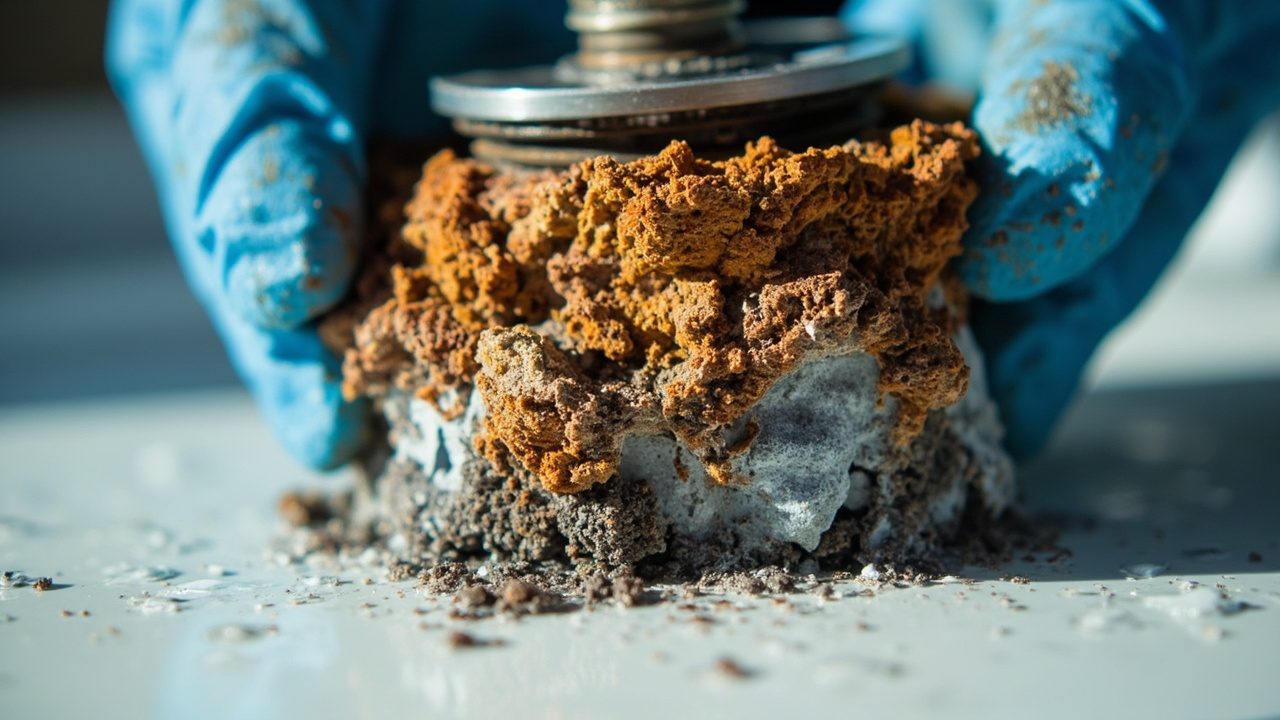
Your water arrives from the ground already loaded with minerals. El Paso County Water Control and Improvement District No. 4 supplies Fabens from groundwater wells, and that water has a history of high total dissolved solids. The district treats for iron and manganese, and whatever slips through shows up as stains on fixtures and as crust in aerators and valve cartridges. Inside a tank water heater the same minerals settle as scale, which slows recovery, so the second shower runs cold first. An anode rod in water this mineral heavy wears down fast, so it gets pulled and checked on a schedule.
The oldest homes in the Original Fabens townsite along West Main date from the late 1910s, and they can still carry galvanized steel supply lines, cast iron drains and clay sewer laterals. Galvanized closes up from the inside, cast iron corrodes from the inside out, and clay laterals are jointed in short sections that let roots in. Many of these houses have been partly repiped, so copper spliced to galvanized is common, and the joint between them needs a dielectric union. Postwar slab homes from the 1950s and 1960s carry cast iron drain lines under the floor. Later subdivisions moved to copper or plastic supply with plastic drains, and manufactured homes on rural lots carry plastic supply lines. In Holly Estates the homes are single story on slab, so a leak under the floor is found and reached through the slab, since no crawlspace exists to work from.
Valley floor soil is river alluvium that runs from loam to heavy clay, with salty, alkaline patches. Clay swells when wet and shrinks when dry, which moves slabs and the drain lines under them and cracks laterals. The salts corrode buried copper and cast iron, so plastic supply and drain materials hold up better underground. Nearly every home here sits on slab without a basement, so ponding against the foundation and around sewer cleanouts after a monsoon downpour is the local flood risk. The land is flat, and storm water moves slowly toward low spots in yards and streets.
From routine maintenance to 24/7 emergency plumbing services, the same local crew handles every call.
How Bedrock Plumbing El Paso runs a job in Fabens
Scope starts at the tap. A hardness test on the incoming water sorts it into soft, moderately hard, hard or very hard, and the jump from moderately hard to hard is where scale starts showing up on service calls. In a valley where the groundwater is mineral heavy, a second water heater inside a few years is a water problem. The reading decides whether the answer is a new tank, a pulled anode rod and a flush, or treatment for the water before anything gets replaced.
The readings become a written scope before anything is opened. It lists the repair, what has to be opened to reach it, the restoration of that surface and any permit item as separate lines, and nothing starts until you approve it. When an opening turns up something outside that scope, work at the spot stops, the finding is shown to you and written as its own line, and you decide whether it happens on this visit.
Skill is checked before a new plumber works alone. A new technician works beside an experienced one until they can pull an anode rod, read a meter leak wheel, set an angle stop that does not weep and join cast iron to plastic with a no hub band, and they show each of those jobs first. On the finished job, the technician who did the work repeats the pressure reading and the farthest hot tap reading with you standing there. An unusual job, such as a leak the meter places under a slab, gets a second opinion from a senior technician before the scope is written. Each of those steps produces a reading you can keep.
The Texas State Board of Plumbing Examiners publishes the rules that govern work like this in your area.
Isolate before opening
Every leak call starts at the water meter with every fixture closed. Any movement of the dial or leak wheel over fifteen minutes means water is leaving the system. Closing the main and watching again puts the loss on the street side or the house side. On a slab home that narrowing decides whether one opening in the floor is enough or whether rerouting the line through a wall or attic is the better repair.
Overnight pressure hold
A screw on gauge at a hose bib reads static pressure with everything in the house off. A reading between 45 and 70 psi is good, and above 80 psi hoses, fixtures and heaters start failing early. Leaving the gauge on overnight catches a failed expansion tank, because a morning reading far above the night figure means the heater is pushing expanded water into a closed system with nowhere to go. That check belongs to the same visit.
Code and authority
Technicians study the International Plumbing Code and, before a scope is written, confirm with the permit authority what applies at the job address. That habit matters most on gas work and main line work, where the permit question comes up first. On a water heater replacement it settles how the relief valve discharge and the expansion tank get set up before the old tank is drained.
Valley floor experience
The flat valley floor, the canals through the farmland and slab construction shape every job here. Clay moves slabs, salty soil corrodes buried copper and cast iron, and rural lots with manufactured homes carry plastic supply lines. Knowing which construction sits where lets a crew choose plastic underground, plan for pooled water at cleanouts after monsoon storms, and expect scale before a heater comes open.
Plumbing work we handle across Fabens
Residential work in Fabens centers on the water heater and the lines around it, with leak repair, fixture and valve replacement, drain clearing, repipe work, sump pumps and gas line work inside the home filling out the rest. Nearly every house is on slab, so reaching a supply or drain leak means going through the floor or running new pipe along the framing.
Commercial jobs turn on uptime. Grease line jetting, main line repair, water heater work, restroom fixture programs and scheduled drain service for kitchens are planned around when a room can be out of service. When water escapes or a drain backs up, emergency work turns on containment, because burst lines, no water, active leaks, sewage backups and failed heaters all begin with shutting off the right segment, and after hours response keeps that step available at night. Scale reads the same on every tier, so the water gets tested on all three.
Water heater repair and replacement
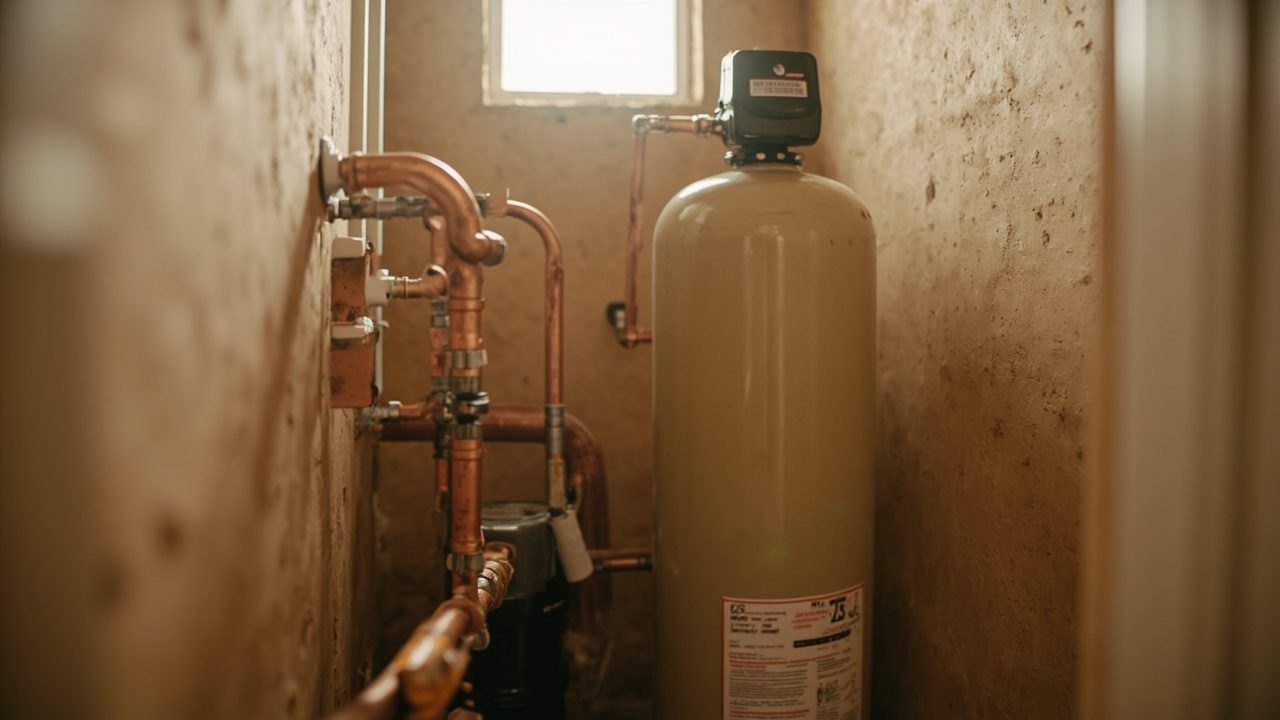
Residential work covers leak repair, fixture and valve replacement, water heater repair and replacement, drain clearing, repipe work and gas line work inside the home. In Fabens the water heater is where the water chemistry shows first. A typical job starts with rusty water in the first minute or a second shower that runs cold, and the anode rod pull tells the story. A bare core wire means the tank itself is now corroding. Pulling the rod needs headroom above the tank, so clearance is checked before anyone promises it can be done today. When a new tank goes in, the hardness reading decides the next choice. An ion exchange softener removes hardness minerals and needs salt and a drain. A template assisted crystallization conditioner needs neither and changes how the minerals behave so they stick less, which suits a house with no drain near the heater.
Grease line jetting and kitchen drain service
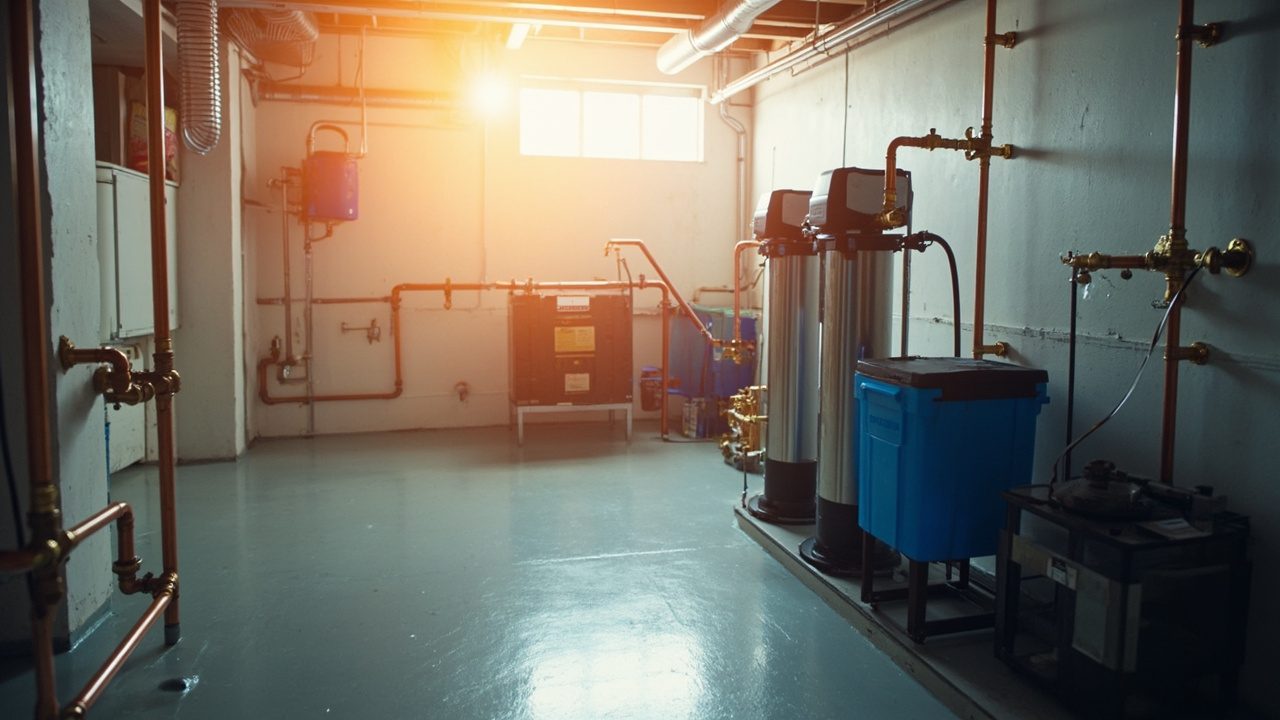
Commercial work covers grease line jetting and maintenance, drain cleaning on primary runs, water heater descaling, restroom fixture service and preventive kitchen drainage programs. Scheduling fits around the hours a kitchen or restroom has to stay usable, so jetting and fixture work go into closed periods where possible. The documentation covers camera footage of the run, static pressure and hardness readings, and a written scope with each line itemized, which is what a property manager, a lender or an insurance reviewer asks for. A typical scenario is a kitchen branch that backs up whenever the dish line runs. Grease at the branch is jetted, the camera confirms the pipe walls are visible along the whole run, and the maintenance interval is set from what the camera found. Scale in a heater cuts recovery during service, so the water is read on those jobs too.
Burst line and sewage backup response
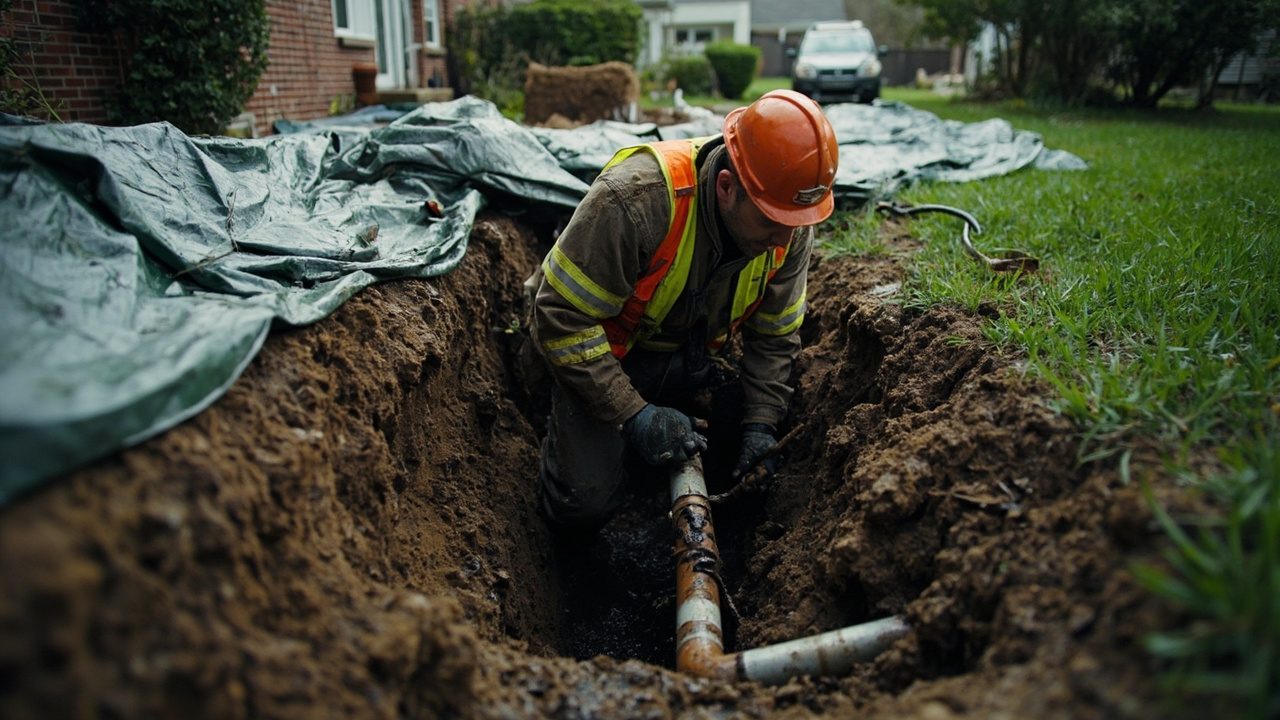
Emergency work covers pressurized ruptures, loss of supply, active leaks, sewage backups, failed water heaters and after hours response. The first move on arrival is containment, because water escapes all night whether anyone is home or not, while a drain escapes only while something upstream runs. For a heater the sequence is the cold inlet on top of the tank closed, the gas control or breaker off, and a hot tap opened on a lower floor so the tank is not under vacuum. A typical call follows a hard freeze. One fixture has no water while the rest of the house works, then a ceiling stain shows hours after the temperature recovered. Closing the main stops it, and the branch that lost water first is where the split usually sits. If you smell gas, everyone goes outside, nothing gets switched on, and the gas utility is called from outside.
The plumbing problems we see most in Fabens
Rusty water that shows up on the hot side only points at the water heater rather than the pipes. In water this mineral heavy, scale collects on the bottom of the tank, and the anode rod, a sacrificial metal coating on a core wire, wears away faster than it would in soft water. The stains that iron and manganese leave on fixtures come from the supply, while rust in the first minute at the farthest hot tap comes from the tank.
The escalation runs in a fixed order. Once the anode rod is corroded away, the steel tank becomes the sacrificial metal, rusty hot water arrives first, and a split tank arrives after. When the hot tap runs rusty and the cold tap runs clean, call today, because the rod is already bare and the tank wall is the part corroding.
Our technicians follow the workmanship standards promoted by the Plumbing-Heating-Cooling Contractors Association.
Freeze splits at exposed lines
Winter nights often drop to freezing, and an occasional hard freeze splits outdoor hose bibs and uninsulated supply lines that were never built for freeze protection. Nothing shows until the ice clears and the pipe is under pressure again. No water at one fixture while the rest of the house works points at a split branch. A ceiling stain after the thaw means water is escaping under pressure, so close the main and call that day.
Galvanized lines and clay laterals
Galvanized supply closes up from the inside, so one tap runs weak while the others run fine and the water comes out brown. Clay laterals fail in a different order. Roots enter at one joint, paper and grease catch there every day, and the main backs up into the lowest fixture with no warning. When every drain runs slow and the lowest one gurgles as another fixture runs, call that day, so the camera can show whether one joint is the repair.
Slab leaks on moving clay
Clay that swells and shrinks moves slabs and the lines under them, and mineral-laden groundwater attacks buried copper and cast iron. A meter dial that turns with every fixture closed means water is leaving under pressure. If it stops when the main is closed, the loss is on the house side, and a warm spot on the floor in one place puts it on the hot line under the slab. Call that day, because a hairline leak keeps the ground and framing damp around it.
Weeping angle stops
A weeping angle stop under a sink is easy to postpone. The compression nut corrodes until it cannot be snugged, and the stop can then snap off in your hand during a faucet change, so the room takes the full supply. Aerators crusted with iron and manganese come from the same neglect. When a stop drips at the nut or will not turn, call before anyone changes that faucet.
Find the sign you have, then read across to see whether it can wait.
| Symptom or first sign | What is already happening | What it becomes if ignored | When to call |
|---|---|---|---|
| An anode rod eaten away | The steel tank becomes the sacrificial metal | Rusty hot water arrives first and a split tank arrives after | This week, while it is still one part |
| Roots at one clay joint | Paper and grease catch at that spot every day | The main backs up into the lowest fixture in the building with no warning | Now, the same day |
| A hairline supply leak behind tile | The framing stays damp | The pipe repair turns into a wall rebuild | This week, while it is still one part |
| Incoming pressure above the normal band | The relief valve on the heater starts weeping | The tank seams work harder every cycle and the heater fails years before it should | This week, while it is still one part |
What the first visit looks like
The first stops are a hose bib and the kitchen tap. A screw on gauge at the hose bib measures static pressure with all fixtures closed, a hardness test and a total dissolved solids meter evaluate the incoming water, and the meter check runs fifteen minutes. A reading above the state secondary standard for dissolved solids means scale builds fast, and softening or treatment gets discussed with you. Before you call, know when the problem started, what changed just before it, how old the heater is, where your main shutoff sits and whether anyone is home.
Independent standards matter too, the EPA's WaterSense program sets the efficiency benchmarks we use when recommending replacement fixtures.
Calls and arrival windows
The person who answers logs what you describe and gives you an arrival window. A technician calls before heading to your address. If the job ahead runs long, you get a call with a revised window before the first one passes, and that same call tells you whether the job can wait until morning. Keep the heater and the meter reachable, since that saves time at the door.
Arrival and walkthrough
The technician introduces themselves at the door, puts down floor protection before stepping inside and asks you to show the problem. You walk them to the heater, the meter or the fixture that started it, and describe when it began and what changed just before. Nothing gets opened or drained until the walkthrough is done, and the main shutoff and the angle stops are located first so the water can be isolated to one segment.
Handover and cleanup
Before leaving, the pressure reading and the hot tap reading are repeated and shown to you, and the meter is watched with everything closed. The work area is cleaned and the restoration items in the scope are finished. Old parts, such as an anode rod with a bare core wire, are shown to you on request. You keep a written record of the readings and of the work performed.
The three steps from call to finished work
A repair at one fixture stop or one valve is a single visit. A heater swap adds clearance and venting checks, and a slab or wall opening adds a second visit for restoration. The detail that changes the visit most is whether water has to be off for the whole building or only one branch, so the branch is isolated in the plan before work begins.
The three steps below run in the same order on every job, from what gets logged on your call to the reading that closes it out.
Call and log
The person who answers logs what you see, when it started, what changed just before, the heater's age if you know it, where the main shutoff is and whether anyone is in the house. Those answers decide whether the first visit is tonight or tomorrow morning and whether the water should be closed at the main before the technician arrives. A supply leak running under pressure moves ahead of a slow drain.
Diagnosis and written scope
The visit produces a written scope that lists the repair, the access needed, surface restoration work, any permit item and any fixture or heater grade you chose, each on its own line. It also states what happens if the opening finds more than the readings showed. Nothing starts until you approve it, and anything added later is written and approved the same way.
Work and verified finish
Work follows the plumbing code as the authority applies it at your address. Then the readings close it out. Static pressure sits in the 45 to 70 psi band, the meter dial stays still for fifteen minutes with everything closed, and hot water at the farthest tap reads around 120 degrees after the tap runs a full minute. You keep the readings with your written scope.
Permits and inspection for plumbing work in Fabens
Fabens is unincorporated, and El Paso County says state law does not let it issue building permits. The county sends permit questions for unincorporated areas to its emergency services districts, so confirm the requirement with the district that covers the job address and with the water district for any work at the service connection. That authority is Emergency Services District No. 1 or No. 2. A full replacement scope such as a repipe, a main line repair or new gas work usually needs a permit, and a like for like repair such as a flapper, a supply hose or an angle stop usually does not. The final call belongs to the district, so the question gets asked before a scope is written.
Which stage gets inspected is the district's answer to give, and the scope keeps the opening accessible until that answer is in, whether it is a trench, a wall cut or a slab cut. Compliance that a crew can verify itself is measured. Static pressure is read at a hose bib, and above 80 psi a pressure reducing valve is the normal correction. A closed system also gets a thermal expansion tank, which gives the heater somewhere to put expanded water, and the overnight pressure hold proves it works. A temperature and pressure relief valve that weeps points at pressure above the band, so the system gets checked before anyone blames the valve. Gas work adds a combustible gas detector and bubble solution on every fitting, and any growing bubble or sustained alarm closes the appliance valve before anything else happens.
Materials standards matter most where old pipe meets new. Copper joined to galvanized takes a dielectric union. Cast iron joined to PVC or ABS takes a proper transition with a no hub band. Type L copper is soldered, and PEX is joined with expansion fittings on PEX A or crimp rings on PEX B, then kept out of sunlight and protected where it passes through framing. Salty, alkaline soil corrodes buried copper and cast iron, so underground runs favor plastic supply and drain materials. For a sewer lateral, lining cures a new pipe inside the old one with a small loss of inside diameter and needs a host pipe that is still round. Open cut restores full diameter and lets slope be corrected. Depth, length and what sits on top of the line decide between them, and the camera decides whether the host pipe qualifies.
Need something specific? Our plumbing services page breaks down exactly how we handle it in Fabens.
Finding slab leaks
Water leaving under a slab on clay ground is found by isolation first. The meter check with every fixture closed proves it, closing branches narrows it, and below the floor the work uses listening gear, tracer gas or thermal on a hot line plus a locator. The decision that follows is between breaking the slab at one point and rerouting that line overhead, and the condition of the rest of the run settles it.
What moves the cost
Access moves the job furthest. Reaching a line under a slab, in a finished wall or above a ceiling, and restoring that surface, outweighs the pipe itself, which is why single story slab homes often route a supply line overhead instead of breaking the floor. Next come excavation depth and length, one joint against the whole run, matching old pipe to new, and fixture or heater grade. Unknowns behind a wall get a written agreement on what happens if the opening finds more.
How finished work reads
A heater swap takes as long as clearance, venting and the gas connection allow, and a slab opening adds a second visit for restoration. Finished work reads a static pressure of 45 to 70 psi at the hose bib, a meter dial holding steady through a fifteen minute closed-system wait, and hot water near 120 degrees at the farthest tap after that tap runs a full minute.
Where the water district fits
Work at the service connection involves the water district, which supplies water and wastewater. A meter dial that keeps moving with the main closed puts the loss on the street side of the meter, and the water district and the permit authority decide where responsibility sits. The crew records the reading, shows it to you and stops there, since who repairs that side is the district's call to make.
Tested water, confirmed permits, written scope
Answers for Fabens Homeowners
Trace and access cost depends on detection method, pipe depth and how much surface must be opened afterward. Listening gear and tracer gas locate a pressurized leak within a small area, and that precision limits how much floor or wall gets cut. Finished flooring, tile and cabinets over the leak push the cost up, while bare slab or an open wall keeps it down. Restoration is written as its own line in the scope, so the total is not a surprise.
Slab leak cost rises with access difficulty and falls when the leak can be bypassed. Breaking the slab at one point costs less when the pipe is shallow and the floor is bare concrete. Rerouting the line overhead avoids concrete work but adds pipe length and wall or ceiling openings. Tile, wood flooring, a second leak on the same run and the pipe material also move the total upward. A written scope separates repair, opening and restoration, so each part can be reviewed.
Converting a bath to a shower costs more when the drain location changes or the floor needs rebuilding. Demolition of the tub surround, a new valve and drain, waterproofing behind the walls and tile all add labor. Moving the drain means cutting the floor, which costs more on a slab. A prefabricated base and wall kit on the existing drain position costs less than a custom tiled pan. Framing damage found after demolition adds a separate line.
Judge cheap plumbers by the itemized scope, since a low first number often leaves out access and restoration lines. Compare written scopes that list the repair, opening, surface restoration and permit item separately. Parts grade matters too, because a low-grade angle stop or fixture fails sooner. Ask what reading will confirm the finished work, such as static pressure inside the 45 to 70 psi band. Any plumber who writes each line out before work starts makes a fair comparison possible.
A badly blocked drain clears with a drain machine cable sized to the pipe, followed by a camera check. A plunger or closet auger handles a fixture trap, but a whole-line blockage needs a cable that reaches the main. The cutting head bores through the clog, and the cable is withdrawn slowly to catch debris. Hot water then flushes the loosened residue. Grease that keeps returning needs jetting, and a bellied or broken section shows on camera as standing water.
Most septic tanks need pumping every three to five years, so yearly pumping usually signals a problem. Household size and tank volume set the interval, though a small tank with a large family may need more frequent service. A tank that fills again quickly can point to a failing drain field, a leaking fixture feeding it, or a missing outlet baffle. Sludge depth measured at the tank shows whether the schedule is right. Bedrock does not service septic tanks.
Sediment in water comes from minerals, rust or sand carried in the supply or released from pipes and tanks. Well-sourced water often carries dissolved calcium that hardens into white grit when heated. Rust flakes come from corroding galvanized pipe or a tank whose anode rod is spent. Sand can enter after a main break or a pressure change that stirs the line. Sediment only in hot water points to the heater, and draining a few gallons from the tank drain shows how much has collected.
Plumbers recommend routine cleaning with a hand snake, a hot water flush and an enzyme cleaner for organic buildup. Pull the stopper and clear the hair by hand before it reaches the trap. Enzyme products digest soap film slowly over hours, which suits a monthly maintenance dose and is gentle on old pipe. Kitchen lines gain the most from hot water after each heavy use, as grease hardens once it cools. Recurring slowdowns across several fixtures call for a camera inspection.
A running toilet is often easy to fix, and most repairs take under an hour with basic tools. Lift the tank lid and check the flapper, the chain slack and the fill valve. A flapper that has warped or crusted with mineral scale fails to seal, and replacing it costs little. Adding food coloring to the tank shows a leak if color reaches the bowl without flushing. A fill valve that will not shut off or a cracked overflow tube needs more work.
Plumbing Services in The Fabens Area
Explore our service area and locate Bedrock Plumbing El Paso with ease. We're proudly local and serve the surrounding neighborhoods with fast response and honest pricing. Use the map to check our coverage area, or call us and we'll confirm in seconds.
Address:
Bedrock Plumbing El Paso, Fabens, TX 79838
Plunging a toilet, cleaning an aerator, swapping a flapper or supply hose, draining a hose bib before a freeze and closing the main are homeowner jobs. DIY stops at anything soldered, anything on the gas line, anything behind a finished wall or under a slab, and any drain backed up past a cleanout. We do not judge drinking water safety, so use the district report and a lab test. Outside work gets named on the first visit.
Last reviewed September 2026 by Dave Parker, Owner.