





What brown water from the tap means in older El Paso homes
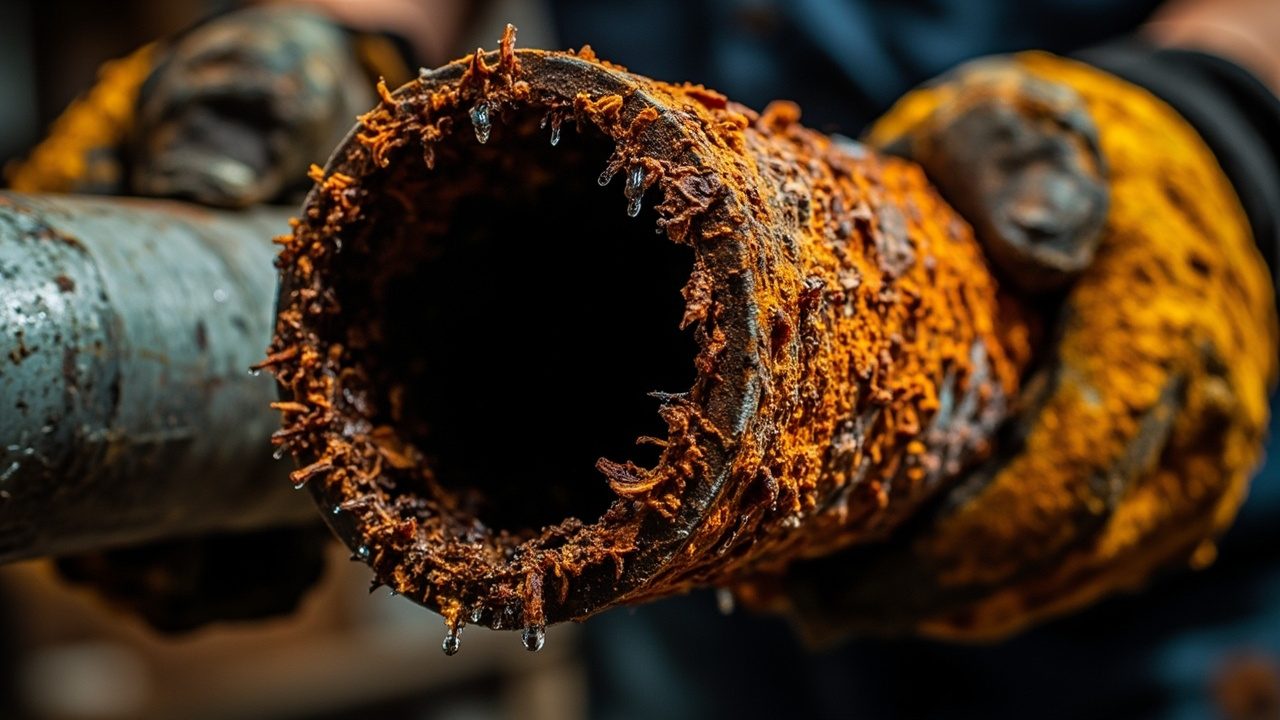
Brown water from the tap that clears after a minute of running is iron oxide coming off a steel surface, either a pipe or a tank. Rusty tap water in the first glass of the morning, yellow water from the faucet after the house sat empty for a weekend, orange rings in a white tub: each one is iron that loosened while the water stood still. You have likely already run the tap, flushed a toilet and checked the laundry for stains. Those are sound first moves, and where the color shows tells you where the fault sits.
Galvanized steel supply pipe corrodes from the inside. Once its coating wears through, the steel rusts, and the scale builds into a rough crust that narrows the bore. A valve closing, a pressure change or a night without use loosens flakes of that crust, and they leave the faucet as brown or yellow water. The utility notes that rusting galvanized pipe inside homes is the typical cause of discolored water, and the housing here explains why. Some homes from the late 1800s through the 1930s still carry galvanized steel supply lines, and homes from the 1940s through the 1960s carry galvanized or early copper supply. Iron in water pipes does not clear on its own, because the crust keeps forming as long as the steel stays wet.
Rust only at the hot taps is a different failure. The steel tank of a water heater is protected by an anode rod, a piece of sacrificial metal that corrodes so the tank wall does not. Discolored hot water beside clear cold water usually means that rod is gone and the tank is next. In homes built from the 1970s through the 1990s the heater often sits in a garage or a closet, and moderately hard to hard water leaves scale in the tank the whole time it runs.
Fill one clear glass from a cold tap and one from a hot tap, and set them side by side on white paper. Color in the hot glass beside a clear cold glass has already narrowed the search to the heater. Supply water is under pressure, so a leak on that side runs all night whether anyone is home or not, and a drain only spills while something upstream runs. Call today when the cold taps run clear and the hot taps run rust colored. An anode rod that is eaten away means the steel tank becomes the sacrificial metal, rusty hot water arrives first, and a split tank arrives after, putting a 50 gallon tank's contents on the floor around it.
If this sounds close but not quite your situation, cold water sandwich effect may be the better starting point.
Permit and inspection questions? Planning & Inspections is the office we coordinate with on every permitted El Paso job.
Find the sign you have, then read across to see whether it can wait.
| Symptom or first sign | What is already happening | What it becomes if ignored | When to call |
|---|---|---|---|
| An anode rod eaten away | The steel tank becomes the sacrificial metal | Rusty hot water arrives first and a split tank arrives after | This week, while it is still one part |
| A weeping angle stop under a sink | The compression nut corrodes so it cannot be snugged | The stop snaps off in someone's hand during a faucet change | Now, the same day |
| A toilet that runs after flushing | The flapper lets the tank refill all night and the fill valve cycles constantly | The valve wears and sticks open with the overflow carrying it away unnoticed | This week, while it is still one part |
How we trace rust to the pipe or the tank before quoting
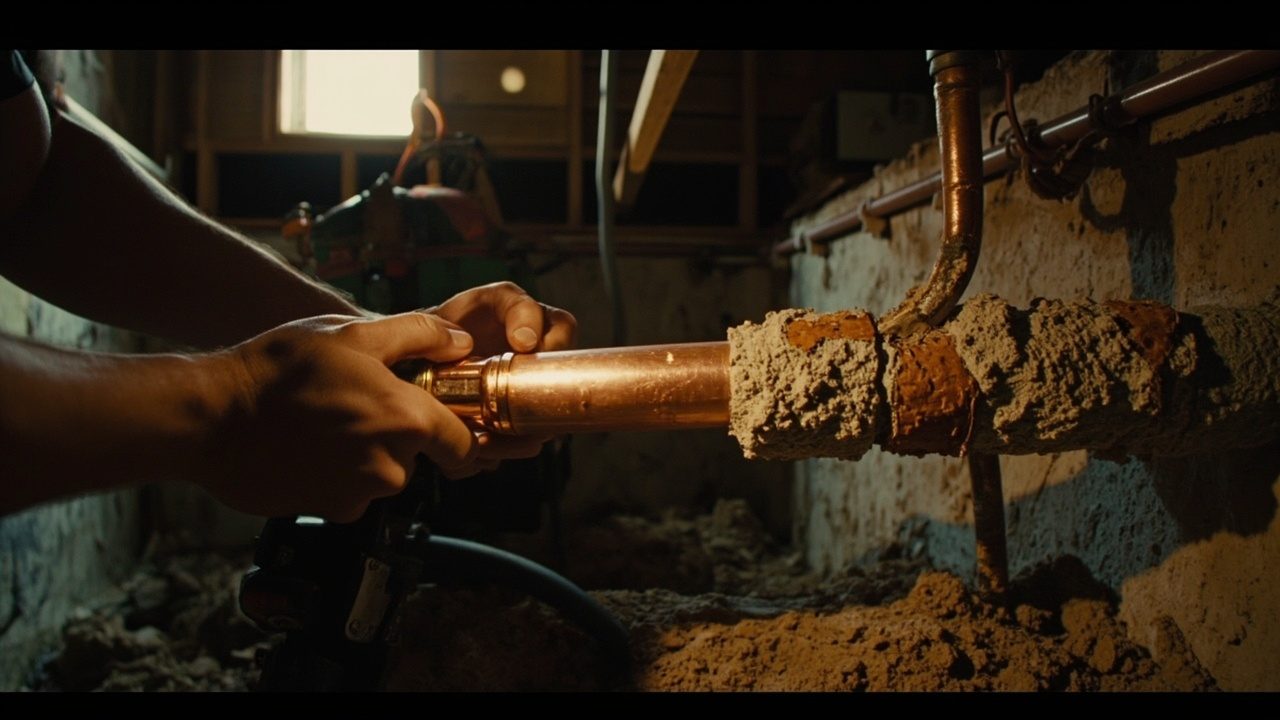
Where the water turns brown locates the fault, so the visit starts at the taps. The technician runs the farthest cold tap for a full minute, reads the color, and repeats at the hot tap. Brown at both puts the fault in the supply piping. Clear cold with brown hot puts it on the heater side. From there the work halves the system. Angle stops and branch valves close one at a time until a branch runs clear, and a branch that stays brown while its neighbors clear is the corroded segment. The meter leak indicator with every fixture closed gets read alongside, because a moving dial changes the job from a color problem into a leak problem. Only after that does anyone decide what gets opened.
The reading this page turns on is the anode rod pull on a tank water heater. A rod with sacrificial metal left on the core wire means the tank is still protected, and the job is a flush of loose scale and, where the rod is thin, a new rod. A bare core wire means the tank itself is now the part corroding, and the job becomes a heater replacement. Pulling the rod needs headroom above the tank, and a heater set in a closet or garage can leave little of it, so clearance is checked before anyone promises the rod comes out the same visit. Two more readings can widen the scope. Static pressure above 80 psi at the hose bib with everything off adds a pressure reducing valve and an expansion tank to the job, and a hardness kit reading at or above about seven grains per gallon adds a flush, descaling or treatment plan, since scale then forms steadily.
When the isolation finds a corroded galvanized segment, the replacement choice is type L copper or PEX. Copper is rigid, tolerates heat directly, and costs more in material and labor. PEX is flexible, so a home run layout off a PEX manifold puts fewer joints inside walls, which means less drywall opened for a future repair. PEX A takes expansion fittings and PEX B takes crimp rings. PEX has to stay out of sunlight and be protected where it passes through framing, and intense desert sun degrades exposed plastic lines, so a sunlit exterior run favors copper. Short hard freezes split unprotected outdoor piping, so where a line is routed decides more than what it is made of. Where new pipe meets the galvanized that stays, a dielectric union separates the two metals.
See high water bills for how the related work is scoped and priced.
Ask which of these readings was taken before any part is replaced.
| Instrument | Good reading | Bad reading | What it changes |
|---|---|---|---|
| Anode rod pull on a tank water heater | The rod still has sacrificial metal along the core wire | A bare core wire with the metal gone | The tank itself is now the part being eaten |
| Water meter leak indicator with every fixture closed | The dial or the small leak wheel does not move over fifteen minutes | Any movement at all with the whole house off | Water is leaving the system somewhere you cannot see |
| Thermometer at the farthest hot tap | Hot water arriving around 120 degrees | Hot enough at the tap to scald a child in seconds | The first slug of water is whatever was sitting in the pipe |
| Screw on pressure gauge at a hose bib | Static pressure sitting in the 45 to 70 psi range with nothing running | Above 80 psi | Fixtures, supply hoses and water heaters start failing early |
How a rusty water call runs

Taps compared first
On the phone we ask which taps run brown, whether the color clears in a minute, and how old the heater is. On site, the technician runs the farthest cold tap and hot tap for a full minute each while you watch the color, then closes angle stops branch by branch to see which one runs brown. A pressure gauge goes on a hose bib with everything off. If the hot side is suspect, the cold inlet on top of the tank is closed, the gas control or breaker is turned off, and only then does the anode rod come out. You see each reading as it is taken.
Work starts after approval
Once the scope is approved, water is isolated at the branch stop or the main before anything is cut. A spent anode rod means a new rod and a flush of loose scale, and a bare core wire means the tank is replaced. On a galvanized run, the corroded segment is cut out and replaced with type L copper or PEX, and the transition fitting between copper and steel goes in at the joint with the pipe that stays. If crust or a thinned wall shows up behind the finished surface beyond what the isolation suggested, we stop and show you before going further.
Readings before we leave
Before we leave, the tap that first ran brown runs for a full minute and the color has to clear. The pressure gauge goes back on the hose bib and has to read in the 45 to 70 psi range with nothing running, the meter leak indicator has to hold still for fifteen minutes with every fixture closed, and a thermometer at the farthest hot tap should read around 120 degrees after a full minute of flow. Galvanized that remains elsewhere can still release color, and the walkthrough shows which branches those are. You keep the written scope marked with what was replaced and the readings taken.
Why local pipe and water conditions change this repair
Whether a rusty water job needs a permit depends on what gets opened. A like for like swap of a faucet or an angle stop usually does not, while a repipe of a galvanized run, a heater replacement and anything on the gas line usually do, and the authority for your address makes the final call. That authority changes at the city limit, because work outside it falls under the county or the neighboring town. A crew that assumes one answer for the whole county writes the wrong scope at some addresses.
The costlier mistakes come from treating rusty water as one problem. A crew that replaces the heater without pulling the anode rod sets a new tank on galvanized supply, and the water runs brown again within days. Water commonly reading around ten grains per gallon or more scales a heater fitted without a plan for flushing or treatment. Copper threaded straight onto galvanized with no dielectric union puts two metals in contact at a wet joint, and that joint corrodes first. Blaming the street without comparing a cold tap and a hot tap sends you to the utility for a fault that sits in your own pipe.
Calls for this work arrive from across the county, and the pipe in the wall changes with the address. Older central housing pairs galvanized supply with cast iron drains, and cast iron under an older slab can crack or corrode, so a crew opening a floor for supply work expects drain findings as well. Newer subdivisions on the east and west sides carry PEX supply on a manifold, and PEX does not rust, so brown water in those homes points first at the heater.
A heater swap is planned as one visit. Headroom above the tank, the existing gas or electric connection and the drain path for flush water all get checked before anyone commits to same day work. A crew that finds a low ceiling over a closet heater after draining the tank leaves the household without hot water overnight, and it also decides whether water goes off to the whole building or only to one branch.
More detail on low water pressure issues is on its own page.
What a rusty water call looks like from your side
When someone arrives
You call and we ask three things: which taps run brown, whether the cold side clears after a minute of running, and how old the heater is. Those answers separate a heater visit from a pipe visit and set the arrival window, which is given to you on the call. Confirmation comes when the technician is on the way. If the job ahead of yours runs long, the technician tells you the new window before the first one closes.
Floors and walls protected
Before a wall, ceiling or heater is touched, floor covering goes down along the path from the door to the work area. Water goes off at the branch stop or the main first, so a cut pipe does not empty into the room. Flush water from the tank runs through a hose to a drain or outside. Cut sections of galvanized pipe go out in a bag, and the last step is wiping down the work area.
What moves the scope
Access moves the scope furthest, meaning a finished wall, a ceiling below or a slab, plus putting the surface back. Next comes one joint against the whole run, which the condition of the rest of that pipe decides. Then comes matching old pipe material and size where the new section joins it, since a galvanized run needs a transition at each end. Heater grade and after hours calls move it least. The written scope follows the diagnosis, and you approve it before work starts.
How technicians earn sign off
A new technician rides with a lead before working alone, and the lead signs off on specific tasks, including a hose bib pressure reading taken with everything off, an anode rod pull with headroom checked first, and a transition joint between copper and galvanized. On a run of galvanized behind a finished wall, a second technician reviews the findings before a scope is written. Updated rules are reviewed with the crew when they change.
You Have Questions,
We Have Answers
Rust colored water comes from iron oxide shed by corroding steel, usually galvanized pipe or a heater tank wall. Iron that dissolves while water sits in the line turns clear water orange or brown once it meets oxygen, which is why a glass looks clear for a moment and then darkens. Water that sits overnight in a corroded section carries the most color. A glass left on the counter that clouds after an hour signals dissolved iron rather than sediment.
Brown water in El Paso homes usually starts inside the house plumbing, not at the source. Sediment stirred loose by a hydrant flush or a main repair can also send a brief brown surge through a neighborhood, and it typically clears within minutes to a few hours once the flow settles. Color that returns every morning, or shows on only one side of the house, points to pipes indoors. Color that hits every neighbor at once points to the street.
Rust colored water is generally an aesthetic problem, since iron oxide itself is not a common health hazard. Lead is the exception worth ruling out in very old lines, and rust cannot be told apart from lead by eye. Discolored water can also carry sediment that harbors bacteria. Skip drinking it until the color clears, and use a laboratory test of your own tap when the source of the pipe is unknown.
Rusty water looks orange, reddish brown, yellow or tea colored, often with fine specks that settle in glass. Iron oxide gives the reddish tones, while a yellow cast points to finer particles suspended in the water. Rust flakes leave orange stains on porcelain, and a metallic taste or smell often comes with the color. Cloudy white water that clears from the bottom up is trapped air, which is a separate matter.
Today's drinking water status comes from the utility, and a page like this cannot confirm it. The utility publishes an annual water quality report and posts notices when a boil advisory or other restriction applies. Those reports cover water at the meter, so they say nothing about rust from your own pipes. Discolored water with no notice usually means the fault sits in the house plumbing. A laboratory test of your tap water settles the question at your address.
Showering in brown water is generally fine for skin, though the water can stain tubs, towels and light hair. Iron oxide sticks to porcelain and fabric, so rinse the tub afterward and avoid laundering whites until the water runs clear. Run the cold tap for a full minute first, since hot side rust from a heater tank tends to come in surges. Skip the shower when the water smells of sewage or gas, or when a boil notice is active.
Chloramine is a disinfectant some utilities use in place of free chlorine, and your annual water quality report names it. Check that report for the disinfectant listed at your meter. Chloramine matters at home in two ways. It can break down rubber parts such as toilet flappers over time, and it must be removed before water reaches a fish tank, because standard dechlorinators leave ammonia behind.
Why galvanized pipe changes rusty water repair in El Paso
Segundo Barrio holds some of the oldest housing in the city, built from the late 1800s through the 1920s, so original galvanized supply, cast iron drains and deteriorated laterals are likely on service calls there. Galvanized closes up from the inside, which narrows the bore and sheds rust as brown water. Homes from the 1940s through the 1960s often pair galvanized with early copper, so one wall can hold two metals that need a dielectric union between them. Slab homes from the 1970s through the 1990s run copper under or through the slab, and post-2000 construction introduced PEX manifolds throughout the area. The water itself is moderately hard to hard, commonly around ten grains per gallon or more, and scale forms steadily above about seven, so a heater in that water wants a flush or treatment planned. Caliche hardpan slows any dig for a yard line, so routing decisions get made before the shovel comes out.
Inspection on a repipe or a gas heater job happens at stages, so when a permit applies the wall stays open until the inspection is done, and the sequence is planned around that instead of around the drywall. The joints, the transition fittings and the gas connection are the places the work gets checked. On a gas heater, a combustible gas detector finds where to look and bubble solution proves it, and a bubble that keeps growing or a sustained alarm closes the appliance valve before anything else happens. If you ever smell gas, everyone goes outside, nothing gets switched on the way out, and Texas Gas Service is called from outside. Questions about what the water carries at the meter belong with the utility report and a laboratory test of your own tap, because pipe work decides what happens after the meter.
Plumbing Services in The El Paso Area
Explore our service area and locate Bedrock Plumbing El Paso with ease. We're proudly local and serve the surrounding neighborhoods with fast response and honest pricing. Use the map to check our coverage area, or call us and we'll confirm in seconds.
Address:
Bedrock Plumbing El Paso, 221 North Kansas St, Suite 700, El Paso, TX, 79901
Additional Services We Offer
Running the cold tap to check the color, cleaning a faucet aerator and finding and closing the main shutoff are homeowner jobs, and you do not need us for them. DIY stops at anything soldered, anything on the gas line and anything behind a finished wall, which covers most galvanized replacement. We do not test drinking water quality, and a laboratory handles that. If the first visit turns up work outside plumbing, we say so then and tell you who handles it.
Before you call, note which taps discharge discolored water, how long it takes the cold side to run clear, and when discoloration started. Locate your water heater and note its age if known. Find your main water shutoff. These details usually tell us whether you need same-day service.
Last reviewed September 2026 by Dave Parker, Owner.