



Why a toilet keeps running on moderately hard El Paso water
You hear a hiss from the tank an hour after the last flush, or the bowl tops itself up every few minutes with nobody near it. Some households never hear a thing and learn about it from a water bill that climbed while nothing looked wet. All three are the same event. Water leaves the tank when nothing asked it to, and the fill valve on the supply side replaces it under line pressure, hour after hour. Supply water is pressurised, so it escapes whether anyone is home. A drain fault only moves water while something upstream runs.
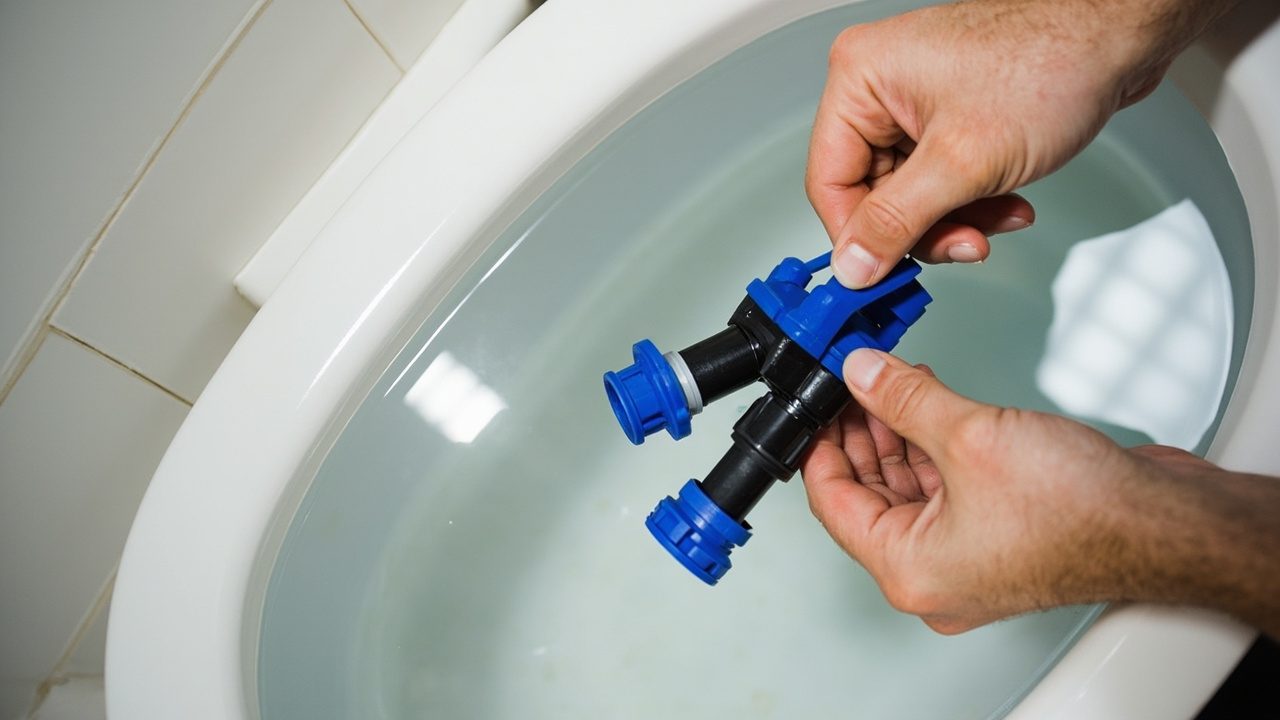
The flapper is the rubber seal over the flush opening. When it hardens, warps or picks up scale on its seat, the tank seeps into the bowl in a thin thread, and the water level drops until the fill valve opens to top it up. A toilet that runs randomly is usually this slow seep, one short refill every few minutes, with a trickle you can see sliding down the bowl wall. A fill valve that hisses without stopping, with water spilling into the overflow tube, is a different fault, because its seal or float no longer shuts the supply off at the set level. Only one fixture is involved either way, so the angle stop under the tank isolates it. Close that stop, and if the hiss and the refilling both end, the fault sits inside that tank.
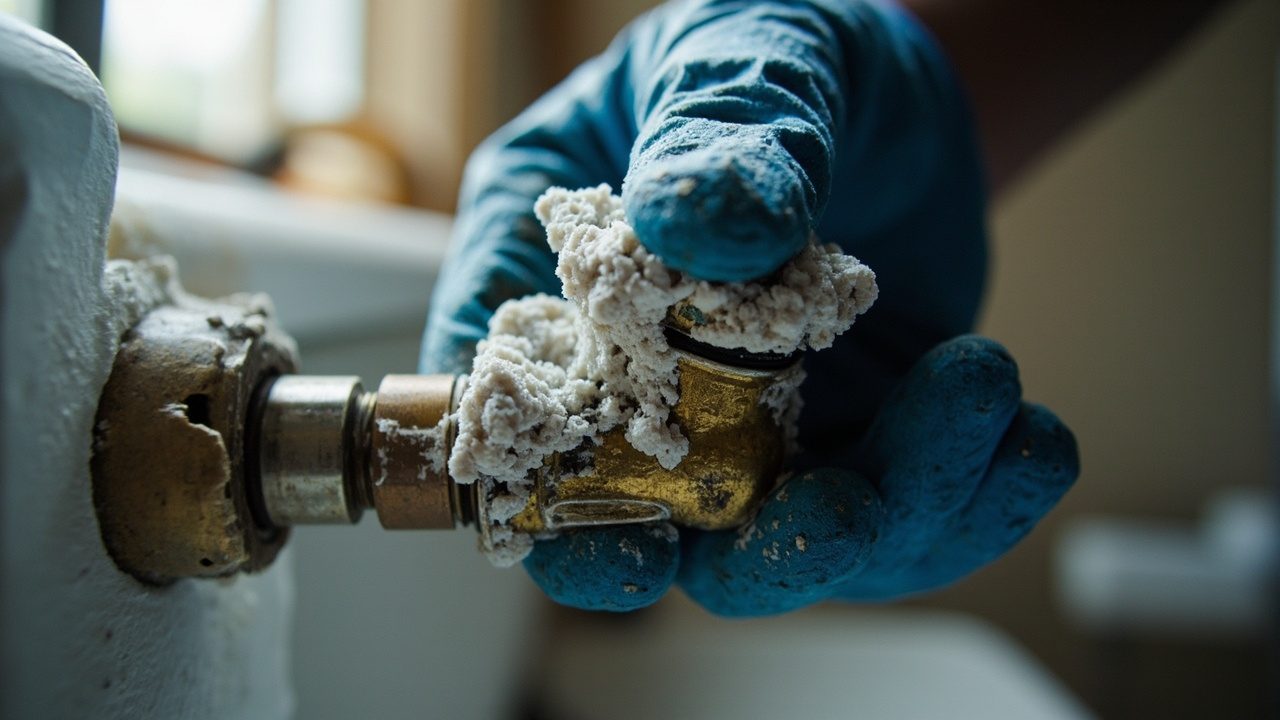
The water here runs moderately hard to hard, and that speeds up both faults. Scale roughens the flapper seat so the rubber never seats fully, and grit collects at the fill valve seal where it has to close cleanly. In older houses with galvanized supply pipe that corrodes from the inside, rust flakes travel to the tank and lodge in the same valve. A new flapper pressed onto a scaled seat can leak again, so the seat gets checked along with the flapper, and toilet flapper replacement or toilet fill valve repair is judged on the condition of both.
A toilet that keeps running after flushing lets the flapper drain the tank, so the fill valve cycles all night to refill it. Then the valve wears and sticks open, and the overflow tube carries the water down the drain where nobody sees it. Call today when the tank hisses with no flush behind it or the meter dial turns with the house shut off. If the angle stop will not turn or weeps at its nut, leave it alone and call, because a corroded compression nut can let the stop snap off in your hand and the room takes the full supply.
See commercial toilet & urinal repair for how the related work is scoped and priced.
The U.S. Department of Energy's water heating guide is a solid primer on operating costs if you want to dig into the numbers yourself.
How we read the meter before a flapper gets replaced
The visit starts at the water meter with the house shut down. Every fixture is off, the washer and the ice maker included, and the leak indicator gets fifteen minutes. Any movement means water is leaving the system somewhere you cannot see. Next the main closes and the dial is read again. A dial still moving with the main closed puts the loss on the street side and moves the job out to the service line. A dial that stops puts the loss inside the house, so the main reopens and the angle stops close one fixture at a time until the movement ends. That order follows the water, and it names one toilet.
The reading this page turns on is the dial with the toilet's angle stop closed. If the movement stops the moment that stop shuts, the toilet is the source, and the job stays at the tank as a repair to the flapper, the seat or the fill valve. If the dial keeps moving, the toilet is one of two leaks or no leak at all, and the scope changes before a part comes off the shelf. The pressure gauge and the hardness kit come after the dial. Their job is to say whether a new part will last or whether the part that failed was reporting on the system. The gauge is read with everything off, because a running fixture hides the static number, and a running toilet is exactly that kind of fixture. Pressure above the band moves a pressure reducing valve into the scope, and a hard result moves seat cleaning and parts replacement as a set into it.
Repair or replace the set comes down to what the isolation found and how the rest of the parts look. A flapper alone is the smallest scope and fits when the seat is smooth and the fill valve shuts off cleanly. When the seat is crusted, the fill valve seal is worn and the stop is corroded, parts of the same age tend to fail one after another, so replacing them together in one visit removes the next failure. A weeping angle stop is its own fork, because the compression nut corrodes until it cannot be snugged. Replacing it on your schedule is a smaller job than the flooding from a stop that snaps during a faucet change. Hard water pushes toward replacing the seat facing parts as a set. A cracked tank, or a leak at the closet flange and wax ring, moves the question from the parts to the toilet.
More detail on overflowing toilet repair is on its own page.
Price-checking is smart: marketplaces like Thumbtack publish typical cost ranges you can hold any quote against, including ours.
Ask which of these readings was taken before any part is replaced.
| Instrument | Good reading | Bad reading | What it changes |
|---|---|---|---|
| Water meter leak indicator with every fixture closed | The dial or the small leak wheel does not move over fifteen minutes | Any movement at all with the whole house off | Water is leaving the system somewhere you cannot see |
| Anode rod pull on a tank water heater | The rod still has sacrificial metal along the core wire | A bare core wire with the metal gone | The tank itself is now the part being eaten |
| Thermometer at the farthest hot tap | Hot water arriving around 120 degrees | Hot enough at the tap to scald a child in seconds | The first slug of water is whatever was sitting in the pipe |
| Drain camera with a locator | Continuous fall to the main, clean joints | Standing water part way along a level run means a belly | Roots at a joint mean the repair belongs at that joint rather than the whole line |
| Screw on pressure gauge at a hose bib | Static pressure sitting in the 45 to 70 psi range with nothing running | Above 80 psi | Fixtures, supply hoses and water heaters start failing early |
| Overnight pressure hold with the gauge left | The morning reading is close to the reading taken the night before | A reading far above the night figure | The heater is expanding water into a closed system with nowhere to put it |
How a running toilet call runs
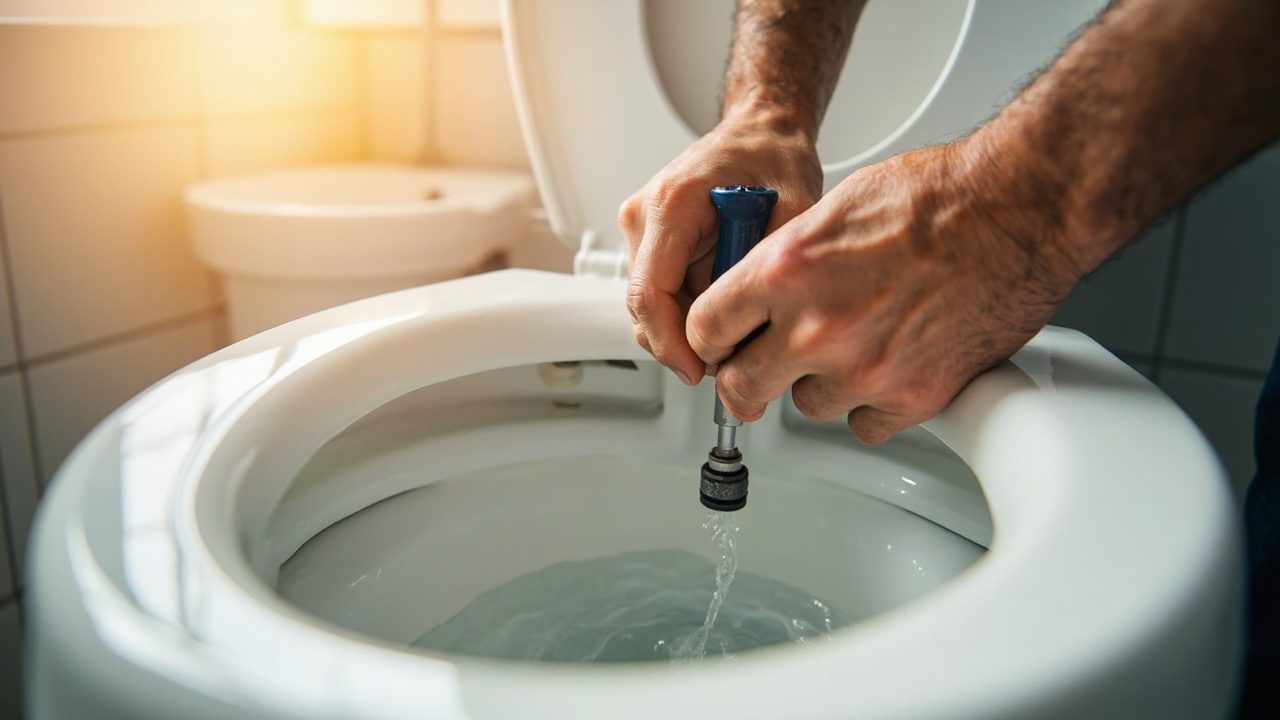
Call, then the meter test
On the phone we ask when the running started, if there is hissing without water flowing into the bowl, and where the angle stop under the tank sits. On site, every fixture goes off and the meter's leak indicator runs for fifteen minutes. Movement sends us to the main, which we close and read again to place the loss on the street side or the house side. Then the toilet's angle stop closes and the dial is watched again. Only after the toilet is named does the lid come off, and the flapper seat, the fill valve seal and the stop get checked by hand and by eye.
Approval, then the repair
Once the scope is approved, the angle stop closes and the tank empties first. The flapper comes off, the seat is cleaned of scale, and the fill valve is reset to shut off below the overflow tube. A weeping stop or a worn braided supply hose gets replaced in the same visit if you approve it. The old parts stay where you can see them. If structural damage or a seal failure turns up, we stop and show you before going further, and the scope changes only with your yes.
Meter watch and handover
Before we leave, the same meter watch runs again with every fixture closed, and the dial has to stay still for fifteen minutes. The tank is flushed and the level is checked against the overflow tube. We walk you through what was replaced, show you the old flapper and the seat, and point out the angle stop so you can close it yourself. You keep the written scope with the parts list and the meter result. The pressure reading goes on the same paper.
What an unfamiliar crew gets wrong on a running toilet
Swapping a flapper, a fill valve or a braided supply hose is fixture-level work, and it usually falls outside the permit process. Moving a toilet, replacing drain pipe or re-laying the run under it is different, and the local authority makes the final call on what needs a permit and what gets inspected. The address matters too. Inside city limits the city issues plumbing permits and inspects at stages, and outside city limits the work falls under the county or the neighboring town. The city adopts its plumbing code with local amendments, so a rule from another jurisdiction cannot be assumed to apply here.
Three mistakes show up when a crew does not know these houses. The first is replacing the flapper without touching the seat, which local water scales, so the toilet runs again on the new part. The second is forcing a stop that has not turned in decades in a house from the late 1800s through the 1930s, where galvanized steel supply lines and corroded compression nuts are common, and the stop snaps and the bathroom takes the full supply. The third is fitting a new fill valve on incoming pressure above the band, which wears fixtures, supply hoses and heaters early, so the valve is back on the bench within a short time.
The housing stock changes what the first ten minutes look like. Adobe, brick and frame homes on raised floors or shallow foundations give access from below, and lifting a toilet there means checking the closet flange and wax ring before anything goes back down. Postwar slab homes often pair galvanized or early copper supply with cast iron drains under the floor. Homes from the 1970s through the 1990s run copper supply and ABS or PVC drains, and newer subdivisions use PEX supply on a manifold, where each fixture has its own valve, so one toilet can come off the supply without touching the rest of the house. Calls come from across the county, and the same isolation order applies at every address. Only the access changes.
If this sounds close but not quite your situation, gurgling toilet sounds may be the better starting point.
Permit and inspection questions? Planning & Inspections is the office we coordinate with on every permitted El Paso job.
What a running toilet visit looks like from your side
When someone arrives
When you call we ask whether the bowl refills on its own, whether water spills down the overflow tube, and whether the water bill has climbed. Those answers sort a same day visit from a scheduled one. A hissing tank with no flush takes priority and goes to the front of the day, while a slow refill every few minutes can wait for a scheduled window. You are given the arrival window on the call. If the job ahead of yours runs long, you hear the new window before the first one passes.
Floors and fixtures protected
A drop cloth goes down before the tank lid comes off, and the lid rests on the cloth. The angle stop closes and the tank is emptied into the bowl so the water goes down the drain and the floor stays dry. Old flappers, fill valves and flakes of scale go into a bag that leaves with us. Last, the tank and the floor around the base are wiped down and the supply connection is checked by hand for moisture.
What moves the cost
Access barely moves a toilet job, since the parts sit inside the tank and no wall opens. The grade of flapper, fill valve or full parts set you choose moves the scope furthest, and a fuller set costs more now and removes the next repair. A corroded angle stop adds work, matching an old supply line adds work, and a call outside normal hours adds to the total. After the meter test we write the scope down, and you approve it before any part comes out.
How technicians are checked
A new technician rides along with a lead before working alone, and the lead signs off on isolating a fixture at its angle stop and reading a meter with every fixture closed. Only after those sign offs does a technician take a call alone. The current code cycle is studied as a group. On anything unusual, such as a stop that will not turn or supply lines of mixed materials, a second technician looks at the job before a scope is written.
You Have Questions,
We Have Answers
Sediment or a partly closed angle stop usually causes a slow fill after a shutoff. Debris loosened by the valve turning can lodge in the fill valve inlet screen and choke the flow. Remove the fill valve cap, flush the supply into a bucket for a few seconds, then reassemble. A tank that takes minutes to refill with a weak hiss points to a clogged inlet or a stop that is not fully reopened. Turn the stop counterclockwise until it meets resistance.
Cost depends on which parts fail and how much work surrounds them, and no single figure fits every toilet. A flapper alone sits at the low end of the scope. A full fill valve and flapper set moves it up, and a corroded angle stop or a worn supply line adds labor. A visit outside normal hours also raises the total. The written scope after the meter test lists each item before any part comes out.
Yes, most running toilets can be fixed by a homeowner with a few hand tools and about an hour. Start by adding food coloring to the tank and waiting fifteen minutes. Color in the bowl confirms a flapper leak. Match the flapper to the flush valve size printed inside the tank, since two-inch and three-inch openings use different parts. Stop and call if the shutoff stop will not turn or the tank is cracked.
Lift the tank lid and find which part is failing, then replace that part. If water spills into the overflow tube, lower the float so the fill valve shuts off about one inch below the tube's top. If the bowl refills without a flush, the flapper is leaking, so press on it by hand. A chain with too little slack holds the flapper slightly open, and adding a link or two of slack often ends the running.
A plumber's charge follows the parts involved, the condition of the shutoff stop and when the visit happens. A flapper swap is a small scope, while a fill valve, seat cleaning and a new supply line together take longer and use more parts. Older houses with stiff or corroded stops add time, because the stop may need replacing before the tank can be isolated. Ask for the scope in writing and approve it before work begins.
Repairing a running toilet is worth it when the tank, bowl and flush valve are sound. Flappers and fill valves are inexpensive parts, and a leaking toilet can pass a large volume of water through the day without any visible sign. Replacement makes more sense when the porcelain has hairline cracks, the flush valve seat is pitted, or the toilet is a high-flow older model. Those faults keep leaking after new parts go in.
A porcelain toilet commonly lasts several decades, while the internal parts wear out much sooner. Flappers and fill valves generally need replacing every few years, and faster where water leaves mineral scale. The bowl itself rarely fails. Trouble usually comes from a cracked tank, a leaking wax ring at the base, or a rocking seat from loose closet bolts. Porcelain with no hairline cracks and a sound flange can outlast several rounds of repairs.
Most running toilets need no plumber, because the failed part sits inside the tank and swaps out with basic tools. Call one when the shutoff stop will not turn, the supply line weeps at its nut, or the meter dial keeps moving after the toilet is isolated. That last reading means the leak is somewhere besides the toilet, and a new flapper will not change the dial.
Plumbers usually price a toilet repair by scope, so the charge changes with the parts and the labor. Replacing a flapper takes little time. Rebuilding the tank with a new fill valve, flapper and supply line takes longer. Replacing a seized shutoff stop, resetting a toilet on a new wax ring, or arriving after hours each add to the total. Bedrock Plumbing El Paso writes the scope down first, so the charge is known before work begins.
The average depends on what is worn, and the cheapest fix is often a flapper or a chain adjustment. Fill valves are the next step up, and each additional part raises the total. A toilet in a house with stiff shutoff stops takes extra time because those stops sometimes need replacing first. Ask any plumber which parts are in the scope so you can compare like with like.
Why moderately hard water changes running toilet repair in El Paso
El Paso Water supplies a blend of surface water and groundwater and describes it as moderately hard to hard. A hardness test kit at the tap commonly reads around ten grains per gallon or more, and above about seven grains per gallon scale forms steadily on heaters, valves and the seats they close against. In a toilet tank that means a crusted flapper seat, a fill valve seal that gathers grit, and parts that need descaling or replacing as a set. The utility also notes that rusting galvanized pipe inside older homes is the typical cause of discolored water, and the flakes from that corrosion land in the fill valve. A hardness reading belongs in the scope early, because water above that level keeps wearing parts whatever gets replaced.
Toilet parts work seldom meets an inspector, and the local authority decides where that line sits. A tank flapper, fill valve or supply line usually stays outside the permit process, while a re-laid drain or a pipe change behind a wall belongs on the other side of it. Knowing which side a job falls on before the visit decides the sequence, since a permitted job waits on the office and a parts swap runs in the same visit. Where cast iron meets plastic, the transition is a no hub band, and that joint is the one to look at on any partial replacement. If the meter still moves with the main closed, the loss sits on the street side, and the utility and the local authority decide where responsibility passes from you to them. The meter reading goes on paper so that conversation starts from a measurement.
Plumbing Services in The El Paso Area
Explore our service area and locate Bedrock Plumbing El Paso with ease. We're proudly local and serve the surrounding neighborhoods with fast response and honest pricing. Use the map to check our coverage area, or call us and we'll confirm in seconds.
Address:
Bedrock Plumbing El Paso, 221 North Kansas St, Suite 700, El Paso, TX, 79901
Additional Services We Offer
Swapping a flapper or a braided supply hose is a homeowner job, and you do not need us for it. DIY stops at anything soldered, anything on the gas line, anything behind a finished wall or under a slab, and any drain already backed up past a cleanout. If the dial keeps moving with the toilet's stop closed, the loss sits somewhere else, and we tell you so on the first visit and tell you what it takes.
Before you call, know when the running started, whether water hisses from the tank without flushing and whether the bowl refills on its own. Find the angle stop under the tank and the main shutoff, and if you can, read your water meter with everything off. Any age you have for the toilet's parts helps, and tell us whether anyone is home.
Last reviewed September 2026 by Dave Parker, Owner.