





What hard water and caliche do to plumbing on post
Water on post arrives hard, and that one fact drives most service calls. Fort Bliss Water Services Company, a subsidiary of American States Utility Services, runs water distribution and wastewater collection here, and El Paso Water is listed as the public utility supplying the post. The supply leans on groundwater from desert basin aquifers, so scale builds inside tank heaters and crusts aerators, valve cartridges and cooler float valves. Separate water systems are on record for the Main Post area and the Biggs Army Airfield area, and the utility publishes an annual water quality report. Private wells are not part of on post housing, so no well pump or pressure tank sits behind your walls. Questions about drinking quality belong with that report and a laboratory test of your own tap. A hardness test measures the minerals that cause scale.
Three eras of housing sit side by side here. The 1890s through 1930s historic quarters are masonry, some on native limestone foundations that enclose crawl spaces and some on concrete foundations and slabs, with piping that may mix original metal lines and later renovation work. The 1950s postwar homes are common, and older metal supply and drain materials may still be in service, which shows up as corroded fittings and restricted flow. Townhomes and single family homes built under the Army housing privatization program in the 2010s have garages and open floor plans, and their plumbing material gets confirmed on site before work starts.
Under all three sits desert basin ground with hard caliche layers. Caliche slows trenching for sewer laterals and water service lines and may call for heavier digging equipment, so a buried repair takes longer here than in softer soil. Rain falls rarely but hard, and monsoon runoff collects in low spots and street drainage. An occasional hard freeze splits hose bibs and exposed outdoor supply, and strong summer sun turns exposed plastic piping brittle. Demand spikes after a hard winter freeze and rises again when monsoon storms overwhelm drains. Legacy and renovated homes on post can carry very different piping, so the material gets confirmed at the first visit before any scope is written.
From routine maintenance to 24/7 emergency plumbing services, the same local crew handles every call.
How we run plumbing jobs on post
Scope on a water heater job starts with the anode rod pull. The rod is sacrificial metal that corrodes in place of the steel tank, and hard water consumes it faster. A rod with metal still along the core wire means the tank has protection left and the job is a repair. A bare core wire means the tank itself is corroding, and the conversation turns to replacement. Pulling the rod needs headroom above the tank, so clearance gets checked at the start, before anyone talks about finishing today.
Pressure comes next. A screw on gauge goes on a hose bib with everything in the house off, because a running fixture hides the real static number. Between 45 and 70 psi is the healthy band, and above 80 psi fixtures, supply hoses and heaters start failing early. The gauge stays on overnight. A morning reading well above the night reading means the heater is expanding water into a closed system with nowhere to put it, and an expansion tank joins the scope. The readings write the scope, and on this hard supply the scale and the anode rod get checked on every heater visit.
A senior technician performs the closing check on every finished job, repeating the pressure reading and looking at each joint the work touched. New technicians work beside a senior plumber and demonstrate the gas leak check, the pressure test and a proper transition band before they run a call alone. Unusual jobs, such as a slab leak or a lateral in caliche, get a second senior technician's review of the readings and camera footage before the scope is written. When work opens up something outside the original scope, that item stops, you see it, and it becomes a separate written line that you approve before anything more happens. Because housing work on post goes through an operator, the written scope is laid out so it can be handed over as written.
The Texas State Board of Plumbing Examiners publishes the rules that govern work like this in your area.
Isolate first
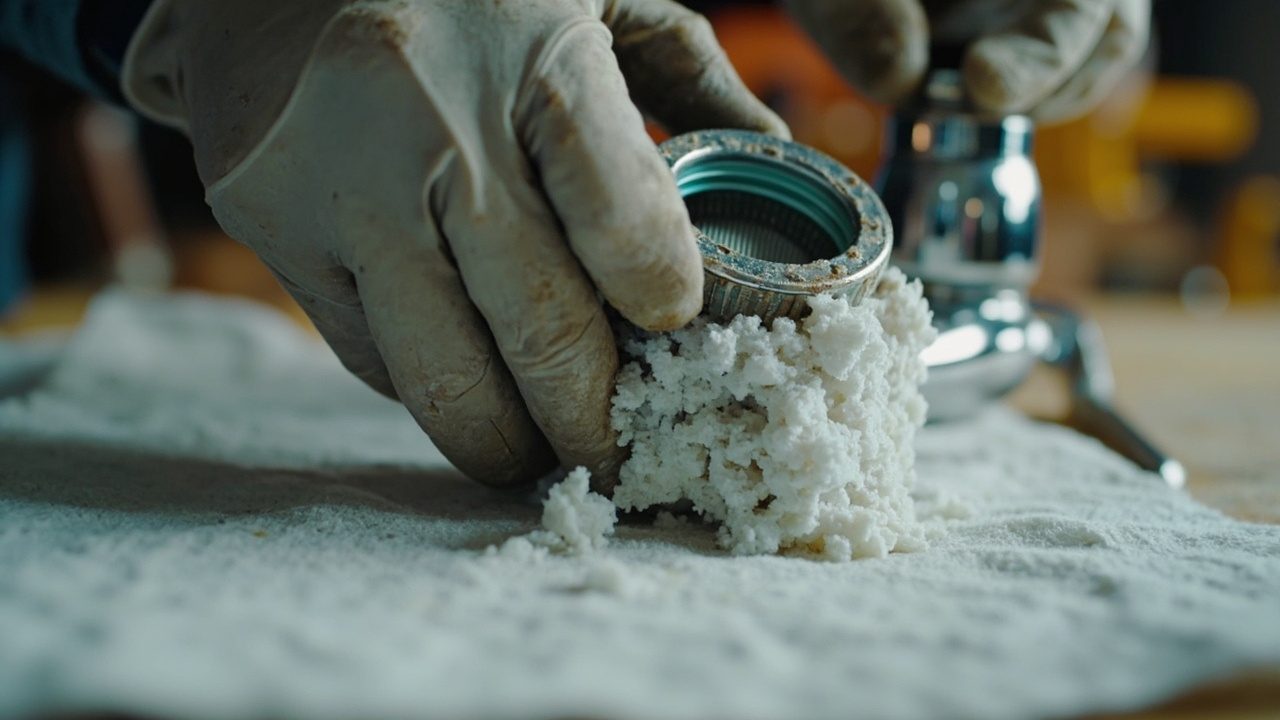
Isolation comes before any instrument comes out. Water is shut off at the stop, the branch or the main until the loss stops, which shrinks the problem to one segment of pipe. In older quarters with masonry walls, and in homes on slabs, that means the opening you make is the smallest one the leak allows, and the surface you restore afterward stays small too.
Camera and locator
A drain camera with a locator turns a slow drain into a spot and a depth. Run from a cleanout after the line is cleared, it shows continuous fall and clean joints, or standing water on a level run, which is a belly in the line. Roots at one joint mean a repair at that joint. With caliche in the ground, knowing the depth before digging decides what equipment goes to the site.
Current code practice
Every technician works from the International Plumbing Code as the permit authority applies it, and each adopted change gets read before it reaches a job. Questions go to the authority when a code reading is unclear. On a water heater swap that discipline shapes how the relief valve and expansion tank are set up, and gas fittings get their leak check before the appliance is put in service.
Local ground knowledge
Crews working across El Paso County see the same caliche under the sandy desert soil, and it slows every trench for a sewer lateral or water service line. Knowing that before arrival shapes the equipment planned for a dig. Legacy and renovated homes on post carry different piping, so the first visit confirms whether metal or plastic sits behind the wall before a quote is written.
Plumbing work we handle on post
Residential work here is mostly water heater repair and replacement in hard water, leak repair, fixture and valve replacement, drain clearing, repipe work and gas line work inside the home. The equipment is a hose bib gauge, a meter, a drain camera and a locator, and access is the variable, with a slab in one house and a limestone crawl space in the next.
Commercial work turns on grease line jetting and maintenance, main line repair, water heater and booster work, restroom fixture programs and scheduled drain service for kitchens, so it runs on a calendar around service hours. Emergency work covers burst line, no water, active leak, sewage backup, failed water heater and after hours response, and the first move is isolation, with the water shut off at the stop or the main before diagnosis starts. On post, garrison and housing operator routing can add a step to any of the three.
Water heater repair and replacement
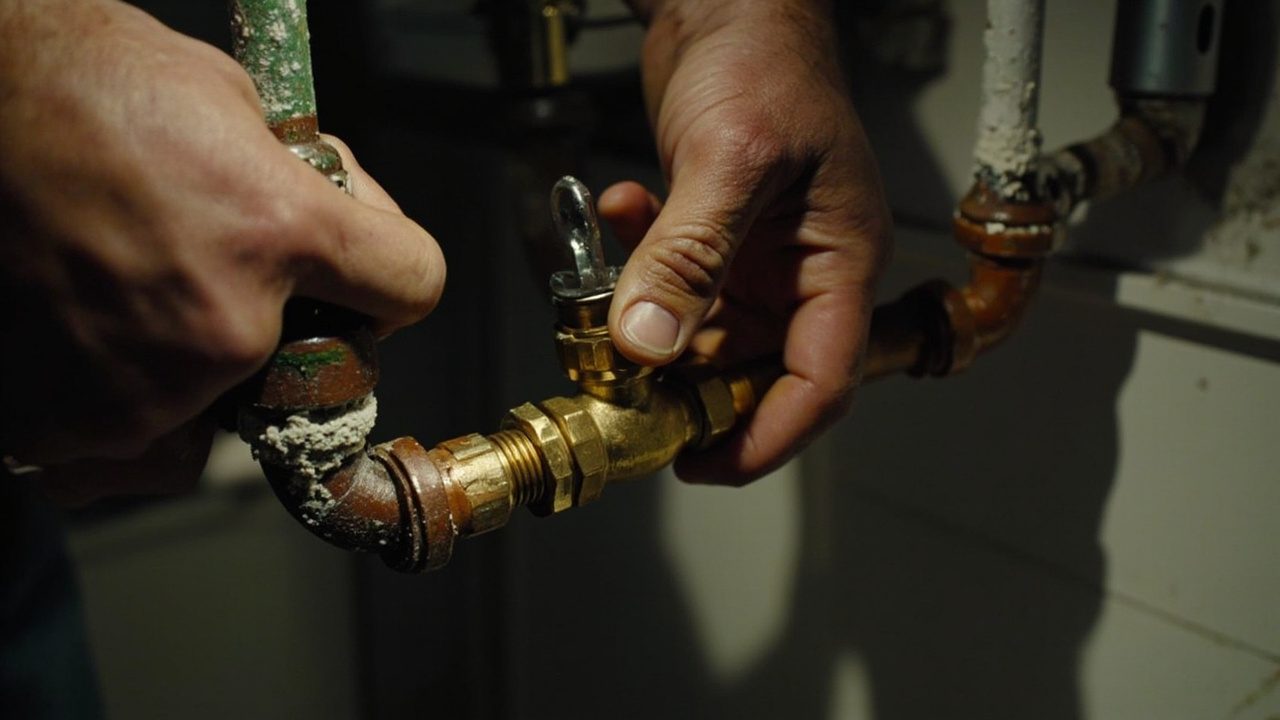
Residential work covers leak repair, fixture and valve replacement, water heater repair and replacement, drain clearing and gas line work inside the home. It suits a resident whose hot water runs out halfway through the second shower or whose taps have gone slow. A typical call starts with rusty water in the first minute and ends with either a new anode rod or a replacement tank, decided by the rod pull. In a 1950s house, older metal supply lines may still be in service, and corroded fittings and restricted flow are the common findings. A repipe then raises the material question. Type L copper is rigid, tolerates heat directly and costs more in material and labor. PEX is flexible, so a home run layout puts fewer joints inside walls, and it has to stay out of sunlight. Plumbing repair on these homes starts by confirming which material sits behind the wall.
Grease line jetting and drain service
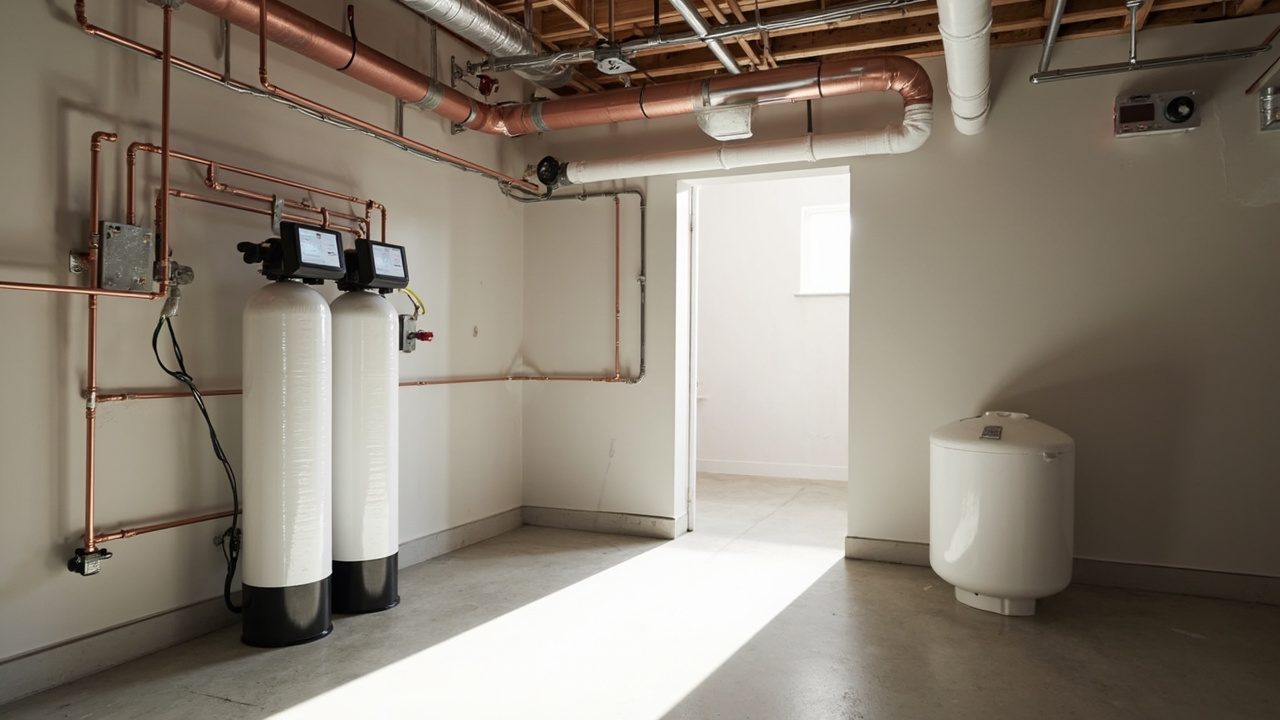
Commercial work includes grease removal and ongoing upkeep of kitchen drainage systems, main sewer line repair, water heater and booster installation, restroom fixture maintenance programs and drain cleaning. Scheduling runs around service hours, because a kitchen branch that backs up during prep costs more in downtime than in repair. A typical scenario is a kitchen line that has backed up more than once. Hydro jetting clears it, the camera runs from the cleanout afterward, and the footage shows whether grease at one branch or a belly in the line is the cause. The documentation covers pressure readings, camera footage, the written scope and permit status, which is what a property manager, a lender or an insurance reviewer asks for. Main line repair and gas work are treated as permit matters, and the final call belongs to the authority.
Burst line and after hours response
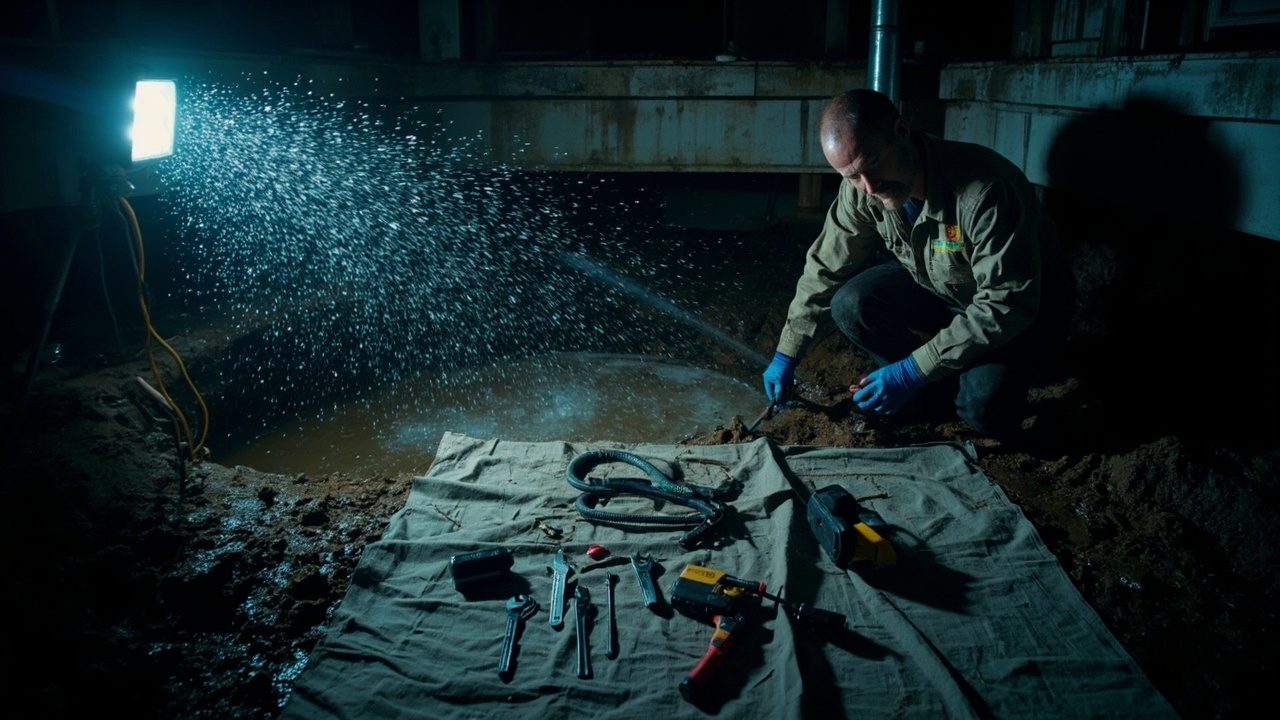
Emergency work covers burst line, no water, active leak, sewage backup and failed water heater. When the search is for an emergency plumber, the first five minutes run in this order. Shut the water off at the fixture stop, or close the main. If water has reached outlets, a panel or a ceiling fixture, kill that circuit before anyone steps into the water. On a heater, close the cold inlet, turn the gas control or breaker off, and open a hot tap on a lower floor. If you smell gas, get everyone outside, leave the door open behind you and call Texas Gas Service from outside. For a sewage backup, stop all water use, including the washer and dishwasher, and do not plunge a full line. A typical call follows a hard freeze, with a ceiling stain hours after the thaw. The technician isolates the segment first, then reads the meter.
Plumbing problems we see most on post
Hot water that runs rusty for the first minute has a mechanism behind it. Hard groundwater drops scale into a tank heater, sediment builds up and cuts efficiency, and the anode rod corrodes in place of the steel. The rod pull described earlier shows how far that has gone, and a bare core wire is the answer.
Call today when the first minute of hot water runs rusty. By then the rod is consumed, the steel tank has become the sacrificial metal, and a split tank follows the rust, flooding the room it stands in. Waiting after a weeping relief valve on the same heater adds pressure to that sequence, since incoming pressure above the normal band works the tank seams harder every cycle.
Freeze splits outdoor lines
A short hard freeze catches hose bibs and exposed outdoor supply that were never insulated. Nothing shows while the ice holds. The signs arrive after the thaw, when one fixture has no water and a ceiling stain spreads hours after the temperature recovered. Pressurised supply runs all night on its own, so close the main and call the same day. Exposed plastic outdoors also turns brittle under summer sun and fails at the fitting.
Aging metal supply lines
Postwar homes may still run original metal supply and drain lines. The sign is flow that has dropped at every tap, or a corroded fitting that weeps. Corrosion narrows the pipe from the inside, and a second leak in the same run means the whole segment has reached the end of its life. Call when a second fitting on the same line weeps, since a hairline leak behind tile keeps the framing damp and turns a pipe repair into a wall rebuild.
Caliche and the service line
Caliche makes buried lines slow to reach, so a leak on the service line grows into a bigger job the longer it runs. Close every fixture and watch the meter leak wheel for fifteen minutes. Any movement means water is leaving somewhere. Close the main and watch again. A dial that still moves puts the loss on the street side of the shutoff, and the utility and the permit authority decide who owns that repair.
Postponed mineral buildup
A toilet that runs after flushing looks minor. The flapper lets the tank refill through the night, the fill valve cycles constantly, and hard water crusts the valve until it sticks open with the overflow carrying water away unnoticed. Aerators and valve cartridges clog the same way. Swapping a flapper or cleaning an aerator is a homeowner job. Call when the fill valve keeps running after a new flapper.
Find the sign you have, then read across to see whether it can wait.
| Symptom or first sign | What is already happening | What it becomes if ignored | When to call |
|---|---|---|---|
| An anode rod eaten away | The steel tank becomes the sacrificial metal | Rusty hot water arrives first and a split tank arrives after | This week, while it is still one part |
| A hairline supply leak behind tile | The framing stays damp | The pipe repair turns into a wall rebuild | This week, while it is still one part |
| A toilet that runs after flushing | The flapper lets the tank refill all night and the fill valve cycles constantly | The valve wears and sticks open with the overflow carrying it away unnoticed | This week, while it is still one part |
| A weeping angle stop under a sink | The compression nut corrodes so it cannot be snugged | The stop snaps off in someone's hand during a faucet change | Now, the same day |
| Roots at one clay joint | Paper and grease catch at that spot every day | The main backs up into the lowest fixture in the building with no warning | Now, the same day |
What the first visit looks like
The first stop is the hose bib, where a screw on gauge reads static pressure with the whole house off, then the water meter, watched for fifteen minutes with every fixture closed. The piping material gets identified on the same walk. Before you call, know what you are seeing, when it started and what changed just before it. Find the main shutoff and, if you know it, the age of the heater. Tell us whether anyone is in the property and whether it is family housing on post, since access there goes through the housing operator.
Contact before arrival
The call logs your address, the symptom and where the shutoff sits. A technician contacts you when heading to the property, and the arrival window is stated plainly so you know when to be home. If the job ahead runs long, you get a call about the shift before anyone knocks. In family housing on post, the housing operator may need notice before access, and the person on the phone establishes that first.
Arrival and walkthrough
The technician gives a name, lays floor protection down before stepping inside, and asks you to show the fixture, wall or ceiling where you first noticed the problem. Questions follow on what you saw, heard or paid for, and what changed just before. Only then do instruments come out. The gauge goes on the hose bib, the meter gets read, and each reading is explained out loud as it is taken.
Handover before leaving
Before leaving, the pressure reading is repeated and shown to you, the meter is read again with every fixture closed, and the work area is cleaned. Any part that came out, such as the anode rod, is there for you to look at. You keep the written scope with the readings noted on it. Where an overnight pressure hold applies, the technician tells you when the morning reading gets checked.
From your call to finished work
The first visit settles which segment holds the problem, and access decides what follows. A finished wall, a crawl space or a slab each change what must be opened and restored, and that decides whether the second visit lands the same week. On post, notice to the housing operator can add a step before a technician enters a family home.
Gas work and main line work usually need a permit, and the authority's routing sets the order. Fixture swaps and like for like repairs usually move straight to work once you approve the written scope.
What gets logged on the call
The call logs what you see, when it started, what changed just before, the age of the heater if you know it, where the main shutoff sits and whether anyone is in the property. Those answers decide whether the visit is tonight or tomorrow morning, and which instruments go along, from the drain camera to the anode rod tools.
Diagnosis and written scope
Readings from the gauge, the meter, the camera or the anode rod pull produce a written scope. It lists the repair or replacement, access and surface restoration, permit items and fixture grade as separate lines. Nothing starts until you approve it. If opening a wall finds more, the scope says in writing how that gets handled before work continues.
Work and final reading
Work is done to the plumbing code the permit authority applies, and tests confirm the result. Static pressure is read again, the meter is watched with every fixture closed, and gas fittings get the detector and bubble solution. Where the work needs an inspection, it follows those readings, and you keep the scope with the numbers on it.
Permits and inspection for plumbing work on post
Fort Bliss is a federal installation, so work on post is coordinated through the garrison Directorate of Public Works, and work in family housing goes through Balfour Beatty Communities, which manages on post housing. That routing decides who is contacted before a wrench turns. A full replacement scope needs a permit, such as a new tank heater with changed venting, a repipe or a main line replacement. A like for like repair, such as a flapper, a valve cartridge or a braided supply hose, usually does not. The final call on any of it belongs to the authority. Gas work and main line work carry permit and inspection requirements more than a faucet does, so those jobs are scoped with the permit step written in.
Materials decide how long a repair lasts. Where copper meets older steel, a dielectric union separates the two metals to prevent galvanic corrosion. Type L copper is soldered, and PEX stays out of sunlight and protected where it passes through framing, which matters under strong desert sun. A cast iron stack that gets a partial replacement needs a no hub band transition to PVC or ABS, since a proper transition band is what joins them. On the water heater, the temperature and pressure relief valve, the pressure reducing valve and the thermal expansion tank belong to one system, so a weeping relief valve gets a pressure check before the valve itself is blamed. Hardness gets tested on the incoming water, and a result in the hard range is expected on this regional supply, so shorter flushing intervals or treatment come up in the conversation. A salt softener removes hardness minerals and needs salt and a drain, while a salt free conditioner needs neither.
Gas fittings get the combustible gas detector to find where to look and bubble solution to prove it, and any growing bubble closes the appliance valve before anything else happens. Where a job needs an inspection, the authority sets the stage and the items checked, and the technician keeps the readings and the written scope at hand for that visit. When a question about scope or materials comes up mid job, the technician calls the authority for the answer rather than settling it from habit. The permit authority also specifies how long the work can stay open before final inspection, which keeps the timeline clear on both sides.
Need something specific? Our plumbing services page breaks down exactly how we handle it in Fort Bliss.
Slab and crawlspace leaks
Above a slab, a leak is narrowed by closing branches one at a time and listening. Below it, the work is listening gear, tracer gas, or thermal imaging on a hot line, plus a locator. A warm spot on the floor in one place is the hot side under the slab. The decision is between breaking the slab at one point and rerouting that line overhead. In crawl space quarters the leak is reached from below.
Access drives cost
Reaching the pipe and restoring the surface move the job further than the pipe does. A finished wall, a tiled floor, a ceiling below, a slab or a crawl space each change the opening. Excavation depth and length matter, with caliche adding digging time. One joint against the whole run, matching old material to new, fixture or heater grade and after hours dispatch all shift cost. You control grade, clear access and adjacent work done in one opening.
Readings that show good work
Good work is measured. With every fixture closed, the meter dial or leak wheel holds still for fifteen minutes. After a heater job the final pressure reading waits for the morning after the overnight hold, and it should sit close to the night figure, so that step cannot be hurried. Gas fittings pass when no bubble grows on the joint. Buried repairs run longer where caliche slows the dig.
Which authority applies
Work in the adjoining City of El Paso follows the city permit process instead of the garrison route. The first call asks which side of that line the address sits on, because it decides who is contacted and in what order before a permitted job starts. A fixture swap that needs no permit skips that step, and the authority makes the final call on anything unclear.
Isolate, measure, permit, confirm
Answers for Fort Bliss Homeowners
Gas line cost rises with pipe length, the number of appliance drops, and the difficulty of reaching the route. Longer runs need larger pipe to hold pressure at the far appliance, and that raises material and labor. Running through finished walls or under a slab adds opening and restoration work. A pressure test on the new line comes before any appliance connects, and a permit step may be required. Each added drop, such as a range or dryer, changes the sizing calculation.
A minor roof leak is a small, contained drip from one point, such as a flashing seam or cracked vent boot. Staining stays under about a hand's width and the decking feels firm. Roofing sits outside plumbing work, so a roofer should assess it. A plumber gets involved when the source is a vent stack boot leaking around the pipe or when a ceiling stain persists in dry weather, which points to a supply line instead.
Standard homeowner policies generally exclude the repipe itself, since aging or corroded pipe counts as wear and maintenance. Coverage more often applies to sudden, accidental damage, such as a burst line that soaks a ceiling, and even then the failed pipe is usually left out. Policy wording varies, so read the water damage section and ask the carrier. Document readings, photos, and the written scope, because adjusters ask for them. On post, the housing operator handles many building repairs.
Faucet repair cost follows the failed part, the faucet's finish and brand, and how easily the shutoff valves work. A cartridge or washer swap costs less than replacing a corroded body. Seized stops under the sink add time, since a stop that will not close forces a shutoff at the main. Hard water crusts cartridges, so an old faucet may cost more to rebuild than to replace. Fixture grade is the choice you control.
Repipe pricing follows home size, fixture count, pipe material, and how much wall must be opened and restored. Type L copper costs more in material and labor than PEX. A single-story slab home costs less to reach than a two-story with finished ceilings. A permit step usually applies, and the written scope should list access and surface restoration as separate lines so you can compare them.
Rusty or discolored hot water is the earliest common sign, followed by popping or rumbling from sediment. Other signs are hot water running out faster than before, moisture at the base, and a relief valve that weeps. Rumbling means scale is trapping water beneath it that flashes to steam. Any dampness at the tank bottom deserves quick attention, since a seam leak cannot be repaired and the tank needs replacing.
Start by keeping everyone out of the affected area and shutting off water use, because sewage carries bacteria. Wear rubber boots, gloves, and an N95 or better mask. Remove standing liquid, then discard porous items such as carpet, padding, and drywall touched by the backup. Wash hard surfaces with detergent, then disinfect with a bleach solution and ventilate while it dries. Have the main line cameraed before cleaning, or the backup may return.
Neither material wins in every home, so the choice follows the house. Type L copper is rigid, handles heat, and suits exposed runs, while PEX bends around corners and needs fewer joints in walls. PEX must stay covered from sunlight, and copper costs more. Water chemistry matters too, since copper can pit in some supplies while PEX resists scale. Access and budget usually settle it, and mixing metals needs a dielectric union.
A porcelain toilet bowl can last several decades, while the internal parts wear out much sooner. Flappers usually need replacing every few years, and fill valves fail sooner where hard water crusts them. A hairline crack in the bowl or tank, or a rocking base with a wax ring leak, ends its useful life. Slow seepage at the floor rots subflooring, so a stained or soft floor around the base needs a look.
Plumbing Services in The Fort Bliss Area
Explore our service area and locate Bedrock Plumbing El Paso with ease. We're proudly local and serve the surrounding neighborhoods with fast response and honest pricing. Use the map to check our coverage area, or call us and we'll confirm in seconds.
Address:
Bedrock Plumbing El Paso, Fort Bliss, TX 79901
Cleaning an aerator, swapping a flapper or a braided supply hose, plunging a toilet and closing the main are homeowner jobs. DIY stops at anything soldered, anything on the gas line, anything behind a finished wall or under a slab, and any drain already backed up past a cleanout. Roof repair sits outside what we do. If a visit turns up work that is not ours, we say so then and tell you who handles it.
Last reviewed September 2026 by Dave Parker, Owner.