





What the hot, cold, hot shower swing means in El Paso homes
The shower runs hot, you shut it off for a minute to shampoo, and when you turn it back on a slug of cold arrives before the heat returns. Hot water goes cold then hot, and you wonder if the heater is failing. On a tankless unit that pattern is the tankless cold water sandwich, a known trait, and the inconsistent shower temperature it causes is easy to mistake for a heater on its way out.
Two things build the sandwich. When you close the tap, the burner shuts off and the water standing in the pipe between the heater and the shower cools toward room temperature. When you reopen, that cold column reaches you first, and the unit needs enough flow through its sensor to relight the burner before the heat catches up. Tankless water heater cold bursts that repeat within a single long shower point somewhere else. A tank heater with a worn dip tube sends cold inlet water straight to the hot outlet, and a scaled shower valve cartridge blends unevenly. Placement is the diagnosis. If only the far bathroom swings while the kitchen holds temperature, the fault sits in the pipe run. If every hot tap swings, look at the heater. If one shower does it alone, look at that valve. All of it sits on the supply side, where water stays under pressure around the clock.
Local water makes the swing worse. The supply here tests moderately hard to hard, commonly around ten grains per gallon or more, and above about seven grains scale builds steadily inside tankless heat exchangers and valve cartridges. Scale narrows the passages, so the unit cycles on and off at flows it used to handle, and water temperature fluctuation shows up even with a sound pipe run. Older galvanized supply closes up from the inside and cuts flow at the shower below what a tankless burner needs to keep firing. Winter adds a third factor. Freezing nights arrive every year, incoming water is colder, and the heater covers a larger temperature rise, which shortens the hot stretch and lengthens the cold one.
The sandwich alone can wait for a scheduled visit. Call today when the swings come with a dripping valve on top of the heater. Incoming pressure above the normal band makes the relief valve weep, the weeping means the tank seams work harder every cycle, and the heater then fails years before it should.
More detail on low water pressure issues is on its own page.
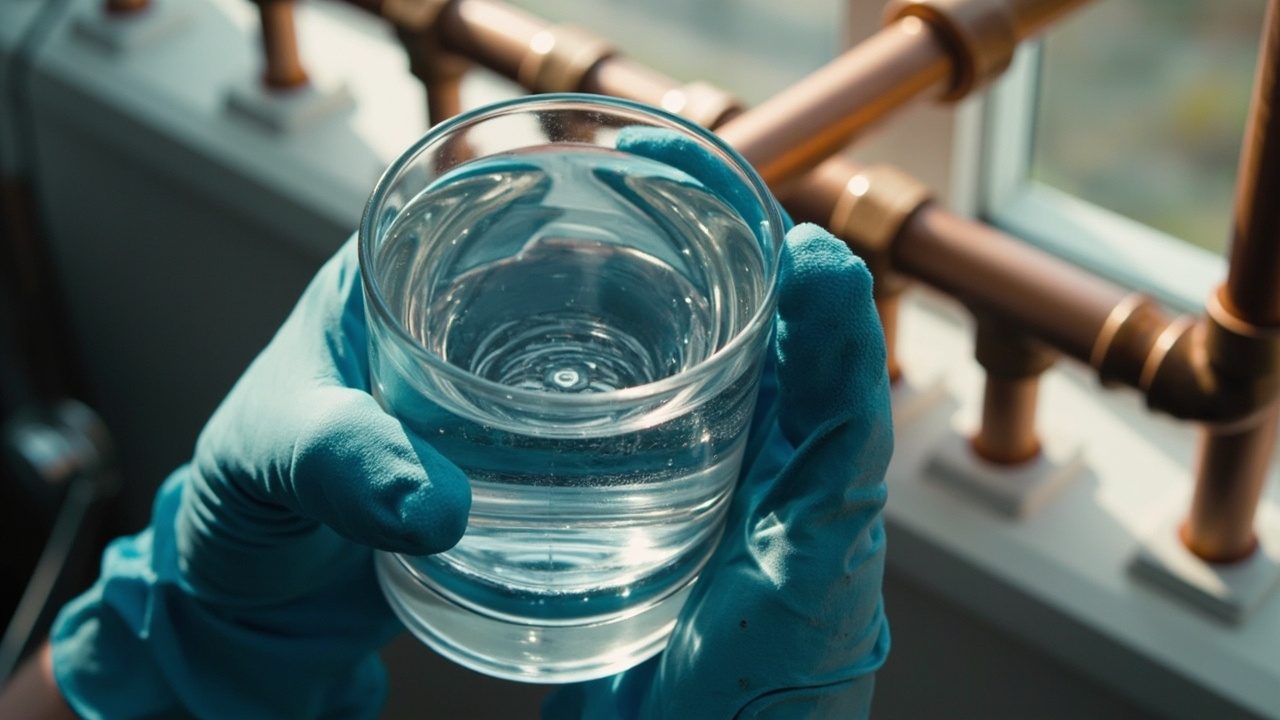
Find the sign you have, then read across to see whether it can wait.
| Symptom or first sign | What is already happening | What it becomes if ignored | When to call |
|---|---|---|---|
| Incoming pressure above the normal band | The relief valve on the heater starts weeping | The tank seams work harder every cycle and the heater fails years before it should | This week, while it is still one part |
| An anode rod eaten away | The steel tank becomes the sacrificial metal | Rusty hot water arrives first and a split tank arrives after | This week, while it is still one part |
| A hairline supply leak behind tile | The framing stays damp | The pipe repair turns into a wall rebuild | This week, while it is still one part |
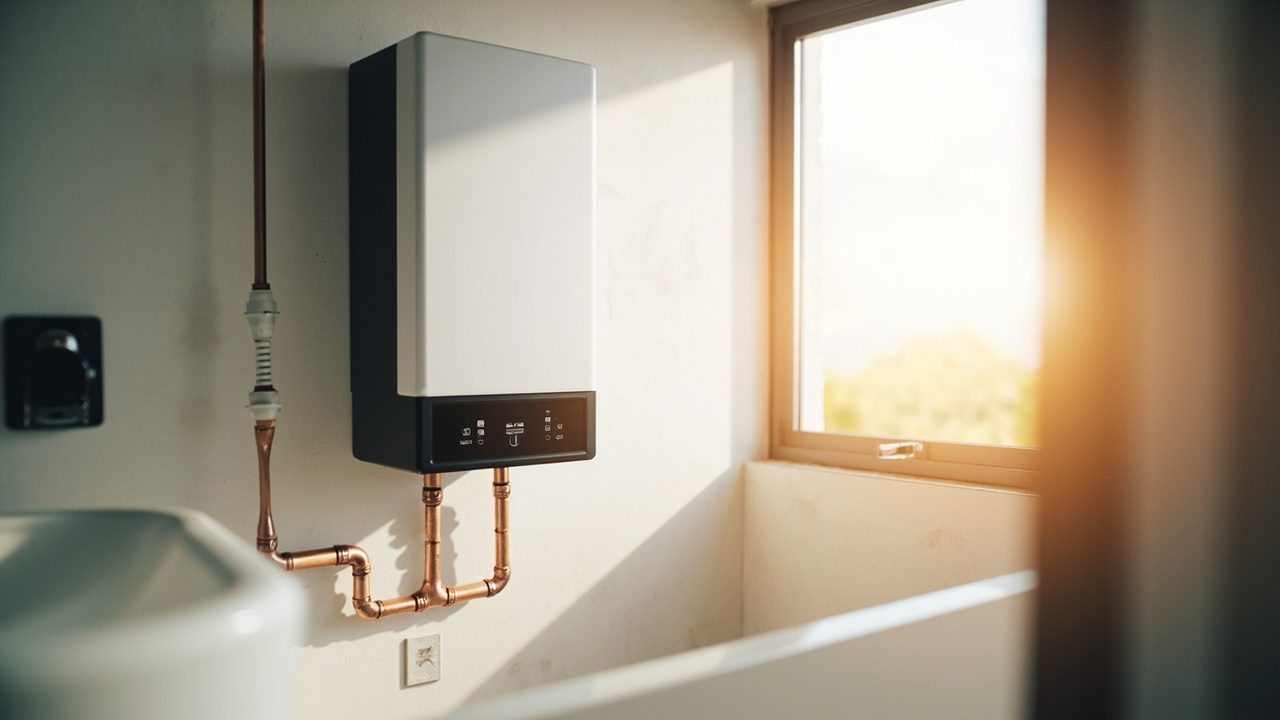
How we read the far tap before we suggest any fix
Work starts at the farthest hot tap with a thermometer, because the first job is shrinking the problem to one segment. Run the tap a full minute so the water that sat in the pipe clears out, then read the number. Close the tap for a short pause, reopen it, and watch how far the reading drops and how long it takes to climb back. Repeat at the tap nearest the heater. If the near tap holds steady and the far tap dips, the loss sits in the pipe run between them. If both dip, the fault sits at the heater. If one shower swings while the tub spout beside it holds, a single cartridge is the suspect. Static pressure gets read before any part is blamed.
The reading this page turns on is the drop at the farthest hot tap during that pause and restart. Hot water arriving around 120 degrees after a full minute is the usual balance between scald risk and a clean tank, and the number that sets scope is how far the reading falls and how long recovery takes. A long dip at the far tap with a short one at the near tap puts a recirculation fix on the table, because a return line keeps hot water moving through the run so the cold column never forms. The same dip at every tap sends the work to the heater, where the hardness kit result decides between a flush, a descale and treating the water first. One more reading changes scope by itself. Static pressure above 80 psi, taken with nothing running, pulls a pressure reducing valve and a thermal expansion tank into the job.
Tank against tankless is judged on different numbers. A tank is compared on gallons of capacity and first hour rating, and a tankless unit on gallons per minute at a given temperature rise. The cold water sandwich belongs to the tankless side, because a burner that shuts off between draws leaves a cold column behind it. A tank still hands you a cold first draw across a long run, and only a return line fixes that. Converting to tankless also means a larger gas line, new venting and a different condensate path. Local water decides the rest. Water that tests moderately hard to hard scales a tankless heat exchanger steadily, so treating the water comes before buying another heater, and cold nights widen the temperature rise the unit has to cover. A long run to the far bathroom favors a recirculation loop on either type.
If this sounds close but not quite your situation, discolored or rusty water may be the better starting point.
Your local utility, El Paso Water, publishes service and water-quality information every El Paso homeowner should know.
Ask which of these readings was taken before any part is replaced.
| Instrument | Good reading | Bad reading | What it changes |
|---|---|---|---|
| Thermometer at the farthest hot tap | Hot water arriving around 120 degrees | Hot enough at the tap to scald a child in seconds | The first slug of water is whatever was sitting in the pipe |
| Screw on pressure gauge at a hose bib | Static pressure sitting in the 45 to 70 psi range with nothing running | Above 80 psi | Fixtures, supply hoses and water heaters start failing early |
| Overnight pressure hold with the gauge left | The morning reading is close to the reading taken the night before | A reading far above the night figure | The heater is expanding water into a closed system with nowhere to put it |
| Water meter leak indicator with every fixture closed | The dial or the small leak wheel does not move over fifteen minutes | Any movement at all with the whole house off | Water is leaving the system somewhere you cannot see |
How a cold water sandwich call runs
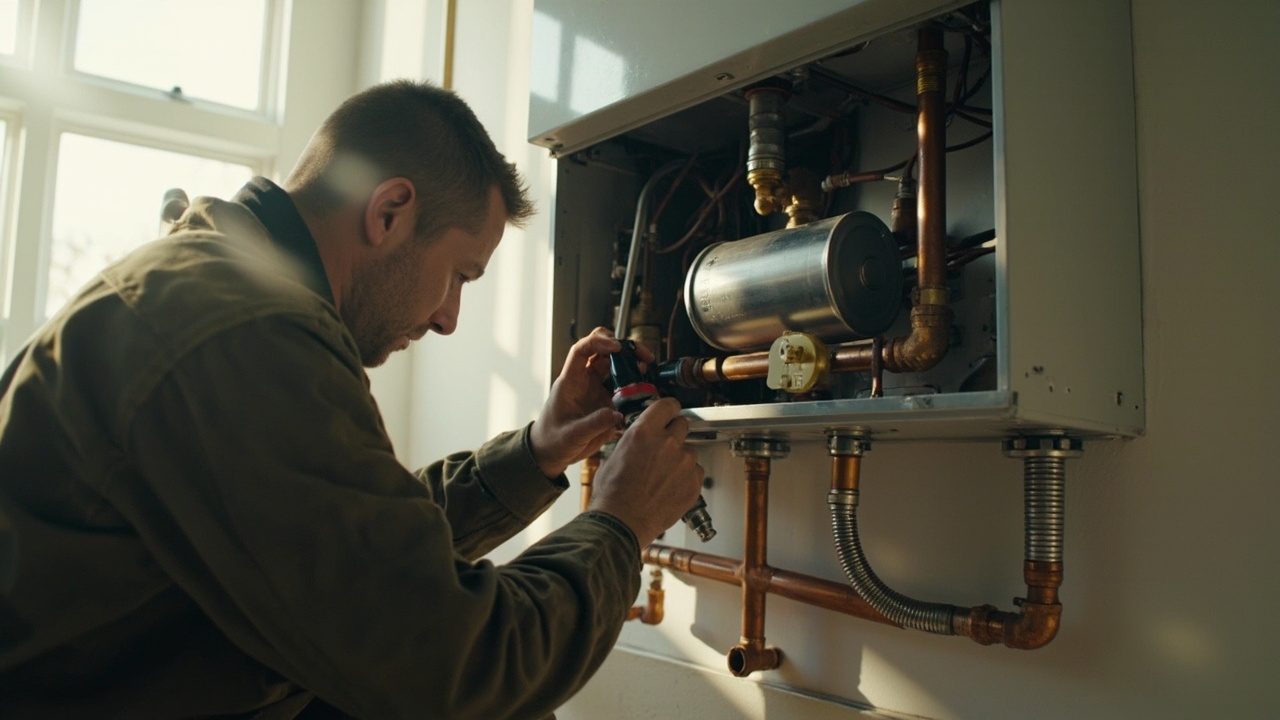
Questions then the far tap
On the phone we ask which taps swing, whether the heater is a tank or tankless, how old it is if you know, and whether the relief valve on top drips. On site, a thermometer runs a full minute at your farthest hot tap before the first reading. We close the tap, reopen it, and log the dip and the recovery, then repeat at the tap nearest the heater. A pressure gauge screws onto a hose bib with everything off, and a hardness kit sits at the kitchen tap. You see taps running and gauges attached, and nothing gets opened yet.
Approval then the work
Once the readings are in, you get a written scope with the reason each item is on it, and you approve it before work starts. Isolation comes first, meaning the cold inlet stop on the heater or the main, then the hot side is drained. The main operation follows the finding, such as flushing scale from a tankless heat exchanger, replacing a scaled cartridge, fitting a pressure reducing valve and thermal expansion tank, or adding a recirculation return with dielectric unions at the heater. If something turns up behind a finished wall, we stop and show you before going further.
Verify and hand over
Before we leave, the thermometer goes back on the farthest hot tap, runs a full minute, and goes through the same pause and restart, so you watch the dip and the recovery on the reading. Static pressure at the hose bib has to sit in the 45 to 70 psi range with nothing running. The meter leak indicator has to show no movement over fifteen minutes with every fixture closed. We walk you through each number, and you keep the written scope with the readings recorded on it.
Why desert water and slab layouts change this diagnosis
Gas work usually needs a permit and an inspection, and a tankless swap is gas work because the gas line size, the venting and the condensate path all change. A like for like shower cartridge or fixture swap usually does not need one. The local permit authority makes the final call on both, so the scope talk on the first visit settles which side of that line your job sits on, before anything is ordered.
Houses here were built in layers, and each layer changes this job. Slab homes from the 1970s through the 1990s commonly carry copper supply under or through the slab, with the heater in a garage or a closet, so the run to the far bathroom is long and the cold column in it is large. A warm spot on the floor in one place marks the hot line under that slab, and it turns a tap adjustment into a leak repair. Newer subdivisions on the east and west sides run PEX from a manifold, which gives each fixture its own hot line, so the cold volume differs fixture by fixture. Those run lengths set how large a recirculation fix has to be, and only a reading at the farthest tap shows them. A new return line in PEX has to stay out of sunlight and be protected where it passes through framing.
A crew used to softer water tends to size a tankless unit on an average winter and skip the hardness test. The heat exchanger scales, the flow drops, and the swings return. Another common mistake is replacing a shower cartridge for a swing that the pipe run creates, which changes nothing at the tap. Heaters in garages also sit through long hot summers, and exposed plastic lines degrade in the sun, so fittings get looked at for that damage. Freezing nights here are short and mild, which is why an unprotected line in a garage gets overlooked until an arctic front splits it.
Distances across the county are long, so the first visit is planned to carry the thermometer, the pressure gauge and the hardness kit in one trip. If you ever smell gas near the heater, everyone goes outside, nothing gets switched on the way out, and the gas utility is called from outside.
See high water bills for how the related work is scoped and priced.
What working with Bedrock Plumbing El Paso looks like
How the call is booked
You call, we ask which taps swing, whether the heater is a tank or tankless, and whether a valve on top of it drips. Those answers sort a same day visit from a scheduled one. You hear the arrival window before the call ends, and the person who took your call is the one who confirms it. If the job ahead of yours runs long, you are told before your window closes and the new window is set on that same call.
Protecting your bathroom
Before anything comes apart, drop cloths go down from the door to the bathroom and a mat goes under the tools. Shower and tub surfaces are covered so a dropped wrench cannot chip them. When a tankless heat exchanger gets flushed, the discharge runs through a hose to a drain or outdoors, and scale flakes are caught in a bucket. Old cartridges and fittings leave with us in a bag. The last step is wiping down the tap, the floor and the staging area.
What moves the number
Access sets the number first, meaning whether a finished wall, a tiled surface or a slab has to be opened and put back. Depth and length of any digging come next, then a repair at one joint against a new segment, then matching old pipe to new. The grade of heater, valve or fixture you pick moves it again, and after hours work adds to it. The far tap, gauge and hardness readings produce a written scope, and you approve it before work starts. If an opening finds more, the next step is agreed in writing first.
How technicians are checked
A new technician rides alongside a lead before working alone. The lead signs off on reading a thermometer at the farthest hot tap, taking static pressure at a hose bib with everything off, and testing gas fittings with a detector and bubble solution. Code changes get read together as a group before they reach a job. On anything unusual, such as a hot line under a slab, a second technician looks at it before a scope is written.
You Have Questions,
We Have Answers
A 40-gallon tank usually gives one shower of roughly 10 to 12 minutes before the water turns lukewarm. Hot water leaves the tank and blends with cold at the shower valve, so the tank supplies more than 40 gallons of usable shower water. With a standard 2.5 gallon per minute showerhead, the top quarter of the tank runs out of heat first. When cold inlet water reaches the outlet, the temperature drops quickly rather than fading gradually.
Many plumbers dislike tankless units because installation and upkeep take more work than a tank swap. A tankless burner needs a minimum flow, often around half a gallon per minute, to fire, so a slow trickle at a lavatory tap can leave water cold. Condensing models also drain acidic condensate that must be routed and neutralized. Flushing scale on a schedule is part of ownership, and skipped service brings error codes and lockouts.
Water at 130 degrees is safe to store in a heater but unsafe to stand under. Adult skin can scald within about half a minute at that temperature, and children or older adults burn faster. A shower valve normally blends the supply down to somewhere near 100 to 105 degrees at the head. If 130 degrees comes straight from the showerhead, the valve is worn or set incorrectly and needs adjustment.
Rumbling or popping from the tank during heating is an early sign the heater is wearing out. Sediment collects on the bottom, and steam bubbles push up through it and make the noise. Other early signs include rust-colored water from hot taps only, a damp patch at the base, and hot water that runs out sooner than it used to. Hot water that stays clear at first but smells like sulfur points to the anode rod.
Showerhead flow rate sets the time, and a 1.5 gallon per minute head stretches one tank to about 20 minutes. A 2.5 gallon per minute head cuts that nearly in half. Sediment on the tank floor also reduces the hot volume you can draw, so an older tank gives less time than the label suggests. When the water starts to cool steadily, the stored hot layer is nearly gone.
A 40-gallon tank typically supplies two back-to-back showers of moderate length, and a third comes out lukewarm. After that, the heater needs time to recover. A gas tank heats roughly 30 to 40 gallons per hour, and an electric tank recovers more slowly because its elements have lower input. Spacing showers about 30 to 45 minutes apart lets the tank rebuild its hot layer between users.
Most households get two to three short showers per hour from a 40-gallon tank. The exact count follows the heater's first hour rating. That rating counts the stored hot water plus what the burner or elements produce during the hour. A running dishwasher or a bathtub fill draws from the same tank, so one load of laundry on the warm setting can remove a full shower's worth. Limit other hot draws during morning rushes.
A 15-minute shower uses about 22 gallons with a 1.5 gallon per minute head. A 2.5 gallon per minute head raises that to about 37 gallons. The head's rating is stamped on the arm or the back of the faceplate. To check yours, time how long the shower takes to fill a one-gallon bucket. Fifteen seconds means 4 gallons per minute, which is a much higher draw than a modern fixture should show.
Avoid a tankless heater when household demand is greater than the unit can deliver at your temperature rise. Two showers and a dishwasher running together can exceed a mid-size unit's gallons per minute, and the temperature sags. A house with a long run and rare short draws also suits it poorly, because the burner has to relight for each brief use. Untreated hard water shortens the heat exchanger life when the unit is not descaled.
Why hard water changes cold water sandwich effect in El Paso
El Paso Water supplies a blend of surface water and groundwater, describes it as moderately hard to hard, and disinfects it with chlorine. Scale from that hardness shortens the life of tankless units, cartridges and fixture valves, so the hardness kit reading at your tap goes into the plan before a heater is chosen, and a flush, a descale or treatment may come first. A scaled shower cartridge blends hot and cold unevenly enough to copy the sandwich, which is why the valve gets ruled out early. The utility notes that rusting galvanized pipe inside homes is the typical cause of discolored water, and that same corrosion closes the pipe from the inside, cutting flow at the shower to a level where a tankless burner drops out. Caliche hardpan and dense soil slow any dig to a slab line, which strengthens the case for routing a return line overhead.
The first freeze arrives on average in mid November and the last in early March, and most cold nights are short and followed by mild days. Water entering the house on those nights is colder, so a tankless heater covers a larger temperature rise and the cold stretch in your shower lengthens. Occasional arctic fronts split exposed hose bibs and outdoor lines, and long hot summers stress heaters in garages. Where a permit applies, work is inspected at stages, and the authority sets what gets looked at. Which authority applies depends on whether the address sits inside city limits. Knowing that up front changes sequencing, so gas fittings are checked with a combustible gas detector and bubble solution before anyone leaves, and the inspection meets work that is already proven.
Plumbing Services in The El Paso Area
Explore our service area and locate Bedrock Plumbing El Paso with ease. We're proudly local and serve the surrounding neighborhoods with fast response and honest pricing. Use the map to check our coverage area, or call us and we'll confirm in seconds.
Address:
Bedrock Plumbing El Paso, 221 North Kansas St, Suite 700, El Paso, TX, 79901
Additional Services We Offer
Cleaning a showerhead or an aerator and finding the main shutoff are homeowner jobs, and you do not need us for them. DIY stops at anything soldered, anything on the gas line, and anything behind a finished wall or under a slab. We do not test drinking water for contaminants, so a worry about your tap water goes to the utility report and a laboratory test of your own tap. If the first visit finds work outside ours, we say so then.
Before you call, know which fixtures swing and how long the cold stretch lasts after you pause and restart the shower. Note your heater's age if you know it, and where its cold inlet and gas valve sit. Check whether the valve on top of a tank heater is dripping. Those answers usually decide whether this is a same day visit.
Last reviewed September 2026 by Dave Parker, Owner.