





What a repeat backup at the lowest drain means in El Paso homes
The lowest drain in the house gurgles when the washer empties, and a snake cleared it a few months ago. Now it runs slow again and the toilets need a second flush. That pattern puts the trouble on the main sewer line or the lateral, since a restriction downstream slows every fixture above it. The lowest fixture shows it first because its rim is the lowest overflow point in the house. A drain only sends water out while something upstream runs, so nothing leaks overnight, and a repeat backup can feel like a problem that can wait.
The washer gives it away. It pumps a large volume out in a short burst, so a lateral narrowed at one joint carries a single toilet flush and still backs up when the washer drains. Every drain slow places the trouble on the main. One fixture slow places it on a branch or a trap.
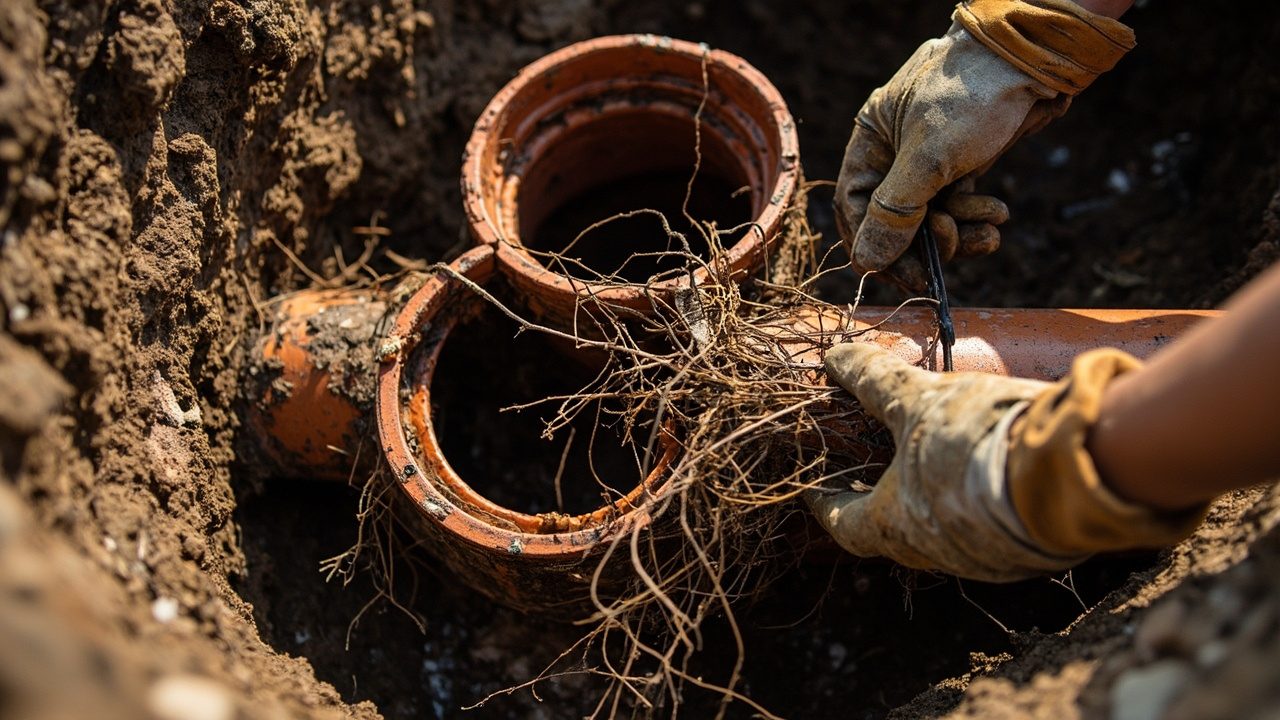
In older El Paso homes the pipe carrying waste out of the house is often clay laid in short sections, with a joint every few feet, or cast iron that corrodes from the inside. Roots follow moisture through dry desert soil, and a weeping joint is the wettest spot underground. One root enters, thickens into a mat across the joint, and a snake cuts the mat while the root stays anchored in the joint. The mat regrows, so a line cleared once and backing up again points to one joint rather than a dirty pipe. Cast iron under an older slab cracks or corrodes and shows the same slow drains, and a cracked section there calls for broken sewer pipe repair instead of another clearing.
Call today when the lowest drain has backed up twice or water shows at a floor drain while the washer runs. Roots at one clay joint are already catching paper and grease every day at that point, and the next stage is the main backing up into the lowest fixture in the building with no warning. Until someone arrives, hold the washer and dishwasher and keep the lowest fixture out of use. Leave every cleanout capped on a full line, because a cleanout under head pressure empties onto whoever opens it. Most people at this stage fear a collapsed pipe and a torn-up yard, and the camera answers that fear with a picture of the actual joint.
See emergency sewer backup cleanup for how the related work is scoped and priced.
Find the sign you have, then read across to see whether it can wait.
| Symptom or first sign | What is already happening | What it becomes if ignored | When to call |
|---|---|---|---|
| Roots at one clay joint | Paper and grease catch at that spot every day | The main backs up into the lowest fixture in the building with no warning | Now, the same day |
| An anode rod eaten away | The steel tank becomes the sacrificial metal | Rusty hot water arrives first and a split tank arrives after | This week, while it is still one part |
| A weeping angle stop under a sink | The compression nut corrodes so it cannot be snugged | The stop snaps off in someone's hand during a faucet change | Now, the same day |
| A toilet that runs after flushing | The flapper lets the tank refill all night and the fill valve cycles constantly | The valve wears and sticks open with the overflow carrying it away unnoticed | This week, while it is still one part |
How the camera finds the joint before anything gets quoted
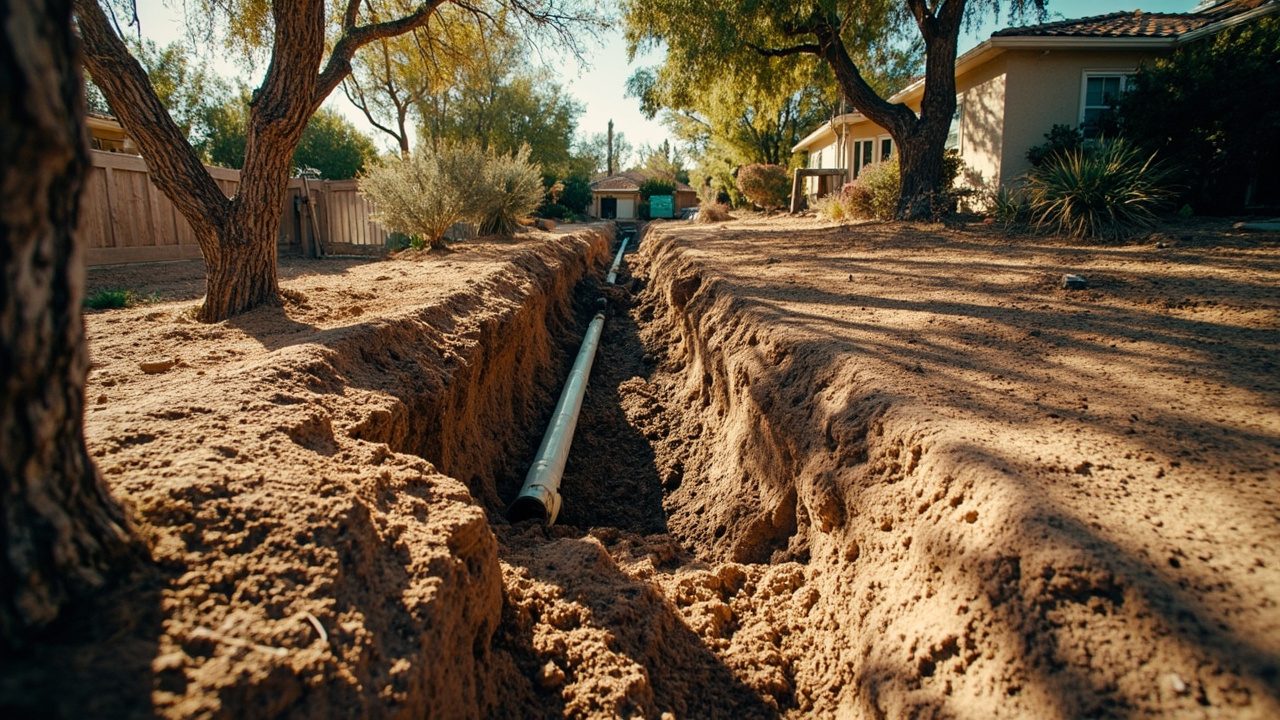
The sequence follows where the water is going. Every fixture goes off and the meter leak indicator is read, because a dial or leak wheel that stays still over fifteen minutes clears the supply side and leaves the drain as the suspect. Then the line is cleared, since a full line shows nothing but water on camera. The camera goes in from a cleanout after that, and a locator on the surface follows the head, marking the depth and the spot of anything the screen shows. Recording the whole run also shows how many joints hold roots, which is how one bad joint gets told apart from a run full of them. Nothing gets opened until the footage and the locator depth are in hand.
Each thing the camera shows decides a different fork. Continuous fall to the main, clean joints and the pipe walls visible the whole run mean the line is sound and the backup was a restriction, such as grease at a kitchen branch. Roots at a joint put the repair at that joint and leave the rest of the run alone. Standing water part way along a level run is a belly in the line, and a belly holds waste at the low spot whatever gets cleared, so that stretch needs re-laying at the right slope. A cracked or collapsed section becomes broken sewer pipe repair at that section, provided the pipe on either side is sound. The locator depth then sets how far and how deep the excavation goes for any sewer pipe replacement.
The local condition that decides between lining and open cut is what the trees and the ground have done to the pipe. Clay laterals under mature trees usually fail at joints, so a run that is still round and holds its slope between the roots suits a liner or a joint repair, and the dig stays small. Caliche hardpan slows every trench, which pushes long, deep runs toward lining when the old pipe is still round. A liner follows the old pipe, gives up a little inside diameter and cannot correct a belly or a collapse. Open cut restores full diameter, lets the slope be set again and reaches whatever sits beside the break, and it needs a no hub band where new plastic meets old cast iron. The driveway, slab or tree over the line settles which way the job goes. Sewer line replacement cost follows those answers, because reaching the pipe outweighs the pipe.
Our page on commercial sewer line repair covers that side of the work in more depth.
Your local utility, El Paso Water, publishes service and water-quality information every El Paso homeowner should know.
Narrow this to two options before calling, then ask which one suits the house.
| Option | The numbers a buyer weighs | Best suited to |
|---|---|---|
| Trenchless lining against open cut replacement | Lining cures a new pipe inside the old one with a small loss of inside diameter | Runs under a slab, a drive or mature trees |
| Salt softener against a salt free conditioner | An ion exchange softener removes hardness minerals and needs salt and a drain | Hard water houses weighing salt against upkeep |
| Type L copper against PEX | Copper is rigid, tolerates heat directly | Repipes where the existing layout sets the method |
| Sump pump selection | Sized by horsepower against the vertical lift plus pipe run it has to push through | Basements with a real lift to the discharge |
How a sewer line call runs
Clear, then camera
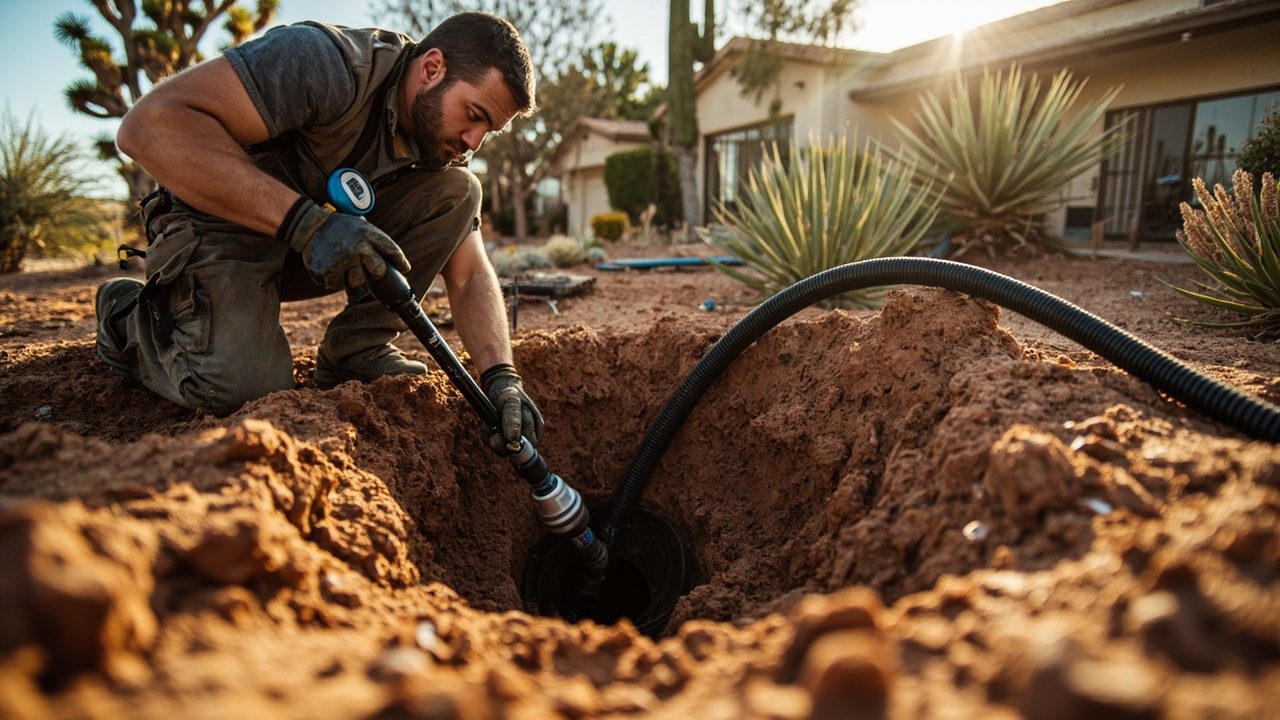
On the phone we ask which fixtures back up, whether the washing machine triggers the alarm, and where the cleanout sits. On site the meter is read first to separate supply from drain. Then the line is cleared, because a full line shows only water. The camera goes in from the cleanout, and a locator on the surface marks the depth and the spot of any root joint, low spot or crack. You watch the screen with us as it goes, and the written scope comes afterward, built from what the footage showed.
Approved scope, then the work
Once you approve the written scope, water use in the house stops and the cleanout and the work area get covered first. On a spot repair the trench opens over the marked joint, the bad section is cut out, and a new section goes in with a no hub band or a proper transition to the old clay or cast iron. On a lined run the old pipe is cleaned and the new pipe cures inside it. If the trench shows more damage than the footage did, we stop and show you before going further.
Camera again before we leave
Before we leave, the camera goes back through the repaired or lined run and must show proper slope toward the main, clean joints and visible pipe walls for the entire length. Water is then run from the fixtures and the washer while we watch the lowest drain, and it has to clear without gurgling. Where a permit applies, the inspection stage comes before the trench is closed. You keep the written scope and the after recording, and we walk the path with you before we go.
Why caliche and old clay change how a lateral gets reached
Replacing a lateral or a long run of the main sewer line usually needs a permit, and a like for like fix of a short section or a drain clearing usually does not. The final call belongs to the local permitting authority on each job. Homes outside city limits fall under the county or the neighboring town, so which side of the boundary the house sits on comes up before a scope is written. Where a permit applies, we pull it and plan the inspection stage before the trench closes.
A crew that has worked mostly in softer soil makes predictable mistakes here. It sizes the dig for easy digging and meets caliche hardpan halfway down, so the trench runs longer than the quote said. It glues PVC straight onto old cast iron, and the joint separates and lets roots and water in at the transition. It lines a run that has a belly and leaves the low spot holding waste. It leaves a trench open ahead of a monsoon thunderstorm, and flash runoff carries silt and water into it. In the river valley the finer alluvial soil holds more water, so a trench there can fill from below and needs a pump on site while the joint is exposed.
One house here can carry several materials in a single run, and the camera has to name each one. Cast iron under the slab can feed a clay lateral, and an earlier repair may have added a section of PVC between them, so the transitions are where the footage slows down. Calls arrive from older central neighborhoods and from newer subdivisions across the greater metro, and the first phone questions sort them, since the age of the house tells us which pipe to expect. The recording stays with your written scope, so any later inspector sees the same run we saw.
We verify each transition point and measure the depth and pitch of every section. The camera shows us belly conditions, separations at joints, root intrusion and the material change points. A belly means that section will hold standing water and organic matter, which accelerates corrosion and collapse. We note the depth so the trench can be dug to match it, and we document the material so the repair uses compatible jointing methods and the same pipe type where the code allows substitution.
If this sounds close but not quite your situation, gas line repair & installation may be the better starting point.
The U.S. Department of Energy's water heating guide is a solid primer on operating costs if you want to dig into the numbers yourself.
What working with Bedrock Plumbing El Paso looks like day to day
When someone arrives
You call and we ask three things. Which fixtures back up, whether the washer sets it off, and whether the lowest drain gurgles. Those answers sort a same day visit from a scheduled one, and water reaching a floor drain is treated as same day. You get an arrival window on the call. If the job ahead of yours runs long, you get the new window as soon as the schedule shifts, so nobody waits at a door wondering.
Protection and cleanup
Floor covers go down along the path from the door to the cleanout before any tool comes in, and the camera cable is rinsed and wiped as it leaves the line. On a dig, sod and topsoil are stacked apart from the caliche and gravel spoil so the yard goes back in the order it came out. Sewage is contained at the cut and never carried through the house. Everything removed leaves with the truck, and the last step is a wash-down of the work area and a walk of the path with you.
What moves the price
Access sets the number first, meaning what has to be cut or moved to reach the pipe, from a driveway or slab to a finished floor, and putting it back. Depth and length of the excavation come next, and caliche slows a deep trench. The depth the locator marked at the first visit is where that scope starts. One joint costs less than the whole run, and the footage decides which you have. You approve the written scope, including what happens if the opening finds more, before work starts.
Sign off before working alone
A new technician rides with a lead on sewer calls before working alone, and the lead signs off on specific tasks. The first is running a camera from a cleanout after the line is cleared and reading what it shows. The second is fitting a no hub band at a transition between old and new pipe. The current code cycle gets reviewed with the lead. On a lateral with mixed materials or a suspected collapse, a second technician looks at the footage before any scope is written.
You Have Questions,
We Have Answers
Sewer line repair cost rises with access difficulty and excavation depth, and falls when one joint needs work. A spot repair at a single failed joint involves far less digging than re-laying a run. Finished surfaces such as tile, a poured patio or mature planting beds add restoration labor. Hardpan slows a deep trench, so depth matters as much as distance. Stating a figure before the camera footage exists would be a guess, so the written scope follows the recording.
A homeowner can legally do some sewer work, but replacing a buried lateral is rarely practical without commercial equipment. Trenches deeper than about five feet can cave in without shoring, and wall collapse is a critical hazard in DIY digging. Setting the fall correctly also needs a level or laser, since a low spot left in the new pipe holds waste again. Cutting into an active line releases sewage gas and raw waste, so ventilation and containment matter before any cut.
Trenchless methods exist, and pipe lining is the most common one for a sewer lateral. A resin-soaked liner is pulled or inverted through the old pipe and cures against its walls, forming a new pipe inside the old one. The old pipe must still be round and hold its slope for this to work. Pipe bursting is a second method, pulling new pipe through as the old one is fractured, though it needs entry and exit pits at each end of the run.
Repair is worth doing when the camera shows one damaged joint or a short bad section. Replacing a whole run for a single root-filled joint spends money on pipe that still works. Repair stops making sense when footage shows repeated cracks, a long belly, or walls flaking apart along most of the run. Counting the damaged joints on the recording gives the practical answer, because each failure point adds a future backup.
Lifespan depends on material, and figures run widely apart. Cast iron commonly serves fifty to seventy-five years before the interior scales and thins. Clay can last a century when joints stay tight, though roots shorten that by entering at the seams. Orangeburg, a tar-paper fiber pipe used in mid-century construction, often deforms within fifty years. PVC and ABS have not been in the ground long enough to show an exact ceiling, and they do not corrode or admit roots at glued joints.
Standard homeowners policies usually exclude wear, corrosion, and root damage, which cover most sewer line failures. Coverage more often appears when a sudden event, such as a covered water discharge, causes the damage. Many policies also stop at the property line or the foundation, so the pipe beneath a slab may be treated differently from the yard lateral. Reading the exclusions section and asking the carrier about pipe age limits gives a clearer answer than assuming. Keep the camera recording, since adjusters ask for evidence.
Full replacement cost climbs with lateral length, trench depth, and what sits on top of the pipe. Concrete, a driveway, or a slab requires breaking and repouring, while an open yard costs less to restore. Caliche hardpan lengthens excavation time, and a connection to a city main at a greater depth adds shoring needs. Permit involvement and the chosen method, open cut or lining, shift the total again. The locator depth marked on the first visit fixes the starting point for the scope.
Replacing a lateral or a long section of the main generally requires a permit. Like-for-like short repairs often do not. The City of El Paso Planning and Inspections Department decides which category a given job falls under. Inspectors typically want the pipe visible in the open trench so they can check the slope and the transitions before backfill. Digging first and asking later can force a reopened trench, so the permit question belongs at the start of scoping.
A standard homeowners policy rarely covers sewer line replacement, though two add-ons sometimes apply. A water backup endorsement pays for damage from sewage entering the home, though it often excludes the pipe itself. Some carriers and utility programs sell service line coverage that pays to repair underground lines on the homeowner's side. Each has a dollar limit, a waiting period, and exclusions for pre-existing damage. Ask the carrier whether a recording made before purchase is needed to prove the condition.
Collapsed pipe repair cost depends on where the collapse sits and how much sound pipe lies on either side. A short collapse under open ground is a spot dig with one replaced section. A collapse under a slab, a driveway, or a mature tree costs more because the surface must be cut and restored. Long collapsed runs or an offset that lets soil wash into the void push the job toward full replacement. Locator depth decides how large the excavation becomes.
Why hillside clay laterals change sewer line repair in El Paso
Kern Place sits on a hillside, and its older homes still have cast iron drains and clay laterals running under mature trees. That pairing makes sewer lateral repair here a question about joints, because clay was laid in short sections and every joint is a place for a root to enter. Desert roots travel toward moisture, and a joint that weeps is the wettest spot in dry ground. The eras tell you what to expect elsewhere. Homes from the 1940s through the 1960s often have cast iron under the slab tied to a clay or cast iron lateral, homes from the 1970s through the 1990s have ABS or PVC drains and PVC laterals, and the newer subdivisions have PVC drains and laterals throughout. Under all of it sits caliche hardpan on the mesas and foothills, which slows a trench and pushes long, deep runs toward lining, while the finer soil of the river valley holds more water around a leaking joint and keeps it feeding roots.
Sewer work that needs a permit is inspected at stages, and the permitting authority sets which stages apply to a given job. On a lateral, the open trench is where the fall of the pipe and any transition between new plastic and old clay or cast iron can be seen, so those stay uncovered until the stage passes. Knowing that up front changes the sequence, because the trench is opened, repaired and tested in one push. Summer monsoon storms make that sequencing matter more. Heavy rain runs off quickly through arroyos and ponds in low streets and dips, and a trench in one of those low spots fills fast, so work in a low area gets a pump and a cover at the end of each day. The recording of the finished run and the written scope stay with you, which gives an inspector, or a buyer's inspector later, the same picture we worked from.
Plumbing Services in The El Paso Area
Explore our service area and locate Bedrock Plumbing El Paso with ease. We're proudly local and serve the surrounding neighborhoods with fast response and honest pricing. Use the map to check our coverage area, or call us and we'll confirm in seconds.
Address:
Bedrock Plumbing El Paso, 221 North Kansas St, Suite 700, El Paso, TX, 79901
Additional Services We Offer
- Backflow Prevention & Testing
- Drain Cleaning & Rooter Service
- Faucet & Sink Repair
- Garbage Disposal Services
- Gas Line Repair & Installation
- Plumbing Services
- Shower & Bathtub Plumbing
- Slab Leak Detection & Repair
- Sump Pump Services
- Tankless Water Heater Services
- Toilet Repair & Installation
- Water Heater Repair & Installation
Plunging a toilet and finding the main shutoff are homeowner jobs, and you do not need us for either. DIY stops at any drain already backed up past a cleanout and at anything behind a finished wall or under a slab. Whether a mature tree stays is your decision and an arborist's. If the first visit shows work outside what we handle, we say so then and tell you who does.
Before you call, know which fixtures back up and whether the washer or a full bathtub sets it off. Note when it started and how many times the line has been cleared. Find the cleanout, often a capped pipe near the foundation, and the main water shutoff. The age of the house tells us whether to expect clay, cast iron or PVC under it.
Last reviewed September 2026 by Dave Parker, Owner.