





What a returning drain backup means in El Paso clay lines
A tub that gurgles when the washer drains, or a floor drain that shows water only during a wash cycle, tells you the water has nowhere to go past one spot. A drain escapes only while something upstream runs, so it differs from a supply leak, which pushes water out all night under pressure. Watch which fixtures complain. One slow sink points to a branch or a p trap. Every fixture slow, with the lowest tub or floor drain backing up first, puts the restriction on the main leaving the building.
If you cleared the line before and it is slowing again, the cause is usually one restriction rather than a dirty pipe. Across the greater metro, older homes send their waste through clay laterals that were jointed in short sections. Desert soil stays dry, and a weeping joint is the wettest spot in it, so roots follow the moisture and push in at the seam. Mature trees supply plenty of roots. Cast iron drains under postwar slabs add a second route to the same symptom, since they corrode from the inside out and crack.
A cutter run down the line clears the roots inside the pipe and leaves the root at the joint. Paper and grease then catch on what remains, so the line clears a little slower after each visit. A sewer rooter and drain cleaning company that skips the camera can be called back for the same job again and again. Where the roots sit, whether at one joint or at every seam of the lateral, decides if the fix is one repair or a new run. The camera shows where the blockage sits and whether the lateral has cracked or separated, which changes the scope from a spot repair to a replacement.
Call the same day when the sequence has started: roots hold at one clay joint, then paper and grease catch at that spot every day, then the main backs up into the lowest fixture in the building with no warning. Once water shows in the lowest tub or floor drain, stop the washer, the dishwasher and every tap, keep people and pets out of the wet area, and leave any plunger and every cleanout alone. At that stage, emergency drain and rooter service is the right call. The longer the backup sits, the more pressure builds in the lateral and the greater the chance of sewage backing into the home.
Our page on storm drain cleaning & repair covers that side of the work in more depth.
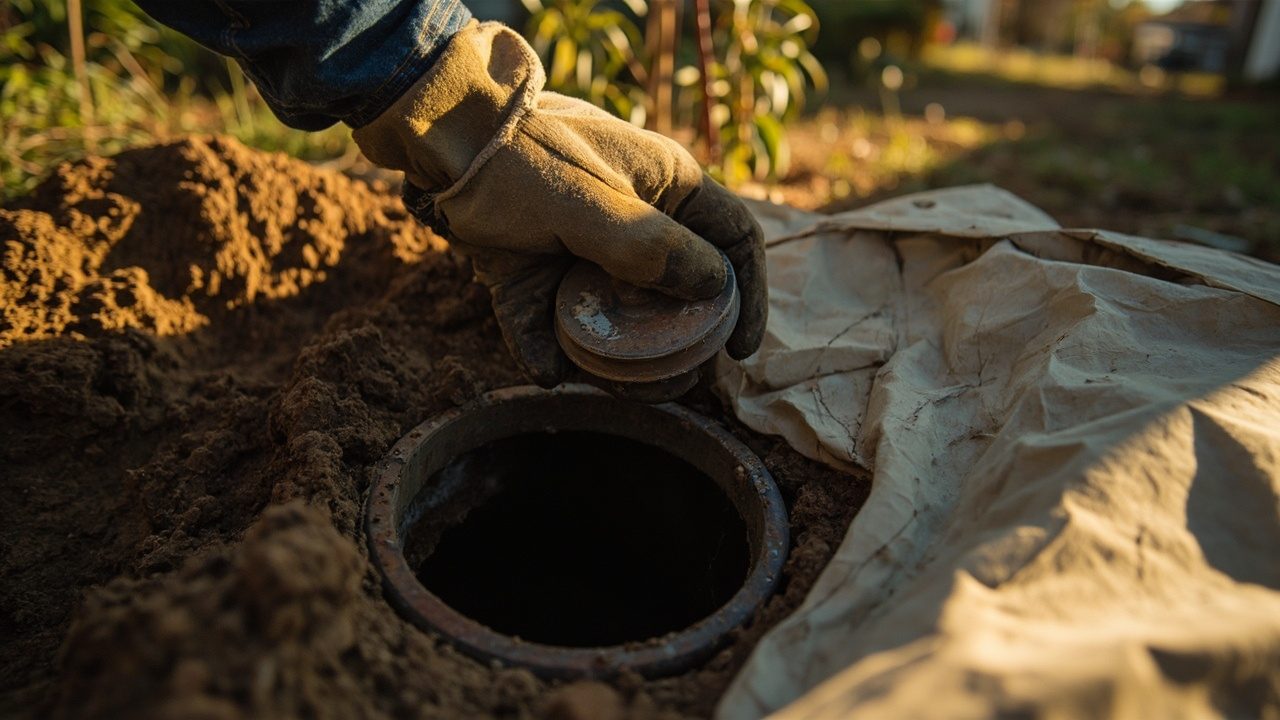
Find the sign you have, then read across to see whether it can wait.
| Symptom or first sign | What is already happening | What it becomes if ignored | When to call |
|---|---|---|---|
| Roots at one clay joint | Paper and grease catch at that spot every day | The main backs up into the lowest fixture in the building with no warning | Now, the same day |
| An anode rod eaten away | The steel tank becomes the sacrificial metal | Rusty hot water arrives first and a split tank arrives after | This week, while it is still one part |
| A weeping angle stop under a sink | The compression nut corrodes so it cannot be snugged | The stop snaps off in someone's hand during a faucet change | Now, the same day |
| A toilet that runs after flushing | The flapper lets the tank refill all night and the fill valve cycles constantly | The valve wears and sticks open with the overflow carrying it away unnoticed | This week, while it is still one part |
| Incoming pressure above the normal band | The relief valve on the heater starts weeping | The tank seams work harder every cycle and the heater fails years before it should | This week, while it is still one part |
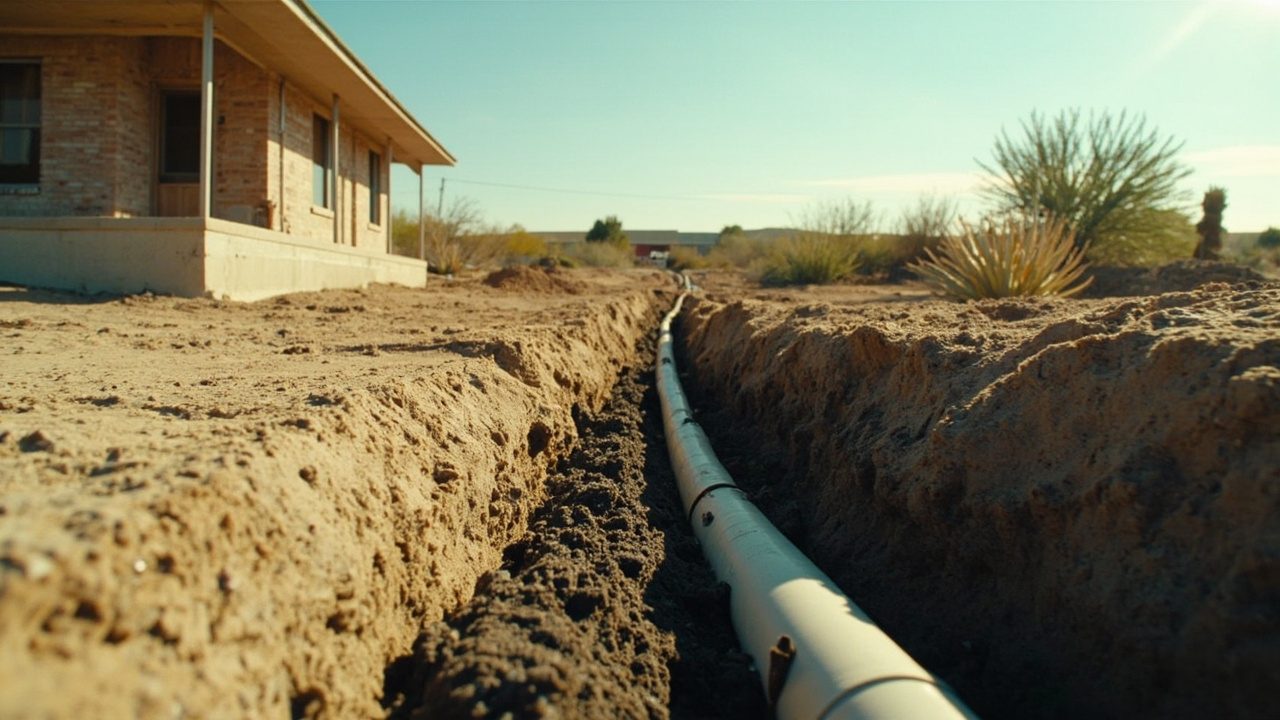
How we place the roots before we quote the repair
The sequence follows where the water is going. With every fixture idle, the technician runs water at one fixture at a time to see which ones slow, which separates a branch from the main. The line is then cleared first, with a cable or a hydro jetting head chosen by what comes back, because a full line shows nothing on camera but water. Once it drains, the drain camera with a locator goes in through a cleanout, and the footage becomes the diagnosis. The camera is only a way of looking. The finding is where the roots sit, how deep, and whether the pipe still falls.
The footage gets read against two pictures. A good line shows continuous fall to the main, clean joints and the pipe walls visible the whole run. A bad one shows standing water part way along a level run, which is a belly in the line, or roots at a joint. Roots at one joint put the repair at that joint and leave the rest of the lateral alone. Roots at every seam, or a belly that holds water, move the job to replacing the run. The locator then marks the spot on the surface and reads its depth, and depth decides whether the fix is a small dig or a trench. Where the camera stops short at a collapsed or offset joint, the scope changes at that point.
The local condition that decides between materials is the age of what is already in the ground. Older homes in the greater metro carry cast iron drains under the slab and clay laterals, and both corrode or open at joints over decades. When only one section is bad, the new piece is PVC or ABS joined to the old cast iron with a no hub band, the proper transition between mixed materials. Plastic is lighter and quicker to set but carries more noise through a wall, so a stack inside a bedroom wall leans toward cast iron. Caliche hardpan slows any trench, which pushes a lateral with a round host pipe and one bad section toward cured in place lining. A lateral with a belly needs open cut, because only a trench lets the slope be corrected. The choice also turns on whether the line runs under a patio or a foundation, as access shapes what methods stay on the table and which ones are ruled out by the existing structure above.
See diy vs. professional drain cleaning for how the related work is scoped and priced.
Permit and inspection questions? Planning & Inspections is the office we coordinate with on every permitted El Paso job.
Narrow this to two options before calling, then ask which one suits the house.
| Option | The numbers a buyer weighs | Best suited to |
|---|---|---|
| Cast iron drain against PVC or ABS | Cast iron is heavy and quiet and corrodes from the inside over decades | Drain replacement under a finished house |
| Salt softener against a salt free conditioner | An ion exchange softener removes hardness minerals and needs salt and a drain | Hard water houses weighing salt against upkeep |
| Trenchless lining against open cut replacement | Lining cures a new pipe inside the old one with a small loss of inside diameter | Runs under a slab, a drive or mature trees |
| Tank water heater against tankless | A tank is judged on capacity in gallons and its first hour rating | Households with long back to back hot water use |
| Sump pump selection | Sized by horsepower against the vertical lift plus pipe run it has to push through | Basements with a real lift to the discharge |
How a drain call runs
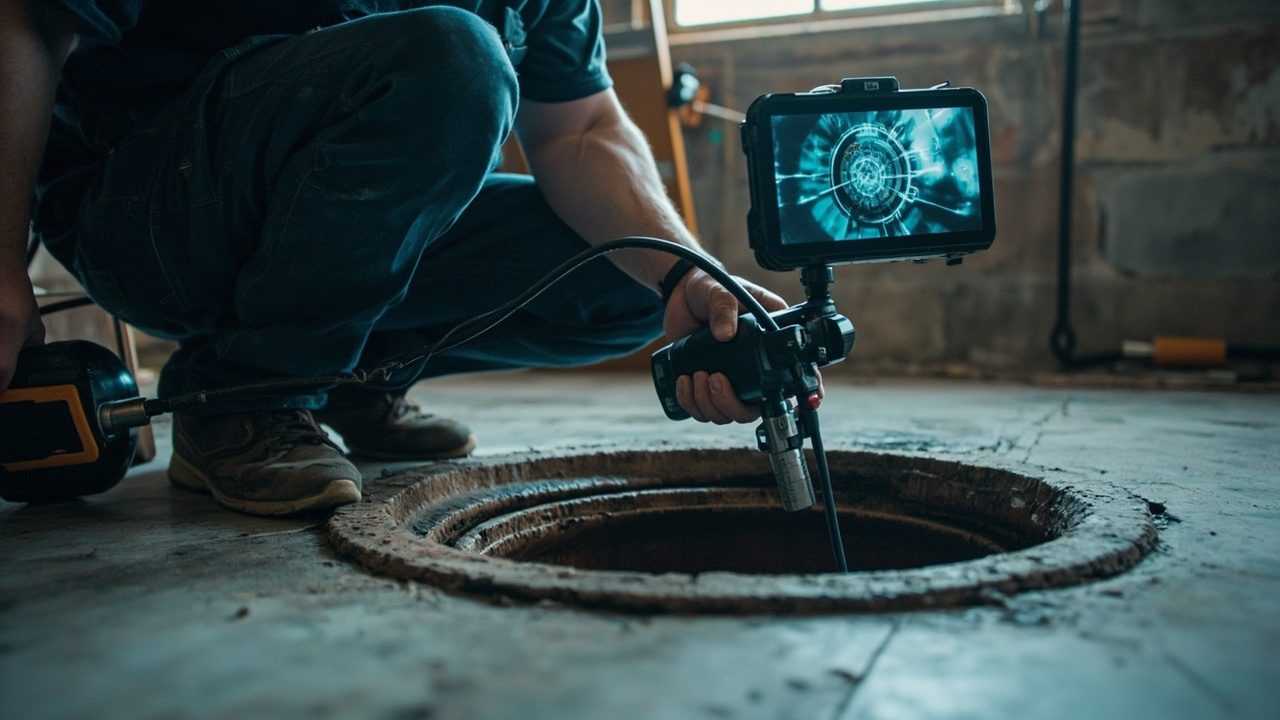
Questions, clearing and camera
The call starts with which fixtures are slow, when it began, whether the washer triggers it and where the cleanout sits. On site, the technician isolates each branch from the main by running water through individual fixtures. If the lowest tub or floor drain was the one that backed up, that fixture gets watched first. The line is cleared with a cable or a jetting head, since a full line hides everything but water. Once it drains, the camera and locator go in from the cleanout and you can watch the footage as it runs. It ends with a spot, a depth and a picture of the pipe walls, and nothing is opened until then.
Approval and repair
Once you approve the written scope, water use on the affected branch stops and the work area is protected. A root stub at one clay joint gets cut out and the joint replaced. If the camera showed roots at every seam, the run is replaced, or lined with cured in place pipe where the host pipe is still round. On cast iron, the bad section is cut out and new PVC or ABS is joined with a no hub band. If the opening turns up a belly or a second cracked joint, we stop and show you the footage before going further.
Test and handover
Before we leave, the camera travels back through the repaired section to verify slope toward the main, clean joints and visible pipe walls along the entire length. Water then runs at the fixtures that were slow, and the lowest drain has to stay dry while the washer drains. On a clearing only, the same test applies, and the line has to drain at full flow with no gurgle at the nearest fixture. You walk through the footage with the technician, and you keep the written scope and the camera findings from the visit.
Why drain work here goes wrong for crews who skip the camera
Clearing a blocked drain or running a cutter through an existing line usually needs no permit. Replacing a run of lateral, or a section of drain inside the building, usually does, and that work is inspected in stages while the new pipe is still open. Which office issues the permit depends on where the house sits, since work outside city limits falls to the county or the neighboring town. The final call on any job belongs to the permit authority, and a crew that assumes one process for the whole metro arrives at the wrong counter.
Unfamiliarity shows up in the pipe. A crew new to the older stock runs a cutter down a clay lateral, watches the water drop and leaves, never learning that a root stub still sits in the joint and will catch paper again. Another jets a cast iron drain under an older slab without a camera first, and the jetting pressure drives water out through a crack under the concrete. A third glues plastic to cast iron and calls it a repair, when a mixed joint needs a no hub band to hold. Someone who treats the ground as soft plans a short dig, then meets caliche hardpan and spends the day on it. A quote for a full lateral replacement written from symptoms alone overstates the job when the fault is one joint and understates it when the run has a belly.
Response covers the whole county, from older neighborhoods with clay laterals under mature trees to newer subdivisions on the east and west sides with PVC laterals. The phone questions sort a call before anyone leaves, so the right cable, jetting head or camera is already with the technician. A newer PVC lateral sends the first look toward grease at a kitchen branch or a low spot, while a clay lateral sends it toward the joints. Knowing which era sits behind the call saves the guessing.
More detail on safe drain cleaning products is on its own page.
Independent standards matter too, the EPA's WaterSense program sets the efficiency benchmarks we use when recommending replacement fixtures.
Working with Bedrock Plumbing El Paso on a stubborn drain
How the call is booked
You call and we ask three things: which fixtures are slow, whether the lowest tub or floor drain holds water, and whether the washer sets it off. Those answers sort a same day visit from a scheduled one, because a full line with water in the lowest fixture goes first. The person who takes the call confirms your arrival window with you on the phone. When the day shifts, the new window comes from that same person, and after hours calls are taken too.
Floors, cables and cleanup
Before any cable comes out, floor runners go down from the door to the cleanout and a drop cloth goes under the work area. Tools stay staged on the cloth, and the cable and camera head are rinsed at the drain before they cross a floor. Water and debris that come out of the line go back down the drain, and any wet area near the cleanout is wiped up. The last thing we do is refit the cleanout cap and walk the route back to the door.
What moves the cost
Access moves the cost first, meaning whether a slab, a finished floor or caliche hardpan sits over the pipe and what it takes to put that surface back. Depth and length of any dig come next, then whether the fix is a repair at one joint or a replacement of the whole run, which moves the scope furthest and depends on the rest of that run. Matching old cast iron or clay to new pipe and after hours calls add to it. The camera findings become a written scope, and you approve it before any work starts.
How technicians are checked
A new technician rides with a lead and does not work alone until the lead has watched them set a camera from a cleanout, read the locator depth and make a no hub transition on cast iron. The lead signs off on each task. On an unusual job, such as roots at every seam or a belly under a slab, a second technician reviews the footage before a scope is written. That second look keeps a joint repair from being quoted as a new run.
You Have Questions,
We Have Answers
Cost depends on where the blockage sits, how the line is reached, and whether a camera run is added. A fixture trap or branch is the cheapest case. A main line cleared through a cleanout takes more cable length and time. Adding a jetting head raises the job because it needs a water supply and setup. A basement or slab-level cleanout that is easy to open keeps the visit short, while a buried or missing cleanout pushes it up.
No single average holds up, because a sink branch and a main lateral are different jobs with different equipment. Cable length, the size of the cutter head, and how long the line takes to clear all move the total. Grease-packed kitchen branches clear quickly, while a root mass needs repeated passes with a heavier blade. Visits after hours cost more than daytime ones. Any camera inspection is a separate add-on you can decline.
Clearing cost rises with the blockage depth and falls when it sits near the fixture. A p trap or short branch needs a small hand cable. A stoppage forty feet out needs a drum machine and a longer visit. Hard water scale inside old pipe narrows the bore and makes the cable work harder. Roots or a collapsed section turn a clearing into a repair estimate.
Professional cleaning is worth it when the stoppage is past the trap or keeps returning. A store-bought snake typically reaches about 25 feet and cannot cut roots or scour grease from pipe walls. A drum machine with a cutter head restores the full bore of the pipe, and a camera confirms it. One slow sink rarely justifies a call. Multiple slow fixtures or a gurgling toilet point to the main and merit a professional.
Most household drains need clearing only when symptoms appear, though kitchen lines with heavy grease use benefit from yearly jetting. Bathroom branches collect hair and soap scum, which a hot water flush every month or so keeps moving. Mainline cleaning on a fixed schedule makes sense only for homes with a history of root intrusion, where a cutter pass every year or two removes regrowth before it blocks the pipe.
A plunger with a proper seal clears most single-fixture clogs in under a minute. Fill the basin so the cup is submerged, then push and pull steadily for about twenty strokes. For a sink, block the overflow opening with a wet rag so pressure goes down the pipe. A hand-crank auger works next for hair in a tub. Skip chemicals, since standing caustic water endangers whoever opens the trap after.
Drain pipes need cleaning when flow slows, with one exception for lines that carry grease or roots. Kitchen lines can build a fatty lining in a year or two, and jetting strips it off the walls. Clay laterals with roots often need a cutter pass on a cycle of one to three years. PVC branches inside a house in normal use can go a decade without service.
The cost to unclog a drain rises with cable length, access, and the material that is blocking the line. A shallow sink stoppage is short work. A blocked main needs a larger machine and an accessible cleanout. Roots take heavier cutter heads and more time than soft grease. A camera run adds to the total, and a written scope follows if the camera shows damage that needs repair beyond clearing.
Drain cleaning costs more for long, deep or dense blockages and less for a simple trap or branch. A hand cable handles a bathroom sink for the shortest visit. A jetting head suits a grease-lined kitchen drain but needs setup time and water. If the fixture shows no fault, a plumber may find the problem is a vent or supply issue and not a blocked pipe.
Why root-bound clay laterals change drain cleaning in El Paso
The ground and the housing eras decide what a drain job looks like here. Homes from the late 1800s through the 1930s sit on brick, adobe or frame with cast iron drains, vent stacks and clay laterals. The 1940s through the 1960s brought slab on grade construction with cast iron pipe beneath the concrete and clay or cast iron laterals, so a crack there means breaking concrete or rerouting the line. Homes from the 1970s through the 1990s moved to ABS or PVC drains and PVC laterals, and newer east and west side subdivisions use PVC throughout. Clay laterals under mature trees are where roots enter at the joints. Caliche hardpan, a dense layer that slows trenching, underlies the mesas and foothills, while the valley soils are finer alluvium that holds more water and keeps moisture near a weeping seam. Where the camera shows one bad joint under caliche, a spot repair avoids a long trench.
Work that replaces pipe is inspected in stages, and at a stage the inspector usually looks for the new section open to view, correctly joined and falling toward the main. Knowing that up front changes how a job is sequenced, because backfilling before the inspection means digging it out again, and digging caliche twice is the slowest way to finish a lateral. A camera run before and after the repair records the fall and the joints. Outside city limits the county or the neighboring town holds the permit, so the first question on a replacement is which office applies. Clearing a line usually involves no inspection at all, and the footage stands as the record of what the pipe looked like. The permit authority makes the final call on what needs a permit and what does not.
Plumbing Services in The El Paso Area
Explore our service area and locate Bedrock Plumbing El Paso with ease. We're proudly local and serve the surrounding neighborhoods with fast response and honest pricing. Use the map to check our coverage area, or call us and we'll confirm in seconds.
Address:
Bedrock Plumbing El Paso, 221 North Kansas St, Suite 700, El Paso, TX, 79901
Additional Services We Offer
- Backflow Prevention & Testing
- Faucet & Sink Repair
- Garbage Disposal Services
- Gas Line Repair & Installation
- Plumbing Services
- Sewer Line Repair & Replacement
- Shower & Bathtub Plumbing
- Slab Leak Detection & Repair
- Sump Pump Services
- Tankless Water Heater Services
- Toilet Repair & Installation
- Water Heater Repair & Installation
A toilet that stops once and takes a plunger is a homeowner job, and you do not need us for it. DIY stops at any drain already backed up past a cleanout, and at anything under a slab or behind a finished wall, because a cleanout under head pressure empties onto whoever opens it. If the camera shows the fault is a fixture or a supply line rather than the drain, we tell you on the first visit and not after the invoice.
Before you call, know which fixtures are slow and whether water pools in the lowest tub or floor drain. Note whether the washer sets it off, when it started, and how many times the line has been cleared before. If you know the pipe material or the age of the house, say so, and find where the cleanout sits. Tell us whether anyone is home.
Last reviewed September 2026 by Dave Parker, Owner.