





What floodplain clay does to plumbing here
Most of Socorro sits on soil laid down by the river and irrigated as farmland for generations, and that soil carries clay-rich layers. Clay swells when irrigation and monsoon storms wet it and shrinks when a dry spell pulls the water out. A slab foundation and the lines beneath it move with that ground, which is why single story stucco homes from the 1990s through the 2010s, the dominant stock here, are where leaks under the slab show up. Those homes carry copper or PEX supply, plastic drain lines under the floor and a tank heater in the garage or a closet. A slab leak gets pinpointed before anyone breaks into the floor, starting with the water meter watched while every fixture is closed.
The water arriving in those homes is hard. Lower Valley Water District supplies most of the city and publishes an annual water quality report, and hard regional water leaves scale in tank heaters, tankless units, faucets and small valve passages. A hardness test on the incoming water, read against the hard classification that starts at about seven grains per gallon, tells you whether a second heater inside a few years is a water problem rather than a bad heater. Anyone with questions about what else is in the tap should read the district report and send a sample from their own tap to a laboratory. Private wells still serve some older colonia lots, and a well brings a pump, a pressure tank and its own treatment into the job.
The older stock splits by how it reached the water main. Sparks was settled as a colonia in the late twentieth century, and lots there were first developed without water and sewer lines, so homeowner-built plumbing, septic systems and service lines added later to reach a newer main are still found, along with fittings that do not match. Ysleta runs earlier, mostly early and mid twentieth century, and houses there bordering Socorro can still carry galvanized steel supply that closes up from the inside and cast iron or clay drain lines that clog and corrode with age. Colonia-era manufactured homes add gray polybutylene supply that cracks at its fittings.
From routine maintenance to 24/7 emergency plumbing services, the same local crew handles every call.
How Bedrock Plumbing El Paso works in Socorro
Scope here is set by readings taken before anything is opened. A screw-on pressure gauge at a hose bib, read with the whole house off, gives static pressure. A reading of 45 to 70 psi leaves fixtures alone, and a reading above 80 psi puts a pressure reducing valve into the job. The hardness test on the incoming water goes on the same visit, because hard water is the local reason heater elements scale and small valve passages close. Those readings go on the written scope, so you can see why each line is there before you approve it.
Every finished job gets a second check from a plumber who did not do the work. That plumber repeats the pressure reading and the meter test and looks at each joint and transition before the job is closed. A new technician rides with a senior plumber and does not work alone until they have shown they can isolate a leak at the meter, read a hardness kit correctly and finish a joint that holds under test. An unusual job, such as an old wall carrying mixed supply materials, goes to a second plumber before the scope is written.
On heater jobs the anode rod pull adds evidence. Sacrificial metal along the core wire means the tank is still protected, and a bare core wire means the tank itself is corroding. Pulling the rod needs headroom above the tank, so clearance is checked before anyone talks about same-day work. Hot water temperature is read at the farthest hot tap after the tap has run a full minute.
When the opening finds more than the scope listed, work stops at that point. The finding is shown to you, a revised scope is written and nothing further starts until you approve it. That order matters most on slab and wall jobs, where the pipe behind the surface stays unknown until it is exposed.
The Texas State Board of Plumbing Examiners publishes the rules that govern work like this in your area.
Isolate before opening
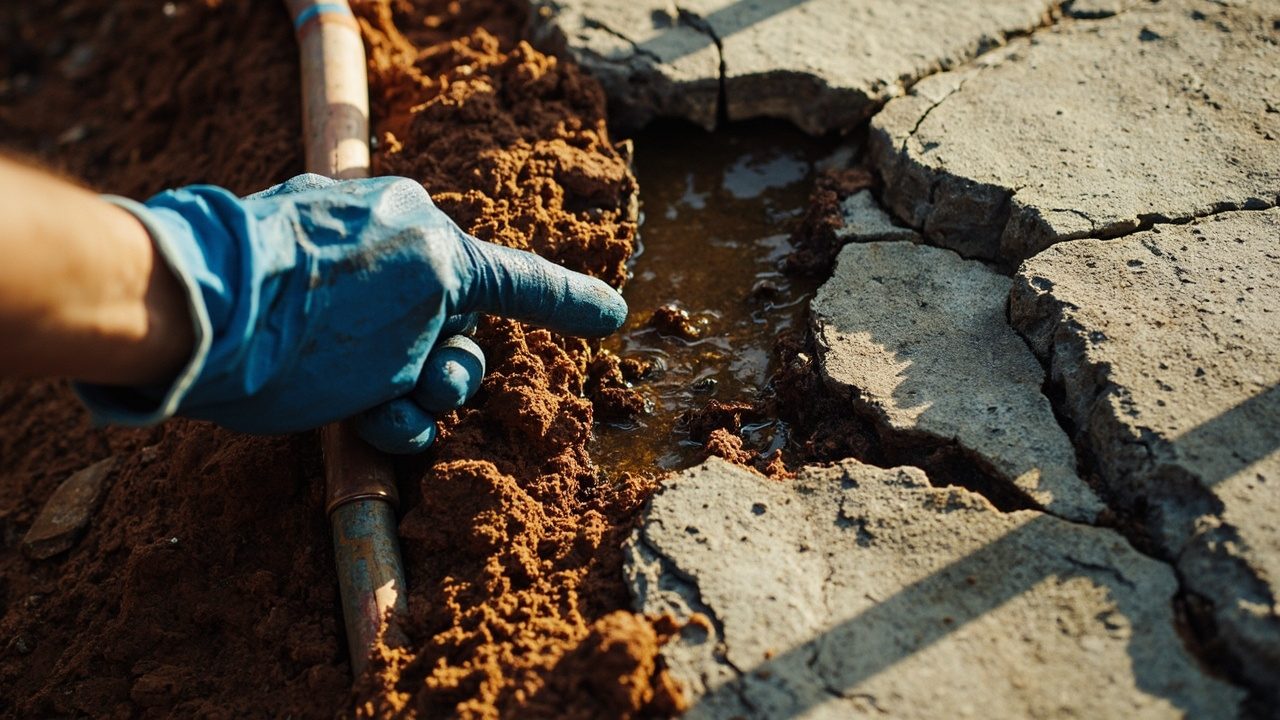
Every leak call starts at the meter with every fixture closed, and the dial or leak wheel gets fifteen minutes. Any movement means water is leaving the system. Then the main is closed and the dial is watched again, which puts the loss on the street side or the house side. On clay-moved slabs that sequence decides whether a floor is opened at one point or left alone.
Drain camera and locator
After the line is cleared, the camera runs from a cleanout, because a full line shows nothing but water. Continuous fall and clean joints mean the line is sound. Standing water along a level run marks a belly, and roots at a joint put the repair at that joint. The locator marks the depth on the surface, which decides between lining and open cut before any digging.
Code cycle practice
Every technician works from the International Residential Code as it is adopted here, and the code family is read again whenever the adopted rules change. On a heater replacement, the relief valve, the expansion tank and the gas connection are the items checked against it before an inspector is asked to come out. Work that is left visible is work an inspector can read.
Housing stock familiarity
Socorro jobs mix adobe walls with plumbing added later, colonia lots with homeowner-built connections and slab subdivisions with clay under the floor. Knowing which era carries which pipe means galvanized steel, gray polybutylene or PEX is expected before a wall is opened, and the transition bands and fittings that match those materials are already on the truck.
Plumbing work we handle across Socorro
Residential work here is mostly leak repair on slab homes, water heater replacement in garages and closets, drain clearing and gas line work inside the home. Hard water shortens heater life, so a heater job carries a hardness reading. Commercial work turns on grease line jetting, main line repair and scheduled drain service for kitchens, where downtime is the cost that matters. Emergency work covers burst lines, active leaks, sewage backups, failed water heaters and after hours calls.
Residential visits need access to the meter, the main shutoff and the garage or closet. Commercial visits need a window outside service hours so a kitchen line can be jetted while it is idle. Emergency visits carry the same gauge, leak indicator and camera equipment, but the first hour goes to shrinking the problem to one branch before anything is diagnosed.
Residential leak repair
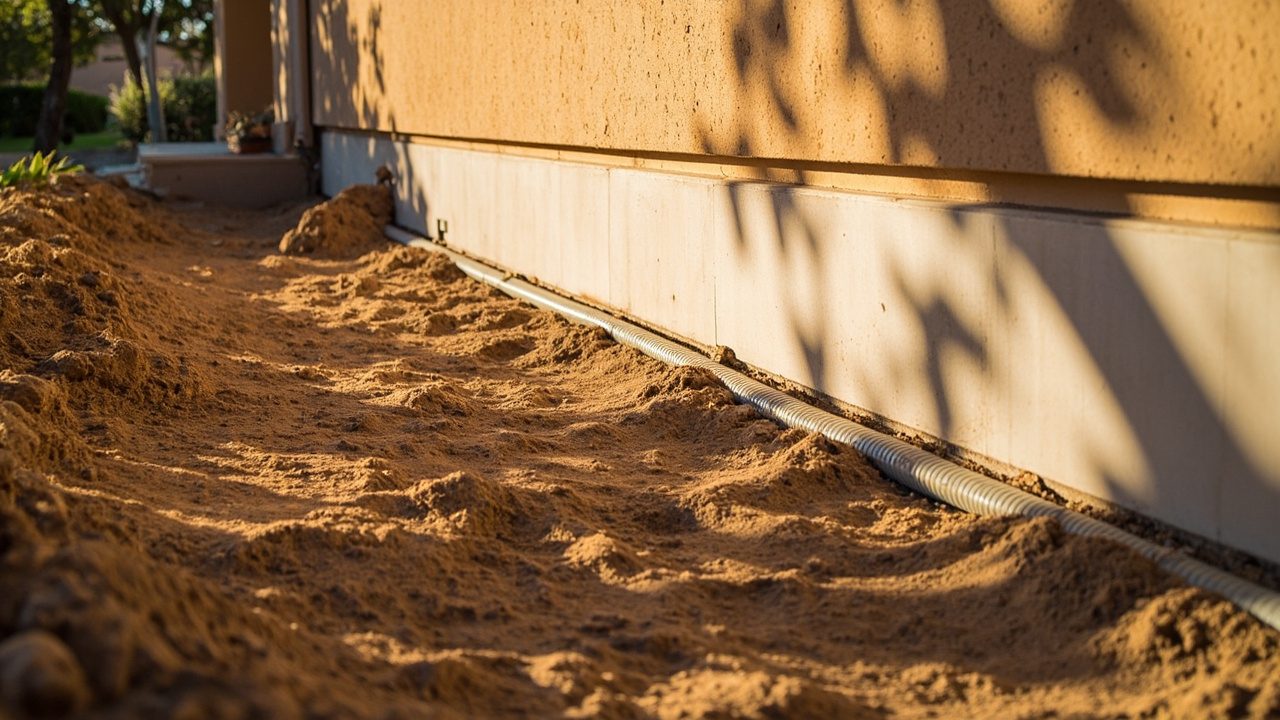
Residential work covers leak repair, fixture and valve replacement, water heater repair and replacement, drain clearing, repipe work, sump pumps and gas line work inside the home. Plumbing repair in Socorro often starts with a warm spot on the floor in one place or a water bill that jumped with nothing visibly wet. On a single story stucco home from the 1990s through the 2010s, that usually means a supply line under the slab. The meter test puts the loss on the house side, isolating branches narrows it, and the floor is opened at one point rather than along a run. When the line is the same age everywhere, the choice is another spot repair or a reroute overhead in PEX with fewer joints inside walls. The heater in the garage gets a hardness reading on the same visit.
Commercial grease line jetting
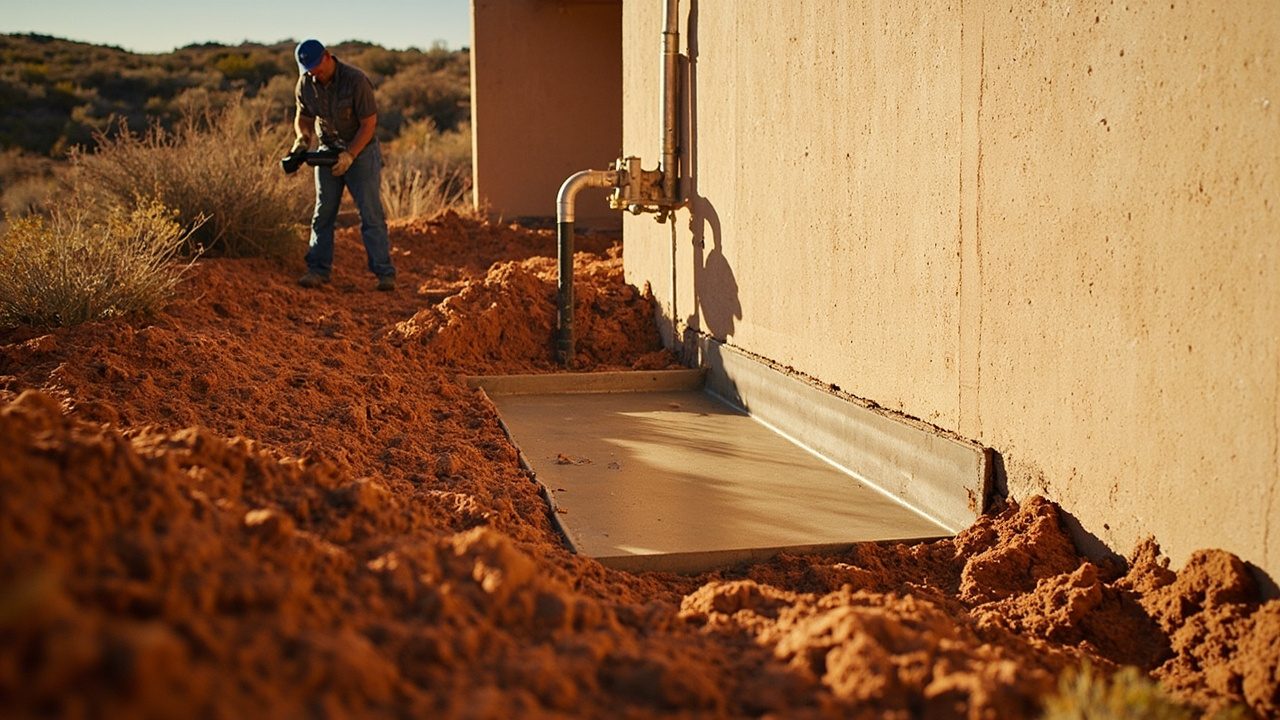
Commercial work covers grease line jetting and maintenance, main line repair, water heater and booster work, restroom fixture programs and scheduled drain service for kitchens. Scheduling runs around service hours, so a kitchen branch is jetted when the line is idle and the dining room is closed. The documentation covers pressure readings, camera footage of the line before and after jetting, the location of each cleanout and the scope approved in writing, which is what a landlord, a lender or an insurance carrier asks for after a backup interrupts trade. Grease at a kitchen branch is a restriction at one place, and the record shows whether it returns to that same place or moves down the line. The camera run after hydro jetting confirms the pipe walls are visible along the whole run.
Emergency burst line response
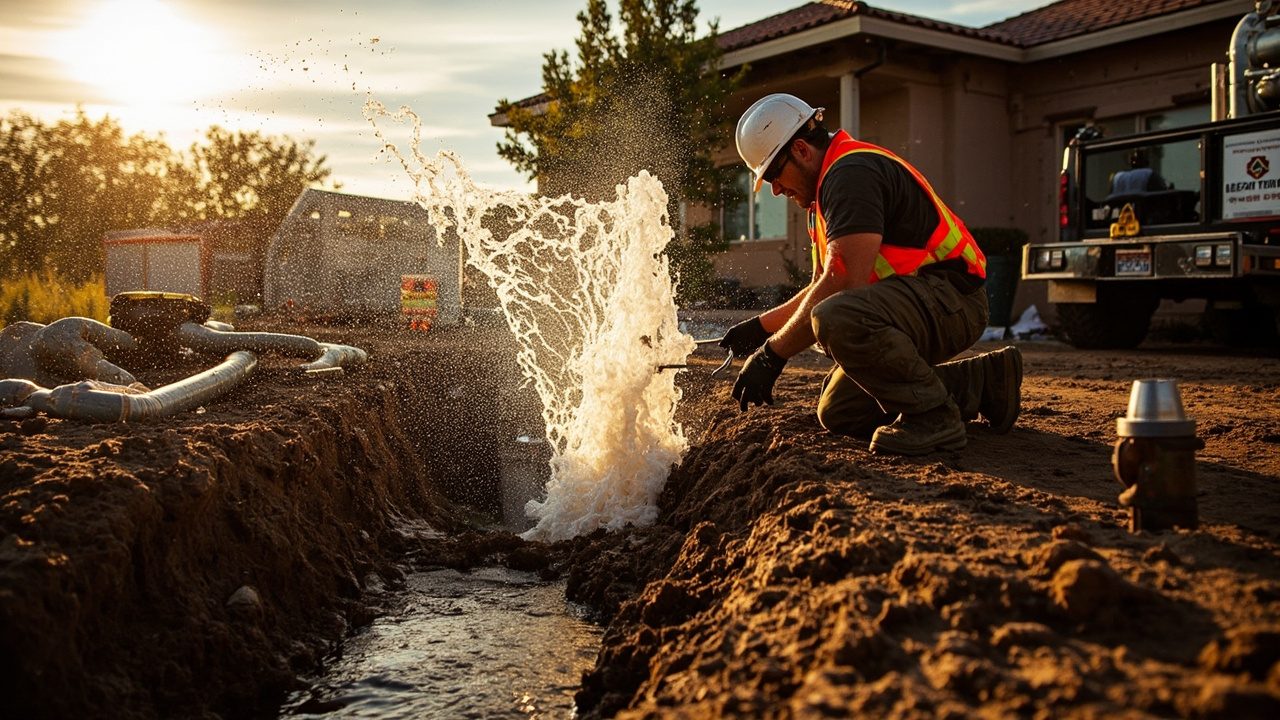
Emergency work covers burst lines, no water, active leaks, sewage backups, failed water heaters and after hours response. The first move on arrival is closing the supply at the fixture stop or the main, because pressurised water keeps escaping all night while a drain only escapes when something upstream runs. If water has reached outlets, a panel or a ceiling fixture, that circuit is killed before anyone steps into the water. On a failed heater the cold inlet closes, the gas control or breaker goes off, and a hot tap on a lower floor opens so the tank is not under vacuum. On a sewage backup every water use stops, washer and dishwasher included, and nobody plunges a line that is already full. If you smell gas, everyone goes outside, nothing is switched on the way out, and the utility is called from outside. A single slow drain can usually wait for morning, and a leak under pressure cannot.
The plumbing problems we see most in Socorro
A meter dial that turns with every fixture closed is the clearest sign of a supply leak, and in Socorro it usually points under the floor. Clay-rich soil swells when irrigation and storms wet it and shrinks when it dries, and a slab and the lines beneath it move with the ground. A copper or PEX line stressed at a fitting weeps first, and pressurised water keeps escaping whether anyone is home or not. A drain fault behaves differently, because a drain only escapes while something upstream runs.
Call today when a hairline supply leak sits behind tile. The framing stays damp because nothing dries inside a wall, and the pipe repair turns into a wall rebuild. The same sequence runs under a slab, where the wet soil and the pipe are harder to reach.
The U.S. Department of Energy's water heating guide is a solid primer on operating costs if you want to dig into the numbers yourself.
Rare freezes, costly bursts
Freezes are rare in Socorro's mild winters, which is why exposed hose bibs, supply lines and plumbing under manufactured homes were never protected. When a multi day hard freeze arrives, ice splits the line at its coldest point, and nothing shows until the thaw puts pressure back on the pipe. A fixture with no water while the rest of the house works, or a ceiling stain hours after the temperature recovered, means close the main and call today.
Mismatched colonia-era fittings
Homes connected to water and sewer after they were built often carry homeowner-installed connections and plastic supply lines, including gray polybutylene in manufactured homes. Polybutylene cracks at the fittings as it ages, and a fitting joining two different materials without a proper transition weeps at the joint. A damp patch beside a wall, or a fitting that drips after being tightened, means the line needs tracing today, since a cracked fitting under pressure does not stop on its own.
Septic and slab drain faults
Where older lots never reached the sewer main, septic systems fail or back up. Where clay moves a slab, the plastic drain lines under it can develop a belly that holds standing water. One slow fixture points to a trap or a branch. Every fixture slow with the lowest one backing up puts it on the main. Stop all water use, including the washer, and call, because a line that is already full cannot be plunged.
Postponed heater care
Owners postpone flushing the heater and checking the anode rod because hot water keeps coming. Hard water builds scale on the elements and the tank floor all the same. A bare core wire on the anode rod means the steel tank is now the metal corroding, rusty hot water for the first minute arrives first, and a split tank arrives after. Call when hot water runs rusty or the second shower runs cold.
Find the sign you have, then read across to see whether it can wait.
| Symptom or first sign | What is already happening | What it becomes if ignored | When to call |
|---|---|---|---|
| A hairline supply leak behind tile | The framing stays damp | The pipe repair turns into a wall rebuild | This week, while it is still one part |
| An anode rod eaten away | The steel tank becomes the sacrificial metal | Rusty hot water arrives first and a split tank arrives after | This week, while it is still one part |
| A toilet that runs after flushing | The flapper lets the tank refill all night and the fill valve cycles constantly | The valve wears and sticks open with the overflow carrying it away unnoticed | This week, while it is still one part |
| Roots at one clay joint | Paper and grease catch at that spot every day | The main backs up into the lowest fixture in the building with no warning | Now, the same day |
What happens at the first visit in Socorro
The first stop is the meter or the water heater, depending on the call. The meter shows whether water is leaving the house, and a leak test with every fixture closed runs fifteen minutes. The heater shows whether hard water is the cause, so the hardness kit goes on a cold tap. If you plan to hire a plumber in Socorro, have ready what you are seeing, when it started, what changed just before it, the age of the heater or the pipe if you know it, where the main shutoff sits and whether anyone is home.
Price-checking is smart: marketplaces like Thumbtack publish typical cost ranges you can hold any quote against, including ours.
Communication before arrival
The person who answers logs the address, the symptom, when it started and where your main shutoff sits, then confirms an arrival window before the call ends. On the day, the technician's arrival is announced by phone so you are not waiting at a window. If the job ahead runs long, the window is updated by phone and the reason is stated. Emergency calls skip the window and go straight to arrival timing.
Arrival and walkthrough
The technician gives their name, puts down floor protection before stepping inside, and asks you to show the meter, the main shutoff and the spot where you first noticed the problem. You describe what you saw and when it started while the technician listens, and then the first readings go on. Nothing gets opened during the walkthrough. The gauge goes on the hose bib, the leak indicator is watched with every fixture closed, and mineral content is measured at a cold tap.
Handover and cleanup
Before leaving, the pressure reading and the meter test are repeated and shown to you, floor protection comes up, and debris leaves with the crew. Any surface opened for the work is restored to the level the written scope listed. Hot water at the farthest hot tap is read after a full minute of running, since the first slug of water is whatever sat in the pipe. You keep the scope with the readings written on it.
From your call to finished plumbing work
Most repairs run two visits. The first settles where the water is going and produces the written scope, and access decides whether the second happens the same week. A hose bib or an angle stop can finish in the first visit, while a slab line waits on the finish flooring and on surface materials that match.
Water goes off to the one branch being worked when the stops allow it, and to the whole building only when the main has to close. A gas or main line job adds a permit and an inspection request placed in advance. Three steps carry the job from the first call to a reading you can watch.
Details logged on the call
The call captures when the symptom appeared, what preceded it, the heater or pipe age if known, the main shutoff location and occupancy status. The question that decides timing is whether water escapes under pressure or only while a fixture runs, because that puts the fault on the supply or the drain and settles whether a technician arrives tonight or in the morning.
Written scope you approve
The diagnosis produces a written scope that lists the repair, the access work, the surface restoration and any adjacent work as separate items. The pressure and hardness readings from the first visit sit on the page beside them, which shows why a pressure reducing valve or an expansion tank is listed. Nothing starts until you approve it. If the opening finds more, work pauses and a revised scope waits for you.
Tested before signoff
Work follows the residential code as adopted here, and the permit and inspection request go in when the job calls for them. Before signoff, static pressure reads inside the 45 to 70 psi range with nothing running, and the meter dial does not move over fifteen minutes with every fixture closed. A drain job ends with a camera run from the cleanout showing continuous fall. The readings are written down and handed to you.
Codes, permits and inspections for plumbing work in Socorro
The City of Socorro issues its own utility plumbing permits, either on their own or attached to a building permit, and city inspectors come out for residential and commercial plumbing inspections when they are requested in advance. The office is the City of Socorro Planning and Zoning Department, Building Division. El Paso County does not issue building permits in unincorporated areas, so work just outside the city limits goes through the local emergency services district, and work across the western line follows City of El Paso rules. A full replacement scope such as a repipe, a water heater replacement or a main line repair usually needs a permit, and a like for like repair such as a faucet or a supply hose swap usually does not. Gas work and main line work carry permit requirements more often than fixture work does, and the final call on any job belongs to the permit authority.
Because inspectors come out on request, the request is placed in advance and the work stays open and reachable until the inspector has looked at it. On a supply repair that means joints, transitions and valve settings are left visible. The overnight pressure hold runs as part of the same visit. The evening gauge reading is compared with the morning one, and a morning reading far above the night figure means the heater is expanding water into a closed system with nowhere to put it, which points at a failed or missing expansion tank. Whether a backwater valve or a backflow device is required at a given address is a question for the authority and the utility, and it gets asked before the scope is written.
Materials standards decide whether the work holds up under the inspector and under desert sun. Soldered type L copper is rigid and tolerates heat directly. PEX A with expansion fittings and PEX B with crimp rings each need their own tool and hardware and are never mixed at one joint. PEX stays out of sunlight, and strong sun breaks down PEX and PVC left exposed outdoors, so exposed runs get protected. Where copper meets galvanized steel, a dielectric union goes between them. Where cast iron meets plastic, a no hub band makes the transition rather than glue. Freeze exposure decides where a line is routed, so supply to hose bibs and under manufactured homes is kept away from open air. Hot water leaving the tank at around 120 degrees is a balance between scald risk and a tank that stays clean, and it is read at the farthest tap.
Need something specific? Our plumbing services page breaks down exactly how we handle it in Socorro.
Lining or open cut
On a lateral in clay, the camera and locator decide the method. Cured in place lining suits a host pipe that is still round, and it gives up a small amount of inside diameter. Open cut restores full diameter and lets slope be corrected, which matters where moving clay has produced a belly. Depth, length and what sits on top of the line settle it, and caliche on higher ground slows the digging.
Access sets the cost
Reaching the pipe and restoring the surface move a job furthest, so a slab, a tiled wall or a ceiling below adds more than the pipe itself. Depth and length of any excavation come next, then one joint against the whole run, which turns on the condition of the rest of that pipe. Matching old material to new, fixture or heater grade and after hours dispatch follow. Unknowns behind a wall are handled by agreeing in writing what happens if the opening finds more.
Timelines and benchmarks
A meter leak test takes fifteen minutes because the dial needs that long to show slow movement, and the step cannot be shortened. A drain is cleared first and cameraed second. Finished work reads static pressure inside 45 to 70 psi at the hose bib with nothing running, and the meter dial stays still with every fixture closed.
Where the property sits
Where the property sits decides which office handles the permit, so the address is confirmed on the first call. The permit is pulled by the plumber on the job, and because inspection requests are made in advance, the inspection date becomes part of the schedule. Rough-in systems remain exposed and accessible for the inspector to verify.
Reading, permit, inspection, written record
Answers for Socorro Homeowners
A sump pump should run under a minute per cycle, and hours of continuous running can burn out the motor. A pump that never shuts off usually has a stuck float switch, a failed check valve, or a basin fed faster than the pump can move water. Heat builds in the motor housing with no cooling cycle, and the thermal overload trips or the windings fail. Cycling more than every couple of minutes in dry weather points to groundwater or a leaking supply line nearby, so the source needs tracing rather than a bigger pump.
Replacement cost turns on basin condition, discharge routing, and pump type, and no dollar figure appears here. A pedestal pump costs less than a submersible because the labor and the unit are simpler. A new check valve, a rebuilt discharge line, or a battery backup each raise the job. A cracked or silted basin that must be dug out raises it further. Reusing sound piping and an accessible basin keeps the scope small, and the written scope lists each item separately.
Plumbing services cover installing, repairing, and replacing the pipes, fixtures, and appliances that carry water, gas, and waste. Supply work covers valves, pressure regulation, and repiping. Drain work covers clearing, camera inspection, and line repair. Fixture work covers toilets, faucets, and disposals, while appliance work covers water heaters and their expansion tanks. Many providers add backflow device testing, hydro jetting, and gas piping. A written scope should separate diagnosis, access work, the repair, and surface restoration so each can be checked.
Yes, most bathrooms have a shutoff at each fixture, and some have a branch valve too. A bathroom on its own branch may have a valve where that branch leaves the main run. Toilets have an angle stop on the wall, and sinks have two stops beneath the cabinet, one hot and one cold. Turn each clockwise until it stops. Older stops often seize from mineral buildup, and forcing one can snap the stem and start a leak. A stop that drips after closing needs replacing, and the branch valve is the fallback.
Drain clearing cost depends mostly on where the blockage sits and which tool reaches it, and no dollar figure appears here. A fixture trap or short branch takes a hand auger and the least time. A blockage in the main, past a cleanout, needs a cable machine or a jetter. Roots, a belly holding debris, or a collapsed section raise the job because a camera run and repair follow. Calling after hours also adds cost, and a repeat clog at the same spot signals a defect.
Some carriers price PEX higher or restrict coverage because of past fitting failures, sun damage, and installation errors. Early crimp and clamp fittings made of certain brass alloys corroded and cracked in some water conditions. PEX left in direct sunlight becomes brittle, and rodents can chew exposed runs. Mixing PEX A and PEX B hardware at one joint also causes leaks. Correctly installed PEX with matching fittings and no light exposure performs well, and underwriting rules differ, so ask your carrier for its own policy language.
Plumbing Services in The Socorro Area
Explore our service area and locate Bedrock Plumbing El Paso with ease. We're proudly local and serve the surrounding neighborhoods with fast response and honest pricing. Use the map to check our coverage area, or call us and we'll confirm in seconds.
Address:
Bedrock Plumbing El Paso, Socorro, TX 79901
Plunging a toilet, cleaning an aerator, swapping a flapper or a braided supply hose, draining a hose bib before a freeze and closing the main shutoff are homeowner jobs. DIY stops at anything soldered, anything on the gas line, anything behind a finished wall or under a slab, and any drain already backed up past a cleanout. Whether a policy pays for a leak belongs to your carrier. If a visit turns up work outside this scope, you are told during the visit.
Last reviewed September 2026 by Dave Parker, Owner.