





What a whole house backup usually means in El Paso homes
Four steps cover the next five minutes, in this order. Stop every water use in the building, including the washer and the dishwasher, and close the main where the line comes into the house or at the meter. If water has reached an outlet, a panel or a ceiling fixture, kill that circuit at the breaker before anyone steps into the wet area. If you smell gas or rotten eggs, touch no switch and no phone charger, get everyone outside, leave the door open behind you and call the gas utility from outside. Keep people and pets out of the wet area, and do not plunge a line that is already full. The main shutoff and the fixture stops are the only things in the house you need to touch.
Your toilet gurgles when the washer drains, gray water stands in the shower after a flush, or the drain at the lowest point of the house brings up water first. The faucets still run, which puts the fault on the drain side. Every fixture slow with the lowest one backing up places a severe drain blockage on the main line, and one slow fixture points to a branch or a trap. A sewer smell with nothing wet points elsewhere, to a dry trap, a vent or the seal at the closet flange. Supply water runs all night under pressure, while a drain only escapes as something upstream runs, so a backup that grows only when you use water stops growing when you stop.
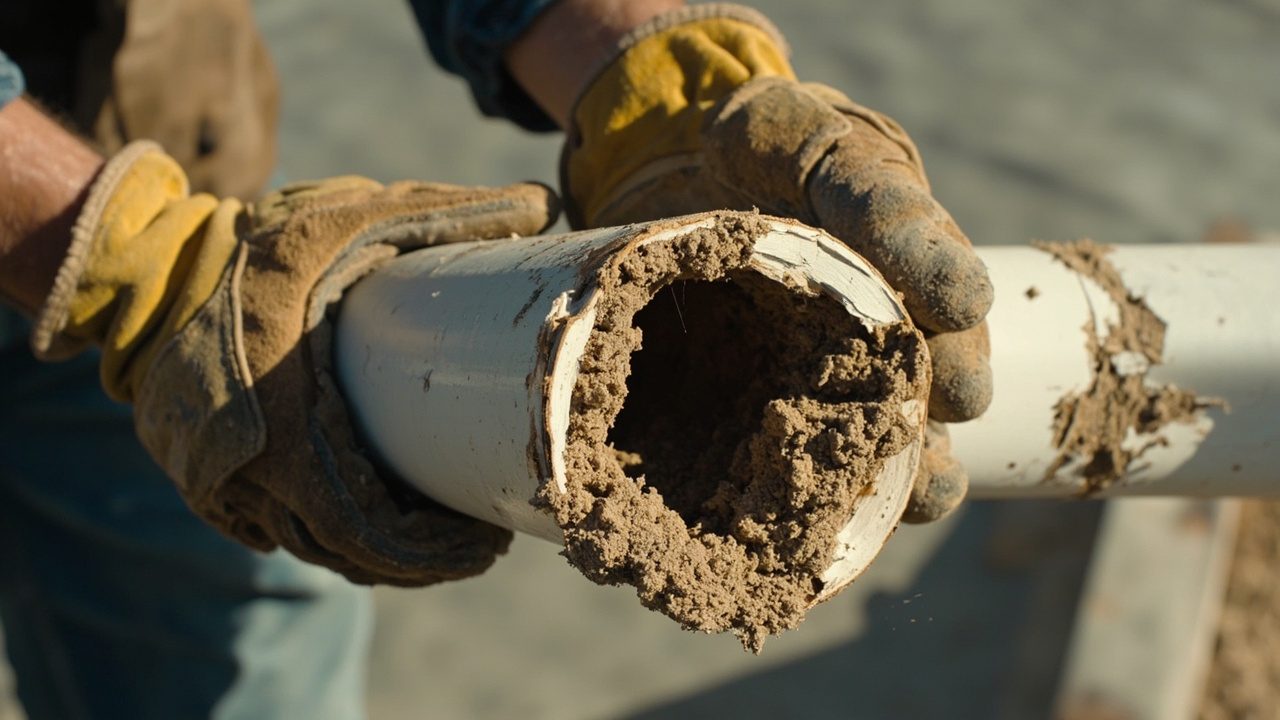
Older houses in El Paso County were built with clay laterals jointed in short sections, and every joint is a place for roots to get in. Dry desert soil makes it worse, because a weeping joint is the wettest thing around and roots follow moisture, so intrusion speeds up while the ground is warm. You see it as a line that was cleared once and backs up again, with every drain in the house running slow rather than one fixture. Under the slab of a postwar house, cast iron adds a second failure, since it corrodes from the inside and leaves a rough wall where paper and grease catch.
Call today once the sequence has started. Roots at one clay joint, then paper and grease catch at that spot every day, then the main backs up into the lowest fixture in the building with no warning. Water standing in the lowest drain means the line is already full, and each flush after that adds to the floor. A whole house that has backed up is a sewer clog emergency, and it needs emergency drain clearing with a camera on the same visit, because clearing alone leaves the joint that caused it.
More detail on basement flooding pump-out is on its own page.
The U.S. Department of Energy's water heating guide is a solid primer on operating costs if you want to dig into the numbers yourself.
How a camera and locator turn a backup into one spot
The sequence follows where the water is going. You tell us which fixtures back up, since the lowest one backing up places the fault on the main and one slow fixture places it on a branch or a trap. The technician protects the floor at the access point, then clears the line from a cleanout with a cable or a hydro jetting head, because a full line shows nothing but water. The drain camera goes in only after the line is clear, run from the same cleanout, and the locator at the surface marks the spot and the depth of whatever the picture shows. Only then does anyone decide what gets opened.
The reading this visit turns on is what the camera sees at the first joint past the clog and along the next level stretch. Roots at one joint put the repair at that joint and leave the rest of the line alone. Water standing part way along a level run is a belly, and a belly brings the clog back within days of any cable, because paper and grease settle in the low spot again, so the fix is a re-lay with the slope corrected. A continuous fall with clean joints means the clog was a single event and the clearing is the job. The other readings taken on the visit each decide one fork of their own, and the written scope follows them.
The comparison that matters on a drain is cast iron against PVC or ABS. Cast iron is heavy and quiet and corrodes from the inside over decades. Plastic is lighter, faster to install and carries more noise through a wall. A partial replacement joins the two with a no hub band as a proper transition, and that transition decides whether the repair holds. On a lateral, cured in place lining builds a new pipe inside the old one with a small loss of inside diameter and needs a host pipe that is still round. Open cut restores full diameter and lets you correct slope, so a belly gets open cut. Depth, length and what sits on top of the line settle the choice, and caliche hardpan here slows any trench and lengthens the dig. Clay laterals with roots at one joint point toward a joint repair, while a cast iron run corroded along its length points toward replacing the segment.
If this sounds close but not quite your situation, emergency sewer backup cleanup may be the better starting point.
Your local utility, El Paso Water, publishes service and water-quality information every El Paso homeowner should know.
Ask which of these readings was taken before any part is replaced.
| Instrument | Good reading | Bad reading | What it changes |
|---|---|---|---|
| Drain camera with a locator | Continuous fall to the main, clean joints | Standing water part way along a level run means a belly | Roots at a joint mean the repair belongs at that joint rather than the whole line |
| Anode rod pull on a tank water heater | The rod still has sacrificial metal along the core wire | A bare core wire with the metal gone | The tank itself is now the part being eaten |
| Screw on pressure gauge at a hose bib | Static pressure sitting in the 45 to 70 psi range with nothing running | Above 80 psi | Fixtures, supply hoses and water heaters start failing early |
| Water meter leak indicator with every fixture closed | The dial or the small leak wheel does not move over fifteen minutes | Any movement at all with the whole house off | Water is leaving the system somewhere you cannot see |
| Combustible gas detector and bubble solution on gas fittings | No alarm at the fittings and no bubble growing on the joint | Any bubble that keeps growing or any sustained alarm | The appliance valve gets closed before anything else happens |
How a backup call runs
Questions, then the camera
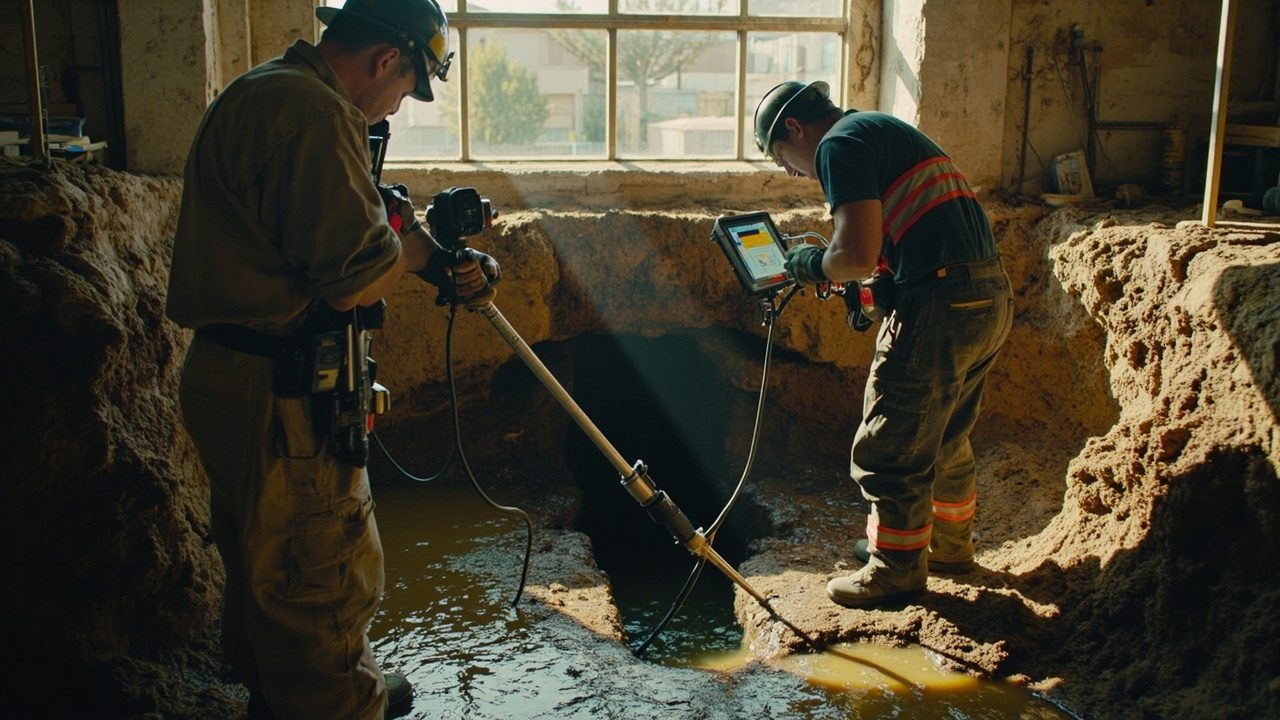
The call covers which fixture backs up first, how many others run slow and how many times the line has been cleared. Those answers place the blockage on the main or a branch before anyone arrives. On site, the floor is protected first and water use in the house stays stopped. The line is cleared from a cleanout, since a full line shows only water. The drain camera then goes in from that same cleanout, and you can watch the screen while the locator marks the spot and the depth at the surface. Nothing gets opened until that picture exists.
Approval, then the repair
The camera picture becomes a written scope, and nothing starts until you approve it. Water use in the house stays off. Then the work follows the picture. Roots at one clay joint mean the cracked section is cut out and replaced, with a no hub band where new pipe meets old. A belly means an open cut re-lay with the slope corrected. A cast iron run corroded through gets a transition to PVC at the last sound section. If something more turns up behind a wall or under the slab, we stop and show you before going further.
Tested before we leave
Before we leave, the camera goes back through the repaired run and has to show continuous fall to the main, clean joints and the pipe walls visible the whole way. The joint or belly the first pass found is the spot this pass checks. The check covers the transition band as well, since the transition detail decides whether the repair holds. Then the fixtures are run, the lowest drain last, and it has to take the water without a gurgle or a rise. You watch the screen and walk the lowest drain with us, and you keep the written scope.
Why local pipe and soil change how a backup gets cleared
A main line repair or a replaced run usually needs a permit and inspection at stages, while clearing a drain or a like-for-like fixture swap usually does not, and the final call belongs to the authority that covers your address. Ask that question before the trench opens, because a dig started with the permit unanswered can stall with the pipe exposed and the house still backed up. The locator marks where the failure sits on the property, and where responsibility for that stretch sits is for the authority and the utility to decide.
A crew that has not worked this ground makes predictable errors. One treats the house as a single material, when one property can carry cast iron under the slab, clay in the lateral and PVC from a later partial repair, and each joins differently. Another glues plastic to cast iron where a no hub band belongs, and the joint weeps and gives roots an opening. A third clears the blocked main, watches the water drain and leaves without a camera, so the joint or belly behind the stoppage brings it back within days. The fourth quotes the trench as if the soil were soft, and the dig overruns with the line open.
Construction era decides the job. Slab homes from the 1940s through the 1960s put cast iron drains under the floor with clay or cast iron laterals, so a crack there means breaking the slab at one point once the locator has marked it. Homes from the 1970s through the 1990s carry ABS or PVC drains and PVC laterals, where the usual finding is a belly or a cracked joint, and the repair is a section replaced with the slope corrected. Homes from the late 1800s through the 1930s often sit on raised floors with cast iron drains and clay laterals, and a raised floor gives access from below that a slab never does.
The first call sorts most of it. A backup at night starts with a phone assessment, and two answers decide tonight against morning. One is whether the lowest drain is holding water. The other is whether water has reached an outlet or a panel. One slow fixture with every other drain running can wait for a scheduled visit. Response runs across the county, and the address tells us which authority covers the work.
See 24/7 emergency plumbing services for how the related work is scoped and priced.
Price-checking is smart: marketplaces like Thumbtack publish typical cost ranges you can hold any quote against, including ours.
Working with Bedrock Plumbing El Paso on a severe backup
When someone arrives
You call, and the person who answers asks whether the lowest drain is holding water, whether water has reached an outlet, and whether anyone is in the house. Those answers tell us if this is a same day visit or a scheduled one, and after hours response covers a backup that starts at night. You leave the call with an arrival window. If the job ahead of yours runs long, the window moves and you hear about it on the same number you called, before it passes.
Floors and tools protected
Before anything comes apart, runners and floor covers go down from the door to the access point. Tools and wet cable are staged on a tarp at the cleanout, off your carpet and tile. Water from the jetting head stays contained at the cleanout and goes back down the line. Everything that comes out of the pipe leaves with us in sealed bags, and the last thing done is a walkthrough of the floor, the fixtures and the cleanout cap.
What moves the scope
Access moves the job furthest. A finished wall, a slab, a crawlspace or a ceiling below adds work, and putting that surface back adds more. Depth and length of any dig come next, then one joint against the whole run, then matching cast iron or clay to new pipe. Fixture grade and after hours response come last. The camera picture produces the written scope, and you approve it before work starts. If the opening finds more, the scope says in writing what happens.
How technicians earn sign off
A new technician rides along with a lead, runs the camera from a cleanout, reads the first joint aloud, and joins cast iron to PVC with a no hub band while the lead watches. The lead signs off on those tasks before that technician works alone. The crew studies the adopted plumbing code and its local amendments. On anything under a slab, a second technician looks at the camera picture before a scope is written.
You Have Questions,
We Have Answers
Drain clearing cost depends on the job, and no dollar figure can be quoted without seeing the line. A single trap or branch stoppage sits at the low end of the work. Cost rises with the length of cable run, whether hydro jetting is needed, how far the cleanout sits from the blockage, and whether the line needs a camera pass afterward. Repeat stoppages on the same line usually mean a structural cause, and that adds repair work beyond the clearing.
Clear a severely clogged sewer line from the cleanout with a cable or hydro jetting head. Then camera the pipe. A cable with a cutting head shreds root mass, while a jetting nozzle scours grease off the wall at high water pressure. Cable length matters, since most residential cleanouts sit a long run from the blockage. A blade that stops at the same distance twice signals a joint or a sag, not debris, and that distance is worth noting for the camera.
Vinegar poured in October has no seasonal effect, and the month changes nothing about how a drain behaves. Household vinegar is a weak acetic acid, roughly five percent, so it cannot dissolve a compacted mass of grease, paper or roots. It can loosen light soap film in a trap. Pairing it with baking soda produces foam that fizzes for a minute and drains away, leaving a deep blockage where it was.
A clogged main drain can back up every plumbing fixture connected to it. All branch lines feed the main, so a blockage downstream leaves wastewater nowhere to go except the lowest opening. A tub or floor drain at the lowest elevation usually overflows first. A blockage on a single branch stays local, which is why the number of affected fixtures tells a technician where along the system the obstruction sits.
A serious clog shows as gurgling, slow drains in several fixtures, and water rising in the lowest drain. Listen for air bubbling up through a toilet when a sink or washer drains, since displaced air is forced through the nearest open trap. Other signs include a tub that fills with gray water during a load of laundry, and a drain that clears briefly with a plunger then slows again within a day.
Use a drain cable or hydro jetting head, since a plunger and short hand auger reach only the first few feet. A household auger typically runs about 25 feet, and a blockage beyond that sits past the trap arm and into the main or lateral. Feed the cable from a cleanout rather than a fixture, keep it turning, and stop if it binds, since forcing a cable can wedge it in a cracked joint.
Nothing poured into a main drain reliably clears a serious clog, and hot water suits only a grease film. Caustic drain openers sit in a standing line without reaching the blockage, and they can soften PVC joints and pit old cast iron. Enzyme products work slowly on light organic film only. Chemicals left in a full line also put a burn risk on whoever opens the cleanout afterward.
All plumbing backs up when a blockage sits in the main line or lateral that every drain shares. Wastewater from the house meets the obstruction and rises to the lowest opening, so a shower or floor drain often shows it first. Check the cleanout cap. If water stands in the cleanout riser, the stoppage lies downstream of that point, and if the riser is dry, the blockage sits between the house and the cleanout.
Stop running water, then try a plunger with a tight seal on a fixture that is not full. A completely clogged drain that is full of water usually needs a cable, because a plunger only pushes the water back and forth against the obstruction. Bail standing water with a bucket first so the plunger seats. If a second fixture starts gurgling or rising, the blockage is on a shared line past the fixture.
Why caliche and clay laterals change severe clog removal in El Paso
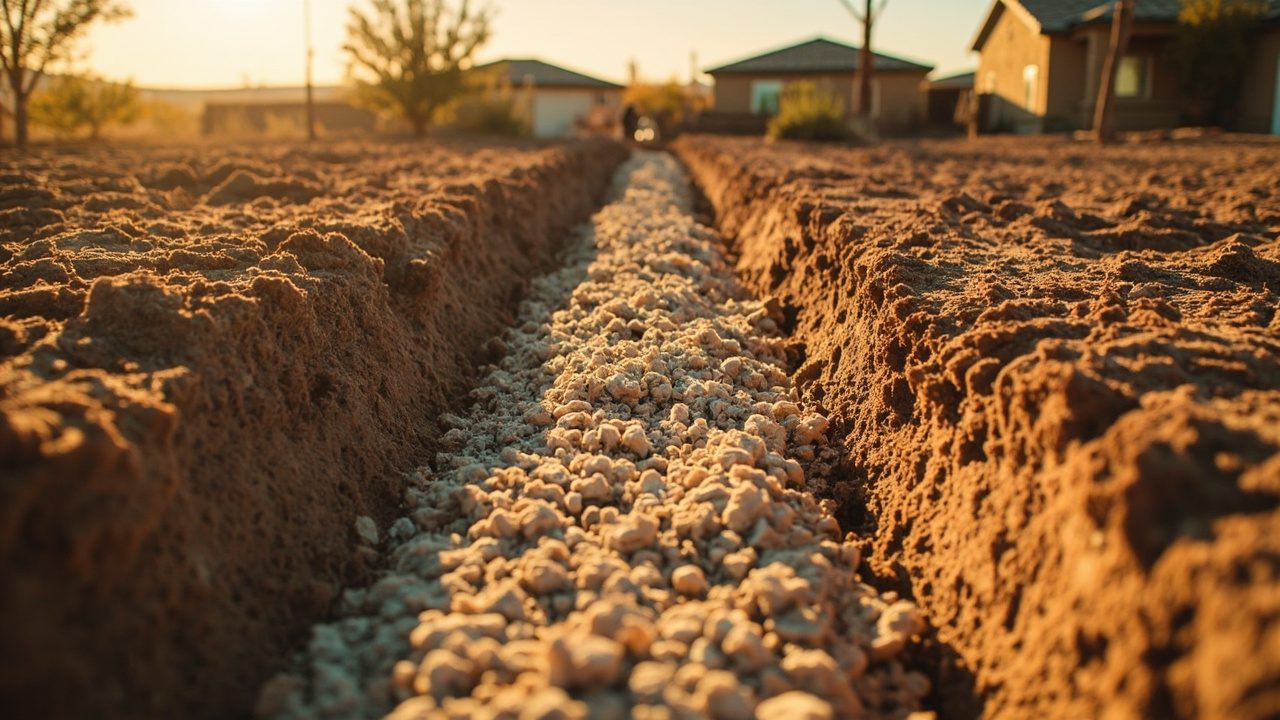
The ground is what changes this work most. Desert soil on the mesas and foothills is sandy and gravelly with layers of caliche hardpan, and hardpan makes a lateral dig slower than the same trench in soft soil, so the plan exposes as little of the pipe as the camera allows. The river valley has finer alluvial soil that holds more water, and a cracked lateral there stays wet, which keeps roots feeding at the crack. Roots follow moisture, so intrusion speeds up through the hot months when the surrounding soil is dry and the joint is the wettest thing near it. The summer monsoon adds a load from outside. Short, heavy storms send rain into a cracked lateral, and a floor drain that backs up only while it rains points to that crack. Water also collects in low streets and dips, so a lateral there sits in wet ground longer after a storm.
Work like this is inspected at stages, and on a lateral repair the inspector looks at the open trench before it is covered. The joint, the transition band where plastic meets cast iron or clay, and the fall of the pipe are what an inspector typically checks. The city adopts its plumbing code with local amendments, and property outside city limits falls under the county or the neighboring town, so the first question on any lateral job is which authority covers the address. Knowing that changes the sequence. The trench stays open until the inspection is done, the camera picture of the new run is ready to show, and cleanout access is left where the next crew can reach it. That gap is why emergency drain clearing can happen the same night while a lateral repair waits on the authority.
Plumbing Services in The El Paso Area
Explore our service area and locate Bedrock Plumbing El Paso with ease. We're proudly local and serve the surrounding neighborhoods with fast response and honest pricing. Use the map to check our coverage area, or call us and we'll confirm in seconds.
Address:
Bedrock Plumbing El Paso, 221 North Kansas St, Suite 700, El Paso, TX, 79901
Additional Services We Offer
- 24/7 Emergency Plumbing Services
- Basement Flooding Pump-Out
- Burst Pipe Repair
- Emergency Sewer Backup Cleanup
- Emergency Sump Pump Failure
- Emergency Water Heater Repair
- Emergency Water Shut-Off Service
- Frozen Pipe Thawing & Repair
- Gas Leak Detection & Repair
- Main Water Line Break Repair
- Overflowing Toilet Repair
- Rapid Response Leak Repair
Plunging a toilet that is not yet full and closing the main shutoff are homeowner jobs, and you do not need us for either. DIY stops at any drain already backed up past a cleanout, anything under a slab or behind a finished wall, and anything soldered or on the gas line. If the camera shows the failure sits beyond your property, we say so on the first visit and tell you who handles it.
Before you call, know which fixture backs up first and whether the others are slow. Know when it started, what changed just before, such as a heavy wash load or a storm, and how many times you have attempted to clear it. Find the main shutoff and the cleanout, and know whether anyone is in the house and whether water has reached an outlet.
Last reviewed September 2026 by Dave Parker, Owner.