





What a wet low room after a monsoon storm means in El Paso
Your lowest room takes on water during a monsoon storm, and the floor is dry again a day or two later. That timing puts the water outside the pipes, which is the job a sump pump exists to do. Few homes in this county have basements, so the rooms in trouble are below grade rooms and houses on low lots. A basement sump pump here sits idle through long dry stretches, then a storm asks everything of it at once.
Rain is infrequent in the desert, but the storms arrive short and heavy and run off the slopes fast, through arroyos and channels into ponding areas, low streets and dips. The flatter river valley collects the most. Its finer alluvial soil holds more water than the sandy, gravelly ground on the mesas and foothills, so a low lot there stays saturated after the sky clears. That water presses on the lowest floor until a pit gives it somewhere to go. A float rises with the pit water and starts the pump, and the discharge line carries the water away from the house. When the pit is missing, undersized or fitted with a worn pump, the level climbs to the floor and the room takes it. Sump pump installation, sump pump replacement and sump pump repair all start from the same question, which is where the water is coming from.
Split the cause before anyone buys a pump. Water that shows only while it rains is coming from outside the building. Water that keeps arriving with the ground drained and the sky clear is a supply line under pressure, and pressurized water runs all night on its own. A floor drain that backs up when it rains is a third case. Rain reaches a sanitary line through a cracked lateral and loads it from outside, and a pump in a pit does nothing for a pipe. One slow fixture is a branch or a trap, and every fixture slow with the lowest one backing up is the main.
Call the same day once that drain is involved. Roots at one clay joint come first, then paper and grease catch at that spot every day, then the main backs up into the lowest fixture in the building with no warning, and in a house with a below grade room that fixture is the drain in that room. Stay out of standing water near outlets. If water has reached an outlet or the panel, kill that circuit from a dry spot before anyone steps in.
Our page on basement flooding pump-out covers that side of the work in more depth.
Your local utility, El Paso Water, publishes service and water-quality information every El Paso homeowner should know.
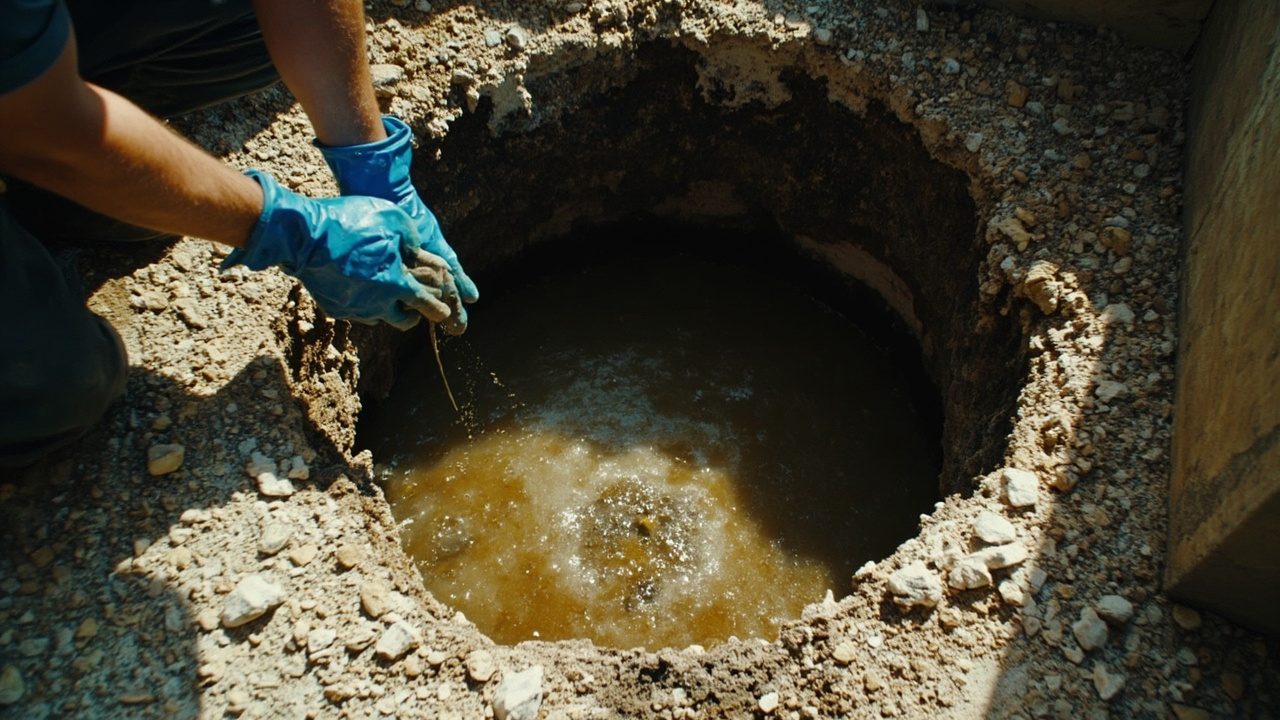
Find the sign you have, then read across to see whether it can wait.
| Symptom or first sign | What is already happening | What it becomes if ignored | When to call |
|---|---|---|---|
| Roots at one clay joint | Paper and grease catch at that spot every day | The main backs up into the lowest fixture in the building with no warning | Now, the same day |
| An anode rod eaten away | The steel tank becomes the sacrificial metal | Rusty hot water arrives first and a split tank arrives after | This week, while it is still one part |
| A weeping angle stop under a sink | The compression nut corrodes so it cannot be snugged | The stop snaps off in someone's hand during a faucet change | Now, the same day |
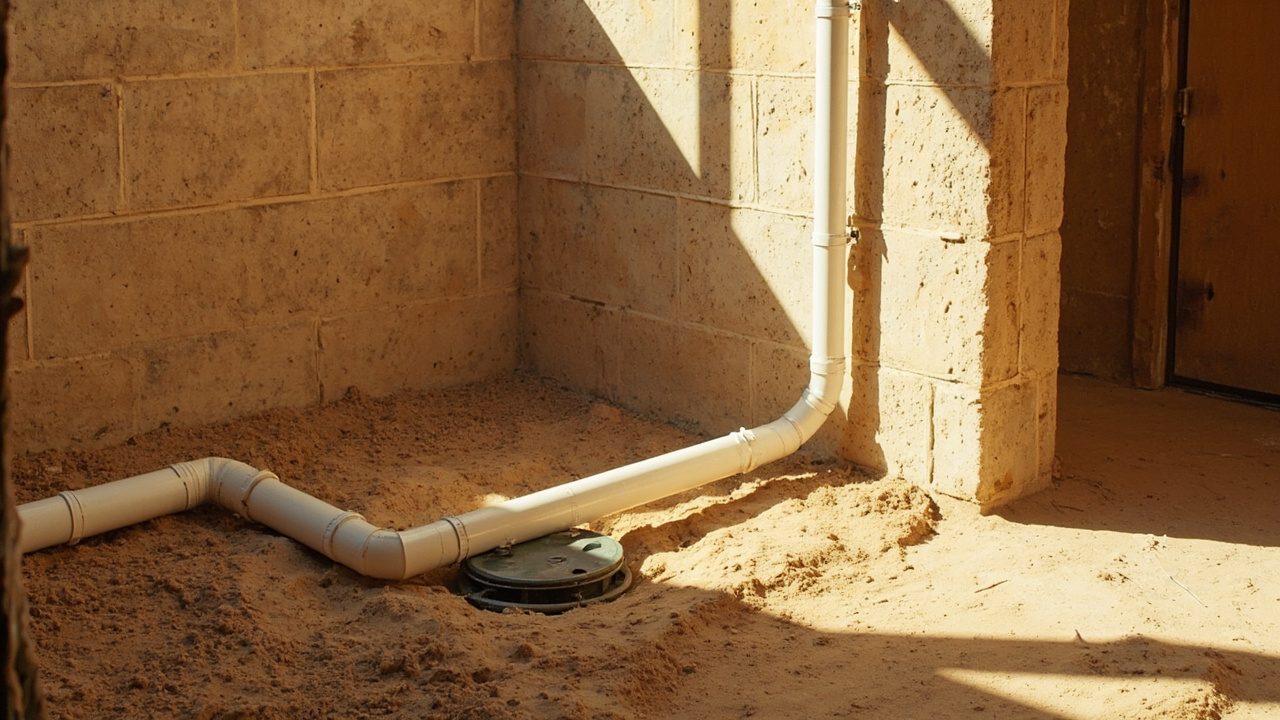
How we trace the water before we quote the work
Diagnosis here is isolation, and the order follows where the water is going. With every fixture closed, the meter's leak indicator gets watched for fifteen minutes, and a dial that stays still takes the supply side out of the picture. If it moves, close the main and read the meter again, because a dial still turning with the main closed puts the loss on the street side. Stops and branches then close one at a time until the movement stops. Only after that does anyone open a surface, and you see the reason first. The drain comes next, and it gets cleared first and inspected second, since a full line shows nothing but water. Once the line is clear, the drain camera with a locator goes in from a cleanout and turns a rain-only backup into a spot and a depth.
Each reading decides a fork. A still meter and a camera showing continuous fall to the main, clean joints and pipe walls visible along the run send the work to the pit, which means sump pump repair, sump pump replacement or a new installation. Roots at a joint send it to that joint, a repair at one point rather than the whole lateral. Standing water part way along a level run is a belly in the line, and a belly means re-laying that stretch, a larger job than any pump. A pit that refills while the meter holds still and the lateral is clean points to groundwater, and the pump gets sized to it. Depth and length from the locator decide whether a lateral repair is a trench or a lining, since lining needs a host pipe that is still round and open cut restores full diameter and lets slope be corrected.
Selection is where the local storm pattern decides. Pump size gets set by the vertical lift plus the pipe run the water has to climb and travel, and horsepower is matched to that figure. Storms here arrive short and heavy after long dry stretches, so a pit sits idle and then runs hard, and a cast iron body, which sheds heat better than thermoplastic, suits that duty. When a storm and a power outage arrive together, a battery backup sump pump as a second unit matters more than extra horsepower, because a bigger primary does nothing without power. Discharge routing is the second decision. Caliche hardpan makes a long buried run slow to dig, and a discharge that ends at a low street or ponding area sends water back toward the pit. The written scope names the pump body, the lift figure and the backup, so each one is a choice you can see.
If this sounds close but not quite your situation, backflow prevention & testing may be the better starting point.
Narrow this to two options before calling, then ask which one suits the house.
| Option | The numbers a buyer weighs | Best suited to |
|---|---|---|
| Sump pump selection | Sized by horsepower against the vertical lift plus pipe run it has to push through | Basements with a real lift to the discharge |
| Salt softener against a salt free conditioner | An ion exchange softener removes hardness minerals and needs salt and a drain | Hard water houses weighing salt against upkeep |
| Tank water heater against tankless | A tank is judged on capacity in gallons and its first hour rating | Households with long back to back hot water use |
How a sump pump call runs
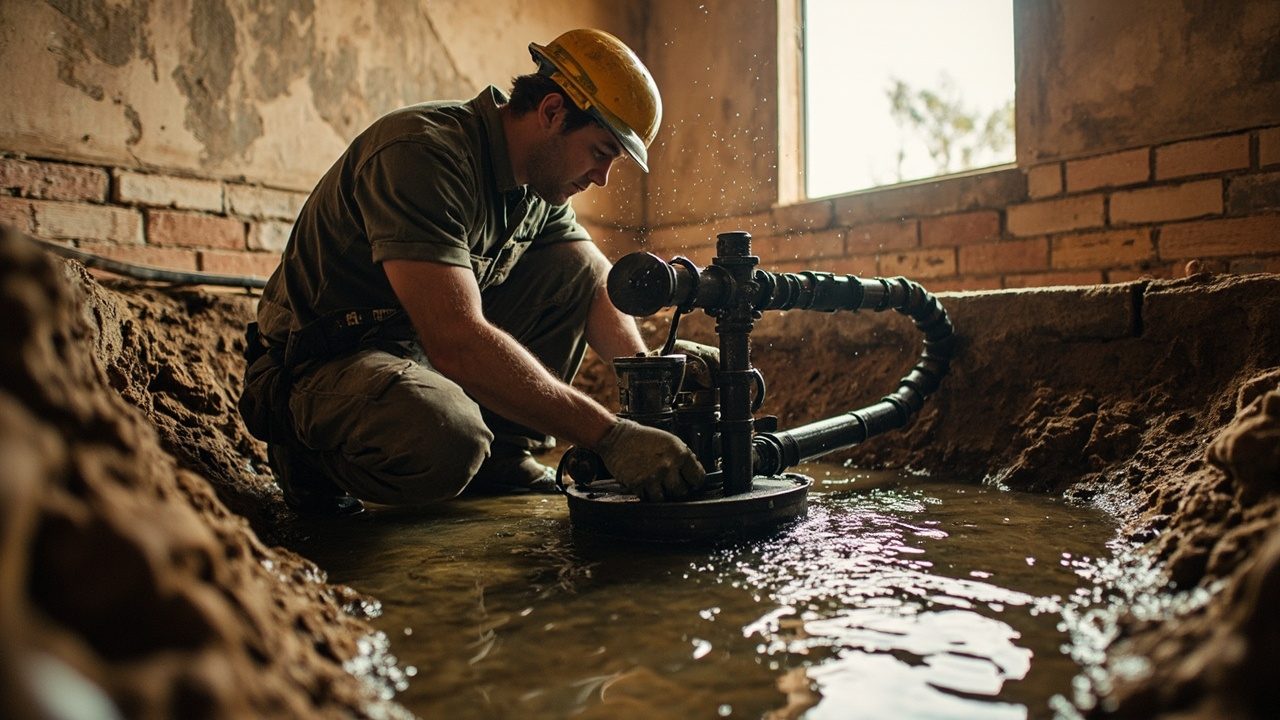
Questions, then isolation
On the phone you describe where water appears, whether flow stops when rain ends, and where the main shutoff is. On site the meter comes first. With every fixture closed, the leak indicator is watched for fifteen minutes, then the main is closed and the dial watched again. A still dial rules out the supply, and a dial that keeps turning with the main closed sends the work to the street side. Next the lateral is cleared, and the camera and locator go in from a cleanout to mark the spot and the depth. You touch only the meter, the stops and the main shutoff.
Approval, then the work
Once you approve the written scope, water goes off first, at the stop for one branch or at the main shutoff for the whole building, depending on where the work sits. For a pump swap the power comes off, the discharge line comes apart, and the new pump sits level in the pit with its float clear of the walls. A cast iron to plastic joint on the lateral gets a no hub band as the transition. If something turns up behind a wall or under the slab, work stops and we show you what we found before going further.
Testing before we leave
Before we leave, the pit is filled until the float lifts and the pump has to discharge and shut off on its own. A battery backup sump pump is tested by pulling the plug on the primary. If the lateral was repaired, the camera goes back through and has to show continuous fall and clean joints. If the supply was touched, the meter has to hold still for fifteen minutes with everything off, and static pressure at a hose bib has to sit in the 45 to 70 psi range. You keep the written scope and the camera findings.
Why monsoon runoff work differs from a standard pump swap
Whether sump pump installation needs a permit depends on the scope, and the local plumbing authority for the jurisdiction the house sits in has the final word. A like for like pump swap in a sound pit usually does not need one. A new discharge line or any work on the main line more often does. Inside city limits the city handles plumbing permits, and outside city limits the county or the neighboring town does, so the address decides who to ask.
A crew that treats every wet low room as a pit problem makes the first mistake. In houses with cast iron drains and clay laterals, the water may be rain loading a cracked lateral, and the new pump then cycles while the floor drain still backs up. Sizing by horsepower alone comes second, and a pump that cannot lift against its run cycles short and runs hot. Third, some crews run the discharge above ground in plastic. The sun degrades exposed plastic, and a short hard freeze during an arctic front splits an unprotected outdoor line even though the ground does not freeze deeply. Fourth, a discharge that ends where water ponds refills the pit from the water it just moved.
The house decides as much of the job as the pit does. Late 1800s through 1930s homes on raised floors or shallow foundations carry cast iron drains and clay laterals. Postwar slab homes from the 1940s through the 1960s often have cast iron drains under the slab, and the 1970s through 1990s brought copper supply run through the slab with ABS or PVC drains. Newer subdivisions have PEX manifolds and PVC laterals. Joining old cast iron to new plastic takes a no hub band transition, a detail an unfamiliar crew skips or glues. Where a house mixes eras, as with a later partial repipe, expect several pipe materials at the same wall, and the camera and the meter sort them before a scope is written. Storms reach the whole metro at once, and flooded low streets slow travel, so calls are sequenced by urgency and equipment status.
More detail on emergency sump pump failure is on its own page.
Permit and inspection questions? Planning & Inspections is the office we coordinate with on every permitted El Paso job.
What a sump pump job looks like from your side
When someone arrives
On the call we ask where the water shows, whether it stops when the rain stops, and whether it has reached an outlet or the panel. Those answers sort a same day visit from a scheduled one. You hear the arrival window from us before the technician is on the road, and after a storm the homes with water near circuits go first. If the job ahead of yours runs long, you get the new time from us before your window closes.
Protection and cleanup
Before anything comes apart, floor runners and drop cloths go down from the door to the work area, and furniture near the pit gets covered or moved. Water from the pit leaves through a hose to a spot you agree on, away from any low place that drains back toward the house. Silt, gravel and old fittings go into bags and leave with us. The last step is a wipe down of the floor and a run of the pump while you watch.
What moves the cost
Access moves the cost furthest. A finished wall, a slab or a ceiling below raises it, and an open run lowers it. Long or deep digs through caliche raise it again, and one joint costs less than a whole run. Matching old pipe to new adds to it, as do a higher pump grade, shutting water off for the whole building instead of one branch, and after hours dispatch. The camera findings become a written scope, and you approve it before work starts. If an opening finds more, what happens then is agreed in writing first.
How technicians earn sign-off
A new technician rides with a lead before working alone, and the lead signs off on each task after watching it done, including the meter test with the main closed and the camera run from a cleanout. The current code cycle gets studied as it changes. On an unusual job, such as a belly in a lateral or a sump that refills while the meter holds still, a second technician looks at the findings before a scope is written.
You Have Questions,
We Have Answers
Most sump pumps last roughly seven to ten years, though cycling frequency shifts that number. A pump that runs every few minutes through a wet season wears its switch and impeller bearings faster than one that runs a few times a year. Signs of the end include a float that hangs up, a motor that hums without pumping, rust flakes in the pit, and a cycle that has grown louder. Thermoplastic housings tend to warp from heat before cast iron bodies do.
Cleaning cost depends on the silt and gravel in the pit and how easily the pump lifts out. A pit packed with fines takes longer than one with a light film. Access to the lid, a stuck check valve, and a discharge line that needs flushing all add labor. A pump that pulls out in one piece keeps the job short. Dollar figures are not quoted in writing here, and the price follows what the pit holds.
Servicing cost follows the work the pump needs, and a routine check costs less than a repair. Technicians test the float, run the pump through a full cycle, inspect the check valve, and clear the intake screen. Replacing a corroded switch or a failed check valve adds parts and time. A backup battery that no longer holds a charge adds a further item to the visit.
Yes, a sump pump needs a cleaning check a few times a year, and more often after heavy storms. Silt, small stones, and debris settle in the pit and can jam the float arm or clog the intake screen. Unplug the pump, lift out loose debris, and pour water in until the float rises to confirm it starts and shuts off. Listen for grinding or a motor that hums without moving water. A pump that fails that test needs a technician.
Replacement cost moves with the pump grade, the lift and pipe run, and the condition of the pit. A cast iron body and a higher horsepower rating raise the price of the unit. A cracked or undersized pit, a corroded check valve, or discharge piping that needs rework adds labor. A like for like swap in a sound pit is the low end of that spread. We do not publish dollar figures, and the written scope shows each item.
A sump pump does not treat radon, though a sealed pit can reduce soil gas entering a home. Radon moves up from the soil through slab cracks and open pits, so an uncovered pit lets gas into the room. A gasketed, airtight lid limits that path. Actual reduction takes a separate mitigation system, and the level is confirmed with a radon test. Radon testing and treatment sit outside our plumbing work, so a specialist handles that side.
Replacement cost rises with pump size, discharge length, and how hard the old pit is to reach. Choosing a larger horsepower or adding a battery backup unit moves the total up, and a plain swap with the same fittings holds it down. Rusted unions or a seized check valve add time at the pit. The written scope lists the pump body, lift figure, and backup as separate items.
Call a plumber who handles sump pumps, drain lines, and discharge piping together. A pump problem often traces to the pit, the float, the check valve, or a drain issue nearby, so one visit should cover all of them. Ask whether the technician tests the pump by filling the pit until the float lifts. Bedrock Plumbing El Paso services sump pumps and can talk through what your pit is doing.
Installation cost depends mostly on whether a pit already exists. Cutting a new pit means breaking the slab, digging out the fill, setting a liner, and patching the concrete, which takes far more labor than dropping a pump into an existing pit. Discharge length, a battery backup unit, and the pump grade add to the total. A finished floor or thick slab raises it further.
A typical sump pump lasts about seven to ten years before its motor or float switch fails. Pumps that idle for months and then run hard tend to fail at the switch or the check valve first, and the motor follows. Standing water left in a pit for long periods corrodes the shaft and the intake screen. A pump past eight years with a loud or uneven cycle is worth replacing before the next big storm rather than after.
Why monsoon runoff changes sump pump work in El Paso
Two soils meet under this county, and each one changes the job. Mesa and foothill terrain sheds water quickly through coarse material, while the finer alluvial soil of the river valley holds more water, so a pit in the valley fills more often and stays full longer after a storm. Layers of caliche hardpan slow the trench for a discharge line, which turns pipe run into a time cost that the lift figure alone does not show. Runoff moves down arroyos and channels and settles in low streets, dips and ponding areas, so the discharge has to end on ground that falls away from those spots. After a dry, windy spring the pit and its float have sat idle for months, so the first storm is the first test. Where a new pit means cutting an older slab, the locator marks the cast iron drain beneath it before the saw goes down.
Where a permit applies, the work is inspected at stages during construction, so the pit, the discharge line and any transition band between cast iron and plastic stay uncovered until the inspector has looked at them. That sets the sequence. The pit is set and the line is run first, and the floor and the trench wait, so you are not left with an open surface while an inspection gets scheduled. Cleanouts stay reachable when the work finishes, since every future camera run and clearing enters there. The utility handles wastewater and stormwater as separate services, so a floor drain that backs up in the rain gets traced before anyone decides where a pump discharge can end. For a supply line, the meter watched with the main closed shows whether the loss sits on the street side, and for a lateral the camera shows which joint. The authority and the utility settle who owns each.
Plumbing Services in The El Paso Area
Explore our service area and locate Bedrock Plumbing El Paso with ease. We're proudly local and serve the surrounding neighborhoods with fast response and honest pricing. Use the map to check our coverage area, or call us and we'll confirm in seconds.
Address:
Bedrock Plumbing El Paso, 221 North Kansas St, Suite 700, El Paso, TX, 79901
Additional Services We Offer
- Backflow Prevention & Testing
- Drain Cleaning & Rooter Service
- Faucet & Sink Repair
- Garbage Disposal Services
- Gas Line Repair & Installation
- Plumbing Services
- Sewer Line Repair & Replacement
- Shower & Bathtub Plumbing
- Slab Leak Detection & Repair
- Tankless Water Heater Services
- Toilet Repair & Installation
- Water Heater Repair & Installation
Pulling loose debris from a dry pit and finding the main shutoff are homeowner jobs, and you do not need us for them. Stop at anything soldered, anything on the gas line, anything behind a finished wall or under a slab, and any drain already backed up past a cleanout. Radon testing and treatment sit outside our work. If the first visit turns up something like that, we say so then and tell you who handles it.
Know whether the water shows only while it rains or keeps arriving after the sky clears, and when you first noticed it. Find the main shutoff and the pit lid. Any age you have for the current pump, and whether it has a battery backup, helps the first visit.
Last reviewed September 2026 by Dave Parker, Owner.