





What a slow sink or shower drain means in postwar slab homes
The bathroom sink takes a full minute to empty, the shower leaves gray water around your ankles, and the tub gurgles when the washer drains down the hall. A hair clogged drain is the usual first suspect, and for the first slow week it is often right. Pull the hair and soap film from the stopper and strainer, and most fixtures run fast again. When the sink drains slowly a second time within days, the restriction sits past the trap.
You may already have tried a plunger, a store-bought cable or a bottle of drain cleaner. Each of those reaches the trap and the first stretch of pipe. Your worry is that the floor has to come up, and in most cases the fault sits at one point, so finding that point decides how much floor gets touched.
Homes in the county built from the 1940s through the 1960s are common, and most are slab on grade with cast iron drains under the floor and a clay or cast iron lateral carrying everything out of the house. Cast iron corrodes from the inside over decadesSo the bore narrows and the pipe wall turns rough. Hair, soap film and paper hang on a rough wall that a smooth pipe would pass. Water still gets through, only slower. By the time a bathtub will not drain at all, the narrowing is well along, and a slow shower drain is the early reading of the same problem.
Where the slowdown shows tells you which segment holds it. One fixture slow points at its own trap or the branch it sits on, and a kitchen sink slow on its own often means grease at the kitchen branch. A sink, a shower and a tub slowing together, with the lowest one gurgling first, points at the shared line under the slab or at the main. A drain also escapes only while something upstream is running, so a slow line will not stain a ceiling overnight the way a pressurised supply line does.
If two or more fixtures drain slowly, a restriction such as roots at one clay joint may already sit on the shared line. Paper and grease then catch at that spot every day, and The main backs up into the lowest fixture in the building with no warning. Call the same day you see a second fixture slow or hear the lowest tub or shower gurgle.
More detail on cold water sandwich effect is on its own page.
Your local utility, El Paso Water, publishes service and water-quality information every El Paso homeowner should know.
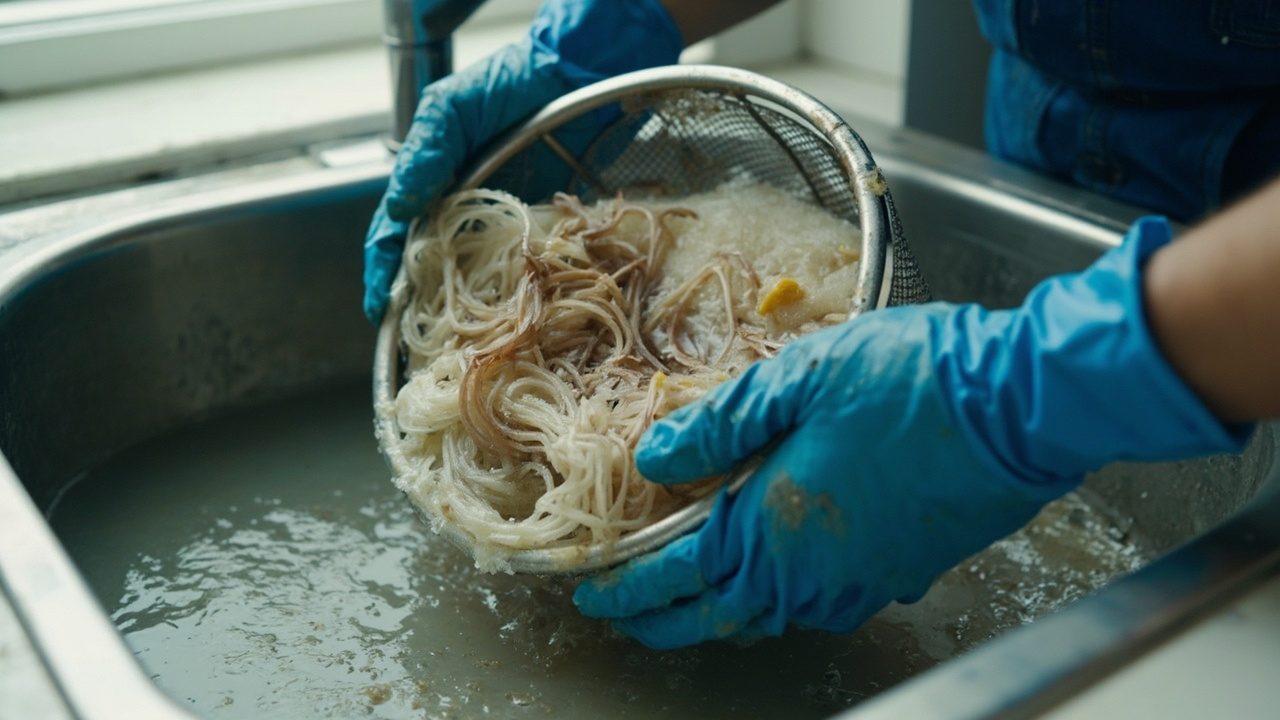
Find the sign you have, then read across to see whether it can wait.
| Symptom or first sign | What is already happening | What it becomes if ignored | When to call |
|---|---|---|---|
| Roots at one clay joint | Paper and grease catch at that spot every day | The main backs up into the lowest fixture in the building with no warning | Now, the same day |
| A toilet that runs after flushing | The flapper lets the tank refill all night and the fill valve cycles constantly | The valve wears and sticks open with the overflow carrying it away unnoticed | This week, while it is still one part |
| An anode rod eaten away | The steel tank becomes the sacrificial metal | Rusty hot water arrives first and a split tank arrives after | This week, while it is still one part |
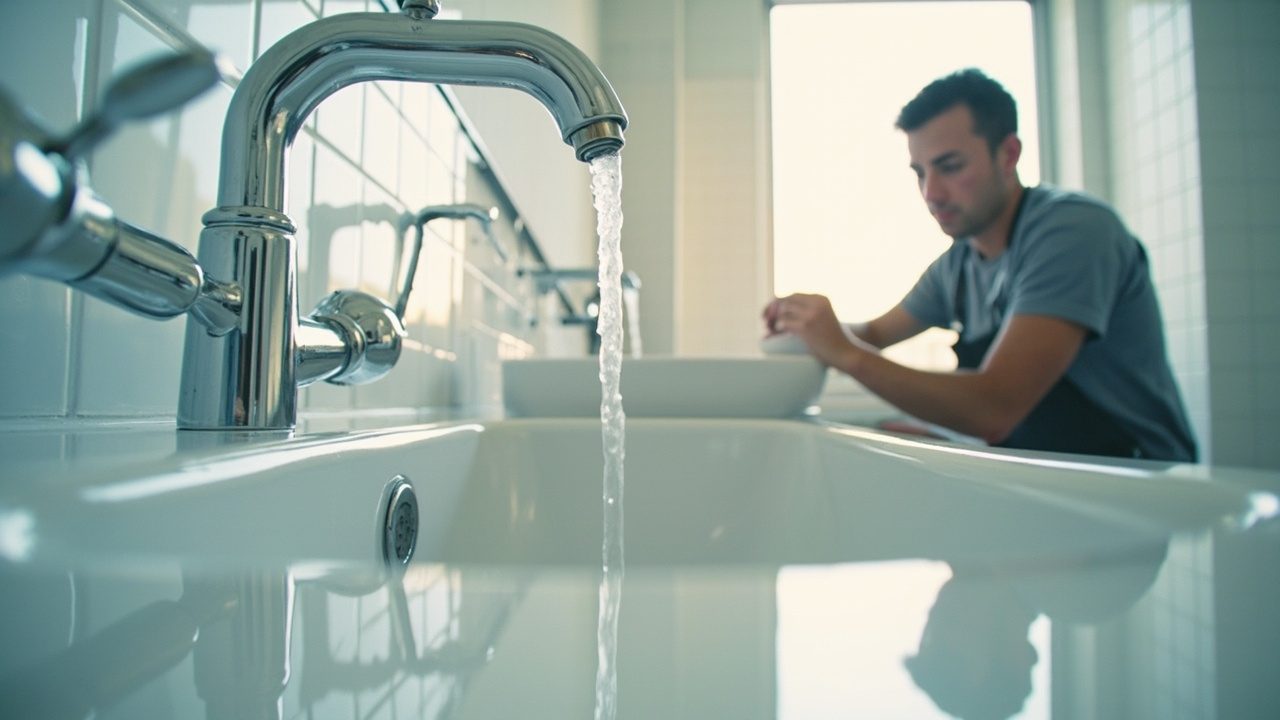
How we place the restriction before we quote the fix
A slow drain is worked in the order the water travels. Water runs at the slow fixture while a second fixture is watched, and any gurgle or rise there shows the two share a line. Running fixtures one at a time shrinks the problem to a segment before anything is opened. The line then gets cleared first and scoped second, because a full line shows nothing on camera but water. The camera goes in through a cleanout after the line runs open, and the locator above it follows the head so the spot and its depth are marked on the floor or in the yard.
The reading this page turns on is what the drain camera with a locator shows along the run. A continuous fall to the main with clean joints and the pipe wall visible the whole way means the restriction was local, and clearing that branch is the slow drain fix. Standing water part way along a level run is a belly in the line, and jetting clears what sits in a belly and leaves the belly in place. Roots at a joint put the repair at that joint and leave the rest of the line alone. The locator depth then separates opening the slab at one marked point from re-routing that run overhead.
Cast iron against PVC or ABS decides how a replacement segment is built. Cast iron is heavy and quiet and corrodes from the inside over decades. Plastic is lighter, faster to install and carries more noise through a wall. Where one bad segment is replaced and the rest stays, the two materials meet at a cast iron to PVC no hub transition, a proper band and never glue. Local ground shapes the method too. Caliche hardpan slows any trench in the county, so a single repair at a located joint needs far less digging than re-laying a whole run. Open cut still wins where the camera showed a belly whose slope has to be corrected, and cured in place lining suits a lateral only while the host pipe is still round.
Our page on discolored or rusty water covers that side of the work in more depth.
Ask which of these readings was taken before any part is replaced.
| Instrument | Good reading | Bad reading | What it changes |
|---|---|---|---|
| Drain camera with a locator | Continuous fall to the main, clean joints | Standing water part way along a level run means a belly | Roots at a joint mean the repair belongs at that joint rather than the whole line |
| Overnight pressure hold with the gauge left | The morning reading is close to the reading taken the night before | A reading far above the night figure | The heater is expanding water into a closed system with nowhere to put it |
| Anode rod pull on a tank water heater | The rod still has sacrificial metal along the core wire | A bare core wire with the metal gone | The tank itself is now the part being eaten |
| Screw on pressure gauge at a hose bib | Static pressure sitting in the 45 to 70 psi range with nothing running | Above 80 psi | Fixtures, supply hoses and water heaters start failing early |
How a slow drain call runs
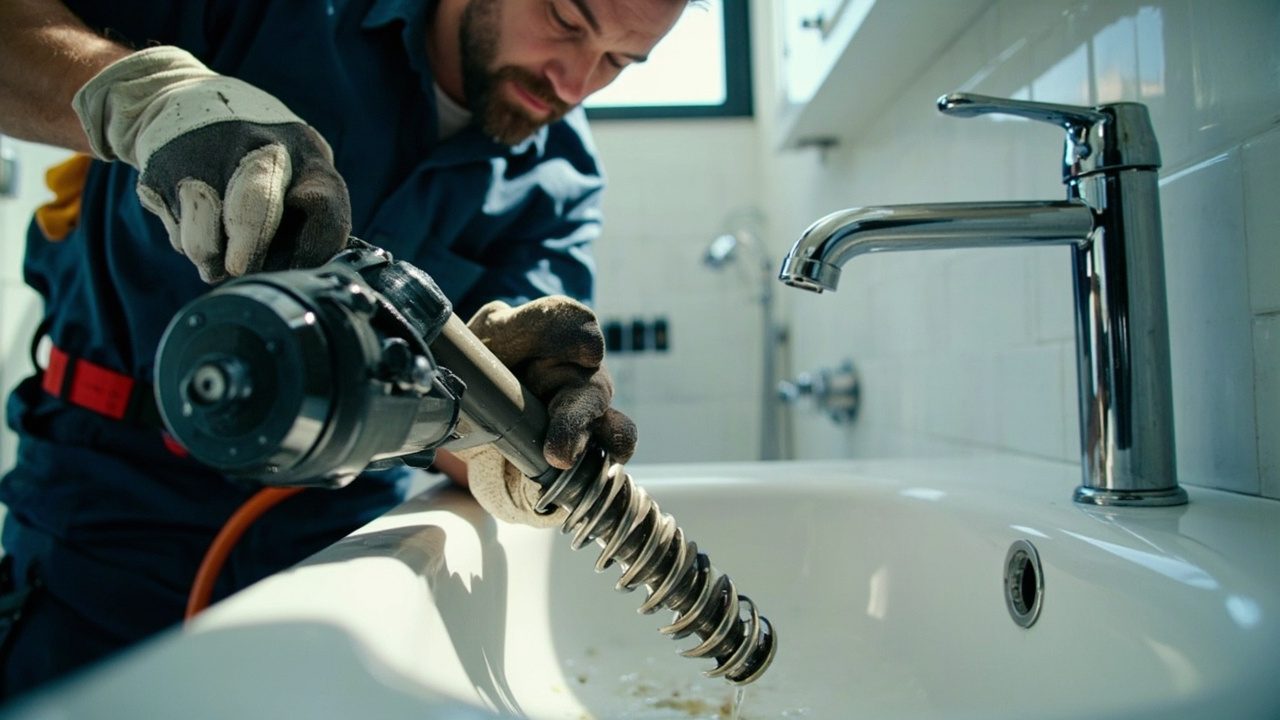
The call and the camera
On the phone we ask which fixtures are slow, when it started, how many times it has been cleared, and whether the lowest drain has gurgled. The age of the house helps if you know it. On site the technician runs water at the slow fixture while watching a second one, which shows whether they share a line. The line is cleared first. Once it runs open, the camera enters via the cleanout with the locator positioned above ground, and you watch the monitor while the obstruction location and its depth get recorded for reference.
Approval and the repair
Once the scope is approved, the fixtures on that branch are taken out of use and the floor is covered. A trap or branch restriction is cleared with a cable or with hydro jetting. Roots at a joint mean the segment is cut out, and the new pipe joins the old at a cast iron hub or with a no hub band, with a sanitary tee where a branch enters. A belly is re-laid to a continuous fall. If the opening shows more than the camera did, we stop, show you, and write the change into the scope before going further.
Flow test and handover
Before we leave, the drain camera goes back through the repaired run and has to show a continuous fall, clean joints and no standing water. A repaired run the camera cannot pass through is not finished. Then every fixture on the line runs at once, and the water has to leave each one without pooling or a gurgle at the lowest drain. You see both results on the spot and keep the written scope with a note of what the camera found, so whoever owns the house next knows what is under the floor.
What an unfamiliar crew gets wrong on a postwar slab drain
A cleared trap and a like for like fixture swap usually need no permit, while replacing a section of drain under the slab or repairing a lateral usually does. The permit authority for your address makes that call, and we pull the permit when the work needs one. Every one of those jobs starts with a technician confirming what material the drain is, because that answer sets the tools, the fittings and the scope. For a slow drain the permit question usually arises only once the camera has placed the fault, which is why the scope is written after the camera.
A crew that expects plastic finds cast iron in a slab house from the 1940s through the 1960s and glues a PVC repair straight onto it. The joint fails, because a partial replacement needs a no hub band transition between cast iron and plastic, and cast iron is heavy enough that the run needs support on both sides of the cut before the bands go on. Another crew clears the line and leaves without a camera, so the belly stays in the run and paper and grease catch at the same low spot again. A third quotes the dig as if the ground were soft, and caliche hardpan turns that trench into a longer job than the quote assumed. A fourth joins new pipe to old without matching the diameter, which leaves a ledge inside the joint where paper catches.
Slab houses from this period often carry galvanized or early copper supply as well. A crew that opens a floor for the drain sees the supply in the same opening and can tell you what condition it is in before that floor is closed again.
The county holds every era side by side. A call can come from a postwar slab house with cast iron under the floor or from a newer subdivision on the east or west side with PVC drains and PEX supply on a manifold. Plastic drains carry more noise through a wall, and a quote for a plastic segment in an older house should say so. A crew that treats every house alike misreads one of them, so the drain material gets confirmed at the trap and the cleanout before any quote is written.
If this sounds close but not quite your situation, dripping faucets & leaks may be the better starting point.
What a slow drain visit looks like from your side
Arrival and scheduling
You call and we ask which fixtures are slow, whether the lowest drain has gurgled and whether water has risen anywhere. Several slow fixtures or a rising lowest drain usually means a same day visit, and one slow sink usually books as a scheduled one. The person who took your call confirms the arrival window by phone before anyone comes out. If the job ahead of yours runs long, you get a call with the new window and the visit keeps its place in the day.
Floors and fixtures protected
Floor runners go down from the door to the bathroom or kitchen before a tool comes out. A drop cloth under the trap catches water when the p trap comes off, and the drain camera goes in through a cleanout so the floor stays closed. If a slab has to be opened at the located point, the cut is kept small and the dust is kept behind plastic sheeting. Debris leaves in bags with us, and the last step is wiping down the fixture and the floor around it.
What moves the scope
Reaching the pipe moves the scope furthest, whether that means a tiled floor, a wall or a slab opened and put back. Depth and length of any dig come next, and caliche hardpan lengthens both. A repair at one joint stays smaller than a replaced run, and the rest of the line decides which one you need. Matching old pipe to new adds parts where material or diameter differs. The written scope comes from the camera findings, you approve it before work starts, and we agree in writing what happens if the opening finds more.
How technicians are checked
A new technician rides with a lead before working alone, and the lead signs off on specific tasks. One is running the drain camera through a cleanout and reading standing water against a continuous fall. Another is cutting out a cast iron segment and closing it with a no hub band transition. On a slab job with a belly in the line, a second technician looks at the footage before a scope is written. Updated plumbing codes get reviewed with the team as they change.
You Have Questions,
We Have Answers
A partial restriction such as grease film or a rough pipe wall slows a sink without blocking it. Cooking fat cools inside the branch and coats the bore, so the pipe carries less flow each month. Water still passes, which is why a plunger shows no clog. A sink that empties quickly at first and then crawls during the last inch usually has a coated branch or a low spot holding water past the trap.
Hair and soap scum coating the trap and branch pipe cause most shower and sink slowdowns together. Soap contains fats that bond with minerals in hard water and form a sticky scale, and hair binds to it. Bathroom fixtures often share one branch, so a single buildup downstream slows both. Corroded cast iron adds a rough surface where that scale catches faster.
A shared restriction downstream of both fixtures is the likeliest reason for the slowdown. Bathroom drains usually join one branch before the main, so a buildup past that junction affects both. Check the vent too. A blocked vent stack lets the drain pull air slowly, and you hear gulping as the water leaves. Slowdowns that return within days point past the trap.
Remove the stopper, pull out the hair and scrub the strainer, then flush the line with hot tap water. For the sink, unscrew the p trap under the basin over a bucket and clear the sludge inside. Reassemble with the slip nut hand tight plus a quarter turn. If both fixtures still crawl afterward, the restriction sits beyond the trap and needs a cable or a camera.
Standing water around your feet after thirty seconds of showering shows the drain is partly or fully blocked. Other signs help. Gurgling from the shower when a toilet flushes or a sink empties suggests air is fighting past a restriction. A sewage smell near the drain, or water that drains faster at the start and slows sharply, also points to a blockage building in the line.
Salt is a folk remedy with little effect on hair or soap film. Coarse salt has a mild abrasive action and dissolves in hot water, but it does not break down grease or hair. Poured nightly, it adds dissolved minerals to the trap and can speed corrosion on metal pipe over time. A hair catcher and a monthly hot flush do more.
Hot tap water followed by a baking soda and vinegar mix loosens light soap film, though neither clears hair. Pour half a cup of baking soda down the drain, add half a cup of vinegar, wait fifteen minutes, then flush with hot water. The fizz lifts only the surface layer. Skip boiling water on PVC, since it can soften the pipe and loosen joints.
Clear the pop-up stopper and the p trap first, since most slow sinks hold buildup in that first foot. A bathroom sink pop-up has a pivot rod and a stopper that you can lift out, and it is often wrapped in hair. In a kitchen, run hot water with dish soap for a minute after washing greasy pans to keep fat moving.
Lift the strainer cover and pull out the hair clump, which commonly sits within reach of a bent wire. Barbed plastic strips cost little and pull hair from the first foot of pipe. Then run hot water for two minutes to carry loosened film along. A shower that drains fast for a day and slows again has a restriction deeper than these tools reach.
Postwar cast iron under the slab and slow drains in El Paso
Homes built in the county during those decades are common, and most rest on slab on grade, with some on raised floors. Their drains are cast iron under the slab feeding a clay or cast iron lateral, and their supply is galvanized or early copper. Each material changes the job. Cast iron that has corroded from the inside is joined to new pipe at the existing diameter, so the camera and the measurement come before the fitting order. Clay laterals are jointed in short sections, and roots follow moisture, so in dry desert soil a weeping joint draws them fast. Caliche hardpan slows any trench, which makes the locator depth a sequencing decision made before anyone digs. A raised floor home lets a crew reach the run from below, while a slab house means opening the floor at one marked point. Galvanized supply from the same period ages in the same house, so an opening for the drain is also a look at the supply.
Drain work that replaces a segment or repairs a lateral is usually inspected at stages during construction by the permit authority for the address, and a cleared trap or a like for like fixture swap usually falls outside that. Inspectors usually look at the fall along the run, the transition where cast iron meets plastic and whether a cleanout can be reached. The authority changes with the address, since work outside city limits falls under the county or the neighboring town. Knowing that up front changes the sequence. The repaired segment stays open and visible until the inspection is done, and the depth from the locator tells the crew how much trench or slab opening that means. Where the private line ends and the utility line begins is decided by the utility and the authority, and the camera gives that conversation a distance and a depth to work from.
Plumbing Services in The El Paso Area
Explore our service area and locate Bedrock Plumbing El Paso with ease. We're proudly local and serve the surrounding neighborhoods with fast response and honest pricing. Use the map to check our coverage area, or call us and we'll confirm in seconds.
Address:
Bedrock Plumbing El Paso, 221 North Kansas St, Suite 700, El Paso, TX, 79901
Plunging a slow sink or tub is a homeowner job and you do not need us for it. DIY stops at any drain that has already backed up past a cleanout and at anything under the slab, because those lines hold standing water and the pipe cannot be seen. A drain on the utility side of the property line is outside our work, and if the camera shows that, we say so on the first visit and tell you who handles it.
Before you call, know which fixtures are slow, when the slowdown started, and how many times you have cleared it. Listen for a gurgle at the lowest tub or shower when the washer drains. If you know the age of the house or where the cleanout sits, say so. Those answers usually place the problem on a branch or on the main.
Last reviewed September 2026 by Dave Parker, Owner.