





What crusted aerators and rusty hot water mean in El Paso homes
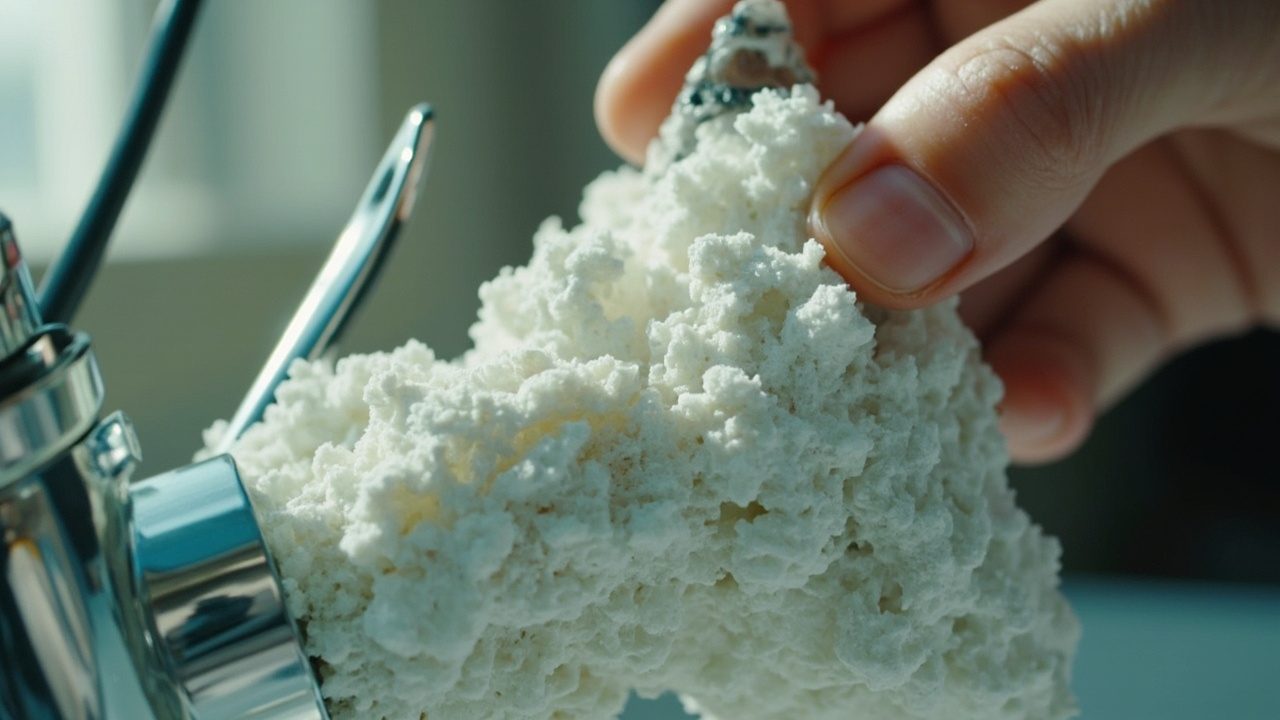
White crust collects around the aerator on the kitchen faucet, the showerhead sprays to one side, and the glass shower door keeps a film that cleaner will not lift. Those marks sit on the supply side, where pressurized water carries dissolved minerals through every fixture in the house. The utility describes its water as moderately hard to hard, and a test kit at the tap commonly reads around ten grains per gallon or more. The common classification runs soft, moderately hard, hard and very hard, and the jump from moderately hard to hard is where scale starts showing up on service calls. Above about seven grains per gallon, scale forms steadily in water heaters, tankless heat exchangers and valves. Whether a water softener is worth it depends on that reading, and the reading comes before any product.
Heat turns dissolved minerals into a solid. Scale settles on the bottom of a tank and coats electric elements, so the heater works longer for the same hot water and the second shower runs cold sooner than it used to. Winter makes that sooner still, because incoming water arrives colder and the heater works through a larger temperature rise. The same parts work hardest in summer and spring. Heaters in garages and closets sit in heat, and float valves on evaporative cooler supply lines scale when the coolers start up. A household on its second heater with the same pattern is looking at a water problem rather than a bad appliance, and that pattern is what sends people to search for why install water softener. Soft water benefits land on equipment, and the water softener advantages that count are heater elements, valves, cartridges and aerators that scale leaves alone.
The utility does not recommend softeners for drinking water, so the case for one rests on the heater, the valves and the fixtures. Scale is a supply side condition. A slow drain or a gurgle sits on the drain side and has nothing to do with hardness. Rust is a separate problem. When both the cold and hot taps run brown for the first minute, galvanized supply pipe rusting from the inside is the usual cause, and hardness treatment does nothing for it. When only the hot tap runs rusty, the tank becomes the suspect.
Call today when the hot tap alone runs rusty. An anode rod eaten away leaves the steel tank as the sacrificial metal, rusty hot water shows up first, and a split tank follows it.
Permit and inspection questions? Planning & Inspections is the office we coordinate with on every permitted El Paso job.
How we read the water before anyone quotes a softener
Diagnosis follows where the water is going, and on a hardness job the first stop is the incoming water. That reading is taken ahead of any existing treatment, because everything downstream depends on it. With the whole house off, a screw on gauge at the hose bib gives static pressure. The hardness kit comes next, then a thermometer at the farthest hot tap after a full minute of running, since the first slug of water is whatever sat in the pipe. Last, if the tank has headroom, the anode rod comes out and the core wire is read. Headroom gets checked before anyone promises the rod pull can happen today. The heater is read last because the part that failed is usually reporting on the system.
Each reading decides a fork. A hardness result in the soft or moderately hard band means scale is not what is eating parts, and the fix is a flush or a replacement part with no treatment. A reading of hard or very hard, and anything near ten grains per gallon or more, moves treatment into the job, because a new heater on that water repeats the scale pattern. Static pressure inside 45 to 70 psi leaves the plumbing alone. Above 80 psi, a pressure reducing valve normally belongs in the job, and an overnight hold on the gauge shows whether a failed thermal expansion tank is letting the pressure climb in a closed system. A rod with metal still on the core wire means the tank has time. A bare core wire means the tank wall is the part being consumed, and the conversation moves from softener to heater replacement. At the farthest tap, water arriving near 120 degrees is the usual balance between scald risk and a clean tank.
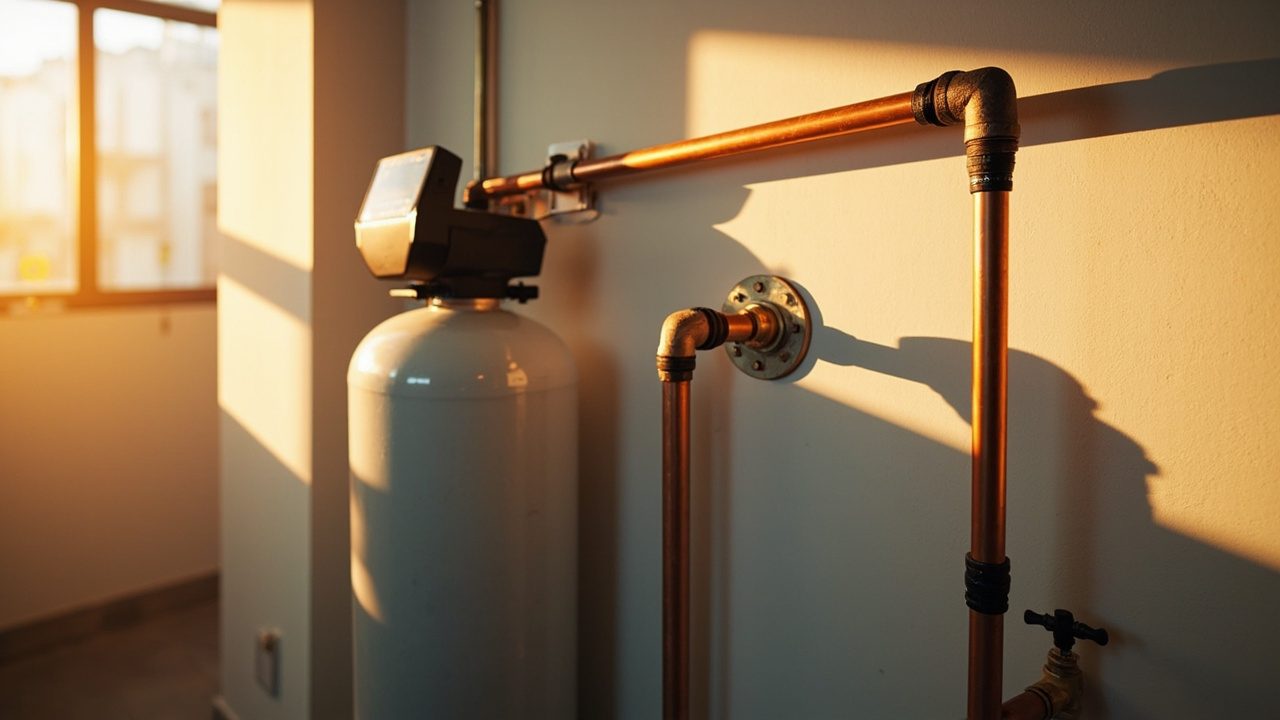
Two facts decide between a salt softener and a salt free conditioner, the tested hardness and whether a drain is within reach of the unit. Local water tests moderately hard to hard, commonly around ten grains per gallon or more, and at that level removing hardness minerals with an ion exchange softener is the direct answer for a heater. A template assisted crystallization conditioner changes how the minerals behave so they are less likely to stick, which fits a reading at the low end of that band or a house with no drain nearby. A condensing tankless unit scales at its heat exchanger on the same water, so the reading comes before that purchase too. The utility's advice against softeners for drinking water means either option is judged at the heater and fixtures, and taste questions go to the utility report and a laboratory test of your own tap.
See how to shut off main water valve for how the related work is scoped and priced.
Plumbing code in most jurisdictions traces back to the Uniform Plumbing Code maintained by IAPMO, it's the rulebook behind our permit work.
Narrow this to two options before calling, then ask which one suits the house.
| Option | The numbers a buyer weighs | Best suited to |
|---|---|---|
| Salt softener against a salt free conditioner | An ion exchange softener removes hardness minerals and needs salt and a drain | Hard water houses weighing salt against upkeep |
| Cast iron drain against PVC or ABS | Cast iron is heavy and quiet and corrodes from the inside over decades | Drain replacement under a finished house |
| Tank water heater against tankless | A tank is judged on capacity in gallons and its first hour rating | Households with long back to back hot water use |
How a softener assessment runs
Call, then read the water
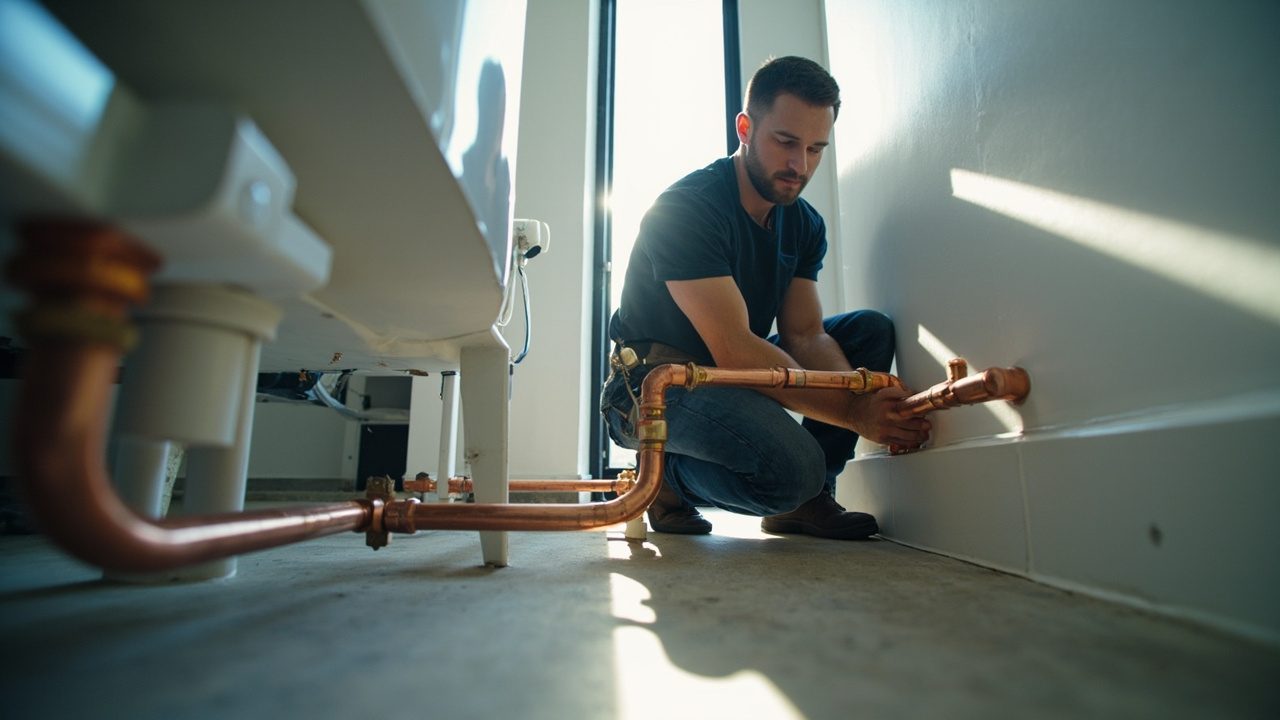
A few questions on the phone place the house in an era and the heater in a location, which tells us what to bring. On site, you point out the main shutoff and the heater, and the readings run in the same order every time. The gauge screws onto the hose bib, the kit takes its sample at a tap, and the thermometer goes on the farthest hot tap. For an anode rod pull, the cold inlet on top of the tank gets closed and the gas control or breaker gets turned off first. You see the kit reading and the core wire before anything is written down.
Approval, then the work
Once you approve the scope, isolation comes first. The main shutoff gets closed, and on a tank the cold inlet is shut, the gas control or breaker is off, and a hot tap on a lower floor is opened so the tank is not under vacuum. Then the sediment is flushed out through the tank drain, or the softener or conditioner is cut into the supply line, with a dielectric union wherever copper meets galvanized. If scale, a bare core wire or a corroded compression nut turns up behind a stop, we stop and show you before going further, and any change goes into the written scope for your yes.
Readings before we leave
Before we leave, the hardness kit goes back on a tap after an ion exchange softener and has to read soft to moderately hard, the band that leaves aerators and elements alone. The gauge goes back on the hose bib and has to sit in the 45 to 70 psi range with nothing running, and the thermometer at the farthest hot tap should read around 120 degrees after a full minute. With a salt free conditioner the kit reads the same as before, since the minerals stay in the water and only change how they behave, so the check moves to flow at the aerators. You keep the written scope with the before and after readings.
Why local housing and water change softener jobs
Permitting follows the scope of the work. A like-for-like faucet or braided supply hose swap usually needs no permit, while a softener tied into the supply line and a drain, or a tankless swap that touches the gas line, is the kind of job that usually does. Gas work and main line work draw permits more often than a faucet does. Which authority reviews the job depends on whether your address sits inside city limits, under the county or in a neighboring town, and that authority makes the final call.
An unfamiliar crew tends to make four mistakes on softener jobs here. The first is sizing from a generic number. Local water runs moderately hard to hard, and a unit sized without a hardness test works harder than the water needs or falls behind the scale it is meant to stop. The second is selling hardness treatment for brown water. Older houses in the county still carry galvanized supply, so brown on both taps is a pipe question first, and a mixed run where copper meets galvanized needs a dielectric union at the joint. The third is placement. Water heaters in this housing often sit in garages and closets, and a salt tank set beside one meets summer heat, sun on exposed plastic lines and the brief hard freezes that split unprotected outdoor piping. The fourth is treating the heater as the whole job. A new tank on the same hardness scales the same way, and a crew that skips the gauge sets it into pressure above 80 psi, where fixtures, supply hoses and water heaters start failing early.
Hard water solutions differ by house era across the county. Central older stock, mid-century slab homes with cast iron drains under the floor, slab homes from the 1970s through the 1990s with copper run under or through the slab, and newer subdivisions on the east and west sides with PEX and manifold distribution each need a different tie-in. The phone questions sort the house into an era before anyone drives out, so the kit, gauge and fittings match it.
More detail on tank vs. tankless water heaters is on its own page.
Communities like r/Plumbing are full of homeowners comparing notes on exactly this problem, worth a read before a major project.
What a softener or conditioner visit looks like day to day
From call to arrival
You call and we ask what the taps show, whether the rust is on the hot side only, how old the heater is and where it sits. Those answers sort the visit into a same-day look at a tank or a scheduled hardness test. The arrival window is confirmed on that call, and if the job ahead of yours runs long, the window moves and you hear about it by phone. Whether the rod can be pulled depends on headroom above the tank, so that gets confirmed when we see it.
Floors, garage and cleanup
Before the water goes off, a drop cloth goes down between the door and the heater or softener location. Tools stay staged on a mat beside the work, so nothing sits on your carpet. The tank drain hose runs to a floor drain or outside, so flushed scale and sediment never reach your floor. Old fittings, packaging and the flushed material leave with us. The last step is opening the nearest hot tap until the water runs clear, then wiping down every surface we touched.
What moves the scope
Where the unit can go moves the scope first. A softener needs a drain and room for salt, a salt free conditioner needs neither, and any new pipe through a finished wall or garage ceiling costs more to reach than the unit itself. The grade of valve, heater or fixture you choose comes next, and a higher grade raises the total. Adjacent work, such as a pressure reducing valve, is your call to add while the opening is already made. The written scope names the readings behind it, and you approve it before any work starts.
How technicians earn sign off
A new technician rides with a lead before working alone, and the lead signs off on reading a hardness kit, reading a pressure gauge at the hose bib and pulling an anode rod with headroom checked first. The current code cycle gets reviewed with the lead technician. On a mixed house with galvanized meeting copper, or on a heater with a bare core wire, a second technician looks at it before a scope is written.
You Have Questions,
We Have Answers
Resin beads lose exchange capacity gradually as chlorine and iron coat them over the years. A tired bed lets hardness leak through, so a kit reading at the tap creeps upward before anyone notices spotting. Brine tanks can form a salt bridge, a hard crust that leaves a hollow gap underneath and starves the resin of brine. Softened water also carries added sodium, which matters for anyone on a sodium-restricted diet. Rechecking the kit reading periodically catches these drifts early.
The main downside is upkeep, since a salt softener needs salt refills and a drain line. Regeneration sends brine to the drain and adds chloride to wastewater. Each cycle also spends a batch of rinse water before the bed returns to service. Softened water feels slick on skin, which some households dislike when rinsing soap. Upfront cost and floor space for the resin tank and brine tank add to the decision.
Homeowners need a softener only when scale is shortening the life of the heater or valves. Spotting on glass and stiff towels are cosmetic, and a vinegar soak on aerators handles much of it. A tankless heater with narrow heat exchanger passages tips the balance toward treatment, since scale throttles flow through them. An electric tank shows scale as popping sounds while it heats, because water trapped under the sediment flashes to steam.
Softening adds sodium to the water and demands a steady supply of salt. Because scale no longer coats pipe walls, softened water can pick up more metal from old plumbing if the water is corrosive. Undersized units regenerate too often and waste salt, while oversized units sit idle so the resin bed stagnates. Resin also tolerates limited heat, so the unit belongs on the cold supply ahead of the heater.
A few jurisdictions restrict salt-regenerated softeners because the brine adds chloride that wastewater plants cannot remove. Chloride passes through treatment and accumulates where treated effluent is reused or reaches salt-sensitive rivers and irrigation land. Rules usually limit brine discharge or require demand-initiated units rather than outright bans on every model. Rules vary by jurisdiction, so confirm what applies at your address before buying any salt-based unit.
A softener pays off in Texas homes where tested hardness is high enough to scale heaters and appliances. Hardness varies widely across Texas from one utility to the next, so a neighbor's result says little about yours. Savings come from longer heater element life, fewer clogged cartridges in ice makers and less detergent per wash load. Salt purchases, regeneration water and eventual resin replacement offset part of that saving, so the math depends on the reading.
A softener raises the water bill slightly because each regeneration uses a batch of water. Demand-initiated units regenerate only after the resin is spent, which cuts that extra volume. Older timer-based units regenerate on a fixed schedule whether or not the resin is exhausted, so they waste more. The cycle usually runs overnight and the water goes straight to the drain. Salt is a separate recurring purchase that never shows on the utility statement.
A scale-inhibiting cartridge on the heater inlet is the smallest-footprint alternative to a softener. It feeds a polyphosphate-type inhibitor that coats surfaces so minerals stick less. Cartridges need periodic replacement and lose effect as water temperature climbs. A vinegar circulation flush clears buildup from a tankless unit after the fact. None of these lowers the tap hardness reading, so glass spotting continues while equipment stays protected.
A softener needs floor space, a nearby drain and power for the valve head. The drain line also needs an air gap. A power loss leaves the timer clock wrong, so regeneration lands at odd hours. Salt must be topped up, and low-grade pellets leave sludge in the bottom of the brine tank that needs scooping out. Dissolved iron in the supply fouls the resin and shortens its working life.
A softener earns its cost only when scale is measurably shortening appliance life. Signs include a heater element wrapped in a hard white shell, a dishwasher spray arm plugged with mineral, and a tankless unit throwing flow restriction error codes. Households seeing none of these can skip one and rely on occasional tank flushing. A tap test comes first, because the grains per gallon reading settles the question faster than any product comparison.
Why moderately hard water changes softener decisions in El Paso
El Paso Water supplies a blend of surface water from the Rio Grande and groundwater from the Hueco Bolson and Mesilla Bolson aquifers, describes it as moderately hard to hard and disinfects it with chlorine. Arsenic that occurs naturally in the groundwater is treated at the Upper Valley Water Treatment Plant, and seasonal algae in reservoirs in New Mexico can bring a short lived musty taste and odor in summer. Hardness minerals are what an ion exchange softener is built to address, so taste and odor questions belong with the utility water quality report and your own tap water sample analysis. Discolored water gets its own check, since the utility names rusting galvanized pipe inside homes as the typical cause. Those facts set the sequence on this job. Galvanized gets settled first, hardness sets the choice between a softener and a conditioner, and the heater gets flushed or replaced last.
Who reviews the work depends on where the house sits. An address inside city limits, one under the county and one in a neighboring town each answer to a different office, so that gets settled on the phone before a scope is written. Softener work that adds a drain connection and tankless work that touches gas are the jobs that usually draw an inspection, and a like-for-like faucet or supply hose swap usually does not. For gas fittings, a combustible gas detector finds where to look and bubble solution proves it, and both are used before a fitting is called tight. Timing matters as well. Arctic cold fronts between mid November and early March split exposed hose bibs and backflow assemblies, so outdoor lines get drained and protected before a unit goes in, and spring startup of evaporative coolers scales float valves on the same hard water.
Plumbing Services in The El Paso Area
Explore our service area and locate Bedrock Plumbing El Paso with ease. We're proudly local and serve the surrounding neighborhoods with fast response and honest pricing. Use the map to check our coverage area, or call us and we'll confirm in seconds.
Address:
Bedrock Plumbing El Paso, 221 North Kansas St, Suite 700, El Paso, TX, 79901
Additional Services We Offer
- DIY vs. Professional Drain Cleaning
- How to Prevent Frozen Pipes
- How to Shut Off Main Water Valve
- Hydro Jetting vs. Snaking
- PEX vs. Copper Piping Guide
- Plumbing Financing Options
- Plumbing Inspection Checklist
- Plumbing Repair Cost Guide 2026
- Safe Drain Cleaning Products
- Signs You Need Sewer Repair
- Tank vs. Tankless Water Heaters
- Understanding Backflow Testing
Cleaning an aerator, swapping a braided supply hose, draining a hose bib before a freeze and closing the main shutoff are homeowner jobs. DIY stops at anything soldered, anything on the gas line and anything behind a finished wall or under a slab. Drinking water quality is outside this work, so taste and odor concerns require a utility report or laboratory analysis. If the first visit finds a job outside our scope, we say so during the visit and tell you which trade handles it.
Before you call, note whether the rust shows on the hot tap only or on both taps, and how long the first minute of water runs brown. Know the heater's age and tank size if you can, where it sits, and whether a floor drain is near it, since a salt softener needs one. Find the main shutoff too. Those answers place the problem on the tank, the pipe or the water.
Last reviewed September 2026 by Dave Parker, Owner.